

A Sri Lanka Tuktuk Rental Guide – the Cranky Rust Bucket Diaries
Scribbled by Claire ◊ 04 Jul 2025
Are you wondering if driving a tuktuk in Sri Lanka is a good idea? This is a complete guide for renting a tuktuk in Sri Lanka, including tuktuk prices, road safety, driving tips, licenses, weather, discounts, some realities, and so much more. This is your one-stop tuktuk handbook!
Sri Lanka is a truly vibrant, sand-lined jewel in the Indian Ocean. This distinctive, steamy, jungle-clad country, filled with ancient, gleaming-white stupas and vivid hill-top Buddhas, is best explored independently and with only the subtlest hint of a plan.
Whether you are drawn to the vast national parks dotted with leopards and elephants, roving primates roaming the rooftops, or worshippers weaving their way through a maze of Buddhist flags, this remarkable destination is unmatched.
For the perfect addition to this unconventional backpacking adventure, consider the ‘three-wheeler’ option – tuktuk rental in Sri Lanka!
We spent a full month exploring the island, covering around 2000 kilometres in our little blue tuktuk, which we affectionately named ‘Blue Pebis’.
Here, we’ve written about the costs involved, safety issues, technical aspects, other drivers and road conditions, other transport alternatives, plus some realities of living your Sri Lanka life out of a tuktuk, all so you can make the most of your epic Sri Lankan adventure!

IN THIS GUIDE //
Tuktuk Rental in Sri Lanka
TUKTUK RENTAL GUIDE OVERVIEW
PART 1: GETTING STARTED
PART 2: WHERE TO RENT A TUKTUK
PART 3: DRIVING A TUKTUK IN SRI LANKA
PART 4: IS IT SAFE TO DRIVE A TUKTUK IN SRI LANKA?
PART 5: WHERE CAN YOU DRIVE A TUKTUK?
PART 6: REQUIREMENTS FOR TUKTUK RENTAL IN SRI LANKA
PART 7: REALITIES OF DRIVING A TUKTUK IN SRI LANKA
FINAL THOUGHTS – SRI LANKA TUKTUK RENTAL
This post may contain affiliate links. If you book through these links we may make a small commission at zero cost to you. It helps us pay for the upkeep of this blog. Thank you!
WANT A 5% DISCOUNT ON YOUR SRI LANKA TUKTUK RENTAL?
If you’re already sold on a Sri Lanka tuktuk rental and know it’s definitely for you, then consider using tuktukrental.com. They’re the absolute best, have a socially minded-ethos, employ fantastic staff, and by using our link, they’ll give you a 5% discount.
Tuktuk Rental Guide Overview
This guide is split into seven sections:
Part 1: Getting Started | which includes all the background information on what you should know about tuktuks, like how big they are, how they function, and how much stuff they can store.
Part 2: Where to Rent | this has information on tuktuk prices, tuktuk availability, the best company (in our opinion) and what you should be looking for in a company.
Part 3: Driving a Tuktuk | which lists absolutely everything you need to know, like petrol and scams, driving tips, learning to drive, tuktuk driving difficulty, maintenance and more.
Part 4: Safety | where we talk about wildlife, road conditions, weather issues, theft, and other drivers.
Part 5: Where you can go | which chats about where you can and cannot go, itineraries, plus talks about options for the Kandy-Ella train.
Part 6: Requirements for Driving | which includes information on licenses and how to get a local one, what to do in the event of an accident, police checkpoints, and if the police stop you.
Part 7: Some Realities | this is a reality check, which includes some very honest comments about what it is like to drive a tuktuk, plus alternative transport options, and our personal takeaways from the trip.
Part 1: Getting Started
1.1 What is a Tuktuk?
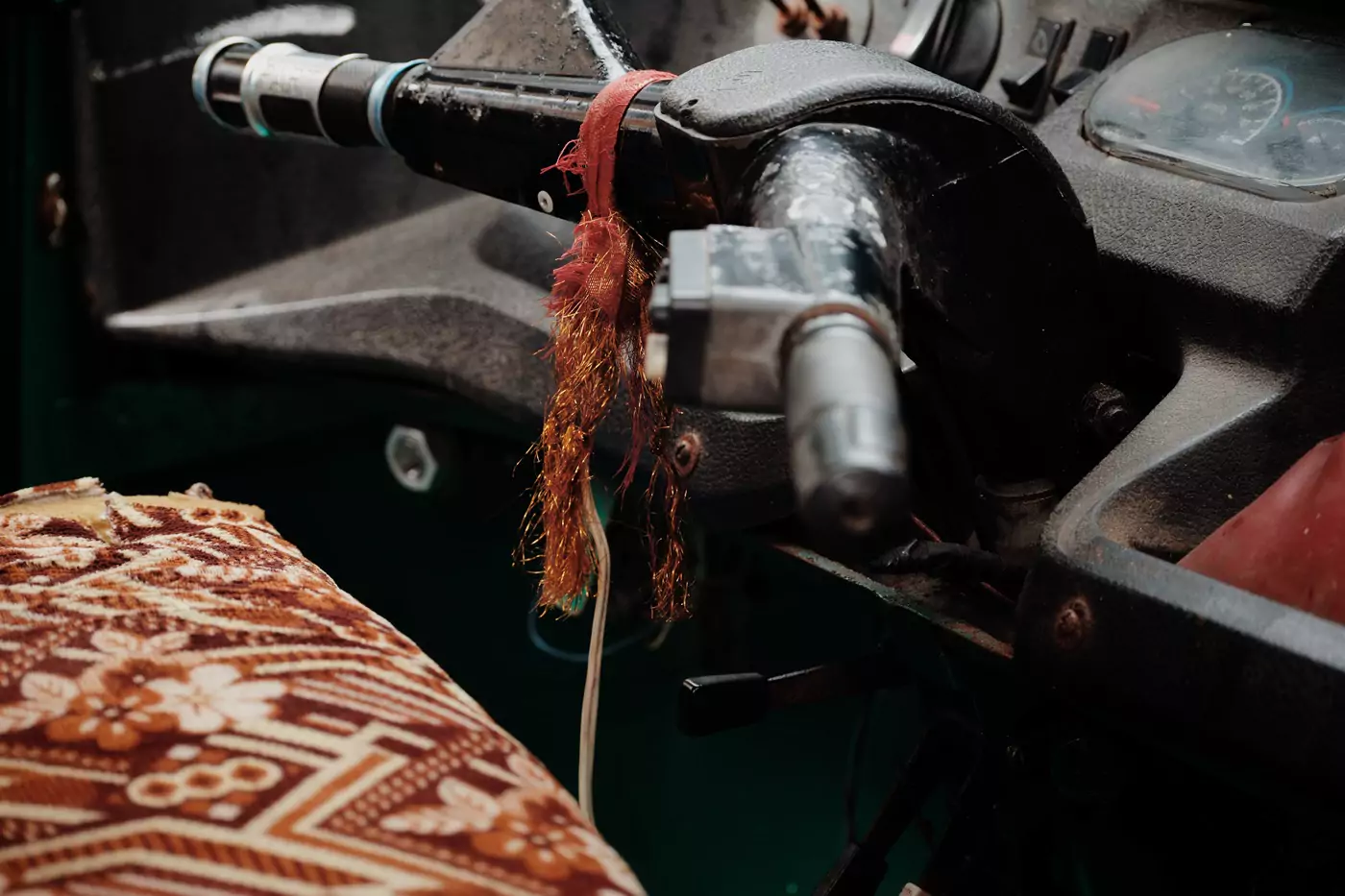
A tuktuk, locally referred to as a ‘three-wheeler’, is a small, half-bike half-car type vehicle. It is narrow, with a roof covering and motorbike-like handlebars.
Tuktuks are a common method of transport in Sri Lanka. Between taxis, commuters and rentals, you’ll not go more than a minute in Sri Lanka without seeing an array of brightly coloured tuktuks, zipping along the well-paved roads.
They’re incredibly widespread, with around 1.2 million of them in circulation across the country, so renting a tuktuk in Sri Lanka will not be a weird or out-of-place thing to do.
If you genuinely want to live up to the phrase ‘do as the locals do’, then tuktuks are the ideal way to traverse this extraordinary land!
1.2 The Mechanics of a Tuktuk
Tuktuks come with four gears and a reverse lever. They are fully manual, meaning you’ll need to use a clutch (straightforward for anyone who learned to drive in the UK, as manual cars are the norm there). A tuktuk clutch operates just like on a standard manual motorbike.
The mechanical insides of a tuktuk are incredibly simple and basic, compared to a car. This means that they’re easy to drive, easy to break, and easy to fix! They are so technologically straightforward that they even have a choke, like in cars from the 80s.
The little tuktuk motors can allegedly get up to about 50-60 kilometres per hour (even more downhill), but the speed limit for tuktuks in Sri Lanka is strictly 40km/h.
They use a duo of metal keys, which operate the ignition and also secure the petrol and engine compartments. This means that although nobody will be able to start your tuktuk without a key, they can technically wheel it away if the handbrake is taken off (this happened to us a few times, for completely non-malicious reasons!).
THINGS TO PACK FOR YOUR SRI LANKA TUKTUK ADVENTURE
Buff | for fumes
Padlock | for securing items
Towel | for drying the seats in rain
Sim card/E-sim | for routing and emergencies
A healthy appetite | for rice and curry
Travel insurance | that covers epic tuktuk adventures
Warm clothes | it can actually get a little cold sometimes
–
1.3 Space Inside a Sri Lanka Tuktuk
A tuktuk can comfortably seat two passengers in the back behind the driver (or three passengers at a push – a parent and two kids would be fine). The cabin is permanently open, so have no doors, as such, only rain flaps.
Families | a tuktuk could potentially be suitable for families if your kids can stay still for long enough and are able to support themselves (the back of the tuktuk is open on one side and secured by bars on the other – be careful of wriggling children falling out). Baby seats are available for the tuktuk with the company we used (no idea on the safety of these).
Tuktuks for tall people | we are five foot nine-ish (about 175 cm) and found the tuktuk comfortable, size-wise. If you are taller and sat in the back, sitting at an angle will provide loads of leg space. If you are taller and driving, you may have to stoop a little when it rains as the windscreen wiper doesn’t reach right to the top of the screen. There is a decent amount of leg space for drivers.
1.4 Storage in a Tuktuk
There is a sort of open trunk section, only accessible from the back seat. This space held both our full, 40 litre Osprey backpacks, a 12-litre camera bag, 22-litre day pack, plus drinks and food for the journey. They were wedged in but fit fine!
Tuktuk travel tip | the storage section in the back can get warm because the engine lies underneath it (it is not hot enough to melt anything, but your drinks won’t exactly stay cold for long there). Nothing in the back is lockable, so don’t leave things unattended (especially around monkeys!).
In the driver’s dashboard there are also two small lockable compartments for storing things like a wallet, sunglasses, sunblock and keys.
There is the option to buy a chain and padlock to attach your bag to the tuktuk (especially useful if travelling solo). It is also possible to buy some fruit/corn/snacks from a roadside vendor and ask them to watch your stuff.


WHY RENT A TUKTUK IN SRI LANKA?
I mean, rent one for the epic adventure and intriguing story! However, there are also more tangible reasons why you should consider renting a tuktuk:
◊ Having independent transport provides flexibility on timing and routes
◊ They’re slow, but faster than many bus journeys
◊ The cost is significantly less than a car
◊ It’s hilarious and fun
◊ A narrow vehicle is easy to manoeuvre in traffic and more versatile for parking
◊ A tuktuk protects from the rain far better than a bike
◊ Maintenance is really easy – anyone will be able to help you fix it in a pickle
◊ Tuktuks are cheap on fuel
◊ It’s a very common way to get around Sri Lanka – residents use them
◊ A tuktuk can take more than two people, unlike a motorbike
◊ It’s way more comfortable than a motorbike (IYKYK)
◊ Residents love talking to you about it!
–
Part 2: Where to Rent the Best Tuktuk in Sri Lanka
Rental tuktuks in Sri Lanka can be found pretty much anywhere! There are many companies all over the island who provide this service, online and in person.
Google delivers lots of options, too. We chose tuktukrental.com for our rental, who we write more about below.
2.1 Sri Lanka Tuktuk Rental Prices
The cost of a tuktuk rental in Sri Lanka varies from company to company. We’ve seen prices ranging from US$13 to $30 a day.
These prices depend on the level of service provided and any optional extras like Bluetooth speakers or coolers. It is even possible to get convertible tuktuks (Sri Lanka is way too hot for that!). In some cases, the price will also depend on how long the rental period is too.
We paid $18 a day with our company which included full insurance for all parties, 24-hour assistance, unlimited mileage and an in-depth driving lesson.
Sometimes there is a deposit to pay, too – ours was US$150.
2.2 Why Tuktukrental.com are the Best in Sri Lanka
We chose tuktukrental.com for several reasons. Firstly, their reviews were decent. Second, I know several people who had used them recently and personally recommended them.
After renting a tuktuk from this company for a month in Sri Lanka, these are the reasons we specifically recommend them:
Storage | they stored our bags and coats for the entire trip for free and even dropped them off when they picked the tuktuk up from us.
Lessons | an instructor provided an in-depth 1.5 hour tuktuk lesson.
Communication | friendly, English-speaking staff.
Ella Train | they’ll move your tuktuk between Ella and Kandy if you want to take the famous train.
Family-oriented | the tuktuks are rented from local families to provide extra income. So far, they have helped over 450 families supplement their income.
Environment | the goal is to convert the tuktuks to electric.
Socially conscious | the company has a socially minded ethos including female driver empowerment, offsetting carbon emissions and installing water connections. A woman driver picked up our tuktuk.
Drop-off | they can pick up your tuktuk from a different end location (we picked up in Negombo and dropped off in Colombo).
Whatsapp | there is a Whatsapp group for all the current tuktuk renters (super useful for up to date, on-location information and for making friends).
Support | they provide lots of paperwork to help with planning – a list of mechanics, itinerary suggestions, driving distances etc.
On-call | you can call them anytime on Whatsapp.
Location | convenient location nearby to Bandaranaike International Airport (Colombo’s Airport).
We liked them so much, we recently used them again for a new tuktuk adventure in Cambodia!
5% OFF YOUR TUKTUKRENTAL.COM BOOKING
If you’re already sold on a Sri Lanka tuktuk rental and know it’s definitely for you, then consider using tuktukrental.com. They’re the absolute best, have a socially minded-ethos, employ fantastic staff, and by using our link, they’ll give you a 5% discount.
–
Part 3: Driving a Tuktuk in Sri Lanka
3.1 Is it Difficult to Drive a Tuktuk?
No, tuktuks are not particularly difficult to drive at all!
They are straightforward to operate, plus the company we used teaches you how to drive a tuktuk before you are let loose on the roads. The little rusty buckets are only permitted to go a maximum of 40 kilometres an hour in Sri Lanka, which means they just slowly trundle along on the edge of the roads, mostly out of the way of other traffic.
Be aware that Sri Lanka drives on the left side of the road which could add a little difficulty if you’re from a country that drives on the opposite side.
3.2 Learning to Drive a Tuktuk
The company we chose provided an educational video to watch, a useful guide, had a virtual meeting before the pick-up date and an hour-and-a-half driving lesson. This was easily enough to get anyone ready to drive a rental tuktuk in Sri Lanka.
The lesson involved observing an English-speaking instructor drive to a secluded parking lot and then practising changing through the gears, signals and having a go at manoeuvres like reversing and U-turns. We then headed into the back streets, before moving onto a main road. We were also shown how to get petrol and what to do at police checkpoints.
They also covered how to check the oil level, brake fluid and fuses, plus how to use the spare wheel and jack.
By the end, we were totally versed on how to maneuver and maintain a tuktuk on Sri Lanka’s roads!
3.3 The Actual Driving
Ok, some people describe the roads in Sri Lanka as chaotic, crazy, or even highly dangerous. They’ll have you panic-imagining crazy, Delhi-style nose-to-nose traffic. They’re all totally wrong. Even driving in the capital Colombo was easy-going, calm and straightforward (having driven all around Colombo for three days). We cannot emphasise enough how pleasant we find the drivers in Sri Lanka.
Horns | road-users habitually use their horns, but almost never aggressively. They beep to tell you they are there and (usually) overtaking.
Buses | similar to Vietnam, buses will often charge through no matter what, but contrary to other driver accounts in Sri Lanka, we’ve equally encountered patient ones on steeps hills in the mountains.
All the A roads in Sri Lanka we drove on during our 2000-kilometre adventure were in generally good condition, well-signed and clearly marked.

3.4 Sri Lanka Tuktuk Driving Tips
Internet | ensure to obtain a sim card with internet access. You can get an e-sim with Airalo (our e-sim company of choice) if you want to have instant internet upon arrival or get a local sim at the airport. We used Dialog sim cards; the coverage and speed were great.
Rupees | make sure to have some Sri Lankan rupees available for petrol or any unforeseen repairs.
Navigation | for navigation apps, Google Maps and Waze were both great in Sri Lanka. Several outlying situations: a short cut between Nuwara Eliya and Ella was far too steep for our tuktuk, and between Polonnaruwa and Dambulla which was miles of pothole hell (bad when it’s rained because you can’t tell how deep each hole is). These were both B roads.
Tuktuk travel tip | if in doubt, the safest option is to stick with A roads whenever possible, especially in the mountains. Choose the bike option, rather than the car on Google Maps.
Tolls | Sri Lankan tuktuks aren’t allowed on expressways, which are all toll roads. So, turn off toll roads on your navigation app and avoid blue roads on signs (very clearly marked).
Maintenance | check the engine oil, tires, and brake fluid daily.
Speed | the speed limit for a tuktuk is 40 km/h. Cars and buses are allowed to go 70 km/h on normal roads, 100 km/h on expressways.
Timing | always allow more time for travel – Google Maps underestimates it a little.
Paperwork | keep your Sri Lankan tuktuk license with you when you drive, as well as your tuktuk documents in case you are pulled over by the police.
Gas | top up the petrol tank regularly because steep hills use much more petrol (crawling up hills in 1st gear with your engine sounding like a lawnmower isn’t efficient, but sometimes essential).
Rules | common (obvious) road laws to be aware of:
– Don’t overtake over solid white lines
– Don’t speed
– If a sign says don’t do something (like a u-turn), then don’t do it
– Don’t overtake at pedestrian crossings
Bluntly, don’t drive like a dick and it’s all absolutely fine. Local tuktuk drivers sometimes exceeded the 40 kilometre an hour limit, but the tuktuks we saw speeding more excessively were almost always other tourists around the beach areas.


3.5 Parking a Tuktuk in Sri Lanka
Well, a tuktuk is basically a little narrow metal bucket, so it’s really easy to park!
We never, ever had a problem finding parking. There was always ample side-of-the-road space, hotels always had a place to store your vehicle and weirdly, no location, even Colombo or Galle, was ever particularly busy. Parking restrictions do exist in Sri Lanka so watch out for striped lines on the side of the road and no parking signs.
There were a few areas that did charge for parking: Galle, Colombo and Kandy. The charges were very affordable – substantially less than £1 a day and often less than 10p an hour, paid in cash. There were always clear signs around and nobody tried to scam us.
In all these areas, tuktuks had a different, slightly cheaper tariff than cars.
3.6 Petrol Stations in Sri Lanka
There are lots of gas stations across Sri Lanka. They are easy to find on Google Maps. The best search phrase is ‘petrol station’, rather than ‘gas’, which brought up all sorts of weird stuff.
Fuel station attendants will fill up the tuktuk for you and larger petrol stations accept payment by cash and card. There are several major petrol station companies, including IOC and state-owned CEYPETCO.
3.7 Petrol Prices in Sri Lanka
The price of petrol in Sri Lanka is set by the government.
As of January, 2025, the petrol prices in Sri Lanka have actually gone down. At the current exchange rates, it is now 309 LKR (£0.83) per litre for 92 Octane and 371 LKR (£1) per litre for 95 Octane petrol.
We were told by someone who rented a tuktuk before us that 95 Octane petrol is better and it made their tuktuk less ’spluttery’, but ours worked fine on 92.
3.8 Petrol for a Tuktuk
Tuktuks in Sri Lanka use petrol fuel, not diesel. Generally, a full 7.5 litre tuktuk petrol tank gives you up to 120 kilometres, so a safe number to work on is 100 kilometres per tank for longer drives. The reserve 1.5 litre petrol tank should provide another 20 kilometres in a pinch. A common defect with tuktuks is a faulty fuel gauge (ours got stuck at three quarters and stayed there, every time!).
Tuktuk travel tip | record your odometer reading each time you fill up so you can plan your trip accordingly.
TUKTUK PETROL SCAMS IN SRI LANKA
A typical Sri Lanka scam is when a petrol attendant does not reset the petrol pump to zero between vehicles. This means you pay for the previous petrol, along with your own.
From our personal experience, this practice isn’t common and we only once had somebody try it. The attendant even had another man try to distract us so we didn’t notice! They started filling the tank before we even could tell them to reset it, so we refused to pay them the 1100 LKR that started on the machine. We underpaid in total – never reward scammers, it only encourages the behaviour.
They were so chill about this scam that they didn’t even try to fight us for the underpaid money.
The Google reviews for gas stations tend to mention if there is a possibility of scams. Check out the reviews for the Lanka Filling Station around GPS 5.969277, 80.369683, for example. They are the ones that tried it on with us. Be extra aware at stations like this.
–
3.9 Tuktuk Maintenance
We were required to grease our tuktuk every 1000 kilometres. This is easily done by one of the many mechanics in Sri Lanka.
Depending on location it can cost between 600 – 1200 LKR (£1.45 – £2.90) and takes around 15 minutes. We were also required to keep both the engine oil and brake fluid topped up – although neither of these needed doing during our month-long rental. Any other necessary repairs would have been paid for by us, then reimbursed at the end of the rental (if not our fault).
Mechanic costs and parts are incredibly affordable in Sri Lanka. We took Blue Peb in for surgery due to his crunchy gears and paid 200 LKR (£0.50!) for the fifteen minutes it took for the clutch plate to be greased. This was the only mechanical issue during our rental.
Another tuktuk renter mentioned they had a broken axle fixed for 650 LKR.


PLANNING A SRI LANKA TRIP?
Have a quick peek to see if any of our other Sri Lanka posts might be helpful:
How to explore Mihintale – Sri Lanka’s most sacred Buddhist site
Is it smart to drive Sri Lanka’s Elephant Road?
Is the Pidurangala Rock hike worth it?
Everything you need to know about backpacking in Sri Lanka
The monster three week Sri Lanka itinerary
How to visit Sri Lanka’s exquisite ancient capital of Polonnaruwa
–
Part 4: Is it Safe to Drive a Tuktuk in Sri Lanka?
Yes, it is safe to drive a tuktuk in Sri Lanka! People do it everyday and are totally fine (and we survived without a scratch!).
Be aware of pedestrians, buses and wildlife, be extra careful in rain and avoid driving at night (full-beam headlights and reflections off the tuktuk windscreen make it kind of tricky to see).
We were also told that there is a higher chance of drunk drivers at night by our tuktuk rental company.
4.1 Wildlife on Sri Lanka’s Roads
Wildlife in Sri Lanka can vary from scuttling monitor lizards to towering elephants. Heed warnings from residents and any signage – larger wildlife can really mess up a tuktuk.
Elephants | these, in particular, are an amazing sight up close, but as we were told numerous times, they can be very angry, aggressive beasts. One swipe and your tuktuk is wrecked, with you in it.
Monkeys | we found monkeys just about everywhere, especially along edges of the road. They know how to operate zips and *will* steal your stuff, so don’t leave food and valuables accessible.
Cows | road cows are everywhere, but at least they’re really slow.
Dogs | last, but by no means least, are dogs. Sri Lanka is crammed full of wild dogs. They roam the roads and will often be found sleeping right in the middle of them. None we drove near were ever aggressive, but a handful did choose to run out in front of our tuktuk.
Tuktuk travel tip | if you see an animal and stop your vehicle, remember that tuktuks don’t always start first time, so making a quick getaway may be out of the question (we learned that the hard way with a gang of grey langurs).

4.2 Road Conditions
The main ‘A’ roads are great in Sri Lanka.
However, back streets are often unpaved, narrow and steep, uneven or waterlogged. They aren’t particularly difficult to navigate but be extra careful after heavy rain. Water-filled puddles can hide surprisingly large pot holes!
The most difficult issue we had with the roads was the steepness. Occasionally, it was just not possible to get our tuktuk up and over the hills with two of us, luggage and water inside. Google Maps doesn’t give you much information on particularly steep sections, so watch out if you veer off the main thoroughfares.
4.3 Weather
Sri Lanka gets a lot of rain, all year around.
Waterlogged roads are common. (We had to drive through an actual rushing river at one point and I was shitting myself because all I could think of was being swept away. However, the little old ladies that lived nearby waved us on, so I figured it was okay, which I guess it was, because I’m still here).
After it has rained, be careful of potholes. These fill with water, making it impossible to gauge the depth. Tuktuks are seriously hardly beasts, but there is a limit, and it’s probably a sneaky two-foot-deep pothole.
Tuktuk travel tip | if it’s raining, take a jumper or jacket for long journeys. It actually gets cold with the wind whipping around you with the rain cooling the air. This can be especially unpleasant in the mountainous regions around Nuwara Eliya and Ella.
4.4 Other Vehicles and Pedestrians
In Sri Lanka, the cars, motorbikes and tuktuks are nice. They’re not too fast, beep to let you know they’re around and are generally decent drivers.
Buses | well, some of them are decent. Others are criminally bad. They’re never bad enough that I was worried, but their horns are loud (appreciate them being used, though) and they drive fast. Get to the left and stay there until they pass, or overtake them as fast as possible if they are stationary and they’ll rarely catch you up because they stop so often.
Pedestrians | there’s also a kind of Morocco-esque pedestrian vibe in Sri Lanka, with the sheer number of ambling pedestrians in villages and towns. People walk along the roads a lot and just kind of cross wherever, with an expectation on you to accommodate them. It’s okay, you’ll probably only be going 30 kilometres an hour at most through towns anyway!
4.5 Theft from a Tuktuk
We did not feel there was any threat of theft during our Sri Lanka trip, however, we would also not leave our stuff unattended. It doesn’t seem like vehicle theft or smash-grab type issues are a major concern, as is common in Costa Rica, for example.
However, I’d say it feels slightly less secure than the *very safe* Middle Eastern Gulf states (if that helps anyone gauge the vibes).
I always had my handbag and camera out on the seat in full view and didn’t feel that it was a problem. We even had a random nice man defend our tuktuk from monkeys while we were at a temple – nobody appeared to want to take our stuff (apart from the monkeys).

WANT 5% OFF YOUR SRI LANKA TUKTUK RENTAL?
Are you sold yet? If so, then consider using tuktukrental.com! They’re the absolute best, have a socially minded-ethos, employ fantastic staff, and by using our link, they’ll give you a 5% discount.
–
Part 5: Where Can You Drive a Tuktuk?
You can drive a tuktuk pretty much everywhere in Sri Lanka!
As mentioned previously, they are not allowed on toll roads, and we’d recommend avoiding seriously steep hills if your tuktuk is heavy (with bags and people).
Although tuktuks perform optimally on paved roads, it is possible to drive them down some seriously rough unpaved roads, with enormous potholes and deep mud. They are very hardy machines.
The most popular regions to visit in Sri Lanka are the southern beaches (Mirissa, Weligama etc.), the central hill country (Ella, Nuwara Eliya) and the Cultural Triangle (Sigiriya, Polonnaruwa, Kandy etc.).
For a detailed route through all of these areas, check out our three week Sri Lanka itinerary, specifically designed with tuktuks in mind.

5.1 Train or Tuktuk for the Kandy-Ella Route?
The famous, scenic Kandy to Ella train journey is one of the most popular tourist attractions in Sri Lanka. It’s a long, slow, pretty, seven-hour (at least) journey through the central mountains and is supposed to be incredible.
We thought long and hard about this one – to tuktuk or to train?
Eventually, partly down to laziness, we chose the tuktuk road route (we’d grown very attached to our tuktuk, Blue Pebis, by this point). Now, we can’t tell you if driving is a better or worse option than the train as we didn’t do both, but be aware that most people online will tell you to take the train, having not driven the roads!
So, this is a quick rundown of our thoughts:
Views | first up, the road from Kandy to Ella, via Nuwara Eliya, is pretty, really pretty. It winds through the mountains and tea plantations, past countless waterfalls that fall right next to the road.
Difficulty | the route is actually quite difficult to drive, compared with the rest of the island, purely because of the steepness of small sections of the road. Tuktuks, or our one at least, absolutely hated steep uphills. At one point, it momentarily gave up entirely between Kandy and Nuwara Eliya! The roads themselves are not narrow, precipitous or in anyway hazardous, though – they’d be extremely easy in a car.
Direction | also, we would suggest driving the route northward if that’s an option, since the views would be a little better in that direction (in our opinion, although it’s super pretty either way).
Crowds | we are biased, but think it’s worth driving (we love a road trip). It’s a quiet route and it’s brilliant stopping whenever you want. We didn’t see any other tourists self-driving while we were there and it was such a lovely experience.
Tuktukrentals.com offers a service where they drive the tuktuk in between Kandy and Ella, so it is absolutely possible to take the train and spend the rest of your trip in a tuktuk, if that’s your preference!

Part 6: Requirements for Tuktuk Rental in Sri Lanka
To rent a tuktuk legally in Sri Lanka, the tuktuk must be registered with the Department of Motor Traffic, have the correct insurance which covers tourists, and have passed an emissions test. The driver of the tuktuk needs to have a valid Sri Lankan Recognition Permit (a local Sri Lankan driving license).
Unlike most countries, an International Driving Permit (IDP) is not the correct legal driving document in Sri Lanka.
6.1 How to Get a Sri Lankan Tuktuk License
To get a valid tuktuk license in Sri Lanka, a valid 1949 International Driving Permit with the ‘car driver’ endorsement is required. In the U.K., this is the ‘B’ stamp. You do not need a motorcycle ‘A’ endorsement to drive a tuktuk in Sri Lanka. You will also need to bring your valid home driving license.
To get the local Sri Lankan license there is the option to go in person to the Automobile Association of Ceylon in Colombo (located near Galle Face Green, easily found on Google Maps). Alternatively, the tuktuk rental company may be able to arrange this on your behalf. Due to the timings of our flight into Colombo, and not wanting to queue, we chose the second option. This involved filling out a form online and providing pictures of the driving license, passport, 1949 IDP and a colour photograph against a white background.
The cost of the in-person license is around $25 (currently around 8100 LKR). We paid 40$ (around 13000 LKR) for the license to be processed by our rental company, which was ready when we picked up the tuktuk.

WHAT TO DO IN THE EVENT OF AN ACCIDENT IN SRI LANKA?
Other than monkeys pooping on our tuktuk, like hundreds of times (a hazard when parking under trees), we were fortunate to not have any accidents with our tuktuk. We were told by our rental company that, in the event of a small accident, whoever is at fault pays the other driver on the spot (and they even had a handy guide on ‘reasonable prices’).
For a more serious accident (anything beyond a cosmetic dent or a scratch), the insurance company needs to come and assess the damage, and a police report may be needed too. Calling the tuktuk rental company is obviously also a good idea in this scenario.
–
6.2 Police Checkpoints in Sri Lanka
Police checkpoints are relatively infrequent and mostly found in and around the busier towns and villages of Sri Lanka.
There are two types of police checkpoint in Sri Lanka: the first has partial barriers on the road to slow down vehicles and the second is usually just a duo of police officers by the side of the road.
Whilst we saw various vehicles pull over at police checkpoints, we only had to stop once in our entire trip around Sri Lanka. The police officer took a swift glance at us, smiled, waved us on and wished us a good trip. We didn’t even need to show any documents.
In the briefing for our Sri Lanka tuktuk rental, we were told that there were three reasons a police office would pull you over:
They are bored/being friendly | other drivers told us they were pulled over by the police who wanted no more than a little chat.
You’ve broken the law | the officers have the power to confiscate your license and fine you.
Bribes | you’re extremely unlucky and have a dishonest police person looking for a bribe – a typical ‘fine’ is commonly regarding the documents being out of date or incorrect. During the driving lesson, we were shown the documents we might be asked for and confirmed they were up to date.
Our company had the benefit of an ex-police officer working with them and said that, if in doubt, to call for help. Fortunately, we never had to.
6.3 If the Police Stop You
If you have broken a traffic law, the officer may confiscate your Sri Lankan tuktuk license and issue you with a receipt for the fine and details of the violation. They will also provide a kind of temporary driver’s license, in case you are stopped again, to show that your license has been confiscated by the police.
Pay the fine at the nearest post office and return to the officer who will give back your license when presented with proof that the fine has been paid. If the officer is not there, locate the nearest police precinct to retrieve your license. It’s all a bit slow, but I guess this payment method also avoids corruption.


Part 7: Realities of Driving a Tuktuk in Sri Lanka
So, we’re pretty honest over here and would feel deceptive if we didn’t include a glimpse into the realities of driving a tuktuk across an entire, tropical country. It’s not all super easy, sunshine and rainbows. However, we personally did not find that any of the things below were a dealbreaker, but it would have been nice to know a few of them in advance:
Bugs | these will get in the tuktuk – can confirm this first hand (try to avoid parking your tuktuk on an ant nest).
Monkeys | they will steal your shit and wreck the tuktuk (or at least threaten to).
Speed | 40 km/h is not fast – journeys take their sweet time.
Inclines | hills are your tuktuk’s mortal enemy.
Noise | tuktuks are loud bitches – between the squeaking, crunching, rumbling and rattling, you’ll need some paracetamol.
Weather | Sri Lanka can actually get cold in the hills and is way less fun to drive in the rain.
Zero suspension | tuktuks are not a smooth ride for you and your back.
Luggage | bags cannot be left unattended for long because you can’t secure them.
Awkward | they’re kinda clunky to drive and don’t always start first time (or fifth, or tenth).
Elephants | genuinely, these will flip you over like a fried egg, with a simple swipe.
Vehicle fumes | it can be really bad in heavy traffic, especially behind buses – I imagine this could be challenging if you have asthma.
Price | tuktuks are a far more expensive option than local buses and trains (but way more fun and flexible, obviously).
Night | tuktuks are not ideal for driving in the dark.
7.1 Alternatives to a Tuktuk
If any of the above issues are a dealbreaker for you, but you still want to have your independence and flexibility on a cross-country Sri Lanka road trip, then we’d suggest renting an actual car.
On our next trip to Sri Lanka, we are intending to rent a car for some of the time and also rent a tuktuk again. They each have their benefits, so we are going to take advantage of both!
We’ve written about it above already, but driving in Sri Lanka is extremely easy and we found it to be very safe (even the bus drivers weren’t as bad as people make them out to be). This level of ease applies whether driving a car or a tuktuk. Having driven over 100,000 kilometres in many countries across the world, we consider Sri Lanka to be one of the easier ones (way better than Italy, for example!).
If you are considering renting a car instead of a tuktuk in Sri Lanka, we’d recommend Discover Cars because they are shit-hot on their (very affordably priced) insurance. This means you don’t have to worry if you have a bit of a dink.
Motorbikes | we would have also been happy to rent a motorbike for local transit in Sri Lanka, but wouldn’t want to venture far on them. This is because it rains too much and they’re uncomfortable for long journeys with baggage (learnt this first-hand!). This method of transport is also only recommended if you have a dedicated motorbike license in your home country (and the relevant 1949 international driving permit).


7.2 Our Personal Sri Lanka Tuktuk Rental Experience
Along with all the things we’ve written about above, here are a few more random, personal thoughts about driving a tuktuk rental in Sri Lanka.
Exhaustion | you’ll hear lots of people talk about using this method of transport like it’s a novelty experience, which I guess it is for most visitors. However, what it gave me was an understanding of actually how exhausting it is to be a tuktuk driver. You’re exposed to the elements, which can be extreme in Sri Lanka. It’s often swelteringly hot or surprisingly cold, you’re breathing bus fumes and never reaching your destination without a pressing need for a shower.
Sensory | the sound of the weird, unique squeaks that each individual tuktuk makes and the crunch of the gears is kind of etched in your mind, forever. It’s strangely physical, driving a tuktuk – your wrists and hands ache, the lack of suspension makes your neck jar, your ears ring like when getting off a plane; it’s not chill like driving a car. All of these sensations are a novelty for us, but a long-term reality for many.
Exposure | there’s a kind of vulnerability when driving a tuktuk that we hadn’t experienced with any other vehicle. Passing a foot away from a gigantic, full-sized elephant trunk really emphasises how small and exposed you are, while simultaneously making you painfully aware that you have almost no acceleration, power or speed behind your vehicle!
Chatty | we also found that driving a tuktuk meant that far more people wanted to talk to us: petrol pump workers, other drivers at traffic lights, motorcyclists or even older ladies with their grandchildren. Although tuktuk rentals in Sri Lanka are growing in popularity, it’s still a relatively rare thing to see a tourist driving a tuktuk (unless you’re around Mirissa, Weligama and Unawatuna – tourists congregate there).
Weather | our trip was extra rainy – unseasonably so, even for Sri Lanka, which is already known for being a bit damp. We left our warmer clothes with the tuktuk rental company, thinking we wouldn’t need them, however it really hit home how exposed you are when it’s torrentially pouring, the wind is blowing and even though the forecast says 28, the temperatures feels genuinely Baltic. It is just another thing I really wasn’t prepared for (probably due to our lack of preparation and research!).
Attachment | we found ourselves becoming very attached to our little blue tuktuk, Blue Pebis, despite his creakiness, temperamental gears and hissy fits when attempting to go up steep hills. He’d driven 95,000 kilometres before we even picked him up and, despite being basically a grumpy old man, got us across the country with minimal drama. We were genuinely sad to see him go.
CAR HIRE FOR YOUR SRI LANKA TRIP
If you’re not vibing with tuktuk rental, consider a car instead.
We always rent our vehicles all over the world, including our recent trips in Thailand, Malaysia, Oman, Saudi Arabia, Tunisia, Jordan and Morocco, with Discover Cars. They’re often the most affordable, plus they paid out immediately on an insurance claim we made when our car took some heavy damage in Sicily. We fully recommend them.
–
TAKE A LOOK BELOW OR CHECK CAR RENTAL

DID YOU KNOW YOU CAN ALSO RENT A TUKTUK IN CAMBODIA?
Recently, tuktukrental.com started renting vehicles in Siem Reap, Cambodia.
We took a two week jaunt around the legendary Angkor Wat temples, Siem Reap and beyond, all using a three-wheeler, just like in Sri Lanka.
If you’re interesting in finding out more, we’ve written a post all about it.
Have a read of our Cambodia tuktuk rental guide for all the info.
–
Final Thoughts – Tuktuk Rental in Sri Lanka
I’m not going to sit here and write that driving a tuktuk is some kind of spiritual, life-changing experience, but it’s certainly physical, raw and memorable. It’s not a sensation I’ve forgotten, even though I’ve ridden motorbikes and driven cars all over the world.
It turned out to be far more than just a method of transport – it became the actual reason to be backpacking in Sri Lanka. I stopped caring as much about which temple to see and which rock to hike; it was more about what the journey was going to be each day.
Journeying in Blue Peb will remain a very visceral memory.
We hope this has helped you decide if renting a tuktuk in Sri Lanka is right for you. If we’ve missed anything out that you’d like answering, let us know in the comments below.
Hi, thanks for visiting our blog! If this post has been of help to you, or you’ve just enjoyed our random ramblings and musings, say thank you by buying us a coffee! It helps keep The Restless Beans blog up and running.
Thank you, Claire + Nick


Thank you so much for all the useful information.
I read that you intend to rent a car for a future trip in Sri Lanka.
How was your experience with traffic and Sri Lankan driving? I wanted to rent a car for a trip of about a month between February and March, but many travel forums are full of fear mongers that discourage this practice. They even write that it would be a stupid thing, that it would be a suicide, that it wouldn’t make sense and so on.
This discouraged me to do so and I was thinking of taking transfers to move between one place and another. Can you give me an objective opinion on car rental? Thank you very much for your help
Hi Barbara, thanks for your comment.
We haven’t yet been back to rent a car in Sri Lanka, however we did drive the tuktuk around for a month and that was surprisingly easy, to the point where we would be totally happy to rent a car. The traffic was, for the most part, reasonably light, and we would consider most Sri Lankan drivers to be polite and helpful.
I think it depends on your driving experience. We’ve driven in many countries that people have advised us not to, only to find that it’s that not difficult at all. Genuinely, I think the most unpleasant countries to drive in are the USA and Italy (and nobody gives warnings against them!).
We would not hesitate to rent a car in Sri Lanka (and tend to ignore the forums full of fear!).
I hope this helps you make a decision and that you have a magical trip 🙂
Claire
Thank you for such a detailed and insightful guide on tuk-tuk rentals in Sri Lanka! Your breakdown of the process, costs, and tips for driving in different areas is incredibly helpful. It’s great to have such practical advice from someone who’s clearly experienced the journey. This will definitely make exploring Sri Lanka more accessible and enjoyable for travelers like me. Looking forward to using your tips on my next trip!
Hi Sahil,
Thank you so much for your comment. I’m really glad you found the post helpful.
I hope you have a great time!
Hi, great blog. I am going to Sri lanka for 14 days. I only want to rent a tuk tuk for 7-8 days, what is the best route to pick up and drop off your tuk? anything you would recommend. thanks!!
Hi Ali,
Thanks for your question.
We booked our tuktuk from Colombo, picking it up at their office which was conveniently located near the airport. We had no problems driving in Colombo and found it a useful place for returning the tuktuk at the end too. Depending on your plans around your tuktuk rental, it may make sense to pick up elsewhere though.
With around a week in a tuktuk there’s a few options, depending on which month(s) you’re planning on visiting Sri Lanka.
If you’re going between June and August then Jaffna and Trincomalee would be an option, as that’s the ‘dry season’ in the north-east of Sri Lanka.
If you’re heading to Sri Lanka between December and March, this should be a good time to visit the beaches south of Negombo (unless you get a tropical storm like we did). Alternatively, there’s the Cultural Triangle area with the ruins of Polonnaruwa and Sigiriya. A final option around these months would be to visit the mountainous area around Ella, Kandy and Nuwara Eliya.
Any of the above would be great to explore with a tuktuk for a week or so.
Hope this helps for your trip!
Hi, thank you for the well-written guide
As a solo traveller, how safe would my bags be in the tuktuk if I wanted to take a short walk away from the vehicle to sightsee or visit a temple? Would bringing a wire cable and locking the bag to the tuktuk be viable?
There’s an electric tuktuk option (might be quieter and less fumes), would they be easy to recahrge at hostels?
Thanks
Hi Suzie,
Thanks for your comment.
I think that, for the most part, your bags would be safe if secured by cables in the tuktuk, especially at quiet places like temples. Tuktuks have weather flaps, so you can use those for an extra layer of security. We found that, mostly, there were always other people around in temple car parks, which made it feel safer to me – we were never overly worried about theft from people. I’d probably avoid leaving my stuff unattended in a tuktuk at the beach wherever possible though (although this is just from an abundance of caution).
I’d ensure there was no food in your tuktuk because monkeys are evil and will absolutely try and steal anything they can. They are a much bigger concern than people, and locks won’t stop them from investigating!
We didn’t have the option for an electric tuktuk, but if they are a little quieter, that sounds great to me! I’d recommend asking the hostels and your tuktuk supplier about recharging because we never had to do that!
Hope you have a great trip 🙂
Thanks for the information Nick
Did you rent the cooler?
If you didn’t do you wish you had?
Hi Suzie,
We didn’t rent the cooler, but it would have been nice to have to keep drinks cold when out all day.
Nick, Claire – what a fantastic website you’ve got here.
My wife and I have booked a 23 day trip to Sri Lanka in mid January 2025 and plan to rent a tuk tuk on our Kandy – Sigiriya – Anuradhapura – Passekudah – Kandy part of the trip. We would need to do each of these links in a day – is that possible in a tuk-tuk? I think the last leg will be 189km.
Thanks
Stuart
Hi Stuart,
Thank you so much for your comment, you made our day 🙂
As a short answer, yes. You can absolutely do all of those journeys on a tuktuk within a day. We’ve done several roughly 200-kilometre days in Sri Lanka, one of them was on our first day!
The last part of the trip to Kandy from Passekudah may be long (especially with the speed limit of 40 km/h for tuktuks) but, even with breaks, can be done without a night needed to break the journey. I haven’t driven that particular route but it seems to be all ‘A’ roads, which are the best ones.
I hope you have a fantastic time!
Exploring Sri Lanka with a Tuk Tuk rental was one of the best travel decisions we made! Renting a Tuk Tuk gave us the freedom to visit stunning beaches, serene tea plantations, and charming local villages at our own pace. The winding roads through the hill country were an adventure, and we loved how easy it was to find hidden gems along the way. If you’re looking for a unique and authentic way to see Sri Lanka, I highly recommend renting a Tuk Tuk!