

29 Essential Tips For Planning a Backpacking Trip to Sri Lanka
Scribbled by Claire ◊ 17 Apr 2025
Are you at the beginning of your Sri Lanka trip research? Read on for loads of useful hints and tips for planning your backpacking trip to Sri Lanka, including money and budgeting info, legal stuff, cultural things to know, and wildlife and animal tourism.

Backpacking in Sri Lanka is perfect for everyone, whether you are a seasoned travel professional or new to the scene. The climate is ideal, it’s super affordable, there are a tonne of awesome things to do and it has a plethora of transport options.
The tourist vibes are low-key energetic, with surf camps, digital nomad hubs, vibey hostels and beachy bars. It’s also a country where you can easily choose to get lost and drop off the tourist trail entirely, if that’s your preference.
No matter what type of trip you have pictured, there is something for every backpacker in Sri Lanka. It’s a colourful, passionate, exciting place and is wildly underappreciated within the tourism market. Take the opportunity to experience backpacking this epic, pristine little island before everyone else figures it out!
Sri Lanka is relatively easy to plan a trip around, but there are a few valuable things to know before you go. These include the most entertaining transport options, safety issues, how spicy the food is, useful apps, what to wear in a temple, when it will rain the least, whether elephants will kill you, and so much more.
Below we’ve written about all the weird and wonderful things we wished we knew before we went!

IN THIS GUIDE //
Planning a Backpacking Trip in Sri Lanka
SRI LANKA – FACTS AND FIGURES
THE MONEY STUFF
THE PLANNING STUFF
THE LEGAL STUFF
THE CULTURAL STUFF
THE ANIMAL STUFF
THE OTHER STUFF
FINAL THOUGHTS – SRI LANKA TRIP PLANNING
This post may contain affiliate links. If you book through these links we may make a small commission at zero cost to you. It helps us pay for the upkeep of this blog. Thank you!
BACKPACKING SRI LANKA – QUIRKY FACTS AND FIGURES
POPULATION → 22,100,000 (2023)
AREA → 65,610 square kilometres (small enough to fit inside India 50 times)
CURRENCY → Sri Lankan Rupee (LKR)
NUMBER OF YEARLY VISITORS → 2 million (2024)
NATIONAL TREE → Celyon Ironwood
OFFICIAL NAME → Democratic Socialist Republic of Sri Lanka
CAPITAL CITIES → Sri Jayawardenpura Kotte (legislative) | Colombo (executive, judicial)
DISTANCE FROM INDIA → 33 kilometres
WORLD’S FIRST FEMALE PRIME MINISTER → democratically elected in Sri Lanka in 1960
NATIONAL SPORT → volleyball
POPULAR EXPORTS → rubber, tea, cinnamon
LITERACY RATE → 92.3%
OLYMPICS → Sri Lanka has won two silver medals and never participated in the winter Olympics
ELECTRICITY → 48.5% renewable
INDIANA JONES → much of The Temple of Doom was filmed in Kandy
–
RELATED POST | DETAILED THREE WEEK SRI LANKA ITINERARY
Backpacking Sri Lanka – Money Planning
1. Your Meagre Backpacker Budget will Love Sri Lanka
Sri Lanka is affordable. I mean, really affordable (depending on how many beers you’re partial to). This makes it an easy place to plan a budget trip.
Food is one of the biggest money-savers when backpacking in Sri Lanka – it’s absurdly inexpensive. Accommodation is also extremely reasonable, especially if you’re happy to travel without aircon, and sim cards are amazing value for money. We’re going to write up our complete, very mid-range, one-month Sri Lanka budget soon, but in the meantime, here are some of the lower prices we paid or saw:
Curry and rice | 150 LKR (£0.37, $0.47)
Iced coffee from a shop | 120 LKR (£0.29, $0.37)
Stuffed vegetable rotis | 375 LKR (£0.92, $1.17)
1 litre Coke Zero | 270 LKR (£0.66, $0.84)
Tuktuk parking fee for one hour in Galle | 30 LKR (£0.07, $0.09)
Happy-hour local beer in a bar (500ml) | 600 LKR (£1.47, $1.87)
Local beer from a bottle shop (333ml) | 300LKR (£0.74, $0.93)
Tasty, mystery street snack | 50LKR (£0.12, $0.16)
Decent hostel bed in Colombo | 2040 LKR (£5, $6.30)
Private room in rural Sri Lanka (walk in, not on the internet) | 800LKR £ (1.96, $2.49)
2. Some Attractions Are Not Backpacker Friendly
When planning your Sri Lanka trip, it’s worth noting that not everything is as affordable!
Historic sites, particularly UNESCO World Heritage ones in the Cultural Triangle, charge an enormous entry fee, way above anything you’d expect considering the cost of other things in Sri Lanka. Like, some of them are an entire day’s budget when backpacking in Sri Lanka.
For foreign visitors, fees of $25-30 are common at the ancient cities, such as Polonnaruwa, which soon adds up if you’re a history buff and want to check out all there is to offer.
Our three-week Sri Lanka itinerary offers some financially friendlier alternatives in the Cultural Triangle section (like Pidurangala Rock or the sacred site of Mihintale) if you are strapped for cash (or just want spend all your funds surfing).

3. Haggling is a Thing in Sri Lanka
Haggling is certainly a thing in Sri Lankan market stalls and with the street tuktuks and taxis. If you’re visiting tourist areas, the initial price offers are likely to be inflated for both.
If you find haggling tiring or awkward, using the PickMe app removes the need to haggle for a taxi or tuktuk. Likewise, visit local markets rather than tourist markets to avoid much of the tout stress.
Another question to consider relates to your personal Sri Lanka backpacking budget. Although it’s essential to haggle and not pay hugely over the odds, consider if haggling a 50 LKR snack down to 40 with a street food vendor is really necessary (only you can answer that one!).
4. Sri Lankan Sim Cards are a Bargain and WiFi is not
As a frugal backpacker in Sri Lanka, you may be tempted to forgo the mobile data and rely only on WiFi. From personal experience, I can advise that this is not a good idea.
WiFi was not super reliable for us during our trip.
Thankfully, the mobile networks in Sri Lanka are excellent, to make up for the often abysmal Wifi connection. If you need to guarantee being connected, get a sim card – they are incredibly affordable. I purchased a Dialog 100 gb sim card on arrival at the airport, costing 3200 LKR (£7.85). Airtel and SLTMobitel are other reliable Sri Lanka sim card options. High speed 5G is available in the cities.
Travel planning tip | if your phone doesn’t accept physical sim cards (newer iPhones don’t), we recommend Airalo for e-sims. I’ve used them so many times in various countries including Tunisia, Saudi Arabia, Hong Kong and Italy, and they’ve been cheaper than a physical sim with just as good coverage.
In Sri Lanka, Airalo currently offer e-sim plans starting from around $5 dollars for two weeks.
5. ATM Fees are Budget Friendly in Sri Lanka
Another overused phrase, but cash is king in Sri Lanka. This means regular trips to an ATM, which are abundant in main cities and towns, and there are no fees if you use certain banks.
Best banks | we personally found that HSBC in Sri Lanka didn’t charge an ATM fee for any of our withdrawals. We were reliably informed that Bank of Ceylon and People’s Bank also don’t charge, but we haven’t tried those ourselves.
Other Sri Lanka banks charge an ATM withdrawal fee between 200-400 LKR (£0.50-£1).
Travel tip | usually, between 40,000-60,000 LKR (about £100-150) can be withdrawn at one time from ATMs.

Backpacking Sri Lanka – Planning and Logisitics
6. Sri Lanka Does Actually Get Cold
I mean, the majority of Sri Lanka doesn’t get cold, so don’t panic-cancel your winter beach holiday just yet.
But the thing is, everyone just says ‘Sri Lanka is always hot’, and that’s objectively wrong.
The hill country in the centre, especially around Newara Eliya, is another matter. It can often be cloudy, rainy, and downright chilly (it was for us in December). It’s a yukky kind of cold, too, because the humidity is still high.
Travel planning tip | when making your packing list, ensure to include a jumper and something to protect yourself from the rain.
If you are planning a beach-only trip, ignore this point and just pack your lightest stuff (and pray for no rain).
7. Winging It is the Way to Go
The beauty of backpacking in Sri Lanka is that you rarely have to plan anything ahead.
We visited during the Christmas season and, even then, there were abundant transport, food, safari and accommodation options everywhere we went. You never need to prebook a local bus and there were always masses of well-rated guesthouses available on the day.
When planning your Sri Lanka trip, a few things you may want to consider booking ahead include the Kandy-Ella train (if you want first or second class), a self-drive tuktuk, and specific accommodation during holidays (so it depends on how fussy you are).

8. Where to Find Other Sri Lanka Backpackers
As with anywhere, there are certain hubs where backpackers and budget travellers tend to congregate. If you’re looking for travel mates or just somebody to chat to, we’d suggest hanging out in Hiriketiya, Ella, Trincomalee (in the right season), Unawatuna, Mirissa or Weligama if you’re after some vibes and a social time.
Sri Lanka isn’t really a hardcore party place (although if you try hard enough, anything is possible). It’s kind of got a laidback, beer and stoner vibe, especially at the beaches. It has (mostly) not got the loud-banging-music-and-flashy-lights kind of party scene.
9. Taxi Apps are Great in Sri Lanka
So, I know getting taxis are a bit of a bougee treat for a thrifty backpacker, but sometimes we have midnight flights or need an emergency food delivery.
Our suggestion for a taxi in Sri Lanka is PickMe, although Uber works really well, too.
The PickMe app is free to download and operates exactly the same as Uber, but for us, seemed a little cheaper. You can also order food or a tuktuk. This is a much better and easier option than haggling for a taxi on the street!
We used PickMe twice and it was perfect both times. We had food delivered by Uber once and that was also great.
10. You Can Hire Your Very Own Tuktuk in Sri Lanka
This is *clearly* a shameless plug and we’re definitely biased – obviously we are going to recommend the crazy self-driving tuktuk option (spoiler, it’s not that crazy).
The thing is though, we spent a month backpacking around Sri Lanka in a moody, rusty metal bucket and holy shit was it equal parts convenient, affordable and hilarious. We fully recommend this option if you love the concept.
Lots of backpackers in Sri Lanka don’t actually realise that they can rent a tuktuk legally and even reserve one, in advance, online. This blog is dedicated to independent adventures, and we found a tuktuk to be the perfect solution to our independent adventure aspirations! It’s particularly well-suited if there are two of you (or more), because it becomes particularly affordable, too.
If you’re interested, check out our guide to renting a tuktuk in Sri Lanka.

11. Plan for Sri Lanka To Be a Wee Bit Damp
The weather in Sri Lanka is tropical. This immediately made me think it would be like places in southeast Asia, where there are semi-predictable wet and dry seasons. However, this does not appear to apply to Sri Lanka!
It will almost certainly rain on you, at some point in your trip. We didn’t bring waterproof clothing because it’s generally warm and you dry quickly, but it’s worth having a decent pair of shoes if youu’re going to hike in the mud and rain. Also, remember a rain cover for your backpack.
The country is subject to two rainy periods, the Yala and Maha monsoon seasons. These, respectively, bring rain to the south west and north east coasts. Plan your visit to these regions with the monsoons in mind. Check out our Sri Lanka itinerary for more information.
PLANNING A SRI LANKA TRIP?
Have a quick peek to see if any of our other Sri Lanka posts might be helpful:
How to explore Mihintale – Sri Lanka’s most sacred Buddhist site
Is it smart to drive Sri Lanka’s Elephant Road?
Is the Pidurangala Rock hike worth it?
The monster three week Sri Lanka itinerary
How to rent a tuktuk in Sri Lanka – realities of driving a cranky rust bucket
How to visit Sri Lanka’s exquisite ancient capital of Polonnaruwa
–
Backpacking Sri Lanka – Legal Stuff
12. Alcohol is Totally Allowed in Sri Lanka
Probably the most common question we’ve received from backpackers planning their trip to Sri Lanka is in relation to alcohol.
Yes, alcohol is readily available in Sri Lanka.
It is sold in specialist ’wine stores’ and in some supermarkets in a separate kiosk area. In the supermarkets and shops we visited, it was not possible to browse the aisles, so you had to speak to the attendant instead. Be aware that you cannot buy alcohol on Buddhist holy days (Poya – roughly once a month following the moon).
Technically, women are not allowed to buy alcohol in shops, although this rule seems to be rarely enforced.
Age limit | to legally drink alcohol in Sri Lanka, the minimum age is 18 and there is a small leeway on blood-alcohol-content if driving (0.08% – slightly lower than the U.K.). We’d definitely recommend staying away from the drink if driving.
13. Drugs are Bad in Sri Lanka
I realise this makes it sound like I’ve sampled a wonderous buffet of drugs on my Sri Lanka trip and had a terrible time (fyi, I didn’t, to either of those things). I more meant that it’s not a great idea, law-wise.
At least legally speaking, it’s a very bad idea to take drugs in Sri Lanka.
There are signs saying ‘death penalty for drugs’ in the airport and warnings on the screens when there are references to drugs on the television. However, you can smell weed, like, everywhere and it’s a chill vibe generally.
Backpackers have, since the beginning of time, taken unknown mystery substances on their quest for enlightenment around the world, so it’s your call.

14. Boring Sri Lanka Visa and Vaccination Planning Info
It’s boring, but consider your visa and vaccination situation while planning your trip to Sri Lanka.
Visas | Sri Lanka has a two-tier system for the cost of tourist visas, one for SAARC and a different one for non-SAARC countries.
Applying online is cheaper than getting a visa on arrival (and far less hassle too).
Online visas for SAARC tourists are $20 and non-SAARC tourists pay $50. There is also a ‘convenience fee’ you pay to apply online which adds on an extra $2. Apply for your visa on the Sri Lanka immigration site.
The Sri Lanka visa allows for double entry, which means that, within a 30-day period, you can leave and come back without needing a new visa. There’s also a free two-day single entry transit visa available.
Vaccines | a yellow fever certificate is required for residents of, or for anyone in transit for 12+ hours within, an ‘at risk’ country. Outside of these conditions, there are no required vaccinations for entry into Sri Lanka.
There are recommended vaccines though, so it’s worth speaking with your healthcare professional. If you’re interested, take a look at what the U.K. government suggests for travel to Sri Lanka.
SAARC countries | Afghanistan, Bangladesh, Bhutan, India, Maldives, Nepal, Pakistan and Sri Lanka
Backpacking Sri Lanka – Cultural Stuff
15. Planning Your Sri Lanka Backpacking Fashion
I’d read that Sri Lanka was a conservative country. Obviously, this is all relative – it’s not very conservative compared to Saudi Arabia, but it is compared to western Europe.
I tend to judge how to dress in a country entirely based on what I see the residents wear. In Sri Lanka, I’d describe this as casual and covered. So, when planning your trip, bear this in mind:
Women’s clothing | day to day, women in Sri Lanka mostly wore a longer skirt and a top or t-shirt that covered their shoulders. Some women also wore saris. Everyone dressed in amazing patterns and bright colours; fashion was a genuinely vibrant delight.
We did not see low-cut clothing, spaghetti straps or short-shorts. On beaches, standard Western swimwear seemed totally fine – I think tolerating tourist fashion is the norm along the coast.
Men’s clothing | men were very casual and wore trousers, longer shorts, t-shirts, or more traditional wear. It would be common for some local men to walk around without a top on, too, with just the traditional sarong, even away from the beach areas.
We dressed casual and modest (and to be fair, backpacking in Sri Lanka is hardly an upscale affair). We always felt comfortable – nobody appeared to care what we wore. The only time I had to modify my clothing was to enter temples when wearing leggings.
16. Pack Some Temple-Appropriate Clothing
In Sri Lanka, there are Buddhist temples dotted about absolutely everywhere, sometimes side-by-side with mosques. Visiting these requires a specific dress code that does not align with the typical Sri Lanka beach wear.
So, make sure you always have a scarf, sarong or wrap to cover your shoulders and have a way to cover your knees. In Kandy, I even had to tie my sarong around my waist because they do not allow leggings inside.
Travel planning tip | be prepared to cover up if you intend to visit any cultural site. We recommend bringing at least one long skirt or loose trousers, and tops that cover your shoulders and elbows.
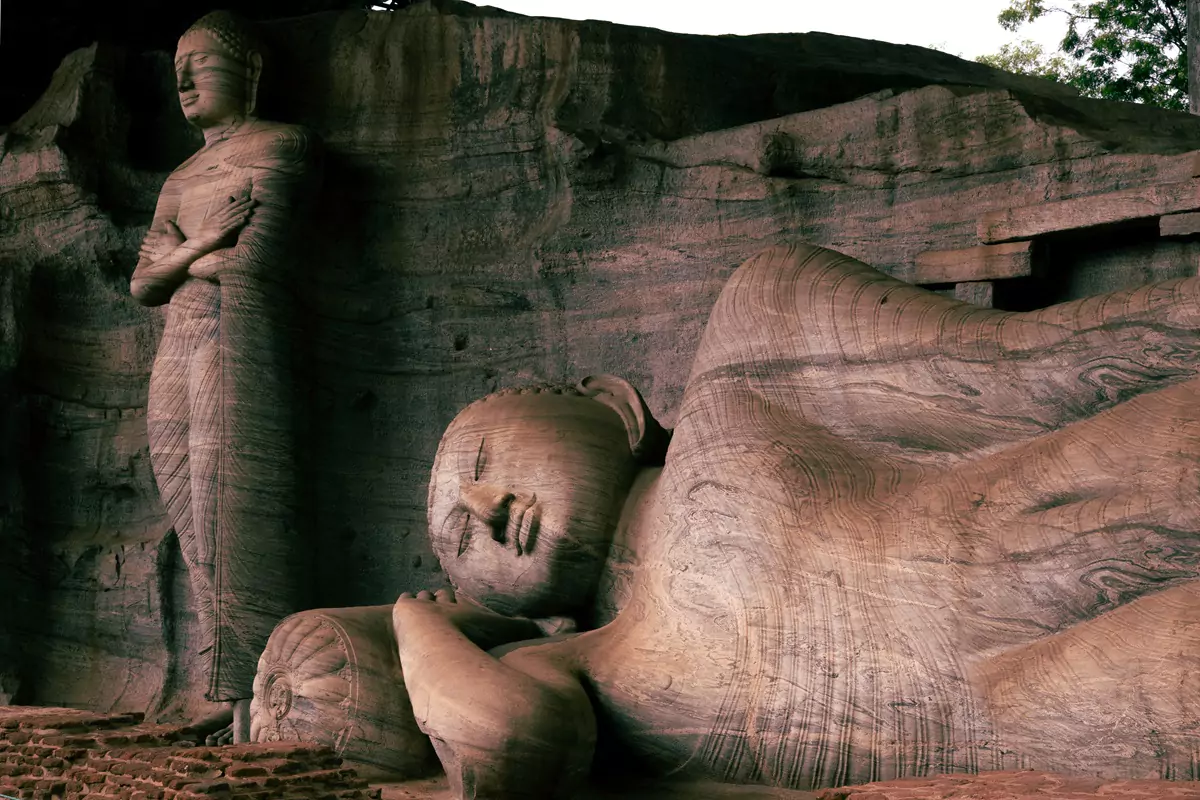
17. Sri Lanka is a Melting Pot
I loved the diversity in Sri Lanka, religion-wise. The over-used phrase ‘melting-pot’ is a totally valid one here, I think.
Understanding Sri Lanka | Sri Lankan people are predominantly Buddhist (around 70%), followed by Hindus, Muslims and Christians.
When you get off the plane at Bandaranaike International Airport, the first neighbourhood you see is predominantly Catholic. There are tortured Jesus statues all over the place – it wasn’t what I was expecting.
Far to the north, Jaffna is a Hindu stronghold, with huge a southern Indian influence. All around the country there are mosques dotted throughout the villages.
It’s a lovely, religiously tolerant country and reminds me why I’m lucky to live in the U.K. – diversity is privilege.
18. English is Widely Spoken in Sri Lanka’s Tourist Areas
The local languages of Sri Lanka are Sinhalese and Tamil.
Tamil | this language is more common in the north and is used by around 29% of people.
Sinhala | this is the most commonly spoken language (87% of people) and will be the one you’ll hear most when backpacking around Sri Lanka.
English | in tourist areas, you’ll never struggle to find somebody who speaks English. In fact, we found Sri Lanka to be one of the easiest places to casually communicate. Many people we chatted with had relatives in Europe, particularly the U.K., and spoke excellent English.
Travel planning tip | having said that, plan to learn a few words in Sinhala (it’s a really pretty sounding language) – ‘ayubowan’ is a greeting and ‘isthuti’ means ‘thank you’.
Often, even if something is written in Sinhalese, numbers will be in Latin lettering and Google Translate is your friend for everything else.

19. Tourism Has Only Recently Returned to Sri Lanka
Sri Lanka has been through a hard decade (actually, far longer).
A civil war; terrorist attacks; economic crisis; covid. The catastrophic, devastating results of these events have left the country with far fewer tourists than it deserves or needs.
I don’t believe in the whole ‘tourists save countries with their spending’ bullshit, but Sri Lanka really is a little dream-like destination that has been long overlooked and would benefit from your visit. Apart from a few overly touristed areas (like a few particular national parks and Sigiriya Rock), nowhere is so densely visited that it is uncomfortable, crowds-wise.
Travel planning tip | if you’re reading this and are on the fence about choosing Sri Lanka for your backpacking trip – stop thinking and just book!
Travel tip | Sri Lanka is *nothing* like Thailand, crowds- or tourism-wise (I often compare the two countries because Thailand is crazy popular with backpackers). In 2024, Sri Lanka received 2 million visitors, versus Thailand’s 35.5 million. Those numbers speak for themselves.
It’s an epic adventure and visiting will bring back some normalcy to a country that has unjustly struggled so much.
Backpacking Sri Lanka – Wildlife Stuff to Know
20. Elephants Are Not Your Friend
Okay, so it’s likely that you’re either someone who thinks that elephants are super cuddly (possibly based on all those terribly unethical Insta videos of people bathing with them) or you’re terrified of them stampeding you. I’m the latter, but I’ve met many people who are the former.
Wild, wandering elephants are reasonably common in Sri Lanka and they don’t always stay in the national parks.
We saw elephants on the road (six full-sized ones, in fact) and I do not recommend you get too close. They’re actually terrifying and I spent most of my time around them wondering if ‘murdered by an elephant’ would be an appropriate description for my tombstone.
Backpackers tend to take more risks than the average traveller so, I’m just saying, try not to get squashed by a house-sized elephant.

21. Don’t Be Afraid of Sri Lanka’s Dogs
The dog population in Sri Lanka is crazy enormous (but friendly). It has been reported that there are over six million street dogs in Sri Lanka, which is just unimaginable until you get there and see the swathes of them, everywhere.
We only encountered, sweet, friendly, often shy dogs, but they’re all over – outside your accommodation, sleeping on the roads, under your tuktuk – everywhere. I’ve never seen so many stray puppies.
Lots have injuries and some are quite sick, but never, in our experience, unfriendly.
Travel planning tip | although the dogs are friendly, rabies is prevalent in Sri Lanka. There are 25-30 deaths a year, some of which are from dog bites. We’d recommend keeping your distance if any dog seems even a little bit sketchy, and consider getting a series of rabies vaccines if you’re the dog-touching type.

22. Sri Lankan Monkeys Will Steal Your Shit
Apart from the numerous dogs, monkeys were our most commonly spotted animal in Sri Lanka.
The thing with monkeys is that, unlike dogs, they are evil incarnate, your ultimate nemesis. They live to steal your food, glasses, phone, wallet, underwear, car keys and water. Monkeys are *smart* and, bluntly, they can be arseholes. They can competently open a tuktuk, unzip your bag, and they *will* steal shit from your balcony.
Travel tip | I found them a little intimidating in certain circumstances during our trip. Be careful around the little sneaks. Give them a wide berth.

23. Consider Your Sri Lanka Safari Choice Carefully
Most Sri Lanka backpacker trips include a safari (or two). If you’re planning to do one, remember that any decision relating to animal tourism (of any kind) should be given particular care and attention.
Our Sri Lanka trip didn’t include one, because if you drive a tuktuk yourself, you can see almost everything, directly from the road (plus I’m not a fan of safaris).
Although most safaris take place in official national parks, this does automatically not make them ethical. There are many horror stories about animal welfare in Sri Lanka, even within the most popular and well-known parks.
Technically, there are rules, but these are often flouted to ensure visitors can see the rarest animals on demand. Animals have even been run over by over-zealous Sri Lankan safari drivers. The BBC has even previously described Yala National Park as a ‘Jeep jam’.
Positive action | please, please consider you decision carefully. When planning, carefully read reviews and recent articles, never choose a company that guarantees wild animal sightings, and avoid overcrowded areas wherever possible.
Plus, I hope it goes without saying, but never ride an elephant, Sri Lanka has too many chained up ones already. The same goes for watching dancing monkeys and snakes.
24. Mosquitos in Sri Lanka Are Not As Bad As You’d Think
We’d heard that mosquitos were a problem in Sri Lanka, but from our experience, this worry never came to fruition (during December). I think I was bitten three times in a whole month, which is amazing since I’m an absolute bug magnet and mosquitos flock to me like I’m royalty.
Dengue fever | this is prevalent in Sri Lanka, so be especially careful of daytime mosquitos (I think the dengue carriers are stripey?). I was extra worried because I’d had dengue fever in Laos the previous year, and it can be bad with a second case.
Malaria | Sri Lanka has been declared malaria free since 2016.
When planning your trip, we’d recommend bring some repellant from home. However, local shops also sell a pink bottle of lovely smelling deet-based bug repellent (the same one as in Thailand), but the label seemed to indicate it was 98% deet?
I used bug spray occasionally, but apart from a few places near standing water (there was one place in Hiriketiya where I was completely swarmed by the biggest mosquitos I’ve ever seen), it was all hunky dory.
Backpacking Sri Lanka – Other Things To Know
25. Don’t Avoid Sri Lankan Buffets
In most countries, the general food hygiene advice is to avoid any food that sits out all day, especially at buffets in warm climates. However, in Sri Lanka, a quality curry buffet is *the* place to be!
Travel tip | go against all your instincts and order that enormous, magnificent plate of curry, you won’t regret it, I promise.
We didn’t get ill, or even just feel a bit off, at any point on our Sri Lanka journey. Plus, we saw residents eat at curry buffets every day, the food was always top-notch, portions are outrageous and it’s one of the most affordable places to be on a backpacking budget.
26. Beaches in Sri Lanka >> Beaches in Thailand
Backpackers love beaches, almost universally. They also love Thailand.
So, I know this is potentially going to be a bit controversial, but beaches in Sri Lanka are *way* better than the beaches in Thailand (and we’ve been to a lot of beaches in Thailand).
Therefore, backpacking in Sri Lanka >> backpacking in Thailand (might be stretching the logic a bit here).
Seriously though, the beaches in Sri Lanka are second to none, in my opinion. They’re clean, wide, palm-lined and rarely crowded. There are almost no sketchy vendors to hassle you and plenty of places to grab a beer without parasol-covered beaches. The weather is often perfect for a beach day, plus there are affordable diving and surfing choices out the wazoo.
Travel tip | even if you’re not a beach person (I’m not), check out Sri Lanka’s beaches. They’re marvellous.

27. Sri Lankan Accommodation is Perfect for Backpackers
Most backpackers will appreciate this one – outside of Colombo, there are few very large resorts or bigger, branded hotels.
Generally, accommodation across Sri Lanka consists of small guesthouses and home stays. We were surprised if a hotel had more than ten rooms. This means it’s easier to meet people, chat with other guests and generally have a bit more of a personal experience, even if you don’t stay in the backpacker hostels.
They tend to be better for your budget, too.
Travel planning tip | we reserved all our accommodation in Sri Lanka on Booking.com. It’s our go-to because it has the most reviews, best prices and the most property listings.
28. Spicy Food Is Hard To Avoid When Backpacking in Sri Lanka
…except in the heavily touristy areas. But why would you want to, anyway?
Sri Lanka is a foodie paradise. In particular, the more budget, affordable food options. An enormous symphony of fantastic curries, accompanied by rice, can cost as little as 150 LKR (about 37p) which is just a budget backpacker’s dream.
However, rarely were these more affordable local options low on spice. If you pay five times the amount from a tourist restaurant, it’s almost certain that the spicy level will be more moderate, but it’s not great for any Sri Lanka backpacker budget.
Travel planning tip | get practicing with the spicy food before you arrive, if it’s not your thing.
29. Traffic in Sri Lanka is Unfairly Judged
Sri Lanka is one of those places where I think people picture Delhi or Cairo’s traffic, when in fact it’s more like, well, a tropical island.
The road users are really pleasant and considerate, apart from some bus drivers (seriously, I saw one nearly run down a full-sized elephant). They speed along without a care in the world, except for getting passengers to their destinations in a timely (but terrifying) manner. This means tuktuks, bicycles and pedestrians are all fair game.
However, if you’re a backpacker on a bus, at least you’ll be getting to where you need to be, at speed (sort of).
Travel planning tip | we’d recommend going luxury backpacker style and getting yourself your very own self-drive tuktuk. Then you get to make your own judgement on the traffic in Sri Lanka.

Final Thoughts – Planning a Backpacking Trip in Sri Lanka
Travelling around Sri Lanka is an epic adventure, whether you’re heading out for your first trip, or your fiftieth. It’s welcoming and affordable; straightforward and safe. More importantly, Sri Lanka has epic beaches in droves, adventurous hiking, cultural sites and exudes low-key social vibes by the tonne. For some unknown reason though, it’s passed on by almost all the budget travellers on their way to southeast Asia, despite its (mostly) ideal climate, affordability and incredible food.
We loved our experience of backpacking in Sri Lanka a *surprising* amount. I’d set absolutely no expectations for this trip because it was initially added purely as a stopover between the Middle East and southeast Asia. Somehow, I’d also seen very little in the media about it as a tourist destination. This meant I was visiting the country almost blind (with my usual lack of planning research) and ended up discovering something spicy, exciting, novel and unique every day I was there.
At the end, I’m left with the squeak of the tuktuks, the flower-patterned dresses, the bright umbrellas and the smell of curry leaves. Those’ll stay with me for a while. It really is a remarkably sensory country to travel around.
We hope you have as fantastic a time as we did planning your backpacking trip in Sri Lanka!
Hi, thanks for visiting our blog! If this post has been of help to you, or you’ve just enjoyed our random ramblings and musings, say thank you by buying us a coffee! It helps keep The Restless Beans blog up and running.
Thank you, Claire + Nick


A great blog….very informative and a wonderful help as I am planning a 3 week trip in August.
What year did you visit? Good to know that you visited in December and it wasn’t crazy busy like peak times in south east Asia, but did you visit a few years ago or more recently? Thanks!
Hi!
We visited recently, in December of 2023 🙂