

31 Essential Morocco Travel Tips for First Time Visitors
Scribbled by Claire ◊ 01 Nov 2024
Are you planning a first-time visit to Morocco? We spent six weeks travelling across the country having nothing but positive experiences, and want to share all the tips, tricks, facts and oddities that we figured out along the way to make your trip to best it can be!
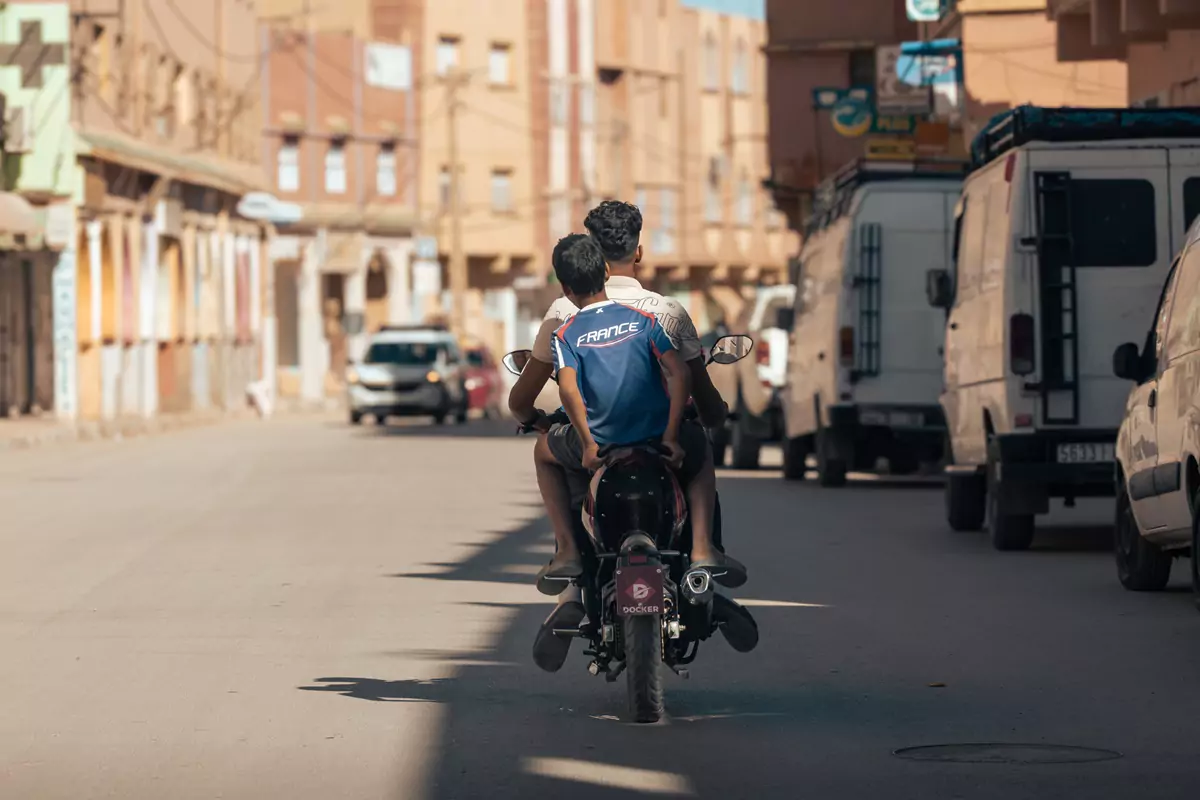
Morocco is an exceptionally scenic and astonishingly hospitable country. With sprawling, untamed wilderness, 3000 kilometres of coastline, a distinctive native cuisine, unparalleled architecture and affable residents, it is hard not to fall for its charm.
However, despite its unwavering charm, there are still lots of elements of a trip to Morocco that you should be prepared for.
Although our six weeks in Morocco was one of the best journeys we’ve ever taken, there were a lot of learning curves and things to figure out on the way (and before we arrived!).
It’s a truly unique destination with so much to see, and this Morocco first-timer’s guide will help every visitor experience the best of it!

IN THIS GUIDE //
Essential Morocco Travel Tips
MY THOUGHTS
MOROCCO TRAVEL TIPS
LOGISTICAL STUFF
MONEY TIPS
HOW LONG TO SPEND IN MOROCCO
CULTURAL THINGS TO KNOW
THE LEGAL STUFF
GETTING TO MOROCCO
SAFETY SCAMS AND ETHICS
FINAL THOUGHTS – MOROCCO TRAVEL TIPS
This post may contain affiliate links. If you book through these links we may make a small commission at zero cost to you. It helps us pay for the upkeep of this blog. Thank you!
MY THOUGHTS ON TRAVELLING MOROCCO
Morocco is often maligned by an overabundance of comments relating to safety, scams, sexism and hassle.
I’ve heard from numerous potential visitors to Morocco who were hesitant; ones who say they would be too uncomfortable to travel without a guide because it would not be safe. This pre-emptive fear must have come from somewhere – I had some myself before visiting and it actually all came from random, often anonymous, online sources.
Although it is obviously possible to have negative moments in Morocco, we think that it’s unlikely, based on our anecdotal experiences. Most Moroccan people are honest, helpful and welcoming to visitors.
However, there are some things we always do, ways we behave, and stuff we look out for, which probably reduces potential hassle. There are also a lot of things we figured out as we went. So, included below are a bunch of useful, actionable tips and various logistics that will make your trip easy-breezy, fun and more comfortable.
–
RELATED | 15 MOST BEAUTIFUL CITIES IN MOROCCO

Helpful Morocco Travel and Planning Tips
Below are all our hints, tips, facts and curios about Morocco, split into categories:
Logistics | like language, connectivity, taxis, water, plugs, GPS, weather
Money | including ATMs, tipping, cash
Culture | about clothing, riads, Fridays, medinas
Legal stuff | like sharing a hotel room, visas, mosques, alcohol, prescriptions
Safety, scams and ethics | including helpful men, animals, photography, pickpockets, guides
The Logistical Stuff
1. Morocco’s Various Languages
In Morocco, the two main languages you will hear and see are Arabic and French. You will also likely see signs in Amazigh (local Berber language) too (the lettering is really beautiful).
It is worth noting that Arabic in Morocco is not like Arabic elsewhere. The language spoken in Morocco is a specific dialect called Darija. I’m told this can be almost unintelligible to Arabic speakers from outside the Mahgreb region!
Occasionally, someone in a medina or a riad will speak English, but for the most part, do not expect anyone to speak conversational English outside of the tourist trail.
We’d recommend using Google translate (the camera function works particularly well for things like menus).
2. Staying Connected
If you intend to use your mobile phone in Morocco, the main service providers are Orange, Maroc Telecom and Inwi. Sim cards can be bought at the airports and in various shops and mobile phone stores in the cities.
For our trip, we each purchased a 20 GB sim card with Orange at the airport for 200 MAD, which lasted 30 days. We then topped these up in an Orange shop in Marrakech train station. You will need your passport when purchasing the sim card. Our Orange sim worked really well, even out in very remote areas (although there were a few sections with no signal, understandably).
E-sims, like Airalo, are also an option and may be better suited for shorter trips. We use Airalo quite a few times every year and they’ve been perfect every time.
Every riad and hotel we stayed in also offered WiFi, however it wasn’t always the fastest and sometimes didn’t reach the bedrooms (the building walls can be really thick!). We relied on our mobile data, a lot.


3. Taxi Apps in Morocco
If you want to avoid haggling with Moroccan taxi drivers (some people love it, some people hate it!), then we’d recommend using a taxi app.
There are several online taxi apps available in Morocco, such as Careem, Roby and Indrive. We didn’t have any need for taxis in Morocco (public transport is perfectly decent), however our friend used Careem a lot and had no issues. The apps don’t work throughout all of Morocco yet, so make plans accordingly.
Uber is not available in Morocco.
4. Staying Hydrated (Without Plastic)
In larger Moroccan cities, the tap water is safe to drink. However, a lot of online sources claim it isn’t.
Major towns in Morocco have water treatment plants, and the water is considered safe to drink. It’s definitely safe to brush your teeth with and nothing to worry about in the shower, for example. In more rural areas, it is possible that the tap water might not be treated.
Obviously, even if the water is declared safe, it is possible to have an upset stomach purely from drinking water you’re not used to – the same as any country (my body does not like Spain’s water, for example!).
If this is something you’re concerned about, use a water filter, like Sawyer, Life Straw or Grayl. We use a Katadyn BeFree filter for all our drinking water needs and it’s amazing.
Try to avoid buying plastic bottled water, it’s such a waste, terrible for the environment and, in the long run, costs you money.
5. Powering Up (Electrically)
Morocco uses two variants of the same electrical plug, types C and E. One is earthed and the other is not.
Type C plugs have two round prongs and type E plugs have two round prongs with a socket for the earth pin. The power supply in Morocco is 220 volts and 50 Hz, so if you’re from the United States, you’ll need a converter.


6. Hitting the Road in Morocco
We love self-driving in Morocco and think it’s the best way to get around! It’s interesting, because some people we’ve spoken to did not even consider it as an option! So, if you’d consider renting a car in Europe, don’t rule Morocco out.
For all the information on driving around the country, including parking, drivers, road quality, plus the debunking of a few myths and legends, check out our detailed Morocco driving guide.
If you are unable drive, public transport is pretty good in Morocco. We took trams, trains and buses along with renting a car. If you want to book your transport routes in advance or are on a tight schedule, our favourite transport aggregator website 12GoAsia has thousands of routes that your can check out. It’s great for getting representative prices for your journeys and reading transport reviews, too.
7. GPS and Navigation
We used Google Maps exclusively in Morocco, for all our driving and walking navigational needs.
It worked perfectly and got us to everywhere we needed to go, even in the medinas. However, no matter which GPS app you choose to use, they won’t work perfectly inside a medina, especially the covered areas in places like Fes. Just use it to make sure you’re heading in the correct direction – you’ll end up where you need to be eventually!
8. Weather in Morocco
Morocco has a varied climate, depending on the area of the country and the season. The elevation also makes an enormous difference – did you you know you can ski in Morocco, not far from the Sahara Desert?
Generally, the shoulder months in spring and fall/autumn are the best and avoid the most extreme weather. However, it’s important to consider your exact locations and activities. For example, I would not want to climb Mount Toubkal in the depths of winter, nor visit the desert in summer. If you dislike rain, the wetter season is roughly between November and March.
The Moroccan coast tends to have the most temperate, pleasant conditions year around.

CAR HIRE FOR YOUR MOROCCO TRIP
We always rent our vehicles all over the world, including our recent trips in Oman, Saudi Arabia, Tunisia, Jordan and Morocco, with Discover Cars. They’re often the most affordable, plus they paid out immediately on an insurance claim we made when our car took some heavy damage in Sicily. Find out more about why we love them so much!
–
TAKE A LOOK BELOW OR CHECK CAR RENTAL
All the Money Stuff
9. ATMs and Charges
ATMs are everywhere in major cities, you’ll never be without one. In smaller towns, we found there were usually one or two. In very rural areas, we’d stock up on cash before we left. Google Maps is mostly pretty good at marking ATMs – so search for them in your area (or where you’re about to travel to). If you’re in doubt about whether the ATM is real, check Google Satellite view and uploaded photos.
During our trip, we used a lot of ATMs and never needed any currency exchanges. They all worked perfectly and never ran out of money.
The cash machines generally charge around 20-40 MAD per transaction and often have maximum withdrawal limit of 2,000 MAD at a time. The Al Barid ATMs didn’t charge us for cash withdrawals.
For more information on what we spent during our trip, check out our detailed Morocco budget with lots more information on money in Morocco.
10. Morocco’s Dirham
The currency in Morocco is the dirham (MAD). This is a closed currency, so it is generally not possible to get outside of the country. However, people have reported that they have been able to occasionally source it from outside the country, however there is really no need to do this. Also, as of 2024, you are allowed to being in and out a maximum of 2,000 MAD.
The best option is to use an ATM after arrival or a currency exchange.
Currently, one United States dollar will buy roughly 10 MAD and one UK pound is worth around 13 MAD.
11. Tipping (Baksheesh)
Tipping culture in Morocco is similar to tipping in many European countries. The expression ‘Baksheesh’ is often used as another term for tipping (and sometimes charity or bribery!).
Tipping is a great way to show appreciation in Morocco, but large tips are in no way an expectation. As a rule, when tipping, just round up or add 10% in smaller, local restaurants. Round up the taxi fare if you‘ve had a nice ride. In gas stations, we would round up to the nearest five when paying cash or pay an extra flat five MAD when our windows were cleaned.
Over-tipping to excess is highly detrimental to economies, for example in Cuba, where tour guides are paid more than nurses, lawyers and doctors. Ignore any crazy suggestions online suggesting to tip in large, especially US dollar, values. It’s almost always way too high (America has a unique tipping culture, but that shouldn’t be applied to the rest of the world without consideration).
An American suggested online to tip $50 *per passenger*, per day, for a driver and guide in Morocco. That is absolute madness and could easily result in a 50-100% (or way more) tip.


How Long to Spend in Morocco
The best amount of time in Morocco is the amount you have!
⬩ For a short, single-city break, four days is enough.
⬩ To see several Moroccan cities and a trip to the coast or desert, 7-10 days is great.
⬩ To explore most of the country, it will take more than a month.
⬩ If you are looking for an alternative trip, consider driving Morocco’s coastal route – this would take around 2-3 weeks. A journey around the Atlas Mountains from Marrakech would take around two weeks. A third option is a 10-day trip around Morocco’s north.
–
Cultural Hints and Tips
12. Appropriate Clothing in Morocco
This is a contentious issue – some people will say that you can wear whatever you want in Morocco, others recommend dressing conservatively and covering elbows to knees. Morocco is a Muslim country and generally that means women dress modestly (and men too, to a lesser extent).
We think that the issue is a little more nuanced and it thoroughly depends on where you are. There are highly conservative towns such as Taroudant where I would never be comfortable dressing in anything with less than my full arms and legs covered. In more touristy towns and near popular beaches around Agadir, for example, it is possible to wear shorts and a t-shirt.
Personally, we dress on the conservative side and always carry a sarong or scarf. This is because you’ll rarely ever see local women dress in strappy vests, small shorts and low-cut tops. I just want to fit in and be respectful when I travel, rather than challenge established norms.
Plus, even in the modern cities, by dressing ‘provocatively’ you’ll probably be offending someone, even if they don’t tell you.
13. Arabic is your Friend
We don’t speak French or Arabic. I know a little tourist Arabic from extended stays in the Middle East, and Nick knows some leftover French from his abysmal high school education.
When we arrived, Nick would speak bad French to people, which was fine, and nobody had an issue with it.
However, I didn’t really know what language to use, so I listened for how residents spoke to each other, and I mostly heard Arabic (very rarely French!). So, I spoke my tiny amounts of Arabic.
Responses to this were so delighted and enthusiastic, it was actually funny. I had a waiter sit down and teach me loads of phrases in a busy Marrakech restaurant because he said that usually, all he heard is French and English (I assume he meant from white people).
From then on, we would exclusively thank people in Arabic, greet people in Arabic and it was such a nice experience, always being responded to so warmly. We genuinely noticed the difference, especially in the southern part of Morocco.
14. Choosing a Riad
In Morocco, a riad is usually an old historic home, converted into a guesthouse, bed and breakfast or hotel. These properties are usually found in the old town parts of a city and are often lavishly, intricately decorated. Most tourists will stay in at least one during their trip to Morocco.
For more information including some history, what a riad is, what to expect and how to choose the best one, check out our detailed post on Moroccan riads.


15. Getting Lost in the Heart of Morocco’s Cities
The medina in a Moroccan city is the name for the old walled town area. This is where most visitors spend their time and the location of all those characteristic pictures of elaborate buildings, labyrinthine alleys and animated markets.
Generally, no cars are able to access the medinas and they can feel a little claustrophobic and tangled. Staying in them is a distinctively atmospheric experience.
Most older cities in Morocco have a medina, but the most exciting are found in the Imperial Cities of Fes, Marrakech, Meknes and Rabat (the medina of Fes has nearly 10,000 alleys, hundreds of mosques and is the oldest still-inhabited Islamic city in the world!). Tangier, Casablanca and Essaouira all also have medinas worth visiting.
For more inspiration, check out our post on the best historical landmarks in Morocco.
16. Fridays in Morocco
Friday is considered the holiest day of the week in Morocco (as with all Islamic countries) and mosques will be much busier as a result. It is still a working day, but some business opening hours may be affected, often some smaller businesses will be closed between mid-morning to early afternoon.
We noticed that Morocco shut down on a Friday a lot less than other Islamic countries we’ve visited. It was not really something that affected us, as tourists.
HASSLE IN MOROCCO
Some people talk about being hassled incessantly in Morocco, particularly in the medinas.
We did not find this to be the case on our trip, even in busy places like Marrakech. I’m quite a smiley (white, female) tourist who cheerfully greets everyone in her path, so you’d think I’d be a prime target!
However, we’re also hyper aware of our surroundings and try not to give off helpless or lost vibes that could invite aggravation. For example, if we are lost, we wouldn’t ask for directions or use our Google maps in an area where people might approach us (nearby tourist markets, for example). I always walk with purpose when I don’t want people to speak to me.
We are also very firm with various versions of ‘no thank you, we do not need’, always spoken in Arabic, when approached. This has been effective, without exception, and we’ve never had anyone bother us.
I also never felt any threat or safety issues as a solo female when I was alone in Morocco. There were no inappropriate comments or advances from men. I have heard from women who have had differing experiences and I believe every one of them, however I just want to say that sexual harassment in Morocco isn’t inevitable. It shouldn’t matter, but I do dress very conservatively.
I’m also aware that everyone has different limits, and what constitutes hassle is subjective.
–
RELATED POST | DRIVING IN MOROCCO GUIDE
The Legal Stuff
17. Sharing a Hotel Room
Morocco is a Muslim country and has (arguably archaic) rules on who can share a hotel room.
According to law, unmarried Moroccans of the opposite gender are unable to share a room, and a lot of traditional hotels and riads are pretty strict on this. So, if someone in your group is a Moroccan national, bear this in mind.
However, if you are a foreigner, it’s no issue. Nobody asked us for a marriage certificate in any places we stayed. If you’re in doubt, Booking.com has a questions section and this topic is often covered in there.
In terms of LGBTQ travellers, we can’t comment from personal experience in relation to Morocco’s hotels. We know plenty of LGBTQ people have recently enjoyed trips around Morocco, though.
18. Boring Visa Stuff
As of 2025, citizens of 70 countries can travel visa-exempt to Morocco for up to three months at a time. To confirm what visa you may (or may not) need, check the official Moroccan website. The site is currently available in French, Arabic and English.
Always check your government website for up-to-date entry requirements, too.
19. Immigration Drama
Make sure you bring the address of your first night’s accommodation or have one in mind if you haven’t booked anything. This is not listed as an entry requirement on the UK government website, but it’s definitely needed.
We arrived into Marrakech airport and the immigration officer was asking for the address for our first night’s accommodation, and we couldn’t remember (organisation is not our strongest skill). He would not let us through and I, for the life of me, had no idea what it was.
We sat down on the floor and tried to get the airport Wi-Fi to connect, to no avail. We were there around an hour before a different immigration man called us over and begrudgingly let us through!
Just a general observation that Marrakech immigration was far, far from pleasant. One of the least friendly (along with its neighbour in Tunis, and also Detroit).

20. Lèse-majesté
Along with several other countries, such as Thailand, Italy and Russia, Morocco has a “lèse-majesté” law which means speaking bad of the ruler is a punishable offence.
This includes, but is not limited to, mocking, criticizing and defacing pictures of the king.
21. Entry into Mosques
In Morocco, non-Muslims are not allowed in active mosques. This means you can only have a look from the outside (usually you’re allowed on the grounds, but not inside the buildings).
The only exception to this is the outstanding Hassan II Mosque in Casablanca, which offers guided tours every day of the week with reduced tours on Fridays. This is one of the largest in Africa and is one of my Morocco highlights.
Remember to dress appropriately, even though you are not allowed indoors. Cover shoulders and knees, and wear a headscarf if you want to blend in (as a woman).
22. Alcohol in Morocco
Alcohol is legal in Morocco – it even produces its own wine, spirits and beer! However, there are restrictions on its availability:
◊ Alcohol in Morocco can only be bought in specialist shops or in some of the larger supermarkets in major cities.
◊ You may need a passport when buying alcohol.
◊ The sale of alcohol is prohibited during Ramadan.
◊ Drinking alcohol in public is illegal everywhere in Morocco. If you do drink, do it in a licensed hotel or bar.
Be aware that Morocco has much stricter drink driving limits than most countries. The blood alcohol limit of 2g/l is four times less than in United Kingdom, for example.
23. Legal Prescriptions in Morocco
Some prescription medicines might not be legal in Morocco. It is always best to check with the relevant authority (Ministry of Health and Social Welfare) to avoid delays or medical complications from confiscated drugs. As of writing this, the official Moroccan MOH website was down, however some information can be found on the International Narcotics Control Board website.
We’ve take non-prescription medications like paracetamol, loperamide and ibuprofen into Morocco with no issues.


Getting to Morocco
Most people arrive in Morocco by air. There are a plethora of international airports in Morocco (it has a surprising number of major cities!). These airports have all the usual amenities, including car rentals, currency exchanges, public transport links and more.
We search for all our flights on Skyscanner to find the cheapest deals. There are frequent, unbelievably good value flight routes to Morocco from mainland Europe and United Kingdom. So, if you can get a great deal on a flight to London, for example, it is possible to fly to Rabat, Marrakech, Agadir, Fes, Tangier and more, all for under £30 if you book in advance.
If you are flying from further afield, it is definitely worthwhile considering a European stopover as part of your journey.
There are also ferry routes from Europe to Morocco if you are bringing your own car or just want to avoid flying. We took a ferry from Palermo to Tunis in Tunisia recently and it was a great way to avoid an expensive flight.
–
Safety, Scams and Ethics
24. The Helpful Men
There are loads of little harmless scammy behaviours that you’ll notice when out and about, especially in the tourist parts of Moroccan medinas. The most common are the ‘helpful’ men giving directions.
We were approached so many times by men and children trying to direct us down random alleys, offering to show us the way to places we didn’t want to go and generally being (un)useful. All these people will charge you for their services and occasionally, we’re told, lead you to an incorrect location.
We just politely ignored everyone and used our phone for navigation – this has always worked.
Occasionally, people will walk with you like they’re guiding you, even after you say no. We will happily chat to anyone, but if we firmly said no to their services at the beginning, we do not pay at the end. Otherwise, you’re just paying someone who is fundamentally just trying to intimidate you, which is basically rewarding a bully. Don’t do it.
25. Ignore the Monkeys and Snakes
Morocco has an animal welfare issue. I wouldn’t say that the entire country is rife with it, but it’s commonly found in the small pockets where tourists exist.
In places like Jamaa el Fna, in Marrakech, there are chained, dressed-up monkeys in cages and charmers with defanged snakes. Old films, like Indiana Jones, kind of romanticise images like these, but when you see it in reality, it’s grim.
There are also badly injured, skinny horses, some for riding, others for pulling carriages. Someone I know saw one collapse, and it was dragged to its feet and forced to continue working. Likewise, with camels – be very wary of interacting with skinny, unwell looking animals. (The best option is to opt out of all animal-related tourist activities, but that is for another post).
All these animals are put there solely for the benefit and entertainment of tourists (and to make money). If it bothers you, do not interact with them; do not entertain them by even looking their way. Essentially, the only people that keep the monkeys in cages are us, the visitors, who fund it.
26. Cats and Dogs
A visit to Morocco means coming to terms with an enormous amount of street animals in varying conditions.
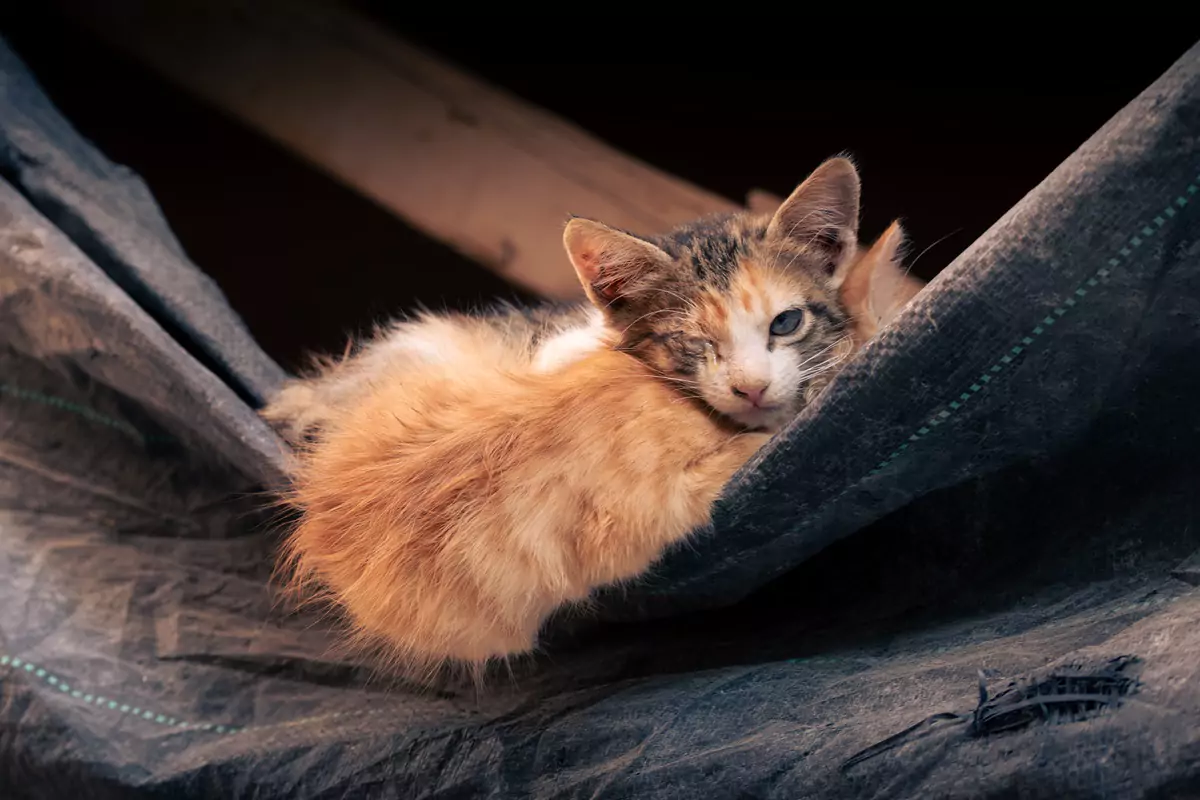
Morocco has a lot of street cats and dogs, in particular. Cats are often treated like royalty, being fed on the street and welcomed by residents. Dogs are shunned and worse, occasionally abused. We mostly saw cats and kittens, some with gammy eyes and others with wounds. It’s a reality of visiting the towns and cities of Morocco.
We had the loveliest dog follow us for two days in Fes, around the medina (she’d wait outside our riad and we called her Sausages). She’d recently had puppies and was the most docile, friendly animal. We saw first-hand how residents of the medina treated her – it was sad and tiring, keeping her safe with us.
27. The Residents of Morocco’s Medinas
Although several of Morocco’s medinas are UNESCO designated sites, they are not just a tourist destination.
The warrens of narrow alleys and twisting tunnels are predominantly home to countless households, where thousands of people do their laundry, grow plants and their kids go to school. The main streets may be noisy and hectic, but behind those thoroughfares are large swathes of quiet, residential buildings.
Sometimes, it seems like tourists forget this (in our experience).
Always be aware of your surroundings. If it seems like you’ve wandered into a residential dead end (you can often tell from the plants and buildings), turn around, and keep your voice down. Do not point your camera or get in the way of people. Imagine if your home street was full of tourists, every day. Always behave the way you’d hope they would.

28. Watch Your Pockets
Ok, this title is a bit dramatic. It should probably be something like ‘You don’t need to watch your pockets’.
As with any major city, especially in Europe, you should watch your pockets in busy, touristed areas. Theft isn’t hugely common in Morocco, but it can happen.
In six weeks of travelling around Morocco, there were only two places where we had issues and both were in mega-touristy spots. The first time was in the Fes Medina, where a back trouser pocket had been unzipped, two times. The other time was at Ouzoud Falls, with the same back pocket, while we were both taking photos.
Nothing was taken in either instance because we don’t keep anything there, but it shows that it can happen, occasionally.
29. Cameras and Photographs
As in any country, be respectful of how and who you photograph. Also, be aware of the story that your photograph is telling (try not to propagate unnecessary bias). There will always be arguments about what is and isn’t appropriate with street photography, but just be mindful of your choices, especially cellphone snapshots which are rarely taken with much thought.
We carry two large mirrorless cameras with substantial lenses and didn’t have any issues with them, but we hide our cameras in a casual shoulder bag when walking around (we find large cameras make people feel uncomfortable). Generally, we found that the Moroccan people we directly interacted with were very keen to ask about our camera and even be in our pictures!
Women and children in Morocco, in particular, are off-limits without permission.
Cats and dogs are fair game, though. There are millions of those!
Note | if you are looking to up your photography game and want to take more sophisticated shots, have a quick peek at our travel photography hints and tips.
30. You Don’t Need a Guide
A guide was not required anywhere in Morocco during our trip (apart from the Hassan II Mosque, mentioned above). People will say that you must have a guide for the medinas, or you’ll get lost and scammed. You won’t, I promise.
If you want an in-depth introduction to the history of an area then, by all means, take a guide, but there is no need for one. We use Get Your Guide for any tour bookings around the world.
Guides will be offering their services at almost every site around Morocco, but none are mandatory and most are very kind and not pushy at all.
31. Pinch of Salt
Everything we read before coming to Morocco impressed upon us the need to be vigilant, that there would be drama around every corner. Whether it was dangerous drivers, scams, impossible parking, animals on the road, pushy touts, harassment or theft – there would be trouble no matter where we went.
Whereas, in truth, Morocco was an amazing, easy-going experience with almost no negative moments, and we can’t wait to go back.
Ensure that whatever you read about Morocco, it’s from a trustworthy source and that instances of issues are backed up by lived examples. Anything else is just hearsay.
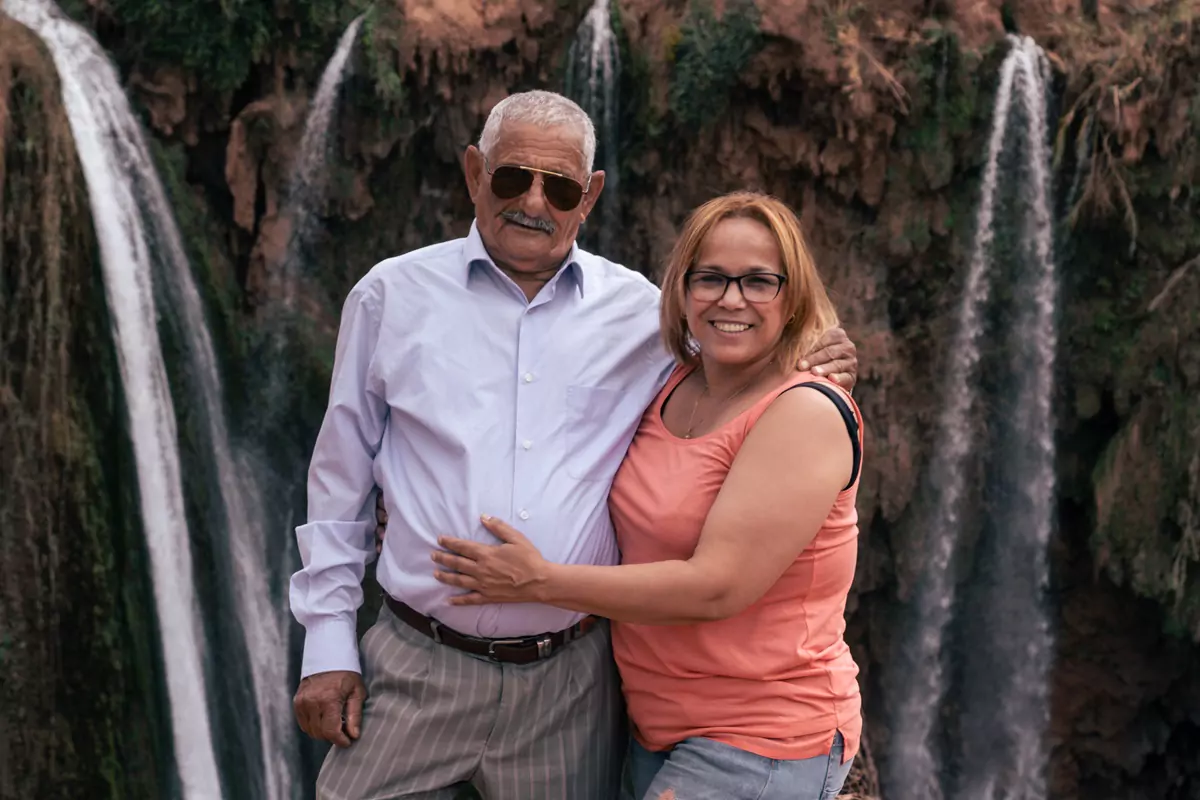

First Time in Morocco – Where to Next?
If you are considering an epic trip to Morocco, don’t hesitate to book your flight (or ferry!).
It’s a fantastic, diverse country with great food, scenery and people. Our trip there was genuinely flawless, a statement that I’ve rarely been able to make after six weeks in any other destination.
For some extra inspiration, have a peek at our favourite historical landmarks in Morocco, a guide to visiting Morocco’s most beautiful village and everything you need to know about staying in a riad.
We hope these travel tips are helpful and that they provide some value. Have a fantastic getaway!
Hi, thanks for visiting our blog! If our free content has been of help to you, or you’ve just enjoyed our random ramblings and musings, say thank you by buying us a coffee! It helps keep The Restless Beans blog up and running.
Thank you, Claire + Nick


Hi Claire and Nick,
I have read most of your articles now and want to say thank you for all of the information you have provided! Out of curiosity, do you remember the location of the photograph that serves as the thumbnail for this article link? I love the minimalistic little doorway along a blank wall.
Hi Brad,
I’m super happy you found our posts helpful! I think it was in the Kasbah in Rabat?
There are quite a few places just like that though, from memory!
Cheers, Nick