

· SOUTHEAST ASIA ·
21 Quirky Tips to Know Before Backpacking Singapore
Scribbled by Claire ◊ 01 Sep 2024
How much do you know about Singapore? If it’s anything like me before I visited, it’s not much! We found that this was the case for most budget travellers – most just hopped off a plane, checked out the famous Supertree Grove, then left. Here, we’ve got a bunch of cool stuff we learnt, plus some quirky facts you probably don’t know, to make you backpacking trip a bit more interesting!
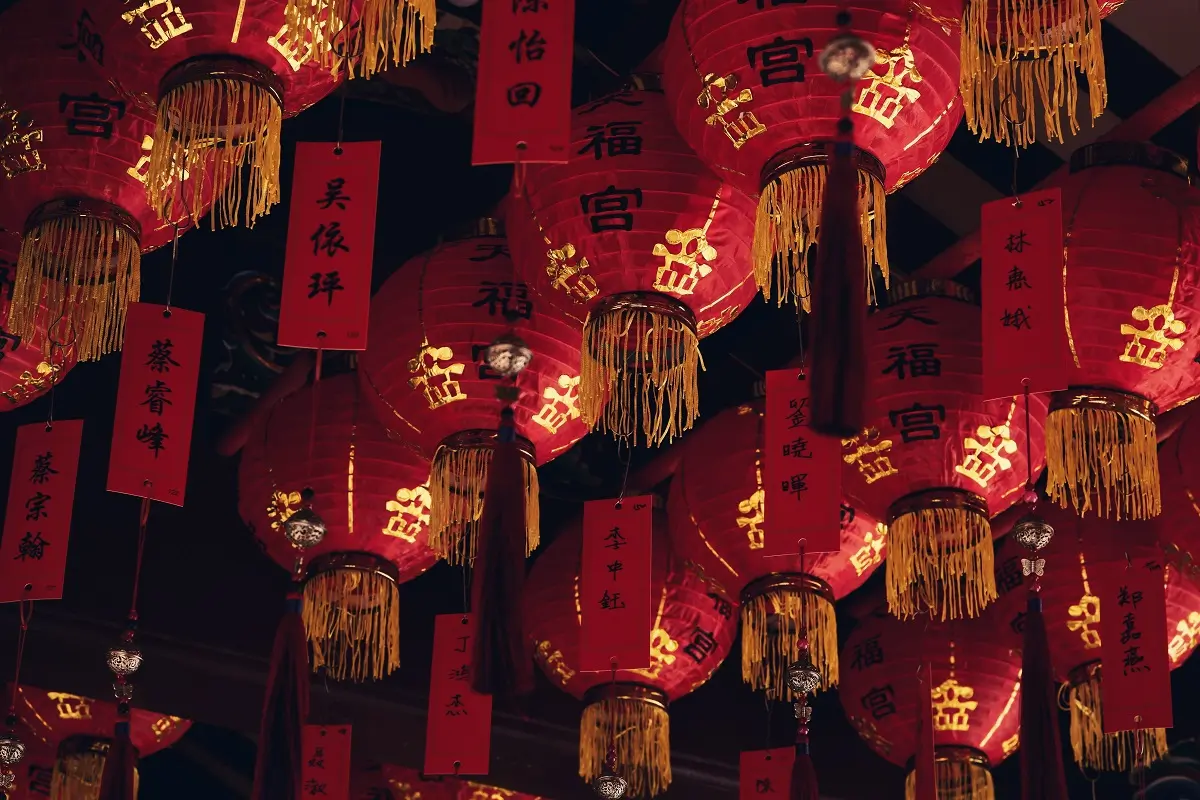
Singapore; the ultimate layover destination.
Seldom do backpackers visit Singapore without having an onward travel plan. Case in point – we just spent four days backpacking in Singapore on route to Hanoi, Vietnam.
This tiny city state, less than half the area of London, was formed in August 1965 and is now home to nearly six million people. Singapore hosts 1.5 million visitors a year, many of them budget travellers on their way to other destinations in southeast Asia.
With many only briefly visiting, we found that lots of backpackers didn’t really know much about the destination of Singapore. To be honest, this was the case for us, too – arriving at the airport and heading to our hotel, it dawned on me that we knew next to nothing about the rules, social norms, customs or even the language people spoke.
In our four days, we learnt a whole lot. These are some of the things you really need to know before you arrive to get the most out of your Singapore backpacking trip. They can help you save money and understand the country a little better!
This post may contain affiliate links. If you book through these links we may make a small commission at zero cost to you. It helps us pay for the upkeep of this blog. Thank you!
BACKPACKING SINGAPORE – AVERAGE PRICES
Cost of a beer – 12 SGD (9 USD)
Cost of a dorm bed – SGD 45 (34 USD)
Annual income – 70,800 SGD (54,000 USD)
Hawker meal stand – 6 SGD (4.60 USD)
Coke can – 1 SGD (0.77 USD)
MRT journey – 2 SGD (1.50 USD)
–
RELATED POST | 2 DAY SINGAPORE STOPOVER ITINERARY
The Legal Stuff
1. Singapore Uses Caning as a Punishment
Although Singapore appears to be a progressive, modern country, many crimes are still punishable by caning. The unusual punishment (also used in Malaysia and Brunei) is measured in ‘strokes’ and can be applied to crimes such as drug abuse and illegal money lending, along with overstaying your visa!
The warnings around the city do not shy away from the fact that this is a normal form of punishment – it is mentioned on most advertisements about crime.
Backpackers are more likely than the average tourist to participate in illegal activities, such as drug use or unruly drunken behaviour. If this is you – be careful – Singapore has a zero-tolerance policy.
2. The Rules on Chewing Gum in Singapore
I’d known this one for years but didn’t really think about it on my way to the country (I don’t chew gum but if you do, be aware!). Gum has been illegal since 1992 and although it is not punishable by caning (see above), importing it is subject to fines of 10,000 Singapore dollars and imprisonment of up to a year (for your first offense).
If you’re visiting Singapore, remember it is technically not illegal to chew gum in the country, just to import it and sell it.
The streets are so clean because of this rule though!
3. Flush the Toilet
Hopefully this one is just common sense, but still, I thought I’d just mention that apparently you can be fined for not flushing the toilet in a public bathroom.
As an attempt to instil a sense of cleanliness in the population, I was told that you can be fined 500 Singapore dollars and if you don’t pay, you can be sent to jail. Getting prosecuted for this is never likely to actually happen, although I’m personally hugely in favour of this rule!
4. Don’t Eat or Drink on Public Transportation
Coming from the United Kingdom, I rarely think about what I should do on the London Underground. If I have a sandwich, I’d just eat it wherever I was (although considering how disgusting the London Tube is, this may be a terrible plan).
However, in Singapore, there are strict rules on eating and drinking on public transportation. You can be fined 500 Singapore dollars and don’t even think about bringing a durian on the underground (personally, I would advise never taking a durian anywhere if you want to make friends). This, unsurprisingly, also applies to the local buses.
Over four days backpacking in Singapore and more MRT journeys than you can count, we only saw one person with any form of food and drink on public transport (and it was a sealed coffee). The rules seem to be taken seriously.
5. ….or Spit
It’s against the law in Singapore, but also, just gross.
Be a good backpacker and don’t do it.
BUDGET ACCOMMODATION IN SINGAPORE
Accommodation is one of the trickiest issues for backpackers in Singapore. The average room price is high and there is no way around this, really.
The most popular way of travelling on a budget in Singapore is to sleep in a hostel or a capsule/pod-style accommodation. Even then though, it’s not cheap!
Wink Capsule Hostel (Wink at Mosque Street and Wink at McCallum Street) | these are some of the better rated hostels in Singapore on Hostelworld, with several locations and hyper modern, private dorm beds. They aren’t super cheap, but we think the price tag matches the reviews, though.
A hostel I particularly love is KINN Capsule. This one has a super cool design, in a central location between Clarke Quay and Raffles, and is just pretty.
There are loads of IBIS Budget hotels across Singapore, which have very reasonable private room rates, and moderate reviews. One of the better rated ones is the IBIS Budget Singapore Crystal. These are a good option if you don’t want to stayed in shared accommodation.
–
The Money Stuff
6. Alcohol in Singapore is Insanely Expensive
Singapore is expensive for a backpacker, sure, but what is less well known is that alcohol is super-pricey too! According to some studies, Singapore has Asia’s most expensive beer and in a recent beer index, was judged as one of the most expensive in the world.
Despite 99 percent of products entering Singapore duty free, import taxes on alcohol into Singapore are very high. Several sources call it a ‘sin tax’, one that the United States government puts down to ‘social and/or environmental reasons’. All alcohol is also subject to a seven percent Goods and Services Tax too, like most other consumables in Singapore.
There is also a ban on selling alcohol in shops and drinking in public areas after 10.30pm, which means if you fancy a late-night beverage, you’ll have to go to one of the far, far more expensive, high-end licensed premises. In many later-evening establishments, we saw cocktails being advertised at 25 Singapore dollars or more per glass.
Singapore has a high per capita earning in relation to most other Asian countries. In fact, it was ranked 4th in the world in 2017. This means beer and wine is sold in a market where the prices can naturally be set higher.
Either abstain from alcohol when backpacking Singapore, or budget ahead!
7. Card is King – Apart From at Hawker Centres
Credit card is almost universally accepted across Singapore, apart from at hawker centres. Shops, hotels, restaurants, bars, the MRT and attractions – all were okay (often encouraged) to pay with a credit card. In fact, a few bars we saw in Arab Street and Chinatown had signs saying they preferred card payment.
Some of the more modern hawker centres may take card, but I wouldn’t bet on it. Take a little bit of cash for your peace of mind; it would suck to be hungry with no way of paying in an epic food court!
Tip | we took cash out at one of the many ATMs in the airport. There was no charge – we used a UOB machine nearby the Travelex in Changi Terminal 3.
8. Eat for Cheap, Even at the Airport and Marina Bay Sands
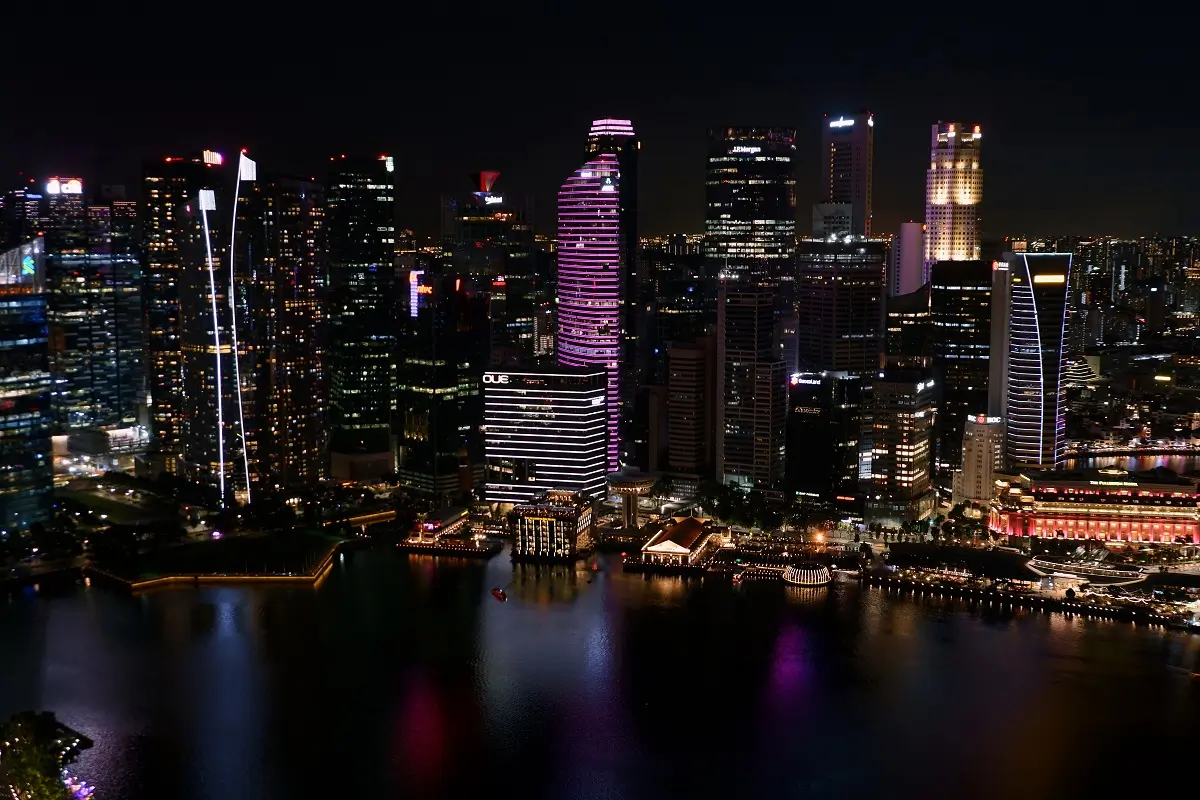
Even in the airport, and posh places like Marina Bay Sands, you can eat on a backpacker budget by checking out the Hawker food courts. For whatever reason, food courts often seem to be in the basement/bottom floor so look there wherever you are.
At the food courts, you will find all the usual fast food and hawker type places without the traditionally huge markup on price. Our experience was that everywhere we visited had a food court – and they have significantly higher quality offerings than the usual American McDonalds, Panda Express and Subway.
9. Getting a Cheap Sim Card in Singapore
We both got sim cards at the airport in Singapore.
We bought them at the Travelex found on the basement floor of Changi Terminal 3. There are two – one is opposite Paris Baguette and the other is opposite Heavenly Wang (you can see them on Google Maps).
Our choice was a 12 Singapore dollar sim card on the Singtel Network, valid for 7 days. It gives 100gb of 4G data with extra free data for social media, plus 500 minutes of local calls and 100 local texts. It worked for our backpacking in Singapore trip perfectly. There were other packages available, too.
Budget tip | the deals from Travelex were significantly cheaper than the offers in ‘Changi Recommends’ in the arrivals lounge (like a third of the price).
Another, cheaper, backpacker friendly option is to use an e-sim if your phone can accept one. We’ve used Airalo (hundreds of times) and currently it’s $5 for a week of phone coverage in Singapore.
10. Budget Tips for the MRT
The MRT is safe, fast, airconditioned and always on time. We fully recommend using it as much as possible for travelling in Singapore on a budget.
You can either use a contactless credit/debit card or buy a prepaid pass (like an Oyster Card in the U.K.) – there is no difference in journey price. You cannot buy single tickets.
My contactless Visa card let me into the MRT but wouldn’t let me out (even though Nick’s one at the same bank worked fine), so I had to buy a pass.
If you must buy a pass, our advice is to avoid the multi-day tourist passes offered. Instead, just get the Ezlink one which you top up like normal. We figured out that in 4 days, we spent under £10 each on transport (and got the MRT a lot, including to and from the airport). If we had bought a tourist pass it would have been significantly more.
If your MRT prepaid pass runs out, be aware that you need to have a balance of at least three Singapore dollars on it for it to ‘reactivate’, even though the minimum load is two Singapore dollars. I had this drama on our way to the airport.
If you decide to get a taxi, use the Grab app – it’s cheap and secure.
ARRIVING IN SINGAPORE
Changi Airport is nice. Super nice, in fact. The airport has been voted ‘best in world’ numerous times, and is a genuine pleasure to arrive in.
The four-terminal airport is well connected to the city. Once you pass through immigration (usually very quickly), head for the MRT station, located between terminals 2 and 3.
Terminals 1-3 are connected with a skytrain and the fourth with a bus (Although we didn’t find it difficult to walk between them all).
Once at the MRT, just tap your contactless credit card and off you go! It’s all very quick and efficient. It’s around 40 minutes to the centre, depending on exactly where you want to arrive.
If you want to check out the famous Jewel Changi Rain Vortex waterfall, it’s easiest accessed from terminal one (or around a 10 minute walk from terminal two and three). It’s after immigration, so it doesn’t matter which terminal you arrive in.
–
The Culture Stuff
11. Languages in Singapore
Luckily, English is widely spoken in Singapore, especially if you spend your time in the popular tourist areas. However, the national language is actually Malay, which is symbolic of the indigenous people of Singapore.
Signs are generally in English. On the MRT (Mass Rapid Transit) system, most signs are in Malay, English, Tamil and Chinese Mandarin. If you speak one of these languages, you will be fine getting around.
Locally, residents often speak ‘Singlish’, an English-based creole language that was born from the long-term mix of various languages in the mixed heritage country. It is not broken English as some incorrectly perceive it to be – it has a whole structure and grammatical complexity of its own.
12. Singapore Mask Culture
From our observations, most local people in Singapore do not wear a mask outside of the MRT. My complete guess would be way less than 10 percent ever wore one.
It is so hot in Singapore that wearing a mask here can be a little uncomfortable. However, if, for example, I got into an elevator with a person wearing a mask, I’d put mine on out of respect. Wearing them on the underground is not so awful because it is airconditioned.
13. Smoking and Vaping in Singapore
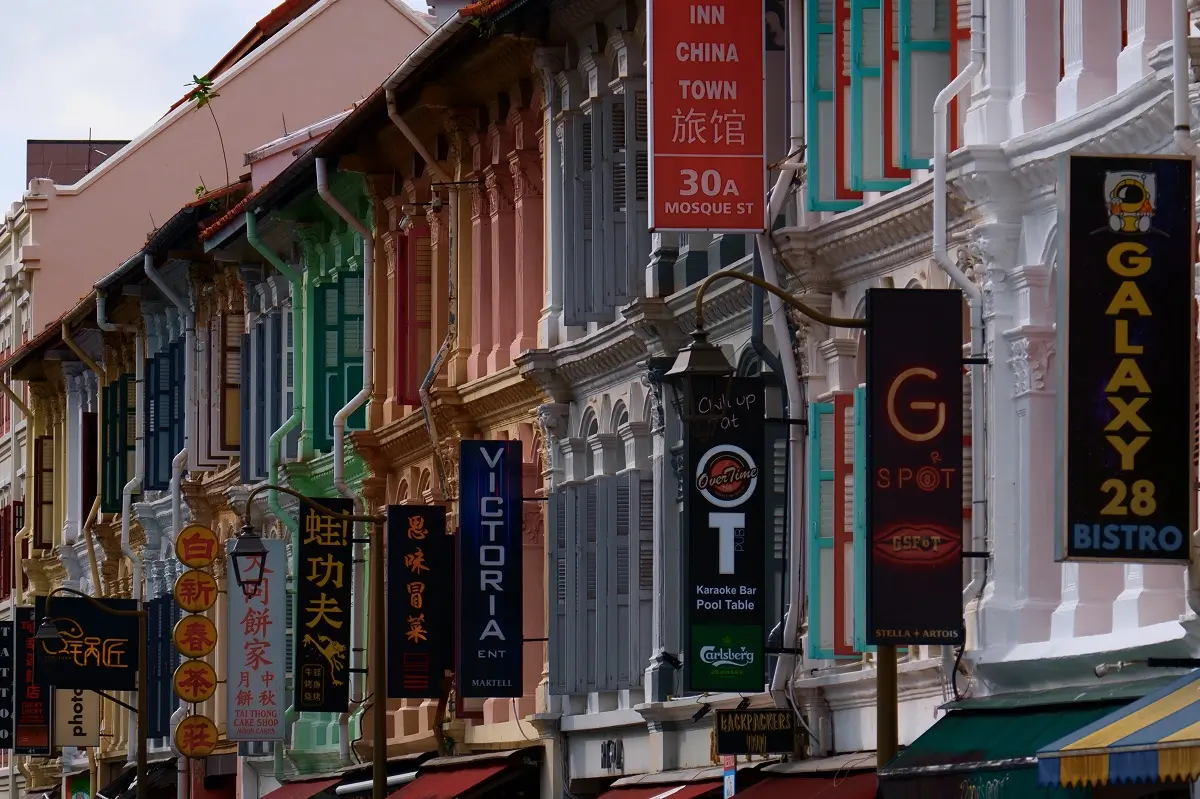
Smoking traditional cigarettes in Singapore is prohibited in public buildings and on all public transport. This includes bus stops and shelters, playgrounds and underground walkways. Smoking is also prohibited at many beaches – check the Singapore Environment Agency for information on which ones. We saw more people smoking in the Chinatown area than anywhere else.
Although we saw a few people using them openly, vapes or e-cigarettes in Singapore are totally illegal. If you are caught in possession of a vaping device, you can be fined 2000 Singapore dollars. The government is apparently cracking down on contraband products too – bring at your own risk.
14. Religion in Singapore
Unsurprisingly, being a blend of indigenous residents, economic expats and immigrants from all over the world makes Singapore a pretty diverse place.
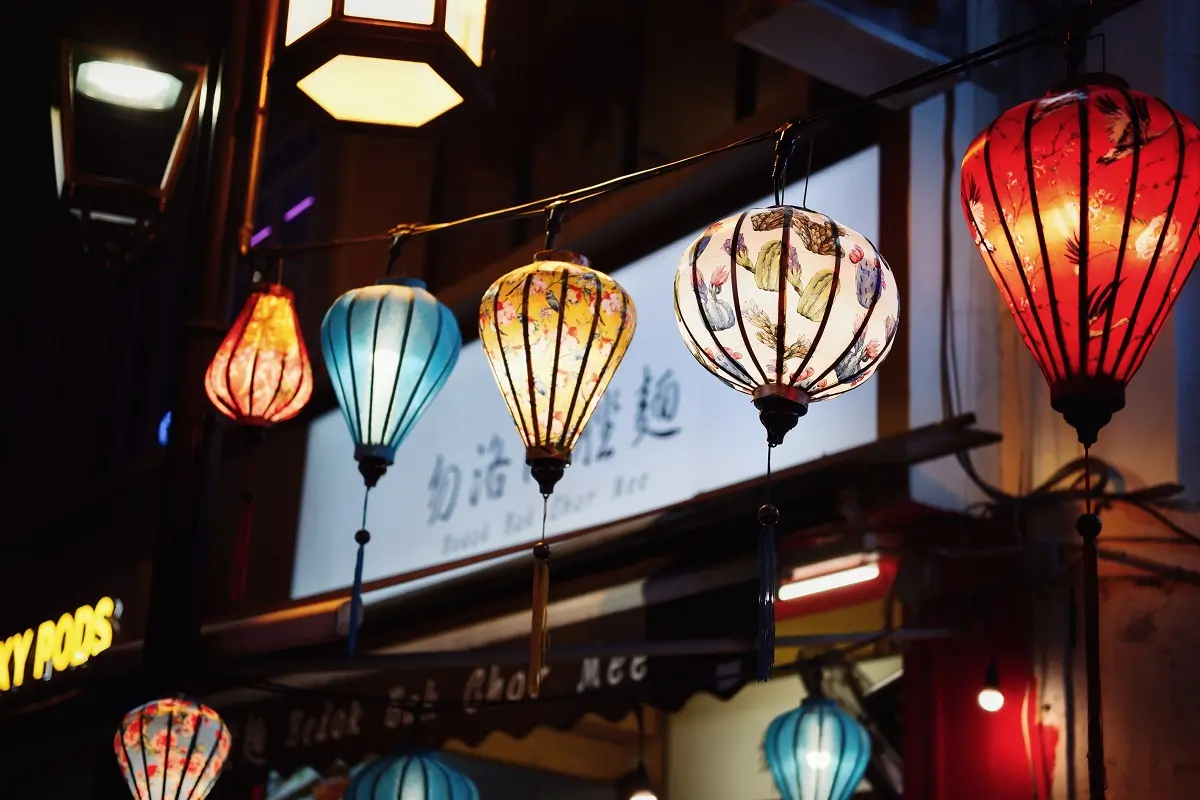
Although surrounded by the Muslim-dominated countries of Indonesia and Malaysia, Singapore does not have a particular prevalent religion or an official one dictated by the government. The country has a very mixed heritage which can be easily observed when visiting the various neighbourhoods.
Around 30 percent of Singapore is Buddhist according to official data. This is mostly due to the large population of Chinese immigrants who call Singapore home. Another 19 percent of the population are Christian, 16 percent follow Islam and 20 percent have no religion.
Interestingly, several religions are banned, including Jehovah’s Witnesses who have been disallowed since 1972. This was because members refused to take part in the obligatory national service or swear allegiance to the flag. Being caught with Jehovah’s Witness materials can lead to a year-long prison sentence.
15. Stand Left, Walk Right on Escalators
With more than 7,000 escalators packed into the tiny country, Singapore is the escalator capital of the world. You will not be able to avoid them (nor should you want to – it’s boiling – all movement should be minimised).
Although in London and Hong Kong people queue on the right side of escalators, in Singapore people always stand on the left. You can spot a tourist – they stand on the wrong side, blocking the walkway. The Singapore Ministry of Transport even conducted a campaign to make sure people get it right – so be a good traveller in Singapore and don’t block the way.
DO YOU NEED A VISA TO VISIT SINGAPORE
162 countries do not need a visa to enter Singapore for either 30 or 90 days (Saudi Arabians can stay indefinitely).
60 countries (and anyone with a biometric passport) can enter via the automated machines, meaning that immigration is super fast. This includes all ASEAN and European Union member nations.
You are also required to fill in an electronic arrival card within three days of arriving in the country. They are found online at the official government website.
–
The Other Stuff
16. Humidity to Aircon – Always Carry a Jumper
You probably already know – it’s humid and hot in Singapore. Even the least sweaty person will be sticky here, so bring breathable clothing, sun protection and a reasonable amount of tolerance for being gross (as a backpacker, you should already be chill with this).
On the completely opposite end to this – always carry a light jumper – the aircon is cranked up high in most places. I often carried a sarong to wrap around my shoulders in cold malls, hotels and restaurants.
17. Electrical Plug Type in Singapore
We love Malaysia and Singapore because they use U.K. style 230V plugs (type G).
It’s such a lovely, rare time when backpacking to not need an adapter! Power adapters can be bought in the airport if you forget one (or in any mall).
Many fast-food places, malls and hotels had USB charging points, too. Changi Airport has more charging points than we’ve ever seen anywhere before.
18. Reserving Tables in Hawker Centres
As a backpacker in Singapore, it is inevitable that you will end up in a hawker centre getting yourself some quality budget food. When this happens, do not sit at a table with a packet of tissues or a bottle on it. This is often how residents of Singapore reserve a table while they go and pick out their food.
It’s likely that if there is something unused on the table, somebody has claimed it.
Also, this is a separate issue, but you must clear your table after eating in hawker centres and food courts. You can be fined for not doing so!
19. Singapore Tap Water
In Singapore, the tap water is completely safe. You can drink it, brush your teeth with it and cook with it.
Despite this wonderful fact, there is still a whole lot of single use plastic in Singapore, especially in the form of water bottles. This was surprising (and a little disappointing) for such a forward-thinking, environmentally conscious country.
A standard suggestion is to bring a reusable water bottle or Platypus bladder to save on plastic bottles – you can drink the tap water, so why not?
20. Changi Bathrooms
Ok, so everyone knows Changi is an absolute corker of an airport – voted best in the world for good reason. We won’t bang on about it here; it is a well-known fact that a visit to the airport is half the reason people go to Singapore in the first place.
We’ll just mention something a bit different. The bathrooms are like palaces there. We found some with mood lighting and music and they even have heated toilet seats. As a budget backpacker in Singapore, it’s probably way nicer than wherever you are going to sleep.
21. Look Up – Biophilic Skyscapers
Not going to lie, I’d never heard of biophilic skyscrapers before, but they are a big thing in Singapore. I already knew that despite being one of the most densely populated cities in the world, Singapore was an actual green city, with a huge emphasis on plants and green spaces. What I wasn’t expecting was the crazy number of plants grown hundreds of feet up in the sky.
Biophilic design incorporates the natural world and emphasises connection to the natural environment.
The newest building, the CapitaSpring, has 80,000 plants and even an urban farm. We also loved the Parkroyal, which we walked past every day in Singapore as it was nearby our hotel (wishing it was our hotel but sadly out of our crappy budget).
HOW MUCH DOES BACKPACKING SINGAPORE COST?
Singapore is known to be pricey. However, we didn’t find it to be as expensive as we thought it was going to be!
There are specific things to avoid if you want to keep to a strict budget, like alcohol and expensive activities/sights.
One of the wonderful things about Singapore is that the necessities are not excessive, like transport and food.
We’ve written an entire article tallying up what we spent, so if you’re interested, head on over to our Singapore stopover budget.
–
Final Thoughts – Backpacking Singapore
Singapore is an incredible backpacker destination; a melting pot of contemporary southeast Asian culture, food and architecture, interspersed with ancient, mixed heritage traditions and structures that make the city feel utterly unique.
If you’ve never been to southeast Asia, backpacking in Singapore is a fantastic introduction to the region. It’s comfortable (apart from the heat!), welcoming and fascinating. If you are passing through on a longer backpacking trip, try to add a few days here as a layover – there is so much to see and do with very little effort! Check out our two-day Singapore itinerary for detailed ideas on what to do.
These 21 little tips and thoughts on backpacking in Singapore are the most important things we learnt on our stopover.
We hope you have a fantastic trip!
Hi, thanks for visiting our blog! If this post has been of help to you, or you’ve just enjoyed our random ramblings and musings, say thank you by buying us a coffee! It helps keep The Restless Beans blog up and running.
Thank you, Claire + Nick


