

· BIG ISSUES · MEXICO ·
How to Combat the Mass Tourism and Sustainability Challenges in the Riviera Maya
Scribbled by Claire ◊ 07 Sep 2024
The Riviera Maya is popular – too popular, some might say. Here, we talk about some of the sustainability and overtourism challenges in the region, and come up with some alternative options for visitors who want to visit but do less harm.
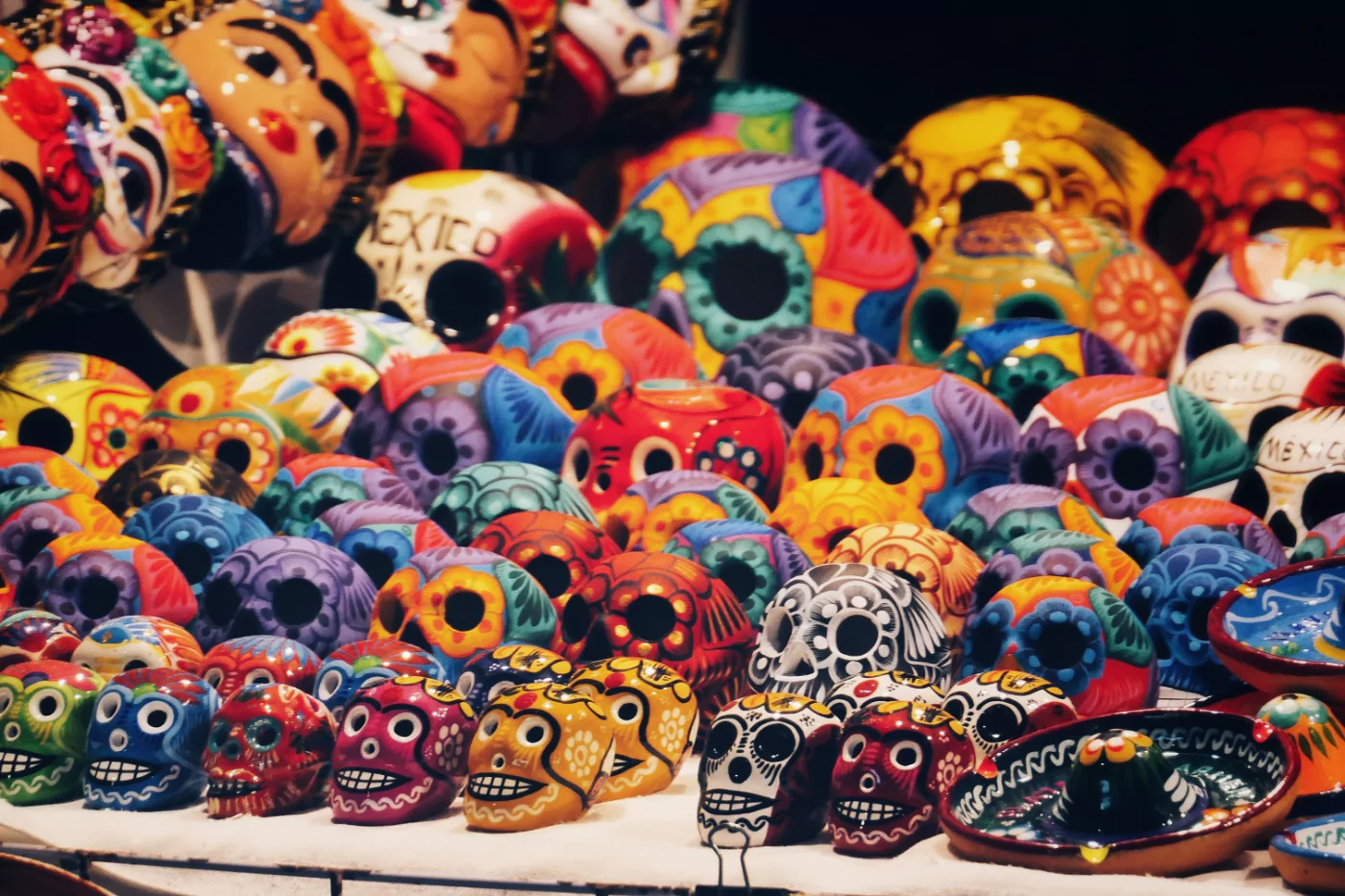
We recently completed a two-month journey around the Yucatan Peninsula. My brain was in turmoil about it from the minute I booked my flight into Cancun. I mean, Cancun? It’s just not my jam.
During previous trips to Mexico, I actively avoided the entire region as much as possible – ‘it’s just too touristy and full of all-inclusive Americans’ I told myself. I’d read too much on sustainability in the Riviera Maya to be comfortable with even the idea of Cancun.
This time though, we were meeting a friend there and had no alternative – so I started this part of my Mexico journey, hoping that the Yucatan could redeem itself in my mind (even though it had never really done anything wrong in the first place).
Well, the great news is that many of my preconceptions were misguided. So many moments in the Yucatan Peninsula were simply magic and contributed to the reason we stayed for two months! The bad news is that I wasn’t entirely wrong in my assumptions either. The well-known issues of over-tourism and unsustainable growth that I had read about were only too real. Read on and I’ll explain.

IN THIS GUIDE //
Mass Tourism in the Riviera Maya
WHAT IS THE RIVIERA MAYA AND WHY IS IT POPULAR?
– MANUFACTURED TOURIST HUBS
– – PLAYA DEL CARMEN AND TULUM
– – SO WHY DO PEOPLE VISIT?
HOW IS MASS TOURISM IMPACTING THE RIVIERA MAYA
– WASTE ISSUES IN TULUM
– WHO ARE THE MAYANS
– – WHAT DO THE MAYANS HAVE TO DO WITH SUSTAINABILITY?
NO EASY ANSWER
FINAL THOUGHTS
This post may contain affiliate links. If you book through these links we may make a small commission at zero cost to you. It helps us pay for the upkeep of this blog. Thank you!
What is the Riviera Maya and Why is it so Popular?
In case you haven’t heard of it, the Riviera Maya is the coast stretching from south of Cancun to Tulum, in the Mexican state of Quintana Roo. It is one of the most popular tourist destinations in Mexico – in 2023, Cancun alone received around 21 million tourists. Even during the worst of the pandemic, it continued to thrive and is the hub of tourism in the region.
In 1970, the area now known as Cancun had just 120 inhabitants. The population today has expanded to at least 900,000, a necessity considering the number of tourists that descend on the area today. However, this degree of growth is rarely accomplished in a sustainable manner. It is, more often than not, chaotic, badly governed and sometimes illegal.
Manufactured Tourist Hubs in The Riviera Maya
Since the start of my trip, I have asked myself – why are Cancun, Playa Del Carmen and Tulum so devoid of any charm or allure?
Well, it turns out that these places, Cancun in particular, were designed and developed purely with tourism in mind.
‘The Cancun Project’ started in 1970 and was intended to (in their words) build a solely tourism inhabited zone, providing residential areas for workers further away from the desirable beaches. A bit of top-notch segregation going on there it seems, right?
When I learnt about this project, it made a whole lot of sense. Constructed to intentionally separate tourists from local people, it was no surprise that Cancun felt shallow and barren. It seemed so unlike other major cities in the Yucatan, such as Campeche or Merida, both of which have swathes of rich history and character.
I think of fabricated tourist hubs, ones that pop up in decades rather than centuries, in the same way I think of some manufactured pop bands – often fake and devoid of character.
Playa Del Carmen and Tulum
Playa Del Carmen is another Riviera Maya town, an hour south of Cancun.
This once sleepy, thousand-inhabitant fishing village is now one enormous beachfront resort town. According to Equal Times, Playa Del Carmen was purported to be the fastest growing city in the world in 2006. It is known today for obnoxiously loud clubs and touts selling everything from food, tours, handicrafts and the obligatory recreational drugs. Oh, and don’t forget to visit the local Walmart.
Tulum, the other chief tourist hub on the coast, is predominantly a mix of digital nomads, high-end beach goers, hippie-yoga enthusiasts and influencers. It’s an overpriced environmental disaster with traffic as far as the eye can see. I think Nomadic Matt put it perfectly in his article about why Tulum sucks (although he didn’t really touch on the hideous environmental disaster waiting to happen).
So Why Do Tourists Visit the Riviera Maya?
Despite these locations lacking in any type of personality, people still flock to the region for a reason.
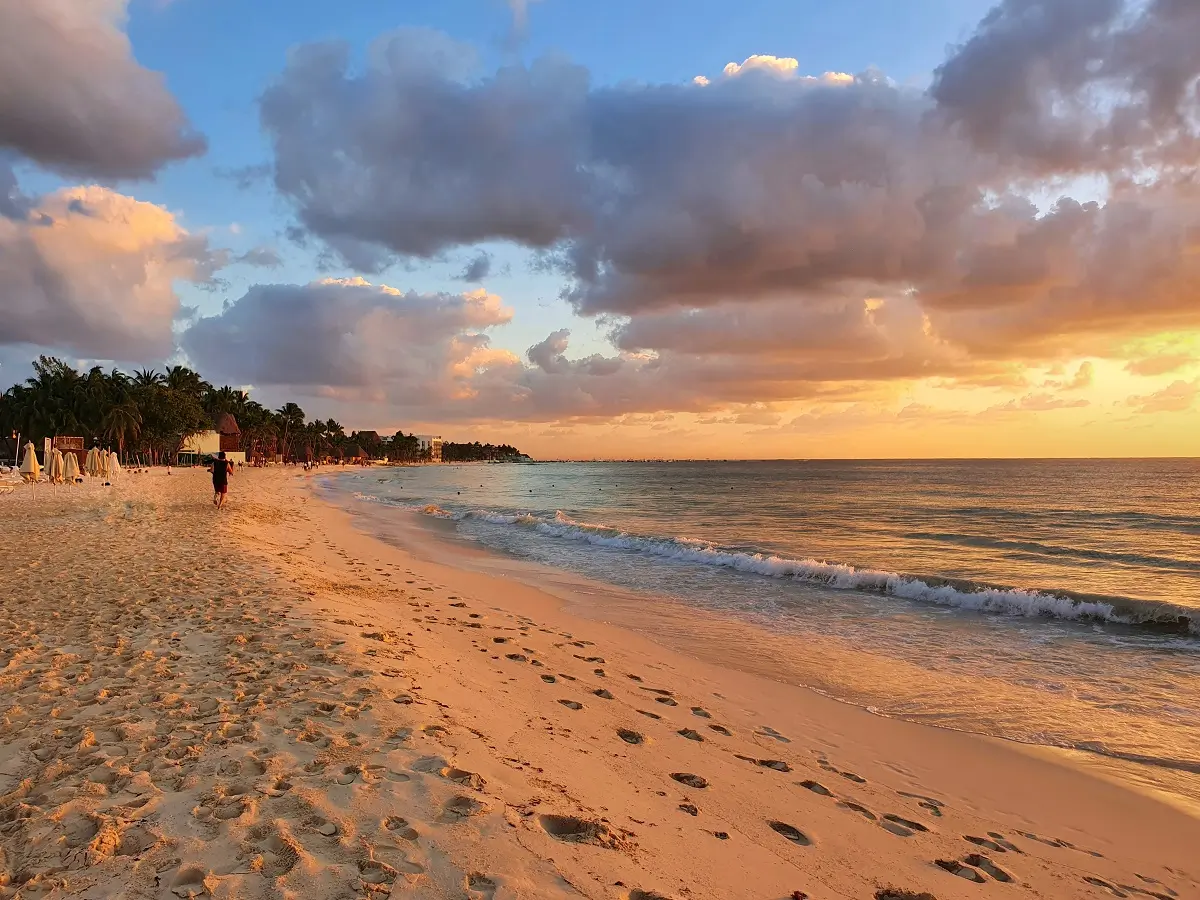
The Riviera Maya has warm, turquoise waters and (sometimes) pristine white beaches; the UNESCO designated Mesoamerican Reef – the second largest barrier reef in the world; beautifully preserved relics of ancient Mayan empires, dotted throughout the jungle; exceptional diving and underground cenotes perfect for water enthusiasts. All, of course, accompanied by the comfort of those mega-resorts and five-star services.
Full disclosure | this region is the most insufferable place I have ever visited, which is what drove me to read more into why it made me feel that way (and then write this post). If you enjoy visiting the region, though, then this article is for you. It is essential that anyone who visits the Riviera Maya knows how these places are managed and how their visit, along with millions of others, impacts the residents and environment.
Most importantly, how can we visit the Riviera Maya with sustainability as our priority?
How is Mass Tourism Impacting the Riviera Maya?
I’ve written about mass tourism and over-tourism before. What is happening in the Riviera Maya is fundamentally no different than in other destinations that also suffer from this problem.
Some common issues include:
◊ people being priced out of their homes;
◊ environmental damage;
◊ rampant economic leakage;
◊ traditions and ways of life eroded;
◊ increases in crime and drug use;
◊ police resources diverted to protect tourists.
These are just some of the typical problems that come with development when sustainability is not the primary focus.
Here though, I thought I’d talk about a few particular issues relating to this specific region: waste issues in Tulum, and the commodification of the Mayan culture.
Waste Issues in Time-Bomb-Tulum
Tulum, in the early 70s, had zero accommodation options. Zero. Can you picture it? Even twenty years ago it only had a few boutique choices.
The town’s growth is unique: it was simultaneously a ‘Maya Village’, a beachfront-oriented holiday destination, and a major archaeological site. This led, not only to growth, but to an influx of diverse, immigrant populations, of which extensive contact had an extraordinary influence on the local culture, land ownership and politics.
Tulum’s unprecedented expansion in the past decade has been extremely harmful to the environment. This type of intensive development is often accompanied by lazy, illegal or even dangerous infrastructure decisions. For example, many of Tulum’s beachfront properties lack access to the power grid, so use diesel generators to run lighting, refrigeration and energy sapping air-conditioning units. There is also a lack of waste disposal options and sewage seeps into the underground waterways.
In the high season, Tulum produces 170 tonnes of waste a day, more than two thirds of which come from hotels. This waste ends up covering what was once a sprawling segment of jungle, nine kilometres outside of Tulum in an open-air, sprawling, unlined landfill site. The nine-hectare space was already full in half the predicted time and, until recently, was where all Tulum’s waste was sent.
Overtourism Consquences
Tulum’s enormous waste heap is a particularly disturbing issue, because the Yucatan has an especially fragile ecosystem due to the interconnected underground hydrological systems and porous bedrock.
Waste quickly decomposes – it only takes an average of seven days for the pollutants to contaminate the ground water around Tulum and enter the ocean. The contaminants increase nitrogen and phosphorus levels in the oceans, causing algae blooms which suffocate the coral reefs. This is a unique problem in the Tulum region due to the lack of waste management and the huge number of waterways under the town. Currently, it is estimated that the coral in nearby reefs has degraded by 80% in the past 30 years.
The trash pile also pollutes the cenotes, which are part of the underground waterways. Most tourists to this region visit, at least in part, for the cenotes, but don’t recognise that their waste is likely harming one of the key attractions they came to visit! A study from 2017 determined that out of the 6000 or so cenotes in the Yucatan, around 80% were contaminated. Another study found painkillers, cocaine, deodorant, toothpaste and chemical run-offs in cenotes.
Can Tulum Be Sustainable Now?
So, next time a new resort pops up in Tulum, claiming to be eco-friendly, ask yourself if there is any possible way for a new property in an area with this pace of construction and lack of infrastructure to be ethical or sustainable?
It’s not just direct waste that is the problem, either. According to Carlos Meade, the director of an NGO based in the region, every hotel room in the Riviera Maya brings in an average of 18 migrants to provide all the necessary direct and indirect services – so even the ‘greenest’ hotel needs to be accountable for the impact that recruiting large numbers of (potentially non-regional) workers has on the local area.
Also, be very careful about greenwashing – businesses are likely not as environmentally friendly as they seem. Even if they genuinely appear to be green, be aware that just the simple construction of a building leads to the razing of mangroves which naturally assist with the natural filtration of the waterways.
This is just a tiny slice of the issue. Corruption allows continued development against advice and laws that are designed to protect the environment. Ineffective and corrupt bureaucracy is easily taken advantage of by developers, so bad management will likely be an ongoing issue for the foreseeable future.
PERSONAL TAKE – IS TULUM THAT BAD?
I feel like there are two schools of thought now: either Tulum is associated with chilled out, beautiful beaches, or it is synonymous with thoughtless urban overdevelopment. I’m definitely in the latter group – passing through this town was one of my least favourite parts of our entire Yucatan trip.
Tulum is literally the poster child for unsustainable tourism endeavours.
It is dirty, built up, full of beeping vehicles and people seem aggressive. It can take hours to cross town during peak season. I stayed for five nights, seven years ago, on a previous trip when I was heading down to Belize and I regretted it, even back then.
–
RELATED POST | 13 PRACTICAL ECO TRAVELLER TIPS

Who Are the Mayans?
Another primary reason for visiting the Yucatan is the ancient Mayan history on display everywhere.
The problem with this is that the Maya are not only history. Bluntly put by Marcelo Jimenez, the head of Quintana Roo’s Popular Culture Office:
“Nobody wants to talk about the living Mayans, just the dead ones,” Jimenez said. “We remain invisible.”
This left me wondering.
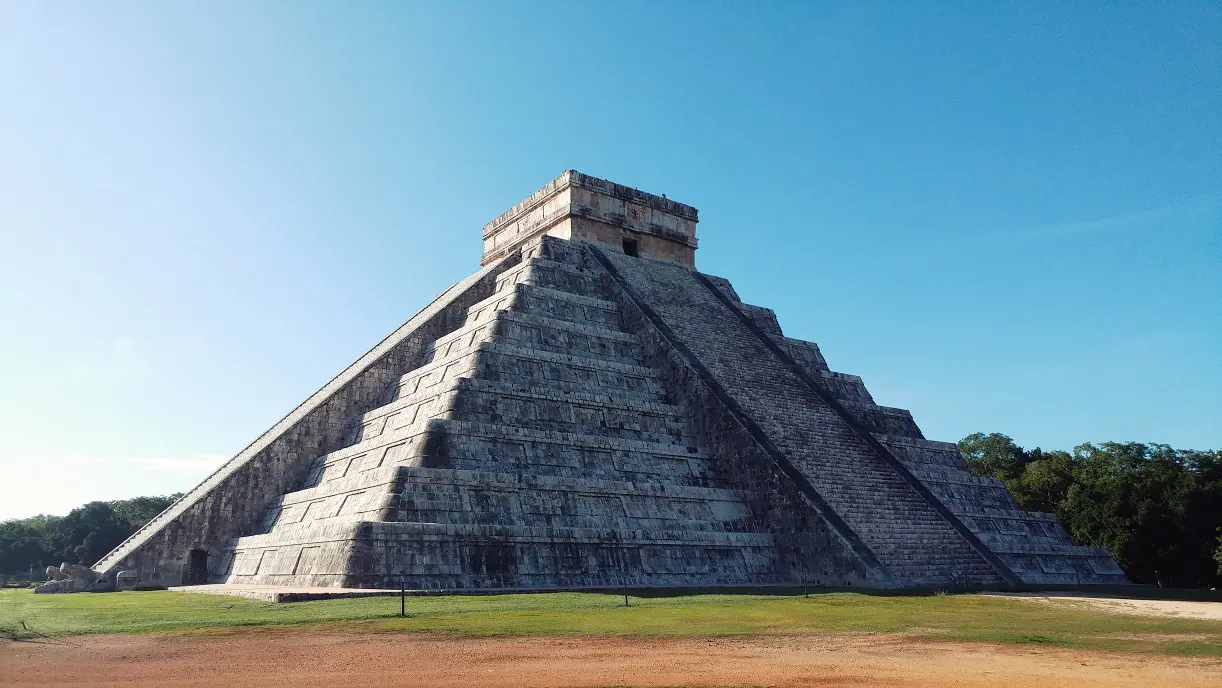
Do many tourists to the region even know that the Maya still exist in large numbers all over Mexico and Central America? Or are the archaeological sites more like a kind of Disneyland – only there to entertain? Maybe people have only heard of the Maya in relation to the sensationalized news story in 2012 about the predicted end of the world. Or, possibly, from television where the culture is almost exclusively referred to as ‘ancient Mayan’. Others may have only heard of the newly elected Wonder of the World, the Mayan ruin of Chichen Itza.
(I know this is not all people. There are troves of decent educated humans everywhere who care about the culture of places they visit).
There are around 200,000 Mayans currently residing in Quintana Roo alone; more still in Chiapas, Belize and Guatemala. These indigenous people still exist, despite often only being referenced in a historical sense.
Between colonialism and religious conversion, they have struggled through massive inequality and hardship. Now, despite rapid economic and urban development on their land, they are ignored, too.
What do the Mayans have to do with sustainability in the Riviera Maya?
Well, sustainability in tourism is not just about the environment.
Cultural and economic factors are just as significant. The impact of overtourism in the Maya Riviera on the indigenous people and their culture is just as an important as the environmental factors around Tulum.
The Benefits and Detriments of Tourism
The modernisation around Tulum and other towns in the Riviera Maya has indeed provided economic opportunities and offered some increased upward mobility to indigenous populations. However, this rapid developmental evolution has also placed the Maya as effectively an inferior class of people. As tourists in Quintana Roo, we have some responsibility to bear when we frequent a place that numerous studies have indicated has marginalised indigenous populations due to said tourism.
A 2002 paper documenting Maya Interpretations of the Changing environment in QR said of the Mayas:
‘They are critiques, not of globalization per se, but rather of their position within globalizing national and world systems’
The paper implies that nobody, including the Mayan people, are denying that tourism brings great benefits, both economically and culturally in many cases. It is easy to condemn all tourism with the ‘good old days’ attitude of ‘it was simpler back then’ and ‘tourists ruined the social fabric of the area’. The thing is, most people would not give up their smartphones and ‘go back to a simpler time’, and modernisation is usually welcome.
On the other hand, the presence of mass tourism has indeed reduced access to land and natural resources. Plus, ecological degradation makes traditional methods of making money more difficult, meaning a switch to ‘wage-labour’ for large numbers of people. This means that some indigenous people have no choice but to work in the tourist industry – the culprit that destroyed their homes, jobs and environment in the first place.
“Tourism doesn’t solve our problems, it causes more problems,” Jimenez said in that same interview, “The investors take the profits. The only thing that stays here is the garbage and the environmental impact.”
Many of these investors are the resort owners. Along the coast they are often overseas companies who ship in staff from all over Mexico – regularly on low or unpaid apprenticeship type contracts. The profit from these businesses largely leaves the Yucatan area, with minimal actual benefit to the indigenous people who reside there. Although some Maya people do work in these roles and benefit from them, the majority do not.
Commodification of Mayan Culture
More recently, as the Mayan culture has become increasingly ‘in demand’ by tourists, then so follows the commodification of said indigenous culture.
This is such a complex issue that I’ll write a whole separate post on it another time. To put it simply, though, it is the concept that communities are there for touristic consumption, which is ethically abhorrent. If you are in poverty and someone wanted to watch you and your family eat, clean and work, even if it made you uncomfortable, would you do it in order to feed your children?
The other question to ask here is: how ‘authentic’ this cultural exchange is, if one side is being paid for it? Plus, there are some who suggest that just by the mere presence of tourists, authenticity ceases to be exist. This marketisation of indigenous people is also claimed to lead to a dilution of their cultural traditions.
It is a complex issue but there is no doubt that the presence of tourists has a negative cultural impact on the indigenous people of the Riviera Maya.

No Easy Solutions
The dichotomised conclusions suggesting that either tourism is all bad or all good is an oversimplification of an exceptionally complicated issue.
For people in the latter ‘tourism is all great’ category – I’ve heard the ‘saviour complex’ attitude time and time again and it is intolerable.
“but my visit brings in money to the area, they won’t survive without us’.
If you have ever sat in Tulum or Playa Del Carmen, with no consideration as to how your property is cooled, where your money/trash is going, or questioning who is serving you your margarita, then you have likely added to the damage in an already at-risk area.
There is no doubt though that tourism has some positive benefits, and I would be wrong to write that we should stop visiting these places all together. The pandemic has taught us all that tourism is incredibly important across the globe, especially economically.
How Can We Visit the Riviera Maya Without Causing More Damage?
Firstly, there are the simple things; stuff like using environmentally friendly sunscreen (or not using any at all depending on where you are); avoiding single use plastics; conserving energy and water wherever possible; buying local.
All these efforts help in any destination you happen to visit and if everyone did these things, it would make such a huge difference.
More specific ideas for the Riviera Maya:
Seasonal | minimise trips during high season. In fact, I would go as far as to advise as many people as possible to avoid the busier parts of the entire coast for the entirety of high season! I know countless won’t, but if even some of us did, it would spread out the impact of our collective visits.
Tulum | do not stay on the beach in Tulum. Those $800 dollar a night hotels *definitely* do not need your money.
Avoid crowds | visit one of the ‘quieter’ areas of the Maya Riviera. Not only will you not be adding to the Tulum trash pile, but you will save some money. Akumal and Puerto Morelos are smaller tourist hubs with similar facilities – I’ve not been able to find out where their trash goes though. Punta Allen and Bacalar is are also less visited options. Even better, visit a beach on the coast near Merida. I love Celestun, personally.
Respect | behave respectfully in condominium blocks. Many tourists in places like Playa Del Carmen rent condos – remember that in a lot of these buildings, residents live there alongside visitors.
Turtles | please don’t sneak out to swim with the turtles in Akumal without a guide.
Sunscreen | this one I’ll mention again. They damage cenotes and reefs. Please get a reef safe one or, even better, wear a sun-proof top and hat and forgo it completely.
Policies | check if your resort (if you stay in one) has eco-friendly policies and is socially aware. Hiring local people is a great sign. Any resort with great eco-credentials will always tell you about all the good they are doing!
Drugs | don’t encourage the illegal drug situation in the Maya Riviera. There is an uptick of gang violence, partly due to increased demand for certain substances. Although this violence very rarely has an effect on tourists, it means more police are diverted to manage it.
Alternatives | consider alternative trip activities if possible. Options like the Camino del Mayab, which is a 60-mile trek through plantations and dense rainforest are a fantastic adventure away from the typical tourist trails.
Think about visiting alternatives to the popular cenote Instagram spots, too – there are a huge number of untouched ones around the Merida area (we visited a few on our last trip – you can just look for them on Google maps!). Consider checking out Sian Ka’an, a biosphere reserve south of Tulum, which has community-run eco-tours. The Yucatan region has so many less-discovered options!
Souvenirs | don’t buy ‘made in China’ type souvenirs. I always think about all those ceramic penises with American football logos on from Chichen Itza – obviously avoid those. Search for something meaningful and locally crafted – there are many highly skilled regional craftspeople. By purchasing their products, you will be helping to preserve the culture of these individuals, plus aid them in avoiding the ‘wage labour’ option they may not otherwise have to do.
PERSONAL TAKE – THE BENEFITS OF TOURISM
In my home country of England, post Brexit, the saviour-complex attitude was repeated time and time again of Spain, after they imposed new restrictions on UK residents visiting (which, I should mention, the UK voted for):
“Spain won’t survive without our tourism – we hold their economy up”
To imply that Spain will simply fall apart without the UK’s custom is an ignorant and arrogant statement. There are certainly benefits that come from our visits, but do they outweigh the damage?
Either way, years later, Spain is still there, functioning and not destitute, despite the changes in entry requirements. That two-week trip those random UK citizens boycotted to Benidorm was not the be-all and end-all of an entire nation, was it?
Tourism does not always benefit both sides, and it certainly doesn’t in the Maya Riviera.
–
Final Thoughts – Overtourism in the Riviera Maya
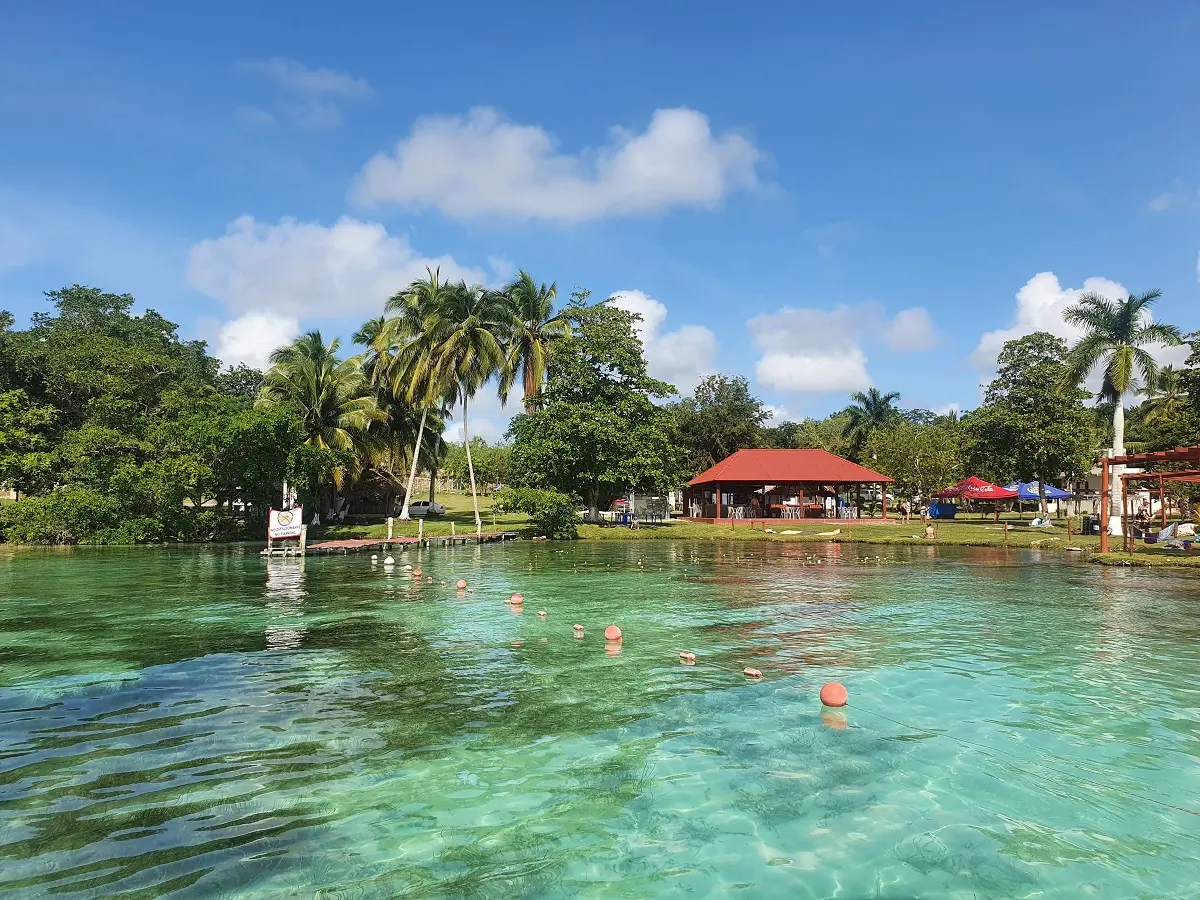
South of Tulum is a little place called Bacalar. It’s one of my favourite places in Quintana Roo, by a long way.
The New York Times wrote an article asking ‘Is Bacalar the next Tulum?’. The piece filled me with a mingling sense of dread and is actually what originally made me consider writing this post (in addition to my intense dislike of the key towns on the Riviera Maya).
I know people will not stop visiting, and nor should they. However, with corrupt and irresponsible management, the Riviera Maya is fated to become an environmental and cultural disaster. One of the ways we can start to make a difference is to enhance the awareness of tourists and slowly change what is demanded by them. The developers’ motivation is money, and we as tourists provide much of it.
Remember, it is not just you, just once. The Tulum trash piles demonstrate that.
Hi, thanks for visiting our blog! If this post has been of help to you, or you’ve just enjoyed our random ramblings and musings, say thank you by buying us a coffee! It helps keep The Restless Beans blog up and running.
Thank you, Claire + Nick




ohla
I read your article as well as the link to the other take on Tulum
I live in Playa del Carmen with my Mexican wife. I agree with almost 100% of your assessment and I would like to point out that this very disastrous effect has already happened in my country that most Americans have come to destroy. My kingdom of Hawai’i. Being Hawaiian and raised on the Big island I have come to see forst hand everyrhing that has been touched on in your article has been occurring in Hawai’i for the past 8 decades. The reason I have not returned to live in the place I grew up and live out my days is due to the very things mentioned in your article. While Mexico is slightly different bc it is an entire country, the destruction of my islands from tourism and wannabe transplants from the lower 48 who do not respect our language, history and culture is too much for me. Most Americans do not even know that the Kingdom of Hawai’i was a sovereign nation recognized around the world until a group of Americans illegally usurped power from our queen. But I digress, Mexico welcomes the tourism amd economic boast otherwise they would not have allowed the development of the areas you mentioned. On a cotnrararian point, Hawai’i and its people are NOT in favor or development but bc it is a state, it’s people have no voice in dictating development.
Kimo
Thank you for writing this article. It aligns with my experiences, observations, and feelings after a one week trip to PdC and Tulum in Feb 2024. Not authentic and not sustainable. Definitely not the way to do tourism and respect one’s culture, heritage, and pristine natural beauty.
Such a great article! As a “really-trying-to-be-sustainable traveller” I was surprised when I arrived in Tulum. It is advertised as such a eco- and sustainability driven destination, all about wellbeing. But looking around I see very little culture and a lot of rubbish. It is clear that this town was built for tourism and does not have the right infrastructure in place to sustain its success. Hopefully with the right management, they can turn it around in the coming years as it keeps expanding.
Hi Nora,
Thanks for your comment, we totally agree.
It’s such a beautiful part of the world and such a pity that tourism is not managed well.
Hey Claire, Sooz from Instagram here (@curiositysaves.travel). I just got back from the Riviera Maya. Spring 2026 was a super weird season. I think what I saw was the aftermath of this over-tourism boom that left prices inflated, apartments designed for foreigners left empty, and, honestly, really low tourism levels all things considered. I came expecting to be crowded and overwhelmed, but I was the opposite, really. I think a lot of things contributed to that in 2026 (Trump, cartel fear-mongering by the US, unusual levels of sargassum, and, honestly, tourists contributing to increasing prices and pricing themselves out…). Who knows, things might recover and return to the high levels when the bubble bursts, or they might not… but what I did see was that this poor management of tourism you highlighted, the inequitable distribution of benefits, and the lack of resource management, left a region with such low tourism resilience that they are now hurting from some of the impacts of undertourism this season.
Such a shame.
I will say that, all things considered, I enjoyed Play del Carmen immensely more than I thought. We stayed in such a nice, quiet, and nature-filled area, away from resorts, and did manage to have a good time.
But, when we went to Tulum on a day trip, it felt like a ghost town left in disarray after being horrifically gentrified. It was weird and unsettling.
Hiiiiii, what are you doing here?! 🙂
I wrote this post so long ago, after some trips through the area in 2022 and 2016. I didn’t even realise anyone was reading it (it’s not my best!).
I’m grateful to read your experience. It’s sad to see that climate change and politics are continuing to do their hideous thing there (although honestly it’s not surprising). Personally, I think it will recover, tourism numbers-wise, just like the (unfortunate) travel boom after Covid. It’s just too easy for people from the U.S. to get their international travel on there, so my bet is they’ll continue.
I’d love to re-research this spot at some point and look at it more (although I’m guessing I wouldn’t like the outcome). I wasn’t really tuned in to the impacts of tourism on my first few trips to Mexico ten years ago – like supporting women-first and indigenous businesses, economic leakage, and even environmental stuff that is so obvious to most people now. I’d love to update this post at some point with some of my current thinking.
I was travelling with my friends for a while so we stayed right in the middle of Playa and it was *so* frat boy! It had vibes of party beaches in Thailand that I hate. However, as you highlighted, there are usually ways to stay in more touristic places so it’s not as nightmare-ish and I’m super happy you had a better time than me!
Tulum is just sad. It’s so, so sad. Large areas of Thailand (where I’ve been for a while now) are the same and it’s horrible. I’m sat here craving a lengthy visit to west Asia at the moment (not the best time, though) – I’ve never felt that yukky gentrified vibe in that region.