

· MIDDLE EAST · JORDAN ·
How to Plan Your Wadi Rum Jeep Tour and Lodging in 2025
Scribbled by Claire ◊ 25 Aug 2024
Are you planning a trip to the deserts of Wadi Rum, but don’t know where to start? After all, it’s a complicated region to plan for! So here, we’ve detailed how to organise your Jeep tour, how to arrange accommodation, things to watch out for, and more.

Wadi Rum is, in our opinion, *the* highlight of a trip to Jordan, even more than its more legendary sibling Petra. The dramatic desert backdrop, with sweeping burnt-orange dunes, vast empty panoramas and wandering camels make for some unforgettable moments.
It’s easy to recognise epic flashes of the distinctive terrain from films like Lawrence of Arabia and The Martian; the scenery is genuinely that spectacular in reality. A Wadi Rum Jeep tour is the ultimate way to experience this grandeur and majesty, while sleeping under the stars provides the picture-perfect way to experience the sunset and night skies of the desert.
In typical fashion, we planned and booked our trip to Wadi Rum the night before we arrived. That’s just how we (often) roll. Despite this, we had the most magical time! Here, we’ll tell you all that we learnt and everything you need to know to have just as cool an experience.

IN THIS GUIDE //
Planning a Wadi Rum Jeep Tour
WHAT IS WADI RUM?
GETTING TO WADI RUM
HOW MUCH DOES IT COST TO VISIT WADI RUM?
ARRIVING AND PARKING AT WADI RUM
THINGS TO SEE ON A WADI RUM JEEP TOUR
HOW MUCH IS A JEEP TOUR IN WADI RUM?
HOW MANY NIGHTS DO YOU NEED IN WADI RUM?
WHERE SHOULD YOU SLEEP IN WADI RUM?
CAN YOU DO A WADI RUM JEEP TOUR AS A DAY TRIP?
WHEN IS THE WEATHER BEST TO VISIT WADI RUM?
ENVIRONMENTAL ISSUES IN WADI RUM
FINAL THOUGHTS
This post may contain affiliate links. If you book through these links we may make a small commission at zero cost to you. It helps us pay for the upkeep of this blog. Thank you!
What is Wadi Rum?
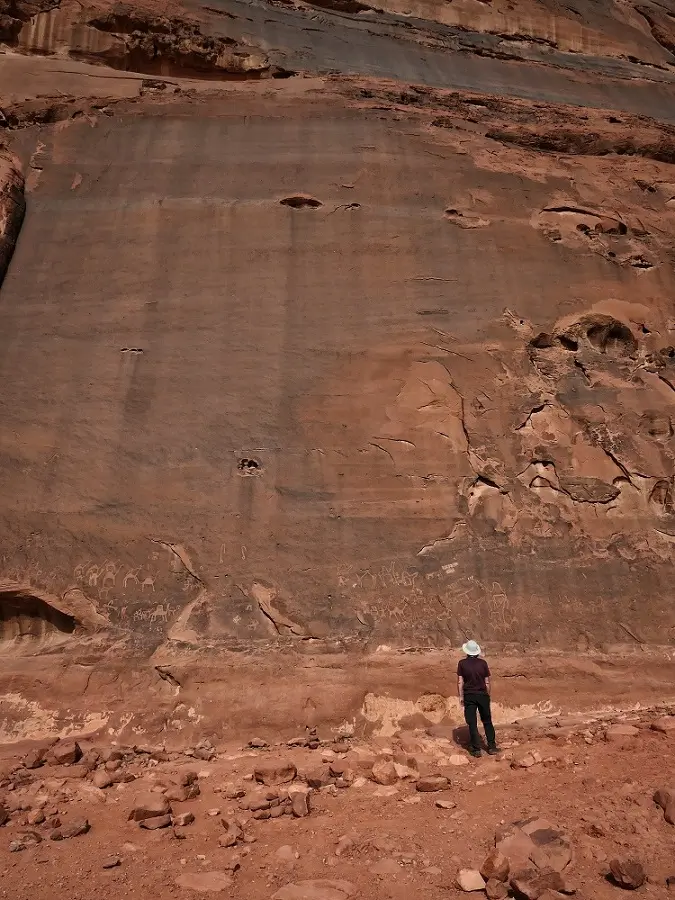
The Wadi Rum Protected Area is a 720 square kilometre mixed UNESCO world heritage site. It is situated about 60 kilometres east of Aqaba and 300 kilometres south of the capital Amman, nearby Jordan’s southern border with Saudi Arabia. There is at least 12,000 years of human occupation in the region, evidenced from the 25,000 petroglyphs and 20,000 inscriptions dotted around the site. Consequently, this is one of the richest collections of rock art in the world.
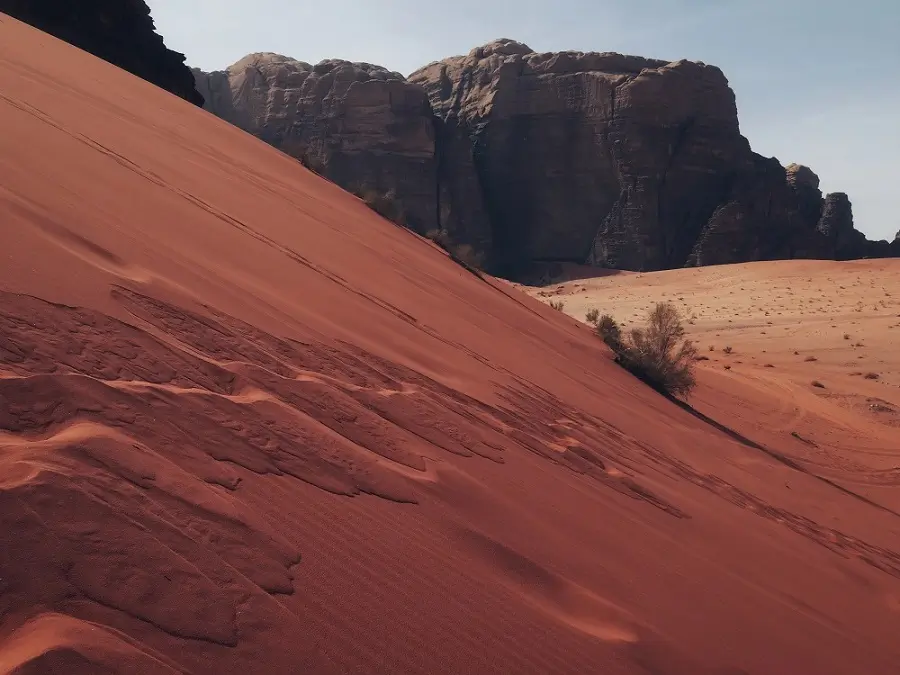
Also called Valley of the Moon, this ancient territory is punctuated with mountainous rocks and narrow gorges draped in burnt orange sand dunes. Wadi, in Arabic, means (dry) valley, and this is the largest Wadi in Jordan; a vast, empty desert with some of the most surreal scenery on Earth.
Several thousand inhabitants including Bedouin wanderers make Wadi Rum their home, despite the unforgiving terrain. A large portion of this local population live around Wadi Rum Village. This is where your Wadi Rum Jeep tour will kick off, or where your lodging choice will pick you up if you choose to sleep in the desert.

WADI RUM: QUICK FACTS
HIGHEST POINT – 1854 METRES, JEBEL UMM AD DAMI
POPULATION – 2000
AREA – 278 SQUARE MILES, 720 SQUARE KILOMETRES
OTHER NAME – VALLEY OF THE MOON
ENTRY FEE – 5 JOD (FREE WITH JORDAN PASS)
NUMBER OF VISITORS – 250,000 A YEAR
–
A GUIDE TO THE ROMAN RUINS AT JERASH | 18 THINGS TO KNOW ABOUT PETRA
Getting to Wadi Rum
There are various ways of getting to Wadi Rum, depending on your transport preferences and starting location. Some basic hints and tips:
Public transport | there is no direct public transport to Wadi Rum from Madaba, the Dead Sea, Dana, or the King Hussein Border crossing. It is best to head to Wadi Musa or Aqaba in these cases (or hitchhike).
Always check ahead of time with your accommodation or at the terminal for bus schedules; Friday services are often non-existent and in low season (winter and summer) the frequency of public services decrease.
JETT buses | these are a tourist bus service that are reservable online. Check the bus schedule.
Self-driving in Jordan | this is the easiest and often most economical way of getting around on a Jordan itinerary. If you are unable or less keen to drive though, below are some other options.
CAR HIRE FOR YOUR JORDAN TRIP
We always rent our vehicles all over the world, including our recent trips in Oman, Saudi Arabia, Tunisia, Jordan and Morocco, with Discover Cars. They’re often the most affordable, plus they paid out immediately on an insurance claim we made when our car took some heavy damage in Sicily. We fully recommend them.
–
TAKE A LOOK BELOW OR CHECK CAR RENTAL
How to get From Aqaba to Wadi Rum
Renting a car in Aqaba is easy and reasonably priced (only a little more than a taxi in most cases). If you are stretched for time, this is a great option for getting to Wadi Rum and the drive is very simple. Other choices include:
Buses from Aqaba to Wadi Rum
Local buses | and minibuses run from Aqaba Bus Station. There are many that travel to Amman, Wadi Musa (Petra) and Ma’an, all of which pass the (well-signed) junction to Wadi Rum on route 47 (the Desert Highway) at Rashidiyah. From the junction, you can hitchhike the final 30 kilometres if you are comfortable (a widespread practice in Jordan). Instead of hitchhiking, there are also shared taxis that will take you and any other passengers they pick up at the junction to Wadi Rum.
Direct public buses | run from Aqaba to Wadi Rum, but with few daily services (likely don’t run on Fridays). Visit the bus terminal in Aqaba to get up-to-date schedules and information. The fee should be about 3 JOD. The buses can get busy with tourists and locals as it is a popular route with minimal services. Be wary if you have a lot of baggage.
JETT buses | a tourist service that can be reserved online (the website is a bit glitchy, so if you have time, head to the JETT office in Aqaba to book directly). The buses are air conditioned and have allocated seating so tend to be more comfortable than the public bus. They run at 8am and return around 6.30pm for a cost of 18 JOD round trip or 15 JOD each way. This route drops you at the visitor centre, seven kilometres from Wadi Rum Village.
Departing Wadi Rum | the public bus leaves quite early, around 6.30am. If you miss that, it is possible to catch any other bus, rideshare or taxi to the main desert highway, then cross the road and hitchhike or grab any of the many buses heading to Aqaba. This approach is not advisable on a Friday.
Taxis and Tours from Aqaba
Local taxis will make the 75-kilometre journey from Aqaba to Wadi Rum for around 30 JOD and take a little over an hour. It is possible to ask them to wait for the afternoon and then drive you back which will cost about 40 JOD. If you stay overnight, getting a taxi to depart from Wadi Rum Village is simple, or your accommodation can arrange a taxi driver for you. Day tours can be arranged which include your transport to Wadi Rum.
These can be booked through your accommodation, via a local agency, or Get Your Guide if you’d like to reserve in advance.

How to get from Petra to Wadi Rum
Public buses | these run from Wadi Musa Bus Station to Wadi Rum Village and take about three hours. There are two services a day, around 6am and 9am and both stop at the Wadi Rum visitor centre on the way. We would suggest you organise this transport via your accommodation in Wadi Musa since it can be busy and there are not many services.
As with public buses from Aqaba, there are also options to get the public bus towards Ma’an and Aqaba and get off at the junction to Wadi Rum, then hitchhike.
JETT buses | these provide a direct service from Petra to Wadi Rum which you can reserve online, and this runs at 5pm daily at a cost of 15 JOD.
Private taxi | from Wadi Musa to Wadi Rum should cost around 40 JOD and take around two hours. Your accommodation can easily arrange a driver.
How to get from Amman to Wadi Rum
Public bus | there is no direct public bus from Amman to Wadi Rum. The best option is to travel to Aqaba or Wadi Musa/Petra and then travel from there.
Another option is to take any public bus travelling towards Aqaba and get off at the Wadi Rum junction on the Desert Highway, as mentioned above. You can then hitchhike or rideshare to the visitor centre.
JETT buses | numerous travel from Amman to Aqaba, check their online schedule (7th Circle means Amman on this website). There is one bus daily from Amman to Wadi Musa, where it makes sense to check out Petra before heading on to Wadi Rum.
Taxi | a taxi directly from Amman to Wadi Rum will set you back around 110 JOD per journey.

How Much Does it Cost to Visit Wadi Rum?
The 2025 entry fee for the protected area of Wadi Rum has tiered tourist pricing:
Non-residents – 7 JOD
Jordanian residents – 1 JOD
Jordanian Students – 0.5 JOD
Under 12 years old – free
The entry to Wadi Rum is included with a Jordan Pass, so no fee is needed if you have one, however you still need to check-in at the counter within the visitor centre. If you are interested in the total cost of our full trip, check out our complete Jordan budget breakdown.
For their records, the police will also request details of your car and the number of people in your group.

Arriving and Parking at Wadi Rum
Firstly, you will need to visit the Wadi Rum visitor centre at the north end of the site. Here, you check-in and buy your 7 JOD entry ticket at counter (free with a Jordan Pass). Do not pay anyone the fee outside the visitor centre, these are not official staff and will not provide you with a ticket.
There is parking available if you arrange a tour guide to pick you up from the visitor centre, however most people meet an arranged guide at the Wadi Rum Village, seven kilometres further down a paved road.
At Rum Village, on the right just before the Wadi Rum Rest House, is a large car park marked ‘parking for wadi rum tour’ on Google Maps. Here, there is an information centre and picnic area. Any guide you arrange, or your accommodation’s representative, should meet you there.
You are not allowed to take your car past the paved road at the end of the village (plus you’d get a rental stuck in the sand there anyway).
Things to See on a Wadi Rum Jeep Tour
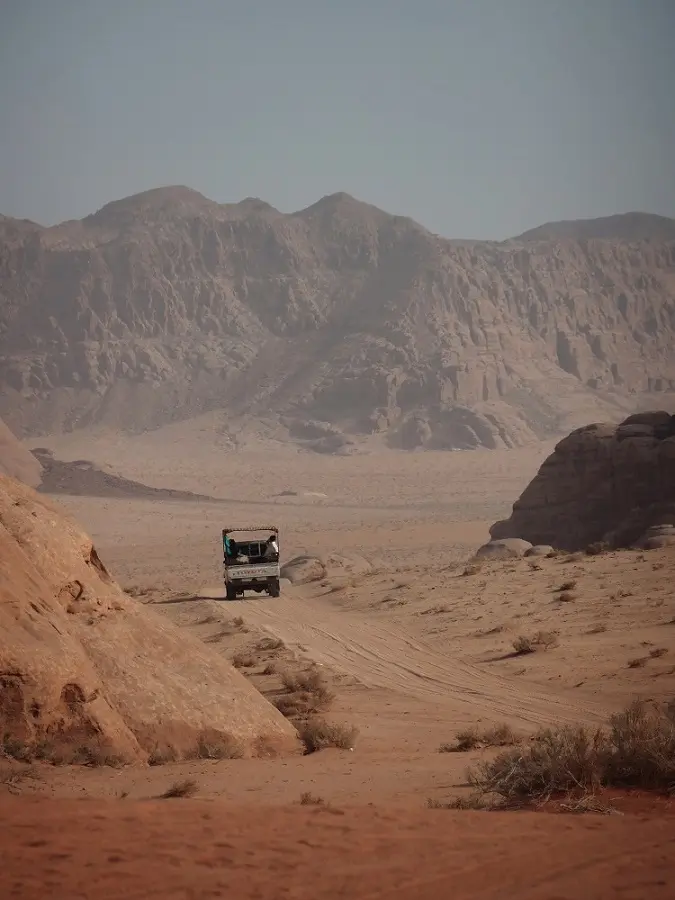
The only way you can get around Wadi Rum is by four-wheel drive vehicle, as the entire area is deep sand. You are allowed to self-drive, technically, but the lack of roads and cost of an insured four-wheel drive vehicle make it prohibitively difficult ad expensive.
This means that, usually, visitors pay a driver to take them around the main sites.
Deciding what to see in Wadi Rum will depend on your chosen Jeep tour and whether you customise it to include something specific. Here are some of the main places to consider:
Lawrence’s Spring (Ain Abu Aineh)
Named for T.E. Lawrence, a British Colonel during World War One. Not the most spectacular site, however the scramble up the hill was exciting and the views top notch. Early morning, there were several camels hanging out by the spring water and no other tourists.
This is not the real Lawrence’s Spring however, Ain Shalalaleh/Shallalah, is purported to be the real one from Lawrence’s book ‘Seven Pillars of Wisdom’. It can be reached by a 15-minute walk from Wadi Rum Village (no guide required).
Lawrence’s House
This was supposedly slept in by T.E. Lawrence during the Arab revolt. The original structure was initially constructed by Nabataeans thousands of years ago; the Bedouin people named this ‘the Small Palace’ as it was used for passing convoys.
The house is not particularly remarkable unless you loved the story of Lawrence of Arabia (the film astonished me), however the views are epic; climb up as high as you can.
Khazali Canyon
This brief but narrow slot canyon in Jebel Khazali is only around 100 metres deep but contains a variety of millennia old Nabataean, Islamic and Thamudic inscriptions and petroglyphs, often of animals. There are pools of water in here, but if you’re cautious you can avoid getting your feet wet.
Abu Khashaba Canyon
Cutting right through Jebel Khashaba is Abu Khashaba Canyon, a four-metre-wide sandstone path with soaring walls and slow growing desert trees. It takes around 20-40 minutes to walk through, so your Jeep tour will drop you off one side and pick you up on the other.
Mushroom and Cow Rocks
Across the desert, there are quite a few odd shaped rocks! We didn’t consider these to be particularly remarkable, however these will likely be thrown into a Jeep tour if they are in between other places.
Al Hasany (Red Sand Dune in Arabic)
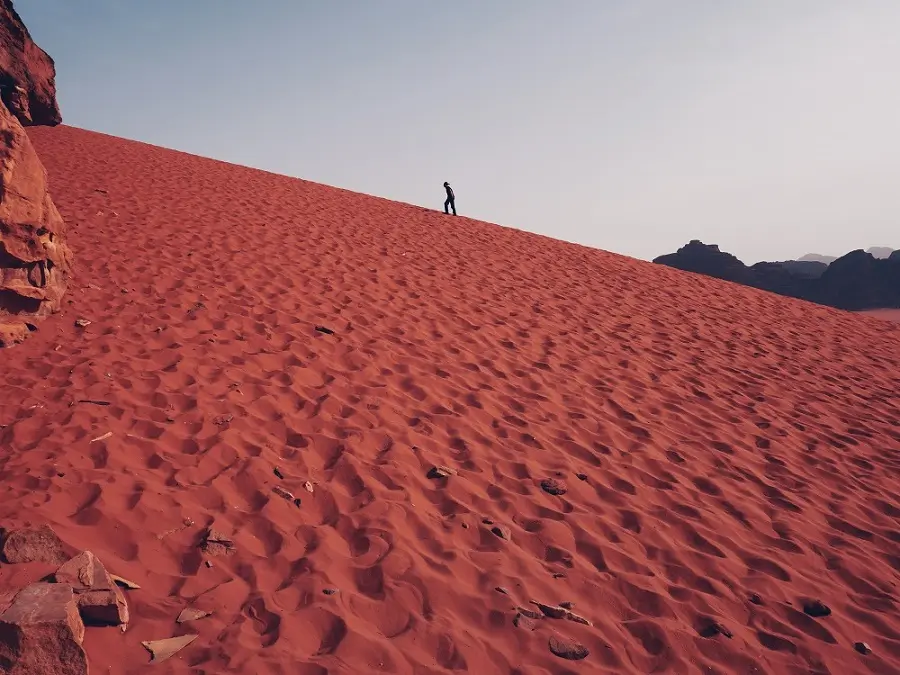
Also called Al Ramal Sand Dune, is one of the most spectacular dunes in Wadi Rum. With a bright orange-red glow, these dunes in Wadi Rum are so distinctive due to a high concentration of iron oxide particles (basically just rust!).
The top of the rocks here was used as a filming location in Lawrence of Arabia and the views are exceptional. Some people do sandboarding here, but it was empty when we visited and I’m pretty appreciative that nobody was sliding down the dunes, if I’m honest.
White Desert
Missing much of the iron oxide particles, this southern section of Wadi Rum has a more familiar yellowish desert colour. It has softer sandstone, so erosion happens faster and has resulted in a distinct form of scenery.
Add this place to your itinerary to escape the crowds if you are visiting during the busy season. There are lots of hiking opportunities, including Jebel Umm ad Dami, Jordan’s highest point at 1854 metres, where you will likely see very few tourists on your hike.
Rock Bridges
There are three well-known, walkable rock bridges:
Um Fruth | the Um Fruth natural rock bridge is a giant horizonal rock, balanced on two stone pillars. This one is easy to climb (takes a few minutes) but it was the busiest on the Wadi Rum Jeep tour circuit so we didn’t hang around here for long. We also thought it was the least scenic of all the natural bridges too.
Burdah Rock Bridge | this is the highest bridge in the area and one of the highest in the world. At around 80 metres high, it is the only one in Wadi Rum that is difficult to reach on foot. The hike is around four hours up, however, is easy to see from the bottom from your Jeep tour if you don’t have time.
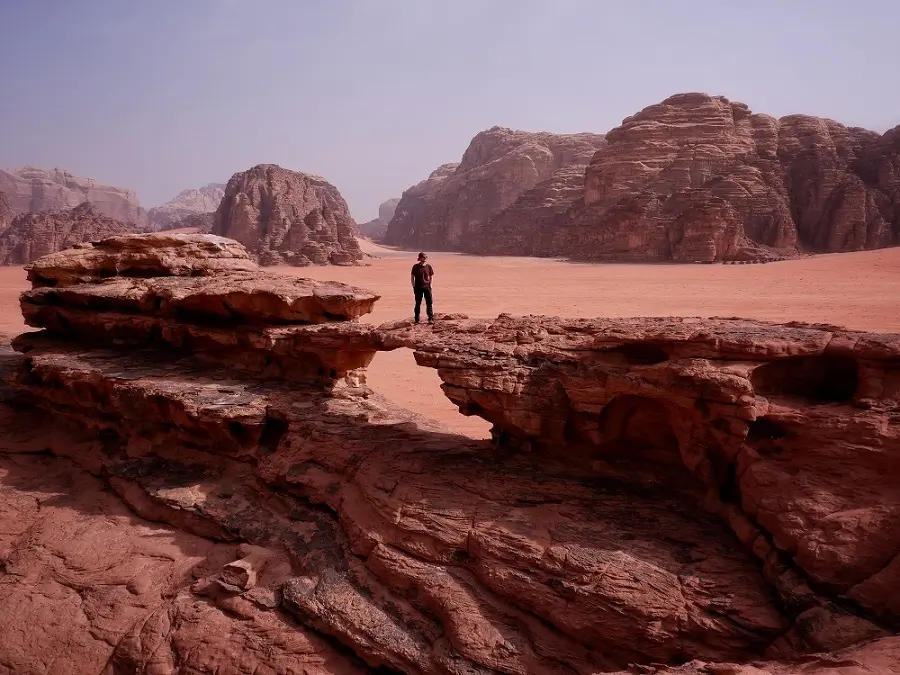
Little Rock Bridge (or Raqabat al Wadak) | despite Little Rock Bridge being the smallest, it was one of our favourite Jeep tour stops. The name in Arabic means ‘pleasant overview’ which I can fully agree with! The structure is easy to climb with near 360 degree views of the desert. We also found that there were very few other tourists here.

How Much is a Jeep Tour in Wadi Rum?
The cost of a Jeep tour in Wadi Rum varies. By hiring a car by the hour at the visitor centre or Rest house in Wadi Rum Village, the going rate is about 20 JOD an hour per vehicle (not per person). This works out well if there is a group of you all splitting the cost. Occasionally, these tours can be a bit restrictive though and will only stick to specific routes.
Your lodging will be able to organise a tour for you which may include food, a guide, a vehicle and be more flexible on the itinerary. These prices vary hugely but can be from 35 JOD per person for 5 hours and upwards (a lot!).
Jeep tours on Get Your Guide also have a range of prices and include reviews, with sunrise/sunset options as well as half and full day tours. Always ensure food is included for a full day and if you want to learn anything about the area, confirm the guide speaks your language.

How Many Nights Do You Need in Wadi Rum?
Most say 1-2 nights is sufficient, however this will depend on what activities you are interested in.
One night | for just a quick Jeep tour around the desert to have a look around, then one night is adequate.
Two nights | with a list of specific sites which include some hiking, I recommend two nights.
Three or more nights | this is ideal for seeing all the standard tourist hotspots, taking a few hiking opportunities in the red desert, visiting the White Desert and climbing to Jordan’s highest point to look out over Saudi Arabia.
Where Should You Sleep in Wadi Rum?
There are loads of lodging options in the protected area of Wadi Rum. From posh, Martian tent pods with private bathroom to hanging out in a bivvy under the stars, you determine your experience!
Wherever you choose, you will typically be picked up in a Jeep from the Rest House car park in Wadi Rum Village. From there, you will be transferred to your accommodation.
All prices quoted below are nightly for two people sharing.
WHERE TO STAY IN WADI RUM
There are loads of options in the Wadi Rum desert. I was enormously overwhelmed and found it all very stressful trying to choose where to stay.
Here are the ones we recommend (I did some serious research, questioned all our Instagram followers, plus got some direct recommendations from friends). This is a narrowed down list from the million suggestions we received:
TOP RECOMMENDED BUDGET
Wadi Rum Fire Camp – from £4, half board
Wadi Rum Desert Adventures – from £18, half board
Wadi Rum Magic Nature Camp – from £28, half board
TOP RECOMMENDED MID-RANGE
Wadi Rum Dream Camp – from £47, shared bathroom, breakfast
Hasan Zawaideh Camp – from £52, private bathroom, breakfast
Wadi Rum Legend Camp – from £45, private bathroom, breakfast
TOP RECOMMENDED HIGH-END
Memories Aicha Luxury Camp – from £157, private bathroom, half board
Bubble Rum Camp – from £94, private bathroom, breakfast
Jamal Rum Camp – from £99, private bathroom
–
We fully recommend checking the reviews for each on Booking.com to check the accommodation is suitable for you. Then, if it’s not noted in the description, contact your favourites on Whatsapp to check:
if they charge to pick you up from Wadi Rum Village;
what they charge for excursions;
if they cater for vegetarians or other dietary requirements;
and any questions about sleeping arrangements.
This is what we did, which helped narrow down our options as some responses were so helpful! We messaged our lodging choices only two days before arrival and had no issues in arranging our trip. Nothing like leaving things to the last minute!
–
OUR RECOMMENDATION
We stayed in a cute bubble in the Memories Aicha Luxury Camp and absolutely, completely loved it.
The bubbles and rooms all have private bathroom, are spacious, comfortable and have air conditioning. The location is super pretty and the staff all spoke excellent English.
We didn’t pay the amount above (got a bit of a bargain), but I think it’s worth the money even if we had. It’s one of our most unique places to stay, ever.
The dinner and breakfast was absolutely exquisite, too (I’m used to going a bit budget, food-wise, so this was all quite overwhelming).
We would definitely recommend them, especially if you want to eat *a lot* of food and need air conditioning during the hotter part of the year.

Can You do a Wadi Rum Day Trip from Aqaba?
Yes, you can arrange a day trip for your Wadi Rum Jeep tour. It makes the most sense to organise this as a day trip from Aqaba, the closest major town.
With a Jeep tour leaving Aqaba early morning, you can expect to spend most of the day at Wadi Rum with a lunch included. There are also tours where you organise your own transport to Wadi Rum from Aqaba by taxi which are cheaper.
Check online at Get Your Guide or ask at your accommodation in Aqaba.
There are also one day tours that include Petra, but we would not advise you do anything so rushed. You’ll hardly see either of these incredible sites and if you are low on time, just choose one. Controversially, Wadi Rum would be our recommendation!
When is the Weather Best to Visit Wadi Rum?
You can visit Wadi Rum at any time of the year; however, the desert suffers from extremes of hot and cold. The best time to visit is between March and May, and September and November. These months have mostly mild weather and comfortable conditions for hiking and sleeping.
Spring | (from March to May) in Wadi Rum has warm days, between 20-30 C, and lovely night temperatures between 10-20 C. It is also wildflower season. This is the most popular time to visit Jordan so it may not be quite as idyllic as you’d hope! Autumn is similar in temperature and conditions, but with slightly fewer tourists.
Summer | in Wadi Rum can be very hot and dry. You can expect day times to reach highs of 40 C (over 100 F) and night time temperatures around 20 C. This makes the open top Jeep tours in Wadi Rum and midday hiking uncomfortable and, in some cases, dangerous. Wadi Rum Jeep tours tend to take large, shaded breaks during the middle part of the day to remedy this. If the temperatures are no problem, this is a fantastic time to visit as it is the quietest season.
Winter | it can rain in the desert and most precipitation falls during the cold season. Apparently Wadi Rum only receives rain a couple of weeks throughout the entire year so it’s not that likely. The day times are around 10-15 C and can dip to freezing on the colder nights. This is another great time to avoid the tourist masses.

Environmental Issues in Wadi Rum
I would be remiss if I didn’t mention the effect that tourism has on the environment of Wadi Rum.
At least 500-1000 four-wheel drive vehicles operate in the protected area, far exceeding safe limits. According to UNESCO, it is impossible to enforce regulations around tracks and the inevitable disturbance to vegetation and wildlife.
I believe people should continue to visit, as the local Bedouin people make much of their living off the tourists nowadays. However, spending more time hiking instead of driving, would reduce some of the vehicle damage. With tours, try and locate a company that uses newer vehicles with a smaller environmental impact. New vehicles are rare in Jordan from our experience though. Also ask about their environmental and sustainability policies.
If you have an English (or your own language) speaking guide, talk to them about the environment; understand how they see the damage from their perspective and what, if anything, they feel we all could do about it.
Final Thoughts
Wadi Rum was easily our favourite few days out of more than two weeks driving in Jordan. It far surpassed our experience at Petra, and Petra was incredible.
The spectacular landscape has been compared to Mars, for good reason. I know it’s an overused phrase, but it must be seen to be believed (although honestly, I have no idea what Mars actually looks like). The trip was a great mix of physical activity, sightseeing and hanging out. Plus, somehow, we ate better food in the middle of the desert than we did anywhere else in Jordan!
We hope this helps you plan your Jeep tour, and you have an amazing time in whatever desert accommodation you choose.
Have a great trip.
Hi, thanks for visiting our blog! If this post has been of help to you, or you’ve just enjoyed our random ramblings and musings, say thank you by buying us a coffee! It helps keep The Restless Beans blog up and running.
Thank you, Claire + Nick


