

· BIG ISSUES ·
What is ‘Home’ for a Traveller?
Scribbled by Claire ◊ 07 Sep 2024
I’m having trouble defining what exact ‘home’ is – how would you define home as a traveller?

It has been four months since I walked out from my house in England, leaving for our latest lengthy trip – an odyssey through North and South America. Due to a certain pandemic, it has been two years since I originally dreamt up this particular journey – two years being stuck in the same place. It has been a long time coming.
So, four months in, I’m speaking to one of the few friends that I’m still in regular contact with (another difficulty of travelling is maintaining relationships – a discussion for a different day, though). Her words hit a nerve with me:
‘Nowhere feels like home. I feel very anxious about it’.
I can absolutely relate to this statement – I feel it, hard. As an intentionally transient drifter it made me pause – should I feel like I have a home? Why would the lack of one make me feel anxious? It made no sense – I crave the freedom in my life that I engineered for myself; I don’t want a home, do I?
What even is the definition of ‘home’ anyway and what makes people call a place ‘home’?
It seems like this odd, uneasy feeling falls on deaf ears when I try to explain it. Many people are unable to imagine a world without a place they call home. Maybe it is due to the proximity to their family or friends; the actual bricks and mortar they live in; their childhood memories; the intense affection or connection they hold for a town or village. Maybe food is the thing that makes people feel like they are home (this one I can come close to understanding).
I don’t have any of those attachments, though. As melodramatic as it sounds, not many people can empathise with that, which adds to the sense of isolation that is already inherent in nomad-style life.
This post may contain affiliate links. If you book through these links we may make a small commission at zero cost to you. It helps us pay for the upkeep of this blog. Thank you!
My ‘Real’ Life
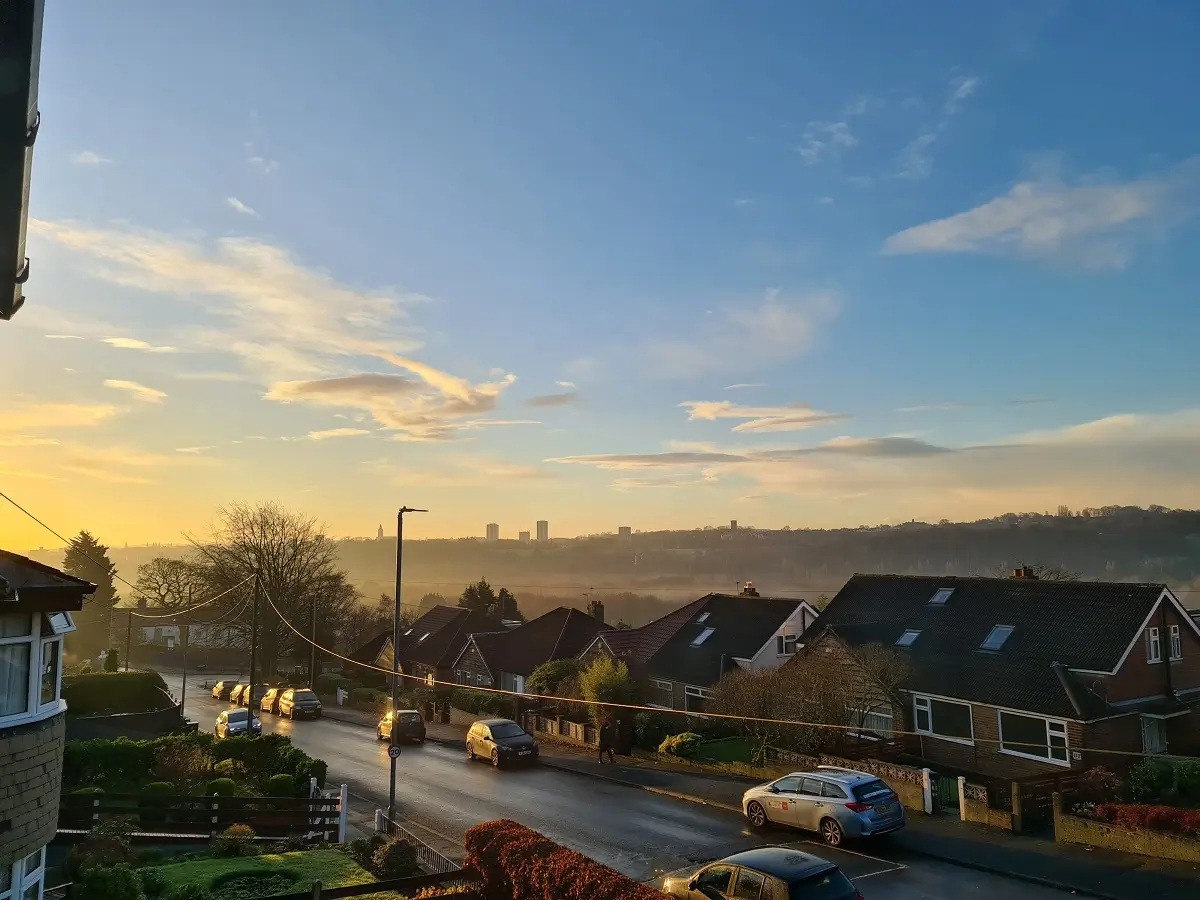
Apart from a one-year stint living in Canada, my permanent residence has always been in the United Kingdom. I guess technically my ‘home’ now is a large city in the north of England. It is not where I was born or where any of my family or long-term friends are from, or even where I have worked for any significant time. I went to university in the city for eleven years and we have a house there – that is my tie. It’s as good a place as any in the United Kingdom.
If I’m not travelling, it is where I exist.
My house is where I attempt to optimise my surroundings – I hang our Navajo sandstone art and Vietnamese silk paintings; I display our little ceramic Ethiopian chickens on a shelf; I frame favourite photos from our trips. This personalisation still does not make it feel like home, though – I’m still just existing there.
‘Existing’ is a term I use often to describe my home life and I’m not sure it is the most wholesome outlook. How do you describe your life at home? I’m guessing most people probably use more fulfilling terms.
Nowadays we generally use the word ‘home’ to describe our room or apartment in whatever town we are currently in. It’s an odd habit that we’ve commented on in the past that feels strangely normal to us now.
WHAT DOES THE DICTIONARY TELL US?
It turns out there are numerous definitions for the word ‘home’. At least the variety justifies my confusion around the topic! Here are some that I found (from Cambridge, Collins, Merriam-Webster and Oxford):
1. ‘the house, apartment, etc. where you live, especially with your family’
2. ‘the place in which one’s domestic affections are centered’
3. ‘your own country or your own area’
4. ‘relating to your own country as opposed to foreign countries’
5. ‘someone’s or something’s place of origin, or the place where a person feels they belong’
My understanding of the first two definitions is that they relate to your physical house (I read domestic affections as house, family and belongings). I do own some bricks, but I do not feel at home in them. That materialistic aspect of ‘home’ does not resonate with me.
Number three and four are more about the country you are from, but they don’t really define what ‘your own country’ means. I feel most familiar with the United Kingdom, where I was born, but do I feel I belong? Not so much.
The fifth definition starts with ‘place of origin’, like numbers three and four, but ends with ‘where a person feels they belong’. That is a pretty broad definition that really does not answer the question of ‘what is home’. I like that latter part of the sentence though – I think we all want to be where we feel we belong. I just haven’t found that place yet.
Perspective Matters
We’ve all witnessed those beautiful images on television (and some lucky people in person) of nomadic yak herders that follow the weather and pastures for their animals, moving their yurt wherever the animals will thrive.
I can’t speak for them, but I imagine their lifestyle instills a unique sense of what ‘home’ means. People who live in an RV or van permanently might also have a comparable, alternative definition of home.
In this wonderfully varied world where each person is unique, the word ‘home’ conjures up a fantastic number of opinions. Here are some that I have come across:
◊ It is often expressed that a physical structure with walls, a place where you unpack your bags, decorate and cook, possibly with personalised material possessions, makes a place ‘home’. This appears to be the most common description almost everywhere I have travelled.
◊ Another theory is that you feel ‘at home’ if you can physically function comfortably with low stress. Can you perform day-to-day tasks? Things like getting your haircut; buying the food you need; getting from A to B; not overheating/freezing; communicating.
◊ Could ‘home’ be centered around a sense of familiarity? Like the above concept of function, but with an added emotional sense of belonging due to your knowledge, experience and even nostalgia of a place. This familiarity would also be applied to the people who live in said place.
◊ Could the concept of home come from a sense of privacy? An environment where you control the flow of people, where you have autonomy? This cannot be a universal definition. In certain cultures, a home might be a single space shared with many people, sometimes even accessible to the public. It could be argued that this lifestyle is often one forced by poverty, however I imagine the residents still consider it home.
◊ Another argument for the meaning of home is that it is purely a mindset rather than a physical space. A person a long time ago said to me that home was anywhere he felt ‘at peace’. He then went on to say that he could ‘be at home watching a Thai sunset’ although I think that transient, temporary contentment could hardly be called ‘home’ for me. It seems more of a romantic notion.
Final Thoughts – Home for a Traveller
When I asked Nick where his home was, he just answered ‘England’ – a man of many words, right there. I asked him to think about what made it his home and I think he prescribes to the traditional view of ‘it’s where my stuff is’ and is familiar to him. I like that answer, it’s simple.
It feels way less simple to me. Maybe I lack a sense of identity and self which is why I am still searching for where I feel at home. Certainly, if feeling ‘at home’ is tied to your happiness and contentedness, then despite the familiarity of Yorkshire; the countryside, the food, the accents, the decent beers; it is not my home.
It might be an almost unachievable, unattainable sense of contentment that will make me feel at home. Not just a momentary, fleeting feeling like a sunset or some decent food, but a long-term continued sense of comfort that I imagine (I hope!) I will feel in my bones.
I think I would also need to have a constant intrigue into the place I call home – which is almost the opposite of familiarity! A place must keep me on my toes, however that is done. Unlike the idea of function and familiarity, the place I call home I hope would always excite and challenge me.
The only other association I have with my current home is my bed. It’s what I think of when I consider going home. But just like the yurt to the Yak herder, my bed could be anywhere in the world and I would feel the same about it. I wish my bed could drift with me!
At the moment, my opinion is that as I evolve, my idea of ‘home’ will evolve, too. Southeast Asia is the only place I can imagine feeling at home in at the moment – but having only spent a few months there, I don’t want to make any hasty declarations. We are currently in discussions about living in Rwanda for a few months; also the possibility of doing the ‘van life’ thing around Europe. Maybe they will give me some more insight on the matter.
After all our travelling over the years, one thing I know is that I feel ‘at home’ when I don’t know what day tomorrow is and Nick is next to me. I’m happy with that.
Update | since writing this post in 2022, we moved to Bangkok, so it turns out Southeast Asia is my home, at least for now. So, going forward in 2025, I do feel a little more at home, in one of the world’s mega-cities. I didn’t see that coming in 2022, to be honest!
What does ‘home’ mean to you?
Hi, thanks for visiting our blog! If this post has been of help to you, or you’ve just enjoyed our random ramblings and musings, say thank you by buying us a coffee! It helps keep The Restless Beans blog up and running.
Thank you, Claire + Nick


i think home is wherever you feel the most comfortable with just being yourself. It doesn’t have to be a place, it could be a person, a community or maybe even a state of mind you reach where you see everywhere as somewhere you belong naturally.
I feel at home either when im comfortably and peacefully on my own or with people that understand me the best and never judge me, people that love me and that i love.