

12 Beginner Tips for Camping in the U.S. National Parks
Scribbled by Claire ◊ 18 Aug 2024
Are you planning to take an epic camping trip in the United States national parks, but don’t know where to start? Here, we give you 12 essential tips to help you make your outdoor adventure happen, including how to reserve a site, how to save money, what facilities are available, how to deal with wildlife, and loads more!

Fancy hiking up huge desert sand dunes surrounded by mountains? Driving along foggy coastal cliffs with crashing waves? Rambling through moss covered temperate rainforests? Taking a dip in high altitude lakes? Witnessing the most magnificent record-breaking trees? Standing before dormant volcanoes, geysers and bubbly mud? All these, and more, can be found in the United States national parks and the greatest (and cheapest!) way to experience those is by camping.
Before I travelled around the United States, I had only ever camped at music festivals in the United Kingdom and Europe. I thought I knew what camping was. Although those experiences definitely challenge you (in the ‘no showers for a week, drunken rampaging mess, muddy fiasco’ kind of way; you’ve seen Glastonbury, right?), I was very much mistaken.
Since those less than glamorous days, we’ve spent many months camping in more than 30 U.S. national parks, multiple times, and this is a list of everything we’ve learnt (and what we got wrong).
This post may contain affiliate links. If you book through these links we may make a small commission at zero cost to you. It helps us pay for the upkeep of this blog. Thank you!
1. Buy an America the Beautiful Pass
So, this isn’t directly to do with camping, but it is excellent advice.
Buy an America the Beautiful pass for the national parks. It costs $80 and unless you are only visiting one park, it makes financial sense. Entrance fees can cost up to $35 dollars per car, per park. This means you make your money back in less than three individual park visits.
Validity | the America the Beautiful pass is valid for the whole year for every national park, monument, recreation area, historic site and forests. If a park has ‘National’ in the name you will get free entry. If you’re an international visitor, take it home as a souvenir after your trip – you can’t gift/sell it because, to be valid, it requires identification. Plus the National Parks need all the support they can get.
Purchase | You can purchase the pass at almost any National Park entrance. Ask for the ‘America the Beautiful’ pass, or order online (but you’ll have to get it posted, so I wouldn’t bother).
If you are interested, read more about why we recommend it, more purchase options and how much money we saved on our post about the America the Beautiful pass.
Note | this will not gain you access to state parks, like Valley of Fire State Park in Nevada for example. You’ll need an individual Nevada state park pass for that (or pay the standard entrance fee).
2. How Much Do National Park Campgrounds cost?
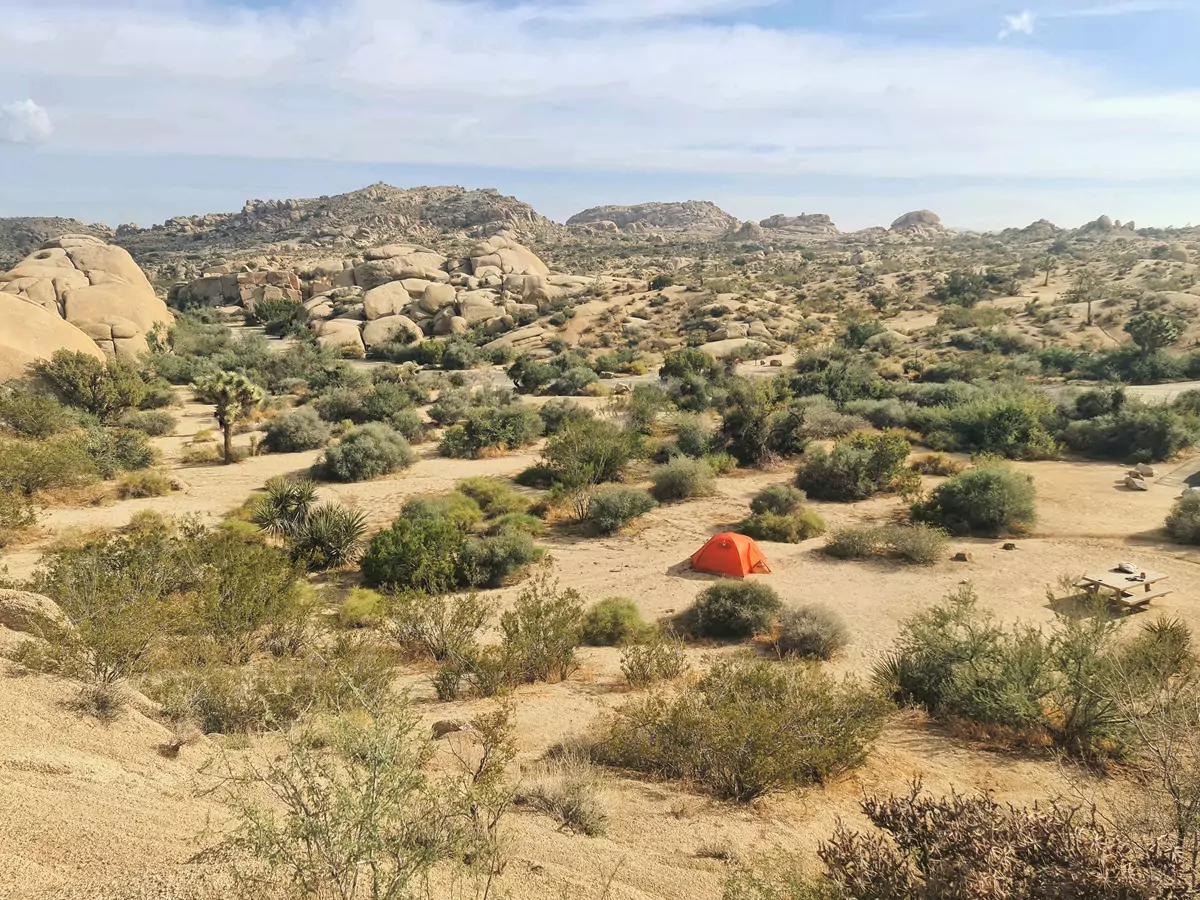
The cost of a national park campsite in a developed campground varies between parks, from around $10-$35 per site per night.
Note | the annual ‘America the Beautiful’ national park pass does not give you a discount on camping, only on park entrance fees.
State parks | these are sometimes more expensive, but can work out well as they often include your entrance fee within the camping cost. Check the specific park website to confirm.
Free National Park Camping | occasionally, there are free campgrounds – Death Valley, for example, has some during summer. Also note that the price does not always reflect what facilities and amenities you will get.
CAR HIRE FOR YOUR UNITED STATES ITINERARY
We always rent our vehicles all over the world, including our recent trip in the United States, with Discover Cars. They’re often the most affordable, plus they paid out immediately on an insurance claim we made when our car took some heavy damage in Sicily. We fully recommend them.
If you book through the link below, we make a small profit, at zero cost to you, which helps us write these posts with no advertising! We only endorse products and companies we actually use regularly. For more information, read our position on affiliates.
–
TAKE A LOOK BELOW OR CHECK CAR RENTAL
3. Look for Alternative Campgrounds
If your chosen national park campground is fully booked (as they commonly are), consider national monuments, forests and state parks as an alternative.
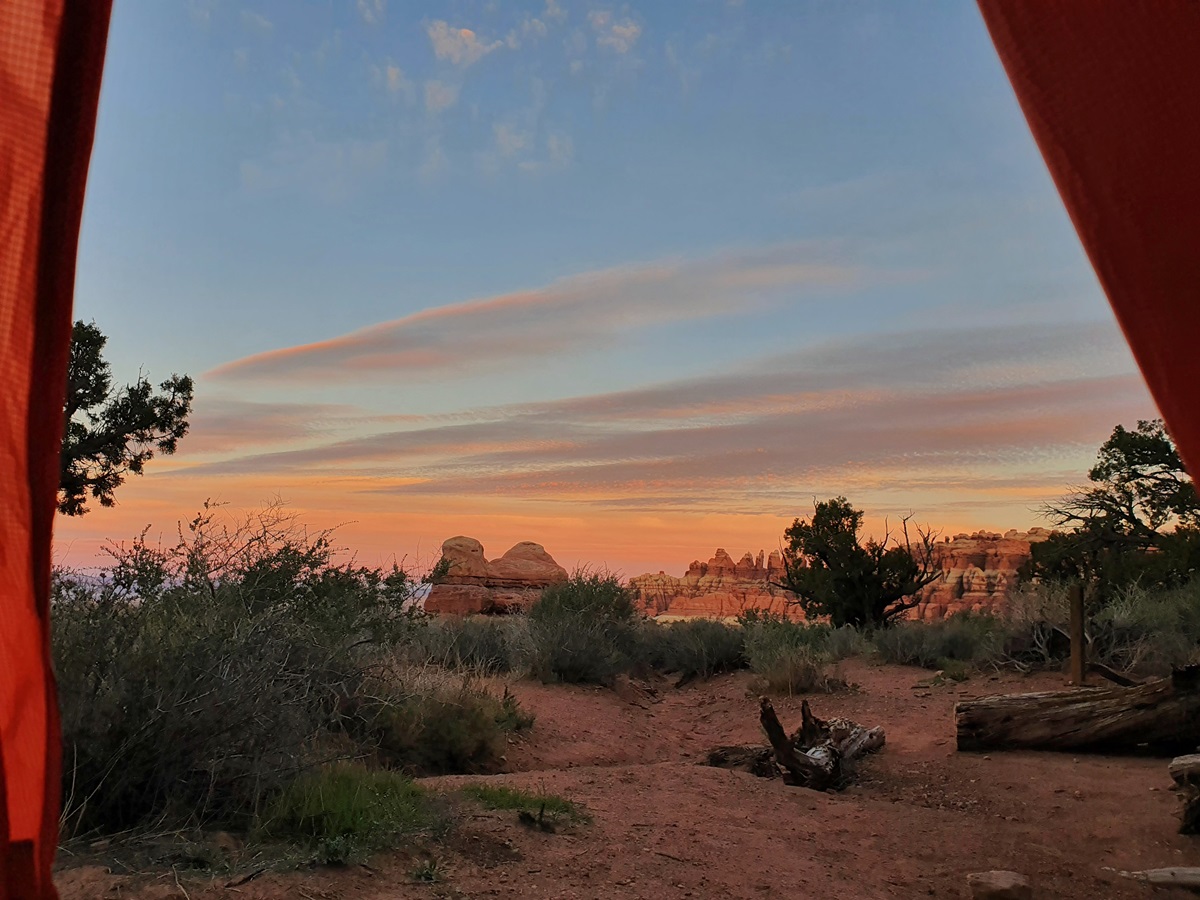
These are also excellent options when looking for a more chill camping experience. Check out our favourite lesser visited (but no less epic) U.S. parks if you are considering something a little more offbeat.
National monument campgrounds | these are covered under the America the Beautiful pass and have very similar facilities to most national parks.
State park campgrounds | in our experience, the state parks often have better facilities in their developed campgrounds; things like hot showers and nicer bathrooms. State parks have different entry passes to the national ones, so the ‘America the Beautiful’ pass will not get you free entry to any park with the word ‘state’ in it.
If you check recreation.gov for your chosen national park and it is sold out, look for nearby campgrounds instead (it’s an option on the website). You will be able to see any close alternatives that are also managed by the National Park Service (and therefore the America the Beautiful pass is valid for entry).
4. How to Backcountry Camp
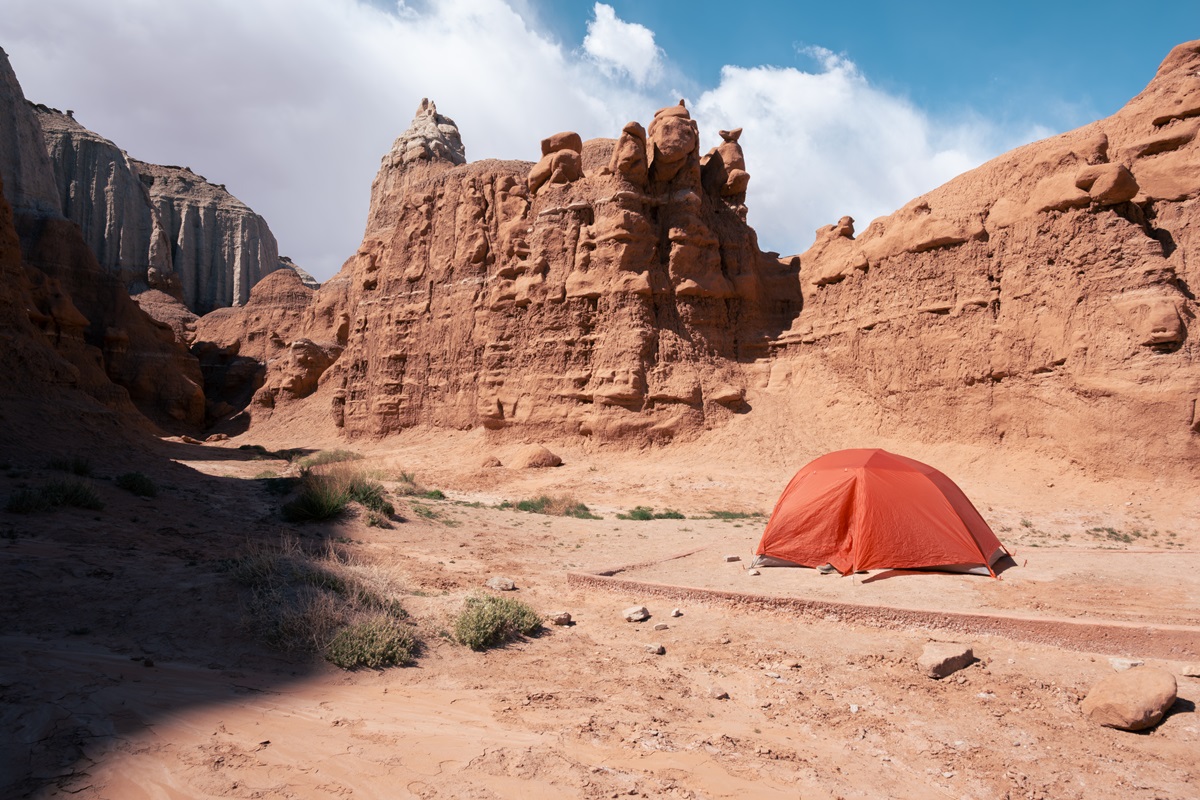
National Parks have strict camping rules. So, if you want to backcountry/wilderness camp overnight (so not in a developed or managed campground), you will likely need a permit.
Often, in very popular parks, you will struggle to get a backcountry permit without a lot of notice or luck, however in less visited parks you can wander in and always get one same day.
Backcountry rules | every park has their own individual rules regarding fires, waste disposal, campsite locations and more, so check out your preferred park on the NPS website.
Getting a permit | the process can be a little arduous sometimes – some parks even require a fax or phone call to apply (the Grand Canyon only moved away from fax in 2023). If they are reservable online, it will usually be on recreation.gov.
Walk-ins | with less popular areas, it may be possible to walk into the backcountry office and pick one up for the next day. This is always worth enquiring about, and we have been lucky using this method, even in the Grand Canyon! In other places, like Capitol Reef National Park, any backcountry permit has to be picked up in person with no reservation needed.
Tip | the park rangers are alwaus very helpful. Always check in at the visitor centre or backcountry office and have a chat before your trip to check for weather and trail conditions.

5. How to Make Campground Reservations
If you want to camp inside a national park, most parks allow you to make reservations on recreation.gov, or occasionally through their concessionaire.
Unreserved camping | some parks also have first-come first-serve (FCFS) campgrounds. National park FCFS camping is handy if you don’t want to plan too far ahead, however you may need to arrive early if you want to secure a spot in the FCFS section, especially at weekends.
Busy parks | some of the busiest parks (like summer time in Yosemite and Glacier) are near-on impossible to get a campsite, even six months in advance through the online reservation method. There are some ethically questionable ways of increasing your chances of booking these, but even then, it’s still unlikely you’ll be successful. It’s worth planning way ahead to have a chance of getting a place.
How to reserve | the booking system and availability windows vary between different parks – it’s all a bit nightmarish, to be honest. For most parks, check recreation.gov or go through the park-specific NPS website which will redirect you to the correct place. If you book on recreation.gov, ensure to make an account and log in, well before you need to make a booking.


6. National Park Campground Facilities
National park campground facilities vary enormously between parks.
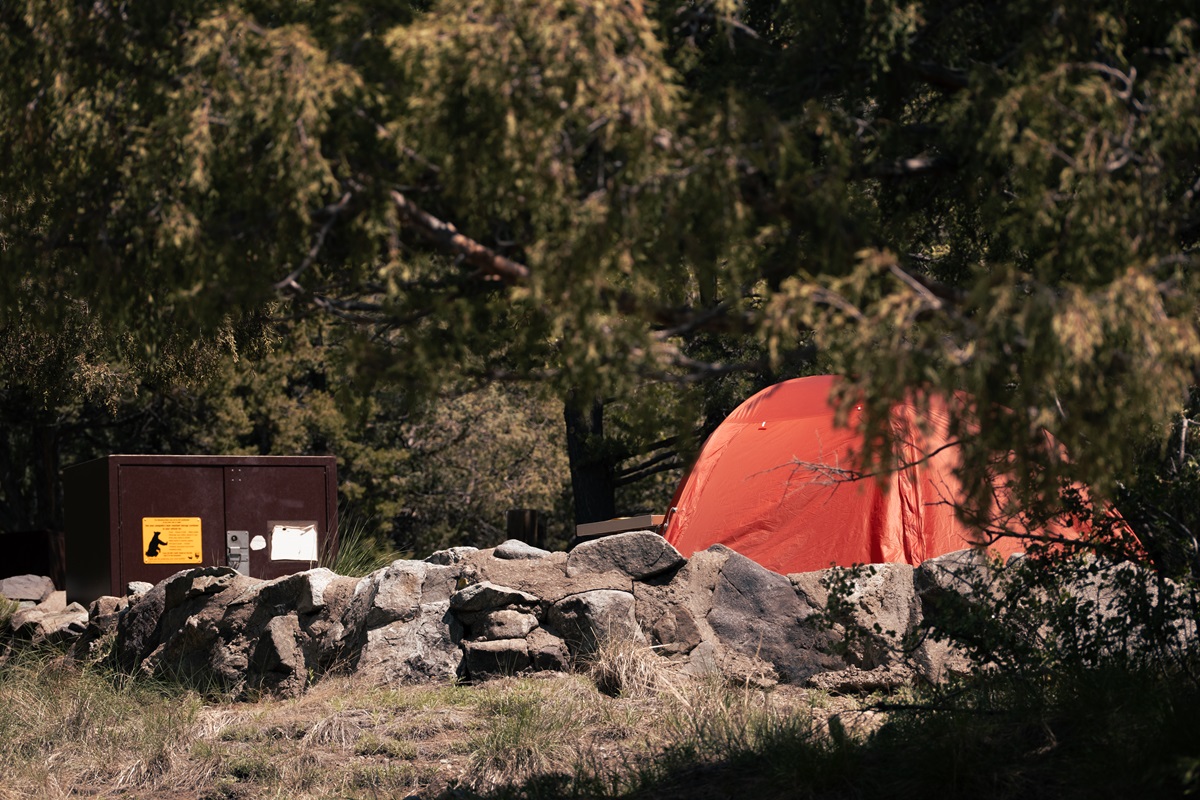
Developed campgrounds | these are reasonably pleasant, with most sites having a fire pit, bench, tent pads, parking, bear lockers and bathroom blocks. Occasionally, some have pay showers and general stores.
Primitive campgrounds | if a campground is marked as primitive, you often get pit toilets and generally less infrastructure (pit toilets are not as bad as they sound, depending on your standards).
Tent space | the tent pads (or equivalent space) can often be quite small. Check the individual campground on recreation.gov to see if there are any dimensions listed. It is worth checking to make sure your gear fits if you are bring multiple tents or one particularly large one. Recently, campsite reviews have been introduced on the site, so check these for helpful size information.
State parks | as mentioned previously, state park campgrounds often have decent hot showers and nicer toilet blocks.
Note on toilets | if you’ve never been the United States, you may not realise that for some inexplicable reason, they *love* leaving more than an inch of space all the way around public bathroom doors. Campgrounds are no exception to the rule. Sometimes the doors are not very high either. This generally wasn’t a problem for me – the bathrooms rarely get busy. It’s still a bit weird and awkward if you’re not used to it, though.
7. Be Aware of the Campground Elevation
It’s important to take note of how high your campground is.
Some sections of the most popular U.S. national parks are at an altitude around 8000 feet or higher, like Yellowstone, Bryce, Yosemite, and the Grand Canyon North Rim. If you’re from the United Kingdom, that’s like two Ben Nevis’ up. It’s high and gets super cold, even in the height of summer.
We have made this mistake, more than once, and I had an overly dramatic moment where I genuinely thought I was going to die from the cold. We have also woken up covered in snow, completely unexpectedly in summer.
Also, do not camp with only a one-season sleeping bag, just because you thought it was easier to fit in your bag.
8. Be Careful of Critters
National park campgrounds are often situated right in the middle of the parks, so you are exposed to all the wildlife and critters that call these spaces their home. From large mammals, like moose, to small crawly things, like tarantulas, it’s worth being aware of what might be living in your campsite with you!
Bears | bears are crafty nightmares and will get into your car if you leave something in there – just check out YouTube videos of it. You really, really do not need your rental vehicle destroyed by a roving bear. Some parks are incredibly strict and you will be ticketed if they can spot food in your car. Also, if a bear is caught doing significant damage or putting people at risk, they may have to be killed by the authorities.
Big note | use the bear lockers! Many campgrounds in the west come with these large metal cabinets – I think they are even a legal requirement in some states like California. You must put everything in them – even toothpaste and your baby carry seat. Anything that smells at all.
Smaller critters | although smaller animals, like mice, aren’t generally life threatening, they can still chew through your tent, bag or even the wires of your car. Keep a clean site and don’t keep nice smelling things in your tent if you’re in an area that is prone to critter strikes. Raccoons can be a serious menaces, too, in certain areas.
Canisters and ratsacks | if you are backcountry camping, in particular, it may be necessary to use a bear canister or ratsack. Sometimes it is even a park requirement to carry your food in them, so check with the backcountry office before you start your trip in case you need to purchase/rent extra gear. The backcountry office may rent them directly so contact them in advance if you are interested in this (places like Yosemite will rent a bear canister for about $5 a day).
Also, consider that they will add significantly to the weight and size of your backpack, so buying a lighter, better quality one makes sense if you’re going to use it more than once. We bought our bear canister from REI after previously using a rented one in Yosemite which was super heavy and enormous.

9. Watch Out For Wildlife
Along with the obvious bears and mice, other wildlife-related hazards in the national parks include:
greedy squirrels, packs of coyotes, rabbits, wild horses, javalinas, mountain lions, moose, elk, thieving raccoons, mosquitoes, giant camel spiders, armadillos, tortoises, scorpions, tarantulas, rats, disturbingly loud Stellar’s jays, toilet-lurking black widow spiders, angry biting ants, crocodiles and alligators, swarms of spiky caterpillars, threatening gangs of wild turkeys, salamanders, wasps, mammoth moths big enough to block out your camping lamp, loudly roaming night-time cows, Harley riders and American humans shooting guns.
We have genuinely had experiences with every single one of these, so come prepared! I’m terrible with creepy crawlies, too, so the camel spider incident was particularly traumatic.
10. Leave No Trace
Leave no trace goes without saying – always ensure that you are aware of the impact you have on the environment around you.
The seven standard principles apply even if you are just day hiking in a national park. Try to leave the parks prettier than you found them.
In particular, with national park camping, consider:
Collecting | do not take anything, not even a pinecone from the national parks. It’s illegal. Places like Petrified Forest National Park have a real problem with people taking small pieces of the park.
Firewood | you usually cannot collect any firewood from within park boundaries. Some parks even have restrictions on where you can bring firewood from – check before you arrive. If your campground has a general store, they will sell it.
Waste | ensure you follow any rules about packing out human waste if you are backpacking. Some parks have very specific rules about using wag bags and catholes. Make sure you know before you go.
11. Dispersed Camping
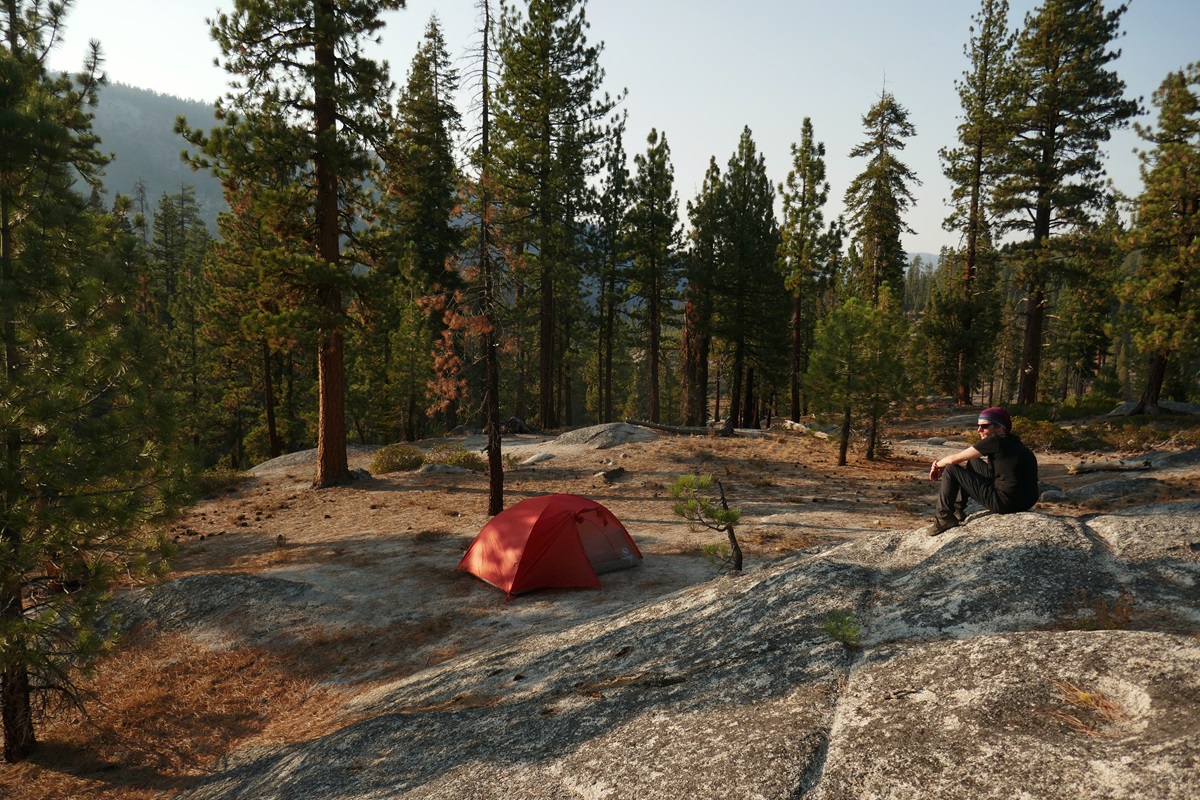
If you’re unable to secure a campsite within the park of your choice, or just want some free camping to help out your wallet, there’s a possibility of dispersed camping on Bureau of Land Management (BLM) land outside the national parks in many areas.
There are a few rules about where you can camp, but it is free, no reservations are needed and you’re away from all the crowds! The downside is that you get no facilities, so it depends on your priorities.
Check out more about BLM camping.

12. Fire Restrictions in the National Parks
Fire restrictions due to hot and dry weather are a common occurrence in the American southwest and California National Parks, where summers can reach extreme temperatures, often over 100 degrees.
Commonly, there are signs showing how extreme the fire risk is at any given time around different areas of the parks. Sometimes these high-risk conditions understandably mean restricting fires at the campgrounds.
The NPS website lists any alerts (which include fire restrictions) at the top of each park-specific page in red. It is always worth checking these before you arrive, although often you’ll receive an email if you’ve booked in advance and the rules have changed.
Bonus Tip: Use Google Satellite to Choose the Best Campsite
When choosing a campsite on recreation.gov, it can be difficult to know which are the best ones. There are usually national park campground maps on the website, so you can get an idea of which spot might be ideal, but sometimes you cannot tell how private, how large, or how close to a road they are, for example.
Often (not always), it can be easy to match the campground map provided with the image on Google Satellite. This can often show you how far apart the campsites are, how much cover they have, plus their proximity to bathrooms and roads.
Also, Google Street View can sometimes be useful for figuring out what the camping area is like, too.
If you are in any doubt at all, always have a quick look on Google Satellite!
Final Thoughts – National Park Camping
In our opinion, camping in the United States national parks is the best way to experience the crazy natural beauty, wildlife and serenity that these amazing places have in droves. It’s also a very budget friendly way to travel around the country! There is so much to love.
Even the reservation system, which can be awkward at times, provides the opportunity to choose your national park campsite in advance and aides with planning, helps with budgeting and takes the stress out of a well-planned holiday.
We this little list helps your planning and that hope you have a fantastic road trip!
Hi, thanks for visiting our blog! If this post has been of help to you, or you’ve just enjoyed our random ramblings and musings, say thank you by buying us a coffee! It helps keep The Restless Beans blog up and running.
Thank you, Claire + Nick


