

Is it Safe to Drive in Tunisia? A Complete Guide
Scribbled by Claire ◊ 26 Aug 2024
Driving in Tunisia is the ideal option for getting around, providing flexibility, freedom and most of all, adventure. But is it easy, or safe? We discuss road rules, safety, how best to rent a vehicle, Tunisian drivers, road quality, gas stations, police checkpoints, our personal experience, and much more.

Tunisia is compact, exciting, and less-visited, perfect for a self-driving road trip and an epic alternative from the tourist mecca of Europe.
The most northerly African country is a nation of sharp contrasts, with green farmland and European vibes in the north that distinctly complementing the striking desert landscapes and traditional Berber villages of the south.
A road trip in Tunisia means tackling Tunisia’s lanes and highways, driving through the countryside and cities, all in your own rental car. Depending on what you’ve read, the proposition of a drive in Tunisia might alarm you a little – however, there’s a lot of scaremongering out there (in our opinion).
Here, we’ve detailed our honest encounters after a 4000-kilometre drive in Tunisia, from top to bottom over a month, to help you plan your own trip.

IN THIS GUIDE //
Self Driving in Tunisia
WHY DRIVE IN TUNISIA?
ARRIVING IN TUNISIA
IS IT SAFE TO DRIVE IN TUNISIA?
WHERE TO DRIVE IN TUNISIA
RENTING A CAR IN TUNISIA
– TYPE OF CAR NEEDED IN TUNISIA
WHAT ARE TUNISIAN ROADS LIKE?
SPEED LIMITS IN TUNISIA
TUNISIAN ROAD RULES
GAS STATIONS IN TUNISIA
PARKING IN TUNISIA
PLANNING YOUR DRIVING ROUTE
WOULD WE DRIVE IN TUNISIA AGAIN?
FINAL THOUGHTS – DRIVING IN TUNISIA
This post may contain affiliate links. If you book through these links we may make a small commission at zero cost to you. It helps us pay for the upkeep of this blog. Thank you!
Why Should You Drive in Tunisia?
Just in case you’re not already sold, here is why we think Tunisia is best seen by rental car!
Louages (public minibuses) are a genuinely efficient, inexpensive option to get around the country, but for flexibility, freedom and time, we thoroughly recommend renting a car. Here are some reasons we recommend driving in Tunisia:
◊ It is easy and safe to drive in Tunisia (despite what others may say)
◊ Car hire in Tunisia is affordable (even more so if you can drive a manual transmission)
◊ There are rarely parking fees (these are generally inexpensive)
◊ The roads are in good condition
◊ Petrol is great value
◊ It’s a scenic and varied country – stopping to see the views is a privilege of a private rental
◊ Crime is low – your car is not likely to be broken into (our guesthouses always said parking on-street was fine. There were never signs saying ‘thieves operate in this area’ and it seemed okay to leave valuables in your car)
How to get to Tunisia
The majority of visitors to Tunisia arrive into Tunis International Airport. There are flight connections from all over Europe which are competitively priced.
We departed from Tunis International Airport and booked our flights through Skyscanner. This amazing flight comparison website is the only one we use (and we, unfortunately, take a lot of flights).
Ferries | you can also arrive by ferry into Goulette Ferry Port, in Tunis. This is what we did which was a bit of an adventure and much more fun than flying. If you are considering arriving into Tunisia by ferry, we recommend you book the trip through Direct Ferries, who provide the routes from all the different companies so you can compare prices easily.
DRIVING IN TUNISIA: QUICK FACTS
SIDE OF THE ROAD | right
PARKING | mostly free, some paid in cities
GAS COST | £0.65 per litre
SPEED LIMIT | urban – 50km/h, rural – 90 km/h, highway – 110 km/h
ROAD SIGNS | in Arabic and French
SEAT BELTS | Legally required for all passengers
MIN DRIVING AGE | 18, but 21 to rent a car
–
RELATED POST | A BACKPACKER’S GUIDE TO TUNISIA
Is it Safe to Drive in Tunisia?
Yes, driving yourself around Tunisia in a rental vehicle is safe.
In our opinion, driving in Tunisia is as safe as any other country we have been in (and, once again, way safer than Italy). If you have driven for any extended amount of time in Italy, you will be totally fine to drive in Tunisia!
Road Hazards
Weather | we drove for a few days in pretty heavy rain. During this time, other drivers were surprisingly cautious and we had zero trouble on the roads.
Animals | we saw no livestock or wildlife on the roads over an entire month in Tunisia, despite the signs for ‘dromadaires’ (camels). This was very contrasting to driving in Oman and Saudi Arabia, where it was common. Honestly, I’d actually say there wasn’t enough roadside camel!
Night time | driving at night is okay in Tunisia. We drove at night, quite a few times, and never had an issue. Roads outside of the main towns don’t have any lights, though, so be aware and drive extra slowly.
Pedestrians | in Tunisia, we noticed a lot of people loved to walk on the roads instead of paths. It’s not really difficult to avoid people, but in towns and villages you’ll likely be avoiding people, especially around markets. One time, near Bizerte, we had to drive actually through a market and I think we tragically ran over a couple of onions. Although drivers are meant to stop at pedestrian crossings, we rarely found this to be the case.
Speed bumps and potholes | I mention these further down but just keep your eyes peeled at all times!
Other Drivers
We write about road rules and driving further down, but here are a few things to consider in terms of driving safety:
Other drivers | generally, we found other motorists in Tunisia to be courteous and not particularly reckless. One exception to this are (all) taxi drivers. For some reason, they have an unreasonable amount of aggression and urge to speed, run red lights, honk their horn belligerently at you and generally be obnoxious. We never saw any female taxi drivers.
Driving style | tailgating wasn’t really a thing whilst driving in Tunisia, nor was aggressive driving (outside of taxi drivers, but they’re just the absolute worst in every country, aren’t they?).
Indicators | Tunisian drivers don’t tend to use their indicators often. We didn’t find this particularly problematic for the most part, but it’s worth being aware if you’re in busy traffic that somebody may just dart across without warning. As in Jordan, we found that not indicating actually made it easier to change lanes!
Police Checkpoints
There are lots of police checkpoints all over Tunisia. They tend to be located at the entrances and exits to towns and villages, and sometimes after exits on the toll roads.
We noticed that they mostly pulled over vehicles with some kind of cargo, so larger trucks and cars weighed down with livestock or supplies.
Although these checkpoints were common, we were very rarely stopped. When we were, one was to tell us that we had run a stop sign (which was totally not there, I’m sure!), another was just to say hi and to wave at us, and the other was just to check our passports.
Travel tip | have you and your passengers’ passports on hand, plus your rental documents.
We never questioned at length, never fined, and never asked for any kind of bribe. We personally didn’t feel a sense of threat from police corruption when driving around Tunisia.
If I’m totally honest, I feel like we weren’t pulled over very much at all because we are fair haired and white. Sometimes, they’d wave us down, just to look at us through the window and send us on our way.
Note | the police spoke excellent French and a tiny bit of English.
Where to Drive in Tunisia
Now that we’ve confirmed that it’s safe to drive in Tunisia, there are loads of amazing places to visit with a rental car! We spent a month there and didn’t get bored.
If you are planning a road trip around Tunisia, check out our flexible self-drive Tunisia itinerary that takes in all the best sites across the entire country. It can be as long as a month, or as short as two weeks.
With less time, consider checking out our Tunis and around guide. This details a fantastic number of day trips from Tunis, all of which makes sense to do with a rental vehicle.
Our top five highlights of a Tunisia road trip include:
◊ El Jem
◊ Ksars around Tataouine
◊ Djerbahood
◊ The Medina of Sousse
◊ Dougga
All of these and more are covered in our all-encompassing, mega Tunisia itinerary.
Travel tip | a few regions of Tunisia are considered no-go areas by some governments, like the United Kingdom Foreign Office. These areas are mostly along the borders with Algeria and Libya, plus a few other spots. We strayed into these, for example, around Sbeitla and Tozeur, and while I do not think it is unsafe, it does likely invalidate your travel insurance. It’s worth checking your policy in advance.
Driving Distances in Tunisia
Below is a grid with the driving distances between major towns and cities in Tunisia.
The distances are in kilometres, using toll roads and avoiding ferries around Djerba. If you use the ferry to reach Djerba, it cuts off 16 kilometres, but doesn’t necessarily save time!

How to Rent a Car in Tunisia
The most convenient location to rent a car in Tunisia is from Tunis International Airport. We booked our Tunisia rental car through Discover Cars, whose comprehensive insurance has saved us, several times (we highly recommend them).
Tunisia rental companies offer both automatic and manual cars, available in a variety of sizes, although manuals are generally cheaper. We rented a tiny, but modern, automatic four-door Kia Picanto which was perfect for our trip.
In order to rent a car in Tunisia, it is necessary to have:
◊ Passport or I.D card
◊ A credit card in the driver’s name
◊ Driver’s license
◊ 1968 IDP if using a license not written in the Latin alphabet (we recommend getting one anyway, just in case your insurance requires it in the case of an accident).
Do You Need a Four-Wheel Drive in Tunisia?
No, you do not need to rent a four-wheel drive vehicle to get around Tunisia.
It is only necessary to rent a two-wheel drive vehicle to see the main points of interest around Tunisia. There are a few places that some people say require a four-wheel drive vehicle to reach, such as Ong Jamal and Lars Homestead in the south around Tozeur (lots of people have been known to take low clearance, two-wheel drive cars to these sites, though). If you’re not a Star Wars fan, missing any of these will not be much of a loss!
Personally, we did not need a larger, high-clearance vehicle at any point during our Tunisia road trip.
Should You Get Car Rental Insurance in Tunisia?
Yes, we think that everyone should have rental car insurance when driving in Tunisia.
Although it’s safe and easy to drive here:
◊ someone could just inexplicably back into you in a car park – three times
◊ some large gravel could just jump up and chip your windscreen
◊ your car might get stuck in a particularly narrow Italian street that’s clearly only designed for manual Fiat Pandas
◊ you could have to crunch your way over loads of rubble after a flash flood
◊ somebody could drive in the wrong direction and damage your wing mirror
All of these (and more) have happened to us over the years (not in Tunisia, thankfully). I’m glad we always had insurance – we’ve never paid a thing for any rental car incident. It’s peace of mind, for us. And it definitely doesn’t matter whether you are a better driver (or not?), anything could happen.
Rental car insurance can be organised directly through your rental company when you pick up the car, or in advance with your broker, which is what we do, through Discover Cars. It’s super affordable and they always pay out, even when we had a completely trashed vehicle once.
Whatever option you choose, we encourage you to get some insurance!

How Much Does it Cost to Rent a Car in Tunisia?
The costs to rent a car in Tunisia varies based on season, type of car and duration. The months of December and January are often the least expensive, whilst prices in August are higher – we hired our car in April. We’d consider it to be very reasonable if you reserve in advance, at around 25-30 GBP a day. We rented a small, automatic car and paid around 3500 TND for four weeks, which is about 850 GBP.
However, we actually had two rental contracts – one for three weeks and another for the final week. This is because we extended our stay and therefore extended our car rental. Our first contract, booked for the three weeks, several months in advance, cost the same as just the final week because we booked on the day!
So, we’d highly recommend booking your rental vehicle in advance and not leaving it right to the last minute, because it was crazy expensive for us!
Other Things to Know About Renting a Car
◊ There are lots of car rental offices around Tunisia if you do not want to rent a car in Tunis. For example, we had to visit a rental office in Sousse to extend our car contract (you absolutely have to do this in person apparently, or you are not insured – so don’t return your car late!).
◊ We did not find any of the car employees scammy by trying to sell us insurance we didn’t need or inventing damage to charge us for. This does happen around the world, but it’s no more likely to happen in Tunisia (most recently, this happened to us in the United States and Saudi Arabia, but not in Jordan, Morocco and Tunisia where people told us it would).
◊ Our car rental employees spoke a moderate level of English (helpful since our french and Arabic is basic).
◊ Our rental was not delivered with a full tank of gas, so just make sure to return the car with the same amount (try not to over fill at the end!).
◊ We communicated with our rental company through Whatsapp when we were on the road. They were pretty good at responding.
CAR HIRE FOR YOUR TUNISIA TRIP
We always rent our vehicles all over the world, including our recent trips in Oman, Saudi Arabia, Tunisia, Jordan and Morocco, with Discover Cars. They’re often the most affordable, plus they paid out immediately on an insurance claim we made when our car took some heavy damage in Sicily. We fully recommend them.
–
TAKE A LOOK BELOW OR CHECK CAR RENTAL
What are the Roads Like in Tunisia?
The roads in Tunisia are generally in great condition. Almost every road we drove was sealed, with the exception of some very small, rural roads (and some unfinished roads!).
They vary, as with many countries, from high quality, super-quick toll roads, to potholed, slightly rough roads through quiet villages.
Sometimes, we’d find ourselves off-road in the mountains, driving on gravel, which we weren’t expecting – usually because Google Maps said it was a short cut. Several times, we’d end up in an area with no roads at all but Google thought there was a way through a field or something (this only happened when we missed our turning and it redirected – so be careful!).
Speed Bumps
Speed bumps in Tunisia are often poorly marked or signed! They can also be quite severe, so could potentially damage your car if you’re going too fast. Typically, they’re painted yellow or whitish, but mostly the paint has faded, so you can’t really see them.
Travel tip | always assume there will be speed bumps if the speed changes, or when approaching a village or town.
Toll Roads in Tunisia
We thoroughly recommend using the Tunisian toll roads, denoted by ‘Peage’ signs – identical to the ones in France.
The routes are quick, traffic-free and incredibly economical. They are paid for at a booth, cash only, and the price depends on distance – for example, we paid 3.6 dinar (US$1.20 or 1 euro) for 131 kilometres of peaceful toll road driving. It is always clear how much to pay, either from a screen or sign, so if you don’t speak French, no worries.
Travel tip | ensure to have lots of change on hand to save time. Giving exact change saves loads of hassle.


Speed Limits in Tunisia
In Tunisia, the standard speed limit in urban areas is 50 km/h. In rural areas it is 90 km/h and on motorways 110 km/h. However, more often than not, the speed limit is different to this and will be denoted by signs.
Sometimes in Tunisia, the speed signs disappear, leaving you a little in the dark about the speed limits. Guessing, purely based on the above limits, seemed to work and we never got a speeding fine!
Other cars did speed, but we wouldn’t say that most people who drive in Tunisia overly exceed the speed limits, and certainly not excessively. We’d consider speeding as a culture to be similar to most other countries we’ve driven in (and much better than Italy).

Tunisian Road Rules and Culture
Generally, the road rules in Tunisia are pretty similar to most other places we’ve been. Below are a few observations from our month there.
On the Roads
Side | cars drive on the right in Tunisia.
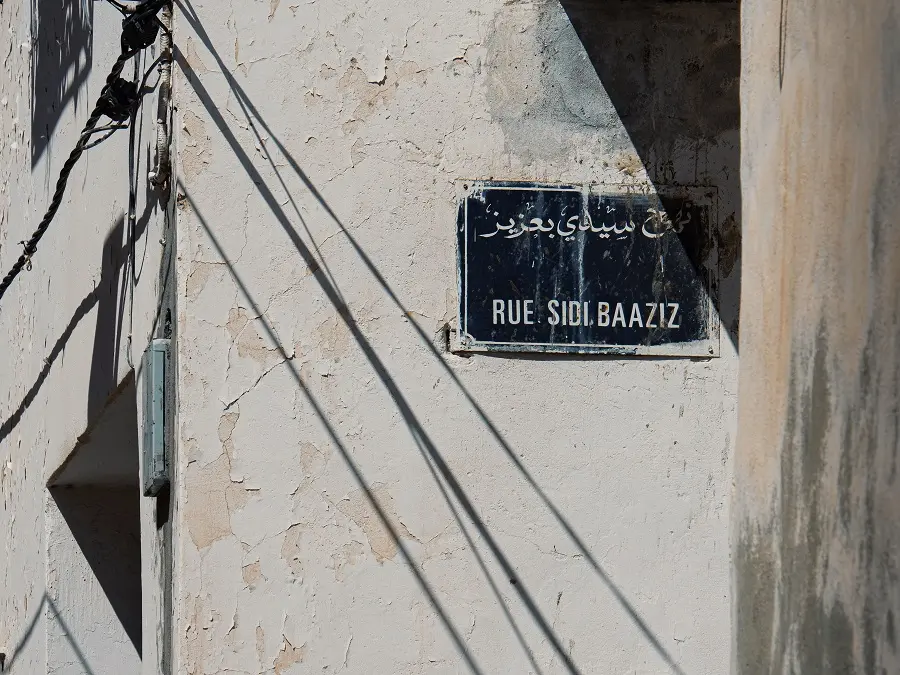
Road signs | in Tunisia, these are generally in French and Arabic, which means reading speed signs is easy for most. The majority of signs will have some familiarity if you have previously driven in Europe. Junctions, roundabouts and hazards are generally well signed (apart from speed bumps).
Speed limit signs | these sometimes disappear in rural Tunisia, and a speed limit change can just revert back to a previous one with no sign. For example, before a turn-off, a speed sign indicates to change speed and slow down, but afterwards, there are no speed signs indicating that the speed has reverted to the original one. This was confusing at first, but it’s not hard to figure out.
Speed cameras | these are common in highly populated regions in Tunisia and fixed ones are easily spotted. Police also make use of mobile speed cameras, so watch out for them!
The Drivers
City driving | Tunis was the busiest of the towns and cities we visited, as expected. We would not recommend trying to drive around the Tunis Medina (We took a Bolt taxi). However, the rest of Tunis is easy to drive in and there was no significant traffic congestion. Sfax was also very busy both times we passed through and had, by far, the most obnoxious taxi drivers.
Roundabouts | these are often the most hectic element of driving! Cars already on the roundabout are meant to have right of way in Tunisia, but often it’s more of a merging together situation (similar to Jordan but not nearly as bad). We noticed that if you make eye contact with the driver you’re pulling in front of, things go smoother! One curiosity is that cars can often be seen parked literally on roundabouts. Police also set up random checkpoints on roundabouts, so traffic regularly stops, causing obstructions.
Horns | drivers do not aggressively use their horns in Tunisia, from our experience. It’s more for awareness, unless it’s a taxi driver (and sometimes at traffic lights if you’re slow).
Lanes | in Tunisia, drivers overtake on the left and drive on the right along dual carriageways, as with most other countries who drive on the right. However, in practice, people drive in all lanes and overtake from the left- and right-hand lanes. Slower vehicles always stick to the right lane.
Traffic signals | many traffic signals will have a countdown. So, a red light will countdown for say, 60 seconds, then go green. However, if you do not go *before* the light turns green, you’ll often get beeped. Sometimes this is a ‘helpful honk’ because the front cars can’t see the lights, but more often than not, it is because of impatient drivers.
Flashing high/main beam lights | in Tunisian driving language this basically means ‘I’m coming through’, unlike the U.K, where it means ‘after you, I insist’.

Gas Stations in Tunisia
We didn’t struggle to ever find petrol for our car in Tunisia and gas stations work pretty much the same as everywhere else in the world. The main gas stations we saw on our trip were Shell, Ola Energy, TotalEnergies and Agil.
Attendants | gas stations in Tunisia always have a fuel pump attendant, so you don’t fill up your own tank. French was widely spoken by gas station staff and only occasionally English. The translation for ‘full tank’ in French is ‘plein d’essence’. This worked for us! Arabic is, of course, spoken too.
Distribution | when driving in Tunisia, we never struggled to find a gas station, but always check ahead, just in case. Towards Ayn Darahim in the north west, for example, there were fewer around.
The country is relatively small, so you are unlikely to need lots of gas top-ups or ever be too far from a station!
Payment | we always paid by cash but some petrol stations in Tunisia accept cards. Some slightly posher toll road gas stations even have Papa John’s in them.
Prices | the cost of gas in Tunisia is very reasonable. Currently, in mid-2024, it is about 2.5 Tunisian dinar a litre for 95 Octane (unleaded) gas. This is about 62p a litre, a little under half the price of the United Kingdom.
Tipping | tipping is not required, but you can always round up to the nearest whole number.
CAN YOU DRINK ALCOHOL AND DRIVE IN TUNISIA?
Do not drive in Tunisia and drink alcohol.
Although Tunisia sells alcohol, it has a zero-tolerance policy on drink-driving. The legal limit for alcohol in the blood in Tunisia is 0 mg compared to 80 mg in the U.K. or 50 mg in France.
–
THE MEDINA OF SOUSSE | A WEEKEND IN TUNIS
Parking in Tunisia
Parking in Tunisia is not a hassle. In cities, there are options to park by the side of the road, park in bays or choose secured car parking. Outside of cities, you can pretty much park where you want. We never had a problem finding free parking.
Street Parking
Rules for parking in marked bays vary by colour:
blue and white markings on the curb or bays means pay parking
red and white bay/curb means (generally) that parking is not permitted
white curbs or bays means it is free to park.
We found it rare that people followed these parking rules, though!
If there are no signs saying otherwise, nor any painted lines on the curb, then it’s okay to park by the side of the road, so long as the vehicle is not blocking access. Keep an eye out for tow zone signs – they are enforced.
Security | we often parked our car on public streets, leaving visible clothes and bags on display and had no issues. There are options for secure parking, if your accommodation doesn’t provide parking spaces, but we never used these.
Planning Your Route
We used Google Maps for all our road navigation in Tunisia.
Occasionally, Google would not have the newest roads (for example, we drove down a new toll road that was unfinished and Google did not have any record of it!).
It is not possible to fully rely on Google Maps – for example the paved road to ksar of Guermassa, outside Tataouine, is not marked. These are small issues though which don’t really make much of an impact on a journey or route planning.
Overall, if you stay on the main routes, Google will get the route correct and the timings were reasonably accurate.
It’s possible to use Waze or Maps.me for navigation, too, but I hate change and use Google wherever possible!
WOULD WE DRIVE IN TUNISIA AGAIN?
Yes, we would drive in Tunisian again, in a heartbeat.
Our experience – we rented a Kia Picanto through Discover Cars (hilariously, the same car that we have at home). It was in good condition, not brand new, but modern.
The car hire experience was excellent and put a fair few other countries to shame with the efficiency and customer service.
We had to re-sign a contract halfway through our trip and that was all arranged via Whatsapp, in English, with no issues.
Over the entire 4000 kilometres of our journey, we had no problematic or uncomfortable moments driving in Tunisia.
–
IS TUNISIA EXPENSIVE TO TRAVEL? | A TUNISIA ITINERARY


Final Thoughts – Driving in Tunisia
If you want to drive in Tunisia, we wholehearted recommend it.
The infrastructure, size of the country and increased flexibility over public transport makes it a fantastic choice for seeing the sights. When we next return to Tunisia (to explore more obscure ksars in the south!), we will definitely be getting a rental car again for our trip.
The country is incredibly simple to traverse, the price-point is great, even for budget travellers, and it’s an amazingly varied country with so much to see. We fully encourage people to visit Tunisia – even if you cannot rent a vehicle!
If you want some ideas for your trip, check out our full, flexible Tunisia itinerary, our Tunisia backpacking guide or things to do around Tunis posts.
We hope you have a magnificent time on your Tunisia road trip!
Hi, thanks for visiting our blog! If this post has been of help to you, or you’ve just enjoyed our random ramblings and musings, say thank you by buying us a coffee! It helps keep The Restless Beans blog up and running.
Thank you, Claire + Nick


I have read some good stuff here. Definitely worth bookmarking for revisiting. I wonder how much effort you put to create such an excellent informative website
This is the best piece I’ve read about driving in Tunisia, so informative and comprehensive, thank you! And thanks for dispelling all the scaremongering myths!
Thank you so much for your kind comment, really appreciate it! So happy to be of help!
I was going to visit Tunisia soon and was very apprehensive about driving. Great article. Thank you!
Thanks so much for your comment, very happy to be of help. Have an incredible trip to Tunisia!
Many thanks for this reassuring article on Tunisia and driving especially. I hope it will convince my Wife to rent a car especially that we will Travel with kids including 2years old so such convienience would be great.
Hi Michal,
Thanks so much for your comment.
I really hope you enjoy Tunisia as much as we did!
This is so helpful! Thank you very much!!
Ram
Super happy to be of help!
Dear Claire and Nick,
your information about Tunisia is very helpful, thanks very much. We would like to visit Tunisia with our own car, we are arriving from Sicily by ferry. Do you think it would be better to rent a car instead of driving around in our own car? Do you think we’ll have any problems with our Swiss license plate?
I would appreciate your comment.
Kind regards Ulla
Hi Ulla,
Thanks for your comment.
We think it would be easier to rent a car in Tunisia than to drive your own vehicle.
We don’t know the legalities of bringing your own vehicle to drive around Tunisia. However, from a little bit of research, it seems it could potentially be tricky with ensuring that you have all the correct documents needed when passing through customs. As a side note, we don’t remember seeing any foreign plates whilst driving in Tunisia.
It would definitely be logistically easier to rent a car in Tunisia. We found the rental cars to be decent in Tunisia and reasonably affordable as well.
Hope this helps