

25 Essential Tips for Maldives Backpackers – a Travel Guide
Scribbled by Claire ◊ 27 May 2025
Below is a list of quirky, useful and interesting tips and facts to help any prospective Maldives backpacker plan their trip – covering beaches, island dress code, restaurant opening times, alcohol, budget transport, realities, illnesses and more.
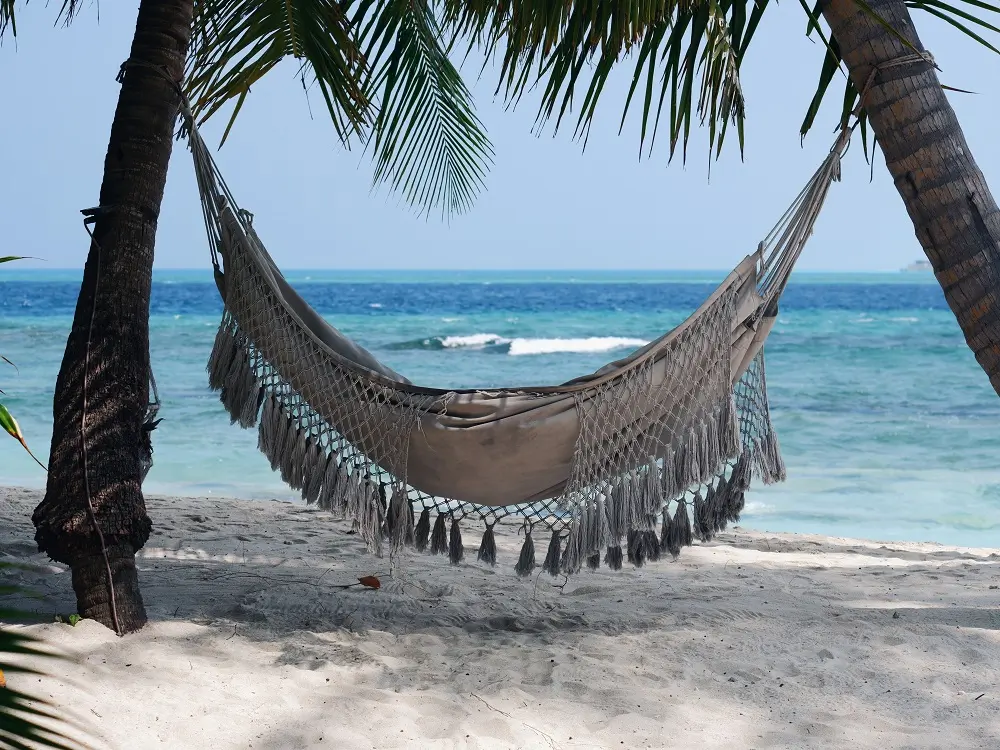
The Maldives – not the typical backpacker’s first consideration when looking for an exciting, affordable beach adventure. However, island-hopping is totally doable on a reasonably modest budget, so consider this shimmering little island nation for your next trip!
We spent several weeks checking out a bunch of local islands and, as it turned out, we were a little unprepared (our trip was booked just four days in advance).
So many factors surprised us, for good and bad, and there were loads of quirks about backpacking the Maldives that we wished we knew before arriving.
Many of these tips are particularly useful to backpackers who are intending to spend their time within the communities of people who live on the islands, instead of stowing away to resorts with their extortionately priced water bungalows.
Some might just be interesting facts (it’s always nice to know a little more about the country you’re intending to visit!). Mostly though, it’s a list of genuinely useful information that is essential to know and will hopefully aide the planning of your Maldives backpacking trip!
This post may contain affiliate links. If you book through these links we may make a small commission at zero cost to you. It helps us pay for the upkeep of this blog. Thank you!
Things to Know about Tourism in the Maldives
1. Tourism Outside Resorts is a Relatively New Thing
Although resort island tourism in the Maldives has been booming for decades now (the first resort opened in 1972), foreigners have only recently been permitted to visit inhabited islands. Since 2009, (although some residents we spoke with insisted this was closer to 2013 before it really caught on), the government changed the regulations to allow visitors to stay on the local islands. This was to increase job prospects of the inhabitants and take advantage of the financial benefits of tourism.
Over the past decade, coffee shops, guesthouses, dive centres and more have started popping up in small communities across the country. This finally makes backpacking the Maldives a reality for many budget travellers.

2. The Most Common Tourists in the Maldives are Russian
This is a controversial one and you may wonder why this is a point worth mentioning.
Well, we had nothing but unpleasant experiences with Russian tourists in the Maldives. They were surly and rude and not a single person surprised us by being pleasant. I know this isn’t a reflection of all Russians, but it was just our experience on this trip. Other people have also mentioned this too, including staff at certain hotels we stayed at (particularly in Thoddoo).
There are so many Russians visiting the local islands in the Maldives that there are even Russian dive shops and signs all over the place in Russian.
It was uncomfortable sometimes, so it’s worth mentioning that by backpacking the Maldives local islands, you’ll probably not have much fun with other tourists there! It’s not a communal, backpacking, meeting people kind of vibe. If you are looking for a social atmosphere and also like diving, we’d recommend joining a dive school or liveaboard if you can afford it.

3. Not All Maldives Islands are the Same
Opinions appear to be divided over this one! Some people we talked to, residents and tourists included, seemed to think that if you’ve visited one Maldives island, you’ve visited them all.
We, on the other hand, found the six islands we visited completely different from each other. The destinations we chose were all relatively close to Malé, yet still felt distinct. I cannot imagine how contrasting they may seem in the further reaches of most southerly or northerly atolls.
Some islands were buzzing hubs of humanity, with activity on every corner; others felt sleepy and subdued. There were some with huge fishing communities; others were agricultural. Some islands gave you the sense of adventure where you could walk for miles; others were less than half a mile long. The wildlife differed on each island too – Thoddoo was full of lizards and bats, Thulusdhoo was full of cats!
Travel tip | a lady who lived in Dhigurah said to me that if you specifically care about diving, just choose island(s) with the best ocean-based sightseeing. So, if you want to see tiger sharks, go to the island with the best chance of that.
4. Local Island Beaches aren’t like the Instagram Spots
I mean, they’re still absolutely amazing. The Instagram photos really set the bar high.
However, local islands are full of normal people, operating in normal communities, doing normal things. This means that the islands you may visit on a Maldives backpacker itinerary are not groomed and pristine like the private resort islands. Residents live and work there every day and do not exist just to serve tourist interests.
This means you’ll see the occasional trash, twig, fish or plant. You know, normal beach stuff.
Some Maldives islands come pretty close to perfect (beaches in Ukulhas, for example, were particularly incredible when we visited), but adjusting expectations is a good idea before you arrive.

5. Malé is the Most Densely Populated City on the Planet
This isn’t a super useful fact for most resort tourists who exit the airport and are immediately whisked away by their holiday representative. However, as a Maldives backpacker, it is likely you’ll be transiting through Malé to change atolls for your itinerary (most ferry routes service an atoll or section of an atoll).
We technically visited four atolls via three ferry routes – this meant plenty of time in Malé!
The city, to us, was kind of odd. It was unfriendly in the sense that people seemed wary of you and taxi drivers were scammy. We did meet some friendly residents though and some were exceptionally helpful. It didn’t seem as busy as I’d imagined the most densely populated city in the world would though, even around the market and port areas.
6. The Maldives is the Flattest Country on Earth
This isn’t just an interesting fact. It’s also important to acknowledge that the country is extremely vulnerable to climate change and will be the first to disappear with increasing sea levels (plus other issues like coral bleaching).
The islands are, on average, only one-two metres above sea level. The inhabitants of the Maldives are conscious of this predicament and must choose between earning money to feed their families via things like unsustainable tourism/fishing practices or protecting their home. It’s a difficult choice that nobody would envy.
One feature you’ll notice on quite a few of the islands is that children are taught about climate change from a young age. Messages about the environment adorn the walls of schools; pictures of turtles wrapped up in trash are pinned on noticeboards; street art often addresses the issue of recycling.
I know we can’t win every battle, but if you set foot in the Maldives, at minimum make sure that whatever you choose to do, it’s as ethical, environmentally friendly and sustainable as possible. This starts with minimising time at the unsustainable resort islands and using reef-safe sunscreen.

7. The Local Language in the Maldives is Dhivehi
Most people probably haven’t heard of this language. Dialects vary so much between atolls that often, people who mutually speak Dhivehi will not understand each other. The script looks really cool – nothing like I’ve ever seen before!
Lots of bits of the language used seem familiar in the Maldives. Some words like thank you – ‘shukriya’, are the same as in Urdu and you’ll often hear little bits of Arabic like ‘Insha’Allah’ and ‘As Salam Alaykum’.
Within the tourist industry, people speak really decent English, but it’s still worth learning at least a few words. Residents seemed stunned when we just said thank you in Dhivehi. (We got asked if we’d visited before purely because we learnt a few words, which shows how obnoxious other tourists may have been).

Maldives Laws and Customs You Should Know
8. The Maldives is a Strict Islamic Country
If the flag didn’t give it away already, the Maldives is a Muslim country.
The island nation strictly follows the general tenets of Islam, so don’t turn up expecting it to be like a full moon party in Thailand! As a citizen, it is mandatory to be a Muslim, and residents must specifically follow Sunni Islam. Since 2014, to abandon Islam as a citizen of the Maldives is even punishable by death. Sharia Law is sometimes applied at sentencing (things like flogging and stoning), although it’s not common for these punishments to actually be carried out.
You will notice a very conservative slant to most people living on the local islands. This means that lots of things may not be as you expect from backpacking other beach holiday destinations like Sri Lanka and southeast Asia.
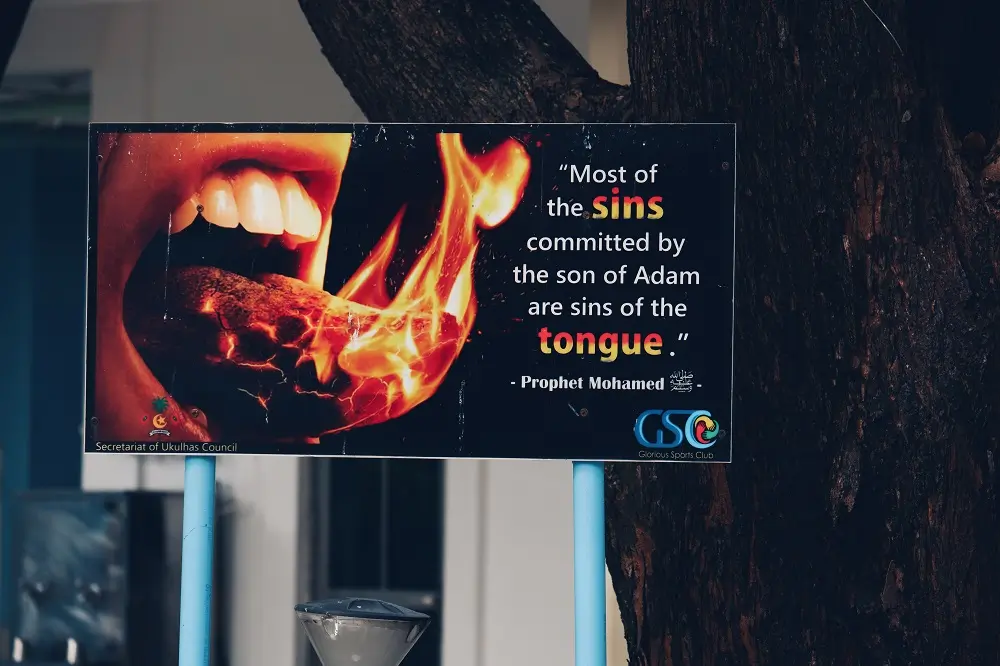
9. Bibles are Illegal in the Maldives
According to the UK government Foreign Office, bibles are not allowed. Items deemed contrary to Islam including ‘idols for worship’ are also not permissible. I assume that means other religious texts are also not accepted.
In 2021, the U.S. Office of International Religious Freedom stated that criticising Islam in the Maldives is illegal and anyone visiting the country is prohibited from openly expressing their religious beliefs.
If you are a Maldives backpacker of a different faith than Islam (or no faith, like us), I wouldn’t worry, but keep it on the down-low. Respecting other cultures includes religious preferences, so take advantage and learn more about Islam as part of your trip (if you don’t know already, obviously).
10. Alcohol is also Illegal in the Maldives
Again, just because there are pictures of perfect humans on unimaginable beaches sipping cocktails and champagne in all the brochures, does not make it an accurate depiction of the Maldives.
The reality of the Maldives is that local islands will not serve a drop of alcohol with meals, and you will not find cute beach bars selling pina coladas. However, on some islands there are some lovely fruity drinks served at even lovelier oceanfront cafes and bars. This will have to suffice for your backpacking trip to the Maldives.
There are some ‘booze boats’ (or whatever people are calling them) off islands like Maafushi and Thoddoo, and you can get expensive alcohol at resorts. Be very careful about being obviously intoxicated in public if you choose either of these options, though – it is punished heavily.

11. There is a Dress code on Every Maldives Local Island
All those pictures you see from Maldives resorts of people in bikinis is a lie.
Well, it’s not a lie, but it’s not the reality on the inhabited isles! Apart from some specific small segments on certain islands, you must dress conservatively. Cover up; skimpy swimwear is prohibited. It’s the law in the Maldives.
The general rule of thumb is to be covered from at least the knees to the elbows. This applies even if you are swimming, unless you are on a ‘bikini beach’ – see below. Nudity is unacceptable and against the law, even on resort islands.
Check out our dedicated post on the Maldives dress code for more information.

12. ‘Bikini Beaches’ in the Maldives are a Thing
Since tourism on inhabited islands was introduced, regions where visitors are permitted to hangout on the beach in their usual swimwear were introduced. Sometimes they are designated an entire beach (or two) on an island. Other times they are separated from residents by huge fences which label what you can wear.
It feels kind of strange, being separated by a fence. The idea is to separate the ‘un-Islamic values’ of the West from residents who may not feel comfortable with the way a tourist dresses.
You can always swim on the local beaches and wear appropriately covered-up swimwear (I wore sports leggings and a rash guard type top which seemed to match what local women sported – we never wore revealing swimwear like bikinis).
Remember, if you frequent the bikini beaches, cover up on the way back to your hotel.

13. You Won’t see a Single Dog in the Maldives
As a backpacker in the Maldives, you’ll have to leave your adorable pet puppy at home – it is not permitted to import them into the country. You won’t see a single dog on any of the islands, they are banned under almost all circumstances. The only exception is in law enforcement, where they are authorised as sniffer dogs.
One explanation for this ruling is that they are banned because in Islam, dogs are considered dirty.
Other animals, such as rodents, birds, cats and reptiles, are all allowed and you will see many roaming the islands.

EXPLORE MORE OF THE MALDIVES
Go island-hopping:
Ukulhas | are these the prettiest beaches in the Maldives?
Thoddoo | why you should explore this magnificent agricultural island
Maafushi | a guide to the Maldives’ most popular spot
Thulusdhoo | experience the surfer paradise of the Maldives
more tips for your trip:
How strict is the dress code in the Maldives?
Read a summary of the best Maldives local islands
Remove the complexity of planning an island hopping itinerary around the Maldives
Learn how to navigate the Maldives public ferries
How much does a two week trip to the Maldives cost?
–
Money in the Maldives
14. The Maldives Currency is the Rufiyaa, but Bring Some US Dollars
If you are backpacking the Maldives, you’ll need to use the local currency to pay for most things, from food to ferries to guesthouses.
Occasionally, a slightly classier hotel might ask to be paid in US dollars, plus tours and speed boats are paid for in dollars, but generally, you’ll need some rufiyaa for day-to-day purchases. If you are visiting a resort, these exclusively deal in dollars, and you’ll likely never see what Maldivian money even looks like.
The coins are cute, too – there have conch shells, turtles and palm trees on.
The rufiyaa currency exchange rate, in mid 2025, is about 20.5 to the U.K. pound and just over 15.5 to the U.S. dollar. Check on xe.com for up-to-date rates.
15. Exchanging any Spare Rufiyaa can be Tricky
You can’t buy Maldivian rufiyaa before arrival, so it is necessary to either exchange a major currency at the airport or withdraw from an ATM. ATMs charge 100 MVR per transaction in the Maldives.
Problem | if you only withdraw money from ATMs then try to exchange any spare currency at the end of your trip at the airport, you’ll be denied, even with receipts. It’s annoying since every ATM you’ll likely use is a Bank of Maldives machine, and the currency exchange is also run by the Bank of Maldives, so you’d think it would be okay. We discovered this the hard way.
Many blogs say that you can exchange your ATM cash at the currency exchange counter if you have a receipt. This wasn’t the case for us, so be aware.
If you do not have a receipt from the actual currency exchange counter, there are several enterprising people at the airport who will trade your leftover rufiyaa for dollars at a less favourable rate.
Note | if your notes (dollars or rufiyaa) are damaged, well-worn or defaced, the shopkeeper may ask you for a different one. Banks are strict on the condition of notes deposited. A torn note is technically worthless to a resident if the bank won’t accept it.

16. Sim Cards in the Maldives are Expensive
We always get a sim card each when arriving in a new country. In the Maldives, we chose Ooredoo who had the best value and was rated with the best coverage.
Two sim cards in the Maldives cost us more than a night of accommodation. We would normally advise people to avoid paying this, if it wasn’t for the less-than-satisfactory Wi-Fi on most islands!
The sim card would be particularly expensive if you’re only staying for a week or less. The most affordable option is an Airalo e-sim if your phone is compatible with it (we’ve used this company loads of times and think they are great). We’ve written briefly about specific sim card costs in our Maldives trip cost post.
Check around to see if your home provider offers any kind of deal. In all likelihood though, you’ll need to budget in a bit of extra cash for a phone sim, unless you’re a Maldives backpacker looking to disconnect for a while.
17. Menu Prices are not the Whole Story
Typically, if you see a price on a menu, you’ll have to add maybe 16-22% on top. If you are backpacking the Maldives, this can really add up! These extra costs are always added to food orders and comprise a GST (goods and services tax), a service charge and sometimes a green tax.
The extra charges were always written on the bottom of the menus from our recollection.
The extra service charge means you do not need to tip in the Maldives, as it is almost always already included.

Transport in the Maldives
18. Local Transport in the Maldives is Super Affordable
OK, so the Maldives can be uber-expensive, even for people not on a backpacker budget. However, one value-for-money feature is the local Maldives public ferry service.
Often, for the equivalent of just a few dollars, you can get a five-hour open-air ferry with island views and lots of space. We enjoyed every single one. Travelling on these was half the fun of backpacking the Maldives.
Don’t get the ferries and speedboats confused, though. They’re both used to transport the general public, but whereas a ferry might cost $3, a speed boat may cost $75. This might be your only option if you miss your ferry – which leads neatly on to the point below!
19. Pay Attention to the Maldives Ferry Schedules
The local ferry schedules are sort of complicated.
Some routes are simple and run at the same time every day, but most don’t. Check to make sure your intended departure route is actually running on the day you need it to (we got caught out by this). One safe bet is to check with any guesthouse you book with. We’ve found them to be very helpful when confirming ferry times.
We have written a detailed post on everything you need to know about catching ferries in the Maldives. Check it out if you are considering a Maldives backpacking trip.
Note | be aware that almost every ferry service does not run on a Friday (a holy day in Islam).

20. Taxis on Malé and Hulhumalé have Fixed Rates
If you are travelling between or within Hulhumalé, the main Maldives airport or Malé, there are standard flat rates for the taxis. Make sure you know before you go – it makes your haggle game stronger if the taxi drivers try to cheat you:
◊ Hulhumalé to Malé (both directions): 85 MVR
◊ Hulhumalé Phase 2 to Malé (both directions): 100 MVR
◊ Within Hulhumalé or Malé: 30 MVR
◊ From Hulhumalé or Malé to the airport: 75 MVR
◊ From Hulhumalé Phase 1 to the airport: 80 MVR
◊ From Hulhumalé Phase 2 to the airport: 85 MVR
Buses | there are also modern buses with aircon for a very reasonable price (we used them a few times and are easy, friendly and cashless – you just tap your card). from Malé to Hulhumalé was 10 MVR.
21. The Maldives Airport is Bizarre
It’s strange, arriving in the Maldives.
You go through a quiet, airconditioned immigration section with some nearly-smiling staff, only to immediately walk out into a hectic outdoor area with no aircon and what appears to be hundreds of booths. These booths represent Marriott, Ritz Carlton, and a million other luxury brands. There are staff members milling about everywhere, trying to locate their clients. There are hundreds of locked Wi-Fi networks, all with the word ‘luxury’ in the title. None are free.
If you arrive in the Maldives as an independent backpacker, none of that stuff above is there for you. It’s there for the family of four to your right arriving with 25 suitcases (no joke – we saw it). It’s there for the people who have spent thousands of dollars for a private seaplane. None of them need a sim card, currency exchange, bus, taxi or a little bit of free airport Wi-Fi.
From memory, at the time I was leaving, I think I described the Maldives airport as a shitshow. A hot little slice of minty-fresh hell. I stand by that, but only if you’re a backpacker.

22. Wait 48 Hours After Your Flight to go Scuba Diving
This might be more applicable for resort tourists who are immediately escorted from the airport by their chosen company to whatever private island retreat. If you are a Maldives backpacker though, chances are it’ll take you a day or two to reach your selected local destination before diving anyway.
If you move faster than us though, bear in mind that diving after flying can be dangerous.
Other Quirky Things to Know
23. Tuna is Basically Considered a Vegetable in the Maldives
If you are a vegetarian, get prepped for a potentially minimal diet. Many meals we had in the Maldives had fish in, specifically tuna (we are vegetarian normally – good thing we don’t actually dislike tuna, isn’t it?).
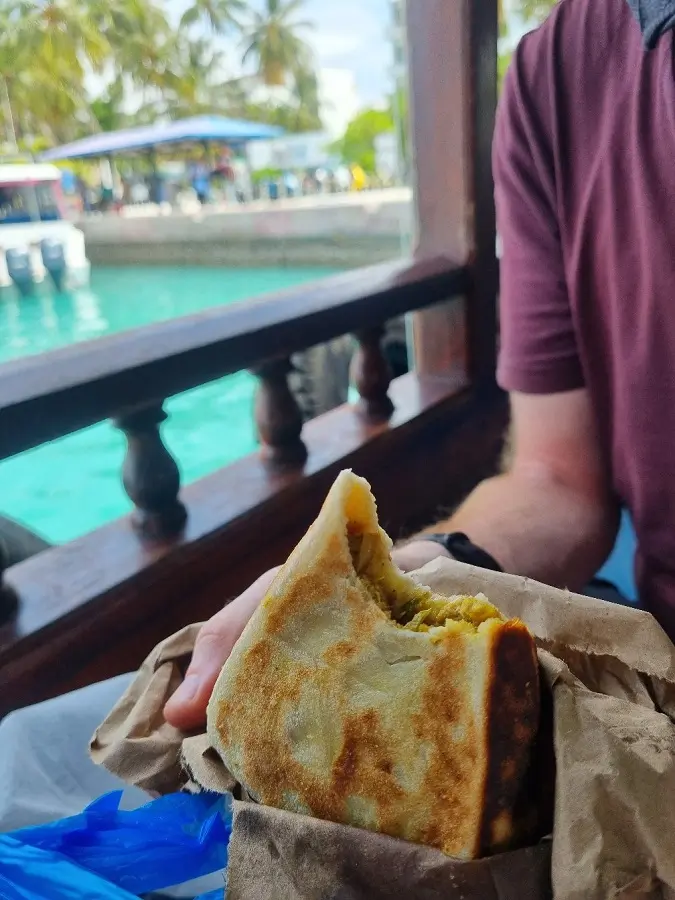
The typical breakfast is a delicious, spicy mix of tuna, chillis, lime and coconut which you eat with a kind of flatbread called roshi (like and extra flat parotti/paratha type bread). Not going to lie, it’s superb (and that’s coming from a vegetarian).
As most Maldives backpackers will be after some budget eats, we recommend curries as the way to go. The islands have significant south Asian influences, which, when mixed with local offerings, produces some interesting and tasty versions of a curry. If you are a vegetarian, be aware that a tuna curry is often cheaper than a potato, lentil or vegetable curry (where they are offered!).
Remember – tuna is the cheapest vegetable in the Maldives.
We often bought small fried snacks from local vendors for ferry journeys who always told us ‘vegetable, vegetable’ only for us to realise, mid-ferry, that they were entirely made of tuna.

24. Services on Local Islands are Shut at Random Times
Actually, it’s not really random at all. It’s just that shops and restaurants shut during prayer times and sizable sections of the day on Friday.
This is because local businesses are exactly that – local. There is often nobody to run them during prayers. This applies to restaurants, too – quite a few wouldn’t open until later in the evening. (I’m useless and eat dinner at, like, four in the afternoon, so this was problematic for me!).
Also, on a separate note, restaurant service is on some *serious* island time. Do not make plans to do anything after meals, they can take hours!
It is also worth noting that on smaller islands, expecting anything to be open at all really on a Friday is wishful thinking.
25. Dengue Fever is Prevalent on Local Islands
Dengue fever is everywhere in the Maldives, but particularly prevalent on the inhabited islands.
There is extra risk during the rainy season from April-May to October-November. It doesn’t mean you’ll definitely get dengue fever during this time but try your best to avoid getting bitten! We visited in January and experienced very few mosquitos; however, other people had nightmares. Don’t forget to take repellent.
The population on inhabited islands are at a substantially higher risk of catching dengue fever, for several reasons:
◊ First, the private resorts take specific action to avoid mosquitos. After all, it’s not in their interest for their guests to have a bad time. They adopt a method called chemical fogging, which reduces the number of mosquitos (although I read that the pesky little insects are becoming resistant to this process). One resort has even reduced mosquitos by 98% without the use of chemicals. These methods are not generally used on local islands (I’m guessing due to cost, sadly).
◊ The second reason is because mosquitos live and breed in standing water, like puddles in tarpaulin, rainfall in coconuts and other receptacles. On resorts, staff members are paid to clear these regularly, stopping the breeding.
This all means that for Maldives backpackers, there is a higher risk of catching dengue fever than for a resort tourist, so never travel without health insurance. I had dengue fever a month before I arrived in the Maldives – it wasn’t fun.
Note | another risk is Chikungunya, a mosquito borne illness common in the Maldives. There is no risk of malaria in the Maldives – there hasn’t been a case since 1984. In 2015 it was certified Malaria free by the World Health Organization (WHO).

Final Thoughts – Maldives Packpacker Tips
The Maldives really is a wonderfully distinctive destination, culturally and geographically.
As a backpacker in the Maldives, you get the opportunity to spend time in the isolated communities that, until recently, have been off-limits to visitors. Along with that, there is the prospect of experiencing some of the best diving on Earth, on a relatively affordable budget. I guess it goes without saying, but all these amazing benefits are only ever enhanced by being surrounded by some of the world’s top beaches.
We highly recommend backpacking the Maldives and hope that some of the tips and facts above help you arrange a perfect visit to one of the most beautiful, unique countries in the world.
Have an amazing trip!
Hi, thanks for visiting our blog! If this post has been of help to you, or you’ve just enjoyed our random ramblings and musings, say thank you by buying us a coffee! It helps keep The Restless Beans blog up and running.
Thank you, Claire + Nick


Re #19 – funny that you got unlucky with Russians in Maldives but you did chose a Russian owned place to eat every dayin Thoddoo:-) The thing with Russians is that they are self-sufficient on all levels. Hence, they don’t show much interest in backpacker typical interactions which other nations are so used to. They also consider Western comms style of “hi/how are you?/where are you from?/where have you been?/where are you going next?” a bit shallow and to be honest I get their point in a way;-)
Haha, the food was really decent there! I would say that I’m definitely not big on small talk either, but I do hold the door for people and I also don’t push in line ;). I’d also consider myself to be pretty self-sufficient!
To be fair, I’ve met lovely Russian people, and my experiences were purely subjective and not representative of a nation of people! I just write about my observations 🙂
Thanks for your comment – I always appreciate other perspectives!
Sitting in my Dubai hostel, completing itinerary for Sri Lanka and I notice that going from Colombo to Male and then Male back to UAE costs about the same as just simply and boringly returning:) So, I start looking for ways to see Maldives in as short period of time and for as little money as possible. Google search tells me ‘nah’:P But your experience, detailed explanations and what seem to be relatable impressions/interests made me confident to try:) So big thanks for taking the time to write it all! Also, perhaps you can help me clarify the whole ‘need confirmed booking at registered establishments’ visa requirement. How strict would you say they are with that? I dread booking ahead:( Can’t see the actual IMUGA form (yet) but the list offered at Govt site is limited (think some of your accommodations, even atolls you went to aren’t on it!). I would have everything else (onward ticket, proof of funds, insurance, passport full of stamps, unhealthy desire to keep moving in my eyes:)
Hi Olivera,
Thanks for your comment, I’m glad our post was helpful 😊
As British citizens, we received a 30-day visa on arrival. At immigration we weren’t asked for anything. They literally said no words to us!
For proof of accommodation, we take a printout of our confirmed first night’s stay, including its name, address and phone number. That’s all.
I hope you have a good trip 😊
Thank you for so excellent article. All information about Maldives in one place.
I’ve spent a week on Maldives in winter 2023 and have almost the same impressions.
And you will be laughing if I say that a lot of russians hates and avoids places crowded with russian tourists :))) Really.
I’ve been to Rasdhoo and it quite different from Thoddoo. Almost no russians, more italians and very few tourists in general. I liked it very much.
Hi Dina,
Thanks for your comment, I’m glad you found the post useful.