

· BIG ISSUES ·
How to be a More Responsible Traveller: 13 Practical Sustainable Tips
Scribbled by Claire ◊ 05 Aug 2024
Are you trying to have less of an impact and reduce damage to the planet when you travel? If so, read on for 13 actionable, practical tips that can make your travels a little more sustainable!

Nowadays, most people are aware of the environment and take some personal day-to-day action, such as recycling or riding a bike to help the planet. However, these good intentions often stop when we enter vacation mode.
With tourism increasing year on year, every footstep we take matters and leaves an invisible imprint. There are lots of concepts that can help educate travellers, such as sustainability and slow travel, but these are often far from practical guidance for helping minimise our impact as visitors to other lands.
Here is a list of realistic, sensible, actionable things that any traveller can do to be more eco-friendly and reduce the negative impact on local communities when travelling. Some are a bit controversial, so please don’t hate us!
Also, if we are being honest, some ethical eco-swaps can cost more money. I know that spending more can be a difficult decision when budgeting for a trip. So, if you can’t do all these things, then try to do a few.
If many people make small changes, we can collectively make a huge difference.
IN THIS GUIDE //
Responsible, Eco-Traveller Tips
SHAMPOO BARS
WATER OPTIONS AND SINGLE USE PLASTICS
PLANE FOOD CHOICES
FLIGHT OPTIONS
CARBON OFFSETTING
ECONOMIC LEAKAGE
DIETARY THOUGHTS
TOILETRIES IN HOTELS
BUY LESS STUFF
GREENWASHING
STAY ON THE TRAIL
WILDLIFE TOURISM PITFALLS
SEASONAL TOURISM
FINAL THOUGHTS – ECO TRAVELLER TIPS
This post may contain affiliate links. If you book through these links we may make a small commission at zero cost to you. It helps us pay for the upkeep of this blog. Thank you!
1. Shampoo Bars
Shampoo bars (and conditioner bars, too) are a superb invention. If you’ve not seen them before, they look a bit like a soap bar and are very small, lightweight and cost-effective since they do not have water pre-added. They have really taken off in popularity over the years and there are now loads of companies out there making top quality solid shampoos for all different types of hair. Conditioner bars are also excellent, with products available for various hair types.
These little wonders help us pack extra light, since for a shorter trip you can chop up the blocks into small, palm-of-your-hand sizes. Other people use a vegetable peeler or knife to make thin sheets with them! Either way, they take up very little weight and space in your travel bag. Don’t forget, they also count as a solid rather than a liquid at airport security.
Shampoo bars are also an excellent eco-swap at home, too. Shipping them is far more environmentally friendly and they have very minimal packaging. The majority of companies making these products prioritise sustainable practices.
Our favourite varieties are made by Ethique and Lush, who both make a massive assortment of products, perfect for eco-aware travellers. Try out a few before you head off on your trip to see what works best for you – check out our shampoo bar reviews if you are considering buying any.
2. Filtering Water and Avoiding Single-Use Plastics
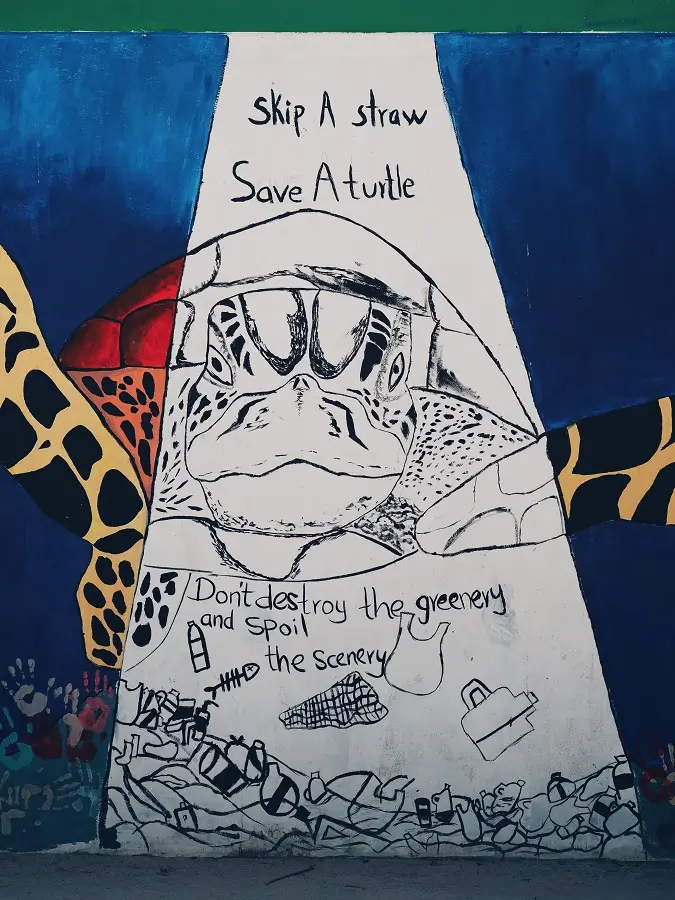
You don’t need to be an eco-conscious traveller to know that plastic bottles are terrible for the environment. Everyone has seen the images of huge trash piles and sea life harmed by plastic in the oceans. By filtering water and using a reusable water bottle, we can do our little bit to help.
Purify | the best way to approach the one-use plastic bottle issue is to purify water at your destination (if it needs it). There are many countries that do not have safe drinking water, so it is common to drink bottled water to avoid getting sick. Instead, consider either filtering or purifying local water and storing it in your own reusable bottle.
Filters | we use a Sawyer Squeeze and a Katadyn BeFree, which are simple, cheap and effective methods of ensuring we always have drinking water from almost any source. Another option is a Lifestraw, which you simply drink through and it filters your water. GRAYL Bottles are another popular option which effectively purify in seconds by pressing a filter down through the water.
Tabs | water purification tablets are another choice, which are great in emergencies, especially if you are out in nature.
Steripen | another option is a Steripen that shines ultraviolet light through your water and kills off any nasty bugs and germs.
Avoiding one-use plastics goes further than just water bottles. Take your own eco-friendly utensils, like cutlery and reusable straws. Bring a small backpack or tote for shopping to avoid those single use plastic carrier bags. Remember, some countries have outlawed disposable shopping bags and plastic straws, so bringing your own only makes your life easier anyway!

3. Order Plane Food in Advance (and Other Eco-Friendly Plane Hacks)
In 2017, 5.7 million tonnes of cabin waste was carried up and then back down again in planes, a quarter of which is reported to be untouched food and drink. Being a more responsible traveller means reducing waste – things like lessening the amount of fuel used and avoiding one-use products that will end up in landfill.
Arranging meal preferences pre-flight seems like an option designed for people who have specific dietary requirements or inclinations. However, excess meals add weight to the plane and use fuel to transport. If every in-flight meal was ordered in advance, the plane would carry far less food as spares would not be needed. There would be significantly less waste, too.
Another cause of that 5.7 million tonnes of waste are those tiny, totally pointless vanity packs containing a toothbrush, unbearably bad headphones and flimsy eye mask. Don’t open them. Most items don’t even get used and they do not get repackaged for the next customer. The same goes for the plastic wrapped blanket; that plastic does not get recycled. Always request a drink without the plastic cup too and, if you end up with one, reuse it for the entire flight.
Generally, it is safe to assume that nothing on your flight will be recycled unless the airline specifically informs you. Any airline will make it clear what their practical sustainability efforts are; some are far superior to others. For example, ANA (Japan’s All Nippon Airways) offer high-end sustainable, vegan food and composts all waste. Emirates has a page dedicated to food and product sustainability. Air New Zealand is trialling no single-use plastics on international routes.
4. Choose Your Flight Wisely
It is unrealistic to expect people to stop flying. There are obviously some short haul journeys that can and should be avoided, but crossing the Atlantic Ocean is not a realistic option for most people without a plane. Also, telling people not to do something that they are going to do anyway is futile. The best way is to help people fly more responsibly.
Flights use less fuel when flying directly to their destination rather than connecting. On average, a direct flight can save 100 kilograms of carbon emissions per person (which makes sense since connecting means further distances flown and more take-offs and landings).
This is an obvious choice for most travellers – everybody wants to fly direct whenever possible.
When searching for flights, if the cheapest one has a connection, just have a quick peek to see if a direct one is a whole lot more expensive. Websites like Skyscanner also have green ‘eco’ markers if a particular flight has less carbon emissions – try and pick the best option you can.
Also, when it comes to choosing a flight, it is worth noting that newer planes are more efficient and better for the environment. Whenever viable, choose an airline with a newer fleet.
THOUGHTFUL TRAVELLER TIP – PROBLEMS WITH AIRBNB
Originally, the idea of staying in another person’s home instead of a hotel was a great, sustainable, ethical initiative. Airbnb was a revolution – you can stay in a private room and have access to a kitchen!
Problems arose when properties became more lucrative to rent out to visitors rather than residents. The outcome was that local people were priced out of their homes, and the entire centres of popular cities became a place only tourists and the mega-rich could afford to stay.
The best way to alleviate this crisis is to share a home with a resident. This means nobody was pushed out to make way for your stay. Some cities have rules, such as Portland in Oregon, which only allows an owner to have one Airbnb – this makes choosing an Airbnb less of an ethical dilemma.
–
5. Consider Carbon Offsetting
The concept of carbon offsetting is the idea that you pay a small sum of money towards a project that removes some carbon dioxide from the atmosphere. This, on the face of it, is a great thing.
However, there are several issues associated with offsetting your journey. The first is that offsetting schemes are unregulated, meaning the quality and effectiveness can vary significantly. The second is that carbon offsetting can give the false impression that taking more flights is therefore justified, which it isn’t.
Despite these concerns, it is still worth investigating as one of the actions that make us better, more responsible travellers. There are registries that can provide some legitimate guidance on who to use for your carbon offsetting, like Climate Action Reserve.
As mentioned above, though, the way to be the best eco traveller is to take the greenest, most direct flight possible, even if you do offset your emissions.
6. Keep Your Money Local and Avoid Leakage
This is probably the least specific thing on this list, in terms of direct, explicit actions. Despite that, we would be remiss not to mention that it matters where you spend your money if you want to be a good, ethical, eco-conscious traveller.
Most people spend the majority of their holiday money on accommodation, tours and meals. This means that by eating and staying locally, rather than with big brands that syphon huge amounts of your money away from host communities, you are doing a small bit in favour of the society you choose to visit.
Spending locally doesn’t just benefit the local population directly, but the environment, too. Encouraging giant Hilton hotels to pop up on remote beaches in Mexico is just not cool. Large international resorts rarely care how they damage the ecosystems around them, or what the impact to residents is.
Instead, help stimulate the local economy; fund local improvements to infrastructure, buy native handicrafts, hire local guides to show you the sights, and check out a homestay if you’re comfortable with it!

7. Reduce the Amount of Meat You Eat
This one is controversial. We are vegan-leaning vegetarians, but I’m not here to preach about animal rights (never do that, even if you are a passionate vegan – vilifying people doesn’t work). I don’t believe that occasional meat-eating does much harm to the environment, to be honest. I also do not think the entire world should be vegan, either.
However, if you truly care about the environment, then reducing (or cutting out) meat products, especially beef, is one of the best ways to be a responsible eco traveller. No matter how much you like steak, livestock accounts for an estimated 14.5 percent of all anthropogenic emissions each year – 62 percent of which is from cattle.
The ratio of animal products versus their emissions varies massively per country, too. Indian dairy on average takes twenty times more cows than the equivalent product in the United States. When you travel to places in the Global South, you are more likely to be eating meat or dairy that has had a much larger greenhouse gas impact on the environment.
There are many countries in the world now though where extremely high-quality meat-free meals are the norm. For example, in the United Kingdom, vegetarian food is genuinely everywhere. It is so easy to eat healthy, meat free alternatives and if everyone chose *slightly less* meat and dairy, the planet would be a happier place!
It can be tricky when travelling in certain countries to eat vegetarian, but never impossible. Eating meat is also entrenched into the culture of some countries. For example, we struggled in Mexico to eat vegetarian on a budget when every affordable street food was meat tacos.
As travellers, we are likely to spend more on food than the local population, so where you put your money counts; consider supporting a veggie or vegan restaurant for just one of your evening meals.
Another small change you could make would be to avoid buffet style meals and all-inclusive resorts. Avoid them even if you do not eat meat, since there is far higher proportion of waste at this style of restaurant.
8. Don’t Use the Travel-Sized Toiletries in Hotels
This one infuriates me. You know those tiny plastic shampoo bottles in hotels, the ones where you can’t even get all the product out of the ill-shaped, rigid container? They’re an abomination.
It’s such as easy swap for hotels to use larger reusable bottles, or even one-use solid shampoo slices packaged in recycled paper (we’ve seen a few of these in eco-friendly hostels recently).
If you open the plastic bottles, they will mostly end up in landfill, with all the others. 11 million metric tonnes of these pointless plastic products end up in oceans each year. The Marriott hotel chain even admitted to sending 500 million of these tiny plastic disasters to landfill each year (they have since phased them out).
Instead, use your own products and if there is an option, be one of those annoying people that leave comments on those little feedback cards hotels often have at reception or in-room. Also, comment on the eco-friendliness of the hotel on any reviews you leave.
Sadly, negative traction is often the biggest impetus for change!
9. Buy Less Stuff For Your Trip
Ask yourself – do you need brand new clothes, shoes, bags or swimwear for every single holiday? Maybe you do, but for some people at least, a holiday is treated as an excuse to shop. Buying more stuff than we need seems to be a universal human habit (for the privileged) and holidays are a prime example of that.
Unsustainable fashion is an enormous problem anyway and buying more items for a trip that you may only wear once is just exacerbating an already significant environmental concern.
Even those ‘sustainability bloggers’ who claim to only use sustainable clothing and accessories but get sent new products daily for ‘collabs’ are missing the most important point. Buying less stuff in the first place is the best way to combat waste and climate change.
‘More stuff’ should always be the complete opposite of an eco traveller mindset.
If you do need to buy things for your trip, consider looking for more sustainable clothing brands, or have a thrift shop day out!
The best bet as an eco traveller is to buy as little as possible, and ensure it is from brands that make ethical, long-lasting products.
ECO TRAVELLER TIP – SAFE SUNSCREEN
Sunscreen that contains oxybenzone is hazardous to marine life and is toxic to coral. It is important to choose a reef-safe sunblock if you are going in the sea. Some countries have even banned them.
Anywhere with a delicate ecosystem is at risk of damage from sunscreen. For example, cenotes in Mexico are being continually destroyed by inconsiderate tourists. The 3.5-billion-year-old stromatolites (the oldest living organisms on Earth) that exist in Mexico’s Lake Bacalar are also under threat from tourism, which includes visitor’s sunscreen.
–
RELATED POST | MASS TOURISM IN THE RIVIERA MAYA
10. Research Your Destination and Watch Out for Greenwashing
One of the easiest ways that a responsible eco traveller falls prey to unscrupulous, unethical practices is purely from lack of research.
Being an eco-friendly, responsible traveller is super fashionable now, so businesses will pretend to be sustainable in order to attract customers. This behaviour is aptly called greenwashing. It is common for organisations to embellish or even fabricate credentials to fool well-meaning travellers into paying money for a product or service that is, in fact, hideously unethical.
Take elephant ‘sanctuaries’ in southeast Asia, for example. Some have an ‘animals first’ ethical approach to rehabilitating elephants and are not about profit. However, this is often not the case.
Spend some time reading reviews and ask questions; often it is clear that a business has exaggerated their green reputation. However, it’s not always easy to spot sneaky greenwashing. Verifying certifications with legitimate organisations like the Global Sustainable Tourism Council or Rainforest Alliance is a good start.

11. Don’t Go Rogue – Stay on the Trail
The footsteps of tourists leave a mark, even from responsible travellers.
It is often best in natural environments for those footprints to fall in the same place. If you go hiking, follow the paths. Heed any instructions or rules, for the sake of the environment, the wildlife and for your own safety.
Trampling vegetation, eroding soil, displacing wildlife and more are all problems associated with wandering off-trail. Even camping, a generally low-impact activity, has negative associated issues, such as cutting down trees for firewood. The expansion of flat areas for new campsites also causes ecological damage. In areas of the southwest United States, biological soil crusts are incredibly important for controlling erosion and if trodden on can take 5-50 years to return, if at all.
Recently, a foot was found in a Yellowstone geyser basin. People dying after straying from the boardwalks is not that uncommon in the national park and yet, year on year, it happens (rather gruesomely).
When bears interact with humans, they get accustomed to human contact. This means the bears are euthanised because they pose a risk to public safety. In 2016, a baby bison was euthanised after tourists tried to ‘rescue’ it. Rangers attempted to return it to the wild, but the mother rejected the baby due to human interference. Not all interactions with wildlife are due to human error, but ones that are ultimately cause the untimely death of these animals.
Simply, when outdoors, don’t wander off trail and follow all rules and regulations.
12. Avoid Wildlife Tourism
Another controversial one. There are instances where wildlife tourism provides financial support to conservation efforts or bring important issues to the eyes of the masses. Well-managed wildlife organisations are important for safeguarding not only animals, but the environment in which they live.
However, most animal tourism around the world does not fit into this category. If you’ve ever ridden an elephant, stroked a tiger or fed any animal in its native environment, then you have taken part in some unethical animal tourism. It’s easily done, we’ve accidently done this in the past, too.
There’s a big overlap between people who care about sustainable travel and responsible travellers who love wildlife. These type of traveller are more likely to prioritise animal experiences on vacation. It’s a big money business, which ironically takes advantage of the tourists that care the most about animal welfare.
Here are a few general rules to follow:
Interactions | if you interact with animals in any way, it is likely not to be wholly ethical. Even washing and feeding elephants is unethical, despite what the ‘rescue centres’ say. The only way to see an elephant ethically is from a distance, in a habitat suitable for the animal. Always think ‘observe, not disturb’.
Volunteers | do the ‘sanctuaries’ allow volunteers? Malpractice and cruelty are much harder to hide with the caring eyes of helpers all around.
Whatever ethical guidelines you set for your trip as an eco traveller, be aware that you will not be putting animal welfare as a priority if you have the opportunity to interact with them.
If you’re interested, we’ve written a little about elephant ethics in our posts in the Koh Chang elephants and Ayutthaya’s elephants in Thailand and also spotting elephants in Sri Lanka.
13. Travel During the Off or Shoulder Season
An easy way to reduce your impact on a destination is to visit outside of the peak tourist season.
Mass tourism creates a huge stress on the environment. Increased waste, damage from foot traffic and a reduction of resources available for local people are just some of the many, many issues. Most places on the planet have a peak visiting time, often based on weather or national holidays – avoid them!
Think: traffic jams and air pollution, higher property prices and crowd control. Spreading the damage out doesn’t remove mass-tourism issues completely, but it does mitigate some of the more severe repercussions.
The benefits are two-fold, though. The environment and local communities suffer less from your visit; you get cheaper prices, smaller queues and fewer crowds!

Some Final Thoughts
A responsible traveller should always be aware and conscious of their impact. My immediate thought is to treat your holiday destination like you would your home.
This means conserving water and electricity, not littering or being culturally insensitive. It means caring for your new home, even if you are only there for a few days or weeks.
Many people go on holiday and consider it an opportunity to behave in a way that they would never do day-to-day. This includes behaviours like being loud late into the night, getting obnoxiously drunk, littering and leaving the lights on.
Most holiday destinations have local people who are not on vacation living there, too. When their lives are disrupted, resources are depleted and environments are damaged, it is them that must deal with the fallout.
If every traveller treated their holiday destination with the same respect as their own home, a whole bunch of sustainability and environmental concerns would be substantially lessened.
Hi, thanks for visiting our blog! If this post has been of help to you, or you’ve just enjoyed our random ramblings and musings, say thank you by buying us a coffee! It helps keep The Restless Beans blog up and running.
Thank you, Claire + Nick


I love this list, some new ideas and reinforcement for others. I never thought of chopping a bit off my shampoo bar to suit the length of trip!
Thanks so much! Really happy to be of some small help 🙂.
I didn’t think about chopping up the bars either until I couldn’t fit them in the container!
It’s a great list, and very worthy thoughts! Should be shared on every travel agency’s window! Thank you!