

A Meticulous Three-Day Grand Canyon South Rim Itinerary: a Complete Planning Guide
Scribbled by Claire ⬩ 17 Aug 2025
Are you planning an epic trip to the Grand Canyon and wondering how to fill your time? Here, we’ve detailed the perfect one-, two- and three-day itineraries on the magnificent Grand Canyon South Rim, including activities, drives and hikes, plus tips for visiting, planning your stay and options for various fitness levels.

Exploring the Grand Canyon is an extraordinary geological journey.
I know the entire world has seen photos of it, but I promise it’s just not the same in only two-dimensions. The unfathomable scale, the creeping shadows at sunset, the moon rising above the cliffs, the gleaming sunrise glow of each log on the trail; it’s an entire sensory overload – one that I never get tired of, despite at least a dozen repeat visits and hikes below the rim.
We’ve spent several months in total at the Grand Canyon. I know that sounds a bit outrageous (at least it does to me when I write it down) but there are so many things to do and explore that I’ve rarely done the same thing twice.
As almost all first-time visitors head to the South Rim first, we’ve based this itinerary there (however, it’s worth adding the North Rim to a southern Utah road trip if you have more time – it’s our favourite). We’ve included options for all mobilities, like the outrageously pretty South Kaibab Trail, the easier but no less impressive Rim Trail, and all the best spots on the scenic drive. There are suggestions for kids, like the Junior Ranger’s Program and star watching, and we have sorted out all the best places to eat (we’ve tried them all – it’s slim pickings!).
These three absolutely magnificent days are exactly how we’d choose to spend a first visit!

IN THIS GUIDE //
Adventures on the South Rim
WHY THE GRAND CANYON SOUTH RIM?
– NORTH RIM OR SOUTH RIM?
Day 1 – SOUTH RIM INTRODUCTION
BONUS – STARGAZING IN THE GRAND CANYON
Day 2 – DRIVE OR HIKE
Day 3 – EVERYTHING ELSE
SOUTH RIM Google MAP
HOW MANY DAYS in the GRAnd CAnyon?
GRAND CANYON SHUTTLE BUSES
WHERE TO STAY ON THE SOUTH RIM
– CAMPING ON THE SOUTH RIM
HIKING ON THIS ITINERARY
GRAND CANYON WITH KIDS
IS THE GRAND CANYON DOG FRIENDLY?
BEST TIME TO VISIT THE GRAND CANYON
WHAT TO PACK FOR YOUR TRIP
GRAND CANYON FEES
WHERE TO EAT ON THE SOUTH RIM
FINAL THOUGHTS
This post may contain affiliate links. If you book through these links we may make a small commission at zero cost to you. It helps us pay for the upkeep of this blog. Thank you!
The Grand Canyon Options
The Grand Canyon is split into four major visitable sections, the two most famous being the North Rim and the South Rim. These two regions are almost directly opposite each other, with hiking trails leading through the canyon connecting them.
1. The most populous area is the Grand Canyon Village on the South Rim, which is around a one-hour drive north of the Route 66 town of Williams, and 1.5 hours north of Flagstaff. The Grand Canyon Village is also around a two hour drive from Page, Arizona.
2. The North Rim is the more remote of the two main areas, easily reached from the small, but lovely, town of Kanab, Utah.
3. Some people also visit the West Grand Canyon, which is very expensive and not as scenic (it’s the place with the tacky ‘Skywalk’ glass bridge). We would not recommend this for your first Grand Canyon trip.
4. Another significant region of the Grand Canyon is Havasupai, which is on Native American land and requires permits (and lots of planning, money, fitness, and preparation). We wouldn’t recommend this for a first time visit, either (even though it is incredible).


Why the South for a First Visit?
If you must choose between the South and North Rim, here are some reasons why you should choose the South for your first visit:
⬩ The South Rim has a plethora of hikes, activities, viewpoints, infrastructure and hotels.
⬩ The South is open all-year round, unlike the North which shuts for winter.
⬩ It also has (arguably) the best views.
⬩ The below-rim hikes are a little more accessible on the South, plus the Rim Trail is perfect for almost any fitness level.
⬩ It’s also around 1000 feet lower than the North, making the weather less extreme and the affects of altitude less significant.


Day 1: South Rim Introduction
Quick aside: below this itinerary, we’ve explained:
⬩ your accommodation options in detail;
⬩ all the campground information;
⬩ the Grand Canyon dog policy;
⬩ all the restaurant choices;
⬩ what to pack;
⬩ national park fees;
⬩ how to use the shuttle buses
⬩ and the best time to visit the Grand Canyon.
Use these links to jump to the section if you’re interested.
If you are a hiker, day one is a useful opportunity to get used to the elevation before throwing yourself down the trails, as it stays above the rim (unless you really fancy a challenge – we’ve mentioned some options).
If you’re not, this itinerary lists alternatives wherever appropriate so you don’t have to feel like insanely difficult hiking is the only option (most itineraries seem to assume everyone is an athlete).
Sunrise: Mather Point
Start your day as early as you’re able. If you fancy watching the sunrise (it’s not as good as sunset), we personally love the Grandview spot along the scenic drive. However, Mather Point is a more accessible option in the Grand Canyon Village for your first morning.
You’ll be sharing Mather Point with other people, but there’s beauty in the fact that relatively few people get up early, and the Grand Canyon rim is large enough that everyone can spread out.
Morning: Hermit’s Rest
This morning, take the Red shuttle route across to Hermit’s Rest. The bus stops nine times along the route, so check out as many viewpoints as you’re interested in seeing (we’d suggest all of them – it is the Grand Canyon, after all). Be aware that the shuttle bus only stops at four stops on the return, so make sure you don’t miss any by accident.
It’s a nice idea to walk between some of the stops – the Red shuttle route makes up a section of the 13 mile Canyon Rim Trail that runs from Hermit to South Kaibab.
We recommend, at minimum, having a look at the Trail View Overlook for epic panoramas of the Bright Angel Trail switchbacks. Spot the hikers on the paths below for some size perspective! Our other favourite viewpoints are Pima, Hopi and Monument Creek (I love spotting from above where I camped previously).
Optional: Below Rim Hiking
At the end of this route, there is an option to hike the Hermit Trail down into the Canyon, which begins a little past the Hermits Rest bus stop. This route leads down to the Tonto platform and Colorado River and is usually pretty quiet.
However, we don’t think it’s the prettiest of the day hike options – it’s much more dramatic during the lower half which is not feasible to reach in a day, in our opinion. If you’re only going to do one day hike in the Grand Canyon, skip this one.

Lunch
Either have a packed lunch along the Hermits Rest route or return to the Grand Canyon Village and check out any of the various options (listed below the itinerary on this page).
For anyone on a budget, the Village Market is not overly expensive and has a surprisingly decent range of foods with picnic tables right outside.
If you’re keen for a full meal, check out the El Tovar Dining Room (it might be worth making a reservation if you’re visiting during peak summer season – we’ve only had breakfast here, and the dining room was busy!). It’s an easy and scenic 10-minute walk along the rim from the Hermit Shuttle bus stop.
Finally, if you’ve already had lunch but fancy a treat, grab an ice cream from The Fountain which is a five-minute walk east from the Hermit Shuttle stop.
Afternoon: Explore the Village and Rim Trail
There is a whole lot to do in the Grand Canyon Village beyond hiking.
If you’re keen to have a longer wander along the Rim Trail, this leads from the Bright Angel bus stop to the visitor centre, Mather Point, and beyond. There are informative plaques all along the Trail of Time section which is particularly great for kids.
The Rim Trail has lots of things to see along the route, including (from west to east):
⬩ The Kolb Studio, a beautiful photographic studio and store, with some incredible art and books (to match the magnificent views).
⬩ Just a minute further east is the Lookout Studio, an historic landmark with lovely views.
⬩ The El Tovar Hotel is a little further along (just go in and have a wander around – you don’t need to stay overnight there to have a peek at how the other half live!).
⬩ Adjacent to El Tovar is the Hopi House, a traditional native American style building selling lots of arts and crafts.
⬩ Next is the Verkamp’s Visitor Center which has lots of historical information and some nicer souvenirs.
⬩ Further along, there is Yavapai Viewpoint and Geology Museum (our favourite stop on this list).
⬩ Finally, you’ll reach the Grand Canyon Visitor Centre and Mather Point (probably the most famous view of the canyon – it’s the one on all the postcards).
This route will take around 1.5 hours (ish). It’s also possible to get the blue shuttle bus for sections of it.
Optional Below-Rim Hiking
It is possible to nip down the Bright Angel Trail to one of the turnaround points if you really want to challenge yourself this afternoon. Chose a target – the 1.5 or 3 Mile Resthouses are a good choice.
If you’re super athletic, then it’s possible to get to Havasupai Gardens and back up in an afternoon, but we wouldn’t recommend it (it’s a nine-mile return trip that drops 3000 feet – I’ve seen people running it, but they’re obviously crazy).

Evening: Yaki Point
Once at the Visitor Centre (via walking or bus), catch the Yellow Shuttle bus route over to Yaki Point. This is one of our favourite spots on the South Rim – it’s magnificent at any time of day, but particularly late afternoon onwards.
Stay for as long as you like and explore the area a little. There are lots of spots where you can wander off and be completely alone with the indescribable vistas. The sunset, as it creeps across the South Kaibab Trail, is breathtaking here, too.
If you intend to do a below-rim day hike tomorrow, we recommend the South Kaibab Trail. Yaki Point has the best views of this trail – try and spot where you’ll be hiking the next day! There are epic views of Cedar Ridge, the trail to Skeleton Point, plus the switchbacks towards the Tip Off.
It sounds a bit mushy and dramatic, but it’s the place I fell in love with the Grand Canyon, so I’d spend all day here, happily.
Casual Dinner
For dinner, either head over to the Yavapai Tavern for some low key food and beer (probably the best place in the Grand Canyon National Park for a casual meal and a beer), or head back out to Tusayan and grab a pizza at We Cook Pizza and Pasta – it’s the best of an average bunch. The pizza there is one of the more affordable options in the area if you share a large (we are always travelling on a budget).
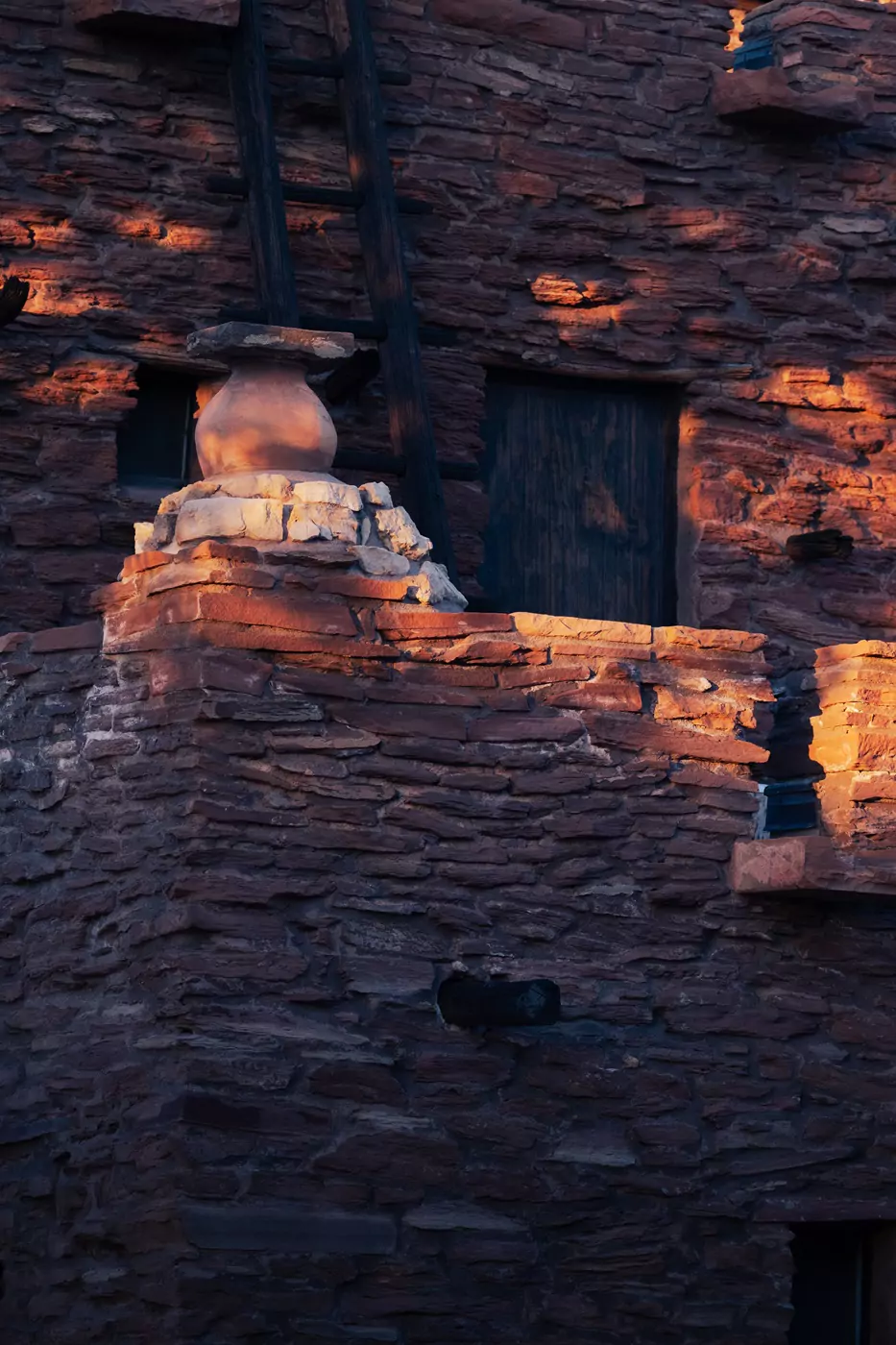

STARGAZING IN THE GRAND CANYON
The Grand Canyon is an International Dark Sky Park (since 2019), so it’s worth heading out after dark.
There are Night Sky Events held regularly in the park – check out the NPS website for more information on your dates.
Make sure you wrap up warm, it can be chilly at 7000 feet up, even into the summer months.
–
RELATED POST | ARCHES VS CANYONLANDS
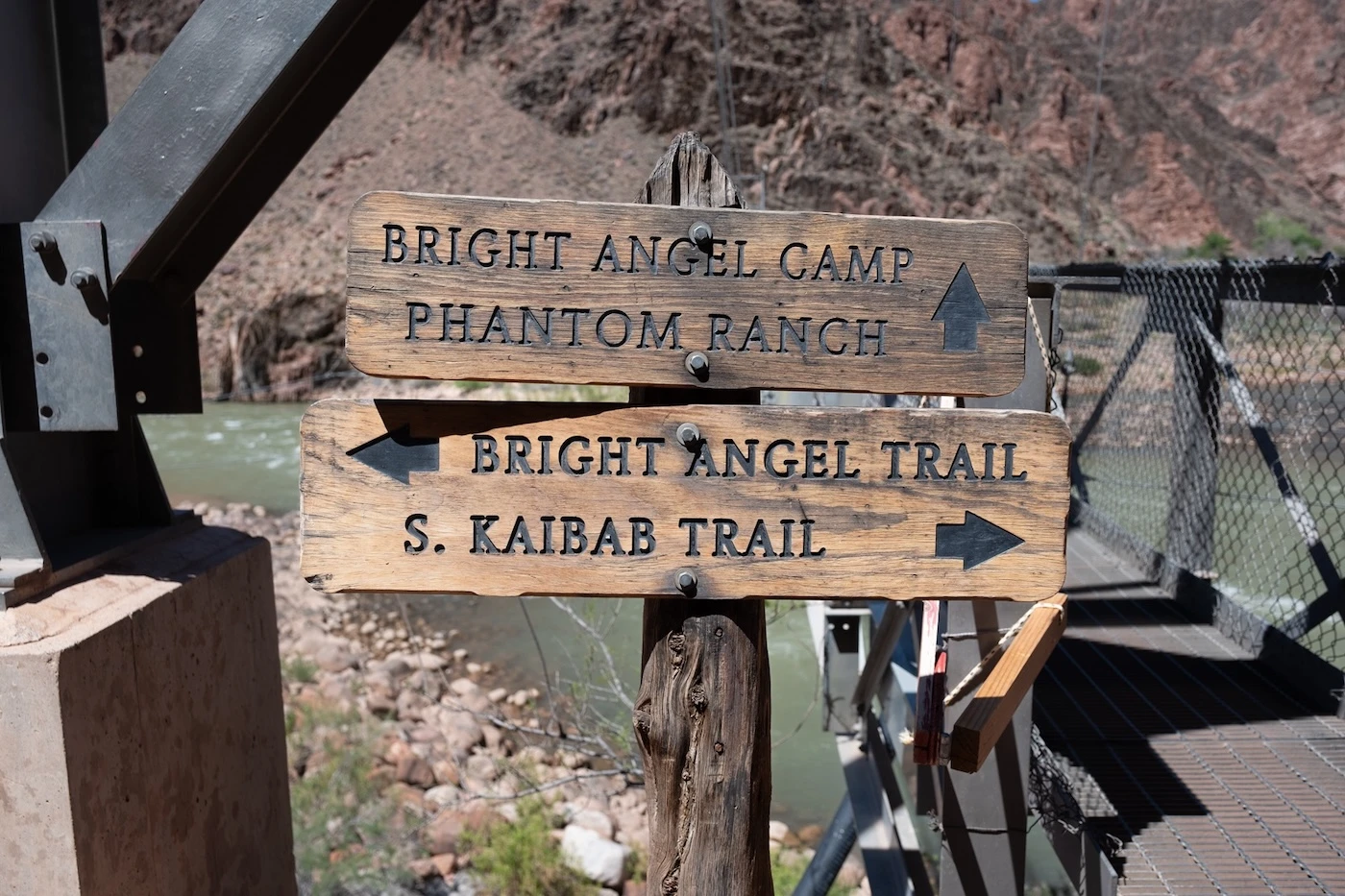
Day 2: South Kaibab Hike and Scenic Drive
Today is either an opportunity to explore below the rim or drive the Rim Route out east to Desert View.
Morning: South Kaibab
We recommend hiking the South Kaibab Trail.
With the best and most expansive views, it makes sense to choose this route over the other South Rim day hiking options. Decide on a turnaround point based on your fitness – Ooh Aah Point (1.8-mile round trip), Cedar Ridge (3-mile round trip) or Skeleton Point (6-mile round trip) are the three sensible day-hike options.
We’d recommend, at minimum, hiking to Cedar Ridge if you’re fit. It’s a flat outcrop with scattered trees and incredible views, bathrooms and lots of places to sit and rest – far superior to Ooh Aah Point.
Hike the South Kaibab Trail as early as you’re able – the route has little shade. Watching the sunrise on the way down is magnificent – we’ve done this quite a few times and it never gets old.
The orange shuttle route is needed to access the South Kaibab Trailhead, so park your car at the visitor centre as early as possible and catch the bus. In the summer months, the first bus runs from 04:15. Outside of these months, the first shuttle bus is at 06:00 – we’ve caught the first bus a few times and it’s never once been busy.
Remember to pack a lunch and snacks.

Afternoon: Scenic Drive
If you have a lot of time left (and inclination), get the orange bus back to your car at the visitor centre and drive Arizona State Route 64 out east towards Desert View. There are so many incredible stops on route, our favourites being Grandview and Desert View.
The landscape opens up towards the furthest eastern end, with vast, sweeping views of the sinuous Colorado River as the canyon twists northward (the river, however, flows south and west). Ensure to to climb the four floors to the top of architect Mary Colter’s iconic watchtower for outstanding panoramic views.
If you do not want to hike the South Kaibab Trail mentioned above, spend the morning and afternoon exploring the South Rim and taking the short exploratory hikes at the viewpoints. Pick up lunch at the Desert View Market and have a picnic along the rim.
Evening: Shoshone Point
If you have any energy left on the drive back, take a short hike (one mile each way) to Shoshone Point, which has far fewer crowds and immense views (remember a head torch if you visit at sunset, it’s dark on the way out).
Alternatively, on the drive back, pop over to Mather Point – it’s the most popular sunset spot with super easy access and parking (helpful if you are tired).
Afterwards, head back, either via the Village Market, Yavapai Tavern or El Tovar, for dinner (whichever you didn’t do the day before).
If you’re somehow still awake (there’s no way I would be), consider checking out an evening program, such as a Night Sky Event.

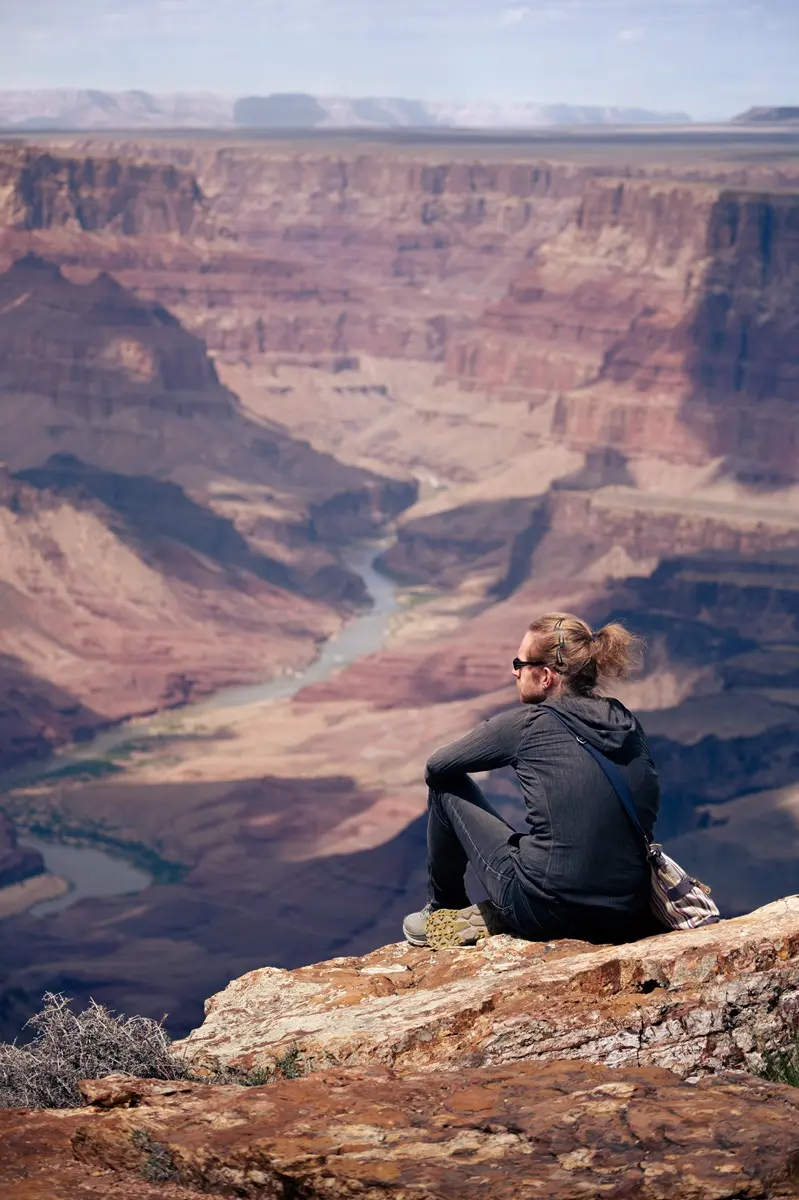
GRAND CANYON – AT A GLANCE
Miles of trails: 35 miles paved, 560 miles unpaved
Width: 18 miles at widest point
Size: 1904 square miles
Depth: 6093 feet
Elevation: South Rim 7000 feet, North Rim 8000 feet
Visitors: 4,733,705 (2023)
Fees: $35 per vehicle, free with an America the Beautiful pass
Established: February 26, 1919, by an act of Congress
–


Day 3: Everything Else
This final day is reserved for anything you didn’t get to do on the first two days.
Other Things to Do on the South Rim
Shoshone Point: watch sunrise or sunset after a short, easy hike
Rim Trail: walk more of the rim trail if there are sections that you’ve missed, especially the Trail of Time section.
Hiking another below-rim route: many visitors to the Grand Canyon choose to hike the Bright Angel Trail, which is understandable since it’s a well graded, maintained trail with bathrooms and piped water in the warmer months.
However, it’s our least favourite trail due to the crowds, mules and views. If we were to choose a second route for our three-day itinerary, it would be the Grandview Trail. It’s empty, rugged, unimaginably beautiful and more of a challenge, terrain-wise. For more information, check out our post on the best South Rim day hikes.
Desert View Drive: check out any missed stops along the State Route 64 rim drive.
Self-guided Walking Tour: there is one for the Grand Canyon Village, download the NPS app for more information
Attend an event: such as a fossil walk, geology talk or wildlife talk. For information about what is on during your dates, check out the NPS events page.
Attend an evening program: as briefly mentioned above, these are held most nights during summer at 8pm at the McKee Amphitheater or at Mather Point. Check the official Night Sky Events page for details on your dates.
There are also events held out at Desert View, including talks and cultural demonstrations. Find out more on the Desert View programming page.
Photography: if you’re a professional, amateur, or just a casual shutterbug, then this entire day could easily be spent photographing this outrageously beautiful geological spectacle. The canyon is so enormous that it only takes a few minutes to leave the crowds behind and find the perfect alternative angle at any viewpoint.
For photography, we love the section between Desert View and Navajo Point, plus Grandview Point, Shoshone Point and Yaki Point (my personal favourite, always).
IMAX: there’s a Grand Canyon film showing at the unofficial Visitor Centre in Tusayan. I’ve not been but apparently it’s worth seeing, plus the cinema is a nice break from being on your feet and the outdoor heat!


Itinerary Google Map
Below is a savable Google Map of all the things we recommend on this itinerary.
⬩ Dark green are places to stay.
⬩ Yellow are things to see and do.
⬩ Light green are trailheads for the South Rim hikes.
⬩ Red are for places to eat.
To save this map, select the star next to the title.
How Long to Spend on the South Rim?
We would recommend between two and four days on the Grand Canyon South Rim for the average first-time visitor. This is why we’ve written a full three day itinerary.
The number of days need mostly depends on how much hiking you intend to do. The South Rim has an enormous number of incredible trails, most with a fair amount of elevation change. If you want to hike several routes, this takes time (no matter how fit you are) and the more days available, the better.
If you only want to have a casual stroll and check out the facilities and viewpoints, then two days in the Grand Canyon is easily enough to see all the sights at a comfortable pace.

Grand Canyon Shuttle Buses
The Grand Canyon shuttle buses are fantastic, and necessary for this Grand Canyon itinerary.
There are three, free-of-charge, colour-coded shuttle routes, servicing different areas around the Grand Canyon Village – we’ve used all three at various times because they were either essential or super convenient. The bus stops are all incredibly obvious and there’s no way you can get confused, I promise. Apart a few peak foot-traffic times of day, we’ve always got a seat on them, too.
The buses are hop-on, hop-off along their routes, so you can just get off, have a quick look around, then catch the next one (they usually run around every 10-15 minutes during daylight hours). Some of the bus drivers are hilarious, too!
Be aware that at occasional busy times, there can be long lines for the buses. We had to wait quite a while for the blue Village route bus once after an overnight backpacking trip and I nearly cried having to stay on my feet! Some kind soul gave me their seat – I must have looked like a right state – I felt it.
The Routes
Hermits Rest ‘Red’ route: this services the seven-mile Hermits Road to the west of the Grand Canyon Village. Catch it from the transfer station bus stop at Bright Angel. The Hermits Rest route is not open to cars (unless you have an overnight permit – you’ll get a code for the gate if you do) from the beginning of March through November. This means you’ll have to take the bus during this time.
Village ‘Blue’ route: this is the busiest bus and covers the Grand Canyon Village stops, including the visitor centre, the Bright Angel stop, lodges, Backcountry Office and Market.
Kaibab ‘Orange’ route: this route runs from the visitor centre eastward over to the South Kaibab Trailhead and Yaki point. This bus is another essential route since cars are not allowed access to the South Kaibab Trailhead, all year-round.
Check the Grand Canyon NPS website for specific times of each bus service for your trip.

CAR HIRE FOR YOUR AMERICAN SOUTHWEST TRIP
We always rent our vehicles all over the world, including our recent trips in the United States, Mexico, Oman, Saudi Arabia, Tunisia, Thailand and Morocco, with Discover Cars. They’re often the most affordable, plus they paid out immediately on an insurance claim we made when our car took some heavy damage in Sicily. We fully recommend them.
–
TAKE A LOOK BELOW OR CHECK CAR RENTAL
Where to Stay on the South Rim
For your South Rim trip, there are three obvious options for accommodation:
⬩ lodge within the Grand Canyon boundaries
⬩ hotel outside the boundaries
⬩ camp.
We’ve done all three a fair number of times now, and each option has some pros and cons.
Within the Park
This option is obviously nearest the rim, which is excellent for sunrises and sunsets and being generally close to the action. It also means you don’t have to queue at the park entrance during busier times.
However, the prices are high for relatively low-quality rooms (we’ve stayed in every lodge in the Grand Canyon apart from El Tovar, because $$$).
There are five lodges within the South Rim boundary:
⬩ Maswik: 5-minute walk from the rim, more affordable – our favourite
⬩ Kachina & Thunderbird: on the rim, amazing views and location next to Bright Angel
⬩ Yavapai: cheapest, most basic, away from rim, near the village market and campground
⬩ El Tovar: posh, high-end, historic, great location, books out fast
Outside the Park
Accommodation outside the park is in Tusayan, a tiny little place around seven miles from the rim.
This town has a bunch of hotels, which are still pretty expensive but have slightly higher room quality. It takes around 10-15 minutes to get from Tusayan to being parked up at the Grand Canyon Rim, which makes it a very convenient hub (assuming there are no queues at the fee booth, which are common unless you visit early or late).
Further out is Williams, around a one-hour drive south. I wouldn’t recommend staying here unless you have no other choice, only because it’s so far away (although you can catch the historic train in!).
In Tusayan, we’ve stayed in most of the hotels (unfortunately for our wallet) and Red Feather Lodge is definitely the best value for your money. It’s modern, clean, comfortable, and provides everything you could want from an overnight stay near the Grand Canyon.
Our Accommodation Preference
If I had to choose a place to stay on my next visit to the Grand Canyon, taking the price, location and room quality into account, then Maswik Lodge is my overall winner.
Camping
This is a super affordable way to stay centrally in the Grand Canyon National Park and the campgrounds have excellent facilities (for national parks, anyway). However, a negative is the rim gets very cold overnight outside of summer (we’ve woken up in unexpected snow a few times – don’t underestimate it!).
Camping Overview AT THE GRAND CANYON
There are three developed campgrounds above the rim in the Grand Canyon: one on the North Rim and two on the South Rim.
Mather Campground: this is huge, reservable and moderately spread out. It’s great because you’ll almost certainly see deer, there are decent facilities (even showers and laundry), and the campground doesn’t sell out instantly. However, it’s big, so can be loud, and it’s not adjacent to the rim. Over all, we like it here, though – it’s pleasant and nearby to the market shop. Try to get a site on the outside of one of the outer loops.
Desert View Campground: this is non-reservable and roughly 25 miles east of the Grand Canyon Village, which means you’re a bit further from all the action. However, it’s also quiet, by one of my favourite viewpoints (Desert View) and there is a market adjacent. It’s useful if you are entering or exiting the park from the east side – Desert View is on the way to-and-from Page and Monument Valley, if they are on your itinerary.
North Rim: this isn’t useful for this itinerary, but we thought we’d mention the North Rim Campground because it’s just lovely, quiet and mostly well spread out. It has all the usual facilities including a nice market on site, and if you get a spot on the edge of the campground, you can walk to the rim in a few minutes (for example, site 36 is super pleasant). As of July 2025, this campground is closed long-term due to fires.
Backcountry: it is possible to camp below the rim in the Grand Canyon, but this requires often competitive permits and some preparation. The three most popular (and developed) campgrounds inside the canyon are:
⬩ Havasupai Gardens (4.5 miles down Bright Angel)
⬩ Bright Angel (at the bottom of the South Kaibab Trail along the Colorado River)
⬩ Cottonwood Campground (halfway up the North Kaibab Trail on the northern side)
We’ve camped at quite a few below-rim campgrounds, including Havasupai Gardens, and they are magnificent (we’d recommend the experience).
–
RELATED POST | THE RENAMING OF HAVASUPAI GARDENS

Hiking on this Itinerary
For the most part, Grand Canyon hiking can be split into two categories – horrendously hard and supremely chill. There’s very little in between!
We would not recommend hiking below the rim during summer, or anytime, if you’re not keen on continuous marching up steep, exposed hills for hours. The canyon is beautiful from above and, although there is immense satisfaction from hiking below the rim, it’s not worth it if you’re going to be miserable, plus it’s dangerous if you go unprepared.
Personally, we would not hike below the rim past May and before October (we’re British and just can’t cope with that sort of heat). Our favourite hiking months are the second half of October and April.

Grand Canyon With Kids
Now, I have no kids, so am definitely not an expert on this, but I’ve been reliably informed that the Junior Ranger Program is awesome.
There are family programs and kid’s activities, all designed to enrich, enthuse and encourage the younger members of your family.
Check out more about the Junior Rangers on the NPS website, or pop into the visitor centre on arrival.
Is the Grand Canyon dog friendly?
Yes, dogs are allowed in the Grand Canyon National Park on the rim, but not on any below-rim trails, except for service animals.
Dogs must be on no longer than a six-foot leash and are not allowed on the park shuttle buses.
Dogs are allowed at Mather Campground, Desert View Campground and in pet friendly rooms at Yavapai Lodge. No pets are allowed in other park lodgings.
–
RELATED POST | 13 AMAZING NATIVE AMERICAN RUINS
best time to visit the Grand Canyon
There is no perfect time to visit the Grand Canyon. The answer, once again, depends on what activities you intend to do.
For hiking: between October and the end of April is best for below-the-rim hiking. The canyon is well in excess of 100F during summer months and people die every single year from exhaustion and dehydration. The winter is more technically tricky, but quiet, pretty and totally doable if you wear traction devices.
Visiting viewpoints: this is perfect at any time of year! At around 7000 feet up, the South Rim is far cooler than inside the canyon and, although warm, it’s quite pleasant in summer if you don’t intend to do anything strenuous. Winter is, once again, trickier, because it gets very cold and is often under snow (feet of snow!).
Photography: personally, I love the winter months because the snow makes the canyon look a little different and the visibility across the canyon is best. Plus, the sun comes up later in the morning which makes capturing the sunrises easier! Any time is a beautiful time to photograph the Grand Canyon, though.
Camping: above the rim, I’d avoid winter, early spring and late fall. It gets so cold (I’ve woken up with my tent in the snow, even in May, and it was not welcome!). Camping below the rim is the opposite, avoid any time during summer due to the heat.
Crowds: in 2023, the Grand Canyon had 4.74 million visitors, which makes it the second most visited national park in the country. The majority of the crowds descend on the park between May and September. Avoiding these months means reducing the time spent in traffic queues, searching for parking spots and fighting for space on the trails.
–
RELATED POST | GRAND CANYON SOUTH RIM DAY HIKES
What to Pack for YOUR Trip
Other than your usual travel stuff, we’d recommend considering packing the below, especially if you will be hiking:
Microspikes for winter
Sunblock
Hat
Comfortable shoes
Headtorch
Refillable water container, like a platypus
Spare socks (wool is great)
Water filter if heading into the canyon
Snacks for any hiking expeditions
Plasters/Moleskin
Permits (if necessary)
Knee supports (if needed)
Electrolytes
Hiking poles (so helpful – don’t underestimate them!)
Day backpack
Sunglasses
–
RELATED POST | EXPLORING UTAH’S PRETTIEST RIVER HIKE
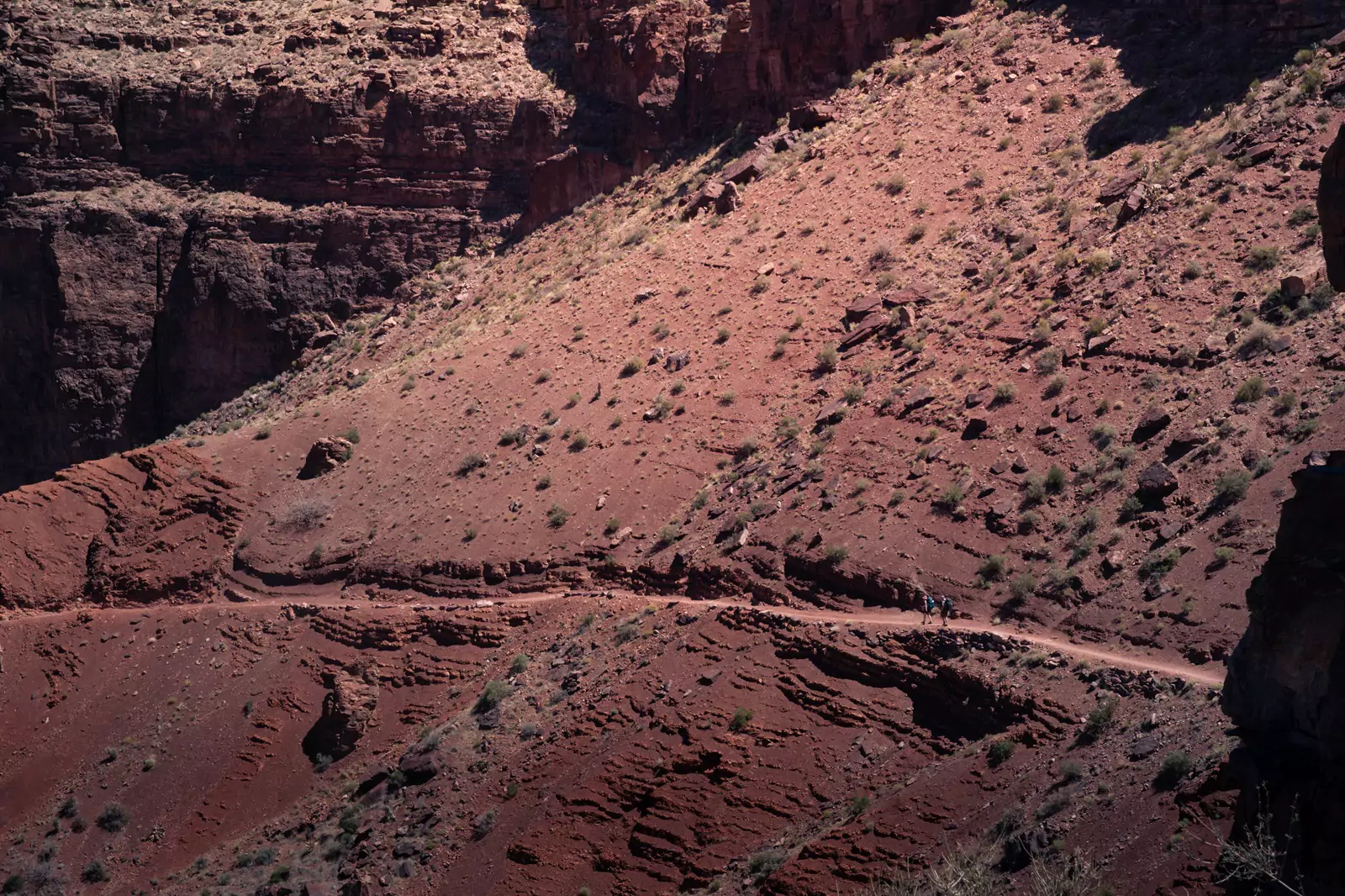
GRAND CANYON FEES (AND RECENT CHANGES)
Entry to the Grand Canyon National Park costs $35 dollars if you are a US resident. This allows one week of access to the park for a whole car of people – great value for families.
If you are a resident and intend to visit any other national parks on your trip, consider getting an America the Beautiful Pass. This costs $80 and provides free access to every federally managed park in the country for a year.
If you are a foreign visitor, recent rulings by the current government have decided that, as of 2026, foreign visitors must pay $135 a day per person over 16 for entry (which is mental, no matter how you look at it – it’s a $100 surcharge, per person, per day.).
If you’re staying three days in the Grand Canyon, buy an America the Beautiful Pass. It’s $250 for foreigners and gives you and anyone in your car free entry to all federally managed sites for a year. It’s insanely expensive, but the USA is currently very anti-foreigner and I guess we should be grateful they let visitors have a pass at all (coming from a foreigner who has spent two years travelling the USA).
If you’re not sure whether the pass is worth buying, we’ve written a post with more information and how much money you can save (based on a USA resident).
–
RELATED POST | THE BEST SLOT CANYONS IN UTAH
Where to Eat on the South Rim
There are a surprising number of places to eat at the Grand Canyon South Rim (it’s basically a fully functioning town!). Everywhere is a bit pricey though, and mostly not worth the price tag, but you don’t get to eat next to the Grand Canyon that often, do you?
El Tovar Dining Room: I ate breakfast in this dining room type-of-place a few years back. It’s super atmospheric, with a rustic, lodge vibe going on. However, it’s not enormously friendly to vegetarians and the menu is pretty standard. You go there for the vibe, not the food.
Yavapai Tavern: slightly average food but very nice, outdoor vibes and a decent selection of beers – this is our go-to if we have no pre-prepared food. It can get a bit busy in the evenings.
Maswik Food Court: average food court vibes and food, nothing to write home about, although I did have a particularly nice veggie burger there. It’s conveniently located next to Maswik Lodge.
The Fountain: a grab and go kind of place with decent ice cream, mediocre meals and a surprising range of alcoholic beverages. Everyone gets an ice cream from here after a hellish hike up Bright Angel!
Arizona Steakhouse: once again, average food, but with some surprising veggie options and very high prices.
Food-wise, nothing at the Grand Canyon will likely stand out (apart from the enormous debit on your credit card). We’d recommend bringing snacks and mostly making meals from the local market – there are endless beautiful places to eat along the rim.
HAS OUR FREE CONTENT HELPED YOU PLAN YOUR GRAND CANYON TRIP?
If you’ve found our content helpful, consider booking your rental car (if you need one!), through the company we always use – Discover Cars. They’re the absolute best and have been our rental companion (and savior, thanks to their insurance) in many destinations across the world.
Also, consider booking your accommodation through Booking.com – we use them exclusively when travelling in North America.
Alternatively, leave us a tip to say thank you.
Help like this makes it easier to pay for the upkeep of this site and ensures our small business survives the onslaught of AI!
Thanks for reading.
–
My Thoughts
The Grand Canyon is one of those places that feels timeless, and I guess it kind of is, on human scales anyway. The Colorado River has been eroding the land here for more than five million years, exposing rocks up to 1.8 billion years old, which is nearly half the age of our planet.
It’s unimaginable, really.
I read somewhere that the canyon is ‘hidden in plain sight’. This is something I particularly love about the Grand Canyon – unless you are right on its threshold, you wouldn’t even know it was there. It makes me wonder what it would have felt like for the first explorers who came across it many hundreds of years ago. It’s totally understandable how, historically, the Ancestral Puebloan people considered it a holy site.
Its geography also provides an achievable challenge, at least for me. I’m not that fit and I’m not that active, but I can reach the bottom of one of the most vast, distinctive geological features on Earth. And I can do that, solely using my feet. ‘Conquering the Grand Canyon’ is something people say as a kind of dramatic, clickbait phrase, but in this case, I actually relate to it.
I love the Grand Canyon, and I hope you feel the same after your visit, too.
Have a fantastic trip!
Where to Next?
For the perfect 2-4 week trip around southern Utah, including the national parks and less-visited spots, take a look at our less crowded road trip itinerary (it includes the South Rim!) or our 31 most beautiful crowd-free spots.
If you are heading onto Page after your Grand Canyon visit, take a look at our favourite things to do, and if you are driving to Monument Valley, take a peek at some more quirky things to do in the area.
For more information on the All-American Scenic Byway 12 just north of the Grand Canyon, have a look at all the highlights of the route, and if you are driving to Moab on your road trip, check out how to spend the perfect three days.
Hi, thanks for visiting our blog! If our free content has been of help to you, or you’ve just enjoyed our random ramblings and musings, say thank you by buying us a coffee! It helps keep The Restless Beans blog up and running.
Thank you, Claire + Nick


