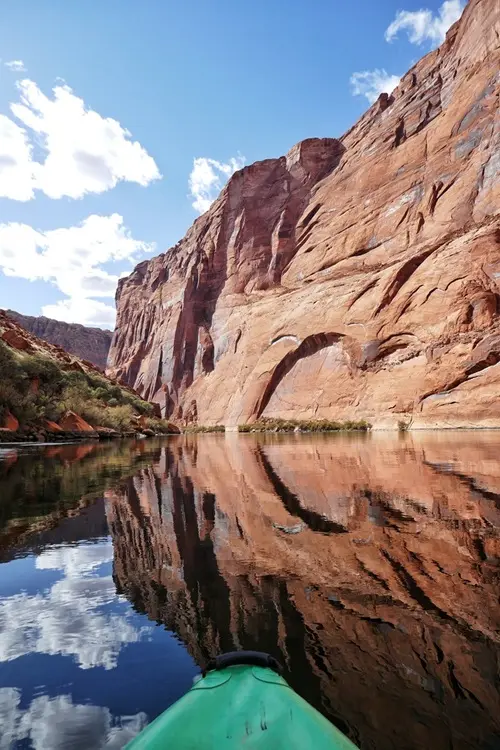
A Two-Week Southern Utah Road Trip – More Than Just the National Parks
Scribbled by Claire ◊ 24 Jul 2024
Are you planning a road trip through southern Utah, and want to avoid at least some of the crowds? We’ve written a detailed two-week road trip itinerary around southern Utah, which includes far more than just the national parks! It has maps, prices, routes, hiking suggestions, less visited sites, camping recommendations, idyllic hotels, and more!

Southern Utah is endless, timeless magic.
It’s home to one of our planet’s most sensational road trips – an inexpressibly epic journey that cannot be easily explained in a blog post. It’s one of my favourite places across the world – there is no better feeling than driving the boundless, unceasing roads of the American southwest with nothing but some of the world’s finest scenery for company.
It’s a road trip we’ve taken countless times, having spent a year exploring the region in depth.
Southern Utah’s unimaginably scenic natural beauty is also paired with an enormous number of state and federally protected areas, meaning vast regions are unpopulated and perfect for outdoor exploring.
This means that, despite the state’s popularity, there are still huge swathes of Utah that have not been overly discovered by tourists. So, for every jam-packed national park you visit, there’s a lonely, empty valley somewhere else, just waiting to be explored.
This detailed southern Utah route not only takes you via the Mighty Five national parks of Bryce Canyon, Zion, Capitol Reef, Canyonlands and Arches, but also through concealed slots, framed arches, tiny ranching settlements and meandering roads that you would likely otherwise miss.
In our opinion, exploring the best of southern Utah is about all the things sandwiched *between* the Mighty Five. So, with two weeks to a month on the road, you can see everything on this itinerary and experience the best the state has to offer, without the crowds.

IN THIS GUIDE //
Escaping the Crowds in Southern Utah
About This Itinerary
Day 1: Las Vegas
Park Fees for This Itinerary
Day 2: Zion National Park
Day 3: Bryce Canyon National Park
Days 4-5: Escalante
Day 6: Capitol Reef National Park
Optional: Goblin Valley State Park
Days 8-11: Moab
Day 12: Monument Valley
Days 13-14: Page
Optional: Kanab
Southern Utah Road Trip Map
Best Months to Travel Around Utah
Final Thoughts
This post may contain affiliate links. If you book through these links we may make a small commission at zero cost to you. It helps us pay for the upkeep of this blog. Thank you!
Itinerary Overview
Las Vegas (1-2 days)
Zion (1-3 days)
Bryce Canyon (1-2 days)
Escalante and Scenic Byway 12 (2-5 days)
Capitol Reef (1-3 days)
Goblin Valley (1-2 days)
Moab (3-7 days)
Monument Valley (1-2 days)
Page (2-4 days)
Kanab (1-3 days)
The higher numbered days are for all the hikers – this trip will inevitably take longer if you want to fit a bunch of four-hour hikes in at each destination!
About This Southern Utah Itinerary
This itinerary begins in Las Vegas, but could just as easily start from Phoenix, Arizona, Salt Lake City, Utah or Grand Junction, Colorado.
It is written as a nice, tidy loop, so wherever you join it, there is an option for a circular route with no backtracking.
If you just want to hit the ‘Mighty Five’ Utah national parks on this itinerary, then around two weeks would be a great amount of time to really make the most of each place and minimise daily driving averages. It could potentially be squished into ten days if you don’t like to hike but love to drive.
If you want to complete all the side-quests on this (incredibly detailed) itinerary, then your road trip could easily go beyond four weeks. Our most recent trip around a similar route like this took six weeks, including the Grand Canyon, but we hiked a lot and did some overnight backpacking.

Day 1: Las Vegas
〈 suggested number of days: 1-3 〉
Las Vegas is always our starting point for any southwest road trip because multitudes of more affordable international flights arrive here (and in Los Angeles, too).
If Las Vegas is on your bucket list, spend a few days checking out the glitzy lights, outrageous shows and crazy vibes, plus stock up on everything you’ll need for your trip. There are numerous supermarkets and outdoor stores in Las Vegas, including two REIs for all your outdoor needs.
Vegas Highlights for Adventurers Rather than Gamblers
If you want to fit in some outdoor activities around Las Vegas that avoid a bunch of the of the typical Vegas crowds, check out:
Red Rock Canyon National Recreation Area | tonnes of very scenic hiking and climbing opportunities – our favourite in Las Vegas.
Valley of Fire State Park | striking, stripey, distinctive, rocky scenery and excellent hiking.
Mount Charleston | perfect for those scorching summer days due to the elevation (be aware that it gets snow in winter, though!).
Seven Magic Mountains | just a colourful, novelty spot by the side of the road, but people love it (it’s always busy).
Hoover Dam | the famous Colorado River dam is worth a quick visit and is great combined with a trip to Lake Mead.
Kayak | there are several places to kayak, one of the most popular being to Emerald Cave along the Colorado River (the cave is a little overrated but the area itself is beautiful).
Hot Springs | there are a surprising number of hot springs around Las Vegas – one of the most popular being Goldstrike Hot Springs (open seasonally).
Further Afield | Death Valley and the Mojave Desert are worthy overnight trips if you have spare time.

WHERE TO STAY IN LAS VEGAS AS A FIRST TIME VISITOR
We’ve stayed in dozens of in Las Vegas (on varying budgets). Be aware that room rates sometimes triple (or more) on weekends. Here are our recommendations:
Cosmopolitan ($$$$) | hyper modern, stylish, amazing parking, super central strip location, huge balconies and top-notch views are a big plus. We spent our last night of our recent three-month Southwest trip here and it was worth it!
Venetian ($$$+) | classic Vegas style, enormous casino, luxury split level rooms (they have three televisions in them!). We always stay here whenever it’s in the affordable range.
Mandalay Bay ($$$) | I just love this hotel. I love its sleek vibes, the smell of the casino, the low lighting, the designer restaurants – everything. I’ve been upgraded to a suite in here, too, which was particularly outstanding (although the standard rooms are smashing as well).
Virgin by Hilton Curio ($$+) | this is our new favourite mid-range hotel. It’s a little off strip, along Harmon Road east, around 20 minutes walk from Planet Hollywood, but it has free parking, super lovely rooms and it’s really quiet. The views from the top of the car park are immense, too!
Golden Nugget ($$) | this is easily the best hotel to stay in Las Vegas Downtown and the only place I’d choose to stay in that area.
Mid-Budget | there are lots of mid-range hotels in Las Vegas, including lots on the Strip. For on-Strip accommodation, we currently recommend Paris, Horseshoe, Treasure Island and Park MGM. These are the best of the bunch. However, there are often incredibly cheap mid-week deals on at Planet Hollywood and Flamingo, both of which have definitely seen better days.
–
RELATED POST | WAYS TO SAVE MONEY IN LAS VEGAS
WHERE TO EAT IN LAS VEGAS
Lemongrass | superb Thai food, located in the Aria Casino and Hotel. The setting, drinks, food and services are immaculate. We’ve made return visits. The Penang curry with lychees and eggplant clay pot may have changed my life a little. Reservations suggested.
Carmines | this family-style Italian serves enormous portions, making it a surprisingly budget-friendly option on the Las Vegas strip. Located in Caesars, this smart but casual place is annoyingly decent – I wanted to hate it because it’s super touristy, but couldn’t. Save space for the *enormous* chocolate bread pudding. Reservations suggested.
Shang Artisan Noodle | located west of the strip on Flamingo, this modern vibey Chinese has an open kitchen and banging hand-pulled noodles. There are a few decent vegetarian options, too.
Daikon Vegan Sushi | I know sushi isn’t supposed to be vegan, but trust me, this place is worth a visit. Situated north west of the Strip, this respite from all the meat-heavy restaurants serves beautifully presented sushi options, plus some southeast Asian options like tofu larb.
–
How Long to Spend in Las Vegas?
How long is a piece of string?
You could easily spend a week in Las Vegas if you’ve never visited before – there are tonnes of things to do.
However, if glitzy city life, museums, shows, crowds and casinos are not your thing (or you’re on a tight schedule or budget), consider spending a night or two, explore Red Rock and Valley of Fire, then bug out.


Park Fees for this SOUTHERN Utah Road Trip
This southern Utah road trip itinerary includes a lot of national parks, national monuments and state parks.
These all have associated entry costs, which can often be negated by buying either a national or state park pass.
The America the Beautiful pass allows free access into every national park and monument across the United States for a year, costing $80. It is absolutely worth buying for this itinerary if you anticipate visiting the Mighty Five national parks.
For more information on the pass, if it’s worth it and for information on which parks qualify for free access, check out our post on the America the Beautiful pass.
The decision to buy the Utah State parks pass will depend on how many you intend to visit (it costs $125 per year). We rarely buy a state park pass as they’re quite expensive and if you camp in any of the state parks, the entry fee is included in the campsite cost anyway.
–
RELATED POST | 16 EPIC UTAH SLOT CANYONS ( NO 4WD REQUIRED)
Day 2: Zion National Park
〈 suggested number of days: 1-3 〉
The first major stop on this Utah road trip is the photogenic Zion National Park. It’s Utah’s first, busiest and most expensive park, plus one of the more exasperating places to travel around. However, despite these difficulties, there is a reason why Zion is so popular (not just its proximity to Vegas) – the 1000-foot-high, deep red and pink sheer canyon walls are just emphatically spectacular.
Tip | getting around the main valley at Zion is by shuttle bus only outside of winter months. This, itself, isn’t a problem as the shuttle is very efficient – it’s actually the queues for them that cause issue! Arrive early, as parking lots fill up and queues are long from the earliest shuttle.
There is also a shuttle that travels into Springdale (the adjacent town), which avoids the need to use your car if you have a hotel nearby the entrance. An excellent alternative is to cycle, which is allowed along the car-prohibited roads, loads of places rent them in Springdale.
Tip | the drive from Vegas to Zion also includes a trip through the Virgin River Gorge, which is a surprisingly beautiful road for an interstate. Keep an eye out for a tiny, high up arch on the right as you drive through – it’ll be the first of many on your trip!
The Best Parts of Zion
The Narrows | the famous Virgin River hike between towering cliff faces is one of the most famous slot canyons in the world. Organise your river gear in advance with outfitters in Springdale.
Also, always check the conditions before hiking and be aware that the route is closed whenever the river flow is deemed too high (this is common during spring snow run-off and summer with monsoon rains), so have a back up plan (maybe head for Emerald Pools instead)! Also, prepare for crowds – get the earliest shuttle you can. This hike can be as long as you want – schedule at least half a day.
Angels Landing | this crazy-popular, 5.4 mile permit-only hike provides impeccable views of the valley, plus an exciting, semi-risky chain-aided crawl to the top. It’ll take you around half a day to complete.
Personally, I prefer Observation Point in Zion – it’s quieter, higher, with better views and no permits are needed. However, it has been closed since 2023 due to landslides, but you can still access this viewpoint from a back route outside of the park – from the East Mesa Trailhead/Observation Point (would take half a day).
The Virgin River | for a far less strenuous, but equally beautiful option, just take the shuttle to any point along the valley and walk back! The scenery is outstanding and I actually prefer the views of Zion from the Valley floor than up high!
The Subway | a crazy cool slot canyon-type hike around the back of Zion (not in the valley). This is another permit-only hike, is pretty challenging and will take an entire day – go prepared.
Canyon Overlook | this short but panoramic one-mile trail is an easy, scenic stop towards the eastern exit of Zion (perfect when on your way to the next place on this itinerary) – arrive early, parking is limited and can be a genuine nightmare.
The route east through Zion also goes through the very cool, super narrow one-mile-long Zion-Mount Carmel Tunnel – it was blasted right into the cliffside in 1930.
Emerald Pools | this moderate (but super pretty) 2.5-mile hike leads you under several waterfalls. I have always found this route surprisingly hot as there is no breeze, so is actually kind of challenging!
Kolob Canyons | located north of the main Zion National Park, Kolob Canyons is just as pretty with a fraction of the crowds. Backpacking in this region is top notch – we did the La Verkin Creek Trail overnight which was beautiful.

ACCOMMODATION GUIDE FOR ZION NATIONAL PARK
Zion National Park Lodge | if you’ve got the budget and it hasn’t already sold out – this is the best bet. It’s the only proper accommodation actually in the national park and is one of the nicer national park lodges, in my opinion.
On the southwest edge of Zion is Springdale, the nearest town to Zion National Park. It’s a tiny little place, with most businesses almost exclusively catering to tourists. There are numerous places to stay between Springdale and St. George, the nearest large town, which is around 40 miles (about 60 minutes drive) away.
In between Springdale and St. George, in distance order, are the small towns of Virgin, La Verkin, Hurricane and Washington. Accommodation tends to get more affordable the further away you are. We’ve stayed in all these towns over various years and if I had to choose, these would be my preferences:
Washington, Hurricane and La Verkin | best for lower budget but higher quality accommodation
Virgin | best for glamping type experiences
Springdale | best for Zion proximity and early starts, and anyone with no strict budget!
Our recommendations are:
Washington | Best Western Plus Settlers Point – we avoid chain hotels whenever we can, however this one had such good reviews for the price point that we went for it (we’re not made of money). It exceeded even the best expectations I had – it’s perfect. Totally, completely perfect, with immaculate rooms, amazing breakfast, lovely staff and a good pool and hot tub.
Springdale | there’s literally nothing affordable in Springdale, ever, but we find the Holiday Inn Express Springdale to be the best, quality to price ratio-wise. It’s not exciting, but it’s comfortable and smack bang in the middle of the town with beautiful views.
Glamping | I love Under Canvas accommodations. I’ve stayed in a few across the American Southwest and, although they’re not cheap, they’re a novelty and great fun for a night. Under Canvas Zion was no exception – great novelty fun, quality tents and a sociable vibe.
There are some official national park campgrounds in Zion – the only one that is open and within the main park is Watchman Campground. Reserve ahead of time – the spots always book up outside of winter.
It’s an okay campground with moderate facilities – I don’t have any strong feelings about it! We’ve camped here a few times and would recommend getting a walk-in tent-only site in F loop if you have a tent – these are the nicest, by far. It’s quite an open campsite, so privacy and space is not great outside of this loop.
The campground is conveniently located next to the shuttle stop and the Zion Visitor Centre, right at the park entrance.
–
WHERE TO EAT IN SPRINGDALE
Not going to lie, we mostly eat Mexican style food in Springdale – it’s the best food in the area. Here’s where we thought was decent:
Oscar’s Cafe | typical Tex Mex type fare, with lots of veggie options, on the pricey side.
Zion Pizza & Noodle Co. | pretty decent pizzas, they were exactly what we needed after hiking, anyway! Moderate pricing for the area, some veggie options.
Whiptail Grill | probably our favourite Mexican here, the veggie options are great, the food high quality and the prices slightly lower than other places on this list.
Zion Canyon Brew Pub | I love a Brew Pub and this is no exception. Great beers, great burgers, great veggie options. Everything you could ask for, right by the national park entrance.
–
How Long to Spend in Zion National Park?
Zion National Park is not that large.
We think that two nights in Zion is a perfect amount of time to see the highlights if you do not intend to do many trails. To hike the Narrows *and* Angels Landing, plus see all the other worthwhile spots, make your stay at least three nights long (so a minimum of two full days).
If you decide to backpack overnight, for example in the Narrows or Kolob Canyons, then add at least one more day.

A NARROWS ALTERNATIVE – KANARRA FALLS
Kanarra Falls is a permit-only hike, only a 10-minute drive north of Zion’s Kolob Canyons.
It’s a beautiful river hike leading through an incredible slot canyon to three waterfalls. If you don’t want to deal with the all the inevitable tourist hoards at the Narrows but still want to hike a cool river slot, then check this one out – it’s quite an easy, fun route!
For more information on the route, costs, logistics and permits, check out our Kanarra Falls post.
–


Day 3: Bryce Canyon National Park
〈 suggested number of days: 1-2 〉
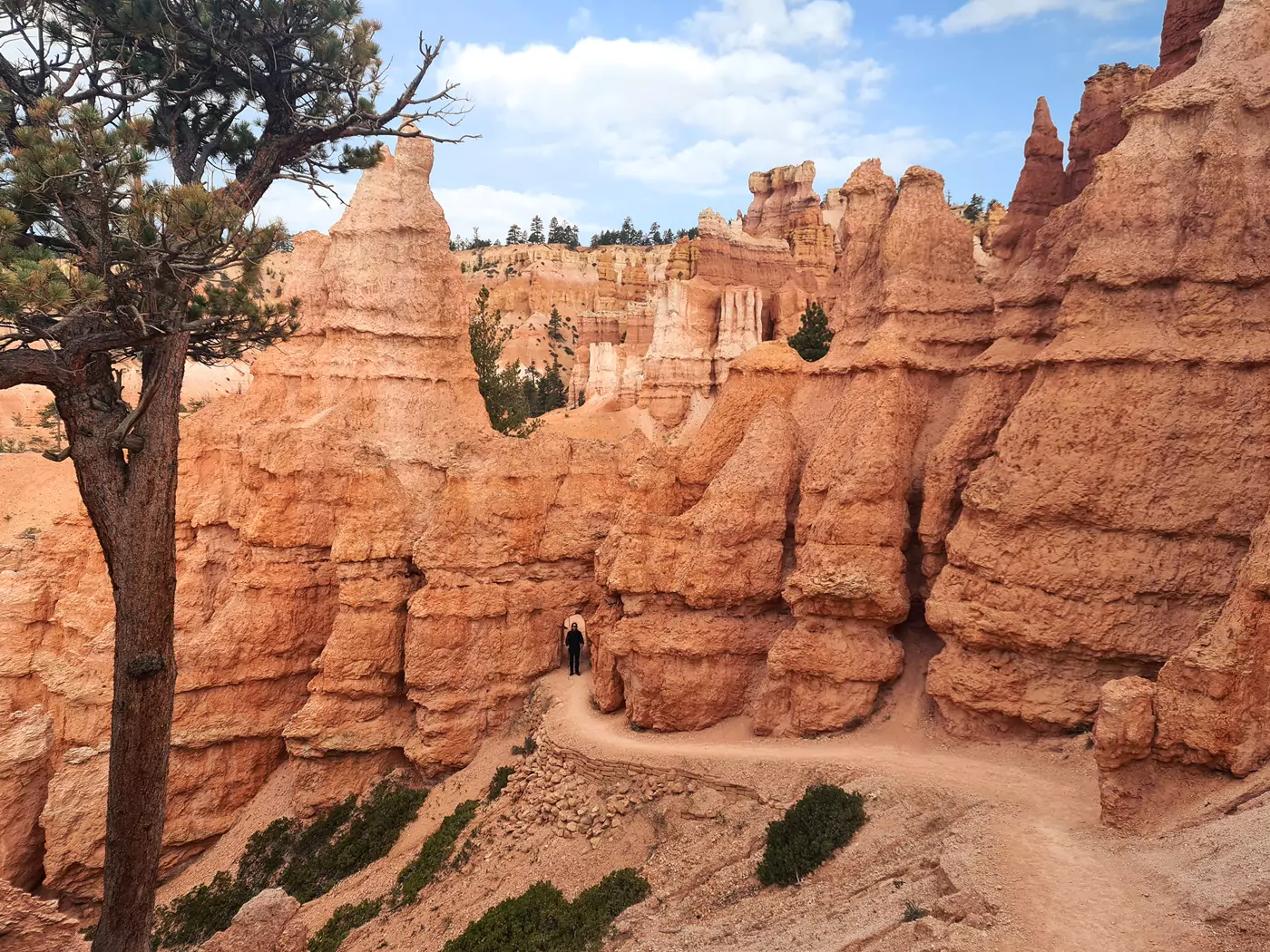
Situated right at the start of one of Utah’s most scenic roads, Bryce Canyon is a surreal and distinctly photogenic park. With the world’s largest and densest collection of hoodoos, this crazy, intricate canyon is a perfect place to employ your wildest of imaginations – these shadowy, humanoid formations are eerie and impressive in equal measures.
Tip | at over 9000 feet at its highest point, ensure you pack layers for Bryce, especially when coming straight from Zion, which is significantly warmer. Also, be aware of the altitude if you are hiking! We’ve camped here many times and it’s always been awful overnight, temperatures-wise.
Bryce Highlights
Queens Garden and Navajo Loop Trails | the most popular hike in the park (for good reason), this reasonably easy, but super scenic hike is smashing, especially if you’re short on time.
Figure 8 | this route combines all the most scenic Bryce amphitheater hikes, including the one above. It’s an incredible route and one that I’ll definitely do again – if you have the time and love hiking (it takes around 4 hours!), don’t miss it. For more information on all the hiking possibilities, check out the Bryce Canyon day hikes on the NPS website.
Mossy Cave | this trail is actually outside of the Bryce Canyon fee boundary. It’s not the most exhilarating, but very easy and quick – there’s even a waterfall! It’s definitely worth nipping in here on your way north on Scenic Byway 12.
Viewpoints | Bryce Canyon is a succession of amphitheaters, or bowl-shaped sections, carved into the side of the mesa. The main road through the park runs 18 miles south to the highest point at over 9000 feet, passing numerous characteristic viewpoints along the way, each with a different view of these bowls (and even a natural bridge).
Bristlecones | not that many people talk about it, but you can see ancient Bristlecone trees in Bryce Canyon on a really easy one-mile loop! I’m obsessed with these nearly 2000-year-old gnarly trees that only grow at high altitudes, usually around 10,000 feet, and cling to the sides of the plateau. This short hike also has some of the most panoramic views in the park, with none of the crowds.
WHERE TO STAY IN BRYCE CANYON NATIONAL PARK
We have never stayed in the Lodge at Bryce Canyon, however if you’ve got the cash to splash, it looks like a decent pick (probably not great value for money though, as with a lot of national park lodges).
Bryce Canyon City | just outside the park boundary is Bryce Canyon City – a very misleading name for this miniscule village, mostly constructed from campgrounds and Best Western hotels. We’ve stayed here a few times – it’s super convenient for access to the canyon rim but, not unexpectedly, a little overpriced.
The biggest and most convenient hotel is the enormous Best Western Plus Ruby’s Inn – it has very average rooms but an okay breakfast. If you can get a decent rate, it’s worth it.
A slightly nicer option is the Best Western Plus Bryce Canyon Grand Hotel – it’s a bit better than Ruby’s, with nicer facilities and pool, but comes with an accompanying price tag.
Tropic | around a ten-minute drive along Byway 12 is Tropic. This is our favourite area to stay near Bryce Canyon, and the Bryce Canyon Inn is, by far, the best! Tropic has a great gas station and a few decent restaurants, we love it. The Pizza Place is decent and coffee is great at Bryce Canyon Coffee Co.
Bryce has a couple of campgrounds – North and Sunset. They’re okay campgrounds – nothing to write home about but pleasant enough.
It’s easier to get reserved spots at these campgrounds because it’s so cold at Bryce – bring appropriate three-season gear and check the weather. I’ve never been warm here overnight, even in the height of summer.
–
How Long to Spend in Bryce Canyon National Park?
We’d recommend one night in Bryce, or a full day and move on in the evening.
If you are on a tight schedule, this park is one that I’d suggest spending less time in. The viewpoints are quick to access, there is only one main road through the park, and there’s a few easy-ish, quick hikes that don’t take up much time but pack a punch, scenery-wise.
If you’re in a rush, as Bryce Canyon is the beginning part of the Scenic Byway 12 section of this itinerary, we’d suggest hitting it in the morning, then driving onto Escalante in the late afternoon/early evening.


GROCERIES ON THIS SOUTHERN UTAH ROAD TRIP
For some parts of this road trip, there are few places to restock your road trip supplies. While there are always gas stations to restock in emergencies, if you are looking for more specialist or fresh foods, these can occasionally be hard to come by.
The Navajo Nation around Monument Valley and between Escalante and Moab were the least well stocked.
The best groceries and markets we found were in:
Springdale | Sol Foods Supermarket
Escalante | Griffin Grocery
Hanksville | Bull Mountain Market (limited)
Moab | The Village Market (my favourite) and City Market
Page | Walmart and Safeway
Kanab | Glazier’s Market (great value)
–
Days 4-5: Escalante and Scenic Byway 12
〈 suggested number of days: 2-5 〉
Oh, my goodness, this remote area packs a punch, landscape and adventure-wise. It’s probably the most underrated part of this itinerary, despite Scenic Byway 12 connecting two of the Mighty Five national parks, with three state parks sandwiched in between!
Scenic Byway 12 is a 124-mile road that runs northward from Bryce Canyon to Capitol Reef, through some of the most diverse landscapes in Utah, all encompassed by the massive Grand Staircase Escalante National Monument. From hundred-foot-tall waterfalls and the state’s tightest slot canyons, to snowy alpine forests and lonely dirt roads, this area of Utah is a surprising mix of unique geology, perfect backdrops and, most importantly, relatively few visitors.
All the Most Beautiful Places Around Byway 12
For a comprehensive guide on everything to do in this area, have a peek at our dedicated Escalante and Byway 12 guide. It’s super detailed, packed with photos, and includes food recommendations and everything you could possibly fit into a trip along this remarkable route. Here are a few of our favourites:
Cottonwood Canyon Narrows and Grosvenor Arch | the northern section of this Cottonwood Canyon Road, in particular, is especially scenic and worth the detour. The narrows are easy to navigate and empty of tourists; the arch is paved and suitable for people with physical limitations.
Zebra Slot | this is a very cool, extremely narrow little slot canyon off Hole-in-the-Rock Road. Also check out Dry Fork, Peekaboo and Spooky Gulch (they’re too claustrophobic for me).
Kodachrome Basin State Park | one of the most visually striking parks in Utah, this state park was named after Kodak’s color film! It’s full of spire-like rock structures, also called sand pipes, all surrounded by some of the most vibrant cliffs in Utah. Furthermore, the campground is the best we’ve visited across the entire state.
Calf Creek Falls | there are two falls in Calf Creek, both well over 100 feet tall, reached by two picturesque hikes. Upper is quieter with a more difficult hike, lower is more popular but very scenic. We’ve done both and actually preferred the upper route (it’s a bit more wild and with zero people).
Escalante River Natural Bridge | this hike is an easygoing introduction into river hiking and can be as long as you’d want it to be (up to around 15 miles one way). The enormous, 130-foot-tall Escalante River Natural Bridge is around 1.5 miles in from the eastern entrance near Kiva Koffeehouse. This hike is *incredible* – if you carry on past the natural bridge, there’s even a small arch high on the cliffs. Plus, look out for native American ruins tucked into the cliffs!
The Burr Trail | this is one of the coolest roads in all of Utah, in my opinion. Beginning at Boulder, it’s diverse, uninhabited, panoramic and continues on through the southern section of Capitol Reef National Park. I’ve driven this route more times than I can count and keep going back.

WHERE TO STAY IN ESCALANTE
We’ve stayed in loads of place in Escalante, and these are our suggestions:
Cowboy Country Inn and Circle D | the most budget options. We’ve stayed in both and in a pinch, they’re okay. Cowboy Country Inn was incredibly quirky, décor-wise (we got the Aztec room), and Circle D had a friendly owner and a nice outdoor chill area. Both are really central, too.
Escalante Escapes | oh my goodness, we loved this place! The fresh, modern ‘tiny houses’ have full facilities and fire pits, plus you’ll not find a cleaner place in the town. You can choose you individual home too when you book and they’re perfect for families or groups.
Escalante Yurts | simply immaculate, don’t think of them as basic yurts – you’ll be doing this place a serious disservice. Seriously, take a look at them! Full disclosure – we’ve not stayed in these personally, but a (slightly richer) friend has, and it looked incredible.
Ofland Escalante | they have a range of accommodations for various budgets, from Airstreams, cabins to campsites, all with a huge pool and an old-school outdoor cinema with free popcorn. Perfect for summer nights in the desert – this place was an absolute vibe. Slightly outside of Escalante, though.
–
WHERE TO EAT IN ESCALANTE
Escalante Outfitters | magical sandwiches and pizzas with great veggie options. We eat here a lot! (They also sell useful camping gear if you’re in a pickle).
Nemo’s Drive Thru | small burger joint that does moderate veggie burgers.
Magnolia’s Kitchen | lovely, if slightly pricey, breakfasts with good veg choices.
–
How Long to Spend in Escalante?
We recommend spending as long as possible in Escalante and along Scenic Byway 12.
◊ A week would allow you to see everything mentioned on this itinerary, do a fair few of the best hikes and drive the scenic off-shoots.
◊ Three days would give you a decent overview and you could hike and drive a selection of the highlights.
◊ Two days on Scenic Byway 12 would allow a quick stop over in Escalante between the two big national parks.
As always, hiking takes the most amount of time, so schedule any hikes in first.


CAR HIRE FOR YOUR UTAH ITINERARY
We always rent our vehicles all over the world, including our recent trip in the United States, with Discover Cars. They’re often the most affordable, plus they paid out immediately on an insurance claim we made when our car took some heavy damage in Sicily. We fully recommend them.
–
TAKE A LOOK BELOW OR CHECK CAR RENTAL
Day 6: Capitol Reef National Park
〈 suggested number of days: 1-3 〉
Romantically described as a ‘wrinkle in the Earth’, Capitol Reef is the second least visited of the Mighty Five parks, and definitely does not get as much attention as it deserves.
Just as remarkable as the other Utah national parks, Capitol Reef has retained a kind of serenity which is tricky to find in Arches, Zion and Bryce Canyon. The dramatic red rock formations, scenic hikes and diverse roadside scenery are genuinely just as spectacular.
Personally, Capitol Reef is my joint-favourite national park in Utah, so we highly encourage you not to skip it.
Crowd-Free Capitol Reef Adventures
For a detailed one-day itinerary, check out our Capitol Reef guide, and for a way to escape the (albeit minimal) crowds, take a look at our post on the Temples of the Sun and Moon, a striking area located in a remote northern section of the park.
A few of our highlights in Capitol Reef:
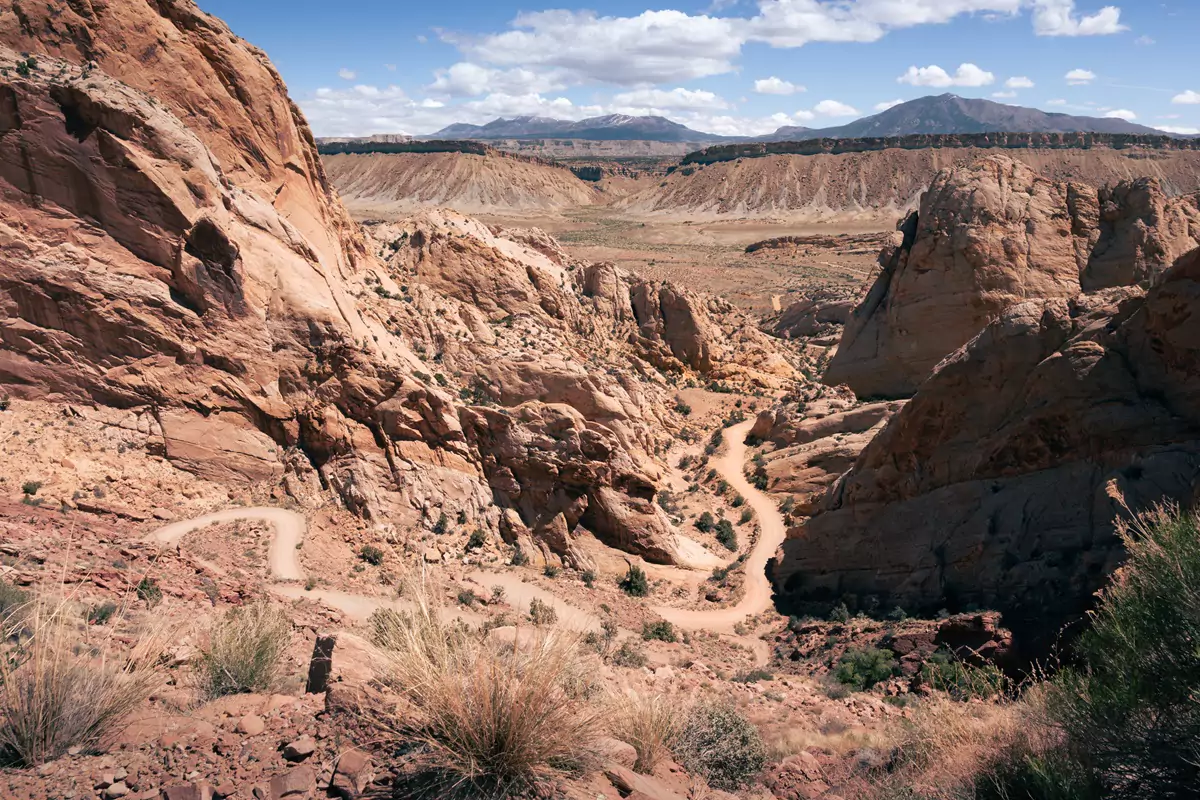
The Burr Trail Switchbacks | this section of the Burr Trail is extremely remote, yet immensely scenic and easy to drive.
Navajo Knobs | this is one of the hardest hikes in the park, but has the biggest panoramic reward (in our opinion).
Fruit pies and cinnamon buns | these are home cooked daily at the Gifford Homestead in Fruita – don’t miss them, they might be the culinary highlight of your trip! I’ve never had a bad flavour there (and I’ve eaten an unreasonable amount of pie).
Grand Wash | a giant wash with scalloped, water worn walls, Grand Wash is basically a colossal, wide slot canyon. If you are looking for a dramatic, but also not too strenuous hike, then this is perfect.
Sunset Point | a very straightforward little walk to a beautiful overlook where I’ve yet to see more than two other people (even at sunset).
Headquarters and Surprise Canyons | far from the frontcountry crowds, these two narrow canyons in the Waterpocket Fold are always empty, beautiful and straightforward to hike.
WHERE TO STAY IN CAPITOL REEF
Torrey is the nearest town to Capitol Reef. It’s a tiny but functional little town with decent lodging, a few markets, some nice restaurants and a gas station. We recommend you stay in Torrey, as there are no accommodation options within the park itself (unless you’re down to camp – in which case, see below).
In Torrey:
Broken Spur Inn | I love, love, love this one. It’s our reliable favourite in Torrey, with large, modern rooms, lovely views in every direction (it’s up on a bit of a hill), and cute, quirky cowboy décor everywhere. They even have wagons you can stay in. Oh, and an indoor pool!
Skyview Hotel | our other favourite is this nearly new, fabulous property with flawless rooms and panoramic glamping pods. We took a risk booking this one with such few reviews, but it’s absolutely one of the best places we stayed during that three-month trip. It is especially great for families – the pods even have bunk beds!
Capitol Reef has some super nice camping – we’ve camped here four times and it’s always been excellent. Below are the camping options within the park:
Fruita Campground | this is a developed campground in the most popular, frontcountry section of Capitol Reef, not far from the visitor center. It’s reservable online and books out fast.
Further out:
Cathedral Valley Campground | high clearance, 4WD recommended. About 36 miles (57.9 kilometres) from the Capitol Reef Visitor Center. First-come, first-serve, primitive, no-fee, 6 sites with picnic table and fire grate, pit toilet, no water.
Cedar Mesa Campground | two-wheel drive accessible, unless it has rained, although the access is more comfortable with high clearance. Located on the Notom-Bullfrog Road, approximately 23 miles (37 kilometres) south of Utah State Highway 24. No fee, five sites, pit toilet, no potable water.
Overnight backpacking permits | in Capitol Reef, these are free and available at the visitor center (we got a backpacking permit for Upper Muley Twist same day – the easiness was a refreshing change from all the other national parks in Utah!).
Bureau of Land Management | there is also a lot of dispersed camping options available on BLM land outside the park boundaries.
–
WHERE TO EAT IN CAPITOL REEF
Apart from the obligatory fruit pie from the Gifford Homestead, these are our favourite restaurants in Torrey:
The Wild Rabbit Café | we loved this place. They did amazing portions of veggie-friendly dishes for moderate prices (seriously loved the Mediterranean eggs benedict, sans bacon).
Capitol Burger | these guys do an almost indecently good mac ‘n’ cheese burger (which can be made with Impossible burgers if you’re vegetarian).
Authentico | we also grabbed some tacos from Authentico, which was magic when we were craving decent Mexican – they even have nopales tacos and burritos!
Color Ridge Farm and Creamery | don’t sleep on this one. I still remember the sunny, lazy afternoon where neither of us wanted to hike, but instead just craved millions of calories. This place was off-the-chart cool and cute, with some of the best ice cream I’ve had, in some noteworthy flavours. The Graham-Berry Slam was nothing like anything I’ve tried before. We fully recommend.
–
How Long to Spend in Capitol Reef?
The main sights of Capitol Reef are easily seen in a day (as per our one-day in Capitol Reef itinerary).
If you intend to do lots of hiking or any backpacking (there is excellent backpacking which requires no reservations and is free), add a day or two onto your itinerary.


Optional: Goblin Valley State Park
〈 suggested number of days: 1-2 〉
Set along the perimeter of the San Rafael Swell, Goblin Valley is an exhibition of bizarre sandstone formations, consisting of thousands of rust-coloured hoodoos that look kind of like melting goblins. These goblins carpet the valley (for almost) as far as the eye can see – a warren of scalable, hikable nooks and crannies. It’s honestly the most fun you’ll have in a Utah state park, I promise!
I’ve written this as ‘optional’, but honestly, don’t treat it like that! It’s worth a full day if you like to hike! However, if you’re short on time, it’s great quick stop between Capitol Reef and Moab.
Tip | Goblin Valley is a State Park, so requires a different entry fee than the national parks – $20 per vehicle. Your America the Beautiful pass will not be accepted here..
Exploring a Maze of Goblins
Hikes | there are a few designated hikes within three areas at Goblin Valley, however, to get the most from this park, just wander off in any direction that appeals to you – this is the best way to explore!
Campground | another highlight for me, personally, is the campground. It is, by far, one of the best I’ve stayed in around Utah.
Little Wild Horse and Bell Canyons | just a few minutes outside of Goblin Valley are these incredible slot canyons that are connected along an eight-mile route – if you love to hike, absolutely do not miss them. For more information on the best slot canyons in Utah, check out our favourites list.

WHERE TO STAY IN GOBLIN VALLEY
The nearest town to Goblin Valley is Hanksville. A little further towards Moab on the I70 is Green River, a slightly larger town that is obsessed with watermelons. Many people stay in Torrey, adjacent to Capitol Reef, then travel from there.
We’ve never stayed in Hanksville (we always camp nearby instead), however we’ve seen the few accommodation options on offer (they’re far cheaper than Torrey, if you’re on a budget). It’s a bit more isolated and rough out that way, with minimal food options. If I were stopping in Hanksville, though, I’d definitely choose stay in:
Muddy Creek Mining Company | this one has cute cabins, excellent reviews and I quite liked the look of it from the outside – it would definitely be where I’d choose to stay in Hanksville.
Goblin Valley’s state park campground is impeccable. Definitely try to get a reservation if you are camping on your road trip.
How Long to Spend in Goblin Valley?
If you leave Capitol Reef in the morning, it is possible to drive via Goblin Valley and end your day in Moab. This is the most common option for visitors, since there are no nearby hotels.
It’s easy to explore the park in half a day or even less, but we’d recommend staying a night in the campground or campground yurts, to catch a sunset and have to park to yourself for a few hours.


Optional: BICENTENNIAL Scenic Route 95, Slots and Shortcuts
From Hanksville, the super-scenic State Route 95 heads 133 miles south through Hite, across the Colorado River, towards Natural Bridges National Monument and onto Blanding or Monument Valley. It’s absolutely empty, despite being a perfectly paved road for the entire duration, and devastatingly beautiful.
This route is genuinely outstanding, passing over historic bridges, past soaring cliffs and by dramatic slot canyons. Our favourite is called Leprechaun Canyon, a surprisingly cool slot with a very easy hike in.
The views at Hite Overlook are absolutely immense, too, and always crowd-free.
Route 95 is particularly useful if you want to drive Scenic Byway 12, but don’t have time to include Moab on your road trip. Taking this option cuts off the north eastern section of this itinerary, heading directly to Monument Valley via the scenic Moki Dugway.
It’s utterly wild, and probably the exact southern Utah scenery you’ve been dreaming of.
–


Days 8-11: Moab
〈 number of days: 3-7 〉
Moab, Utah’s epicenter of adventure, is probably the most vibrant and exciting hub in southern Utah. Encircled by two of the Mighty Five national parks, you’d think that proximity to the parks would be the entire reason to visit, however Moab holds its own, even without them.
As one of the only towns in Utah with access to the banks of the Colorado River, water sports opportunities here are unparalleled. This, along with an abundance of off roading, climbing, and hiking routes, makes Moab an alfresco traveller’s dream town.
It has the infrastructure to feed and accommodate any kind of traveller, whether you are after a stunning riverside camp spot, a high-end hotel or a unique glamping experience – it’s got everything.
Adventures around Moab
For a highly detailed, three-day itinerary, check out our Moab guide. It contains everything you need to know about the area. If you’re strapped for time, we’ve written a comparison of Arches and Canyonlands if you only have one day.
Here are a few of our favourite things to do:
Fisher Towers | a lovely, mostly quiet 4.5-mile hike next to some peculiar, distinctive towers with views of the Colorado River. This is outside the national parks, so no fees involved. It’ll take around 2-3 hours.
The White Rim Road | this awesome four-wheel drive adventure weaves its way around a remote area of Canyonlands’ Island in the Sky district, vaguely following the Colorado and Green Rivers as they cut the through the park. It’s a stupendous 100-mile, two/three-day drive and one of my favourite ever experiences. You can visit on a day trip, too, if you do a shorter route. For more planning information, have a look at our White Rim guide.
Fiery Furnace | another incredible outing, this time in Arches National Park. This permit-only hike is one of my all-time favourites, with narrow slots, huge fins, arches and boulders, all in a maze-like setting with no official route. It’s unreal and worth your time, I promise. For more information and how to get permits, check out our Fiery Furnace post.
Route 128 and 279 | if you’re not a hiker, don’t despair, Moab has something for everyone. For a non-four-wheel-drive route that’s simply exquisite, drive the Utah 128 east from Moab along the Colorado River, or west on the Utah 279 Potash Road into Canyonlands (the road gets rougher after the potash plant). Also consider exploring one of the other scenic routes in the area, like Kane Creek.
La Sal Mountains | the perfect drive for fall or late summer. This road heads up into the oft snowcapped La Sal Mountains (the ones you can see from everywhere in Moab). I’ve never seen more beautiful fall colours anywhere in the world, plus the elevation makes it perfect for escaping the heat.

WHERE TO STAY IN MOAB
We’ve stayed in loads of places in Moab at varying budgets (Moab is generally expensive – stay in Green River for slightly lower prices, or camp). These are the best ones we’ve found:
Bowen Motel ($$) – this simple motel has the most central location on the main street, comfortable, clean rooms, and often a decent price point. We’ve stayed here a few times now and never been let down. It’s always our choice when the price is right.
Kokopelli West ($$$) – super cute, colourful cabins, lovely hosts, great location. This amazing little find has modern, up-to-date rooms with comfy beds, fire pits and a general vibe that I just loved.
Under Canvas Moab ($$$) – I’ve stayed in other Under Canvas locations, and this particular one lives up to the name. It’s like luxury glamping and I love it! The tents gets pretty hot though, so I’d give it a miss during the scorching summer months.
Red Cliffs Lodge ($$$) – if you’re looking for something a bit special, this could be it. Hidden down Route 128, surrounded on all sides by cliffs, perched on the shore of the Colorado River is this surprising find. The location is unmatched, the rooms have a modern twist but with a kind of wood cabin vibe, and the room patios are huge. We actually discovered this place by driving past it – then immediately booked it!
There are loads of epic camping opportunities all around the Moab area.
Down both routes 128 and 279, there are tonnes of affordable first-come, first-serve BLM sites right on the Colorado River. These can be busy.
Along Kane Creek Road/Kane Springs Blvd (leads to the Chicken Corners route), there is plenty of slightly more remote camping – we particularly liked Ledge B campground down there. These campgrounds rarely get that busy from our experience. Nearer Moab, Kings Bottom is really nice, but often busy.
The nearby national parks both have camping too. Arches has Devils Garden Campground (reserve well in advance). We didn’t love this one to be honest. There are a few really great sites in the rocks and the group site is cool (we got given the group site once due to a booking mess-up), but lots of them are open and more designed for RVs. Canyonlands has Willow Flat Campground which is lovely and has a bit of a windswept vibe up near Green River Overlook (first-come, first-serve).
There are also a few BLM campgrounds, like Horsethief and Cowboy Camp, just outside the boundary to Canyonlands, on the road in (first-come, first-serve).
–
WHERE TO EAT IN MOAB
There are tonnes of decent places to eat in Moab. Here are our favourites (there’s more detail within our Moab guide):
Great for Breakfast | Doughbird, Moab Garage Co., Love Muffin, Gilibertos, Moab Coffee Roasters
Great for Lunch | MOYO, Quesadilla Mobilla, Tacos El Gordo, Street Dog, Milts
Great for Dinner | Thai Bella Moab, Antica Forma, The Moab Brewery, Proper Brewing, Rooted Vine
–
How Long to Spend in Moab?
It’s easy to spend a leisurely week in Moab. With almost endless outdoor activities and the nearby national parks, you could stay even longer. There’s a different restaurant for every meal, decent supermarkets and lots of evening activities.
However, for a flying visit to Moab, we’d recommend three days to see Canyonlands and Arches, plus a few of the nearby hikes and scenic drives. If you need to see Canyonlands and Arches in one day, we’ve discussed how to do this on our comparison guide.


OPTIONAL: Needles District of Canyonlands
Between Moab and Monument Valley (the next stop on this itinerary) is the Needles District of Canyonlands National Park.
Canyonlands is made up of three enormous areas, split by the mighty Green and Colorado Rivers. The region near Moab is called the Island in the Sky district, and south of that is Needles. To the west, the Maze makes up the other third and is incredibly isolated and remote – not safe for visiting unless you go extremely well prepared.
Needles is a fantastically scenic area and is particularly popular for off-roading and backpacking. We’ve personally done two overnight backpacking trips here – one in Chesler Park and the other in Lost Canyon, and we’d highly recommend both. There are also loads of exciting, varied day hikes and a lovely developed campground. Check the Needles NPS for permit requirements.
On the drive in, there is also a very cool petroglyph panel called Newspaper Rock.
If you fancy a trip to Needles but don’t camp, book a place to stay in either Blanding or Monticello. In Blanding, we highly recommend staying in Stone Lizard Lodge, it’s the best place in town.
–


Day 12: Monument Valley Navajo Tribal Park
〈 suggested number of days: 1-2 〉
The sacred native American site of Monument Valley, situated smack-bang on the border between Utah and Arizona, is on almost every American southwest road trip itinerary, for excellent reason. The sunbaked sandstone buttes and mesas that erupt directly from the flush desert floor look like something on Mars, or maybe just something out of your wildest, craziest science-fiction dreams.
Tip | no state or national parks pass will work at the Tribal Park, so every passenger must pay for entry (currently $8 per adult).
Exploring Beyond Monument Valley
We’ve written about the ten best things to do around Monument Valley – there’s far more than just the Tribal Park in the region, even though it’s feels incredibly remote and empty!
Here are a few of our favourites:
Muley Point | this insane lookout is high up on the cliffs and overlooks Goosenecks State Park, the San Juan River, Valley of the Gods and Monument Valley in the distance. It’s also highly likely you’ll have it all to yourself. The best part is driving up the incredible Moki Dugway to reach it!
Valley of the Gods | this is a smaller, quieter set of sandstone buttes along a 17-mile dirt road on BLM land, meaning you can hike, camp or climb wherever you want. It’s absolutely desolate and strikingly beautiful.
Monument Valley Loop Drive | my favourite bit of Monument Valley. The loop drive takes you along dirt roads in and around the famous buttes, with some outrageously incredible views – there are more crowds here than Valley of the Gods, but it’s also more dramatic.
If you’re on a tight schedule and can’t decide between the Monument Valley and Valley of the Gods loop drives, check out our comparison post.

WHERE TO STAY IN MONUMENT VALLEY
There are several options for accommodation nearby, including Monument Valley itself, Gouldings, Kayenta, Mexican Hat and, slightly further out, Bluff.
Most options out here are kind of expensive for what you get, but the below are the best of the bunch. For more hotel suggestions, check our detailed Monument Valley post.
We’ve stayed in all these towns over the years, so here are our hotel recommendations for each area:
Monument Valley | The View Hotel or The View Hotel Cabins (there is also a camping option). These have the best views of the Mittens and Garrick Butte, but come at an extreme price for the room quality. Don’t be sucked into paying for the good view.
Goulding’s Lodge | this is just opposite the entrance to Monument Valley, so is in a perfect location, with a pretty setting in the opposite cliffs. We actually stayed in a cool little cabin in the campground that we absolutely loved (we were supposed to camp but it was snowing). Check availability at Goulding’s Lodge.
Kayenta | this is a larger town south of Monument Valley and has some traditional motel options, the best being the Hampton Inn Kayenta Monument Valley. It’s a decent, modern motel, but pricey.
–
How Long to Spend in Monument Valley?
For a flying visit, we’d recommend at least a night in Monument Valley, however many visitors just nip into the Tribal Park, check out the views then move on. This only takes a few hours, at most, so it’s possible to head straight to your next stop.
We’d recommend at least one night, not just for Monument Valley, but for all the things to do in the area. There are loads of beautiful spots!


Optional: A QUICK JAUNT TO THE GRAND CANYON
The route between Monument Valley and Page takes just over two hours to drive.
If you have never visited the Grand Canyon, the epic South Rim is a little over three hours away from Monument Valley by car. It’s then 2.5 hours back to Page.
This means that if you have a few days spare, it would be possible to take a quick detour into Arizona to see one of my favourite places on Earth.
If you’re interested in learning more, check out our posts on the best Grand Canyon day hikes and the perfect three day South Rim itinerary.
–
Days 13-14: Page, AZ
〈 suggested number of days: 2-4 〉
Okay, so Page is technically in Arizona, not Utah, but only by a slither. The city is bordered on the northern side by Utah and it’s necessary to pass through on this route.
However, Page is well-worth visiting and totally deserving a place on any southern Utah itinerary. Sitting directly on the banks of Lake Powell, adjacent to the beginning of the Grand Canyon, its enviable location makes for an ideal outdoor adventure hub. It’s one of my favourite spots on this road trip.
Outdoors in Page
There is so much to do around Page, however it does get very hot in summer, so reduce the number of days here on this road trip itinerary if you can’t do as many outdoor activities.
We’ve written a large, comprehensive post about all the things to do in Page. Some of our favourites include:
Lees Ferry | this is basically the beginning of the Grand Canyon! It’s a small, remote bay where the Grand Canyon rafting trips set out from and has some impeccable hiking routes.
Buckskin Gulch | absolutely one of the best slot canyons across the entire of the Colorado Plateau. Buckskin Gulch is thought to be the longest and deepest slot in the world, yet despite these impressive statistics, is so easy to hike! We think it’s also the most photogenic slot we’ve visited.
Cottonwood Canyon | we mention this previously in the Scenic Byway 12, Escalante section, but the southern end of Cottonwood Canyon Road actually begins nearby Page. So, if you’ve missed it previously, it’s possible to still check it out.
Horseshoe Bend | this is the famous screensaver shot of the symmetric Colorado River bend from the 1000-foot-high cliffs above. It’s expensive ($10 to park for a 0.75-mile hike) and very, very busy. Consider kayaking around the bend instead, it’s an astonishing experience.
Spot endangered condors | the *super* endangered California Condor hangs out a lot around the historic Navajo Bridge, nearby Lees Ferry. This less-than-majestic animal is the largest North American land bird and was extinct in the wild in 1987. It has since been captively bred and reintroduced to its habitat. There are now 561 in the wild.
We’ve spotted them a few times in the area – just go hang out on the bridge for a while!


WHERE TO STAY IN PAGE
Page has a huge number of accommodation options, however it doesn’t have a large number of exciting ones! Despite this, accommodation in the town often sells out in peak months and prices fly up. We’d recommend booking in advance for the best rates here.
Here are a few places we’ve stayed, and one more we wished we had:
Motel 6 – I wouldn’t routinely recommend a Motel 6, but it was *easily* the cheapest place we stayed in Page on our most recent trip. It wasn’t too bad and if you intend to be out of your room the entire time, it’s tolerable.
Other central motels – we’ve stopped over in many motels in central Page, our favourites being the Holiday Inn Express, Country Inn and Suites and the Baymont by Wyndham. Honestly, we wouldn’t usually choose pricier chain motels but Page has so many (mostly bad) budget options. Check the reviews carefully if they’re rated below an 8!
Under Canvas Lake Powell – for a proper glamping experience, look no further than Under Canvas. This outrageously pretty place has luxury tents with private bathrooms, but it might be worth skipping in the hot months – there’s no aircon. There is even a slot canyon, on site, if that helps persuade you!
Amangiri – ok, straight up, we can’t afford this one, but if you take a look at it, you’ll know why it’s on our bucket list. For a once-in-a-lifetime, millionaire inheritance kind of stay, check this out.
–
How Long to Spend in Page?
If you are just wanting to hit the main spots in Page (Horseshoe Bend and Antelope Canyon are the most popular), you’ll just need one day. Also, if it’s peak summertime and just too hot to safely hike, then one night will be adequate.
If you want to get out on the water and explore Lake Powell, kayak Horseshoe Bend, do a few hikes and visit Lees Ferry, that could easily take three days or more.


Optional: Kanab
〈 suggested number of days: 1-3 〉
Kanab is just an hour west of Page but feels a million miles away. From Page’s huge Walmart, Little Caesars, dam electrical cables and plethora of branded of motels, Kanab is the antithesis. Small, mostly two-storey hotels, quiet roads, an appealingly cozy main street, and that’s pretty much it.
Despite Kanab’s lesser size though, there are easily enough things to keep you busy for a few days.
Around Kanab
We’ve written a list of all the best things to do around Kanab, but these are our favourites:
Kanab Sand Caves | super easy and photogenic little stop right next to the road outside town.
Best Friends Animal Sanctuary | the biggest no-kill sanctuary in the United States, reserve a spot online in advance to visit.
Coral Pink Sand Dunes State Park | this cool state park is a bit different: you can rent an ATV or sand board thingy and just hang out on some of the craziest red dunes I’ve ever seen (apparently the sand is made from the surrounding red rocks, hence the name).
North Rim | this is a little further away, but if you haven’t yet visited the Grand Canyon, you have the opportunity from Kanab. It’s around a 90-minute drive so you could day trip it, however, we’d suggest booking a night at the North Rim Lodge or at the lovely North Rim Campground (both of these are currently closed because of a severe wildfire that devastated the area in July 2025).

WHERE TO STAY IN KANAB
Best Friends Roadhouse and Mercantile | our favourite in Kanab. The rooms are so comfortable, the staff are dog-lovers (which says a lot about their characters), and the motel even has a pet spa! It’s set on beautiful, flower-filled grounds and I’ve rarely enjoyed a motel as much as this one. Even without pets (we don’t have any), this place is worth it. Also, such quiet air-conditioning – something rare in the American southwest.
Red Canyon Cabins | a more budget option that is probably my second choice in Kanab. When the price is right, this collection of cute red cabins is an absolute steal – one of the best value stays we’ve had on our recent three-month road trip. We’ve actually stayed here on every southwest trip in the past decade – it’s reliable, comfortable and excellent value.
Aikens Lodge | this motel is quirky, with kitschy film memorabilia on the walls and a no-frills, retro motel feel. We wouldn’t recommend it above Red Canyon Cabins, but if you’re on a budget and the price fits, this place isn’t bad. The aircon is crazy loud though so I had to sleep with it off! Also, the included breakfast is at the Best Western just down the street.
Quail Park Lodge | another slightly retro style motel, but this one is a little nicer than Aikens Lodge. It’s been recently (and thoughtfully) renovated, so the rooms are modern and up to date with decent TVs and nice bathrooms (don’t let the ‘retro’ description put you off!). We stayed at Best Friends, just across the road, and our friends stayed here – it’s a pretty close tie between the two!
–
WHERE TO EAT IN KANAB
We’ve eaten in most places in Kanab, and these are some of our favourites. For more reommendations, check out our dedicated Kanab post.
Peekaboo Canyon Wood Fired Kitchen | my all-time favourite! This vegetarian restaurant is one of the absolute best (even if you love meat). The pizzas are perfection with thoughtful toppings, the salads are impeccable, the behemoth portions of garlic parm bombs are hilarious and I even order desert (which is a rarity for me). Order the Hot Mess pizza – it’s special.
Wild Thyme Café | absolutely love this cute restaurant. There’s a fantastic cocktail (and mocktail!) menu, plus loads of vegetarian options – I’ve tried all the salads at this point and would definitely recommend them. Also, the hatch green chile penne was top-notch.
Best Friends Mercantile shop | we were in a rush one morning and needed a quick packed lunch, so we nipped into the vegan shop at Best Friends Mercantile and bought a tofu burrito and a dill-pasta salad, which were incredibly affordable and far, far tastier than I was expecting for the price.
–
How Long to Spend in Kanab?
If you are short on time during your southern Utah trip, just the one night would be adequate in Kanab. However, if possible, we’d recommend several nights, especially if you visit the Grand Canyon’s North Rim. You could skip Kanab entirely if you are pressed for time, but we’d not recommend it!
And, once you are done in Kanab, head back to Las Vegas for the end of your trip!


Southern Utah Road Trip Map
Below is a savable Google Map with all the main stops on this itinerary. There are also colour-coded layers:
◊ Orange are towns and cities
◊ Purple are accommodation suggestions
◊ Deep red are the national and state parks
◊ Green are camping
◊ Yellow are hikes and places of interest
◊ Red are food recommendations
To check out each layer, select the top left symbol. To save the map, select the star next to the title.
Best Month for this SOUTHERN Utah Road Trip
There is no perfect time to do a road trip around Utah.
Winter | southern Utah has lots of terrain at higher elevations, meaning it can be particularly cold (and even snowy) between November and April. I’ve been snowed on in Bryce, Monument Valley and Moab in previous years. If you are considering a camping trip, definitely bear this in mind. Even in May, it can be cold around the higher elevation areas. There is also the potential need for tire chains at higher elevations, which many car rental companies do not permit.
Summer | in the summer, all of Utah gets hot – really, really hot. Especially at lower elevation areas, temperatures regularly exceed 100 F degrees, making hiking and camping unpleasant. The holidays also attract larger crowds at the more well-known national parks. During summer, there is a heightened risk of wildfires, plus monsoon season also begins, bringing crazy heavy rains that make hiking in canyons unsafe.
Spring | late spring is a lovely time to visit – May into June in particular. It can still be nippy in the early mornings and river water is often especially cold due to snow run-off, but the day time temperatures are great for outdoor adventuring.
Fall | this has potentially comfortable temperatures, but far higher risk of forest fires, which occasionally shut some of the parks and reduce visibility (amongst other devastating consequences). Monsoon season continues through the beginning of fall, too. A positive is that the excessive summer crowds dissipate in September.
Summary | for a straightforward getaway to southern Utah with no hiking or camping, any time of year can be decent for a road trip (avoid summer purely due to crowding). For hiking, camping and backpacking, the summer is dangerously warm and winters uncomfortably cold, so we’d recommend springtime – there is low risk of fires, and the monsoon season has yet to begin.
–
RELATED POST | A PHOTOGRAPHER’S ALTERNATIVE TO ANTELOPE CANYON
HAS OUR FREE CONTENT HELPED YOU PLAN A SOUTHERN UTAH TRIP?
If you’ve found our content helpful, consider booking your rental car (if you need one!), through the company we always use – Discover Cars. They’re the absolute best and have been our rental companion (and savior, thanks to their insurance) in many destinations across the world.
Also, consider booking your accommodation through Booking.com – we use them exclusively when travelling in North America.
Help like this makes it easier to pay for the upkeep of this site. Thank you!
–
Final Thoughts
The months I’ve spent driving around southern Utah are some of the best of my life. That may sound a bit dramatic, but it’s true. For me, at least, it’s the ideal destination for camping, road tripping, photography and hiking. There’s no place like it on Earth.
This Utah road trip is not even close to exhaustive, either, – for add-ons, it’s possible to head over to southwest Colorado and explore old mining towns surrounded by soaring peaks, plus the country’s largest sand dunes and most impressive ancient cliff dwellings.
If you head south, the state of Arizona is packed with adventures, including isolated organ pipe cactuses on the Mexico border, colourful petrified forests, kitschy wild west towns, Sedona, and the Grand Canyon.
If you head north, well, there’s the inimitable Yellowstone and the severely underrated Sawtooth region in Idaho.
To the west, it’s all about the Sierra Nevada mountains, home to the highest mountains in the contiguous United States and an uncountable number of aquamarine lakes.
This region of the country has endless possibilities. I’ve explored all of this, and more, over the past 15 years, yet it is southern Utah I keep getting called back to, again and again, searching for new adventures.
We hope you have a genuinely magical time on your trip and that this post helps you plan!
Hi, thanks for visiting our blog! If our free content has been of help to you, or you’ve just enjoyed our random ramblings and musings, say thank you by buying us a coffee! It helps keep The Restless Beans blog up and running.
Thank you, Claire + Nick