

13 Amazing Native American Ruins in the Southwest
Scribbled by Claire ⬩ 03 Aug 2024
Here, we talk about the some of the most incredible native American sites within the national parks and monuments system, dotted across the American southwest. Each one has easy access by two-wheel drive vehicle and free entry with an America the Beautiful pass.

The national parks of the American southwest always evoke typical conversations about the natural beauty of the Grand Canyon, the outstanding climbing and hiking in Yosemite, or the dramatic narrows of Zion.
However, the American national parks are not all about outdoor scenery. There is a myriad of Native American sites that present a cultural, historic perspective to accompany the rugged beauty of the southwest.
Offering ancient architecture, petroglyphs and artifacts, the Native American ruins in parks across the region provide a fascinating historical glimpse into a 1000-year-old history while frequently offering wonderful hiking and panoramic vistas to accompany it.
Here are our favourites!

IN THIS GUIDE //
Native American Ruins of the Southwest
1. MESA VERDE NATIONAL PARK
2. CHACO CULTURE NATIONAL HISTORICAL PARK
3. TONTO NATIONAL MONUMENT
NATIVE AMERICAN HISTORY
4. CANYON DE CHELLY
5. HOVENWEEP
6. NAVAJO NATIONAL MONUMENT
7. WALNUT CANYON
8. WUPATKI
9. MONTEZUMA CASTLE AND WELL, TUZIGOOT
10. PETROGLYPH NATIONAL MONUMENT
OTHER PLACES TO SEE NATIVE AMERICAN HISTORY
11. AZTEC RUINS NATIONAL MONUMENT
12. CASA GRANDE RUINS
RESPONSIBLE TOURISM – NATIVE AMERICAN RUINS
13. BANDELIER NATIONAL MONUMENT
NATIVE AMERICAN RUINS – MAP
FINAL THOUGHTS – NATIVE AMERICAN RUINS
This post may contain affiliate links. If you book through these links we may make a small commission at zero cost to you. It helps us pay for the upkeep of this blog. Thank you!
1. Mesa Verde National Park
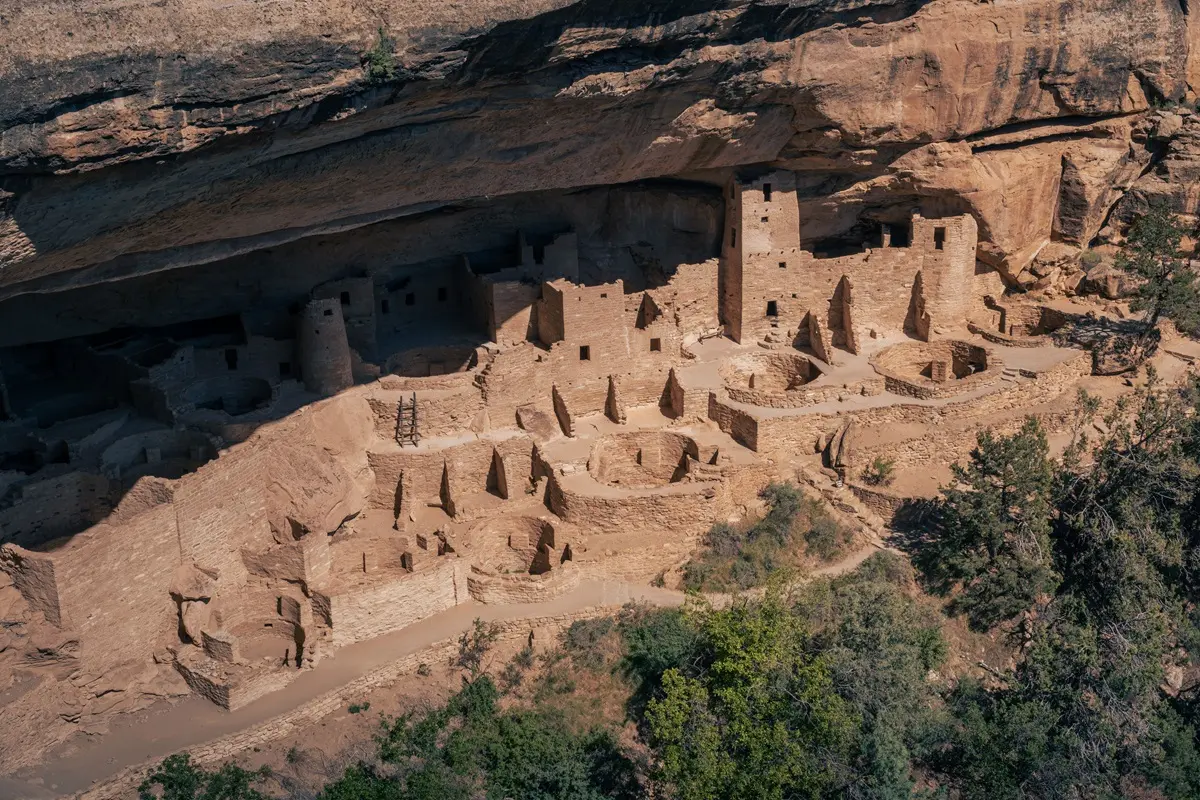
The UNESCO World Heritage Site of Mesa Verde, (‘Green Table’ in Spanish; describing the plateaus under which all the dwellings are situated) is the ultimate park for learning about Native American cliff dwellings. With stunning panoramic vistas, enormous canyons and construction going back over 700 years, Mesa Verde National Park should be included on any southwest itinerary with an interest in Native American ruins.
Within the hundreds of Ancestral Pueblo constructions concealed beneath the canyon rim is the largest cliff dwelling in the United States, Cliff Palace. You can book onto a ranger led tour of Cliff Palace, or hike or bike one of the other park trails to visit additional dwellings. For a less active trip, it is easy to spend an afternoon spotting the dwellings from the opposite cliffs along the scenic drives.
MESA VERDE
WHERE: Montezuma County, southwest Colorado
COST: $20 in winter, $30 in summer (free with an America the Beautiful pass)
CLOSEST MAJOR TOWN: Cortez, CO
AREA: 210 square kilometres
VISITORS: 563,420 in 2018
Hint: dedicate at least a day for Mesa Verde. There is loads to see and the tours (book in advance) can be quite long. Also, the highest point is over 8500 feet, be aware when hiking.
–
We’ve always found the best car rental prices for the USA on DiscoverCars. It’s our go-to car comparison website for every road trip because they have such good insurance. You can save loads of money and get great-priced comprehensive coverage.
2. Chaco Culture National Historical Park
The UNESCO designated Chaco Culture National Historical Park is a bonus addition to this list because it has some mildly sketchy roads, so does not meet our requirements of two-wheel drive vehicle access. However, it is one of the most significant pre-Colombian sites in the United States, and worth adding to any itinerary that is prioritising Native American history.
Situated in remote northwest New Mexico, the massive Chaco site was a major centre of culture and engineering from around 900 CE for the Ancestral Puebloans. The area comprises multiple settlements, reachable via a scenic loop drive and some backcountry hiking. A can’t-miss stop is the largest great house in Chaco (a ‘great house’ is a large multistoried structure in Ancestral Puebloan settlements, often functioning as important religious or political hubs). Named Pueblo Bonito by explorers in the 19th century, the semi-circular structure has 800 rooms and is the best-known building within the park.
CHACO CULTURE
WHERE: San Juan and McKinley County, northwest New Mexico
COST: $25 per car for 7 days (free with America the Beautiful pass)
CLOSEST MAJOR TOWN: Gallup, NM
Area: 137 square kilometres
VISITORS: 39,175 in 2011
Hint: there is 20 miles of dirt road to reach Chaco Culture National Historical Park. this is passable for two-wheel drive vehicles if you are careful and it has not been raining. be aware, this dirt road will likely invalidate your car rental insurance.
–
NATIVE AMERICAN HISTORY
I’m not sure what people in the United States are taught in school and told via the media about the history of their country. Growing up in the United Kingdom, I had very little in the way of background; there is almost nothing about Native Americans in our education system and even less in the media.
I found that visiting these Native American sites provided a helpful window into a group of (often maligned) people who I would otherwise not have had much exposure to. I have travelled the width of the United States by car eight times and spent several years on the road there and, despite this, it would have been easy to learn very little without visiting some of these sites.
I imagine many who visit the United States for a short period will not have that same exposure. So, I hope that if you are doing a driving tour of the big and famous locations across the southwest, you include a few of these Native sites, too! They add extra depth and comprehension about the history of the country you are travelling. This is as close to an authentic cultural experience as you will find!
–
RELATED POST | RENAMING INDIAN GARDEN – WHY THE HAVASUPAI NAME MATTERS

3. Tonto National Monument
Tonto National Monument comprises two stunning cliff dwellings, Upper and Lower, which were built by the Salado people around 1300 CE. These Native American ruins are remarkably well preserved, even having partially intact original roofing. The soot from resident fires is still visible on the alcove ceilings.
The lower dwelling has 20 rooms and is a short, easy walk up the cliff, affording amazing views all the way across to Roosevelt Lake. The larger 40 room upper cliff dwelling is only accessible by guided ranger tour, which must be pre-booked. Tonto National Monument is well worth visiting even without a trip to the upper dwelling though; a very enthusiastic ranger was at the lower site to answer all our questions!
TONTO
WHERE: Gila County, central Arizona
COST: 10$ per person. children under 16 are free. (free with America the Beautiful pass).
CLOSEST MAJOR TOWN: Phoenix, AZ
AREA: 4.5 square kilometres
VISITORS: 39,822 in 2018
Hint: combine a visit here with a drive along the Apache Trail, a super-scenic drive that ends nearby this monument (only give this a go if you have a four-wheel drive vehicle, the road can be a bit sketchy).
–


Got More Time in the Southwest?
Check out some itineraries:
Plan the perfect day in Canyonlands
Find out ways to avoid the crowds in Arches
Spend an impeccable three days in the Grand Canyon
Discover Moab in three days beyond the crowds
See the best of Capitol Reef in one day
or have a unique adventure:
Explore the most photogenic slot canyon (with low entry fees)
Drive the crazy-scenic 100-mile White Rim Road
Get off road in Capitol Reef and explore the temples
Choose the best slot canyon adventure for your trip
–
4. Canyon De Chelly National Monument
Canyon de Chelly might be my favourite site (pronounced de ‘Shay’). Situated within the boundaries of the Navajo Nation, the park is still populated by multiple families of Navajo people who live within the canyon. The three impressive valleys that run through the national monument have been populated for more than 5000 years; it is one of the longest continuously inhabited regions of the United States.
Around 40 families live in the Canyon, which you can view from 300 metres above from the Canyon rims. The only way to visit the valley floor is with an authorised Navajo or Park Ranger guide, apart from one trail. With a guide, you can visit via horseback, four-wheel drive vehicle or on foot.
The site has two scenic drives, peppered with many viewpoints along the canyon rims. Some have viewing aides that help you find the small adobe dwellings built onto the cliffs opposite. They are surprisingly hard to spot!
Along the bottom of the canyon are beautiful strips of cottonwood trees, lining meandering streams that run past traditional Navajo homes and farmland. The culmination of these views is Spider Rock, a massive monolith jutting directly skyward, around 250 metres from the floor of the canyon.
CANYON DE CHELLY
WHERE: Apache County, northeast Arizona
COST: free
CLOSEST MAJOR TOWN: Chinle, AZ
AREA: 344 square kilometres
VISITORS: 439,306 in 2018
Hint: photography is best during the mornings along the north rim, and in the afternoon along the south.
–

5. Hovenweep National Monument
Hovenweep National Monument is an area dedicated to the preservation of six settlements built by Ancestral Puebloans. Affording superb views of the Colorado Plateau, this designated Dark Sky Park is somewhat different to the traditional cliff dwelling style of other sites like Canyon de Chelly and Mesa Verde. Much of the construction you can see at Hovenweep is in square towers, situated not below the rim, but along the valley edges.
The main trail, the Square Tower Loop, is accessed directly from the visitor center and is around two miles long, briefly dropping into the canyon. Other hikes are available but involve dirt roads, if your car can manage it.
HOVENWEEP
WHERE: Montezuma County, Colorado and San Juan County, Utah
COST: $20 for one car (free with America the Beautiful pass)
CLOSEST MAJOR TOWN: Bluff and Blanding, UT
AREA: 3 square kilometres
VISITORS: 39,970 in 2018
Hint: watch out for rattlesnakes, we heard three rattling very close to us on the hike.
–

6. Navajo National Monument
Navajo National Monument, located on the Navajo Nation in northern Arizona, is the site of three exceptionally beautiful Native American cliff dwellings, build by the Ancestral Puebloans in the 13th century.
Set on a high plateau in a spectacular canyon, a casual 1.3-mile trail offers panoramic views of the 120 room Batatakin Ruins (meaning ‘House Built on a Ledge’ in Navajo), the only cliff dwelling visible from the canyon edge within the national monument. This overlook is one of the finest displays of Native American cliff dwellings I have seen, with an improbably circular alcove surrounding the settlement, tucked beneath the cliff.
Keet Seel (‘broken pottery scattered around’ in Navajo), the larger site, is deemed one of the best preserved Native American Ruins in the entire of the southwest due to its positioning but is not viewable from the rim.
Free (but strenuous) ranger guided tours are available to take visitors to the base of the canyon to see the dwellings up close.
NAVAJO
WHERE: Navajo and Coconino Counties, northwest Arizona
COST: free
CLOSEST MAJOR TOWN: Kayenta, AZ
AREA: 1.5 square kilometres
VISITORS: 61,195 in 2018
Hint: camping is free in this monument! also, be prepared for snow in the shoulder/winter seasons.
–

7. Walnut Canyon National Monument
Walnut Canyon in northern Arizona is home to 25 cliff dwellings and many pictographs, thought to be abandoned around 800 years ago. Constructed in 1100 CE by the pre-Colombian Sinagua people (labelled ‘without water’ in Spanish because of the nearby San Francisco Peaks, which were known as ‘La sierra sin agua’), it is now a hotspot for wildlife due to the seasonal stream that runs along the bottom of the 120 metre valley.
There are two hiking trails, one along the rim of the canyon providing excellent views of the cliff dwellings, the other which descends into the canyon to see the 25 Native American structures in the cliffside alcoves up close.
WALNUT CANYON
WHERE: Coconino County, north Arizona
COST: $25 for one car, or get the Flagstaff Area National Monuments Pass for $45 which gives one-year access to Walnut Canyon, Sunset Crater and Wupatki. Free with an America the Beautiful pass.
CLOSEST MAJOR TOWN: Flagstaff, AZ
AREA: 9.1 square kilometres
VISITORS: 167,736 in 2018
Hint: there are 736 stairs on the second hiking trail, beware! also, stop by the visitor center to find out about the wildlife in the canyon.
–

Got Even More Time in the Southwest?
Get a bit more inspo:
Check out 10 lesser-visited spots around Monument Valley
Check out our 31 most photogenic spots in southern Utah
Which is best: Monument Valley vs Valley of the Gods
Plan the best things to do in Kanab
Drive the entire length of Byway 12
or explore 17 epic places in Page beyond the guide books
or take a hike:
Wander around some child-friendly toadstools
What’s it like hiking to the White Rim in Canyonlands?
Why you should explore the permit-only Fiery Furnace in Arches
Why it’s worth exploring Escalante’s prettiest waterfall (despite the crowds)
Choose the best south rim Grand Canyon hike
Check out an alternative river hike to Zion’s Narrows
–
8. Wupatki National Monument
The various settlements constructed across Wupatki National Monument were built by the Ancient Pueblo people (or Anasazi in Navajo). This included the Sinagua people who also built Walnut Canyon and other settlements in the Verde Valley of Arizona.
Originally occupied around 500 CE, the largest building in the region is named Wupatki, which means ‘Tall House’ in Hopi. Made from sandstone, it has multiple stories, more than 100 rooms, community space and a ball court (like the Mayan ruins of Mexico and central America).
Several other ruins in the region are just as impressive, and the site allows you to walk around these structures up close to experience the scale and construction first-hand.
WUPATKI
Where: Coconino County, north Arizona
COST: $25 per car (includes Sunset Crater), or get the Flagstaff Area National Monuments Pass for $45 which gives one-year access to Walnut Canyon, Sunset Crater and Wupatki. Free with an America the Beautiful pass.
CLOSEST MAJOR TOWN: Flagstaff, AZ
AREA: 143 square kilometres
VISITORS: 205,122 in 2018
Hint: visit late in the day for beautiful photography light
–

9. Montezuma Castle and Well, and Tuzigoot National Monuments
Montezuma Castle National Monument, misnamed by the European-Americans who thought it was Aztec, is one of the best preserved Native American ruins. Set into a sheer cliff 27 metres off the ground, the 20-room structure is a sight to behold. Built and occupied by the Sinagua people around 1100 CE, this five-story dwelling was home to 30-50 people. The structure is 90 percent original!
The site is small and has a very easy, flat 1/3-mile route and a decent museum.
Montezuma Well, a sub-unit of Montezuma Castle National Monument, is a short drive north of Montezuma Castle. It comprises a large circular sinkhole, created by underground rainwater, which is pushed to the surface like a dam. The water flows, despite looking static from above, being replenished by 1.5 million gallons (5.7 million litres) of water every day! The unique chemical composition of this water means that although no fish can survive here, there are five waterborne species that are endemic to just this one spot. There are also some small cliff dwellings tucked into the side of the well.
Despite receiving only around a foot of rainfall per year, a third of the national average, there is abundant water around this site. There are streams, little waterfalls and a lovely short walk.
Tuzigoot National Monument is a 110 room, 1000-year-old hilltop pueblo not far from Montezuma Castle. It is the largest pueblo in the region and is interesting in that there are few doors; instead access was by ladders and trapdoors in the ceiling. This place had some of the most friendly and informative rangers we have met so far and a nice little museum.
MONTEZUMA CASTLE AND WELL; TUZIGOOT
WHERE: Yavapai County, central Arizona
COST: $10 per person for access to all three (or free with an America the Beautiful pass)
CLOSEST MAJOR TOWN: Sedona, AZ
AREA: Montezuma: 3.5 sq km, Tuzigoot: 3 sq km
VISITORS: Montezuma: 390,151, Tuzigoot: 98,090 in 2018
Hint: don’t miss the short walk behind Montezuma Well to see the water draining through the cracks in the rocks.
–

10. Petroglyph National Monument
Petroglyph National Monument has around 25,000 images carved onto rock faces across the site, 90 percent by Ancestral Pueblo peoples and the remainder by Spanish settlers. It is thought that most of the petroglyphs were made between 1300 and 1680 CE.
The park is split into four areas, all with hiking options; three have large numbers of easily accessible petroglyphs. The only section without is the Volcano region, so choose one of the other three routes if you want to see petroglyphs. We walked Rinconada and Piedras Marcadas Canyons which have around 700 petroglyphs between them.
PETROGLYPH
WHERE: Bernalillo County, central New Mexico
COST: free entry, but with $2 parking fee on weekends, $1 on weekdays
CLOSEST MAJOR TOWN: Albuquerque, NM
AREA: 30.5 square kilometres
VISITORS: 124,177 in 2016
Hint: more like advice, but check the weather. It was blue skies when we left, but still got caught in a haboob (sandstorm) and got inundated with tumbleweeds.
–

OTHER PLACES TO SEE NATIVE AMERICAN HISTORY
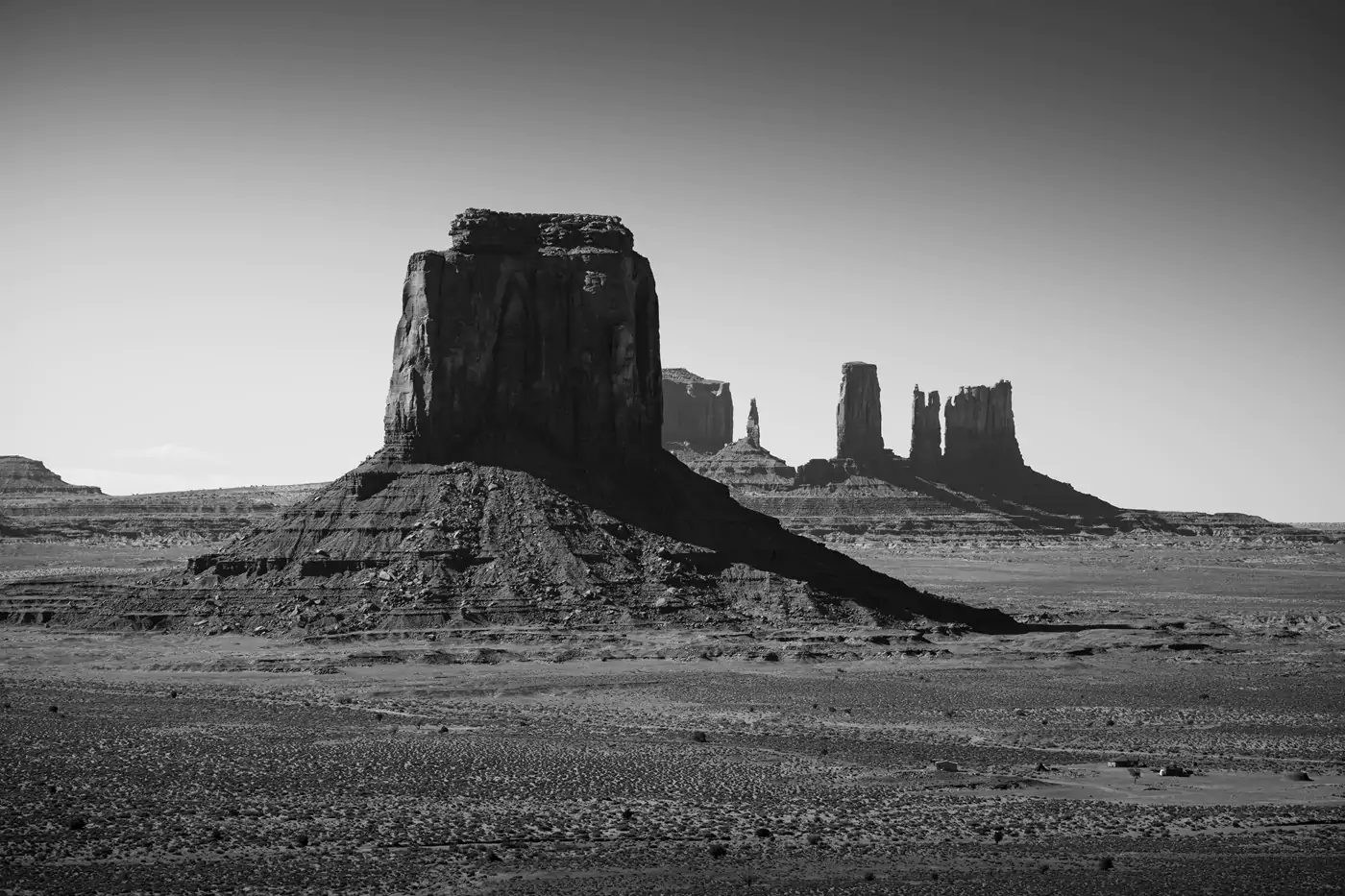
There are Native American ruins, history and culture everywhere across the southwest United States. Places like Monument Valley, although not a federal park, offer a great insight into Native American traditions.
Petroglyphs can be found almost everywhere, from the canyon rocks surrounding Moab, to the sheer walls of the Colorado River, and places like Newspaper Rock near Canyonlands National Park. Native American culture is all around you, all the time.
–
11. Aztec Ruins National Monument
Misnamed by 19th century American settlers who attributed the construction to the Aztecs, Aztec Ruins National Monument is an Ancestral Puebloan site, built during the 12th and 13th centuries. The native American site contains the largest reconstructed ceremonial kiva in the world (an underground circular room used for traditional rituals).
This small site has a short, self-guided walk around the three-story Native American ruins, ranger guided tours and a museum.
AZTEC
WHERE: San Juan county, northern New Mexico
COST: free
CLOSEST MAJOR TOWN: Farmington, NM
AREA: 1.29 square kilometres
VISITORS: 52,756 in 2017
Hint: although geographically close to Chaco Canyon, the drive is more than 2.5 hours between the two parks.
–

12. Casa Grande Ruins National Monument
Casa Grande Ruins National Monument protects a group of structures built around 1100 CE by the ancestral Sonoran Desert people (sometimes called Hohokam by archaeologists, although this name should only refer to the archaeology and culture, not the people).
Casa Grande, or ‘Big House’ in Spanish refers to the largest building on the site, a four-story house made from caliche, a sedimentary rock, in traditional adobe methods. This, along with several other structures in the park, is protected by shelters, helping preserve them and increase their longevity. This site also has an ancient Hohokam ball court which can be viewed from a viewing platform.
CASA GRANDE RUINS
WHERE: Pinal County, central southern Arizona
COST: free
CLOSEST MAJOR TOWN: Phoenix, AZ
AREA: 1.9 square kilometres
VISITORS: 62,995 in 2018
Hint: make use of the visitor center here (and museum when open). It gives a ton of useful information that helps with the appreciation of this site.
–


RESPONSIBLE TOURISM – NATIVE AMERICAN RUINS
There are signs of Native American territory and history everywhere you go in the southwest United States. Consider the Grand Canyon. Most tourists visit to check out the views and go hiking (as I did the first few times), but there is a murkier history to the Grand Canyon that I feel more people should know about if they are to visit.
When you visit the famous sites like Yosemite Valley, ask a ranger about the Native American history that accompanies it. Ask what the original names of places were, what tribes resided there (or still do) and, most of all, what happened to them when the place was (re)discovered by Europeans.
Many sites in the southwest United States have a Native American origin, so even if you cannot visit all the places on this list, you can still enrich your understanding!
–
13. Bandelier National Monument
Bandelier National Monument, nearby Santa Fe and adjacent to Los Alamos, is a large 33,000 acre site that is home to huge cliffs, dotted with petroglyphs and dwellings. Ancestral Pueblo people lived in this region between around 1150 CE and 1550 CE, living in the cliffs and farming on the canyon mesas.
There are cavates (small, carved alcoves in the rocks), some of which you can even climb within! Another particularly spectacular ruin is Tyuoni, originally a 400 room, two storey building used for storing food.
Unlike some of the other sites on here, there’s lots of climbing, ladders and exploring, with 70 miles of hiking trails and even some waterfalls within the site. The Alcove House trail even involves scaling ladders 140 feet above the canyon floor.
This park is right next to Los Alamos, which is also worth visiting for its historic sites, if you have the time.
BANDELIER
WHERE: Sandoval County, northern New Mexico
COST: $25 per car, free with an American the Beautiful pass
CLOSEST MAJOR TOWN: Santa Fe, NM
AREA: 133.5 square kilometres
VISITORS: 199,501 in 2023
Hint: get here early, the parking lots get busy. Also, don’t miss the climb to Alcove House, it’s not as scary as it looks.
–


Native American Ruins: Google Map
Below is a savable Google Map of the native American ruins mentioned in this post.
To save the map, click the star next to the title.
CAR HIRE FOR YOUR SOUTHWEST TRIP
We always rent our vehicles all over the world, including our recent trips across the United States, with Discover Cars. They’re often the most affordable, plus they paid out immediately on an insurance claim we made when our car took some heavy damage in Sicily.
Find out why we fully recommend them.
–
TAKE A LOOK BELOW OR CHECK CAR RENTAL
HAVE WE HELPED YOU PLAN A TRIP TO THE SOUTHWEST?
If you’ve found our free content helpful, consider booking your rental car (if you need one!), through the company we always use – Discover Cars. They’re the absolute best and have been our rental companion (and saviour, thanks to their insurance) in many destinations across the world.
Also, consider booking your accommodation through Booking.com – we use them exclusively when travelling in the USA.
Alternatively, leave us a tip to say thank you.
Help like this makes it easier to pay for the upkeep of this site and ensures our small business survives the onslaught of AI!
Thanks for reading.
–
Where to Next?
This list of Native American ruins only showcases a few of the many that are out there. Others, like the Gila Cliff Dwellings and Canyon of the Ancients, and more, are all worthy of a spot on your southern Utah road trip itinerary. They’re also often surrounded by some of the best scenery in the country!
If you have limited time, or don’t want to spend your entire southwest trip checking out Native American ruins, this list gives some seriously great choices. We really hope you enjoy learning more about North American history.
For some more ideas for your native American explorations, consider visiting Monument Valley Tribal Park and the surrounding regions.
Have a wonderful trip!
Hi, thanks for visiting our blog! If our free content has been of help to you, or you’ve just enjoyed our random ramblings and musings, say thank you by buying us a coffee! It helps keep The Restless Beans blog up and running.
Thank you, Claire + Nick


Your SW entries are spot on. Many I have been to and many I have not…..I will travel again to these parts. My favorite part of the USA. May we continue to honor and enjoy these regions respectfully. Thank you for your blog.
Susan
Just wanted to let you know I appreciate your kind, informative input as we ready for a journey to the SW with our kids over the holidays! I felt compelled to tell tell you, my husband and I are a bit older. We busted Nym a few years ago. I have always been very much drawn to the history of our Native Americans. While visiting Bandelier, though absolutely TERRIFIED of heights, I simply HAD to climb one of those little ladders to experience what our brave ancestors did on a daily basis – probably with a babe in arms, or strapped on one’s back with a load of provisions to boot. One can only imagine. Traveling does this for a soul. Thank you for what you do. Continue it in peace, love, and happiness!