

· PHOTOGRAPHY · SOUTHEAST ASIA ·
Happy-Snapping Hong Kong – A Weekend of Neighbourhood Street Photography
Scribbled by Claire ◊ 17 Aug 2024
If you’re taking a trip to Hong Kong with your camera, below are seven of our favourite neighbourhoods with some street photography examples and locations. Hong Kong is one of our favourite places to capture – we hope you love it too!
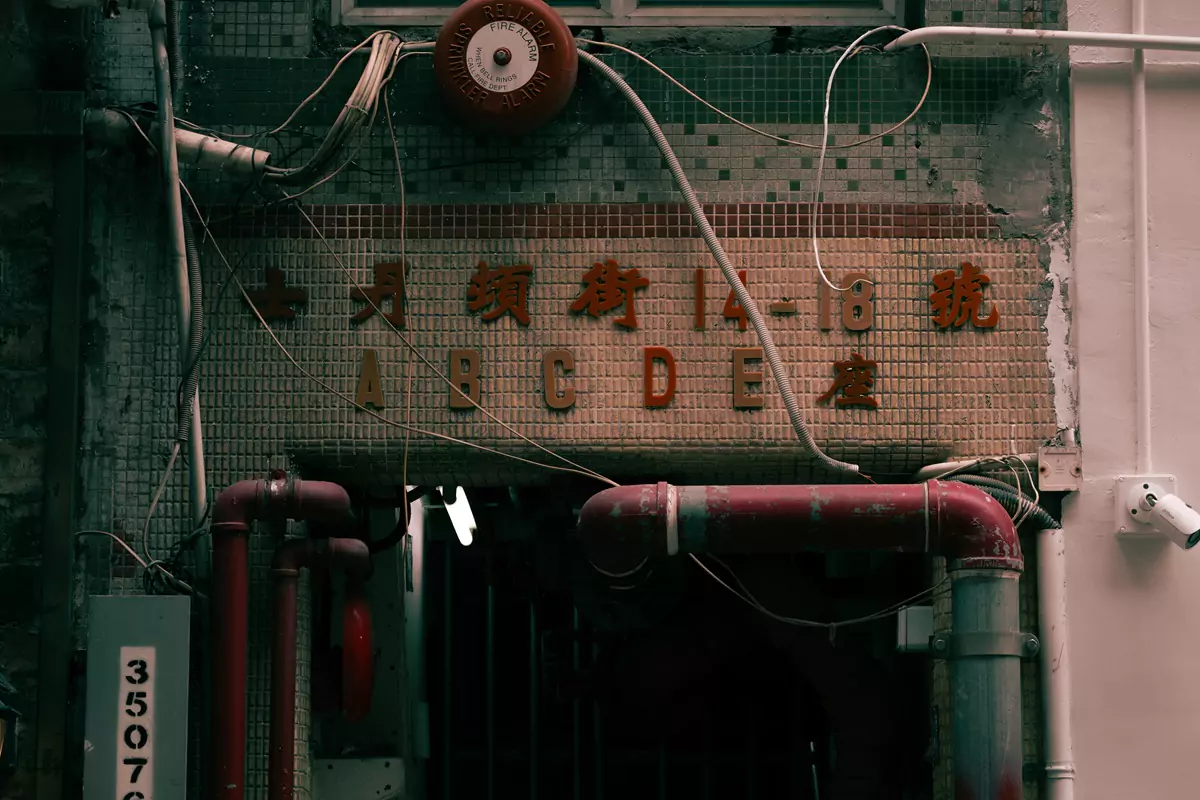
I did not know what to expect from Hong Kong. This densely packed metropolis was a destination I had imagined visiting since I was a young child, before it was returned to China even, and certainly before I owned a camera. So, when I had the opportunity to spend a week there this past January, I was irrationally enthusiastic and first onto the flight from Bangkok.
Whatever I was imagining, it was not what I experienced. Hong Kong was far more ugly-beautiful than I could have imagined. I’ve never been anywhere so visually stark and brutal – I was captivated by the towering architecture, chaotic crowds and concrete. It was a puzzling cross between unembellished utility and contemporary glamour.
Hong Kong was amid a particularly chilly spell when we visited – it was so cold that often I could not feel my hands or operate my camera properly. I think this overcast weather really assisted with the moody, stark ambience that I was experiencing (unexpectedly, probably only due to my naivety). However, we sheltered indoors for much of these days, which definitely hampered my efforts to explore the city fully.
Despite the weather, a week in Hong Kong is a decent amount of time, and what we did would easily take up a long weekend during nice weather. So, if you’re planning a visit, here are a few snapshots from seven areas we visited – I hope it inspires you to take a weekend for some travel photography in Hong Kong!

US //
Photography and Gear
I’m not really a photographer. We take photos while travelling and have a blurry line between the purpose of our escapades – do we take photos while we travel, or do we travel to take photos?
Either way – all these pictures are taken with two Fujifilm XT5s, combined with Fujinon 70-300mm f/4-6 and Fujinon 16-55mm f/2.8 lenses (and an occasional 18mm f/1.4). This gear is magic for travel photography because the lenses are particularly lightweight, and the ‘zoom’ that comes from the cropped sensor is useful for street photography (my 70-300mm lens actually is around 105-450mm – all from around 580g in weight, it’s fantastic). Also, despite carrying one everywhere, we never use a tripod because we’re just too lazy.
The images from this specific Fujifilm set up are tack sharp, for the most part, and the system performs moderately in low light too. We totally recommend it.
This post may contain affiliate links. If you book through these links we may make a small commission at zero cost to you. It helps us pay for the upkeep of this blog. Thank you!
A Street Photography Weekend in Hong Kong
I definitely don’t pretend to be an expert on Hong Kong. We spent a week there, in the freezing cold, but I feel like it is such a photogenic place that even rudimentary street photography in this iconic urban chaos is worth sharing. This city is just magical from any camera’s point of view.
During our visit, we just aimlessly wandered, meaning that it’s possible (likely) that we did not hit every Instagram photo spot but, truthfully, we weren’t really aiming for that. So, for a bit of the Hong Kong atmosphere and vibes, maybe this post can be of help.
If you are visiting Hong Kong for a weekend of photography and want to snap some street shots, here is where we went, split into areas.
Hong Kong Neighbourhoods
Tsim Sha Shui
Victoria Peak
Mongkok
Central
Wanchai
Sham Shui Po
Bonus – Macau
1. Tsim Sha Shui
This is one of the most popular places for tourists and the glowing Nathan Road that slices vertically down the centre is continuously buzzing. I was surprised by the number of high-end shops and shiny buildings here (although maybe I shouldn’t have been). Our hotel was nearby this area, so we walked through daily.
At the south of Tsim Sha Shui is the prominent Victoria Harbour. My expectations were low – I’ve never been one for tall shiny buildings and thought it would just look like any other skyline. However, Hong Kong’s record-breaking number of skyscrapers ensured that this was not going to be the case. The views are utterly magnificent. I’m not one to be overwhelmed, at all, but here, I came close.


WHERE WE STAYED IN HONG KONG
We chose a lovely hotel called Page 148. Located a very short walk from Nathan Road on the edge of Tsim Sha Shui, the hotel was within comfortable walking distance of Temple Street and the outrageous skyline views of Victoria Harbour.
The rooms were large, at least for Hong Kong standards, with modern yet quirky, retro décor. Things like Marshall speakers, a free mini bar, drinking water on every floor and spectacularly comfortable beds are what set this place apart for me. They also provided us with a complimentary portable Wi-Fi router to take around the city for the duration of our stay.
Our room, on the 24th floor, had panoramic views of the Hong Kong skyline. We absolutely loved it here – plus the café on the ground floor does excellent coffee and food.
We fully recommend! If you’re interested in checking it out – Page 148.
–

2. Victoria Peak
Every first-time visitor to Hong Kong goes up Victoria Peak, usually via the famous Victoria Peak Tram. The panoramic city views are famous – but what is a little less well known are the miles of hiking trails up there. We took the circular walk around Lugard Road, which takes an hour and provides incredible views and photographic opportunities.
At the top of the tram is a huge shopping and restaurant centre – it’s vast and, for some reason, not what I was expecting! There’s even a Burger King up there.
It was cold, cloudy and windy on our visit though, which isn’t exactly ideal conditions for walking this route (or anything really) up a giant mountain. We practically ran it!


3. Mongkok
I loved Mongkok – it was feverish, neon-glowing and had a kind of retro feeling, with old school pet stores (including Goldfish Street), energetic markets and open-air restaurants. Everybody there seems hurried, but there is a large, quiet, raised section above a lot of the main thoroughfare that gives remarkable vantage points down to the street level. You can see it immediately as you exit the underground.
It was here, in Mongkok, where I realised that most of Hong Kong’s life happens through hidden doors. There are concealed entrances to businesses and homes everywhere, and because Hong Kong extends upward, instead of out, most of it is always hidden from view.
This area is home to Fa Yuen Street Market, which is visually similar to the Temple Street Market from above. As the car park vantage point for the famous Temple Street has been demolished, this is a fantastic alternative. Mongkok is also known for Tung Choi Street, a busy place full of bars and food.


4. Central
Central is part wide, posh and shiny; part steep, ancient and narrow. There are towering, skyscraper banks (including the famous, angular Bank of China Tower), hotels and businesses, all intermingled with parks, high-rise accommodation, and the crazy outdoor escalators which literally take you to the top of the mountain (Hong Kong Island is very steep).
It’s a really varied area, with a lot of nightlife, businessmen and traditional establishments (why are there so many foot massage places?). It’s also a transport hub for the airport, Macau and further afield. Central has a bit of everything.


5. Wanchai (and a little Causeway Bay)
Wanchai was my favourite location to photograph in Hong Kong. It shouldn’t have been, because most people recommend Mongkok for its traditional feel, but Wanchai was this collection of pricey, yet less-than-lavish in appearance, towering monstrosities that I just found utterly fascinating (I say this in an affectionate way – I loved it there). It’s the place in Hong Kong that really made me wish I had a tilt-shift lens.
The area’s lofty buildings disguise the old-school markets (loved the outlandish orchids at Gresson Street), throngs of bicycles and meat stalls. All the things I hoped to see on my trip.
There was also some great food here, including Alice Pizza.


WANT TO TAKE A BETTER PHOTO?
There are three parts to travel photography –
◊ Planning your trip
◊ Taking the photo
◊ Editing the end result
To get the highest quality, most sophisticated photos from your travels, you’ll need to perfect all three (plus a tiny bit of luck).
So, we’ve written a lot of country-specific guides about planning trips to various destinations, and also collated our absolute top tips for taking photos on location. We’ve also written a dedicated post on how to take the best black and white travel photography. Check them out if you’re interested!
We also write about typical editing mistakes to avoid. To complement that, we’ve collated a more intermediate user’s guide to editing travel photography. This covers more elegant, advanced and refined skills, ones that will promote your photos to the centrepiece of anybody’s wall.
–
6. Sham Shui Po
This area was just all market, down every street; each section selling a specific type of product – the fairy lights department, the vacuum replacement parts section, the walkie talkie area, the XXXXL male clothing zone. It was an experience.
Sham Shui Po feels less affluent than other areas, with few higher end stores and glass buildings, plus more (what appears to be) working class housing. There were some lovely, budget-friendly bakeries – bought some smashing egg tarts along the main streets here.
It was in Sham Shui Po that I noticed the entire wardrobes worth of clothes outside windows of the apartments. I couldn’t help but think how difficult it must be to live in such cramped conditions (Hong Kong housing is known for being notoriously cramped). Or, maybe it’s just normal and comfortable to people in Hong Kong? I live in England and my house would not be considered large in the eyes of many Americans, for example. It just demonstrates different norms, I guess.
This was the region I felt the least comfortable photographing in Hong Kong– it was very local, and I wouldn’t say we were made to feel actively unwelcome, but you can feel like an intruder nevertheless (this might just be my paranoia playing up though).


7. Bonus – Macau
If you’re visiting Hong Kong, then a quick overnight (or even day) trip to Macau totally makes sense. It’s an hour on the ferry from Central, the tickets are simple to buy, and the ferry is extremely comfortable.
Macau was not what I thought it would be like, at all. It was freezing (running theme of my trip) and kind of gritty looking (like Hong Kong, but with some extra European features to the buildings, such as French-style awnings). Honestly, I thought it would be all glitzy like Las Vegas, which I’ve visited more times than I can count, but it wasn’t – at all.
It’s definitely more grit than glitz. Also, everyone appears really serious, and it doesn’t seem like anybody in Macau has any fun in casinos – it’s a very different culture.
So, we spent a day wandering about, freezing and being awkwardly invited into casinos by security (no photos allowed in there though) because we were the only non-Asian looking people in the entirety of Macau that day, it seems. We were probably the poorest, too – not great for that casino lifestyle.


Final Thoughts – Hong Kong Street Photography
I’m sat here wondering what the purpose of this post is. I guess, I was looking through street photography from Hong Kong before I visited and much of what I saw didn’t really help me visualise what the city was about and what to expect.
I’m not sure if this post is any more of a help, to be honest, but I loved this city so much that I thought it was worth writing about!
At minimum, it gives you a list of neighbourhoods to visit on your trip!
For more on travel photography, check out our essential hints and tips.
Hi, thanks for visiting our blog! If this post has been of help to you, or you’ve just enjoyed our random ramblings and musings, say thank you by buying us a coffee! It helps keep The Restless Beans blog up and running.
Thank you, Claire + Nick


