

· MIDDLE EAST · SAUDI ARABIA ·
The Ultimate One Month Saudi Arabia Road Trip Itinerary
Scribbled by Claire ◊ 17 Jun 2025
Are you planning an adventure around Saudi Arabia? Read on for a detailed Saudi Arabia one-month road trip itinerary that can be split into sections depending on how much time you have.

Saudi Arabia was, only a few years ago, almost completely inaccessible to tourists outside of Islamic religious visits.
It has long been a country of myths, folklore, trade routes and rumours. Heavily talked about but seldom seen; it was a hidden, sand swept and pious Kingdom. Visions of caravans from antiquity, roving through mysterious and untouched ruins, juxtapose against images of high-rise metropolises, modern malls and more Dunkin’ Donuts than you can count.
Which parts do you want to include on your Saudi Arabia Itinerary?
We spent an utterly surprising month in Saudi Arabia. From the stereotypical sand dunes to vast volcanic craters and ancient mountain towns, we explored all corners of this enormous, rarely visited country, yet still have so much more to return for.
It was a fascinating trip from beginning to end, so if you’re looking for a safe, but adventurous, exciting, new destination – look no further, because this is it.

This post may contain affiliate links. If you book through these links we may make a small commission at zero cost to you. It helps us pay for the upkeep of this blog. Thank you!
Road Trip Overview
This is a complex itinerary, but flexible for different time frames. We’ve illustrated the general plan on the map below – which is similar to the route we took on our first trip.
Starting point | you can arrive into different international airports, but for this itinerary, we chose Riyadh as a starting point. It’s one of the more popular arrival locations for international tourists and a central place to begin. However, if you enter via Jeddah or Dammam, just change the order of the trip based on the route below. (On our first trip, we arrived into Dammam and left via Riyadh).
Overview of Saudi Arabia’s Regions
Saudi Arabia is absolutely vast. Spanning over two million square kilometres, it is naturally diverse as a result.
The below map is a loop (of sorts) that swings by a lot of the sights in the country via four main regions – the centre and east around Riyadh and Dammam, the northwest (near Jordan and Tabuk), the southwest around Abha, and the central west coast near Jeddah. There are local maps included below for each region.
All regions can be visited independently of the others – we’ve advised how many days are needed for each one individually. This Saudi Arabia itinerary is written as a month-long road trip for those who really want to explore, however it is easy to cut off the longer drives in exchange for a flight and save some time.

How Long Should You Spend in Saudi Arabia?
Saudi Arabia is huge. Most people can spend up to three months of a year in the country on the tourist visa, which would be ideal! In reality though, two to four weeks would be an adequate amount of time to see most of the highlights.
Two weeks would give you enough time for several regions, while four weeks would give you a speed tour through all the highlights. We personally recommend driving wherever possible, which gives a little more flexibility than flying (we’ve mentioned driving distances where we feel it is helpful).
How Many Days?
If we were to spend four weeks driving around Saudi Arabia again, this is how we’d schedule our days as per the map above (our actual route was a little less logical!).
Dammam – 2 days
Riyadh – 4 days
Najran – 2 days
Abha – 4 days
Jizan – 3 days
Al Bahah – 1 day
Taif – 2 days
Jeddah – 3 days
Al Madinah – 1 day
Al Ula – 3 days
Tabuk – 2 days
Hail – 1 day
–
1. Central and East Saudi Arabia
The centre-east of Saudi Arabia is somewhat sparse. There are some pretty mountains and red sand dunes, but it’s mostly a dusty, flat region with minimal in the way of nature-offerings. Despite that, it does have a lot of heritage sites, museums and historically significant places.
Most things to do in the central and east region of Saudi Arabia are based out of Riyadh, but there are several worthwhile stops nearby to Dammam on the Persian Gulf. Dammam, to the east, is around 400 kilometres away from Riyadh along easy, fast highways. This route is pretty empty, but there’s a short section where you are driving through immense red sand dunes!
Both Riyadh and Dammam are popular international hubs, which have everything you could possibly ask for in the way of tourist facilities.

Around Riyadh (4 Days)
Riyadh is the conservative, yet strangely cosmopolitan, capital and birthplace of Saudi Arabia. From rows of soaring, hyper-modern skyscrapers and the shiniest malls, to ancient, mudbrick historic districts and forts, there is something for everyone in Riyadh. The city has a newly opened metro system which means you may even be able to avoid some of the traffic insanity we experienced in the city (it is so busy!).
We spent a week in Riyadh and here some of the things we suggest:
Ad Diriyah District: At Turaif UNESCO World Heritage Site | the first Saudi capital, with renovated royal residences from the 15th century, lots of exhibits and some beautiful restaurants (that we could not afford!).
Masmak Fort and old town Riyadh | built in the 19th century, and now a museum, this clay and mudbrick fort is near the clocktower at Al-Safat Square and the Grand Mosque.
Ad Dilam Pigeon Towers | an intriguing set of over a dozen mud and wood constructed towers in the desert.
Red Sand Dunes | lying south west of Riyadh is an expanse of rust-coloured sand dunes. If it’s your cup of tea, quad bikes can be rented to explore here.
Edge of the World | great hiking, off-road driving and some pretty spectacular views from the Tuwaik mountain range.
Heet Cave | located in the south east outskirts of Riyadh, this limestone cave has a 30 meter deep underground lake.
Al Manjour Trail and Tuwaiq Escarpment | not too far from the Edge of the World (but without the need for a four-wheel drive) are multiple options, including historic camel trails, with epic vistas.
The Skybridge at Kingdom Tower | almost a thousand feet up in the air, this is a great place to view the city from (if you’re not afraid of heights).
Check out a mall like Riyadh Park | explore one (or many) for a different slice of life, some super-modern restaurants and expensive shopping!
Ushaiqer, Shaqraa Heritage Villages and Al Ghat | easily visited when driving between Riyadh and Hail, these areas feature some partially restored historic mud-brick built villages. Ushaiqer is particularly tourist friendly – we thought it was really pretty and well preserved.
Where to stay in Riyadh
Riyadh is enormous, so it’s difficult to choose which region to stay in – everything is far from everywhere!
We’ve stayed in four hotels in Riyadh, and our favourites were Centro Waha by Rotana and the Aloft Riyadh Hotel (booked with points). Both are central, modern with genuinely lovely staff. Breakfast at the Rotana was a stand out.
If you specifically want to stay near Diriyah, and are looking to stay somewhere really special, consider the Bab Samhan, a Luxury Collection Hotel – it’s exquisite.
_
OPTIONAL LOOP FROM RIYADH TO DAMMAM
Dammam itself is not all that interesting, however the historic region of Hofuf (full of waterways) and the Al Hasa Oasis area which surrounds the city (a UNESCO designated site) are very much worth visiting. Al Qatif and Al Khobar, just outside Dammam, both have some cool spots to explore too.
Here are a few highlights:
Ithra Cultural Centre (in Dharan/Al Khobar) | opened in 2018 to celebrate human creativity. There are individual museums for adults and children, as well as exhibits, seminars and a library. Reminiscent of a cluster of pebbles, the metal clad building stands proudly above. Entry and library access is free but entry to the cinema and events require tickets.
Tarout Castle (Al Qatif) | Portuguese 16th century castle ruins located atop a hill on Tarout Island. The castle base boasts a history going back over 5000 years. Entrance is free and there are guides available if you want to know more about the local history.
Hofuf
Ibrahim Palace | a 16th century castle and fort constructed by the Ottomans. It is noted for the combination of both Islamic and military architecture. The palace covers a huge area, some 16,500 square meters, and the domed mosque is part of the Al-Ahsa Oasis UNESCO Cultural Landscape. Free entry.
Jabal Qarah | a mesa about 75 meters high, north-east of Hofuf, located within the Al Hasa Oasis. It’s been prepared for tourism with cave systems, shops and various entertainment put on throughout the year, but does have a pretty incredible 360-degree panoramic view of Al Hasa below. Entry fee SAR 50 for adults.
◊
SAUDI ARABIA DRESS CODE | HEGRA VS. PETRA
Where to stay in DAMMAN AND HOFUF
There are loads of places to stay around Dammam – our favourite stay was at the Braira Al Dammam. It’s comfortable, clean and has a smashing breakfast.
In Hofuf, there’s less accommodation choices but still enough places to suit any traveller. The Intercontinental is insanely nice and the best place to stay in town (not in our budget!), followed closely by the really comfortable Somewhere Hotel, which is still pricey, but you get much more bang for your buck. We loved it.
–


2. Central West Saudi Arabia
The central-western region of Saudi Arabia is a place of visual and cultural contrasts. Soaring mountains, volcanic craters and turquoise beaches compliment each other, while the relatively liberal metropolis of Jeddah nestles up against one of the most significant, conservative religious sites in the world, Makkah.
These paradoxes are a constant fascination to me and we loved our time spent exploring here. Further north is Al Madinah, the second most holy site in Islam, the resting place of the Prophet Mohammed (PBUH).
Jeddah is the major hub of the area – lots of international flights arrive here. There are many rental car companies, lots of western hotels, Cheesecake Factories and shiny malls with McDonalds.

Taif (2 Days)
Taif is a smaller, less touristy city, surrounded by pretty mountain scenery. There are camping and picnicking opportunities everywhere – it’s a genuinely lovely place. Our highlights:
Al Hada Mountain | this was our primary reason to visit Taif. Al Hada, out towards Makkah, has some impressive views of the surrounding region. We were told by a lovely guy on the top of the mountain that you can see the clocktower in Makkah from there in good weather (we unfortunately had hail and lightning though!). There’s an expensive cable car with epic views, too.
Al Wa’bah Crater | an extraordinary crater that, despite seeing very few visitors, is absolutely spectacular! You can hike all around it and camp for free on the rim. It’s stunning and has paved roads the entire way.
Ash Shafa | a mountainous, rocky region south west of Taif, often in the clouds, with winding roads and more picnic spots and hiking trails than you can count. We loved this particular area, especially around Jabal Qarnayt.
Note | Ash Shafa itself is actually a little touristy village perched on the edge of a cliff. It’s not really my cup of tea but does provide a fascinating insight into Saudi domestic tourism and what residents enjoy doing in their downtime.
Where to stay in TAIF
In Taif, we stayed in the Remaj Hotel, which was central, quite posh (for us) and really comfortable! Seriously, take a look at the room decor – it’s distinctive. Parking was really easy, too.
We’d definitely recommend it.
–
Jeddah (2-3 Days)
The cosmopolitan, relatively liberal city of Jeddah is a fascinating change from the rest of the country. Here, there are modern malls, hotels and restaurants, you’ll see women driving Ubers and it has this super-friendly, progressive vibe. It’s probably the craziest place to drive in Saudi Arabia in our opinion, too! In central Jeddah, our highlights included:
Jeddah Corniche | a 30 km stretch of waterfront parkland with sculptures, walking paths and also where the Saudi Arabian Grand Prix is held.
Al-Balad | the UNESCO designated old town and our favourite place in Jeddah (there is lots of on-street parking available – free on Fridays).
Al Hamra Corniche | grab an ice-cream and do some people watching – competitive free parking available. Gets *super* busy in the evenings and on Thursday and Friday nights.
King Fahad’s Fountain | the fountain jet reaches over 250 metres and is best seen at sunset from the Al Hamra Corniche in our opinion.
Al Rahmah Mosque | this floating mosque is absolutely beautiful in the evening light.
Where to stay in JEDDAH
Jeddah has, like, a billion hotels for every type of traveller. We chose the Ibis Jeddah City Center due to the location and the easy, free, convenient parking (and because it’s one of the best value stays we could find). We actually had a perfectly decent time here and would recommend it.
If I was rich and wanted the best place in Jeddah, I’d choose either The Jeddah Edition, or the Ritz-Carlton Jeddah, because of course I would! We passed by both of these on foot with immense jealousy!
–


Optional – Thee Ain (1 Day)
Positioned up in the mountains connecting Jeddah and Abha, in a valley adjacent to the city of Al Bahah, this iconic heritage village has one of the most impressive settings I’ve ever witnessed. Nestled within a verdant valley, with a spring running along the base and white marble mountains as a backdrop, it’s breathtaking (and I don’t use that phrase lightly!).
Delicately restored, Thee Ain has parking and there’s even a manned visitor centre with lots of information. The walk to the top is easy, but not wheelchair friendly.
Visiting Thee Ain would make the most sense as part of a drive between either Taif or Jeddah and Abha, with an overnight stop in Al Bahah en-route. Cloud City Hotel is the nicest option in town.

3. South West Saudi Arabia
The south west of Saudi Arabia is by far the most varied and distinctive region across the country. With the tallest mountains in the Gulf, precariously positioned ancient heritage villages and islands reminiscent of the Maldives, it’s a region we could easily spend two weeks (or more) in.
Abha is the hub here – with an international airport, fantastic hotels, restaurant and car rental options.

Abha (4 Days)
This wonderful mountain town has a noticeably distinct culture, architecture and climate to all the other cities in Saudi Arabia. We almost got the sense that we were travelling in a different country!
Although relatively remote, this city has lots of restaurants, hotels and services and is easy to explore in a car. If you choose to drive to Abha, the road scenery is absolutely epic from pretty much every direction, since the city is at an elevation of 2270 metres (about 7450 feet). This means that no matter what direction you arrive from, you’ve got to head up.
Some worthwhile sites around Abha:
Al Khaluf and Al-Jahamah Historical Villages | very ‘off-the-beaten-track’, showcasing Al-Qatt Al-Asiri art and Yemeni townhouse-style mudbrick architecture. We loved these villages, partly because we didn’t see another person the entire time we were there.
Al Habala Hanging Village | a ‘hanging village’, so named because originally the only access was down and up the steep mountains of ‘Asir, often with ladders and ropes! Now, there’s a cable car to save you the trouble.
Rijal Almaa | a picturesque UNESCO designated village, dubbed Saudi Arabia’s ‘gingerbread village’ due to the distinctive, mountainside, multi-storey architecture.
Fatima Museum | another fascinating display of the all-women designed Al-Qatt Al-Asiri art.
Bees Tower Honey Refinery | nearby Rijal Almaa, this superbly curated space makes honey on site from lots of different bees. It’s such a curious spot to find in the hills of ‘Asir and definitely not one to be missed. The owners spoke no English when we visited but were so kind. Go try all the honey samples!
The mountain scenery | this is a bit vague, but there are stunning views from every side in the ‘Asir mountains. The roads wind and twist past stepped farms, huge cliffs, tiny mosques and astonishing villages. Drive towards anything that looks wiggly on Google Maps, you won’t be disappointed.
Jabal Al Soudah/Sawda | the highest mountain in Saudi Arabia, just to the west of Abha, sits at around 3100 metres high. There’s a cable car and park – choose a clear day, otherwise all you’ll see is clouds.
Where to stay in Abha
In Abha, we stayed in the immaculate Abha Gardn Millennium Hotel. It’s absolute crazy value for money, with luxury rooms, easy parking and very helpful staff.
We’d highly recommend this one.
–


Najran (2 Days)
Four hours east of Abha, along the border with Yemen and the Rub Al Khali desert (the empty quarter), sits Najran. Set in a sprawling oasis, this strategically positioned ancient city on the frankincense trail is surprisingly green and verdant. Despite being on the edge of one of the world’s largest sand deserts, there’s an abundance of available water. The city is famed for having an historically Jewish and Christian population, until the early/mid-20th century.
Places to consider visiting in Najran:
Al Aan Palace | built in 1688, this four-storey tall intricately decorated building provides smashing views of the surrounding countryside.
Najran Fort/Emarah Palace | with a distinctive traditional Arabian architecture, this beautifully designed structure isn’t all that old, but very pretty. It’s also pretty big, with 65 rooms spread over 625 square metres.
Najran Dam | this 73-metre-high dam is the largest in Saudi Arabia and a popular tourist spot for the pretty, rugged views.
Al Ukhdud Archaeological Site | ruins of the fortified old city, just south of new Najran. The site contains ancient ceramics, tools, clay figurines, human bones, places of worship and many pre-Islamic petroglyphs.
Empty Quarter | this is a bit of a bonus, but if you have a car, take an adventurous drive out east towards one of the most famous, but least visited regions on the Arabian peninsula!
Jizan (3 Days)
A large port city on the Red Sea, pretty Jizan has several very worthwhile reasons for visiting, including forts, a corniche and a heritage village. Other highlights of the region include:
Farasan Islands | home to around 80 islands, three of which are inhabited by around 12,000 people, this biodiverse protected area is popular for scuba diving and snorkelling. It’s probably the least ‘Saudi’ looking place on this entire list – most people don’t even realise that Saudi Arabia has islands!
Reached by a 40-kilometre, one hour ferry journey that goes several times a day, it is possible to do a quick day trip if you do not want to stay overnight.
Wadi Lajab | epic hiking, waterfalls and dramatic landscapes make this excursion from the city worthwhile. Situated halfway between Abha and Jizan, you can visit from either base.
You may want to rent a four-wheel drive vehicle (or at least high clearance) to traverse the canyon entrance, especially if the weather is wet, or you’ll have to hike the several kilometres in.


4. North West Saudi Arabia
The north west of Saudi Arabia exactly matched the image I had mentally formed from books, films and the media.
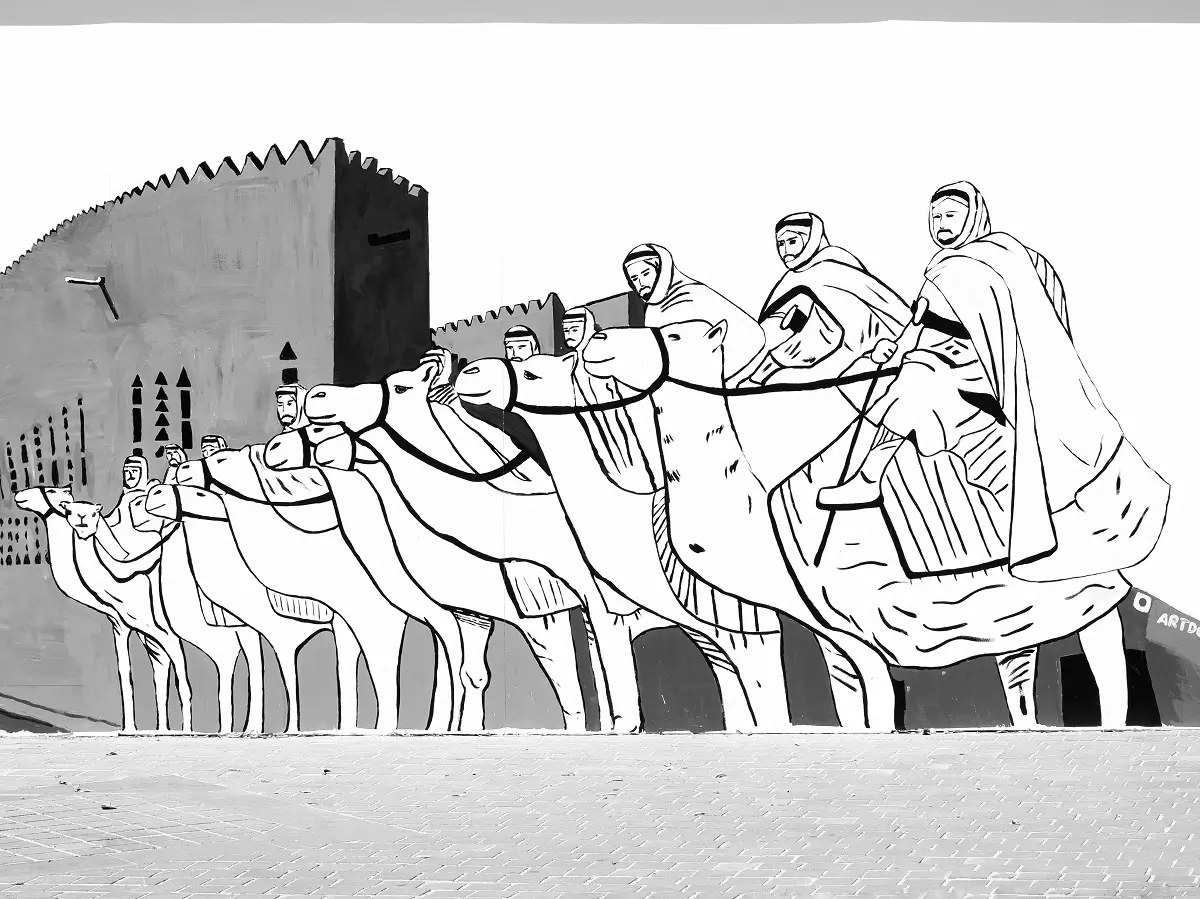
Its dry, dramatic landscapes, dotted with camel riders and ancient cities, were everything I dreamt of when I thought of visiting the Kingdom. This region is pretty famous outside of Saudi Arabia due to the Nabataean ruins of Hegra around Al Ula (you’ll even likely see a few a foreign tourists here), but there is far more to the area than just that.
Tabuk is the most common (affordable) airport for visits to Hegra – the city has nice hotels, car rental and lots of restaurants, including a surprisingly good sushi one!
The journey between Tabuk and Hail, if you choose to drive, is a long (but not unpleasant) one.

Al Ula (2-3 Days)
Many Saudi Arabia bucket lists include the UNESCO world heritage site of Hegra – Petra’s smaller but no less spectacular sibling. Concealed within some of the most remarkable desert scenery, the ancient Nabataean city has recently been thrust into the limelight with the opening of Saudi’s borders to international tourists.
Al Ula, the small, historically significant town nearby Hegra, is a beautiful ancient settlement, squeezed between massive rust-coloured cliffs (imagine southern Utah for reference). Here, there are lots of millennia-old things to enjoy, along with a must-do visit to Hegra.
Visit experiencealula.com to book tickets and check out seasonal events.
Consider visiting:
Al Ula old town | a restored, and mildly ‘touristified’ (but still interesting), ancient mudbrick settlement.
Ancient Dadan | from 7th century BCE, pre-Nabataean rock carvings and inscriptions.
Hegra | Nabataean civilisation dating back to the 3rd century BCE with incredible sandstone outcrops, elaborately carved to act as tombs for important members of society.
Note | all three of the above need tickets for access and a tour – check experiencealula.com. For information specifically about the Hegra tour, check our dedicated Hegra post.
Maraya | meaning ‘reflection’ in Arabic, this is the world’s largest mirrored building, beautifully situated in the desert outside Al Ula, just to the west of Hegra. The building is used predominantly as a concert hall and art exhibition host – although it’s also pretty famous for being photographed by Instagrammers!
Elephant Rock | this is a rock shaped like an elephant. It’s got pretty famous though so if it’s your cup of tea, go take a peek! There’s a bar set up at the bottom with music, so in typial Saudi fashion, you can spend lots of money while listening to loud music in nature. Parking is free so you can just take a look around instead, if you prefer. There are a few arches and rock formations that are worth hiking around.
Harrat Viewpoint | another beautiful place that has now got some pumping music and a venue, just plonked in nature! Parking is free and the views are spectacular, so definitely check this one out (even if you find club music in the desert kind of offensive).
Where to stay in Al Ula
Ok, so Al Ula is notoriously expensive. We stayed in the Sahary Al Ula Resort, which are like cute tent rooms (with private bathroom) nestled up in the rock canyons outside of town. It was super lovely, but we could only afford it because we used a bunch of point redemptions. The breakfast was really decent, plus the staff were incredible when our car broke down there (they called our car company and the staff helped fix our car!). It sells our fast, so book ahead.
If you’re on a bit of a budget, there’s a relatively new place in town called Rural Compound which has great reviews – I’d consider booking it on our next trip.
If you’re just absolutely minted, the Chedi Hegra is the ultimate dream hotel. Well, I dream of it, anyway.
–
Tabuk (2 Days)
Situated near the border with Jordan and the Gulf of Aqaba, this city shares a lot of similar landscapes with its northern neighbour. This means a plethora of burnt red rock formations, rolling sand dunes, dry rocky outcrops and epic road views. The city is important, historically, as a stopping point on the holy Levant Hajj pilgrimage road from Damascus to Madinah.
Some things to check out around the area include:
Scenery | the primary reason we loved Tabuk was simply the immense desert panoramas, dotted with settlements, palms and camels.
Tabuk Ottoman Castle | dating back to the 16th century, this well-preserved, renovated fortress and museum also houses a mosque and climbable watchtowers. It is famous for the Battle of Tabuk, the final campaign by the Prophet Muhammed (PBUH).
Hejaz Railway | initially built by the Ottomans at the turn of the 20th century to connect Istanbul with Makkah, the remains of the Hejaz railway can be seen in the railway bridges and stations scattering the desert. Whilst some are fenced off, the stations at Tabuk, Al Ula and Madinah are now tourist attractions.
Al Aznam (Alozlam) Castle | a 14th century castle from the Mamluk era which was part of the Egyptian pilgrimage route. It is currently being restored by the General Authority for Tourism.
Wadi Disah | a phenomenally beautiful canyon, perfect for hiking, picnicking and camping under the palms and stars. It can be visited with a 2-wheeled vehicle but a 4×4 will save you a longer hike in.
Tayma | historically one of the oldest settlements in Northern Arabia, Tayma’s ruins nowadays include the Qasr Al Hamra Palace, Tayma Museum, Temple of Salm and Tayma Fort.
Where to stay in Tabuk
In Tabuk, we stayed at the Ewaa Express Hotel, which was great value for money – a bit like a nicer Ibis-style hotel. It was modern, had a simple included breakfast, very comfortable beds and easy parking. It’s nearby the airport, too, if you’re flying in or out.
–
Hail (1-2 Days)
Previously an important strategic location and stop for pilgrims from the Kingdom’s north, the city of Hail is home to a UNESCO site and numerous forts, castles and palaces.
Some recommendations for this area include:
Jubbah | a UNESCO World Heritage Site with five-thousand plus petroglyphs (rock art engravings) dating back to 8000 BCE. Additional petroglyphs can also be found at Jabal Hibran, further to the south. I find it weird and fascinating how similar rock art appears to be, all over the world. Like, Jubbah reminded me of the American Southwest!
A’Arif Fort, Barzan Castle and Qishlah Palace | a mixture of old castle wall ruins and renovated buildings originally built between the 17th and 20th century lie spread across the town of Hail.
Where to stay in HAIL
We stayed in the Holiday Villa Hail, which was hilarious. We walked in and everything was just so over the top, I loved it. It’s modern glass from the outside, but then there’s this almost aggressive lobby decor which then leads to perfect normal, modern rooms. Parking was very easy at this hotel, too.
Would totally recommend.


Road Trip Map
Below is a savable Google Map of everything mentioned on this Saudi Arabia itinerary, including main towns and cities, attractions and transport hubs.
◊ To save the map to your Google Maps, click on the star icon by the title.
◊ Select the screen icon in the top left to show or hide the breakdown of the sections.
◊ Click on a tick box to hide/show a section.
Map layer regions:
Purple | north west
Blue | central west
Red | south west
Yellow | central and east
CAR HIRE FOR YOUR SAUDI ARABIA TRIP
We always rent our vehicles all over the world, including our recent trips in Oman, Saudi Arabia, Tunisia and Morocco, with Discover Cars. They’re often the most affordable, plus they paid out immediately on an insurance claim we made when our car took some heavy damage in Sicily.
We highly recommend them.
–
TAKE A LOOK BELOW OR CHECK CAR RENTAL
Final Thoughts
Saudi Arabia is a bit of an enigma. The way it is portrayed in the media (often correctly) can make people feel wary and even scared. However, every country is more than its government and Saudi Arabia, it turns out, is an incredible hub of warm, welcoming citizens, culturally significant sites and astonishing natural beauty (with slightly sketchy drivers!).
Our Saudi Arabia itinerary was a month of surprises and contradictions – from the modern, world-class malls containing Cheesecake Factories and P.F. Changs, to the gender-segregated entrances of McDonalds for men and families. It’s a country of extreme traditions coupled with hyper-speed modernisation.
Frankly, several months later, I’m still thinking about our trip to Saudi Arabia; I’m still processing how I felt about everything I experienced. I do know that I will definitely return – as soon as I can – as there is so much more to see.
We hope you decide to visit and figure out this paradox of a country for yourself!
Happy travels!
Hi, thanks for visiting our blog! If our free content has been of help to you, or you’ve just enjoyed our random ramblings and musings, say thank you by buying us a coffee! It helps keep The Restless Beans blog up and running.
Thank you, Claire + Nick




So much detail and information here! Incredible article.
Thanks so much, really appreciate the comment! Happy travels 🙂
I love your writing and traveling style! Quick question: we have the feeling that traveling to AlUla beyond fancy hotels is quite challenging. Would you mind sharing where did you stay and what was your experience?
Hi,
Thanks so much!
We stayed in the Sahary Alula Resort using points. It was far more expensive than our usual budget but Alula is low on affordable accomodation options. There are some slightly more reasonably priced options in the town itself but there’s not a great range in the area unfortunately.
Hi, very interesting article with a lot of information.
Unfortunately, I cannot see the saveable Google maps. There is an empty space between the paragraph “Saudi Arabia itinerary map” and the next “Saudi Arabia itinerary overview”.
Thanks
Hi Barbara,
Thanks for your comment and for letting us know about the map not appearing. We’ve checked and there’s no issues on our end, maybe it’s something to do with your browser?
Thank you so much for the valuable information!
Hi,
We are planning a trip to KSA in December. Your posts are extremely helpful.
One question. Can I rent a car and return in different city? for example, rent a car in Madinah and return it in Jeddah.
Hi Michael,
I’m glad you’ve found our posts useful.
You absolutely can hire cars one way in KSA (and other countries). There’s a surcharge for this, which varies from car company, so it is best to check around.
I hope you have a fantastic trip.
Hello, compliments! This was the best and most informative post I’ve found on the entire internet about Saudi Arabia. Now I have another question… what about swimwear, i.e. bikinis, on the beaches? I know it’s only permitted on private beaches. Are there enough private beaches, and how much does admission cost? Or rather, how does it work? My daughter is 25 and, of course, doesn’t want to get a tan. 😂😂
Hi Monika,
Thanks so much for your comment 😊
There are a fair number of private beaches typically owned by hotels in Saudi Arabia, and if their policy allows it, then bikinis can be worn on the beach.
Some hotels/resorts will include access to the private beach within the price of accommodation, others might charge extra for it. Buying a day pass from a resort is also an option, and these often include a meal!
Depending on the resort, and the amenities you’re after, the day pass price varies. I’ve seen prices ranging from 100 to 275 SAR (23-63 euros) for adults (and even more expensive too!).
I hope this helps and you have a wonderful trip 😊
Thank you very much, very helpful….
Very useful information. I am planning to rent a car in Al ula in December and drive to Wadi AL Disah and on the next day to Tabuk. It seems however, that there are not too many places to stay near the Wadi. What is your opnion on the plan? Doable?
Hi Eran,
I’m glad you found our post helpful!
I think your plan is definitely doable but only if you camp – it’s legal, doesn’t require a permit, and free. I’m not aware of any hotels nearby the wadi itself – the nearest accommodation options are in Tabuk or Duba, on the coast.
If you don’t want to camp, it’s possible to visit the wadi in one day by leaving Al Ula really early, then arriving in Tabuk/Duba in the evening.
I hope this helps a bit, and you have a fantastic time.