

· MIDDLE EAST · SAUDI ARABIA ·
Travelling Saudi Arabia – 15 Useful Planning Tips and Logistics
Scribbled by Claire ◊ 17 Jun 2025
This Saudi Arabia planning guide includes absolutely everything we learned over more than a month travelling around the country, including transport options, our personal highlights, prices, food, safety, visas, some quirky anecdotes and more.

Are you trying to plan a trip to the magical, mysterious, mammoth country of Saudi Arabia? It’s a complex place, with vast distances, visa requirements, minimal first-hand online information and a sketchy reputation.
We’ve visited Saudi Arabia twice, once for over a month, and have absolutely loved both of our road trips. However, we had to learn a lot along the way (like, did you know that most of the speed limit signs are only in Arabic? I didn’t until we were driving there!). We even had a snowball fight, which was mildly surprising.
Here, we’ve written about everything that would have made our trip a little bit easier, like exact what we wore, what the driving is like, what the visa process was, how we got on with the food as vegetarians, how safe we felt, our favourite places, and more.

IN THIS GUIDE //
Travelling Saudi Arabia – Hints and Tips
HOW TO GET TO SAUDI ARABIA
HIGHLIGHTS OF SAUDI ARABIA
VISAS FOR SAUDI ARABIA
BEST TIME TO VISIT SAUDI ARABIA
LANGUAGE IN SAUDI ARABIA
HOTELS IN SAUDI ARABIA
IS SAUDI ARABIA EXPENSIVE?
TRANSPORT FOR THIS SAUDI ARABIA ITINERARY
FOOD IN SAUDI ARABIA
IS ALCOHOL ALLOWED?
IS SAUDI ARABIA SAFE?
WHAT TO WEAR IN SAUDI ARABIA
CAN NON-MUSLIMS VISIT MADINAH OR MAKKAH?
IS PHOTOGRAPHY ALLOWED?
BE AWARE OF RAMADAN
FINAL THOUGHTS
This post may contain affiliate links. If you book through these links we may make a small commission at zero cost to you. It helps us pay for the upkeep of this blog. Thank you!
1. How to get to Saudi Arabia
Arriving in Saudi Arabia by Air
Almost every visitor arriving into Saudi Arabia comes via air.
There’s a whole bunch of international airports, including Riyadh, Jeddah, Dammam, Tabuk and Abha. Where you choose to arrive will depend on flight routes from your departure point, as well as which region you want to explore.
We book every flight via Skyscanner. Along with showcasing the cheapest routes to a destination country, it has prices for all the regional budget Saudi Airlines, such as Flynas and Flyadeal (which you can use to get around Saudi Arabia if you don’t like driving long distances).
There are also a few budget airlines, like Wizz, who operate flights to Saudi Arabia from Europe, super affordably. We’ve taken some *eye-wateringly* cheap flights to and from Saudi Arabia from Rome and Sicily, for example.
Getting to Saudi Arabia Overland
Other methods of arriving in Saudi Arabia involve bus, car or boat. Saudi Arabia has land/sea border crossings with Jordan, Kuwait, Bahrain, Qatar, U.A.E., Egypt, Sudan and Oman.
Buses | common overland routes into Saudi Arabia are from Bahrain into Dammam, Abu Dhabi to Riyadh and from southern Jordan to Tabuq (there is an unpublished bus for this route that departs Amman’s Abdali Station twice a week, apparently, but you have to ask for a ticket at the JETT counter which costs 10 JOD).
For information on the Bahrain and Abu Dhabi buses, check out Saptco, the national bus service in Saudi Arabia. The website is easy to use and gives details of the trip including price (in Saudi riyals, SAR), travel time, and any stops.
Boats | there are boats from Egypt and Sudan, servicing various Red Sea cities within Saudi Arabia. I’ve heard of people having their camera gear confiscated via these routes but have yet to take them ourselves.
Car | you can also drive to Saudi Arabia from other Gulf states if you are a GCC resident.
What is Immigration Like?
We’ve always found Saudi Arabian immigration to be very pleasant!
Both times, we were served by women, who spoke English and were not mean at all (not like certain other countries, IYKYK).
We also found it to be very fast.
2. Our Highlights of Saudi Arabia
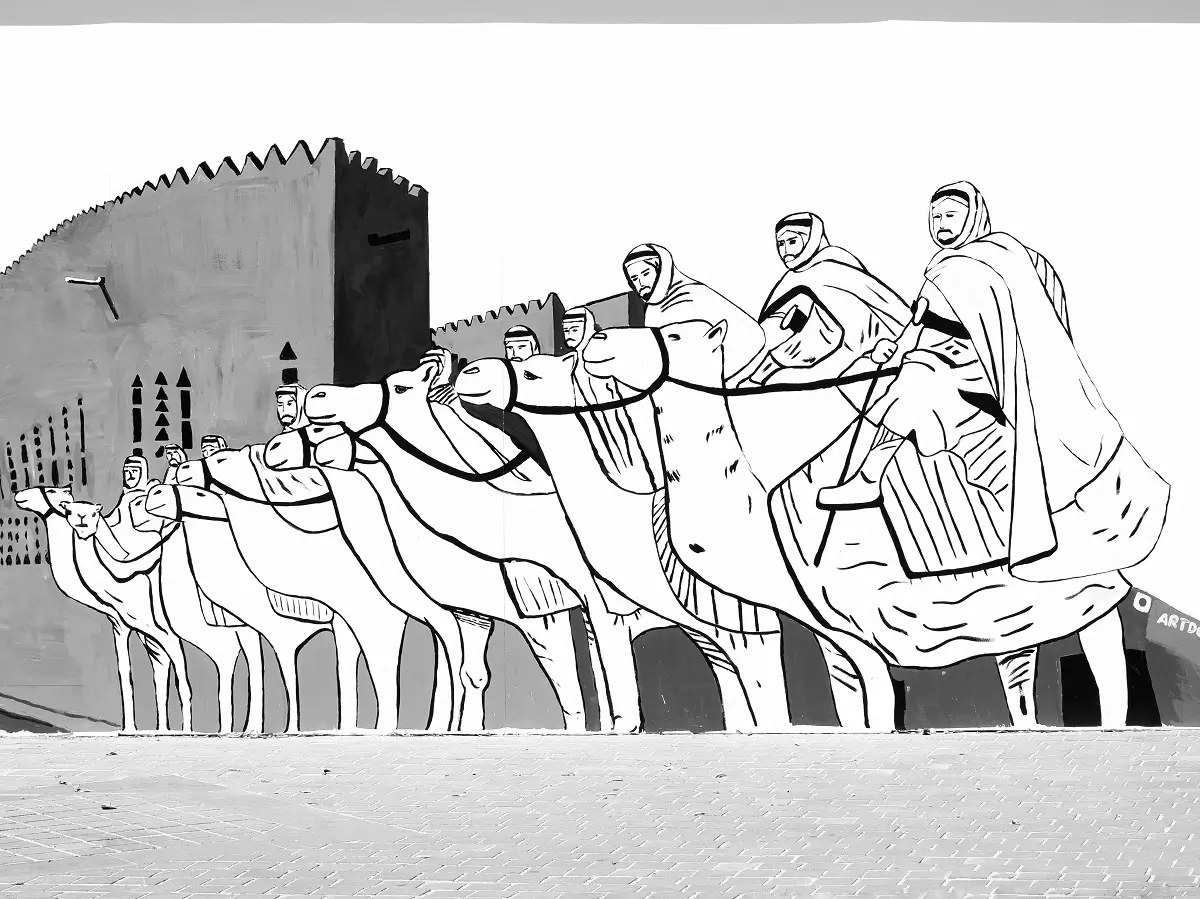
After two trips and more than a month driving around Saudi Arabia, we have a huge list of highlights!
We wrote about our 11 most beautiful moments in Saudi Arabia if you’re looking for a little bit of inspiration for your trip. Some of our favourite places include:
◊ Al Balad, Jeddah
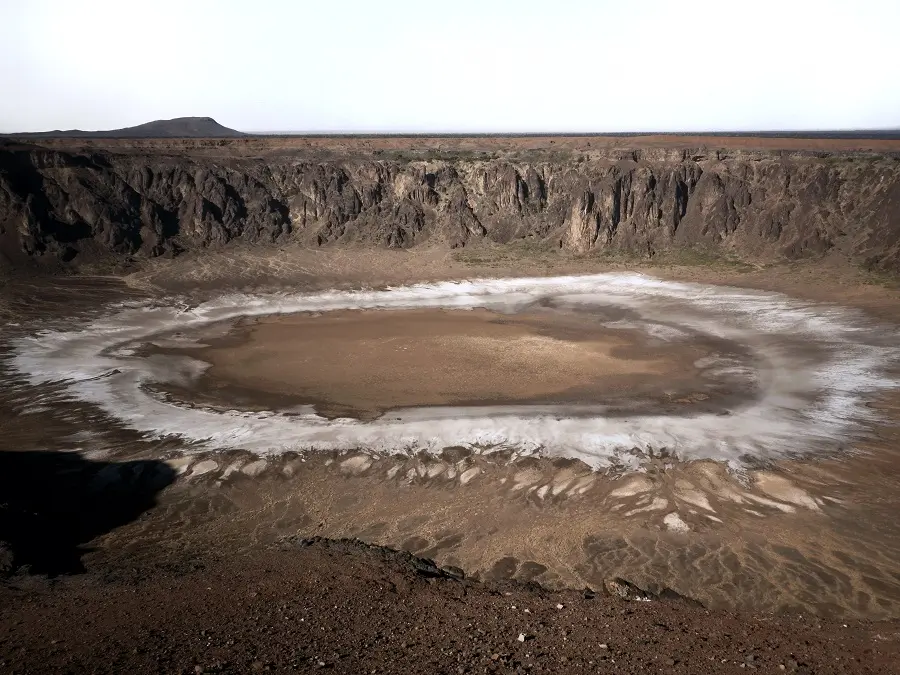
◊ Al Wa’bah Crater
◊ Al Ula’s scenery
◊ ‘Asir Mountains near Abha and the Al-Qatt Al-Asiri art
◊ Al Hada Mountain, Taif
During our experience, and this may sound seriously cliché, it was often the residents of Saudi Arabia who were a highlight. Saudi Arabia gets relatively few western visitors, especially outside the main cities, but we were always welcomed with incredible grace and hospitality. This was universal, in every region, across the country.
We always had help when we needed it, many people spoke surprisingly great English and, although we often felt ‘out of place’ (I didn’t wear an abaya or hijab, for example), it was never in a negative way.
3. Are Tourist Visas Easy to get for Saudi Arabia?
For many nationalities, the Saudi Arabia tourist visa is very easy to get (but isn’t cheap).
As of 2025, the Saudi e-visa is available for 66 countries. It costs 300 SAR (plus 140 SAR for health insurance) and provides access to the country for up to three months (with multiple entries) for one year. There are also short visas and transit visas, too.
We had both our online visas authorised in a matter of minutes, and the forms were surprisingly easy to fill out compared to some others we’ve done!
This visa includes health insurance within the fee, which is excellent since some governments advise against travel to the southern border with Yemen. Government advisories like this are problematic since they often significantly over-represent the dangers of a region while also invalidating most standard insurance policies.
Southern Saudi Arabia is a lovely region to visit (our favourite, in fact) and it would be a shame to miss out because an insurance policy wouldn’t cover you to travel there.
Tip | we’d recommend having your visa printed for immigration (makes things quicker and easier).
Same Visa, Different Passport!
We got new passports between both our visits to Saudi Arabia. Both trips were within a year, so the visa had not expired.
We were able to use the original visa, even though it was registered under our previous passport, because we took our old passports with us. Immigration didn’t even ask any questions!
Tip | the online people at the Saudi Tourism Authority (who we asked about the passport query above) were so helpful, so don’t hesitate to contact them if you have any visa questions! Email them at ask @ visitsaudi(.)com.
4. When is the Best Time to Visit Saudi Arabia?
Saudi Arabia is huge, and so is its range of weather!
Quick answer | the best overall time to visit Saudi Arabia is outside of the summer season. Winter is nice across lots of the country, and spring and fall are also pleasant in the mountains.
Geography | the Kingdom experiences 40-degree summers, snowy mountains, extreme rain, blanketing fog, and more. If you only intend on visiting a specific region, it is worth checking the regional forecasts since the weather varies wildly across the country. We saw all the above weather conditions, as well as a small tornado, in March-April while driving around the country!
Summer | in general, it is worth avoiding visiting Saudi Arabia in the height of summer, between May and September. Most places (bar the southern mountains) are uncomfortably hot. We visited in spring when, even in the desert lowlands, it was mostly not too hot.
Mountains | the ‘Asir mountains in the south are lovely in summer, however, they are also a popular spot for Saudi Arabian residents escaping the heat of the summer. We visited ‘Asir in March, and although the temperatures were fine, it was so incredibly rainy. We’re talking flooded roads and extreme, dangerous fog in the mountains. We even saw some snow in the mountains, while driving through a village.
Pilgrims | unless you are a Muslim, do not book a trip to Saudi Arabia during the Hajj season (at least not to the central west coast). Hajj happens at different times each year, and is between May 24th to 29th in 2026 (it shifts back about 11 days on the Gregorian calendar each year). Flights to Jeddah are usually only allowed for pilgrims during this time and it is a super busy, hectic period to travel around Makkah, Taif and Jeddah.

5. Language in Saudi Arabia
Arabic is the language of Saudi Arabia but, sadly, we don’t speak much Arabic! Despite this, it was easy to get around as quite a lot of people spoke some English and Google Translate worked a charm with the camera/photo option.
Most small, local shops do not have signs in English, unlike the equivalent places in Qatar, UAE and Oman (where every shop sign is translated into at least rudimentary English). However, in larger supermarkets like Lulu and Carrefour, food is labelled in both languages and prices are written in English numbers.
It is useful to speak a few polite words, like greetings and ‘thank you’, as well as learning to read some rudimentary numbers (especially useful if you are driving – most of the speed signs we saw were only in Arabic numerals in Saudi Arabia).
6. Where to Stay in Saudi Arabia
In the major cities, Saudi Arabia has a whole range of hotels, of all standards.
In places like Riyadh, Jeddah and Dammam, there are high-end Western options, all the way to budget apartments and guesthouses. Hostels are not really a thing anywhere in Saudi Arabia.
Hotel prices | we personally found the accommodation options to be generally of high quality in Saudi Arabia. However, in comparison, they were slightly more costly than in the neighbouring countries of Jordan and Oman, and slightly cheaper than in Qatar and the UAE.
Smoking | be careful if you don’t want a smoking room – smoking is a popular pastime in Saudi Arabia and often many rooms will have had smokers in before you. Ask in advance – this happened to us several times even though we requested non-smoking options.
Couchsurfing | this is not only popular, but a fantastic option in Saudi Arabia – definitely consider this option if it is something you’re comfortable with. Hospitality is next level in Saudi Arabia and Couchsurfing is an incredible way to experience this! We know several solo female travellers who solo Couchsurfed Saudi Arabia and had nothing but positive experiences.
Can Unmarried Couples Share Hotel Rooms in Saudi Arabia?
Yes, unmarried foreign couples can share a hotel room in Saudi Arabia.
Foreign men and women can share a hotel room, even if they are not related. Legally, as a foreigner, you do not need to be married or brother-sister. We were never asked, even once, for a marriage certificate and didn’t even get a passing comment.
Everybody was just so friendly and happy to speak with us!
How to Book Hotels in Saudi Arabia
We booked every hotel for both our Saudi Arabia road trips using Booking.com.
It always had the cheapest prices, the most hotel choices and the largest number of reviews.
Note | we have noticed that properties in Saudi Arabia can be quite harshly reviewed by the residents! So, in some countries where an average of 8-9 out of 10 is a commonly good score, a 7-8 might be more appropriate in Saudi Arabia!
This is just an interesting observation, that Saudi hotel guests can be quite particular with their expectations (not a bad thing, by any means).

7. Is Saudi Arabia Expensive?
From our experience, Saudi Arabia was moderately pricey. However, it depends on what choices you make with respect to transport, food, accommodation and sightseeing.
It also depends how far in advance a reservation is made, if you fly excessively, and which regions are visited (some are pricier than others, like Al Ula, which can be monstrously pricey).
From our experience, we definitely would not describe Saudi Arabia as a backpacker budget-friendly country, although it is possible to travel very cheaply if you hitchhike, Couchsurf, camp and have a flexible schedule.
8. How to get Around Saudi Arabia
There are several options for getting around Saudi Arabia. Firstly, it depends on which regions you want to visit. The second factor is whether you are able (or want to) drive.
National bus routes | the country is well connected by long distance buses, provided by Saptco. These are reliable and affordable, linking the larger cities.
Regional flights | Saudi Arabia has lots of regional flights and this is the most popular way to get between the big cities. Saudia, Flynas, Flyadeal and others connect the cities – check Skyscanner for all the route options.
Hitchhike | another popular and safe option is to hitchhike. We have known several people to do this and would absolutely take this option if we had a flexible schedule and were on a tight budget.
Local Transport in Saudi Arabia
The above options connect the main hubs, but Saudi Arabia’s cities themselves are notoriously difficult (sometimes impossible) to navigate by foot.
They have few public transport options, so car rentals, taxis, Ubers or private drivers are often the only way to get around. However, as part of the Saudi Vision 2030 mission, Riyadh has just opened a pretty cool looking metro that links the city in a way that finally makes it easy to get around (it’s a pretty congested place, from our experience). Generally speaking though, a car is essential for getting around in Saudi Arabia.
Although the country is huge, it is entirely possible to drive all around Saudi Arabia without taking any flights (we chose this option). There are definitely a few long drives involved, but I can say from personal experience that we always enjoyed these journeys. The roads and infrastructure in Saudi Arabia are high quality and it’s easy to navigate. We are currently writing a guide to driving and renting a car in Saudi Arabia – stay tuned.
Is it Easy to Drive in Saudi Arabia?
Generally, yes, it’s easy to drive in Saudi Arabia! The roads are typically high quality, signage is clear and we never had any routing issues.
We loved driving all around Saudi Arabia – absolutely loved it. The scenery, freedom and ease made all the huge distances worthwhile. Take a look at our post about driving there – it’s got all the information you’ll need to plan your trip.
Whilst we fully endorse this method of travel, it is possible to rent a vehicle in each region and fly the longer distances in between.

CAR HIRE FOR YOUR SAUDI ARABIA TRIP
We always rent our vehicles all over the world, including our recent trips in Oman, Saudi Arabia, Tunisia and Morocco, with Discover Cars. They’re often the most affordable, plus they paid out immediately on an insurance claim we made when our car took some heavy damage in Sicily. We fully recommend them.
–
TAKE A LOOK BELOW OR CHECK CAR RENTAL
9. What is the Food like in Saudi Arabia?
Meat | if meat is okay with you, then you’ll have a fantastic time in Saudi Arabia! There’s so much in the way of goat, camel and chicken that you’ll never go hungry.
Pork | there is, of course, no pork allowed in Saudi Arabia.
Supermarkets | these were well stocked, but not as posh as the equivalents in Oman, Qatar, and the UAE. They stocked all the usual foods you’d need to pack for a road trip, though, like breads, spreads, fruits and more.
Western food | weirdly, Saudi Arabia is *full* of American favourites – Dunkin’ Donuts, McDonalds, Burger King, Starbucks, Cheesecake Factory and loads more. So, if you’re a fussy eater, you can probably always find something.
Prices | in terms of food prices, we found Saudi Arabia to be moderate. For Western food like pizza, it’s reasonably pricey (similar to England), and for more local food it’s still not particularly cheap. Supermarket food prices were also middling. Honestly, I’d say that, on average, prices were less than in the United States, and slightly more than the UK (for whoever that helps!).
What is Saudi Arabia like for Vegetarians?
Travelling in Saudi Arabia can be a nightmare for vegetarians (in our option). It’s just such a meat-heavy country.
As vegetarians, we found it quite difficult to source (healthy) food outside of supermarkets in Saudi Arabia. There were some fast food type places that sell fries, and there were a fair few pizza restaurants around. Whilst Middle Eastern places do sometimes sell falafel, overall, it was a bit of a struggle to find much variety.
There are multiple apps, such as Hungerstation, to order delivery food from (we did this a couple of times, with mixed results!).
Something we noticed was that there were not so many Indian subcontinent type foods – like curries. In meat-heavy places like Oman, vegetarian curries are ubiquitous and were always a healthy-ish, affordable alternative to the goat barbeques available everywhere!
So, to conclude, you won’t starve in Saudi Arabia as a vegetarian, but you won’t be enthralled, either.
10. Is Alcohol Allowed in Saudi Arabia?
No, alcohol is not allowed anywhere in Saudi Arabia, including at Western hotels and the airport.
Alcohol is not even allowed to be served on planes in Saudi airspace.
Don’t bring any with you, and don’t arrive under the influence at immigration.

11. Is Saudi Arabia Safe to Travel?
Saudi Arabia was completely safe, for us.
When considering safety in Saudi Arabia, there are several things to consider:
Personal safety, such as theft and harassment
Road and traffic safety
Political safety.
Personal Safety
For us, as cis, white British citizens, we felt perfectly safe the entire time in Saudi Arabia – possibly the safest we’ve felt in any other country apart from Oman. Risk of theft is extremely low, harassment/scamming is zero, and we felt comfortable enough to consider wild camping on our next visit (we were going to on this trip but had our car breakdown on the way).
I never felt unsafe, even when alone, as a female in Saudi Arabia. People knew I was a visitor to their country and I was always treated with respect by everyone I met, despite the less than positive women’s rights issues in the country.
Road and Traffic Safety
Road safety in Saudi Arabia is something we are going to talk more about in our ‘driving in Saudi’ post, but to put it bluntly, driving in Saudi Arabia can be a little erratic.
It’s not totally awful, but people *love* to speed. That doesn’t necessarily mean it’s always dangerous, but it’s worth being extra aware, nonetheless. If you’re comfortable driving in Italy, the USA or Dubai, for example, you’ll be okay in Saudi Arabia.
Political Safety
I cannot speak for anyone in the LGBTQ community about how it would feel to travel in Saudi Arabia.
Being gay and trans is criminalised and potentially prosecutable. I know of cases where people have been imprisoned for expressing pro-LGBTQ views, however they were all Muslim and prosecuted under Sharia law. It is unclear how the country would respond to a western, non-Muslim tourist if they were to be openly gay.
On the Visit Saudi website general information FAQ, one of the questions is ‘Are LGBT visitors welcome to visit Saudi?‘. The response from the government says that “everyone is welcome to visit Saudi”, and visitors are expected to respect the culture of the country as you would anywhere in the world. They say that you are not required to disclose personal information and your right to privacy is respected.
If you want to visit, personally I’d feel safe enough not drawing attention to my sexuality and dressing appropriately (just as I wouldn’t draw attention to my religion, if I had one). Having said that, I’m not really able to advise as this is just an opinion based on my experiences.

12. What to Wear in Saudi Arabia
I’ve written an entire post on the dress code for Saudi Arabia, especially for women. It details what I wore and how I felt. To summarise:
◊ There is no legal requirement to wear an abaya or headscarf/hijab
◊ Do not wear clothing which shows offensive or controversial slogans
◊ Men should wear trousers and a t-shirt – do not show shoulders or lots of leg
◊ Women should be as covered as possible – think high-neck tops, long sleeves, ankle-length skirts or loose-fitting trousers
◊ Do not wear religious jewellery or anything with religious symbolism
It’s not *that* strict really, despite the points above. It’s more about not drawing attention to yourself or offending a resident.
13. Can Non-Muslims Visit Madinah or Mekkah?
Non-Muslims are allowed to visit the holy city of Madinah, but may not enter Al Masjid Al Nabawi, the resting place of Prophet Mohammed (PBUH). Although it is not strictly necessary, as a woman, I would choose to wear an abaya and head covering in this city, whilst in proximity of the holy sites.
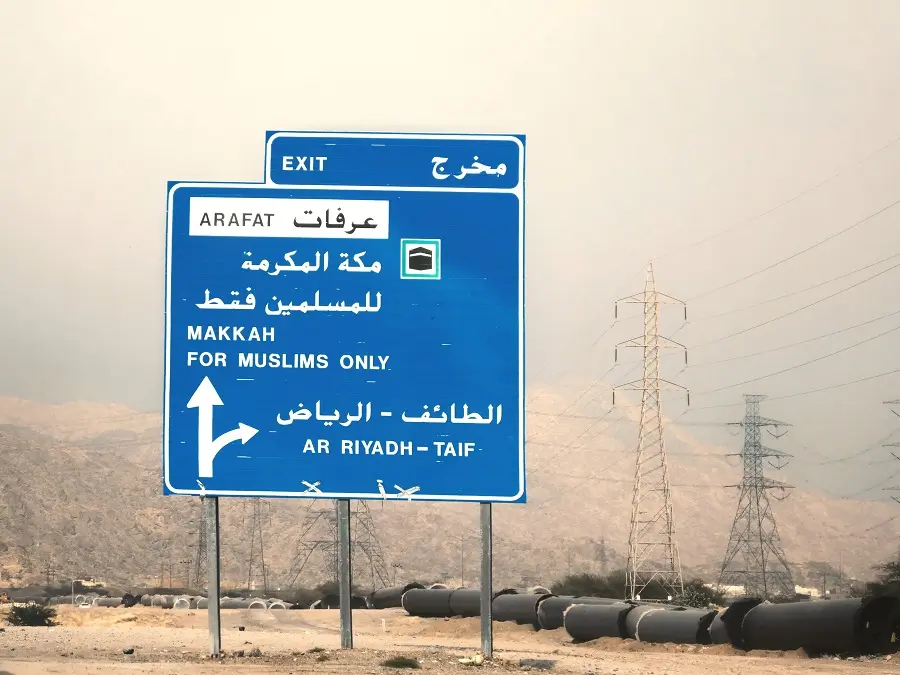
Conversely, non-Muslims are not allowed to enter the holy city of Makkah (the border is many miles from Masjid Al-Haram, the Ka’bah and clocktower). There is a lot of coverage nowadays of non-Muslims entering anyway, but I wouldn’t do it, personally – it’s super disrespectful. We drove to the boundary where we were allowed as non-Muslims and then turned back (they are all well-marked).
It is clearly indicated on your visa that no entry to Makkah is permitted to non-Muslims. Some Saudi Muslims claim that it is okay to enter – there are apparently contradictory interpretations of the Quran that mean it is a bit of a grey area. Nevertheless, not wanting to offend anyone means I wouldn’t go (even though I’d absolutely love to).
14. Is Photography Allowed in Saudi Arabia?
Photography is allowed in public areas of Saudi Arabia, however it’s quite sensitive.
The best bet is to avoid photographing people. It’s not allowed without explicit consent, as it is considered to violate the privacy of individuals.
Our photography is a bit weak in Saudi Arabia due to this; I didn’t always feel comfortable with my camera out. Many people we met asked why I don’t just use a phone! Throughout our trips in Saudi, I only met one resident with a larger, non-phone camera – a woman on the corniche in Jeddah.
15. Be Aware of Ramadan
Ramadan, a holy month in Islam, is an interesting time to visit Saudi Arabia. There are quite a few pros and cons (we were there for some of Ramadan).
Typically, people fast between sun up and sundown for the entire month, meaning that lots of food establishments are shut during the day. Iftar, the big meal at the end of the day often means that restaurants will not have a usual menu, and will serve mega-feasts instead!
Remember, this fasting includes water. Saudi Arabia gets pretty hot, so it’s tough to fast for a whole day in the sun.
It’s worth being sensitive about where you eat and drink in public. Most of the population are going to be a bit hungry during the day, so it’s good to keep it private. However, we chatted with a Saudi man in the supermarket who told us he didn’t care if we ate food during the day, because it’s his Ramadan celebration, not ours. He said he didn’t care if we ate a hamburger right in front of him!
Ramadan is a particularly lovely time to travel, though, because people are extra generous (we got given all sorts of things, even by gas station attendants!). It’s also an opportunity to join in with an Iftar meal!
A negative of road tripping in Saudi Arabia during Ramadan is car accidents. It has been reported that road accidents increase, which is not surprising, since people are hungry and thirsty. The best bet is to avoid driving a little before and after sundown, as that’s when people are going to their prayers before eating.
Ramadan is around 17th February to 18th March in 2026.
Where to Next?
We have genuinely loved travelling around Saudi Arabia, and don’t think it’s a particularly difficult country to traverse, especially if you’ve spent time in other Gulf states or the Middle East. The main complexity is the size of the country (which I only really came to comprehend after driving 12 hours on one road without stopping!).
These tips are meant to be a kind of guide to planning, to get you started on your journey! If you’re intending to drive, have a look at our one month flexible road trip itinerary – it’s detailed and can be adapted to different trip lengths and regions, depending on what your interests are!
We’ve also written about what to wear in Saudi Arabia, discussed the differences between Hegra and Petra, written a guide to visiting the Gingerbread Village of Rijal Alma, had a deep-dive into southern Saudi’s women-based art, and more!
We hope something can be of help to you – have a fantastic trip!
Hi, thanks for visiting our blog! If this post has been of help to you, or you’ve just enjoyed our random ramblings and musings, say thank you by buying us a coffee! It helps keep The Restless Beans blog up and running.
Thank you, Claire + Nick


I read it; it’s very helpful.