

· SOUTHEAST ASIA ·
3 Days in Luang Prabang Itinerary: Wats, Waterfalls, Markets, and Sunsets
Scribbled by Claire ⬩ 11 Sep 2026
Are you planning a trip to Luang Prabang and want to know how to max out your time? This itinerary and guide is designed to help you get the most out of a three-day visit, with lots of photos, accommodation suggestions, restaurant recommendations, plus must-see sights, things to skip, and more!
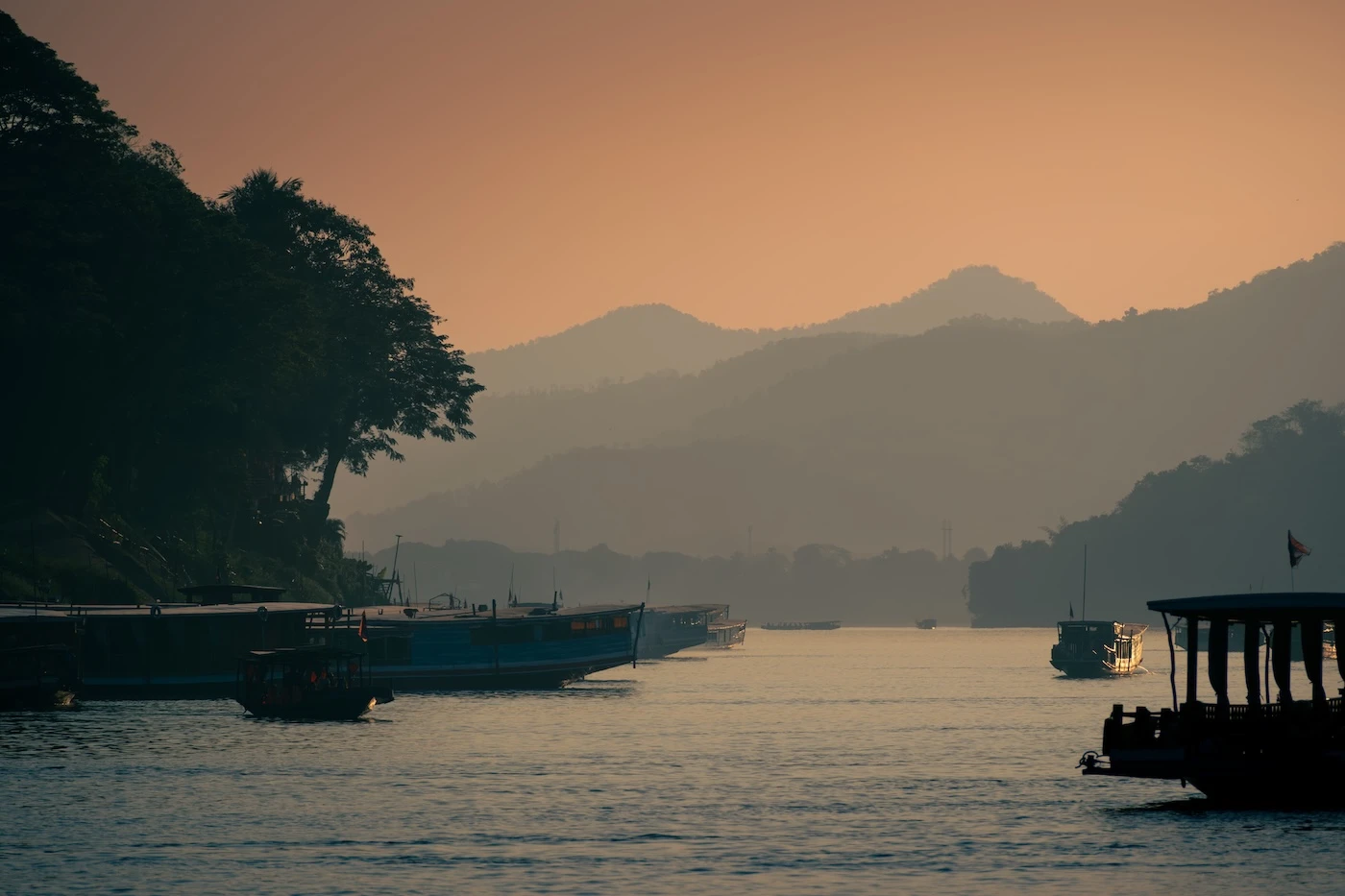
Luang Prabang, the misty, romantic, cultural capital of Laos, has been a UNESCO World Heritage Site since 1995 and is a remarkably atmospheric city.
It’s a city of contrasts; energetic yet sleepy, royal yet humble. From high on the steep, muddy banks, the vast Mekong River appears to wrap around the city, ambling its way to the eponymous delta far to the south. The distinctive French colonialist, dark-wood architecture lines the main streets without interruption while swaying palms and small restaurants dot the riverside pathways.
For decades, this city has been a favourite of offbeat travellers looking for an alternative to the bustling southeast Asian tourist hotspots like Hanoi and Bangkok.
My first introduction was on television: watching Anthony Bourdain having a beer by the riverside. There was a kind of ethereal quality surrounding the moment that I can’t quite describe. After that, my initial visit was made with high expectations, ones which were easily surpassed.
I’ve returned several times since, and once for a longer stay. It’s a city that absolutely captured my heart on the first visit and, curiously, my subsequent ones felt like returning home. It’s a magic place.
Note: this post has been updated after each visit to the city and it’s got longer and more detailed each time, to the point where it’s now an entire massive guide, with restaurants, hotels, things to do, transport, weather, logistics, and an itinerary, all contained within! Use the contents to jump about wherever you want to be, or just read the entire thing to help you plan your whole trip.

IN THIS GUIDE //
Hanging Out in Luang Prabang
Quick Thoughts on the City in 2026
How to Get to Luang Prabang
Transport Around the City
– Ride Hailing Taxi Apps
– Scooter Rental
How Many Days Do You Need?
Best Time To Visit
– Burning Season in Laos
14 Things to do in Luang Prabang
Three-Day Luang Prabang Itinerary
– Day 1: Around Town
– Day 2: Caves and Waterfalls
– Day 3: Everything Else
Luang Prabang’s Curfew and Nightlife
Best Hotels in Luang Prabang
14 Restaurant Recommendations
Tours
Luang Prabang Google Map
A Few Frequently Asked Questions
Where to Next?
This post may contain affiliate links. If you book through these links we may make a small commission at zero cost to you. It helps us pay for the upkeep of this blog. Thank you!
My Quick Thoughts on Luang Prabang in 2026
I’ve been coming to Luang Prabang regularly for the past seven or eight years and I still remember, distinctly, what the city felt like when I first arrived.
It was a challenge to reach: either you arrive by two-day slow boat, a nightmare of a minivan journey, or you fly. It was a little dot of tranquillity that few people wanted to go through the hassle to visit.
At this point in 2026, I just feel that I have to be honest – I wouldn’t always associate the word ‘tranquil’ with Luang Prabang. You see, the newish China train has been crucial in its atmospheric undoing.
Now, tour groups arriving from China and Thailand bunch up at every tourist attraction, the narrow roads are literally lined with snakes of identical white minivans, and throngs of people queue to climb the stairs of the city’s most famous temples. Don’t even get me started on the alms giving ceremonies – it’s a travesty.
I don’t even mind crowds (I’m actually a big city person), but Luang Prabang just feels forever altered, and not in a way that appears to always benefit its residents.
I just want to make sure that this guide is honest and doesn’t romanticise: and my genuine, current take is that you’ve got to try just a little harder now to get those almost ethereal ‘Anthony Bourdain by a misty river with a beer’ vibes that I mentioned in the intro.

How to Get to Luang Prabang
Most people arrive at Luang Prabang by air, boat, minibus or train from Vientiane, Vang Vieng or Nong Khiaw (or internationally).
The Slow Boat
The local slow boat is a super popular backpacker option and runs from the northern Thailand/Laos border village of Huay Xai to Luang Prabang. The majority of people start their journey from Chiang Rai, in Thailand.
It involves two days of floating down the Mekong River, with an overnight stop in Pakbeng. This is the exceptionally scenic but super-slow choice (the clue is in the name).
There are also faster boats that take this route and more expensive tourist-only options, too.
The ‘China’ Train
This train route is a posh, new-ish service that passes through the popular Laos cities of Luang Prabang, Vang Vieng and Vientiane (and originates in China).
It has metal detectors and you can’t even take aerosols – just like airport security. However, it’s fast, reliable, clean, and much quicker than the sickness-inducing, winding roads that link Luang Prabang and Vang Vieng.
It’s definitely a more comfy option than the buses (I know because I’ve taken both quite a few times).
Buses and Minivans
Laos has buses that cover all the routes you’ll need across the country.
These cheap and cheerful vehicles shuttle people between Luang Prabang and all the other cities in Laos. We’ve taken many of the winding roads since our first visit some years ago and, despite what people say, the roads aren’t all that bad (unless you’re visiting in the rainy season – if so, add many hours to the expected journey time!).
12GoAsia
For any advanced reservations for overland travel in southeast Asia, we use 12GoAsia, a broker for travel companies across the region. It’s reliable, efficient, and easy.
Take a look, even just to get representative prices for the overland portions of your trip. Alternatively, if you have a flexible schedule and itinerary, you can book on arrival at each destination with local transport operators.
Air
Luang Prabang has an international airport, just a few miles from the city centre, that is connected to major cities across Asia, like Bangkok.
This is the quickest and easiest (but least fun) way of arriving in Luang Prabang. The airport is small, sells sim cards, and has a nice easy minibus-taxi system to get you to your hotel without scams.
We book every flight we take on Skyscanner – it’s great for comparing flight prices, even the budget Asian airlines.
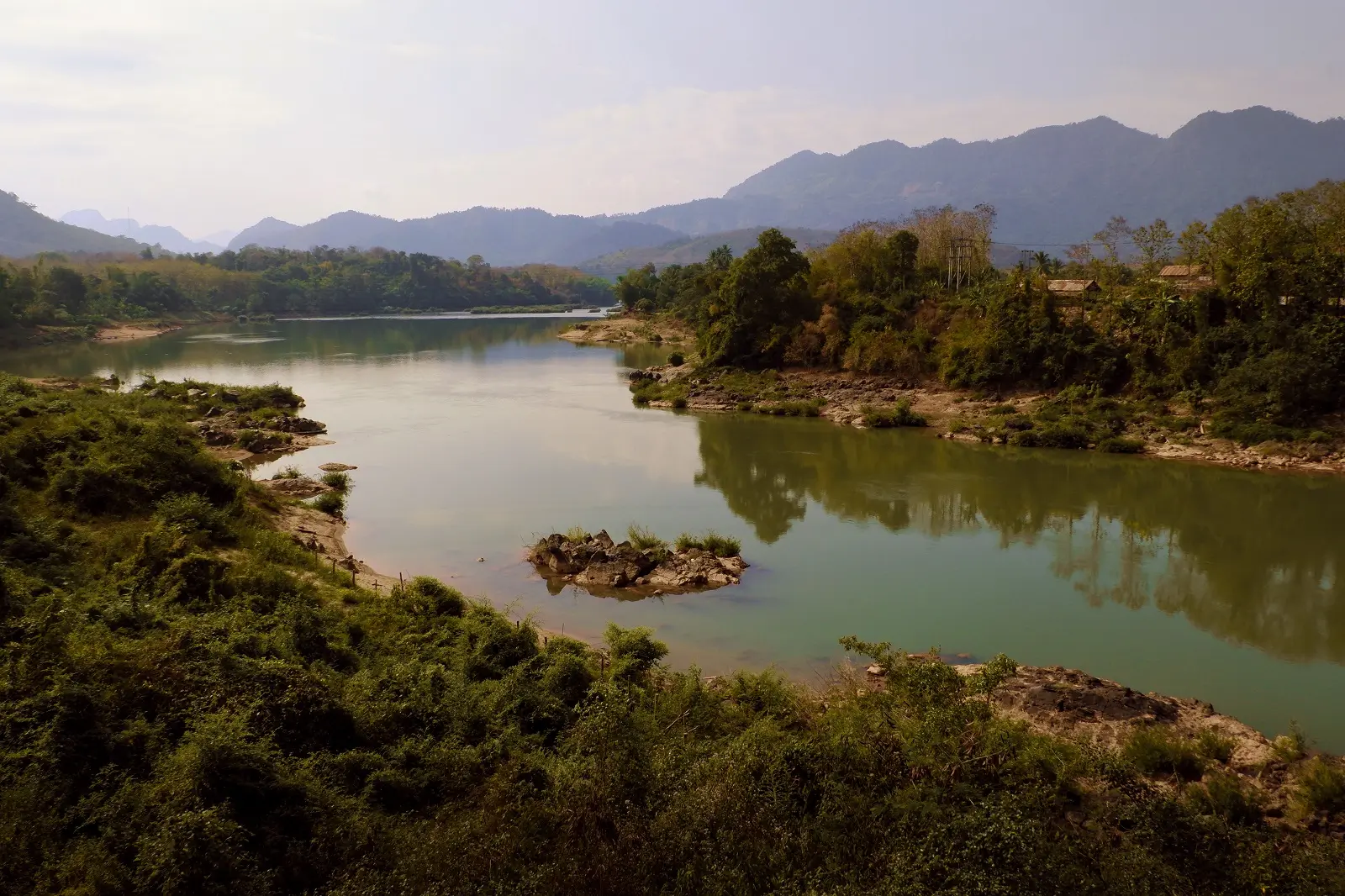
Getting Around Luang Prabang
Central Luang Prabang is compact and very walkable, especially in the winter months when the weather is mild. It’s also mostly flat, has decent footpaths, and is easy on the knees.
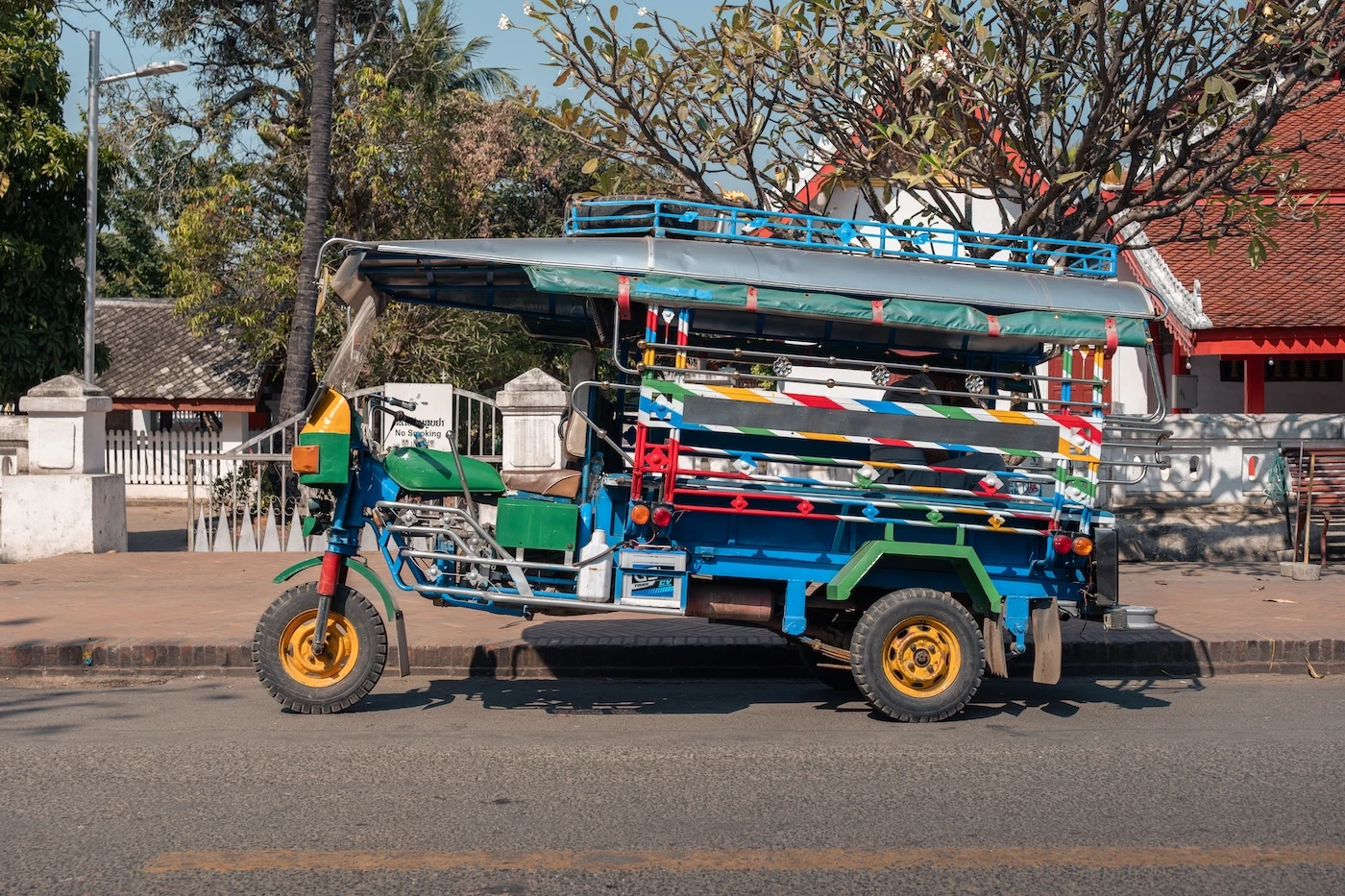
To reach the outskirts of the city or further afield attractions, such as Kuang Si Falls, there are shared songthaews (like open air pick-up trucks/tuktuks), air-conditioned minibuses, and taxis. Transport and tours can also be arranged directly through your hotel, but it will be a little more expensive that organising it on the street, usually.
Ride Hailing Taxi Apps
There’s a reliable taxi app in Laos called Loca, which is super easy to use. It works just like Uber or Grab, and you can pay on card or in cash.
We used it several times successfully in Vang Vieng and in Vientiane, but not in Luang Prabang because the airport and train station both have easy shared shuttles you can take (and for all the rest of our time there, we’ve always had a scooter).
It’s really affordable and we never had to wait long for a ride. You don’t need a Laos number to use the app, either.
Scooter Rental
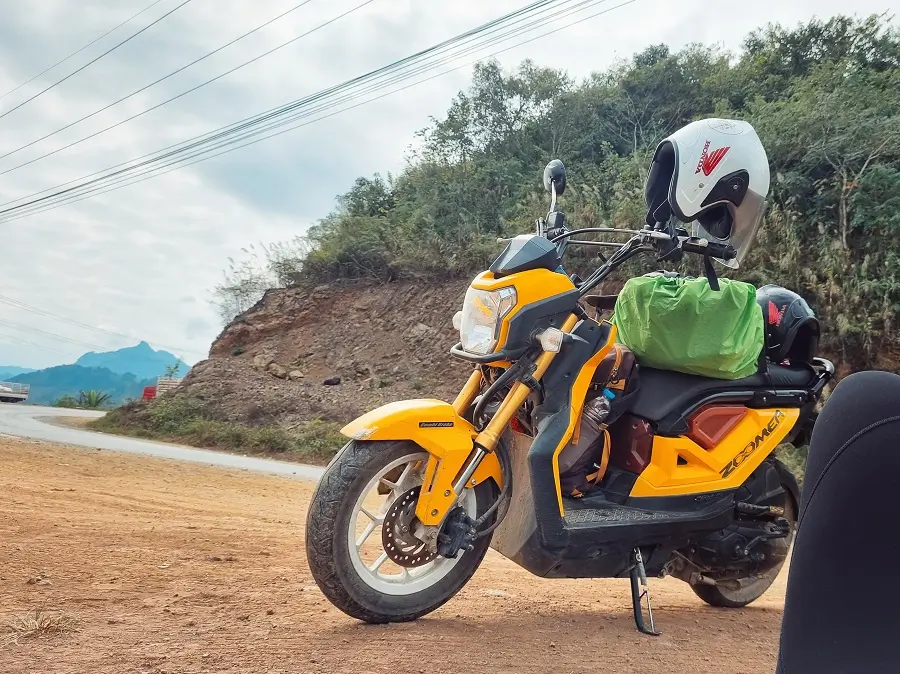
Another option for getting around Luang Prabang is to rent a scooter/motorbike, if you have the appropriate license, experience and insurance. This is the option we chose for all our visits (bar the first). A scooter gives you the flexibility and freedom to check out the city’s scenery and surroundings without having to visit the famous sites as part of a tour or get a taxi.
The roads are reasonably straightforward if you’ve driven/ridden in other southeast Asian countries, too. The driving/riding style of residents reminded me a lot of Siem Reap, in Cambodia (if that helps you at all!).
We rented several times through Anousay Motorbike Rental who were decent and professional enough.
We even used one of their bikes to ride the four-hour journey up to Nong Khiaw and then back, which was incredible (apart from the dengue fever I picked up somewhere on the way).
We pay 120k kip per day for the rental.
The Mekong Ferry Crossing
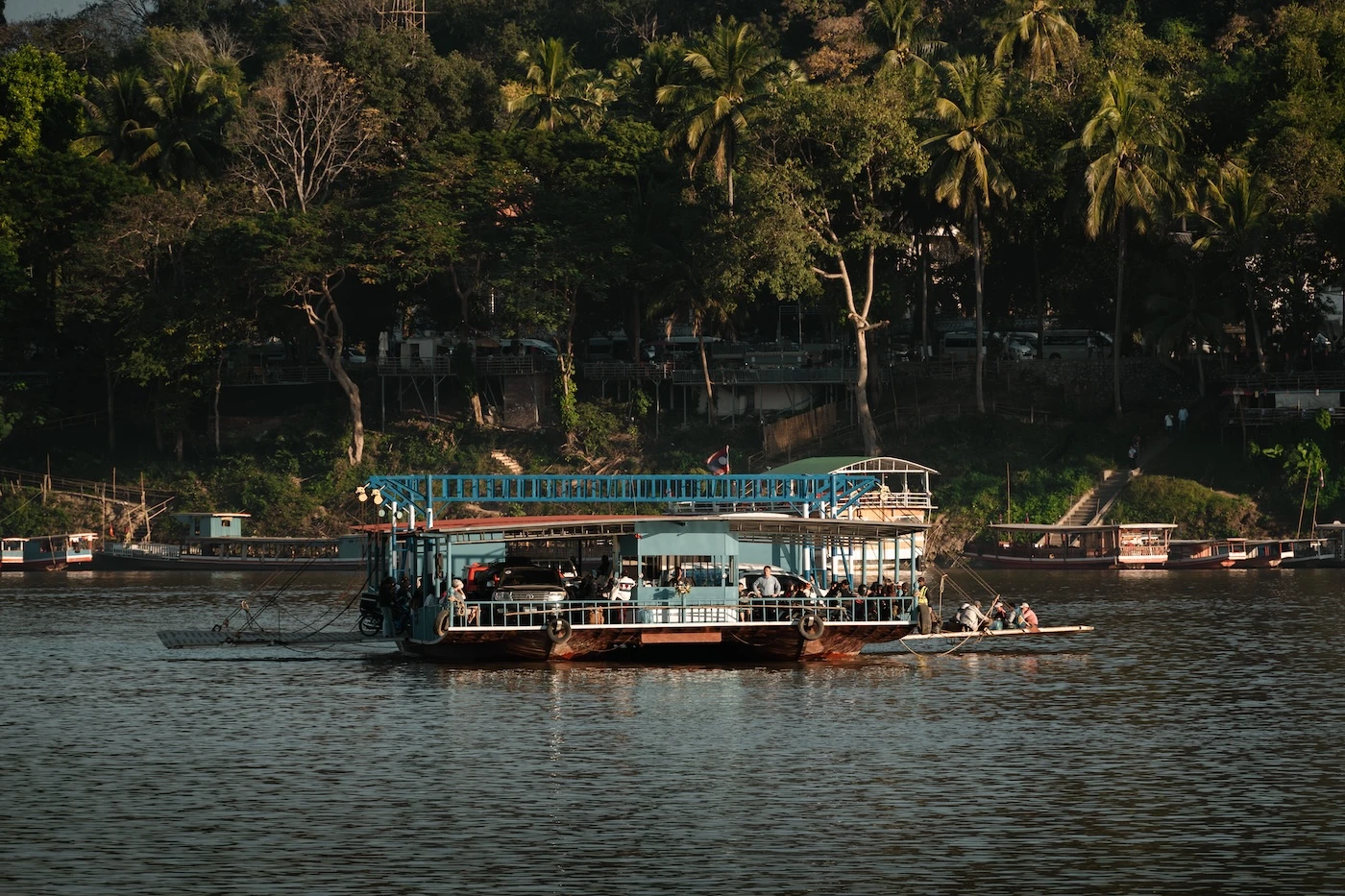
Luang Prabang is set on the southern banks of the Mekong River. If you want to cross over and explore the more rural side, there is a river transfer that moves cars, people, and motorbikes from either bank and just goes continuously throughout the day (like every 10-15 minutes-ish).
If you are on foot or on a bike, just head to the bottom of the hill (on either side) and just wait in the queue (ignore the cars, they have a separate queue). Just board when everyone else does and somebody in a fluorescent jacket will come around and take your payment.
It costs 8,000 kip for us and our bike in 2026.
How Many Days in Luang Prabang?
We would recommend spending three to four days in Luang Prabang. However, the most important things on this itinerary could be squeezed into three days if necessary (and you’re energetic).
I’d be more than happy to spend longer, though – we’ve always spent at least a week in the city and, one time, we spent a month.
If you just want to explore the city, check out a wat, visit Kuang Si Falls, and walk up Phousi Hill, you could squeeze all that into two full days.
BEST TIME TO VISIT LUANG PRABANG
The best time to visit Luang Prabang is during the winter between November and March. During these months, the temperatures are milder, the sun is out, and rain is scarce. However, this is also the peak tourist season so be aware that prices will be higher, along with the crowds.
The summer months in Luang Prabang bring lots and lots of rain and, with it, humidity. It can still be a pleasant place to visit, but the Mekong is not so calm, hiking in Nong Khiaw is uncomfortable (to say the least), the bamboo bridges are taken down, and the Kuang Si Falls are a sad brown colour.
Burning Season in Laos
Northern Laos suffers severely from the agricultural ‘burning season’ which occurs at the end of February through April.
It is a well-known phenomenon in places like Chiang Mai in Thailand, and is the period when farmers set fire to their fields, clearing them at the end of the crop harvest. The burning season can swamp the skies with smoke and make the air uncomfortable, or even dangerous, for people to breathe. This is something worth noting when planning a trip to Luang Prabang.
–
RELATED | UNIQUE TEMPLES IN CHIANG RAI
14 Things to Do in Luang Prabang
Below lists the highlights of any stay in Luang Prabang and all the things we really enjoyed.
Each entry has information on transport, opening hours and ticket costs (if any) plus how long each activity may take and, where applicable, the best time of day to visit. It is also mentioned if an activity is strenuous.
This will obviously be subjective, but we’ve included if we consider something ‘essential viewing’, too.

1. Grab Breakfast at the Luang Prabang Morning Market
Exploring markets is one of the coolest activities wherever you are in southeast Asia; morning markets, specifically, are even more so.
They tend to be aimed towards residents rather than tourists, which results in less hassle, less kitschy souvenirs, and better people watching opportunities. Luang Prabang is no exception.
Packed into the narrow, tight side streets of the historic district, the morning market lanes are packed with freshly cooked noodles, fruits, spices, whole grilled fish, snakes, snails, and live frogs. It’s absolutely teeming with agricultural products, coffee, cakes, and much more – you’ll definitely be able to find something to match your cravings here.
Daily, we’d head down to the market to buy food for the day – much of it was better than any Luang Prabang restaurant food and super affordable, too.
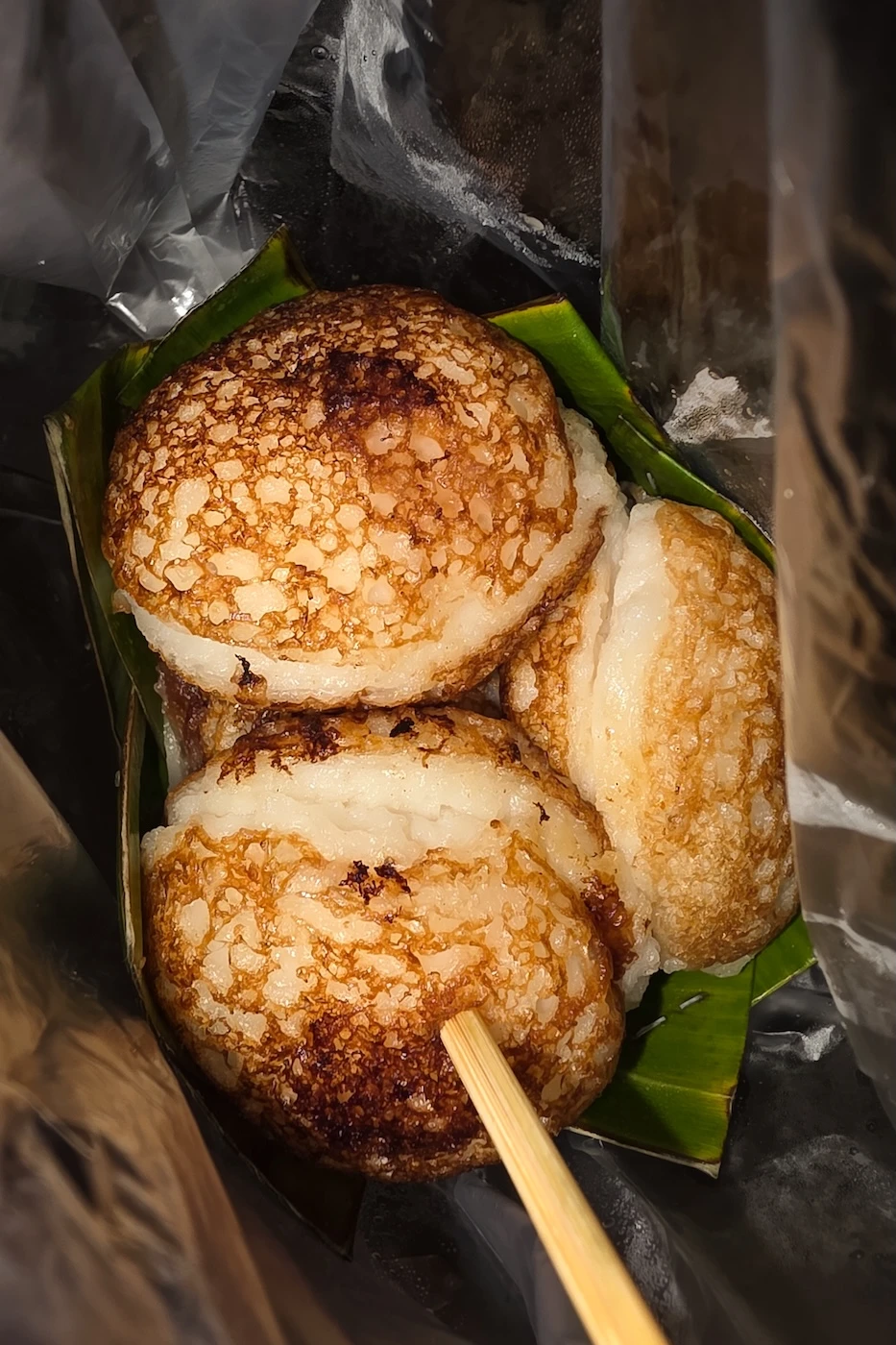
We had toasted rice lollipops, veggie noodles in banana leaves, fluffy banana bread, and sweet oranges.
Location: ‘Luang Prabang Morning Market’ on Google Maps. The road parallel and adjacent to Sisavangvong Road.
Time of Day: 5 a.m. – 10 a.m.
Strenuous: 2/10
Cost: n/a
Priority: high
◊


2. Wander through Luang Prabang’s Night Market
As with the morning market, the Luang Prabang night market is also worth a visit.
However, it’s a bit more tourist-oriented than the morning equivalent, with some serious party vibes on the southwestern end where the outdoor food court is (you’ll see the party-sized Beer Lao keg-vessels everywhere). There’s even a stage which has local acts performing. It actually gets pretty loud – we were staying adjacent to here during new year and it was literally deafening.
The market has lots of (often overpriced) but tasty foods including amazing cakes and our favourite ever food – the tiny coconut rice pancakes called khanom khrok (I dream of them). There’s a whole bunch of handmade tourist souvenirs (I think these are some of the nicest that I’ve seen in southeast Asia, too).
You can’t really miss this market – it’s situated smack bang in the historic district on the main road. Don’t forget to nip down the small side roads, like at 19.889396, 102.133861 – there are small food stalls where we had some amazing, super-value, vegetarian meals. If you’re into meat barbecues, there are usually a few nearby the large roundabout at the western end of the night market (but I cannot tell you if they’re any good).
Location: ‘Luang Prabang Night Market’ on Google Maps – Sisavangvong Road.
Time of Day: from 5 p.m.
Strenuous: 2/10
Cost: n/a
Priority: high
◊

3. Explore Kuang Si Falls
The exquisite Kuang Si Falls is pretty much always on a visitor’s must-see list in Luang Prabang.
Situated 29 kilometres south-west of the city, it’s a half-day (or so) trip to see the unbelievably blueish-white, multi-tiered falls, deep in the tropical jungles of northern Laos. It’s such a cool, but super easy adventure!
Honestly, they’re mesmerising. So much so, that we’ve written a post, just for them.
Location: 30 kilometres south-west of Luang Prabang
Time of Day: 8 a.m. – 5 p.m.
Strenuous: 4/10 or 7/10 if climbing up to the top of the waterfall
Cost: 25,000 kip
Priority: high
◊

5. Take a Laos Cooking Class
As in other southeast Asian countries, a popular activity is to take a cooking class. Laotian cuisine shares similarities with its neighbours, especially northern Thailand, but is certainly distinctive and worth learning about. For foodies, the best way to gain knowledge of Laotian fare is to cook it!
There are several options for Laotian cooking classes in Luang Prabang, usually including a shopping trip to the market for locally sourced ingredients. They also cater to vegetarians, too.
The most popular is Tamarind Restaurant and Cooking School. They offer day (9am—3pm) and evening (4.30pm—8.30pm) classes for a very reasonable price, plus extra special private lessons, too.
Location: central Luang Prabang
Time of Day: various, morning and evening classes available
Strenuous: 2/10 (you’re on your feet a lot)
Cost: varies ($35 dollars and up)
Priority: medium (high for foodies)
◊


6. Hop on a Mekong Sunset Cruise
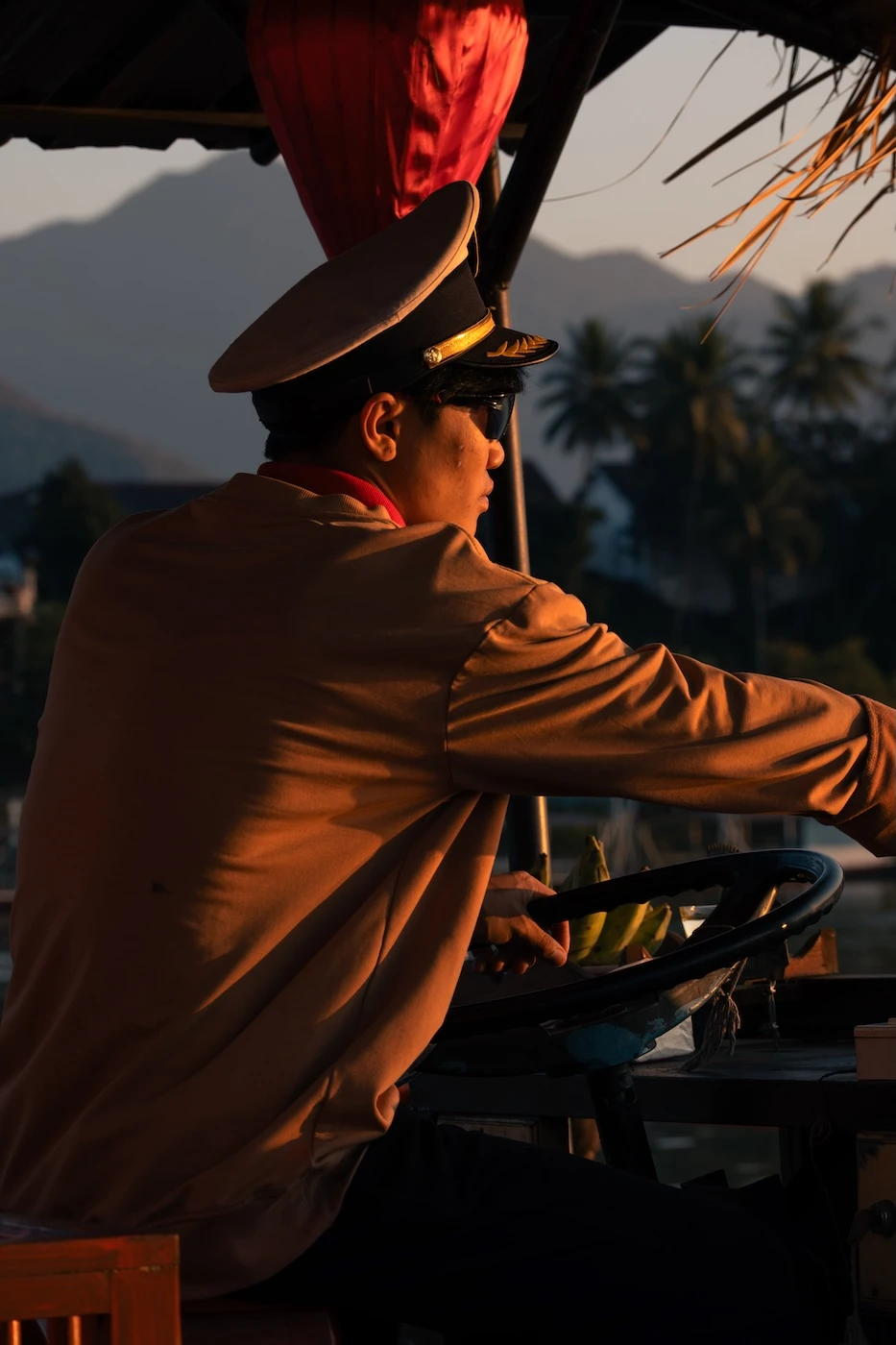
There is no better way to see this sultry, atmospheric city than from the mighty Mekong River. Sunset boat tours are pretty good value and give you a perfect view of the setting sun over the layered peaks surrounding Luang Prabang.
Tickets can be bought in advance via Get Your Guide, or you can pop down to the Mekong riverbank in Luang Prabang to pick up tickets in person.
We’ve done a sunset boat trip three times now and recommend Sa Sa Sunset Cruise. They provide you with a free (alcoholic if you want) drink on arrival, some hilarious theatrics, and are very decently priced for a two-hour cruise (also, apparently their boat is now solar powered!).
Location: central Luang Prabang
Time of Day: 4 p.m. (ish)
Strenuous: 1.5/10
Cost: 265,000 kip per person with Sa Sa Sunset Cruise
Priority: high
◊

7. Take a Trip to the Pak Ou Caves
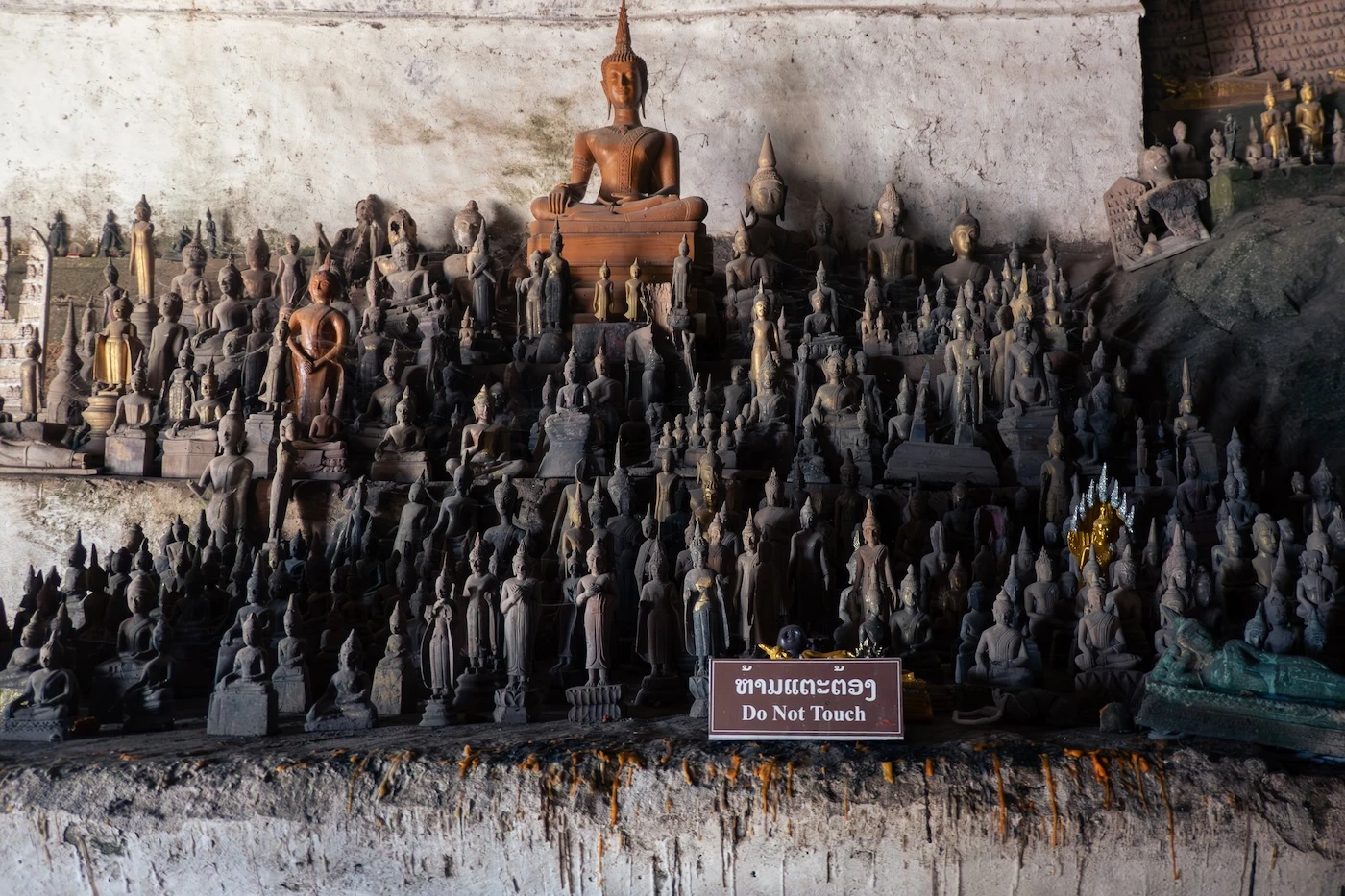
The Pak Ou Caves are a major tourist hotspot – like nearly as popular as Kuang Si Falls, nowadays (they’re often done together as one day trip).
The two caves are famous for the roughly 4000 miniature Buddha statues that have been placed inside. It’s still used as an active place of worship and, apparently, predates Buddhism.
The Pak Ou Caves are around 30 kilometres north of Luang Prabang, about a 50-minute journey by road. The caves are on the opposite side of the Mekong River, facing the mouth of the Nam Ou (river Ou). Access is by boat, which is charged as a separate fee to the entry cost.
Although popular, these caves feel like a bit of a tourist trap to me, surrounded by relatively aggressive hawkers and begging children, plus the caves aren’t really up to much. It is possible to reach the caves by boat along the Mekong instead of journeying by road – this is the nicer, but a little more expensive, route and the boat trip is far more impressive than the caves themselves.
We only recommend a visit if you have tonnes of time or have a real calling for it (I know this is an unpopular opinion!).
Location: 29 kilometres north of Luang Prabang
Time of Day: 8 a.m – 5 p.m.
Strenuous: 4/10
Cost: the boat crossing: 15,000 kip and caves entry: 20,000 kip
Priority: low
◊
8. Visit Some Museums
There are quite a few small museums in Luang Prabang with fantastically low entry fees that are worth a little of your time. Below are our favourites and ones we think should go onto your itinerary.
8.1. UXO Laos Visitor Center
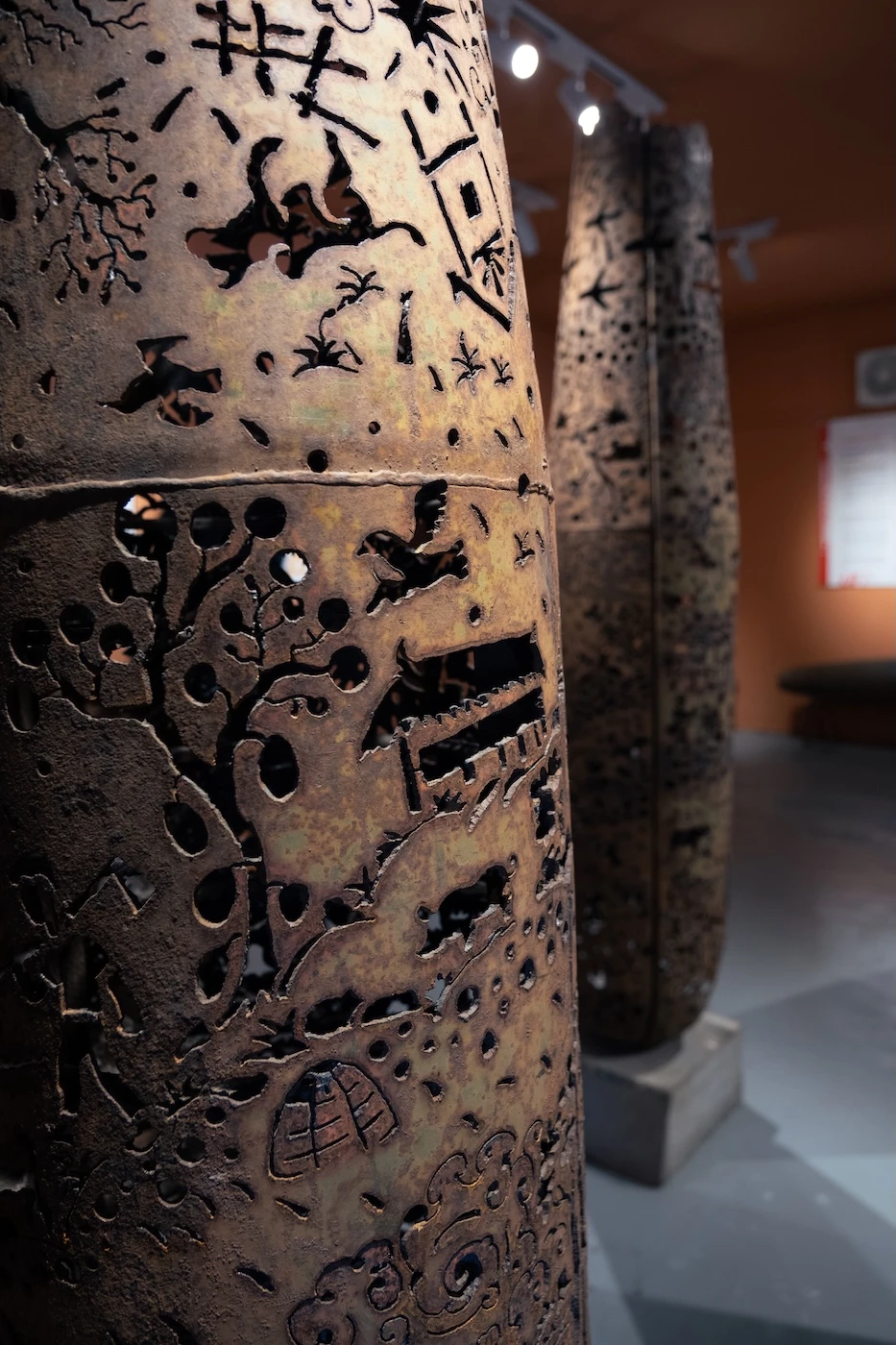
This is a small museum highlighting the ongoing impact of UXO (unexploded ordnance) in Laos.
There are loads of signs in English about the UXO, details on the cleanup work, stories from victims and survivors, along with numerous examples of the munitions and tools used for their cleanup.
We think this place is really worth visiting, especially since ordinance is ongoing problem across the country that doesn’t currently have a solution, especially with USAID being cut. We spent around an hour to check it all out.
Open daily: 8am—12pm, 1am—4pm
Free entry (leave a donation)
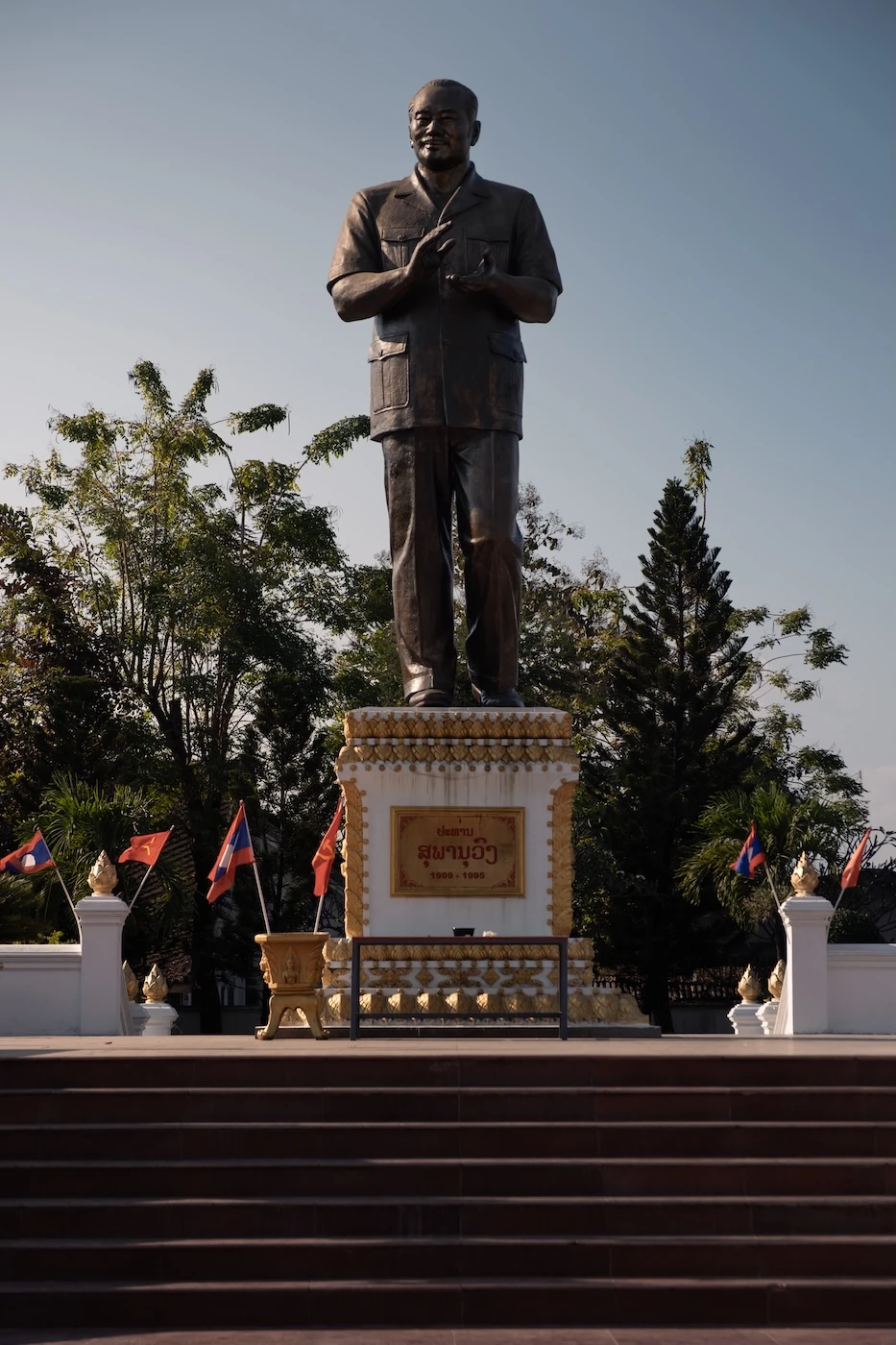
8.2. Traditional Arts and Ethnology Centre
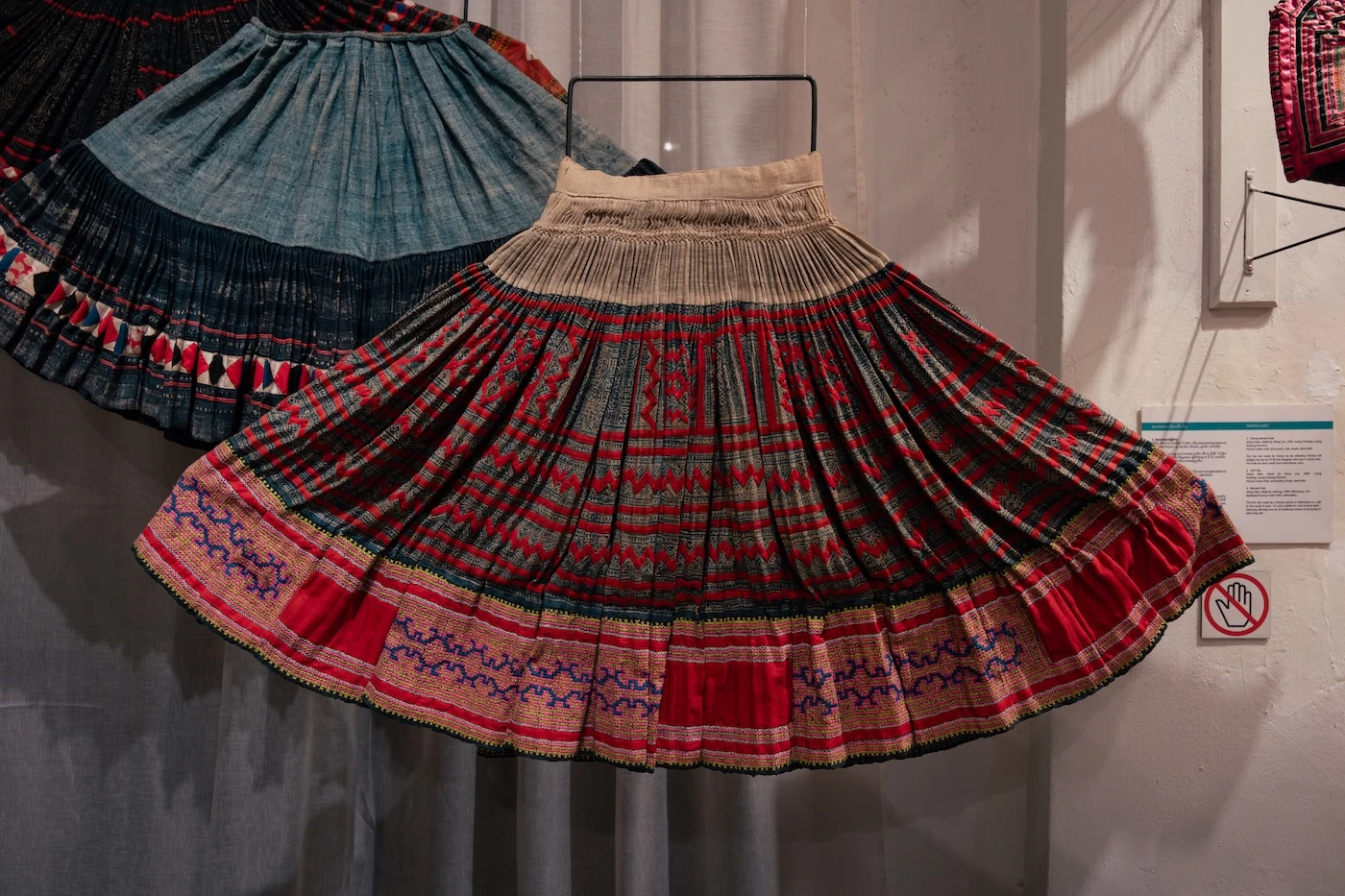
The Arts and Ethnology Centre in Luang Prabang is a really worthwhile place to learn more about the various ethnic groups of Laos through the permanent displays and even special one-off exhibitions.
There’s an extensive collection of handmade clothing, jewellery, musical instruments, and tools through the museum. It’s a genuinely interesting, colourful stop and I didn’t get bored (I wasn’t sure if it was going to be interesting since I’m not a museum-y person and the name sounds a bit dry!). We took around an hour or so to wander through the rooms.
Check the events page for any free talks or activities. They also have a fair-trade shop selling artisanal pieces from over 20 ethnic groups around the country. There are also guidebooks in multiple languages available at the ticket counter.
Open daily: 8am—5pm
Entry fee: 35,000 kip
8.3. Heuan Chan Heritage House
This is a small, 100-year-old Laotian wood house in the backstreets of Luang Prabang’s historic quarter, turned into a museum and activities centre.
On the grounds are cooking and textile workshops, along with a nice outdoor cafe. Inside the upstairs museum section, there are a number of informational signs along with furniture, tools and antiques of the previous wealthy residents.
It’s a nice window into 19th century life in Luang Prabang and worth the tiny entry fee they charge. We spent about an hour here in total for the museum and grounds.
Open daily: 9am—5pm
Entry fee: 20,000 kip for the grounds, or 40,000k for full access to the house museum.
8.4. Royal Palace and National Museum
This palace and national museum are the largest in Luang Prabang, set within huge grounds dotted with palm trees and ponds. It’s located directly across from the entrance to Phousi Hill: you can’t really miss it! This does mean that it actually gets quite busy, especially with tour groups, and was the most crowded place we’ve been to in Luang Prabang (apart from Phousi Hill).
The grounds are lovely and have all sorts of interesting stuff going on, like royal cars and a boat. However, inside the (often crowded) main building (where you can’t take photos) are the crown jewels, diplomatic offerings, living quarters, and other royal artifacts, which are the main draw (I wasn’t entirely enamoured, though). There are QR codes to explain things as you go around.
I found this stop okay, but a little less personal and a bit drier compared to the three places listed above which were a little more intimate. I think we spent about 1.5 hours here which, for the entry fee, is great value. However, if I were to skip one museum, it’d be this one.
Also, it’s quite strict here and you can’t take any kind of bag in, no photos are allowed, and there’s an enforced dress code similar to Buddhist temples, so be aware before you turn up!
Open daily: 8am—11.30am, 1.30pm—3.30pm
Entry fee: 60,000 kip
9. Wander the Historic Centre
The French colonialist architecture is on display everywhere in the historic old quarter of Luang Prabang.
Within the shadowy, wooded overhangs hiding little guesthouses, cafes, and restaurants; you could spend most of a day just strolling about if you like to amble (or are a photographer).
The city is so distinctive when compared to other cities in southeast Asia. Truthfully, I was expecting it to have old/French quarter Hanoi-style vibes because of its French past, but Luang Prabang doesn’t feel like that at all (although it does still feel French).
The old quarter is actually on a small peninsula, enclosed by the massive Mekong River on one side and the graceful Nam Khan (Khan River) on the other. In the centre is Mount Phousi, a towering hill that lauds over the city.
Make sure you wander down the four main streets:
⬩Kingkitsarath Road: lovely Nam Khan river views and some of the prettiest houses
⬩Sisavangvong Road: the main artery through the peninsula
⬩Khem Khong: the is the Mekong side of town with views across the vast river
⬩Kounxoau Road: smaller road with temples and businesses on
Make sure to wander down the smaller back streets that connect these four main ones – you’ll get a real feel for how pretty the architecture is.
Location: Luang Prabang
Time of Day: all day
Strenuous: 2/10
Cost: free
Priority: high
◊

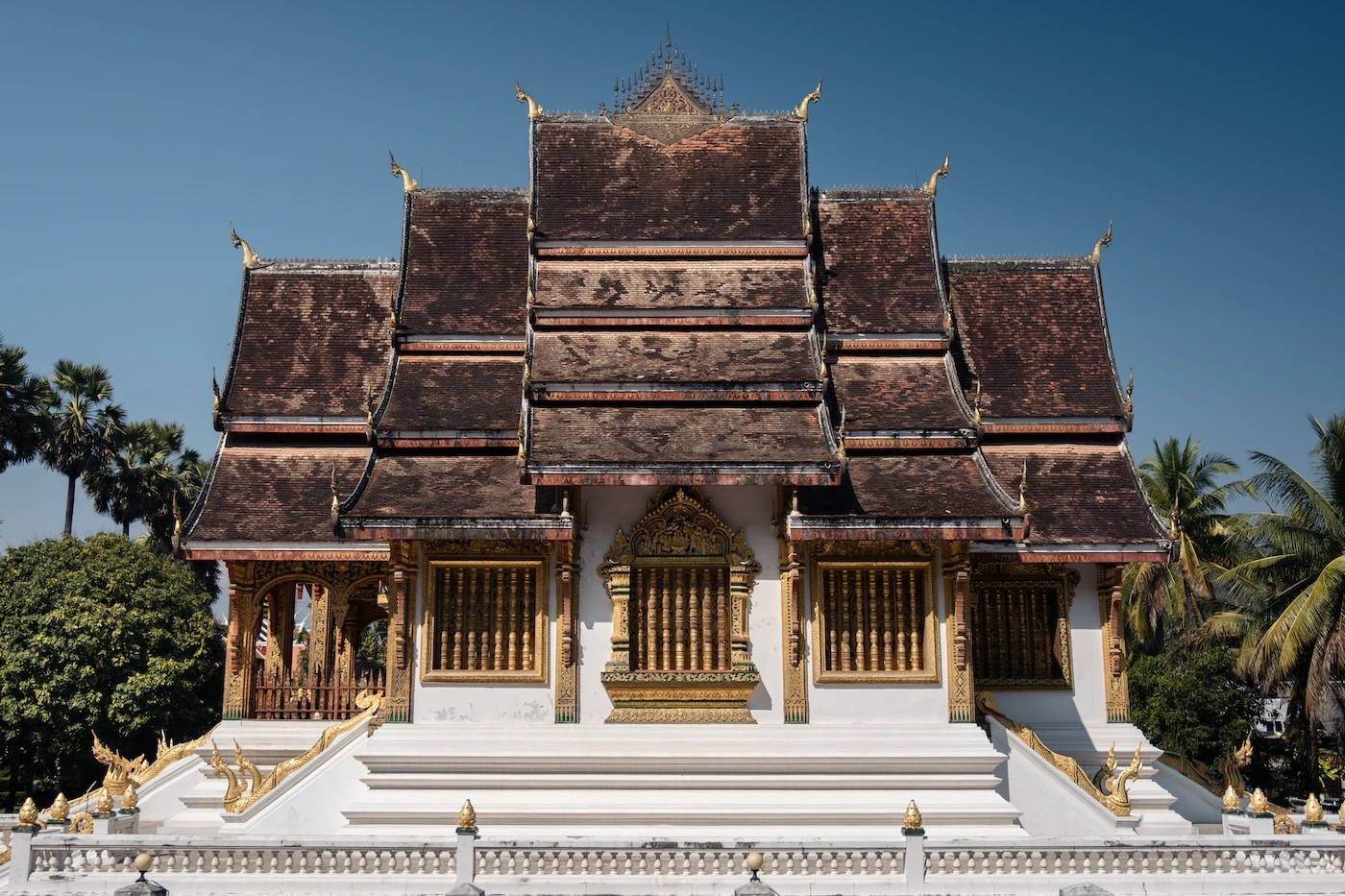
10. Visit the Temples
The temples in Luang Prabang are fantastic examples of Buddhist religious teaching centres and are really quite beautiful – easily on-par with others you’ll see around southeast Asia. They’re quite traditional in design – you won’t see the craziness of Thailand’s more modern Buddhist temples here.
Luckily, there are quite a few all within the walkable centre of the city, too, so you can wander via a whole bunch of them.
There are several temples in or near the main UNESCO area:
⬩Wat Sensoukharam: free (on the main street, less busy)
⬩Wat Xieng Thong: 30,000 kip (one of the most visited by tour groups, had a cool puppet show, distinctive decoration. Did you know Luang Prabang was actually called ‘Xieng Thong’ between the 14th-16th centuries?)
⬩Wat Wisunarat: 20,000 kip (oldest in Luang Prabang)
⬩Wat Chom Si: 30,000 kip (atop Mount Phousi)
⬩Wat Siphoutthabat Thippharam: free (small, minimally visited, hidden in the trees at the base of Phousi Hill)
⬩Wat May Souvannapoumaram: 10,000 kip (next to the night market, yet lesser visited)
⬩Wat Chomphet: 20,000 kip (across the Mekong on the other side)
Location: central Luang Prabang
Time of Day: 8 a.m. to 5 p.m.
Strenuous: 2/10
Cost: 0 to 30,000 kip
Priority: high
◊
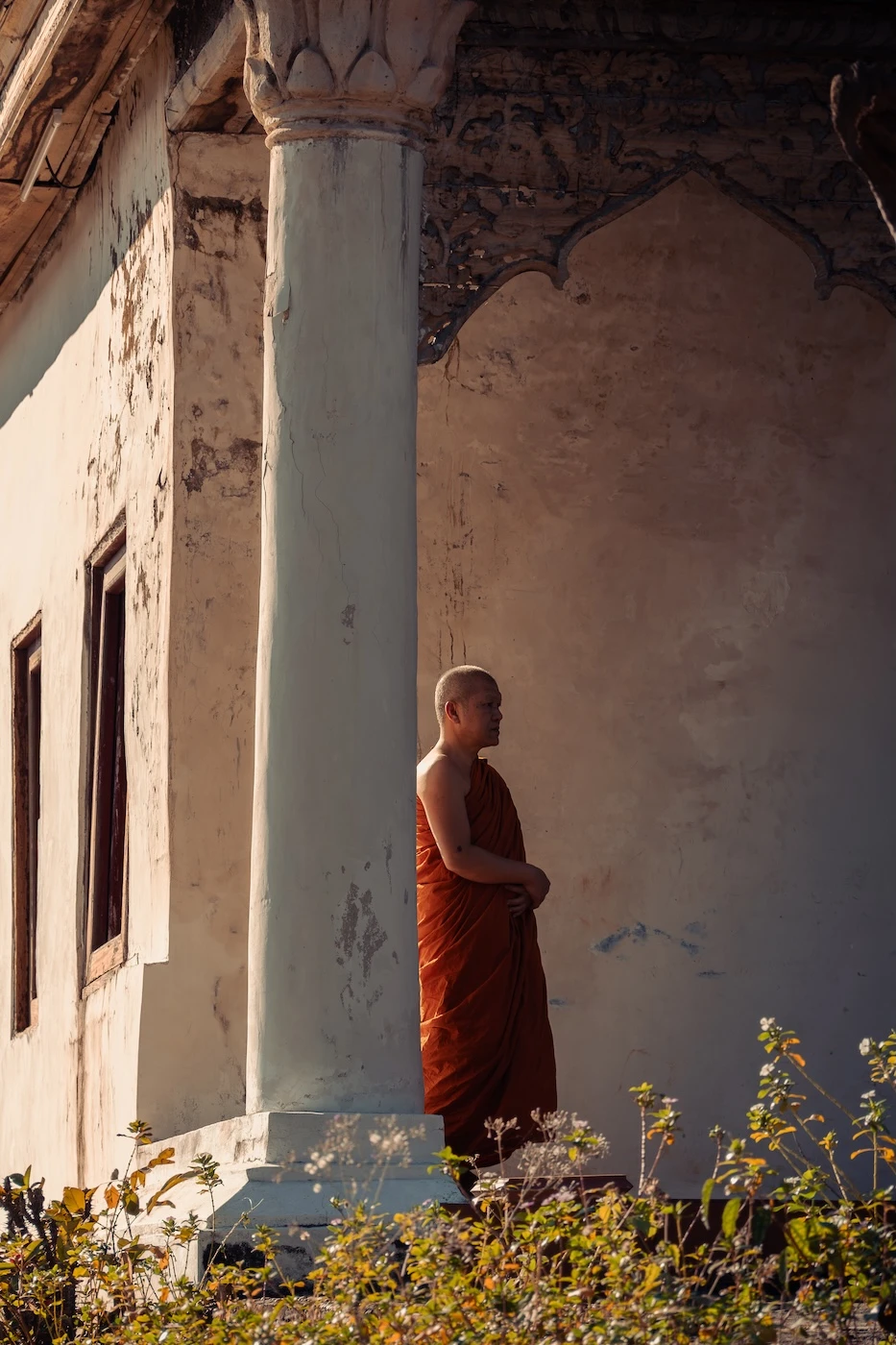
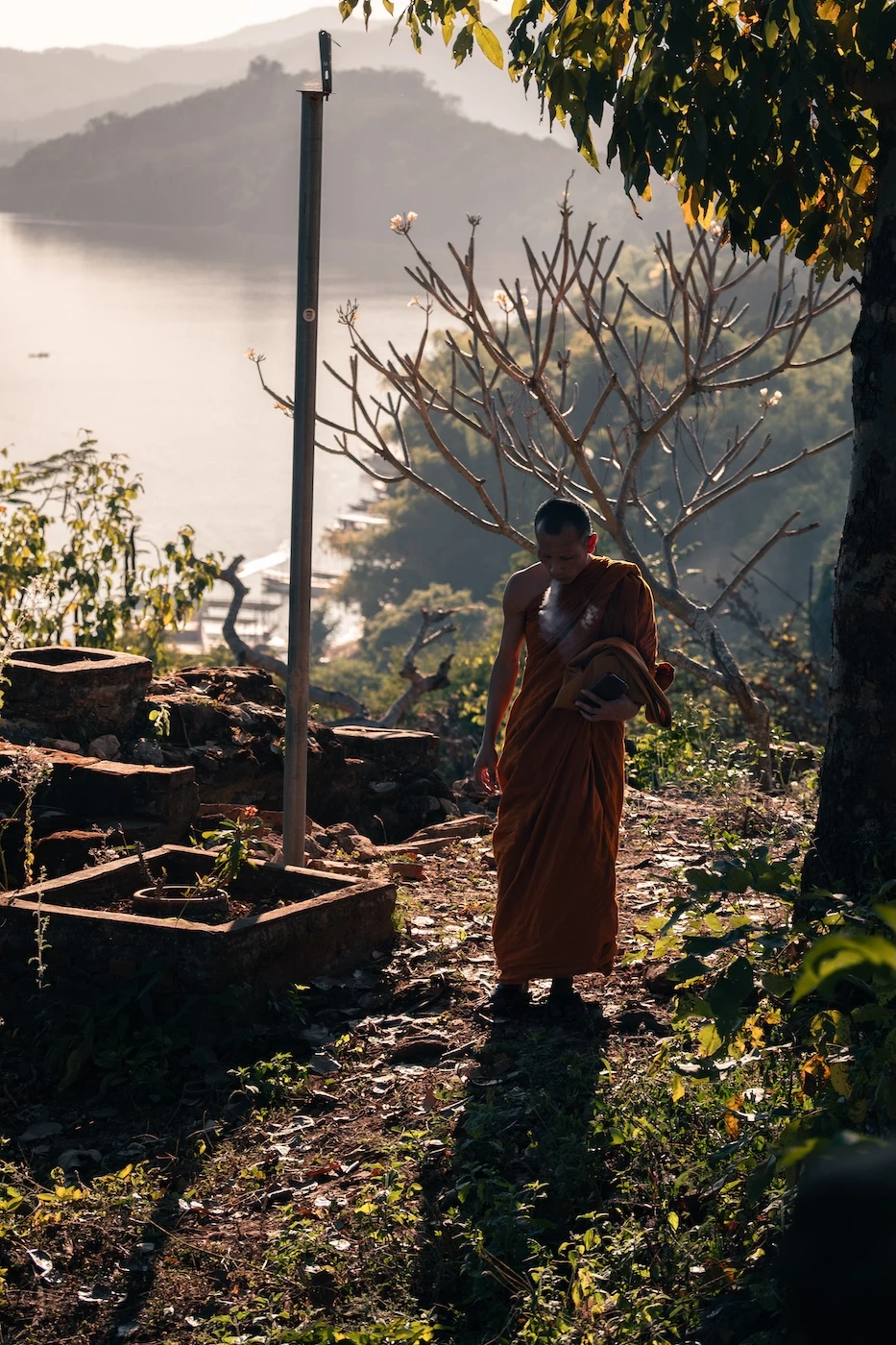
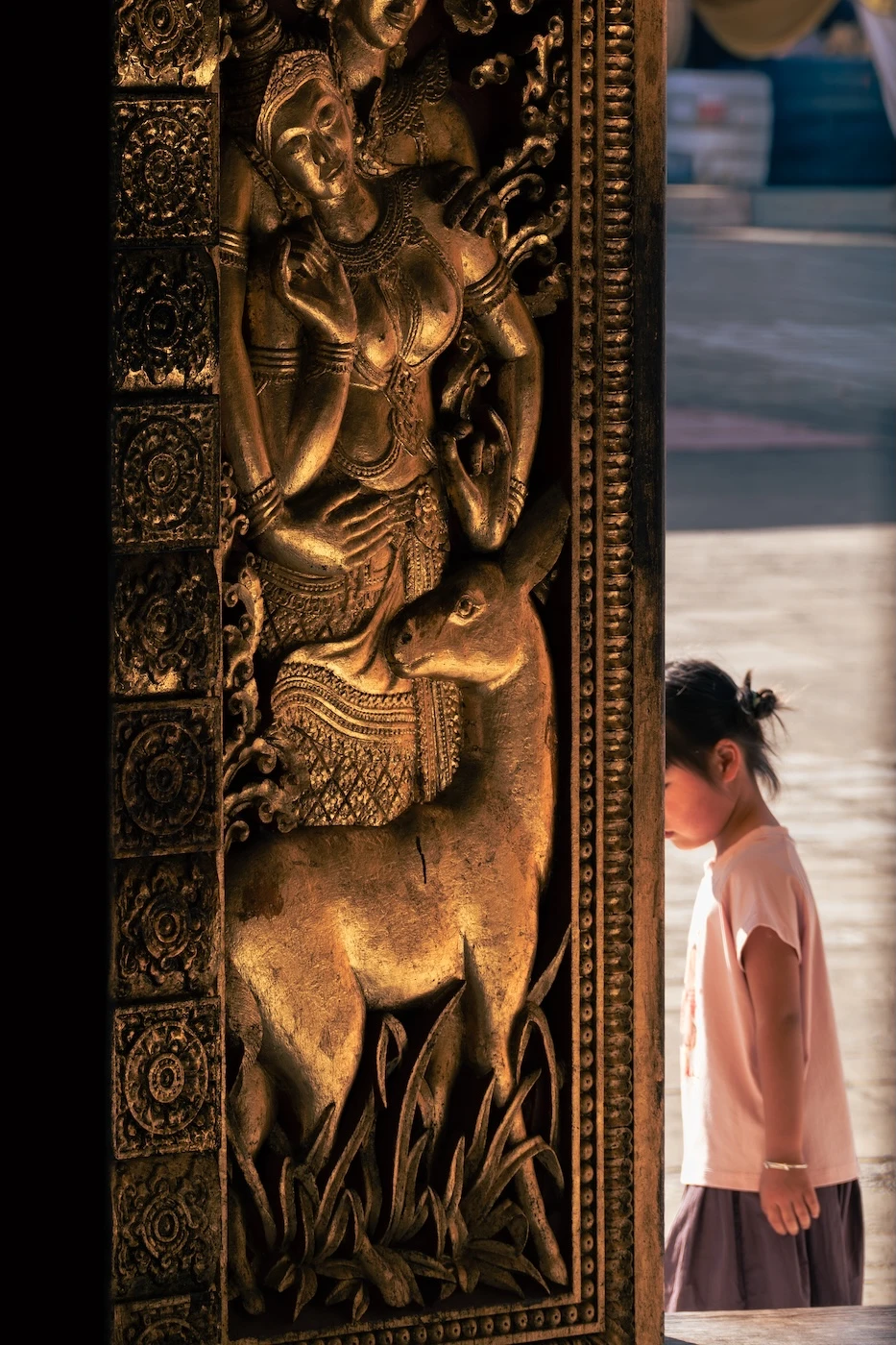
11.Walk Up Mount Phousi
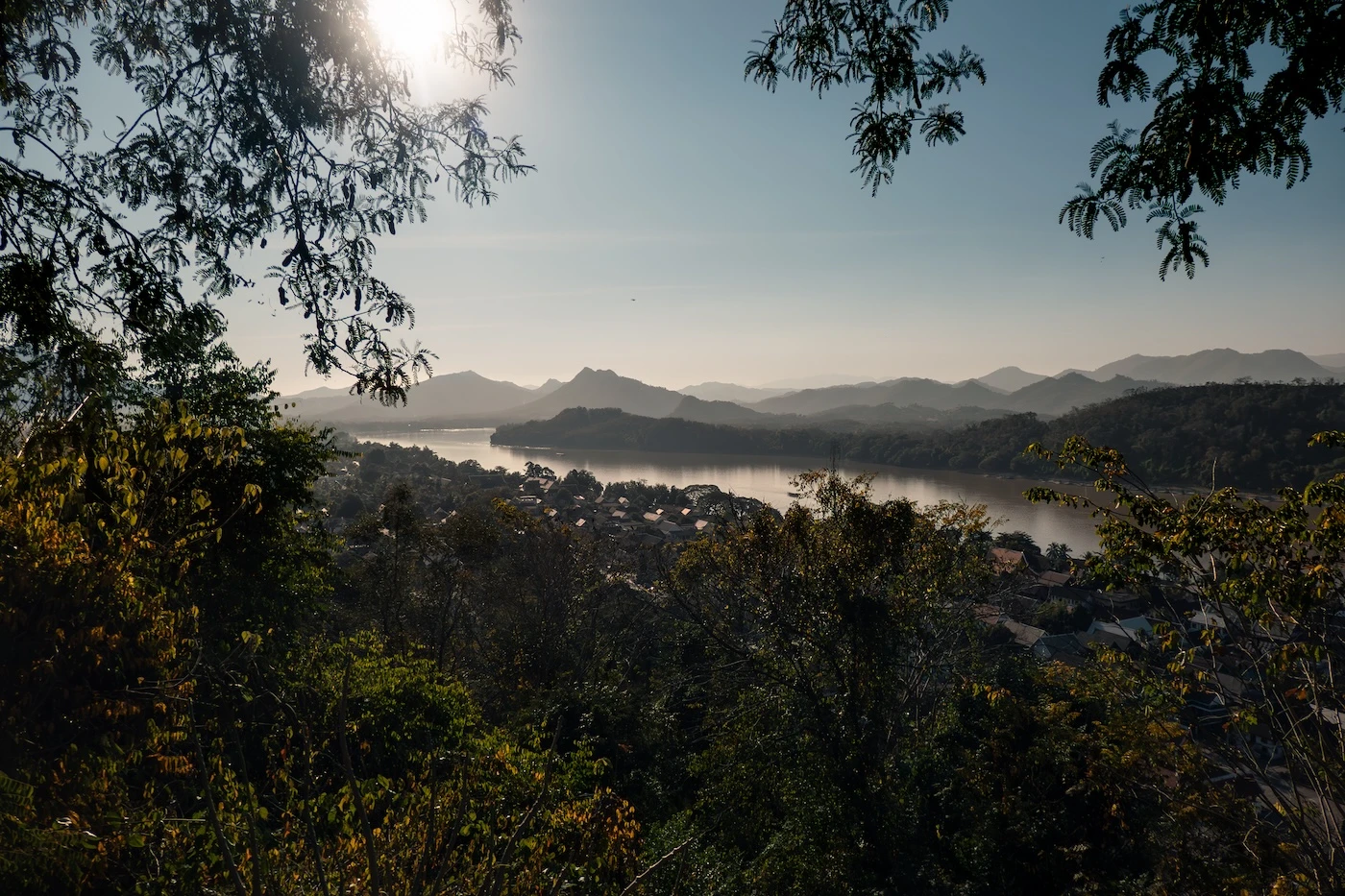
Adjacent to the historic district of Luang Prabang is Mount Phousi (also known as Phu Si), a 100-metre-high hill that towers over central Luang Prabang, providing astonishing views for miles around.
There are 328 stairs going up in one direction and 350 steps going up the other. The first of two entrances are found at Sisavangvong Road, next to the night market. The gate and steps are quite obvious – it’s opposite the Royal Palace.
On the other side of the hill, the entrance can be found by the Nam Khan, the river adjoining the Mekong (this route is marked on Google Maps). This path has more steps but is a little easier as it’s got fewer steep bits and passes a whole bunch of interesting statues and temple stuff.
It really doesn’t matter which way you choose to walk.
The views at Mount Phousi are better at sunset due to the direction of the mountain – the actual viewpoint roughly faces west. However, we’ve visited twice and prefer it at sunrise. It’s cooler (much nicer for the walk up!) and quieter – only a handful of tourists ever get up early enough, it seems.
Location: central Luang Prabang
Time of Day: 5:30 a.m. to 6 p.m.
Strenuous: 7/10
Cost: 20,000 kip payable part way up
Priority: high
◊

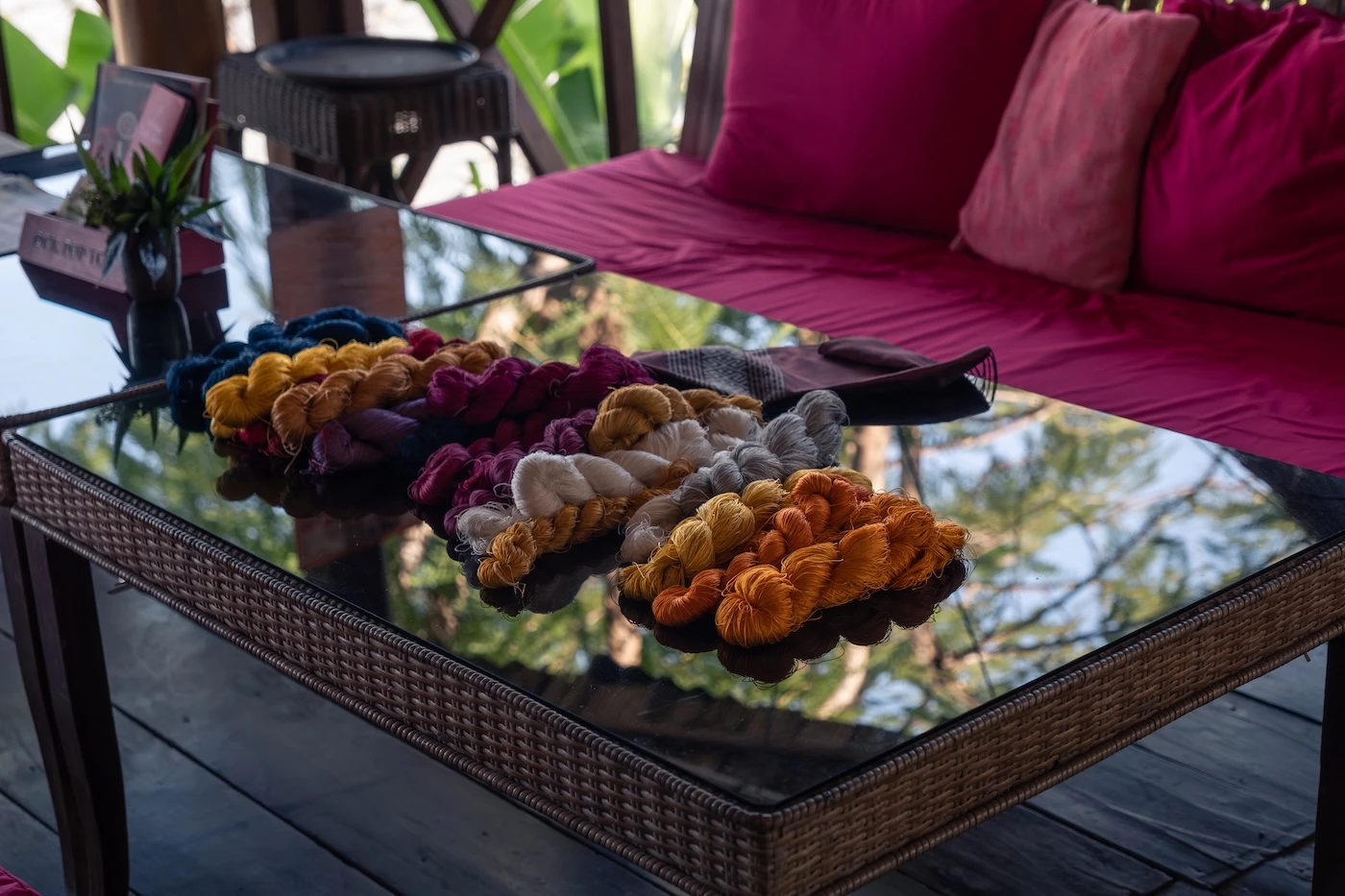
12. Make Something Fun at Ock Pop Tok Living Craft Centre
This super cute complex, a little outside the centre of Luang Prabang on the banks of the Mekong River, is run by Laos women and hosts a number of family-friendly, crafty activities, a café, and a restaurant. It’s a fantastic, hands-on stop for younger kids that need a bit of stimulation.
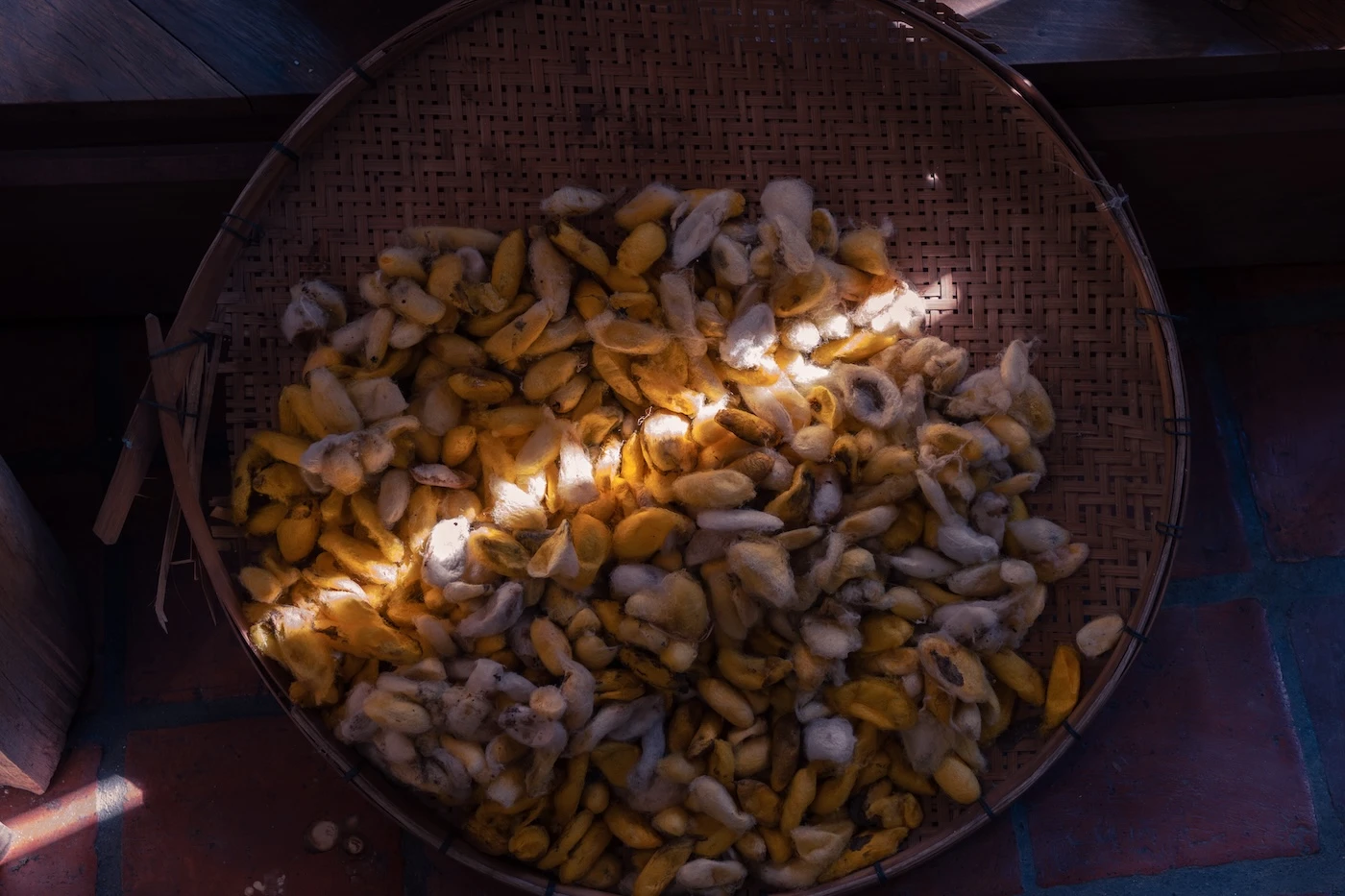
There are free tours along with optional paid classes including: natural textile dying, bamboo weaving, batik crafting, and silk embroidery. It actually has some surprisingly in-depth, high quality, multi-day courses that go way beyond the typical tourist stuff. You can also just wander around and explore on your own and take a look at all the displays.
It’s a very worthy stop if you’re even slightly interested in fabrics, fibres, weaving, and traditional dye techniques, or want to support a women-centred business. There’s also a really nice riverfront restaurant that you could stop at for lunch!
Location: central Luang Prabang
Time of Day: 8 a.m.—8 p.m.
Strenuous: 1/10
Cost: free entry, classes need to be paid for
Priority: high
◊
13. Visit the Other Side of the Mekong and Learn About Pottery
With some spare time, I’d highly recommend taking the Mekong ferry (mentioned above) to the other side of river, opposite to the city. It’s rare that tourists venture out to the lesser visited, sparsely populated side, despite there being a few really nice things to do and it being a far less gentrified.
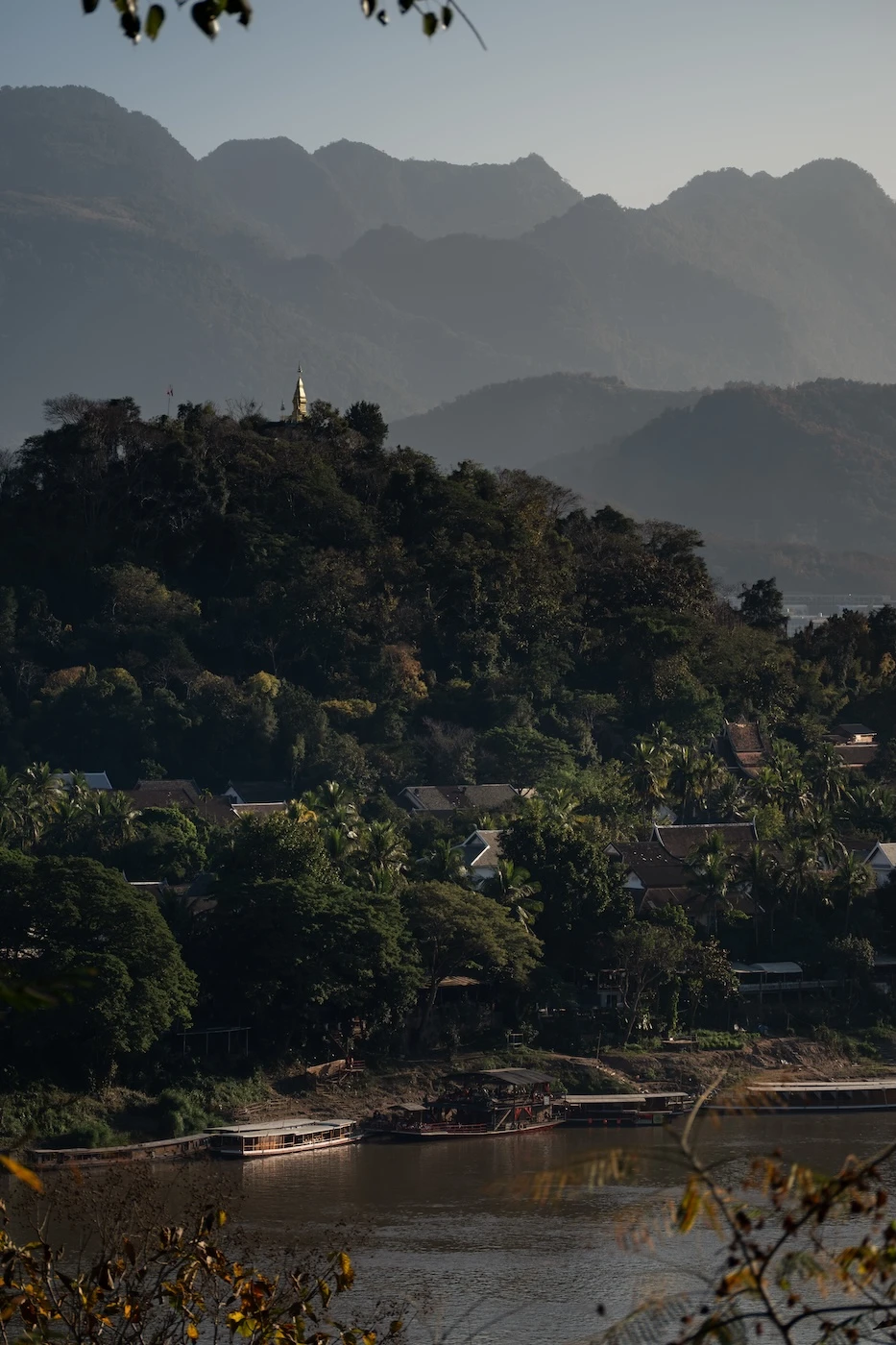
Either you can pop over on foot and just explore Wat Champhet (the white temple on a hill you can see directly across the river) and its adjacent small village. The temple has magnificent views down the river and of the city, even though it’s not overly impressive, architecture-wise. I think it’s well worth visiting: I spent two lovely hours just sitting at the top, listening to Chinese karaoke boats in the distance (a reality of Luang Prabang in 2026).
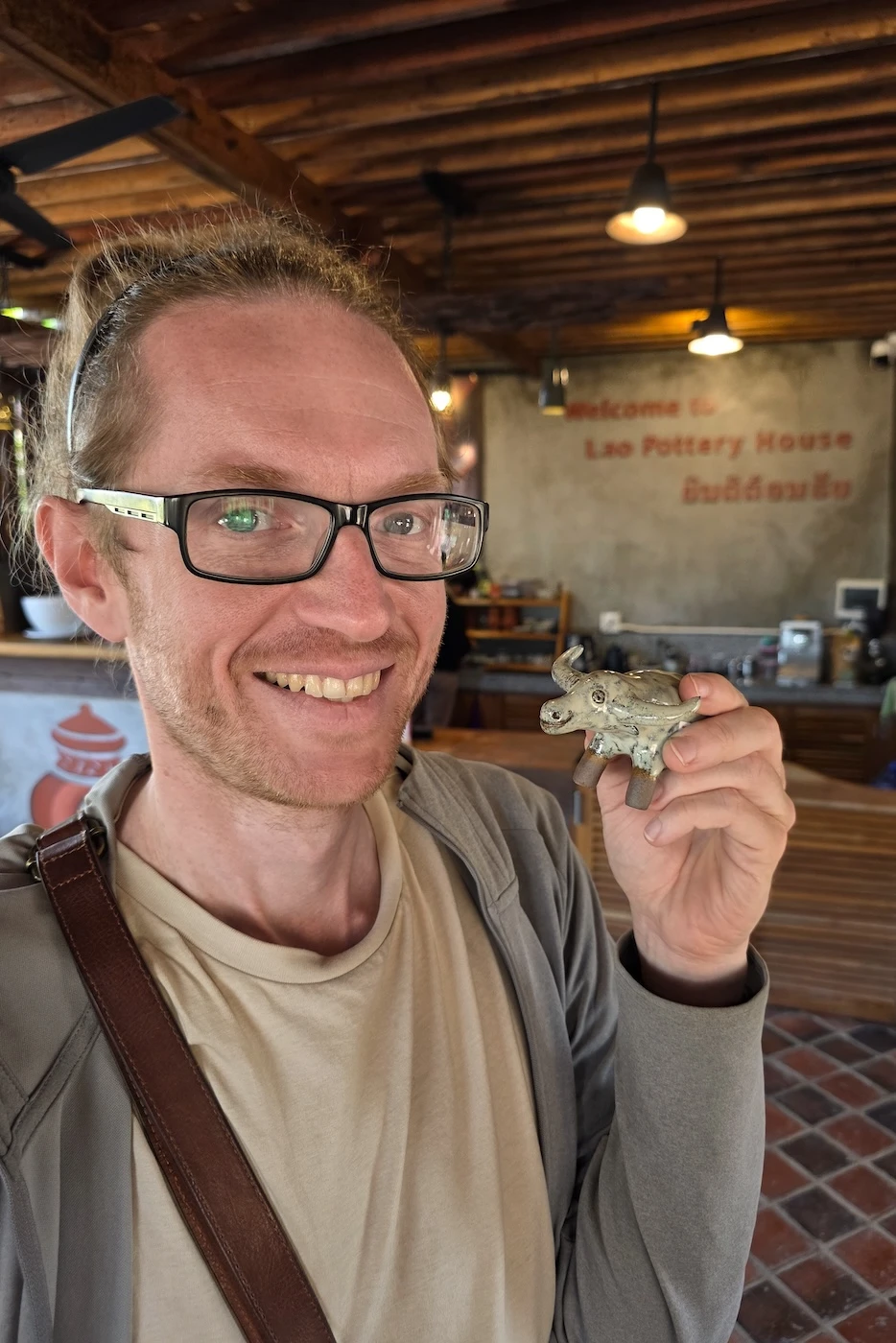
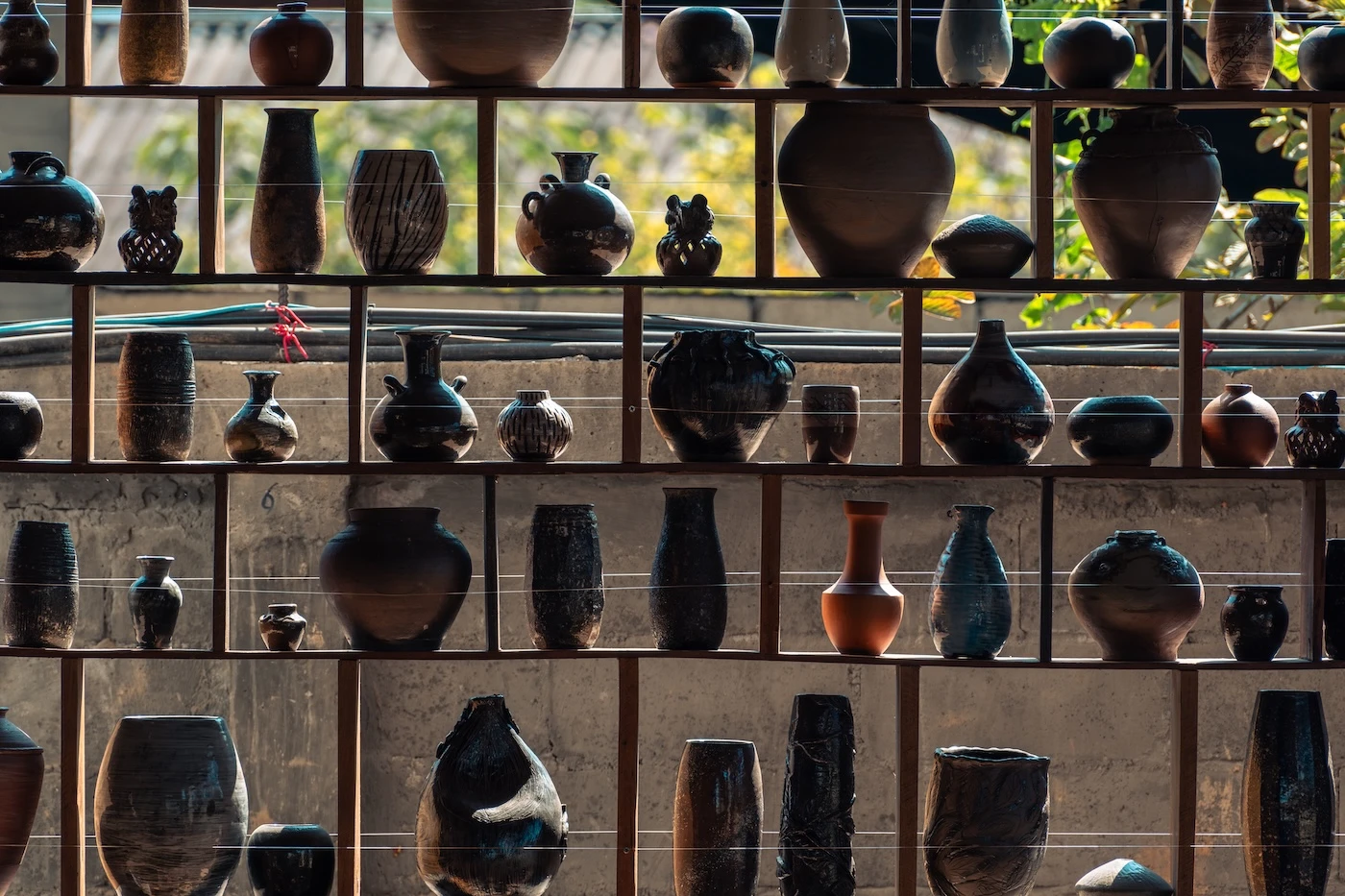
Alternatively (or as well!), you can rent a scooter and head over to the Lao Pottery House, which is around three-kilometre journey south west. It’s a lovely stop, even if you just pop in for a coffee or tea, plus there are classes and educational exhibits. It’s really rural and so peaceful compared with central Luang Prabang (I don’t think any tour groups come here yet!). They have loads of insanely good-value souvenirs for sale, too, so now I have a ceramic buffalo on my shelf.
14. See the Confluence and Bamboo Bridges
Luang Prabang is flanked by two mighty rivers – the Mekong and its less well-known tributary, the Nam Khan. Both add to the ambiance of the city, but the Nam Khan is just extra layers of special in my opinion. Its beauty is absolutely magical.
The confluence of the two rivers occurs at the end of the peninsula containing the historic quarter. It’s an epic sight – the combining of the brownish-muddy Mekong with the clear, dark blue of the Nam Khan. To access the opposite bank for the best views, there are several physics-defying bamboo bridges that cross the Nam Khan.
Constructed entirely from rope and bamboo, the bridges are actually rebuilt every year after the rainy season (they are deconstructed between May and November for safety). Now, they are even built with lights on (this is new compared with our first visit). These bamboo bridges are only designed for footsteps, not wheels, which means they are quite narrow and tranquil.
To cross the bridges, there’s a small charge of 10-18,000 kip per person (you can cross and come back for that fee).
It is also possible to view the confluence from the restaurants on the bank. Viewpoint Café has the best views – we ate here a few years ago and it had excellent food at slightly inflated prices (as expected with magical vistas).
If you want to ride a scooter around to the opposite bank, you’ll have to ride over Luang Prabang’s old, 1920s French Bridge, designed for scooters and pedestrians only. For some reason, I found this bridge terrifying, every time we either rode a motorbike or walked across (and promised myself each time I’d never do it again).
The confluence has lovely views of the sunset, with far fewer tourists than on Mount Phousi.
Location: central Luang Prabang
Time of Day: n/a
Strenuous: 3/10
Cost: 10-18,000 kip
Priority: medium
◊

A Three-Day Luang Prabang Itinerary
Below is a way to combine the activities detailed above into a nice, moderately busy, three-day itinerary around Luang Prabang.
I’ve not included breakfast recommendations because every hotel I stayed at includes it within the room rate (it’s pretty standard in Laos). However, Joma Bakery does great bready/cakey options, and the morning market has tonnes of amazing budget breakfast finds if you need something.
Also, hit up the bowling alley for gone-midnight activities (it’s open until 2am daily).
We’ve listed some restaurant suggestions on this itinerary which are detailed further down.
This itinerary is best suited to riding a scooter, just because getting around is faster – but obviously it’s all entirely walkable or cycle-able, too, or you can grab a taxi or two.
⬩ Morning:
– Traditional Arts and Ethnology Centre
– Heuan Chan Heritage House
– National Museum
Lunch: Le Banneton Café & French Bakery
⬩ Afternoon:
– Wat Xieng Thong (and any other wats you see on your walk)
– Take a chill wander around the old town architecture
⬩ Evening:
– Dinner: Home in Baan
– Evening Night Market
– Optional: morning market if you’re around early enough
⬩ Morning:
– Kuang Si falls first thing to arrive at 8am
⬩ Afternoon:
– Pak Ou Caves
– Lunch: anywhere you fancy on our restaurant list below (if you do a full day tour to include both the above places, a stop for lunch should be included).
– (Alternative to the Pak Ou Caves: cooking class at Tamarind from 4pm-8.30pm)
⬩ Evening:
– Dinner: Tamarind
– Evening vibes: Jungala (or you could have a casual hang out here in the afternoon)
– Optional: walk up Mount Phousi (if you’re desperate to see a sunset here)
⬩ Morning:
– Sunrise on Mount Phousi
– the morning market (if you missed it on the previous days)
– Ok Tok Pok
– UXO Center
– Lunch at Two Birds Café or The Happy Cat
⬩ Afternoon:
– Option 1: rent a scooter and take the ferry across to the other side of the river for the Lao Pottery House and to explore Wat Champhet
– Option 2: Bamboo bridges (if they are there), explore the confluence area (easier with a scooter), visit any wats or museums that you’ve missed. Get a massage (not my kind of thing but it’s well rated).
⬩ Late afternoon:
– Sunset Cruise
⬩ Evening:
– Dinner at Papolo (because it’s okay to eat incredible pizza anywhere in the world)
About Alms Giving in Luang Prabang
We haven’t (and wouldn’t) ever take part in alms giving (tak bat or binthabat) in Luang Prabang.
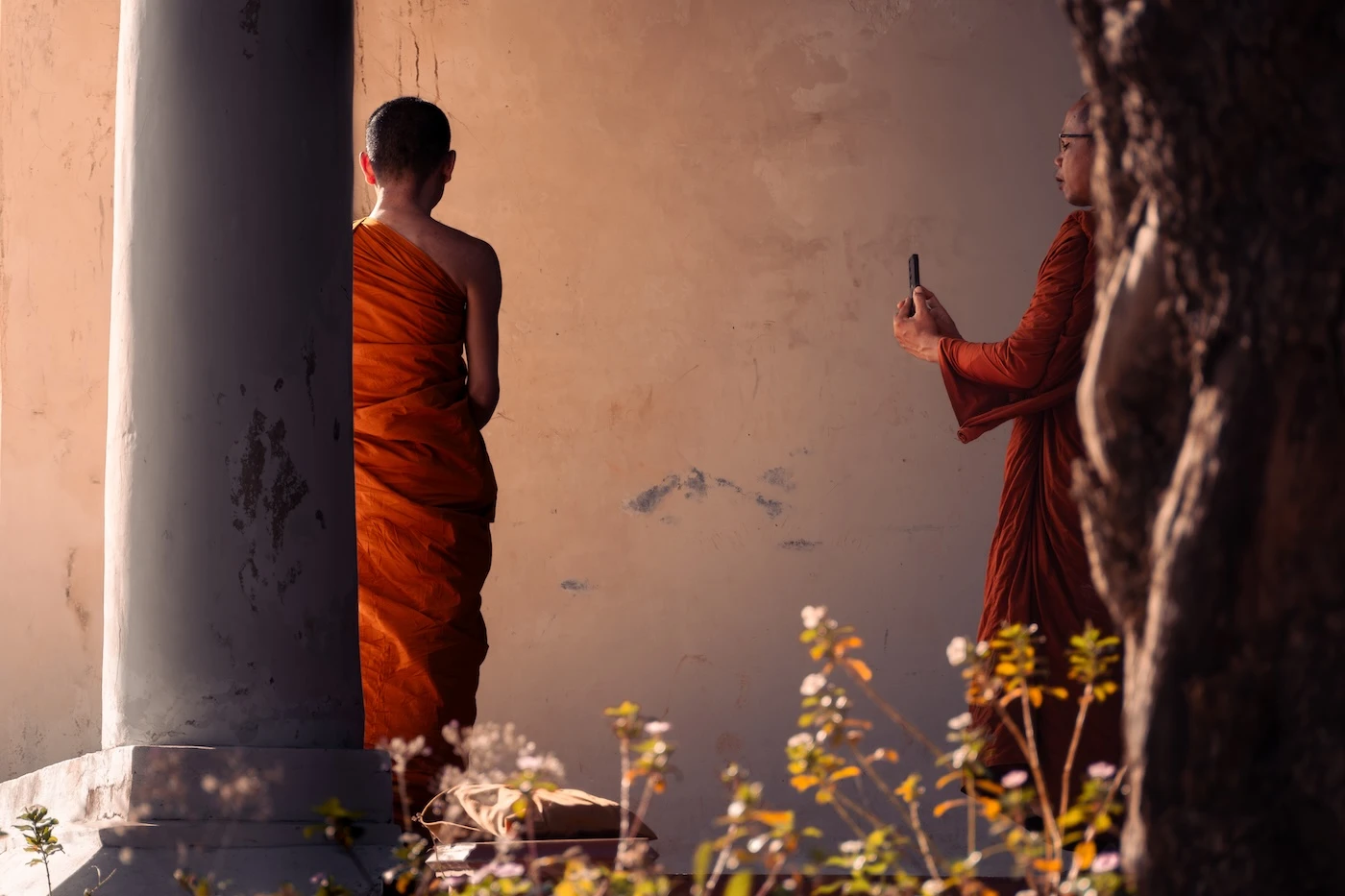
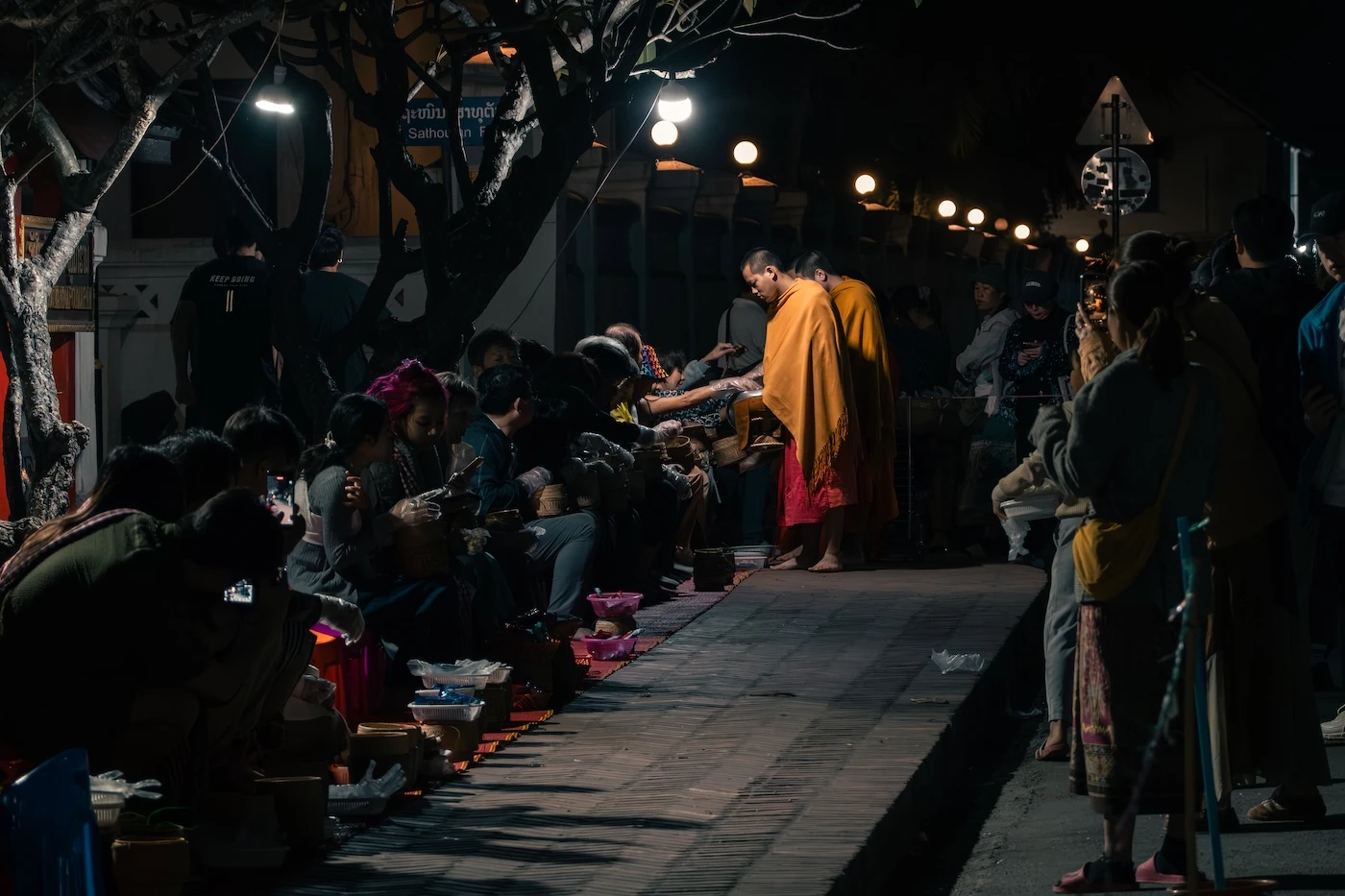
It’s become a really fashionable activity to give monks ‘alms’ early in the morning along the main streets of Luang Prabang. A traditionally silent, sacred ceremony has developed into a crazy spectacle.
Before I even investigated it further, I felt uneasy about the idea of joining in with an important religious ceremony for novelty’s sake. It felt, in some sense, intrusive – I don’t belong at a ceremony that has been performed for generations, just to gawk. I would certainly never join in, essentially just for fun.
I got up early one day and, before going to the morning market, walked along the main street, Sisavangvong Road. Honestly it was mental how invasive the tourist throngs were there: blocking the monks’ route, climbing over the barriers (that shouldn’t need to be there in the first place), and just being really super weird the whole time. I don’t really get it.
Over the past seven years I’ve been visiting Laos, this behaviour and the size of the crowds has just escalated to ridiculous levels (it’s definitely been made more extreme by the train from China bringing in far more tourists).
It’s up to you if you want to join in, and obviously this advice doesn’t apply to practicing Buddhists but, for me, it’s a big no-no.
ELEPHANT CAMPS IN LUANG PRABANG
There are a few elephant camps around Luang Prabang. Sadly, they’re pretty much all sketchy and unethical.
Luang Prabang Elephant Camp and Manifa Elephant Camp and Resort are definitely places to avoid in Luang Prabang. The former is on the way to Kuang Si Falls, and the latter is on the way to Pak Ou Caves.
Both are basically circuses that use elephants for tourist entertainment. I’d implore you to read reviews, learn about elephant welfare and really spend some time understanding what behaviours and actions are detrimental for elephants before visiting.
For a quick overview of elephant welfare, check out our post on the elephants in Koh Chang, Thailand.
From my research, the only ethical sanctuary in Laos is the Elephant Conservation Center, around 110 kilometres south-west of Luang Prabang. They have 34 elephants that live in a huge, protected area, with no riding, feeding or bathing.
Check out World Animal Protection’s summary for more information on ethical elephant encounters.
–
The Luang Prabang Curfew and Nightlife
Believe it or not, old town Luang Prabang actually has a curfew. This means that everything shuts down around 11 and people go to bed.
However, if you’re well into partying into the wee hours, the place to go is, weirdly enough, the bowling alley! It’s open until late (around 2am) and it’s where most backpackers will go for a ‘night out’.
It’s located a bit outside of Luang Prabang’s historic centre, and is called ‘Luang Prabang Bowling Alley’ on Google Maps, but taxis all know the way late at night. It’s pretty surreal (and the road down to it is dark and creepy at night – but the actual bowling alley isn’t!).
There’s archery there too, if that’s a smart, drunken late-night choice for you!
HOTELS FOR THIS LUANG PRABANG ITINERARY
The old quarter of Luang Prabang is visually captivating. Noticeably French colonial architecture, with wooden window shutters and white-washed walls, is found everywhere. We’ve spent closing on two months in the city, staying in a huge range of accommodations, all within, or nearby the historic district.
The region around Kingkitsalat Road and bordering Wat Wisunarat, behind Mount Phousi, is popular and often a little cheaper, but still local to everything you’d need. Also, along the Nam Khan towards the French Bridge are some stunning hotels with lovely river views!
These are hotels we have personally stayed in (and recommend):
La Casa Hostel ($): smashing little newish hostel with lovely private rooms and dorms. Surprisingly comfy beds, breakfast included and family dinners. What’s not to love? Oh, exceptional price-to-quality ratio, too.
Thatsaphone Hotel ($): small hotel with large rooms, central location in the historic district but really quiet, great aircon, refillable water tank. Friendly and family-run.
Villa Mahasok ($$): resort type vibes on a budget. Great if you want a nice pool without a huge price tag in a central location. Buffet Breakfast was decent, too.
Museum Inn Luang Prabang ($$): our favourite place on this list. Lovely fresh-cooked breakfast, incredibly functional rooms, super-friendly family, amazing range of TV channels! It books out fast – try and get the deluxe double.
Houngvilai ($$$): larger hotel, beautiful, dark-wood rooms, with probably the best location on this list (although very loud during events, like new year). Incredible buffet breakfast. Staff were less helpful in helping us sort out a bus. Stunning hotel overall, though.
Sunrise Hotel Luang Prabang Mekong River ($$$): I stayed here for an extended period with dengue fever! They were really flexible with how long we needed to stay. The rooms are decent, clean, well-furnished, and the pool is lovely. Breakfast buffet was reasonable.
Sofitel Luang Prabang ($$$$): every now and again, you treat yourself (or you have points to burn, like us). This was one of those days – it’s exquisite. Definitely one of the best hotels in Luang Prabang, no doubt.

14 Restaurants We Recommend in Luang Prabang
There are countless decent restaurants in Luang Prabang – the city is actually a bit low-key cosmopolitan with its food options! We’ve eaten in absolutely tonnes of places in the city – these are our memorable, favourite spots (that we’ve mostly been to more than once):
Lost in Baan: by far my favourite food experience in Luang Prabang. This spot is upscale and contemporary, with a super innovative, vegan-friendly menu, smashing cocktails and just all the vibes. Check out the bathroom, too – you won’t be sorry!
Popolo Restaurant: best pizza in Luang Prabang, without a doubt (seriously: I’ve tried most of them by now, I’ve made it my entire personality). It’s also such a cute, comfortable restaurant and the staff were really lovely.
Jungala Lounge Bar: this used to be called Utopia (and has re-opened with a new name) and was a super popular spot for hanging out in the evenings. We spent a new year here and it’s got all the riverfront-beanbag-backpacker vibes you could ever wish for.
Yuni Yupoun: we had a really cool Christmas dinner here. It’s got an international menu and decent drinks offers.
The Happy Cat: this spot did one of the best smoothies I’ve ever had, plus have an entirely veggie menu. It’s also hilarious: ‘fried rice against the machine‘, anyone? Also, they don’t allow people to sit and speak on their phones with loud speaker, which is just smashing.
Café Sinouk: lovely fruit smoothies.
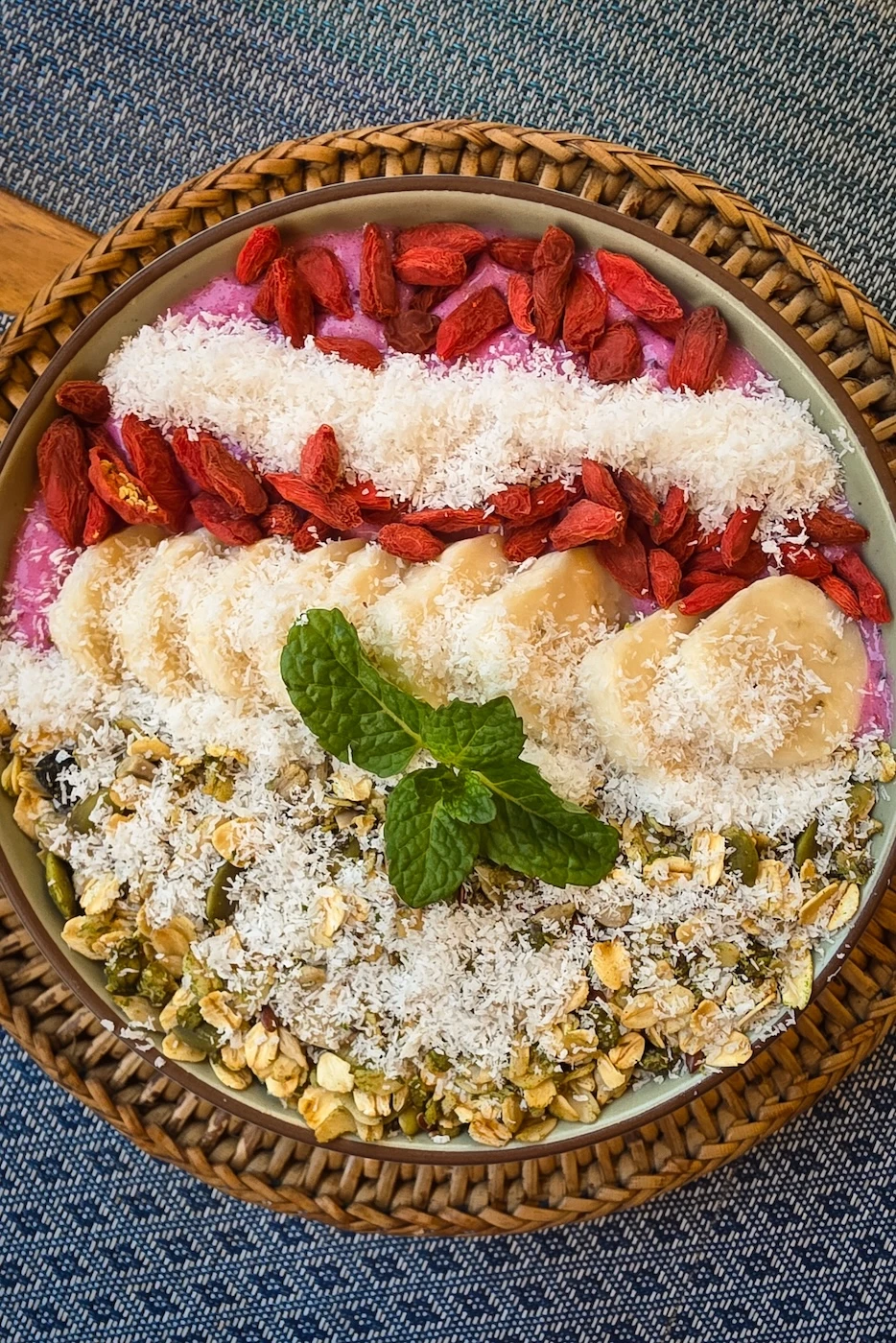
Two Little Birds Café: we practically lived in this café at lunch times. It’s a vegan-friendly little place with tonnes of options. The smoothie bowls are incredible. The only thing I’d avoid is the slightly lacklustre avo toast.
Tamarind: authentic Laotian cuisine with Nam Khan views (and cooking classes).
Timeless Café: this place served crazy-good, huge baguettes with a variety of fillings (and excellent value, too). Their apple Danish things made my day, too – get one before they sell out.
Atsalin Restaurant: super budget, affordable local food. Absolutely no frills, but decent.
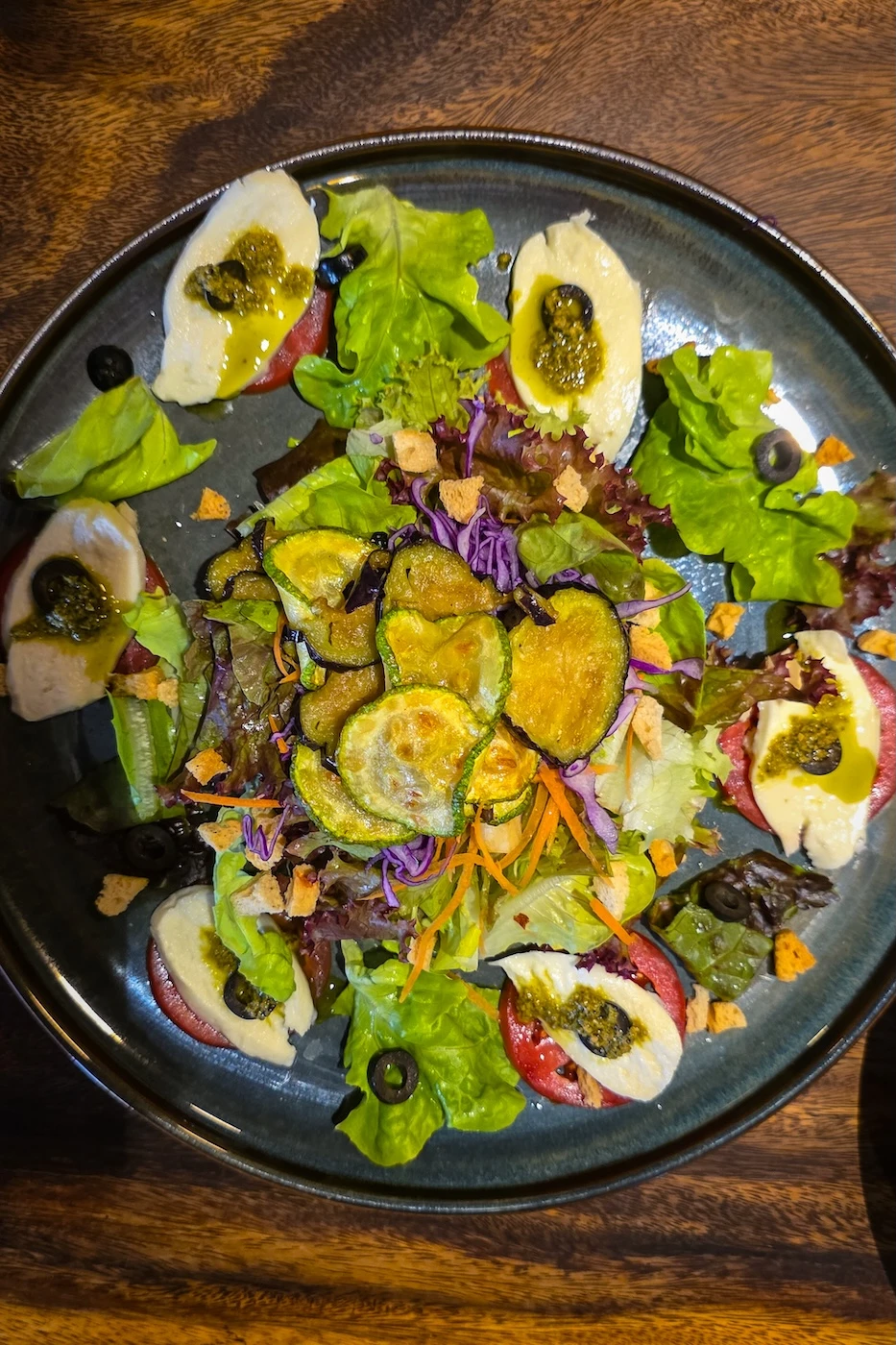
Joma Bakery Café: upmarket bakery that everybody loves in Luang Prabang. It’s always full of westerners getting their French bakery fix. Unfortunately, it has those Western prices, too. I personally prefer Le Banneton Café & French Bakery (they have a beautiful menu, lovely vibes, and beautiful salads.).
Maolin Tavern: we often end up in this bar for its decent variety of craft beers, central location, and dive bar vibes.
La Silapa Italian Kitchen: second best pizza we had in Luang Prabang (when you need that emergency pizza-fix).
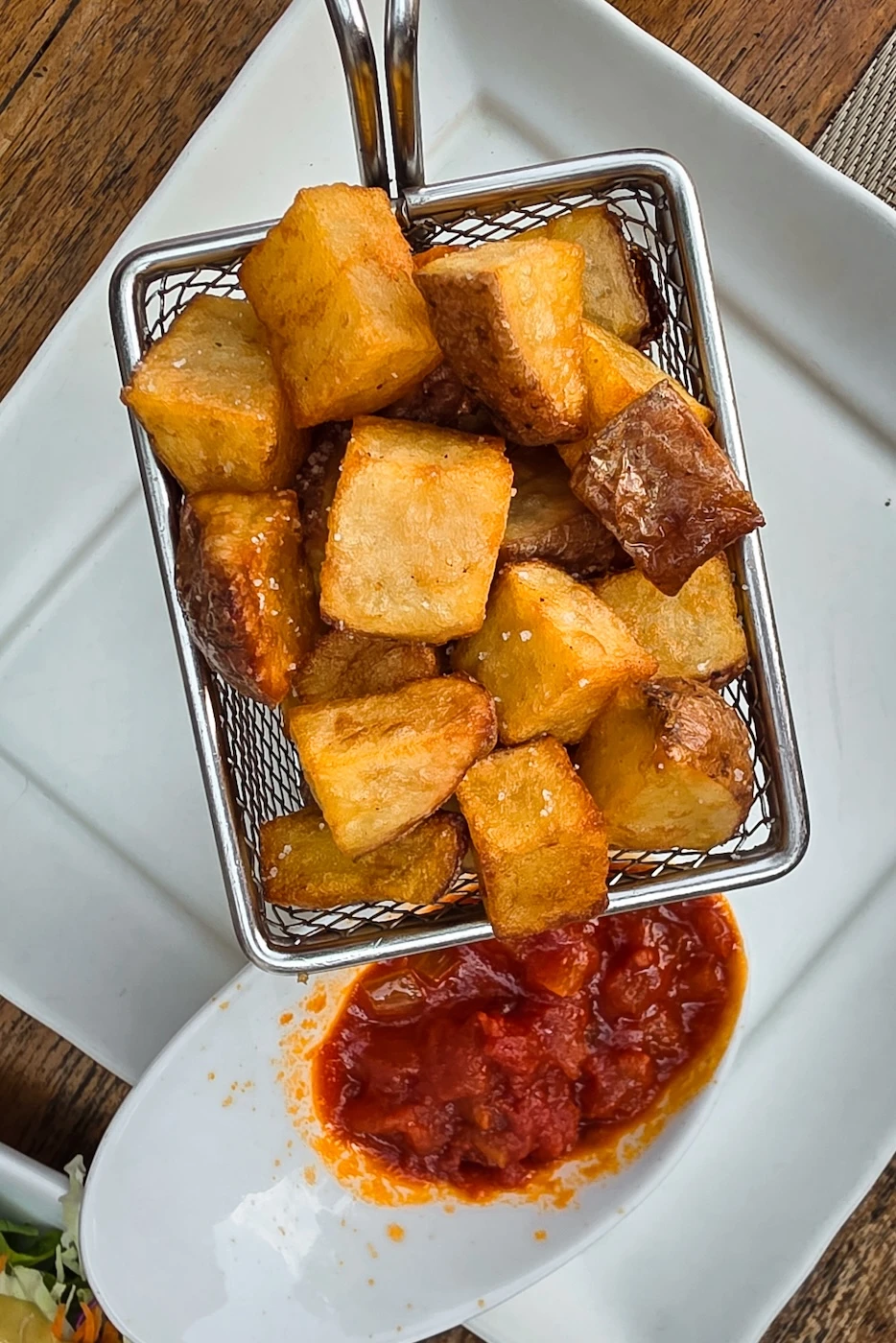
La Cantina: actually decent Latin food. I did not expect it, to be honest, but it was a lovely change from everything else I’d been eating. Plus it’s vibes in there at night and a cute place to sit outside and have a beer during the day.


Tours Around Luang Prabang
If you are visiting Luang Prabang on a time-sensitive schedule or just like to have things organised in advance, consider booking any tours through Get Your Guide (and transport through 12GoAsia). We like it because you can read reviews before deciding and have a bit more of an idea what your day will look like (booking locally can be a bit more hit and miss).
There are ‘combo tours’ that mean you can see all sorts in one day, plus have a guaranteed departure time and date.

Luang Prabang Itinerary: Map
Below is a saveable Google Map of everything mentioned in this Luang Prabang post, including hotels, restaurants, attractions and transport hubs.
⬩ To save the map to your Google Maps, click on the star icon by the title.
⬩ Select the screen icon in the top left to show or hide the breakdown of sections for this Luang Prabang itinerary.
⬩ Click on a tick box to hide/show a section.
A Few Frequently Asked Questions
Are there ATMs in Luang Prabang?
Yes, there are loads of ATMs around Luang Prabang, including a bunch at the airport. Some people have reported that they run out of cash, but we’ve never experienced that.
What is the visa situation for Laos?
Visas are required for Laos – you can either apply online or get them on arrival.
They cost $50 for a one-month duration, so bring clean USD bills.
Is Luang Prabang or Vientiane better for a short trip?
Luang Prabang is generally the better option for a short trip to Laos, however Vientiane is an underrated spot, in my opinion! Luang Prabang is certainly more scenic, compact and easy to get around, plus has far more to do (although the local food markets in Vientiane are incredible). Luang Prabang is a UNESCO site for a reason!
Is Luang Prabang a safe, walkable destination?
Yes, it is safe and easy to walk around Luang Prabang. The area is mostly flat, has footpaths, lit streets and there is minimal petty crime (although bag-snatching has been known to happen – but not in my experience).
The only thing I’d recommend is watching out for the traffic, and especially motorbikes without lights at night!
How long should I spend in Luang Prabang?
Well, I wrote this itinerary based on three days, which is what most people spend in Luang Prabang. It’s enough to cover all the interesting spots, but doesn’t leave masses of time to chill out.
So I’d actually recommend 4-5 days unless you’re really into rushing around and don’t want to sit with a drink and savour things for a while.
HAVE WE HELPED YOU PLAN YOUR Laos TRIP?
If you’ve found our free content helpful, consider booking your rental car (if you need one!), through the company we always use – Discover Cars. They’re the absolute best and have been our rental companion (and saviour, thanks to their insurance) in many destinations across the world.
Also, consider securing you accommodation through Booking.com – we use them exclusively when travelling in southeast Asia.
Alternatively, leave us a tip to say thank you.
Help like this makes it easier to pay for the upkeep of this site and ensures our small business survives the onslaught of AI!
Thanks for reading.
–
Where to Next?
Luang Prabang entirely deserves its UNESCO designation. The city oozes charm and sophistication and retains an air of historical significance that is difficult to describe to anyone who hasn’t visited. It’s easily one of the most beautiful cities in the world, too, and exudes an element of tranquillity despite being a major city.
I’d even go as far as to say that it’s quite a liveable place and somewhere I can picture staying for many months (we’ve spent about two months there so far now).
We hope this Luang Prabang guide helps you plan your trip and provides some value. Have an amazing trip in one of our favourite places!
Hi, thanks for visiting our blog! If this post has been of help to you, or you’ve just enjoyed our random ramblings and musings, say thank you by buying us a coffee! It helps keep The Restless Beans blog up and running.
Thank you, Claire + Nick




The only place I went to in Laos was Donsao Island on a day trip from Northern Thailand. Luang Prabang looks like an interesting city. I would love to visit the Kuang Si waterfalls
Oh I’ve never been there! Kuang Si Falls are crazy beautiful – fully recommend!
Thanks for the recommendation! I’ll have to go