

· SOUTHEAST ASIA · THAILAND · PHOTOGRAPHY ·
Photographing Ayutthaya: a Practical Guide to Light, Temples, and Timings
Scribbled by Claire ⬩ 30 Apr 2026
Are you visiting Ayutthaya and want to take the best photos possible? Find out all the best temples, times of day, angles, and tips to make the most of your photography trip!
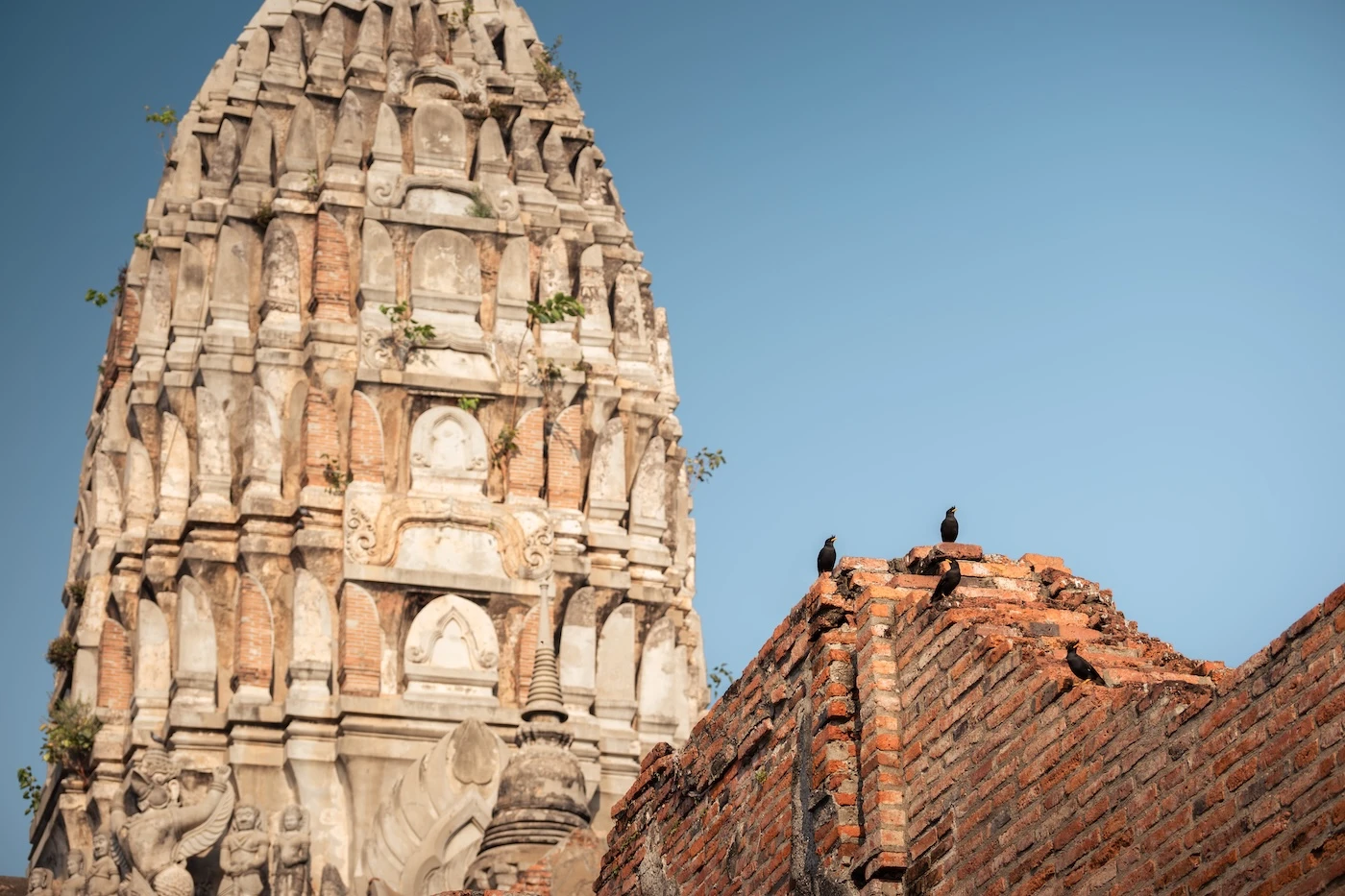
I’ve been to Ayutthaya four times now and, each time, I’ve taken photos hoping they’d be better than the last set.
However, I’m not sure I always managed it.
It’s the light, you see. If you want beautiful photos of these temples, it’s all about the light. That’s it. Angles, layers, timing and all that stuff, it’s negotiable.
You need the late afternoon light to be perfect. It’s the only way to achieve that atmospheric feel in your pictures.
I learnt this the hard way – my most recent trip was just so dodgy, light-wise (plus my early morning game was non-existent).
So, I’ve put some photos below, written about when and where they were taken, what quirky, pretty places there are to visit outside of the main temple complex, and generally just rambled on about pointless stuff.
I know the title says ‘practical guide’, but really it’s more of a meandering, visual wandering. I hope some small part of it is helpful!
IN THIS GUIDE //
Happy-Snapping in Ayutthaya
Mornings
– Locations
The Misery of Midday Light
– Black and White
Late Afternoon and Sunset
The Most Photogenic Temples
– Wat Phra Si Sanphet
– Wat Chaiwatthanaram
– Wat Phra Ram
– Wat Mahathat
– Wat Ratchaburana
Lesser-visited Locations
– Wat Phutthaisawan/St Joseph’s Catholic Church
– Wat Yai Chai Mongkol Worawihan
– Bang Pa-In Palace
– Wat Maheyong and Wat Kudi Dao
– Ayutthaya’s Royal Temples
Photography Tips
Where to Next?
This post may contain affiliate links. If you book through these links we may make a small commission at zero cost to you. It helps us pay for the upkeep of this blog. Thank you!
SunrISE & Sunset Timings
Sunrise winter: 6:30am
Sunset winter: 6:00pm
–
Sunrise summer: 5:45am
Sunset summer: 6:40pm
–
Mornings
Mornings in Ayutthaya aren’t great for light.
No matter the time of year, I’ve always found later afternoon, into evening, to be the only time that really shines in Ayutthaya Historical Park for photography. Generally, this is after 4.30pm.
I’m not an expert, and I’m certainly not a morning person. However, I can tell you that every time I scraped myself out of bed at sunrise in Ayutthaya (more times than I’d like) it’s been a bit of a let down. I mean, the roads and parks are empty and it’s peaceful, so that’s genuinely wonderful, but the light? It’s just not that great.
The mornings feel very washed out with this weird, white diffused light. As a result, I end up taking hardly any photos.
Locations
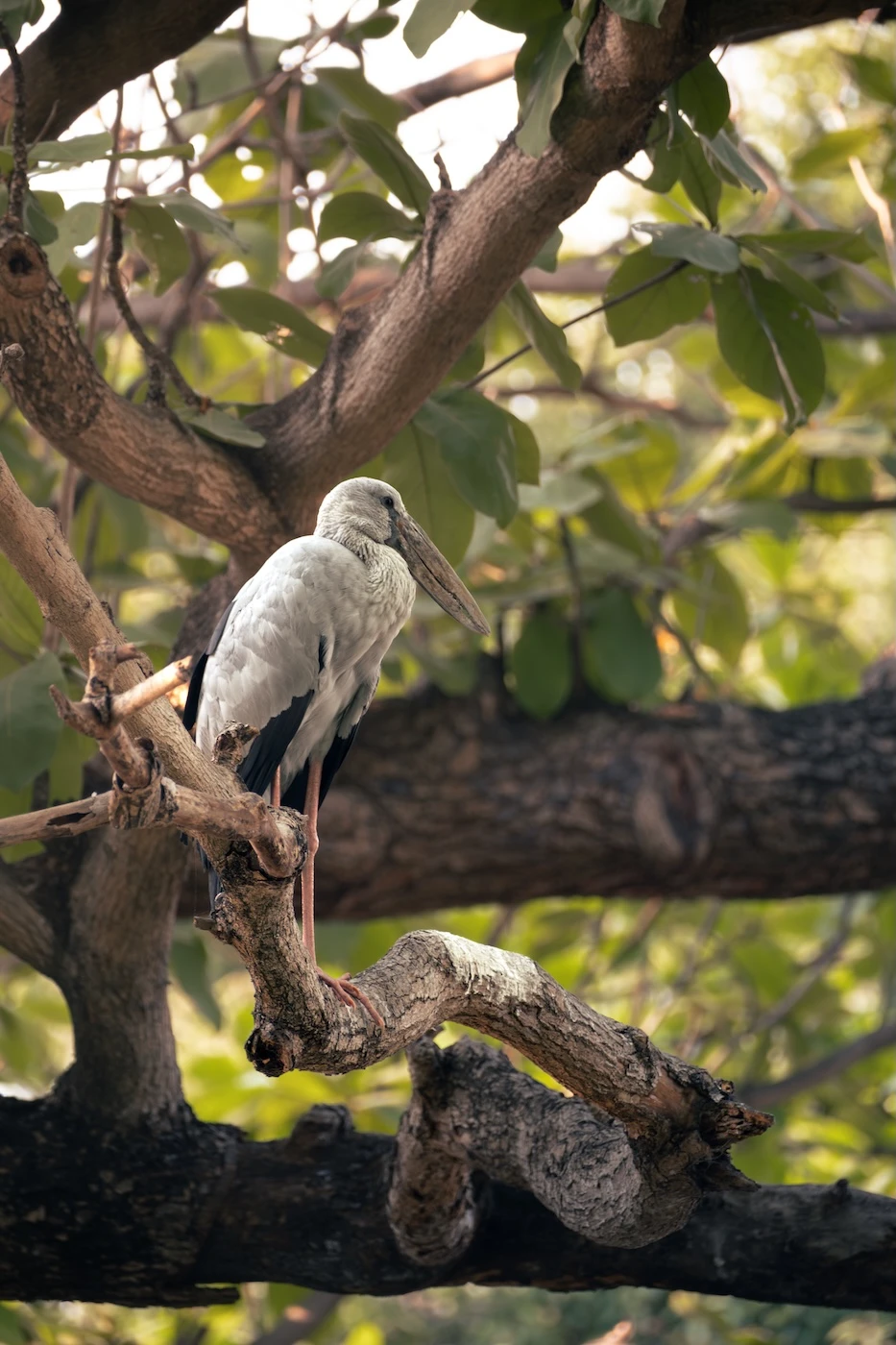
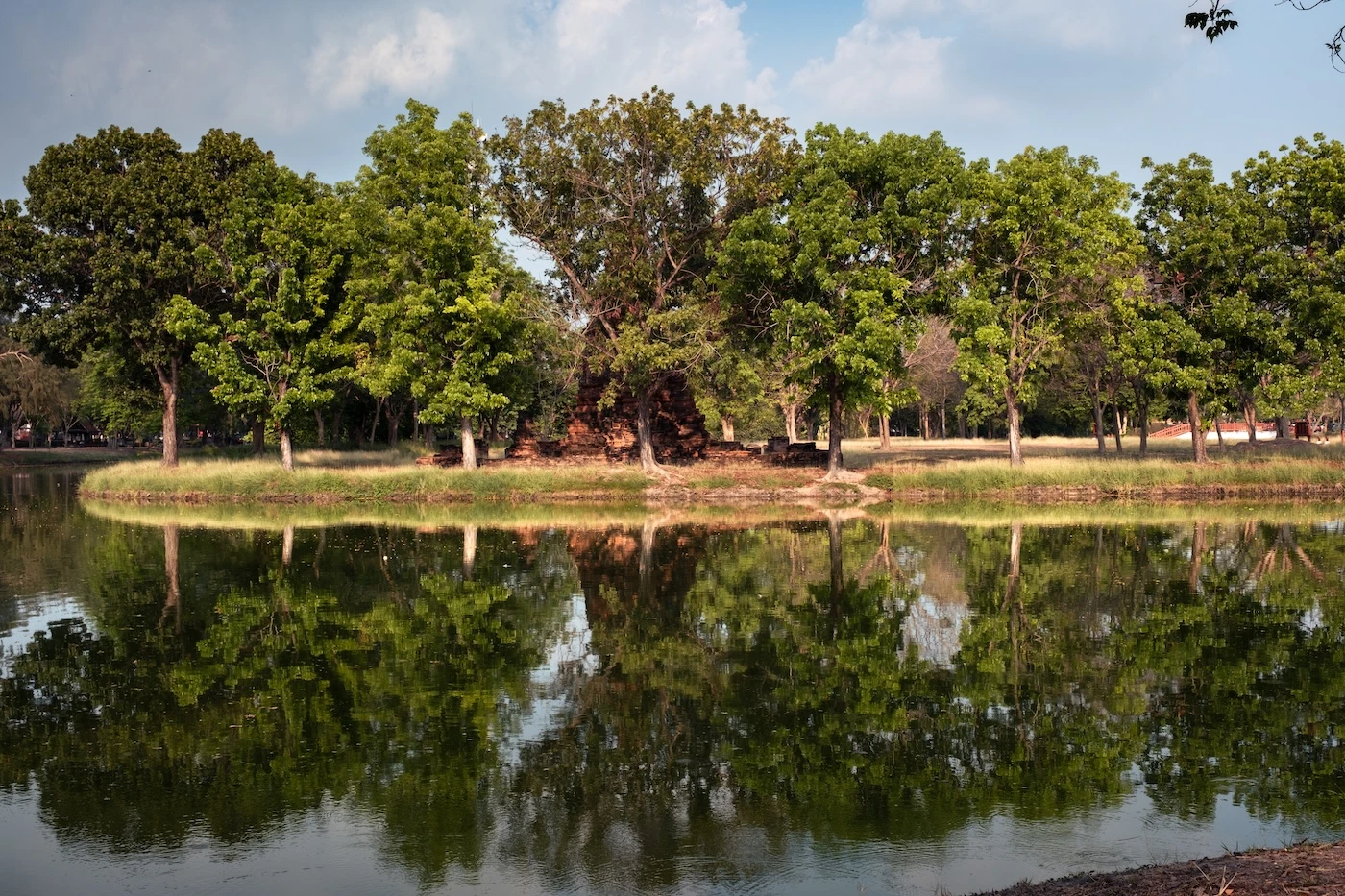
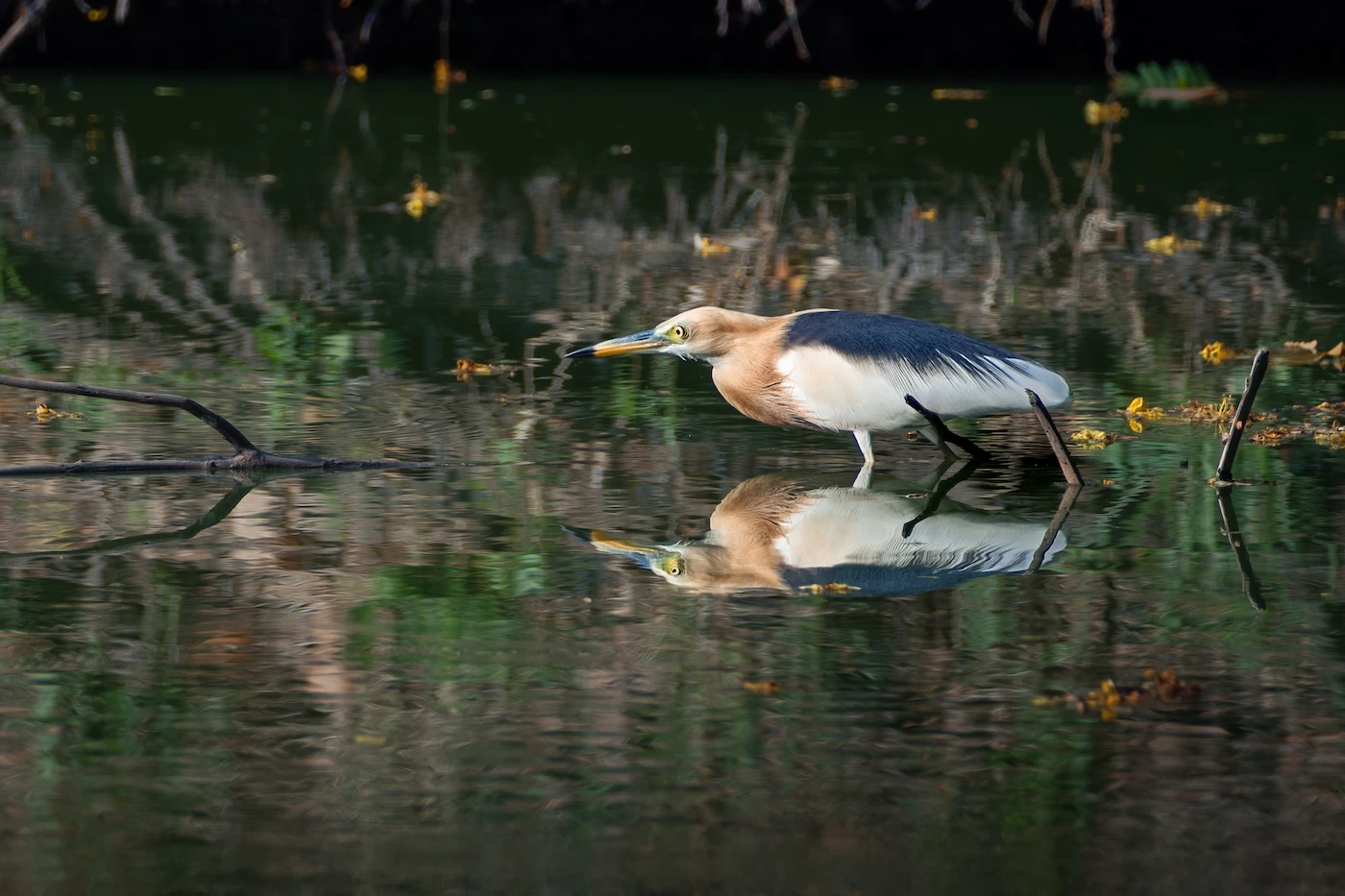
Bueng Phra Ram Park is a lovely walk before the temples open and, if you get lucky, the lake waters will be still for you to take some excellent reflections. (Use a longer exposure to smooth it out – I can never be bothered). It’s also really easy to spot birds at that time of day.
On my first trip, years ago now, I found the most beautiful location first thing in the morning where the prang of Wat Phra Ram was perfectly framed by trees and reflected on the lake. I’ve looked for that same angle since, and it’s never been quite right since the trees have grown too much (but we should never complain about the wondrousness of trees, should we?).
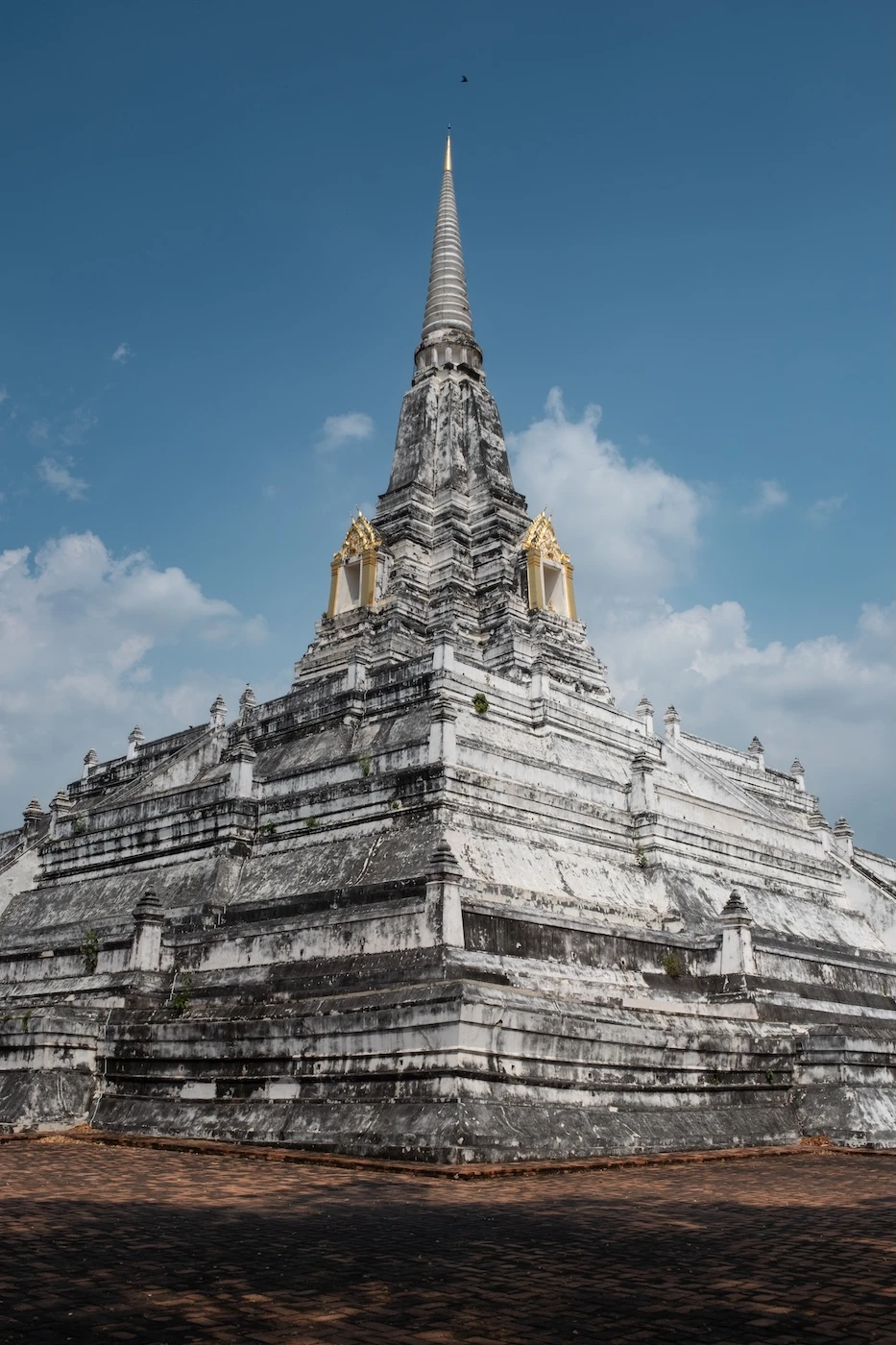
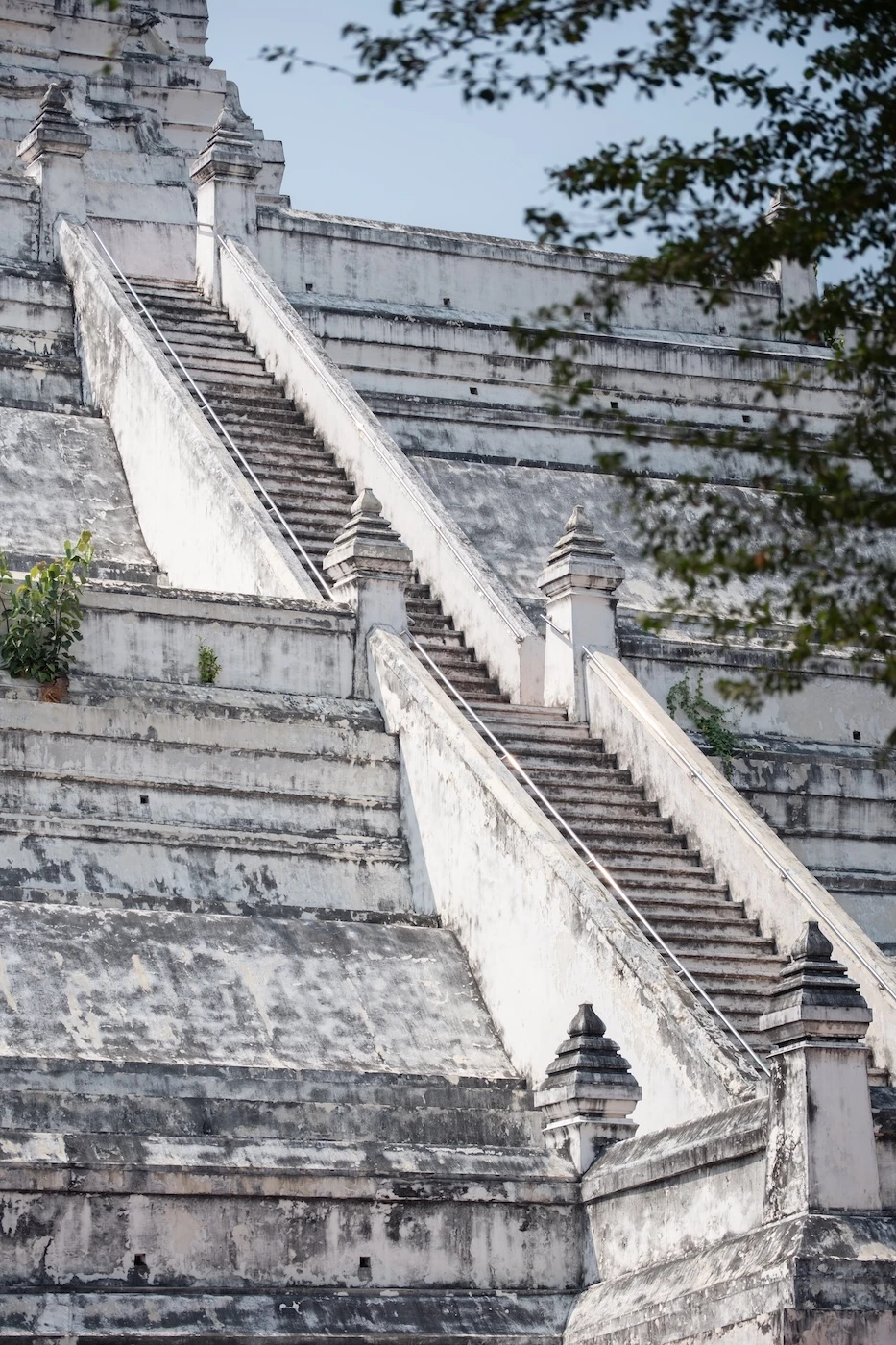
Another great spot in the morning is Wat Phu Khao Thong, also called the Golden Mount, which is a massive white (not gold, weirdly) chedi about ten minutes outside the old town that you can climb up. It’s open from 8am, a bit past sunrise, but not by that much. Plus, you’ll almost certainly be the only one there! It shuts at 5pm so isn’t great for sunset. I visited in the mid-afternoon so don’t really have any particularly special photos of it.
Camera Gear
We use Fujifilm XT-5 cameras usually with XT 16-55mm f/2.8 and 70-300mm f/4-5.6 lenses.
They’re lovely cameras for travel because they’re compact even with an enormous zoom and, although they are not full frame, it’s very rare that I’ve ever wished for more than I have.
If you’re looking to get a decent camera specifically for travel, we’d recommend them.
–
The Misery of Midday Light
There’s no escaping that dodgy midday light in Ayutthaya. It’s just really, really bad.
This location doesn’t provide any forgiveness.
Unrelated to photography, but there are several museums that are worth visiting during the midday heat and bad light. We’d recommend the Chao Sam Phraya Museum which has really lovely displays, and the Million Toy Museum (it’s quirky!).
For me, the best midday option is to look for black and white photography options since sometimes you can use the extra glare to your advantage. I generally hide inside though because I’m British and not build for that kind of intense sun and heat (even though I live in Bangkok).
Black and White
When any scene seems a bit bland, either because of the light or a general lack of enthusiasm, I tend to switch to my ‘black and white mind’ which helps me feel a bit better about everything.
I don’t think Ayutthaya is particularly well-suited to monochrome pictures in general (too many trees and textures), but I found it fun to play around a bit.


FIRST TIME VISITOR TO THAILAND?
If this is your first ever trip to Thailand, have a look at our monster-guide to visiting this beautiful country, which includes tips on money, food, transport, logistics, culture and more.
Also, if you’re landing in Bangkok, consider having a look at our overly ambitious one-day Bangkok itinerary (we live here, so we know it well).
Or check out our massive Thai island rundown – to help you choose your ideal one.
–
RELATED POST | A SOUTHERN THAILAND ITINERARY
Late Afternoon and Sunset
Now, sunset is the best time to be in Ayutthaya, without a doubt.
I don’t have the best photographs around sunset because I am impatient and a bad planner, but it’s definitely the optimal time for some atmospheric pictures.
This is a strong reason for staying overnight instead of visiting for the day and also a good reason to rent a car to get around (you’ll have so much flexibility).
The most popular spot for sunset is the riverside Wat Chaiwatthanaram, which is a large site that loads of photographers use for their costume and modelling photoshoots. It’s a really great place for photography because there are so many angles. Personally, I prefer Wat Phra Si Sanphet, though. It has always been entirely empty every time I’ve visited, after around 5.30pm, and is magnificent for sunset snaps.
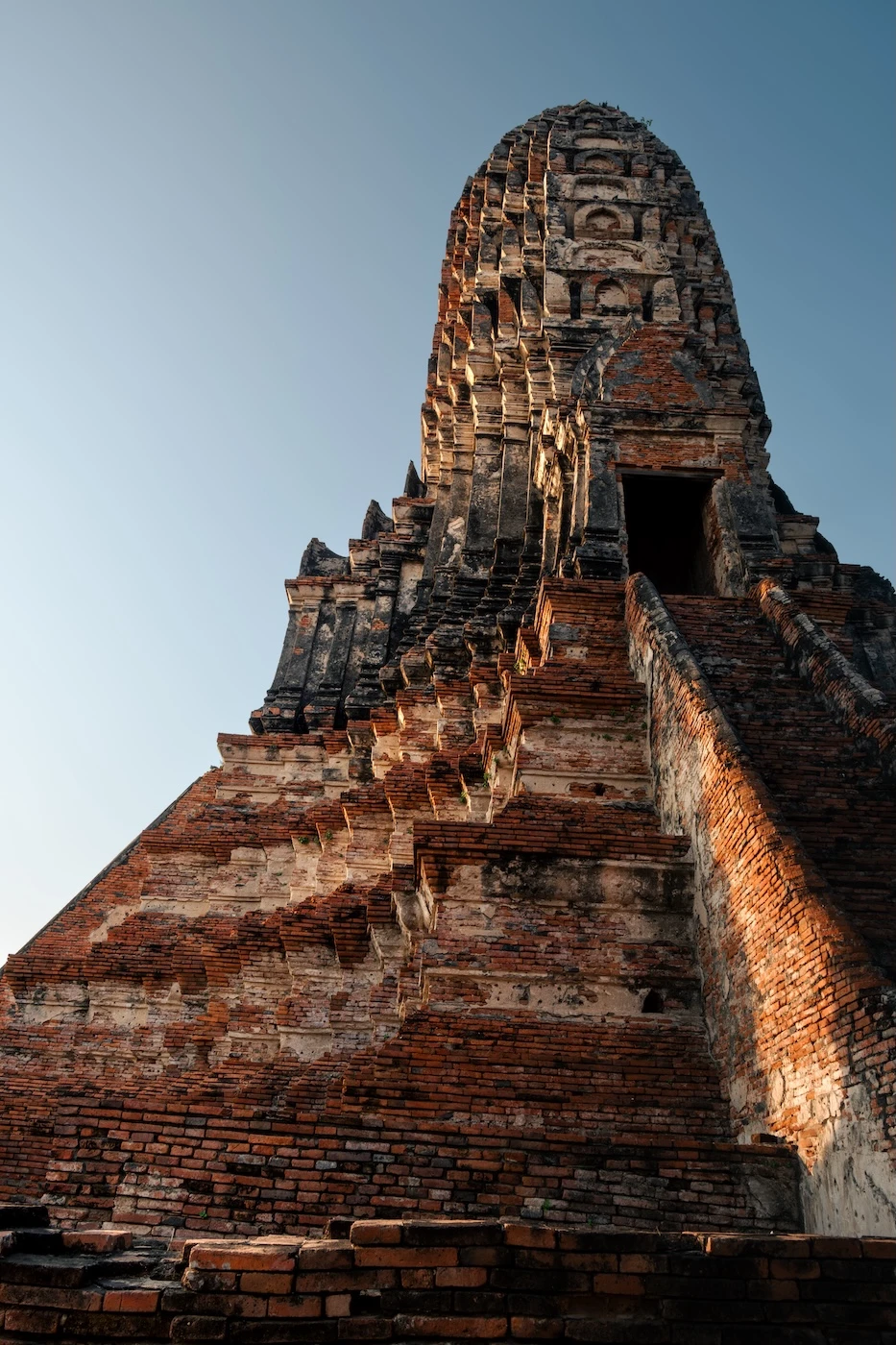
There are photos all throughout this post of Wat Chaiwatthanaram, most of which are taken at 5pm-ish.


The Most Photogenic Temples
Every temple in the actual Ayutthaya Historical Park is lovely when the light is right, but below are our favourite five locations (in no particular order).
Entry fee for each: 80 baht (or 300 baht for a two-day all-site ticket)
1. Wat Phra Si Sanphet
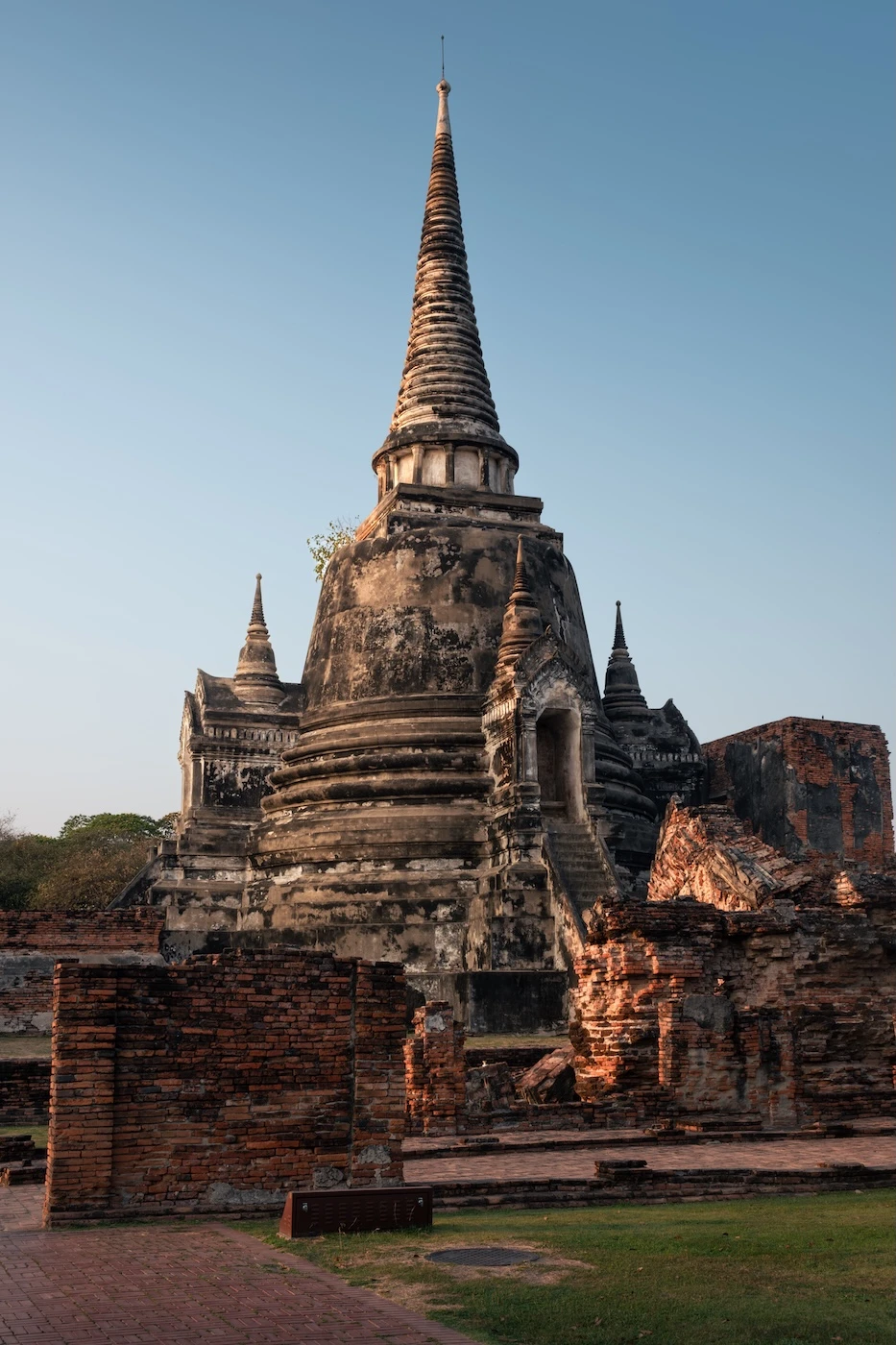
This temple site is simply magic and, by far, my favourite.
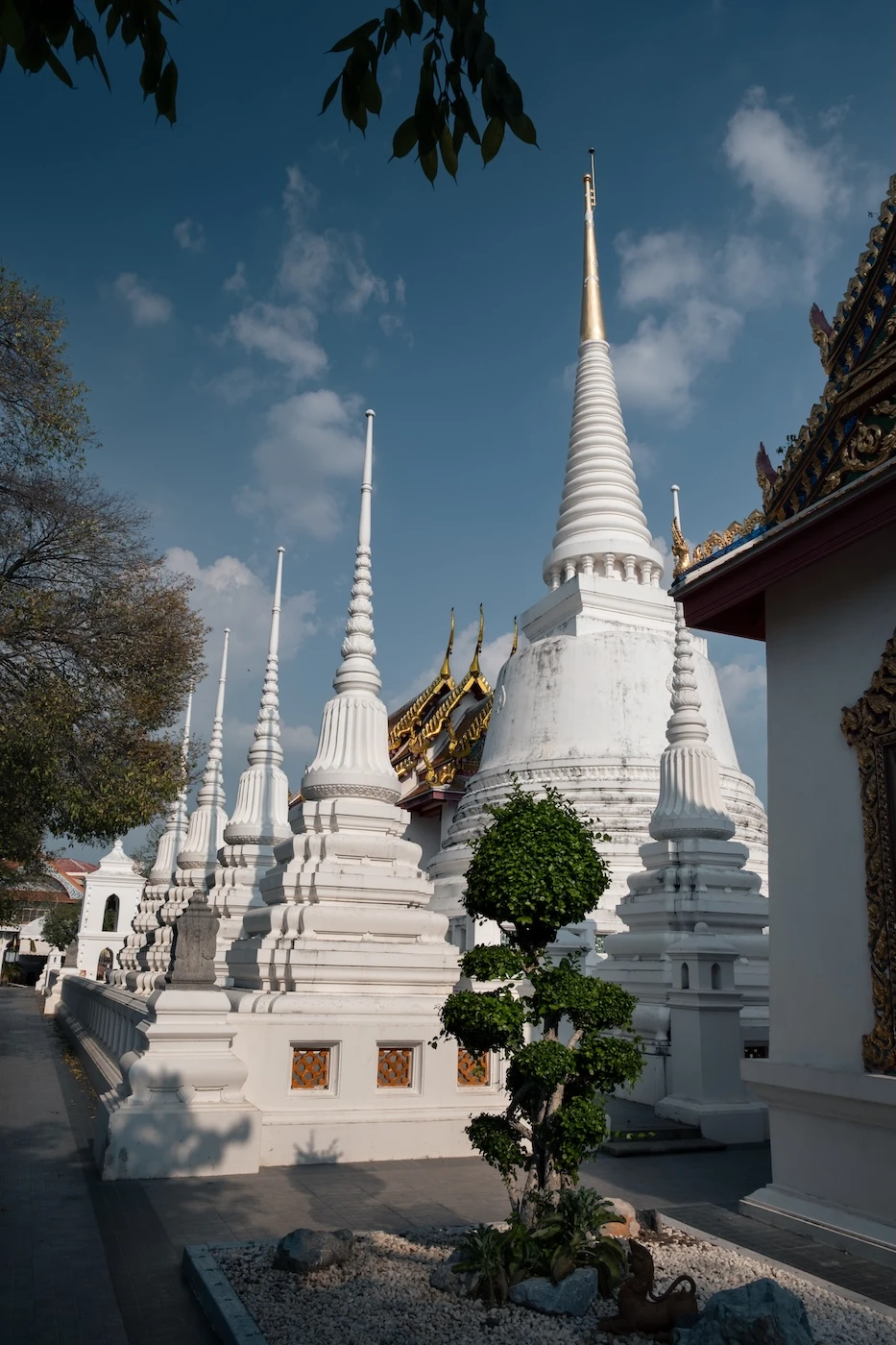
What sets it apart from the brick ruins and prangs of the other main sites is that it houses these three incredible chedi structures, which are totally unlike the others. They’re huge and so intricate – I genuinely feel like they belong in Angkor Wat instead of Ayutthaya!
The area isn’t really very large, so take a wander around to consider where the light is best for your photos. There are great vistas of all the spires from the eastern side, which works particularly well when the sun is setting in the west if you want some dramatic silhouettes (it’s my favourite sunset spot in Ayutthaya).


2. Wat Chaiwatthanaram
This is the most popular temple for sunset in Ayutthaya.
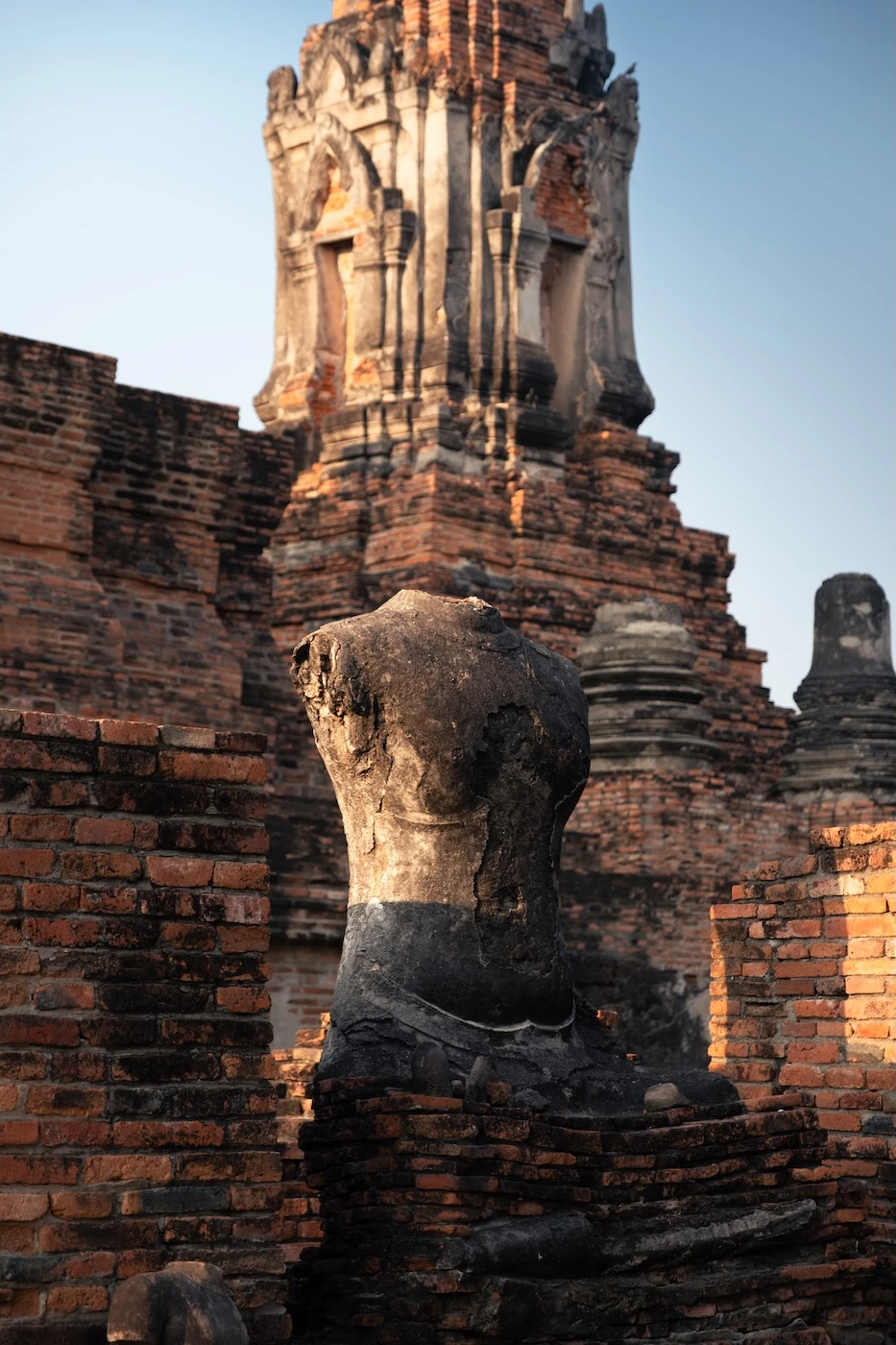
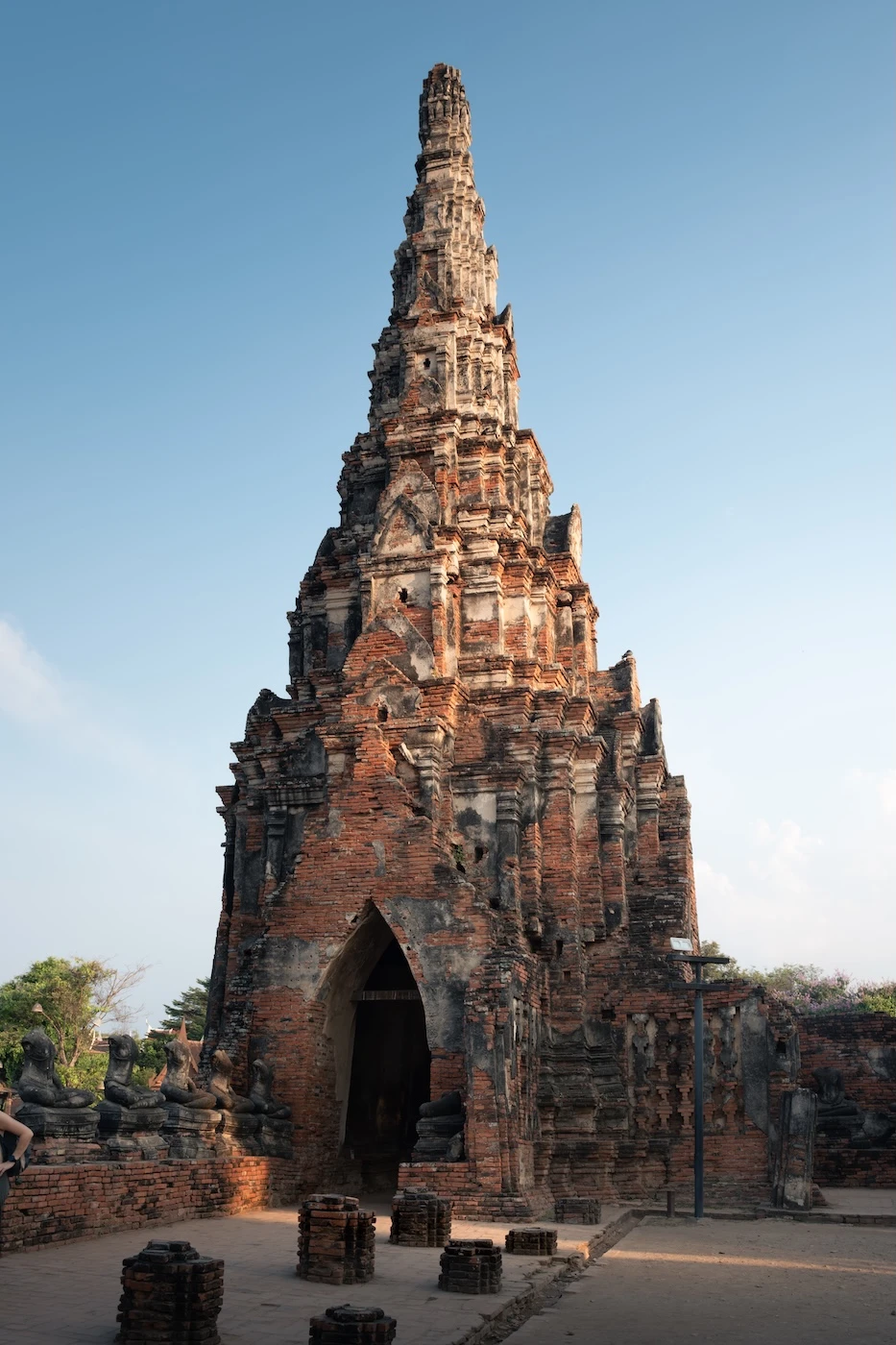
It’s a large, symmetrical, Khmer-style site with lots of tall prangs and headless Buddhas which catch the sun, so layering your photos is easy and everything looks beautiful. The setting next to the river is also quite pretty.
Although it’s not super busy like Wat Mahathat during the day time, we found it a little tedious with costume photographers hogging particular spots. So, be aware that once they’ve set up, they may not move!
There are no specifically good spots for photography because all of it looks quite similar, but I’d obviously recommend getting the sun behind you on the western side, opposite to the river. Most of the costume photographers don’t do this, so you’ll escape them on the west!
There’s some scaffolding works going on in 2026, so wide shots will suck a bit until it’s completed. It doesn’t affect most of the closer photography, though.
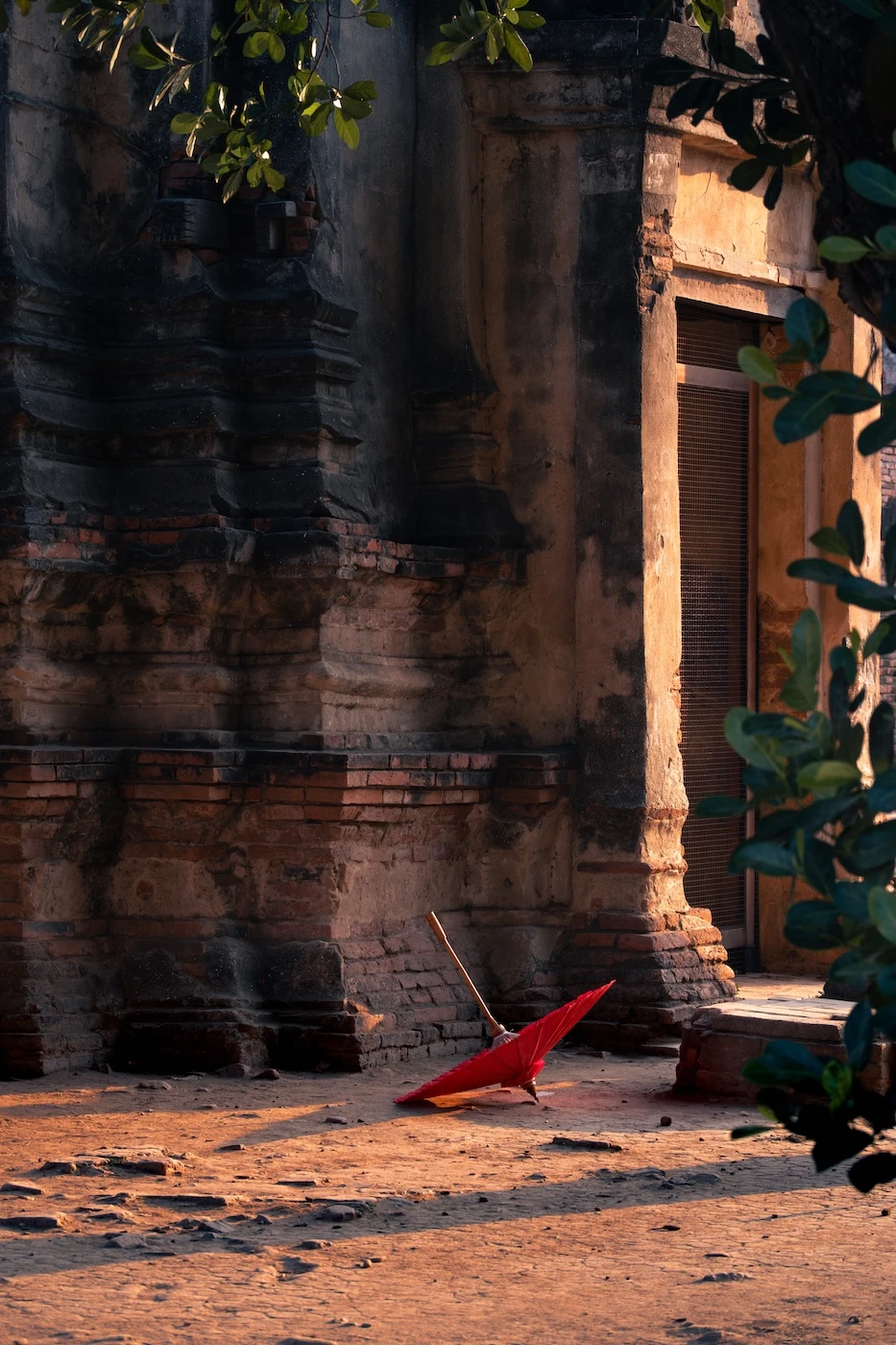

3. Wat Phra Ram
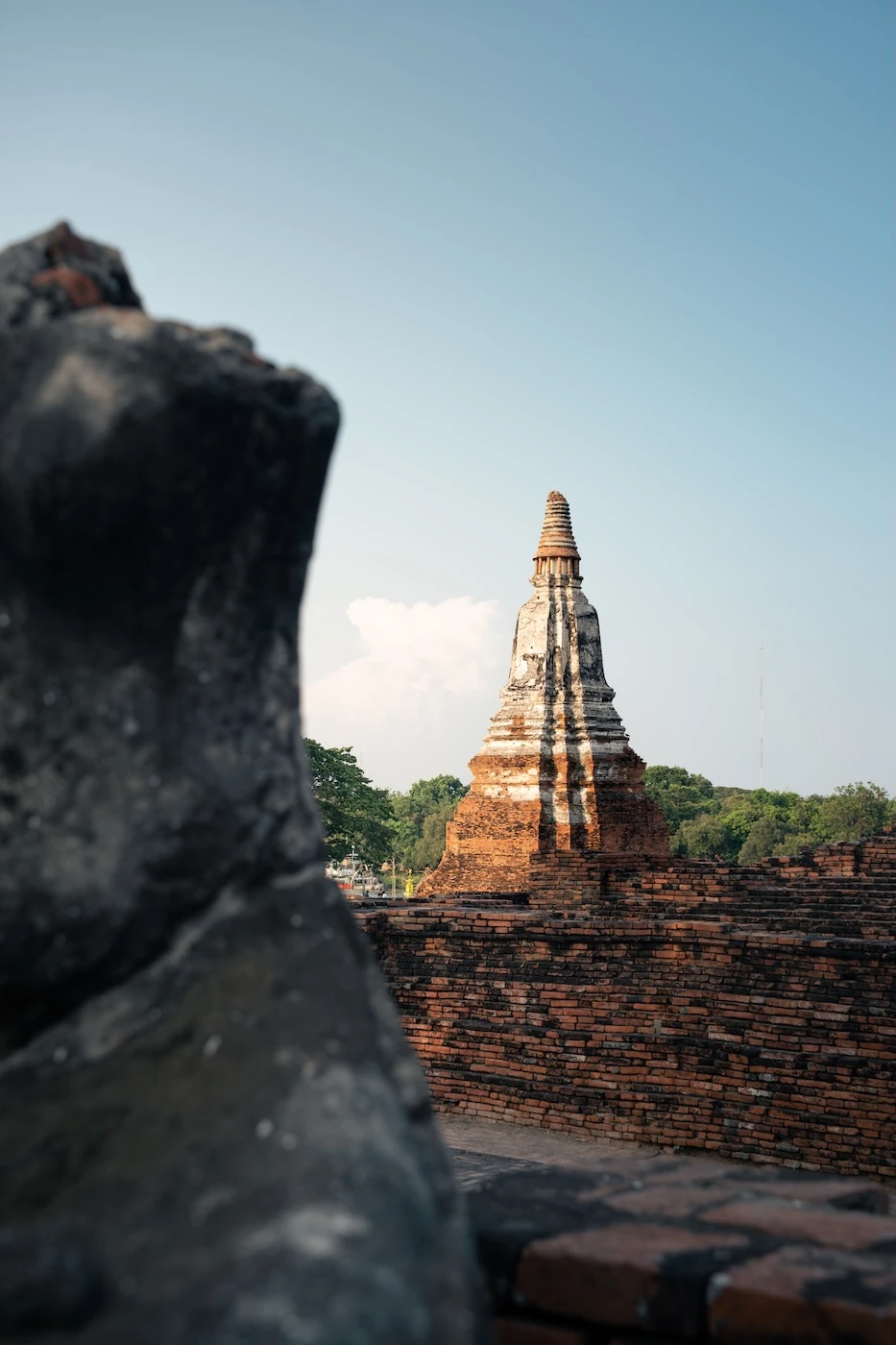
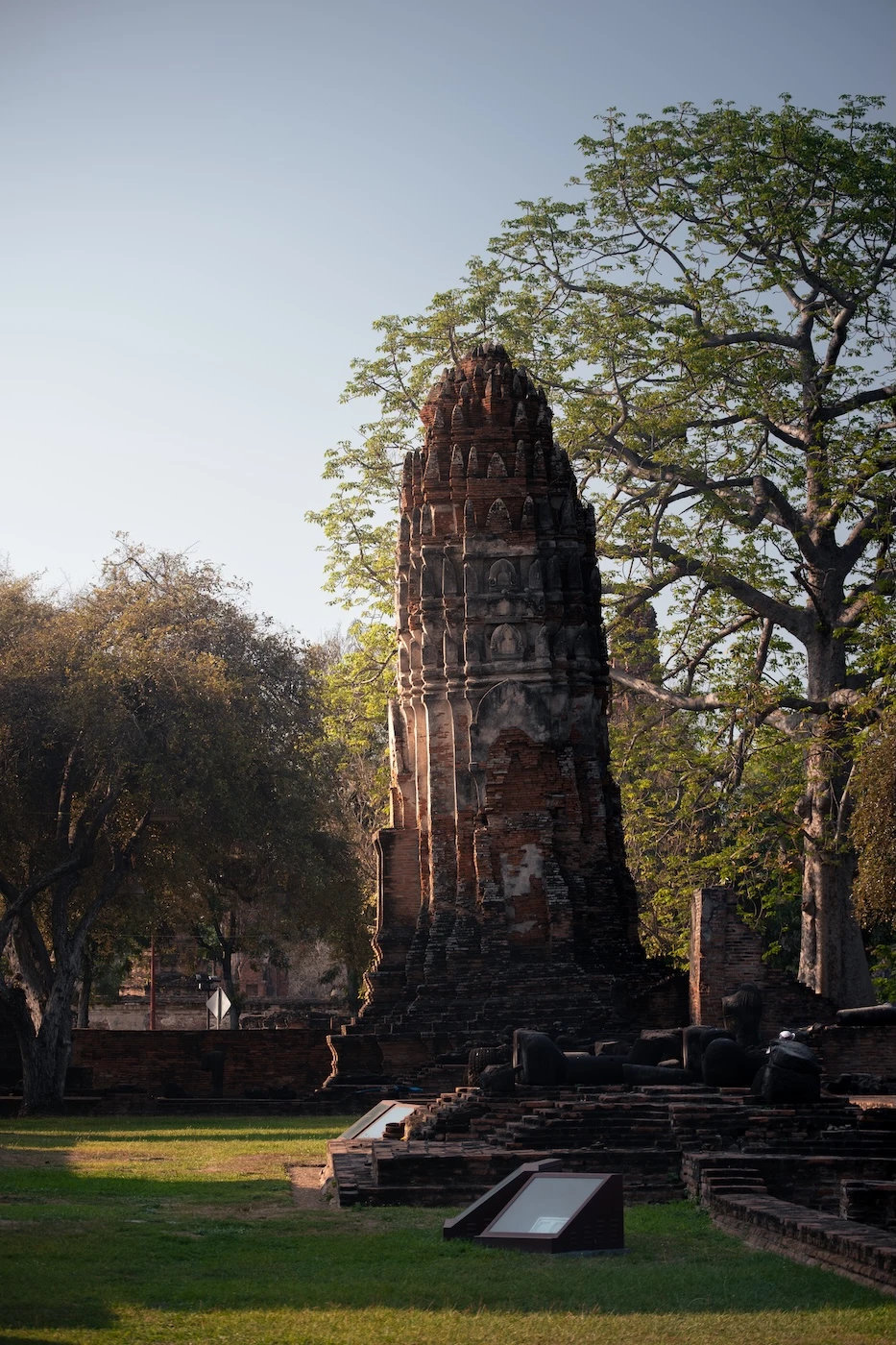
Wat Phra Ram is a slightly smaller complex right next to Bueng Phra Ram Park and Wat Phra Si Sanphet.
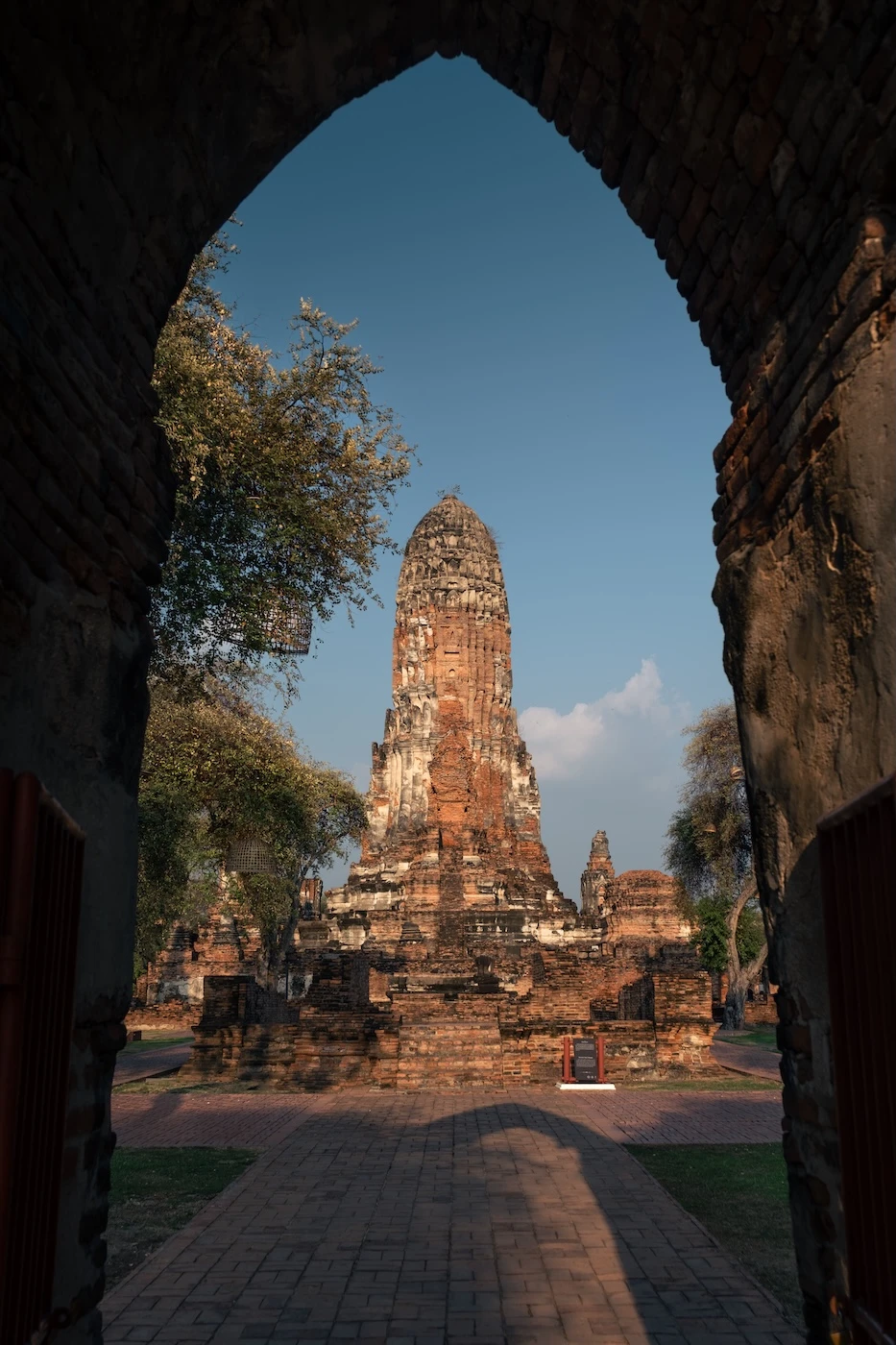
It’s not that large and only takes fifteen minutes or so to wander around the giant, dominating central prang. As a whole, it’s pretty typical of other nearby sites. However, what I love is the meander through the park to get there.
Wat Phra Ram is also super close to my favourite Wat Phra Si Samphet, so it’s worth visiting when you’re nearby. I’ve never seen many crowds in the spot later in the afternoon, so you might be lucky enough to have it all to yourself.

4. Wat Mahathat
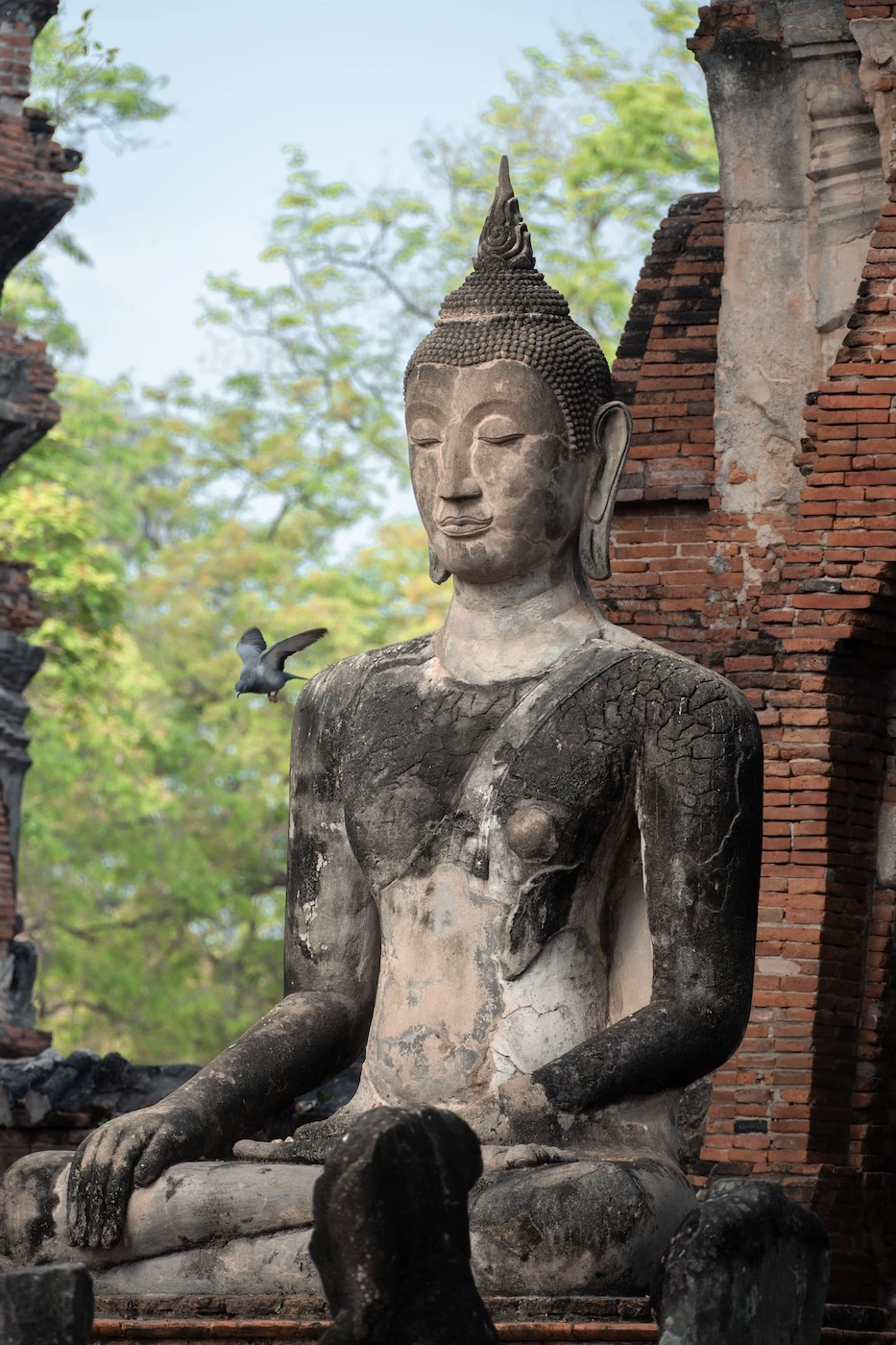
Wat Mahathat is the most famous, most photographed temple section in Ayutthaya Historical Park. It’s home to the famous Buddha head in the Bodhi tree that everyone raves about (and photographs identically – just like the below!).
Controversially, I actually don’t think Wat Mahathat is the most exciting of the Ayutthaya temples, but it’s definitely worthy of your camera (and some tolerance for crowds if you visit midday).
The overgrown prangs and rows of headless Buddhas are iconic, and we’d recommend you follow the low brick walls around and take your time in the grounds. The views of the impressively detailed main prang at the adjacent Wat Ratchaburana (behind Wat Mahathat’s structures) is also pretty magic. Keep an eye out for Buddha hands and heads with coins left on them for good luck.
As with pretty much every spot on this list, later afternoon is the best time to visit for the light.
In particular, the famous Buddha head tree faces north and the immediate area is pretty sheltered and shaded. From our experience, the sun doesn’t really hit the face very often (if at all, depending on the time of the year). If you want a picture of the face with the sun on it, last thing in the afternoon would probably be your best bet (it’s definitely possible but we’ve never seen it!).


5. Wat Ratchaburana
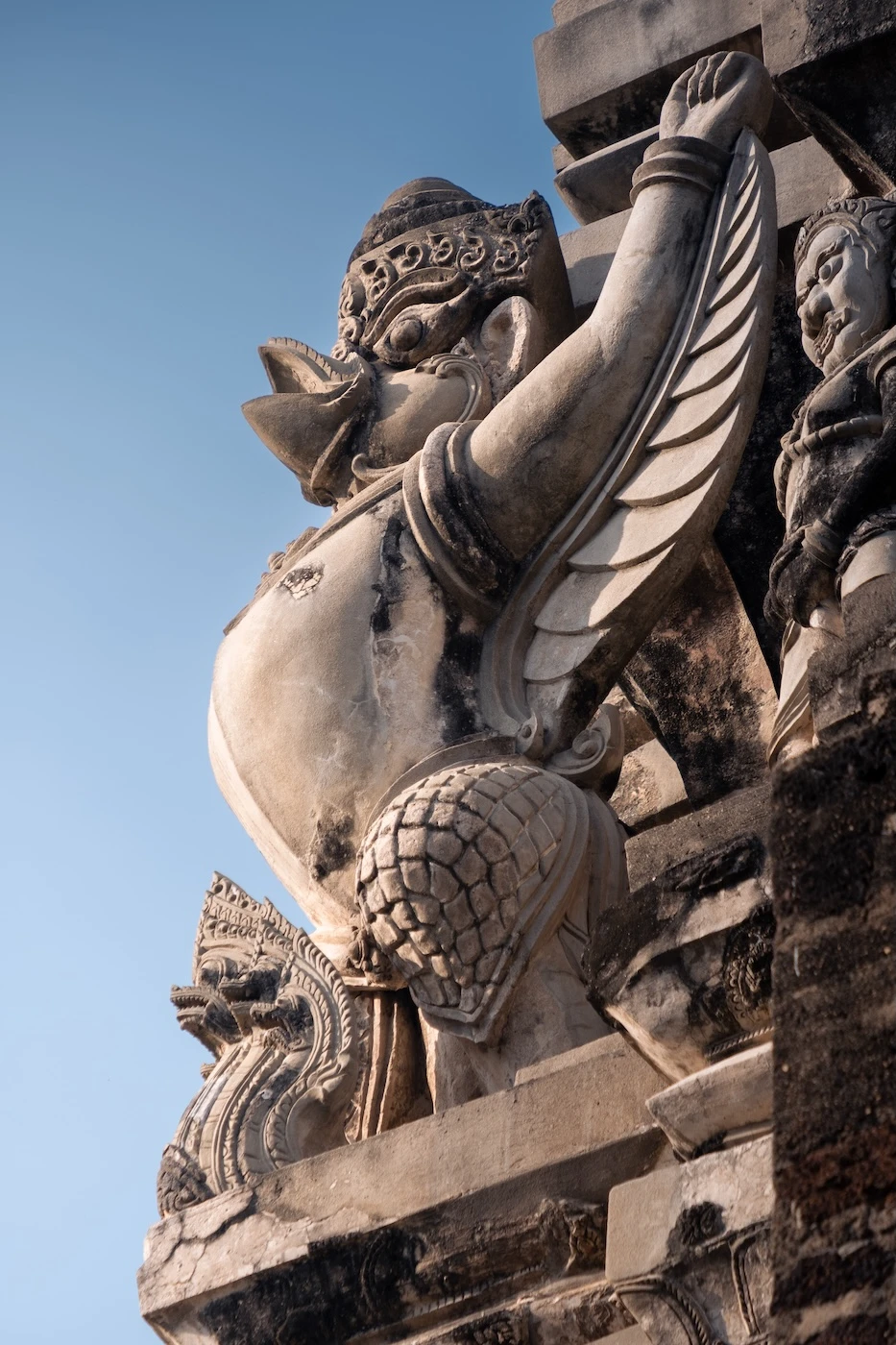
Wat Ratchaburana wouldn’t be an overly stand-out site apart from its seriously impressive, intricate white prang that looms over everything in the area.
It’s very unique, adorned with garuda and naga stuccos, which I’ve not seen in any of the other Ayutthaya sites (I may just have missed them, though, so correct me if I’m wrong). There are also murals in the crypt (within the prang) but it was under renovation when we last visited.
Wat Ratchaburana and Wat Mahathat are literally right next to each other, so it makes sense to visit them at the same time. As always, they both look the best in the later afternoon. However, luckily the huge prang looks kind of the same from all angles, so you can capture the sun on the stuccos from any side, technically!

Lesser Visited Locations
Below are a few locations that are worth visiting, located outside the main historical park sites. They’re worthy of your camera (as usual, best visited in the later afternoon).
Wat Phutthaisawan and St. Joseph’s Catholic Church
I’ve grouped these spots together since they’re almost adjacent to each other along the Chao Phraya riverside, opposite the island on its southern side.
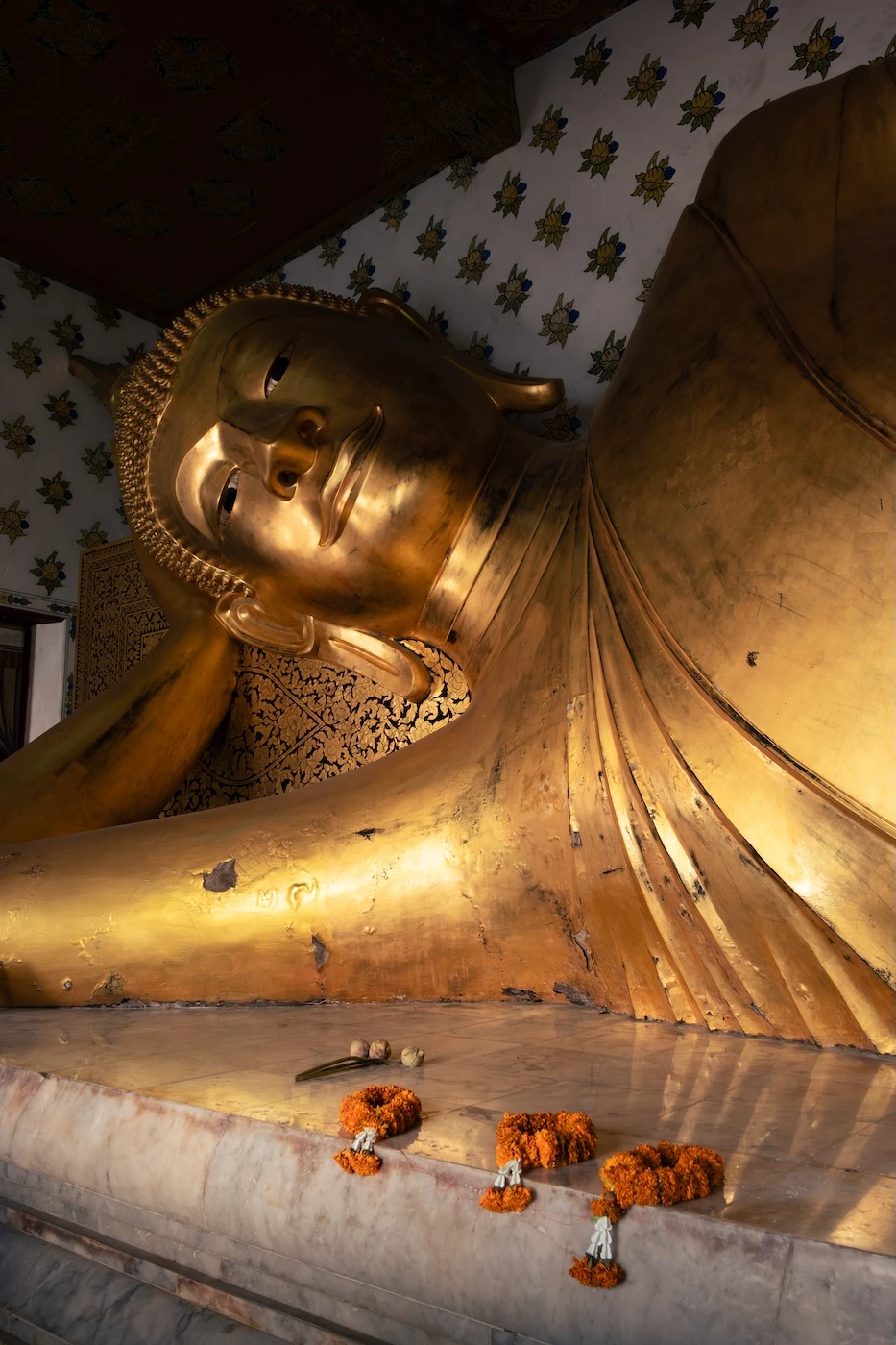
First is Wat Phutthaisawan, which is a large Buddhist complex with a huge white Khmer-style prang, large reclining Buddha and all the newer, shiny Buddhist temple staples. It’s quite nice at sunset if you have an extra evening (or you can check it out from across the river at the exquisite Sala Ayutthaya hotel).
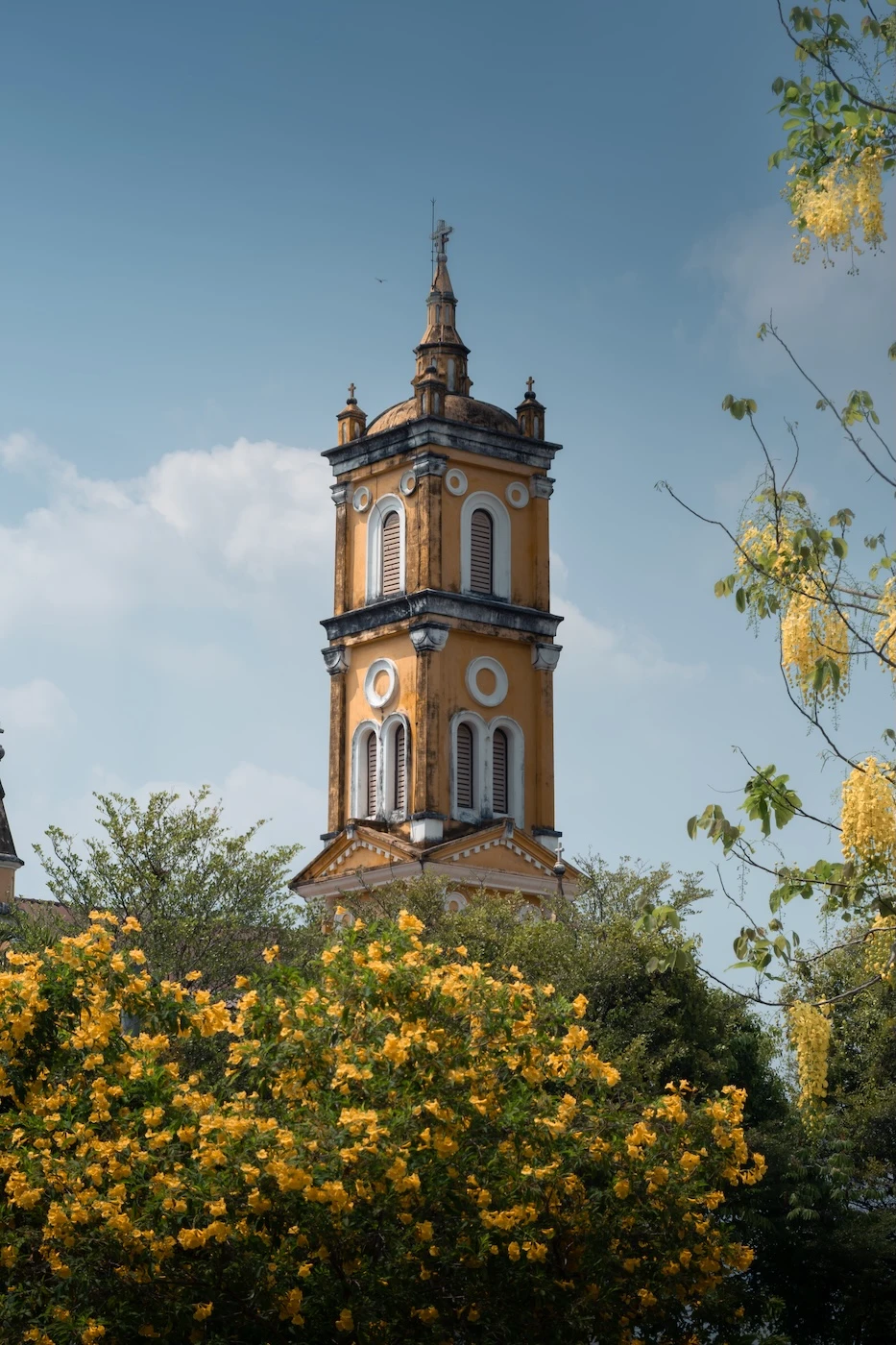
Second is nearby St. Joseph’s Catholic Church, one of Thailand’s oldest catholic centres from the 17th century. It’s quite cute and novel, and surrounded by grazing sheep!
Neither have an entry fee.
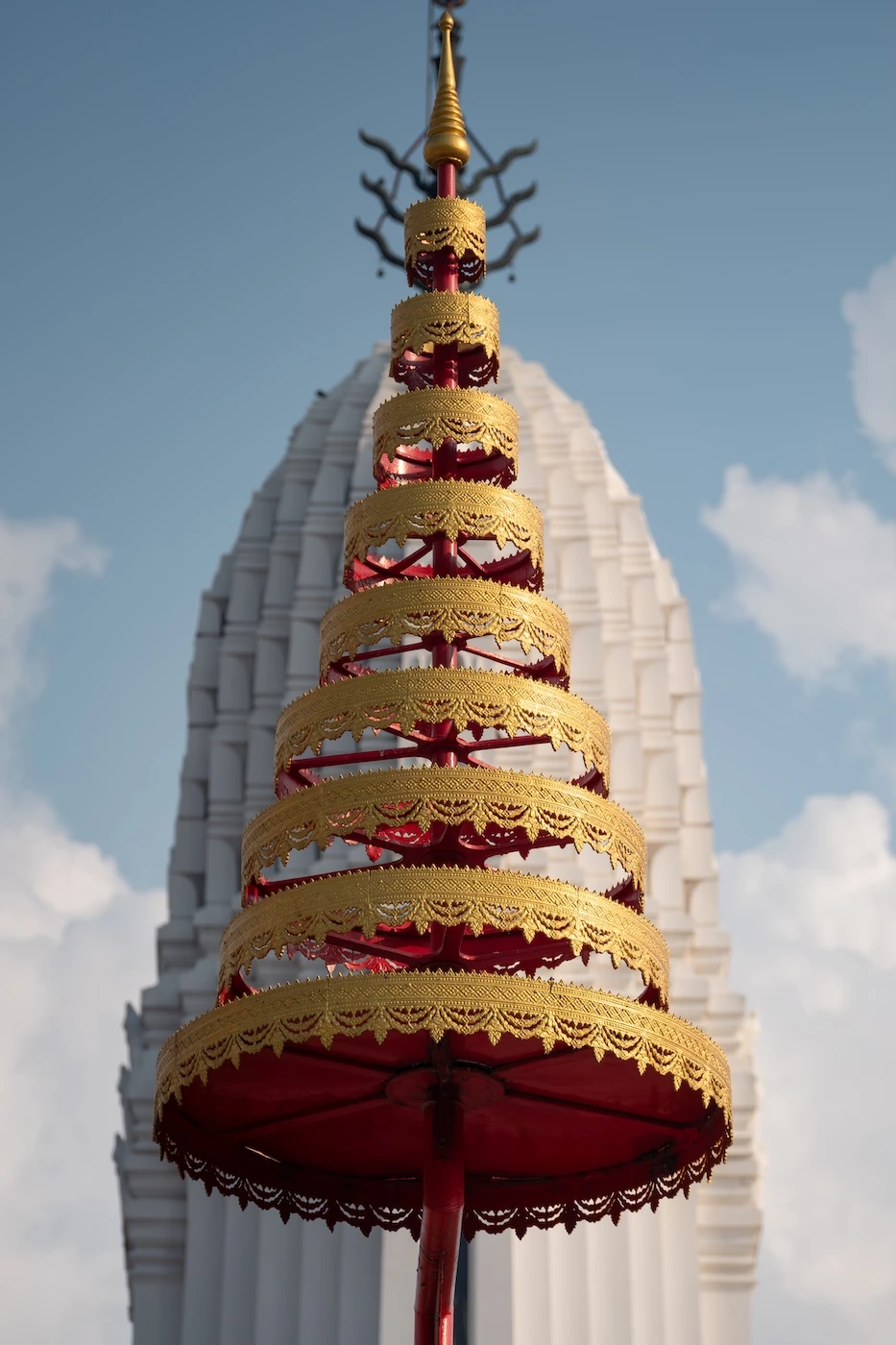
Wat Yai Chai Mongkol Worawihan
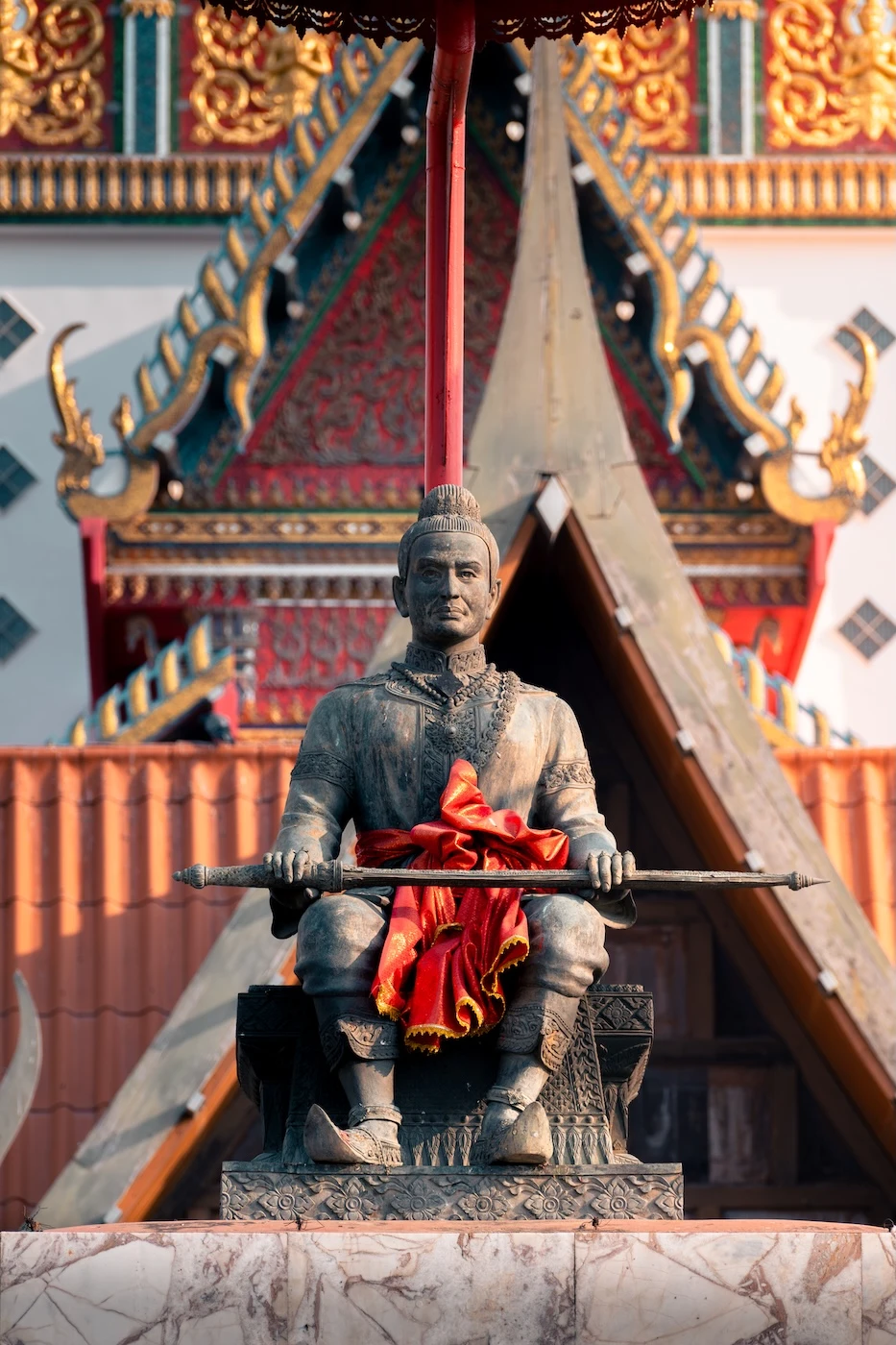
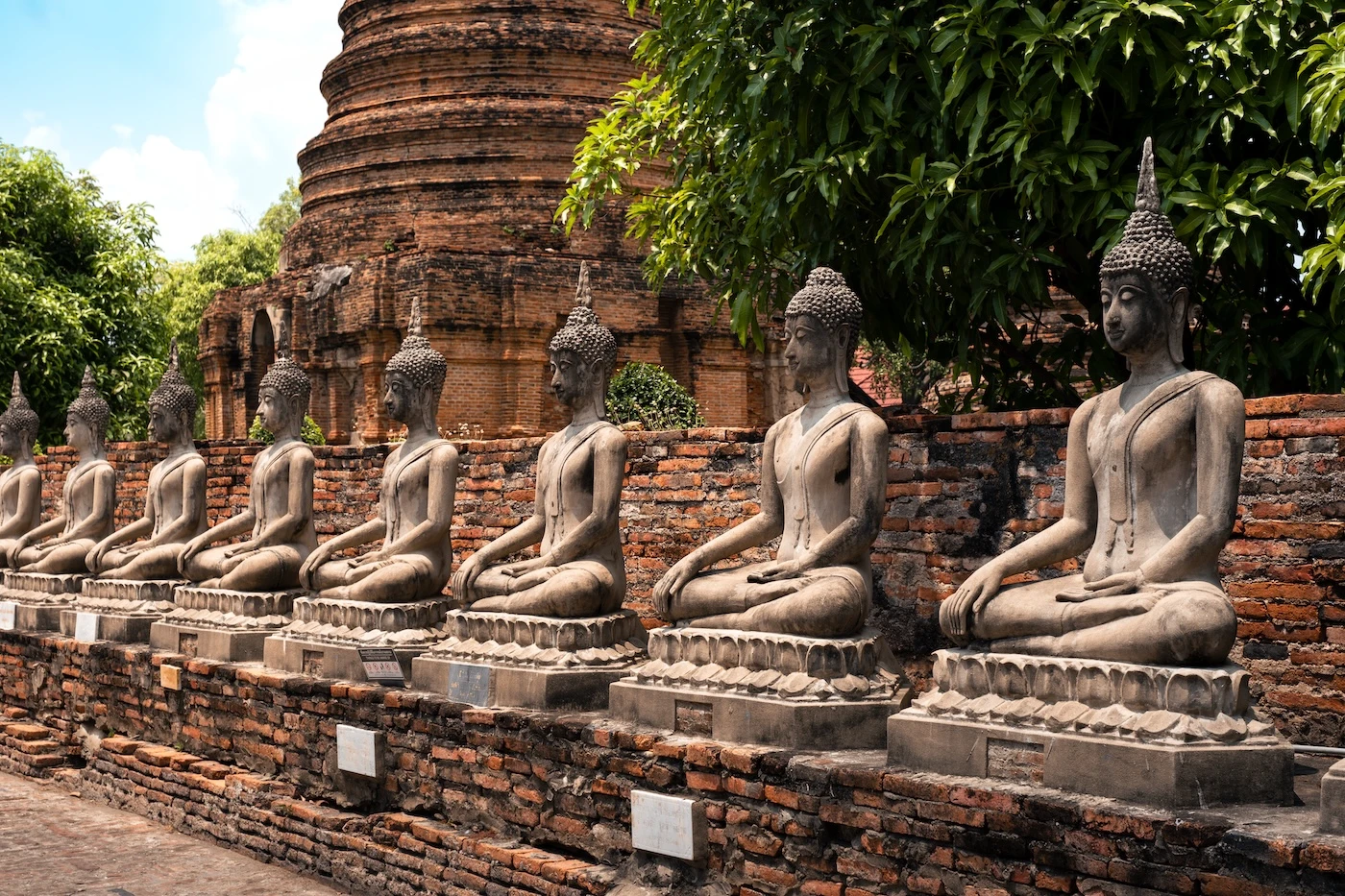
This was one of my favourite temples in Ayutthaya, even though it’s not actually part of the main historical park (which means it has a separate entrance fee).
It’s similar to the other Ayutthaya temples, but it’s more actively used as a religious place of worship, set among lovely gardens that feel a bit more manicured.
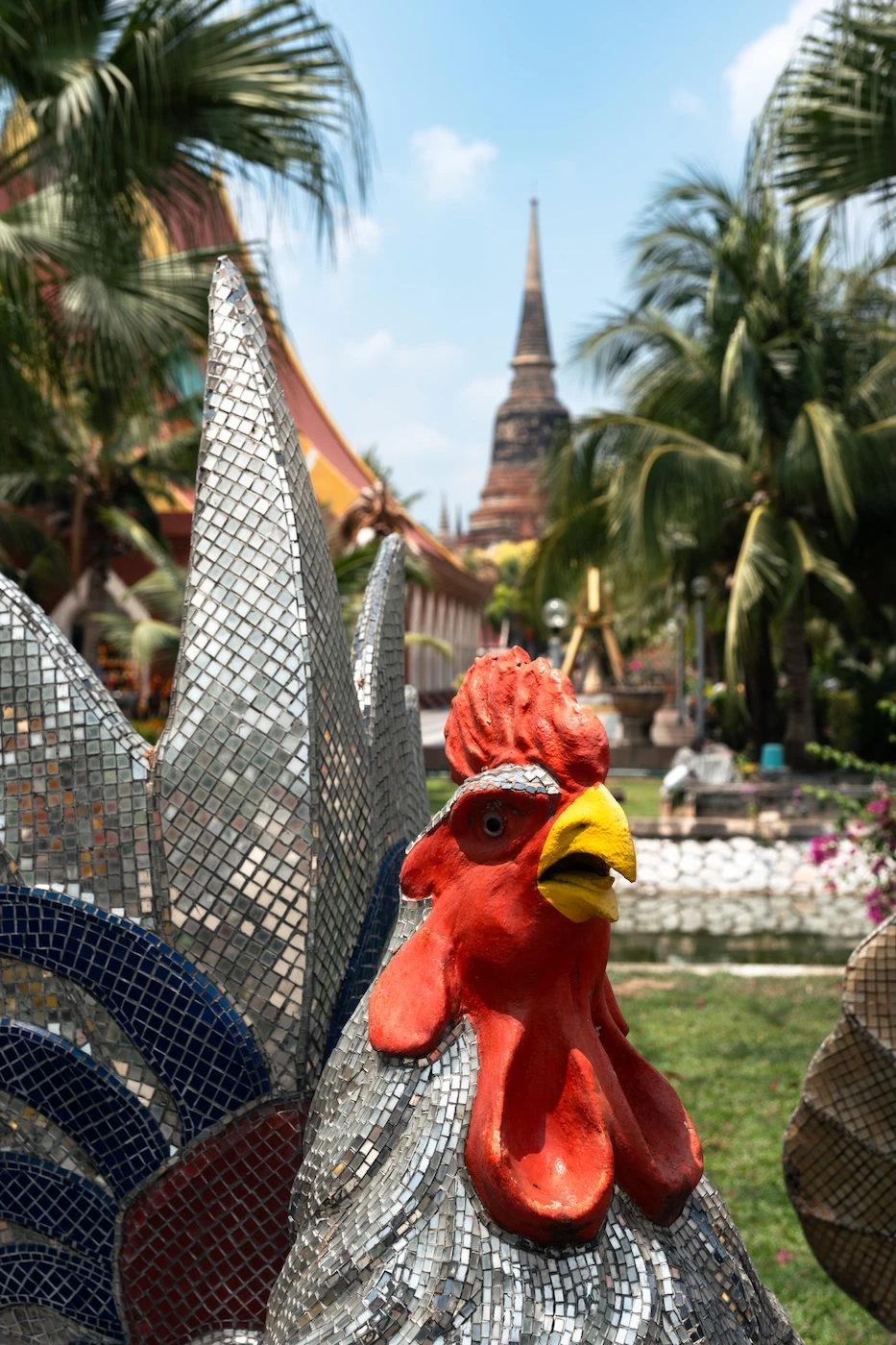
There’s a giant restored stupa in the centre housing a wishing well, a large reclining Buddha, and various (rooster) statues (there’s a reason for the rows of chicken-related ornaments, to do with a revered Thai king and cock fighting). It’s worth your time, photography-wise, since it’s not just a historic ruin.
There’s just a different vibe that makes it stand out for me.
Entry fee: 40 baht

Bang Pa-In Palace
This cool spot is around a 20 minute drive south of Ayutthaya, on the way back to Bangkok. It’s a particularly good stop in a rental car when travelling to-or-from the historical park.
It was previously used as a summer residence for the Royal family and is a large property full of lakes and pretty buildings (that’s a bit reductionist, to be honest). The site dates back to the Ayutthaya period, but was destroyed by the Burmese and then rebuilt in the mid-19th century by King Rama-IV.
I’d recommend taking a couple of hours to wander around the entire place to do it justice; it’s really quite photogenic.
Entry fee: 100 baht


Wat Maheyong and Wat Kudi Dao
These two spots are almost next to each other, found northeast of the island and train station. Wat Kudi Dao is included in the main Ayutthaya Historical Park ticket (along with Wat Maheyong), so it’s part of the main set of temples (although not the most spectacular of them).
The highlight is Wat Maheyong, which is without a doubt utterly unique (and I say that having gone on on a huge Thai temple road trip right before I visited). It’s a vast, modern temple complex that is currently a large centre for meditation. You’ll see loads of people wandering around in white outfits among fake caves (don’t photograph them up close, though, that would be a dick move).
The grounds also have an enormous man-made waterfall and water feature, a reclining Buddha statue, and an incredible new temple that’s nearly finished being built. Additionally, there’s a small ancient site just outside the entrance, which you can visit for free.
Entry fee: 80 baht each


Ayutthaya’s Royal Temples
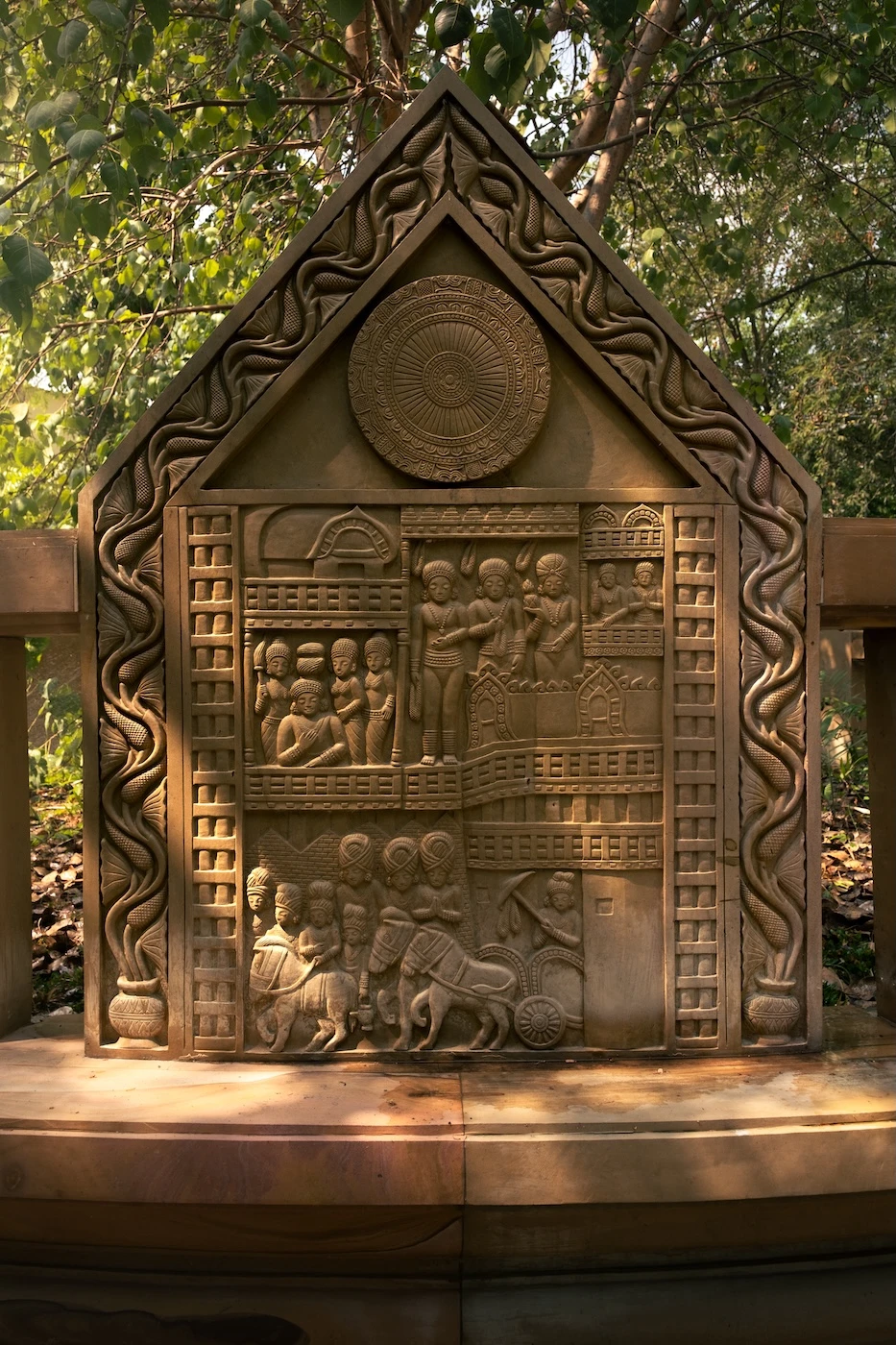
There are two first-class Royal temples in Ayutthaya (outside of Wat Mahathat), called Wat Senasanaram and Wat Suwandararam.
One is to the north east of the island, the other to the south east. If you’re short on time, these are two spots we’d recommend skipping. Since I love Thai temples in general (especially for photography) I’ve included them. (I’m making it my mission to visit all the royal temples – there are more than 300!).
Both are quite traditional and well-kept (as are all the first-class royal temples we’ve visited), and worth visiting if you’re interested in Thai Buddhist culture and traditions.
There is no entry fee at either temple.
Random Photography Tips and Thoughts
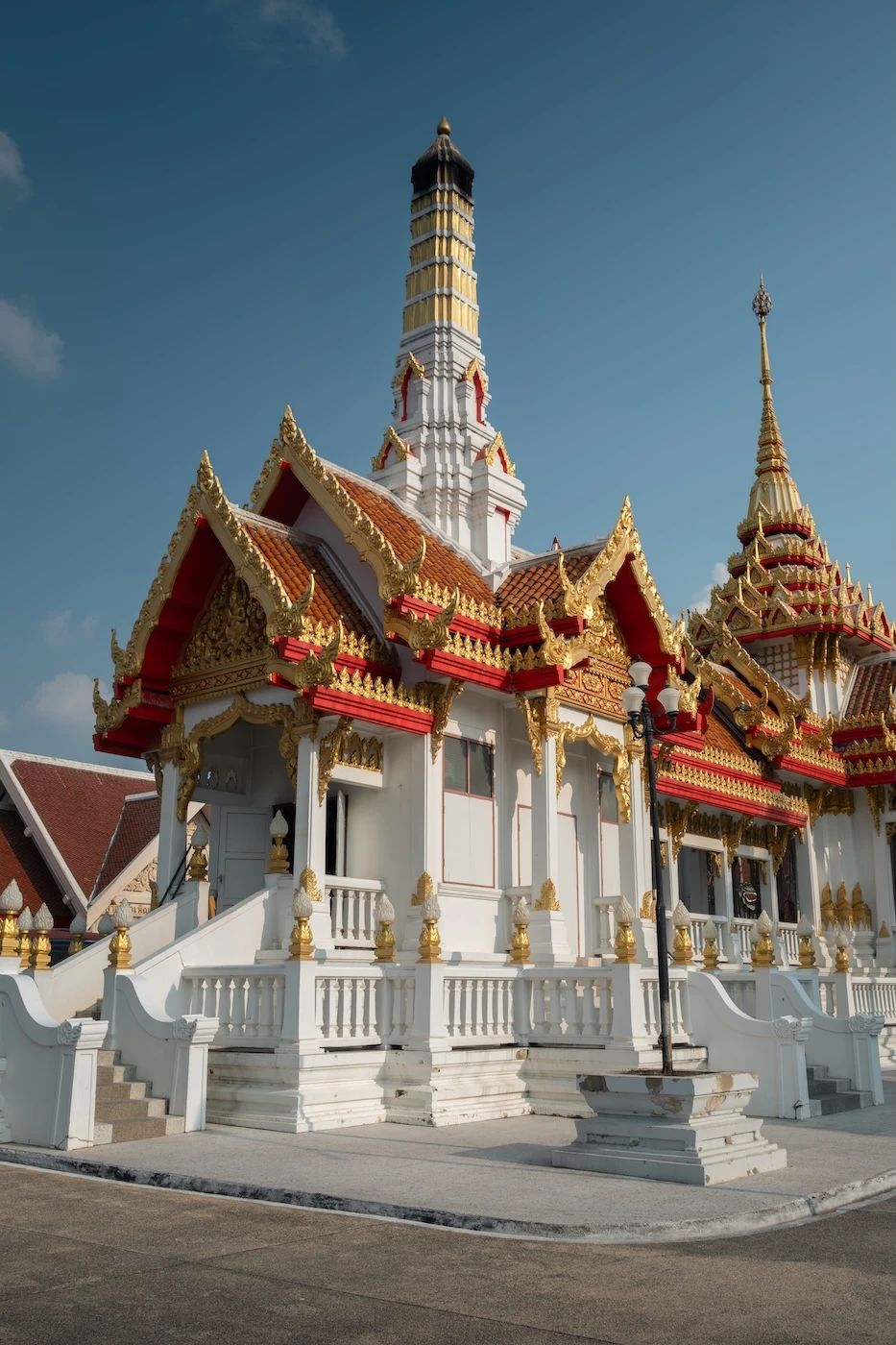
⬩ Temples in Ayutthaya can start to look a bit samey after a while. Afterall, there’s only a certain amount of almost identical chedi/prang situations you can photograph before it becomes a bit repetitive. (I think this is the case even in Angkor Wat, too, and that is one of the most photogenic places on Earth). So, look for the details and odd angles; if you’re not a photographer, it’s likely you wouldn’t notice a lot of the intricacies!
⬩ Use an ND filter during the day – this will tone down the horribly whiteish, bright light. (I’m too lazy to do this, but you definitely should).
⬩ Bring a tripod for early morning lake scenes. Other than for those, though, you won’t need one.
⬩ Self-driving is by far the best way to get around on your own schedule and to see as much as possible in the decent afternoon light. It’s also the ideal option for seeing the spots outside of the main temple complex area.
⬩ Stay overnight in Ayutthaya – otherwise how else will you get those excellent evening shots? We’ve written more about why we prefer overnight stays, if you’re interested.
⬩ Further afield is Thailand’s largest Buddha statue at Wat Muang, in Ang Thong. If you’ve rented a car, this spot is very much worth a visit with your camera – it’s way bigger than you’d imagine and crazy photogenic!


WANT TO TAKE A BETTER TRAVEL PHOTO?
There are three parts to travel photography –
⬩ Planning your trip
⬩ Taking the photo
⬩ Editing the end result
To get the highest quality, most sophisticated photos from your travels, you’ll need to perfect all three (plus a tiny bit of luck).
So, we’ve written a lot of country-specific guides about planning trips to various destinations, and also collated our absolute top tips for taking photos on location avoiding the rain would probably be our number one!). We’ve also written a dedicated post on how to take the best black and white travel photography. Check them out if you’re interested!
We also write about typical editing mistakes to avoid. To complement that, we’ve collated a more intermediate user’s guide to editing travel photography. This covers more elegant, advanced and refined skills, ones that will promote your photos to the centerpiece of anybody’s wall.
–
HAVE WE HELPED YOU PLAN YOUR AYUTTHAYA TRIP?
If you’ve found our content helpful, consider booking your rental car (if you need one!), through the company we always use – Discover Cars. They’re the absolute best and have been our rental companion (and savior, thanks to their insurance) in many destinations across the world.
If you don’t drive, secure your overland transport through 12GoAsia – they’re who we use for all our bus and ferry journeys.
Also, consider securing you accommodation through Booking.com – we use them exclusively when travelling in southeast Asia.
–
Where to Next?
I’m optimistically hoping that my weird little photo guide upped your enthusiasm for visiting Ayutthaya’s historical park!
It’s well worth a full day or two if you want to take some really great photos – consider an overnight stay and a rental car for the best results.
We’ve written about various topics on Ayutthaya, from the responsible travel and elephant tourism angle (worth a read if you don’t know much about elephant wellbeing and standard ethical practices) to a fully comprehensive guide on the best methods of actually getting to Ayutthaya.
I hope you have an epic trip!
Hi, thanks for visiting our blog! If our free content has been of help to you, or you’ve just enjoyed our random ramblings and musings, say thank you by buying us a coffee! It helps keep The Restless Beans blog up and running.
Thank you, Claire + Nick


