

A Photographic Introduction to the Unique Temples of Chiang Rai, Thailand
Scribbled by Claire ◊ 23 Mar 2025
If you thought you’d seen Thailand’s best temples in Chiang Mai, then think again – Chiang Rai is where it’s at! This northern Thai city is home to some of the most distinctive architecture in the country – below we show-off three can’t-miss spots you need to add to your itinerary!
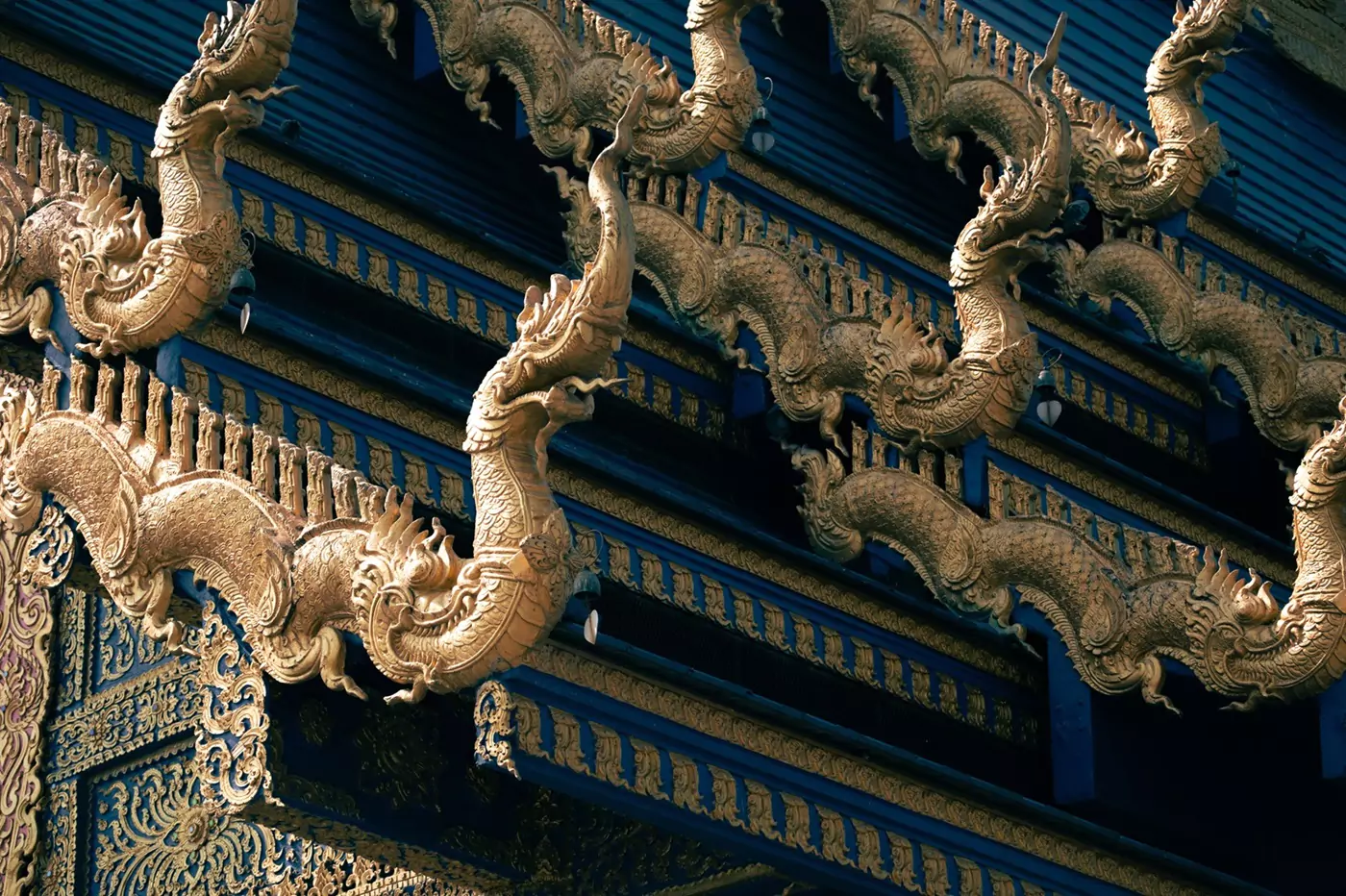
Typically, images of Thailand in the media are dominated by pretty beaches, closely followed by distinctive and intricately designed, colourful temples. These architecturally exquisite Buddhist structures are ubiquitous across the country, whether you’re in Chiang Mai, Bangkok, or even more Muslim-dominated parts of southern Thailand.
Now, we’ve heard that some people get a bit ‘templed out’, after visiting one too many, which is totally understandable (we feel the same way about churches in Latin America!). However, the best temples in Chiang Rai are definitely an exception to this rule and are basically works of art (literally!).
If you’ve already visited Chiang Mai, the capital of the north and Thailand’s temple headquarters, you might be tempted to skip Chiang Rai. Well, we’re here to show you why you shouldn’t, and why no temples in Thailand are as visually unique as the ones in Chiang Rai.
There are numerous temple sites that could be considered must-sees in Chiang Rai, however many of them are visually similar in style to ones in Chiang Mai and elsewhere across the country. So, here we’ve described three of the most interesting ones in detail, specifically using photography, all accompanied by the information needed to visit, such as ticket costs, parking and transport options. We’ve also briefly mentioned a few others in the region that are also worth your time.
This post may contain affiliate links. If you book through these links we may make a small commission at zero cost to you. It helps us pay for the upkeep of this blog. Thank you!
What and Where is Chiang Rai?
Chiang Rai is a smaller city in the far, far north of Thailand, surrounded by hilly jungle, with a population of about 80,000 people.
Tucked up near the international border, almost equidistant between Laos and Myanmar, the city lies in a previously volatile area called the Golden Triangle, so named for the opiate trade between the countries.
Although Chiang Rai has been getting more attention from tourists in recent years, it has always had a relatively small number of visitors. It was mainly backpackers who stopped there as part of the Banana Pancake Trail that traditionally passed through as an overland route to the Laos border (often to catch the famous slow boat).
The location of Chiang Rai makes it a bit out-of-the-way for a lot of tourists with shorter itineraries to consider. This means the city is definitely a little quieter, with less gentrification and more local options for lodging and food. It’s past the backpacking days, but still has very much of a low-key feel.
IS CHIANG RAI WORTH VISITING?
Yes, Chiang Rai is definitely worth visiting!
It receives a fraction of Chiang Mai’s visitors (a city that is outrageously busy with tourists, year-round), has a great walking street, excellent value accommodation, a lovely flower festival, plus mild winter temperatures (for Thailand). Don’t forget the biggest draw too – the most fantastically intricate temples!
Below, we’ve done a sort of photographic guide through our favourite temples in Chiang Rai and listed several more that are also worthy of a visit.
–
SOUTH THAILAND ITINERARY | KOH CHANG ISLAND GUIDE
Getting to Chiang Rai
Most people travel to Chiang Rai from Chiang Mai, the nearest major city, 185 kilometres to the south west. There are several ways to reach Chiang Rai including self-driving a rental car, flying, or taking a taxi/bus. Chiang Rai does not have a train station.
Rental car or taxi | the easiest way to get to Chiang Rai, especially for a group. Rental cars can be picked up from the international airport in Chiang Mai, which has a large range of well-known companies to choose from on site.
It is also possible to drive from Bangkok if you’re including Chiang Rai as part of a larger road trip. The drive from Chiang Mai is about three hours on high quality, easy to drive and very pretty roads (no wiggly mountains!). For everything you need to know, check out our guide on driving in Thailand.
Bus to Chiang Rai | there are tour operators all over Chiang Mai who can organise a bus for you. Seriously, you can’t miss them if you walk around the walled city area. Another option, if you’re tight on time or like to book in advance, is to reserve tickets online using 12GoAsia, a trustworthy, reliable, travel aggregate company. The website is also useful for checking availability and representative prices for journeys. Public buses also run along this route – ask your accommodation for up-to-date local bus information.
Flights to Chiang Rai | Chiang Rai also has an international airport. Regular flights within Thailand run from Bangkok, Phuket and more.
CAR HIRE FOR YOUR THAILAND TRIP
We always rent our vehicles all over the world, including our recent trips in Thailand, Malaysia, Oman, Saudi Arabia, Tunisia, Jordan and Morocco, with Discover Cars. They’re often the most affordable, plus they paid out immediately on an insurance claim we made when our car took some heavy damage in Sicily. We fully recommend them.
–
TAKE A LOOK BELOW OR CHECK CAR RENTAL
Getting Around Chiang Rai
It’s very easy to get around Chiang Rai on foot, although the main temples we’ve listed below are not walkable from the city centre.
If you plan to drive a rental car, all the sites mentioned have abundant, easy parking. Alternatively, it’s easy to order a Grab or Bolt taxi which can take you around (nowhere is very far away). These are taxi apps, a bit like Uber. With Grab, in particular, you can pay with you credit card, which we love.
It is also possible to rent a motorbike for 200 baht a day if you have the appropriate license (don’t ride with no experience – Chiang Rai is quiet, but the city itself still has plenty of busy traffic).
Temples in Chiang Rai – a map
Below is a savable Google Map, marking the temples we mention, locations for parking, plus any hotels we recommend within this Chiang Rai travel guide.
To save the map, click the star next to the title.
TEMPLES IN CHIANG RAI – ETIQUETTE
It goes without saying, but even the more touristy temples are still places of worship for some, so always behave respectfully.
In particular, dress appropriately, including covered shoulders and knees, take off your shoes where instructed and don’t wear hats inside.
Keep your voice down around people who are doing their religious stuff, and never point your feet towards the Buddha.
Follow instructions about photography – for example, you can’t take photos inside the White Temple.
–
BEST KOH LANTA BEACHES | KOH MOOK – A GUIDE
The White Temple
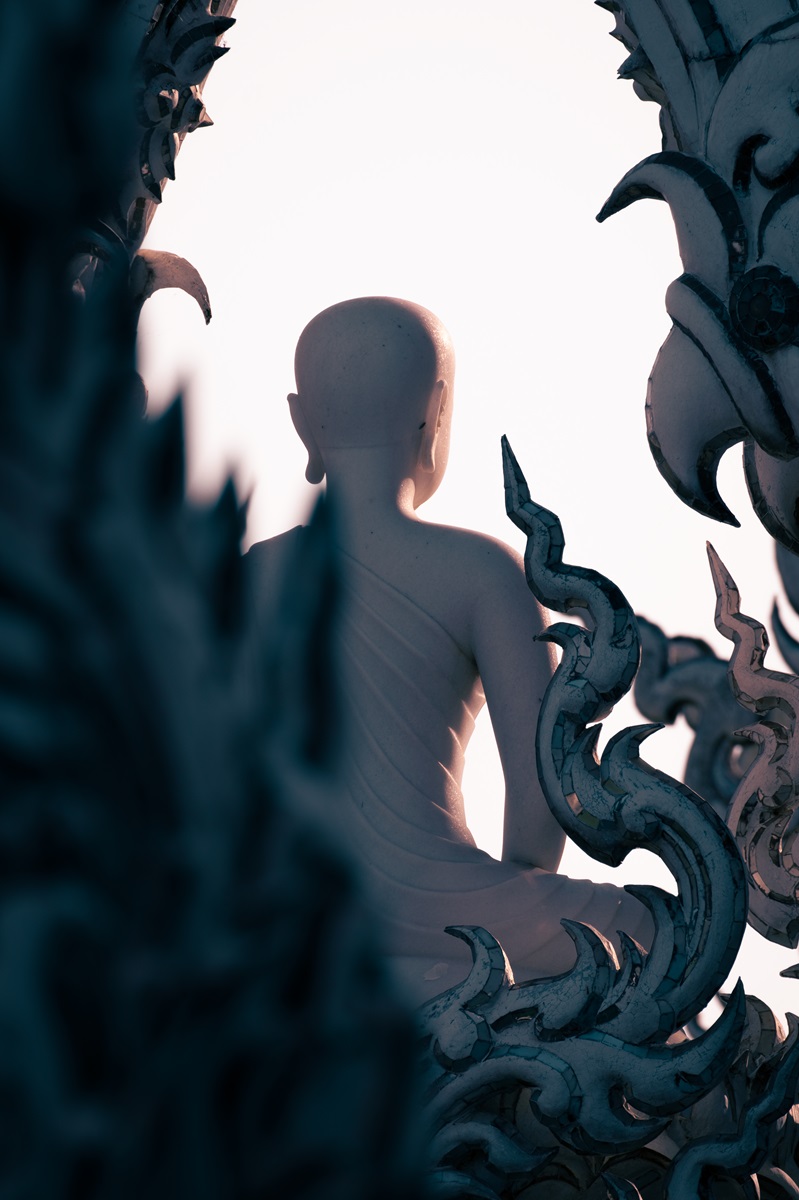
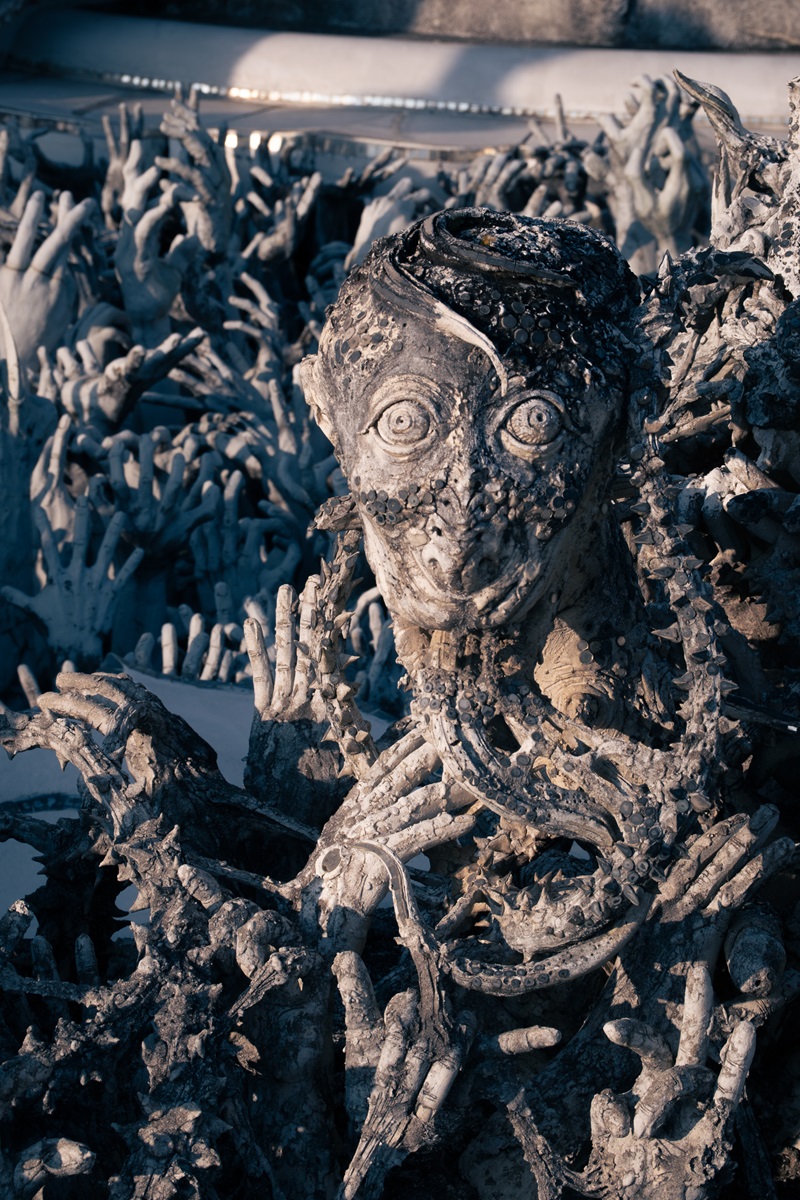
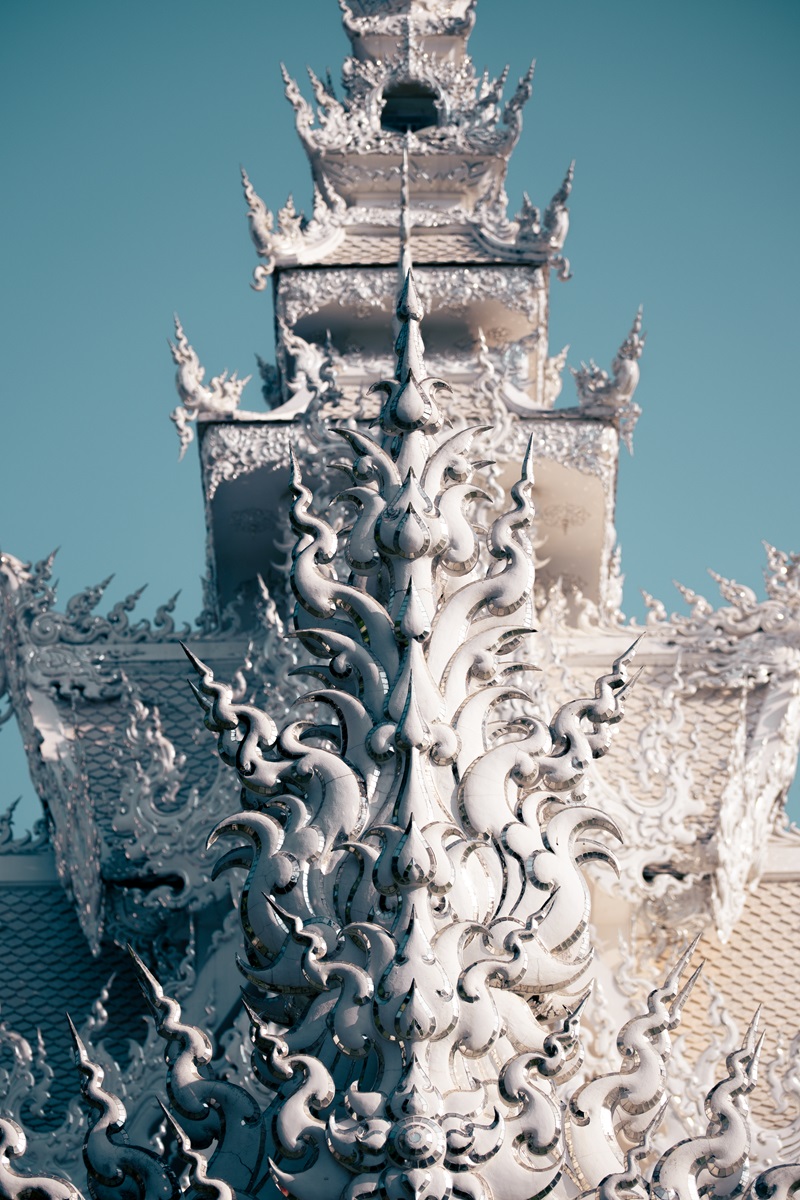
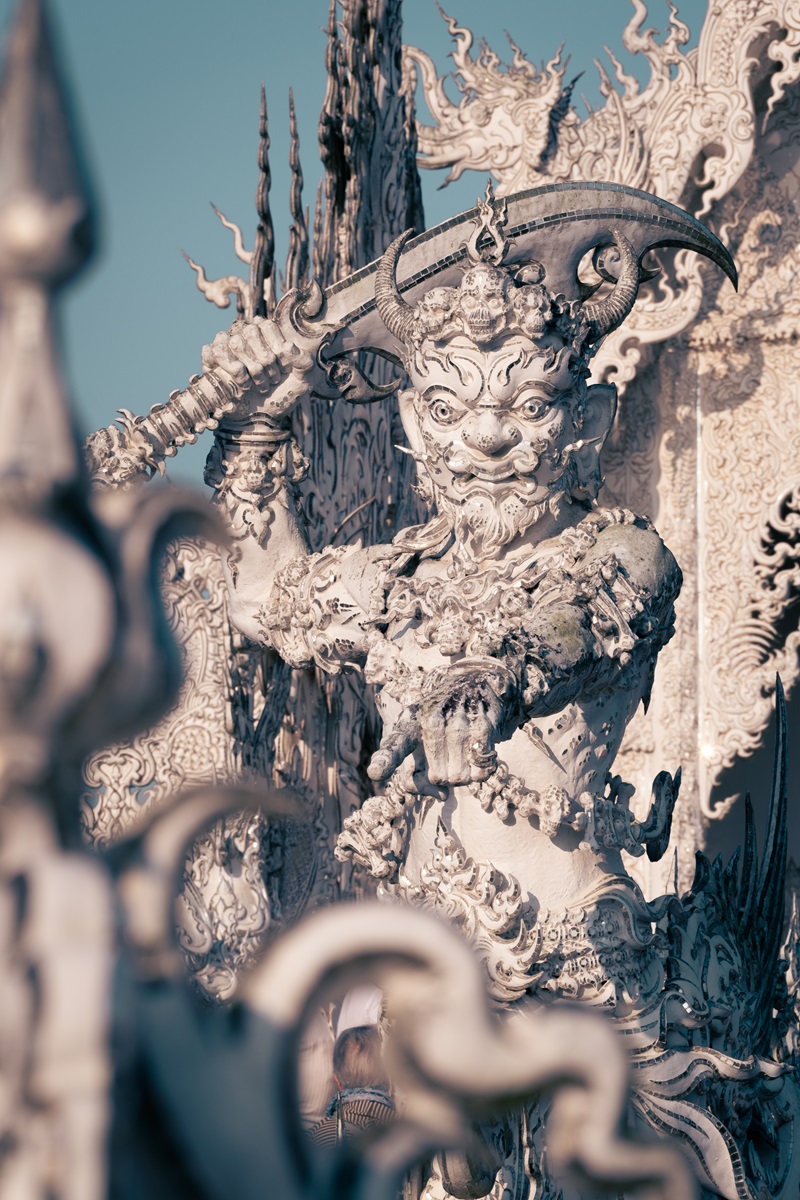
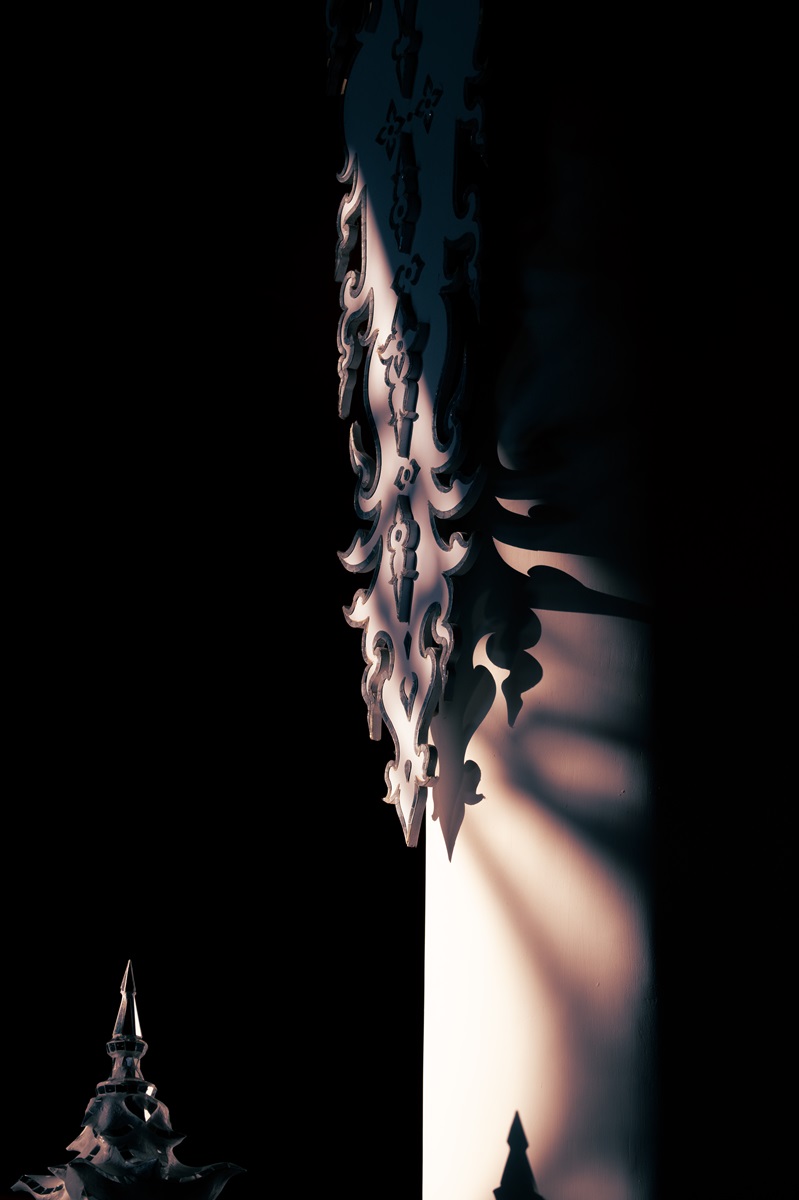
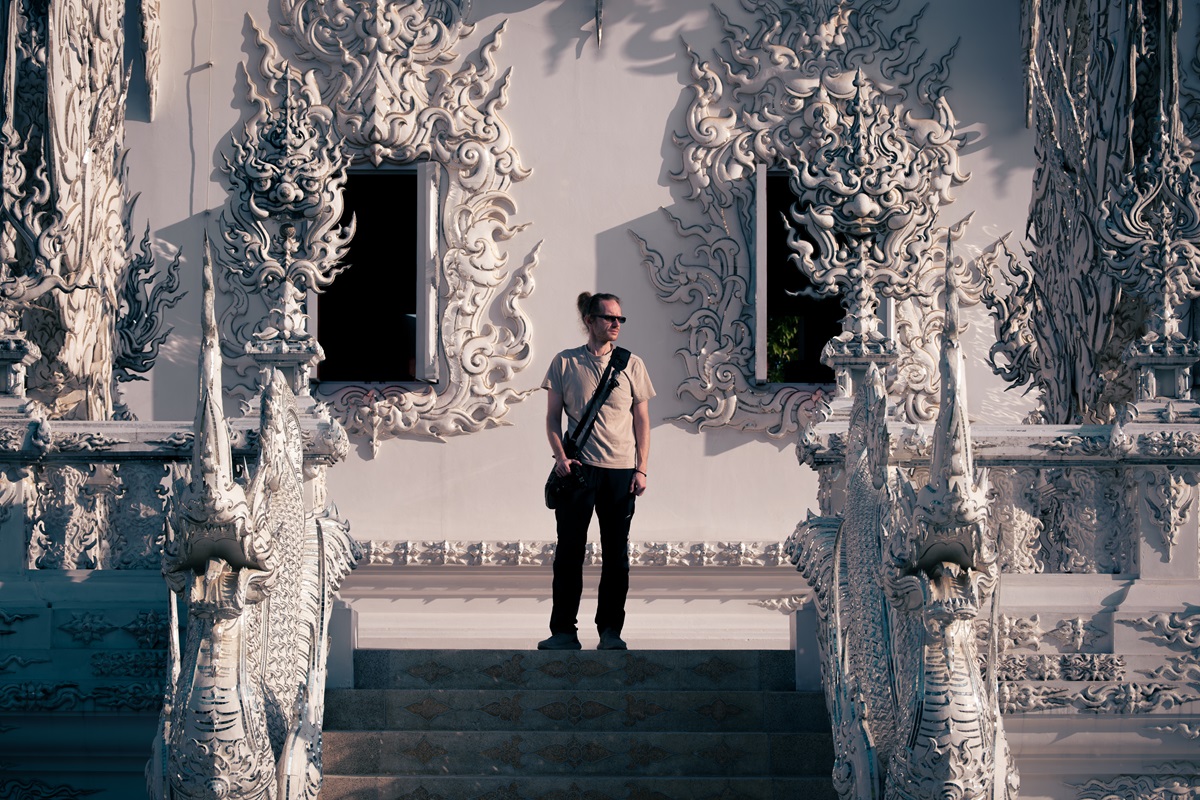
Officially named Wat Rong Khun, the White Temple in Chiang Rai is the one most people have likely seen on Instagram. It’s incredibly picturesque and, at the same time, super unique and bizarre!
The White Temple is part of a complex, which is also an art installation by the famed Thai national artist, Chalermchai Kositpipat. The exact number is divided online, but he spent a lot of his own money building the compound, replacing the original wat, which needed drastic repairs. The White Temple was initially opened in 1997 and has been continually improved and added to since.
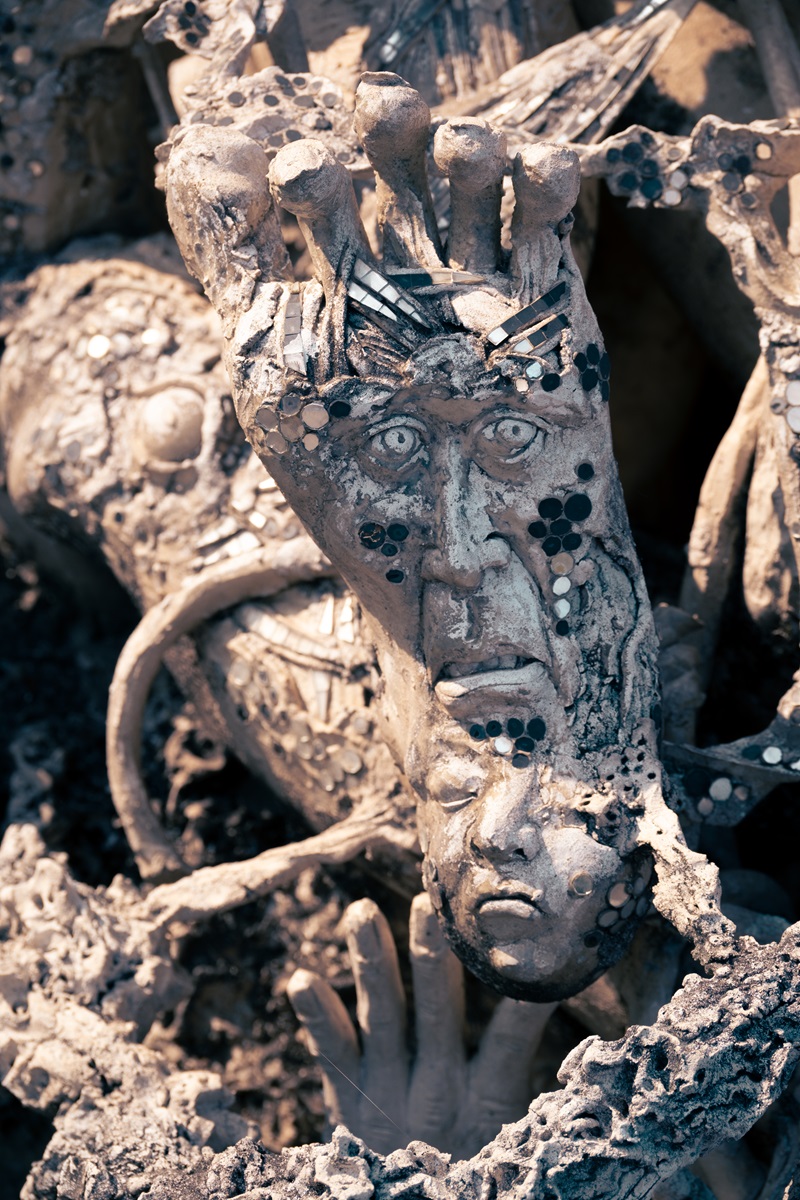
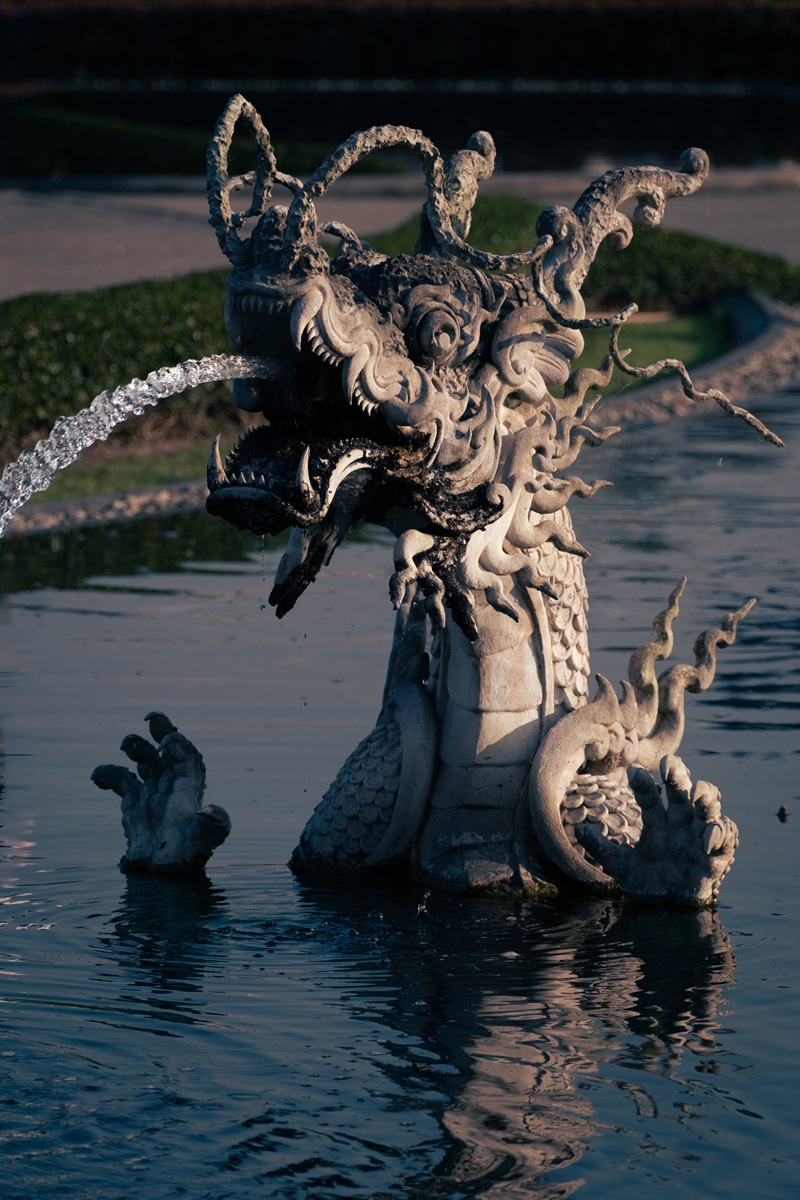
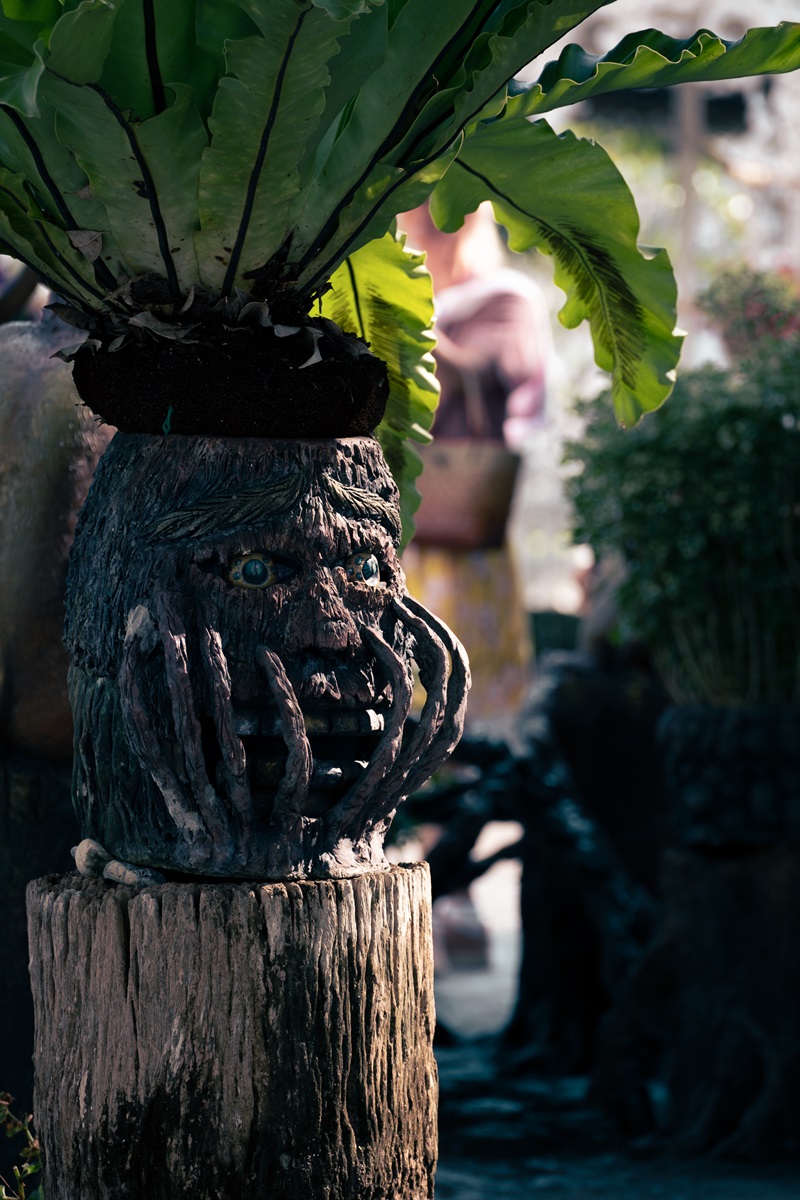
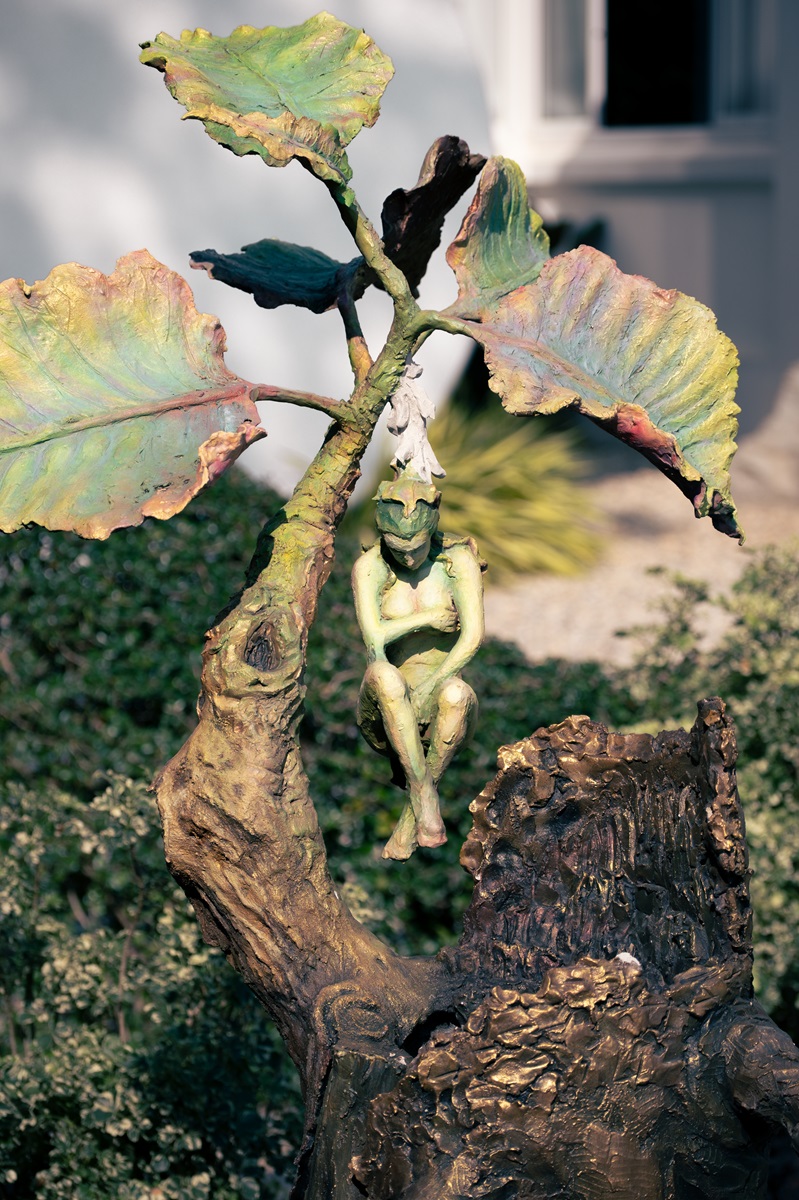
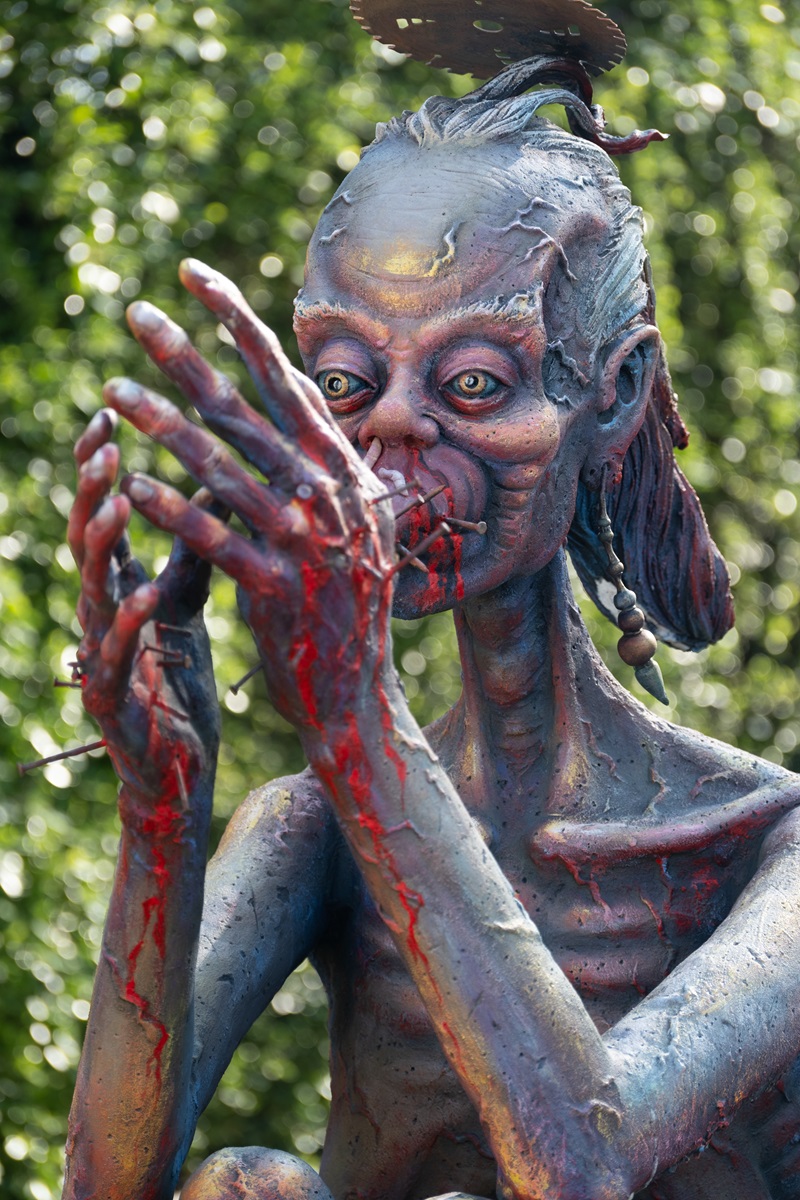
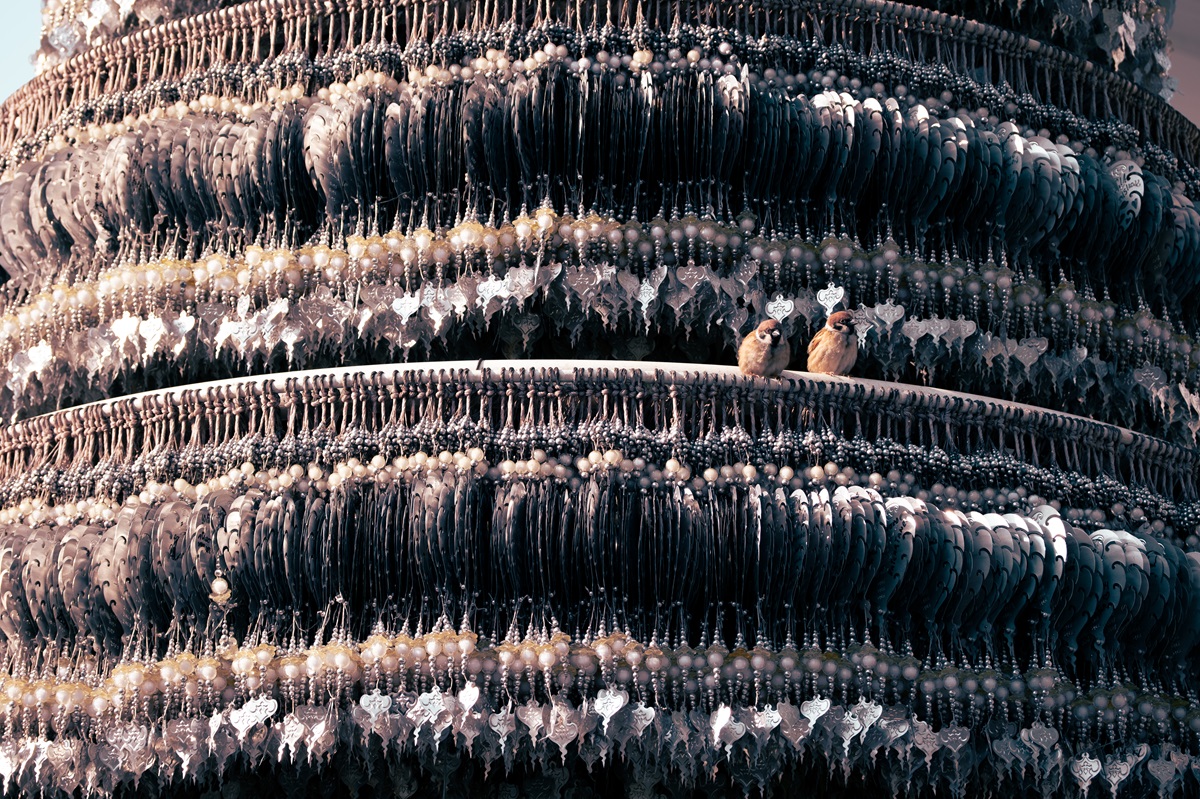
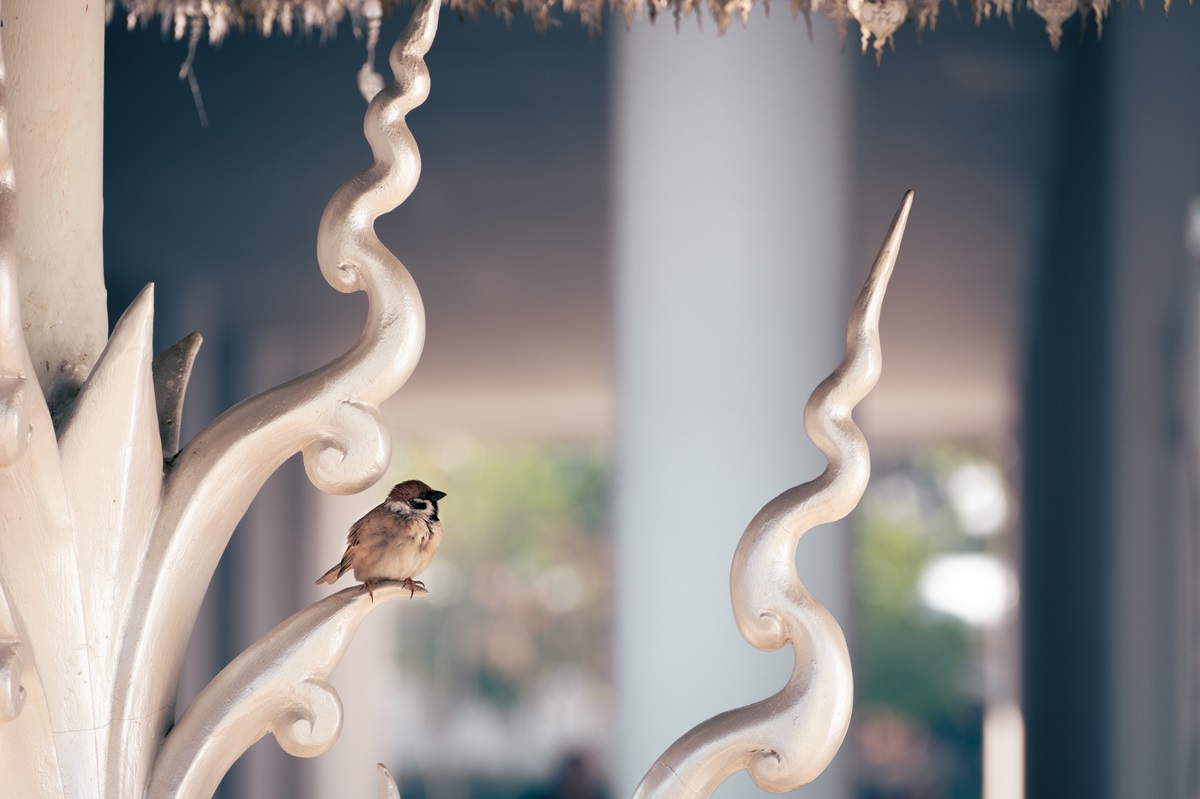
It’s a large site, with far more to see than just the White Temple. There are art exhibitions, peculiar sculptures, pretty metal bodhi trees to hang wishes on (tiny birds nest in them), some bizarre manmade caves, and another entire enormous lake-bound temple.
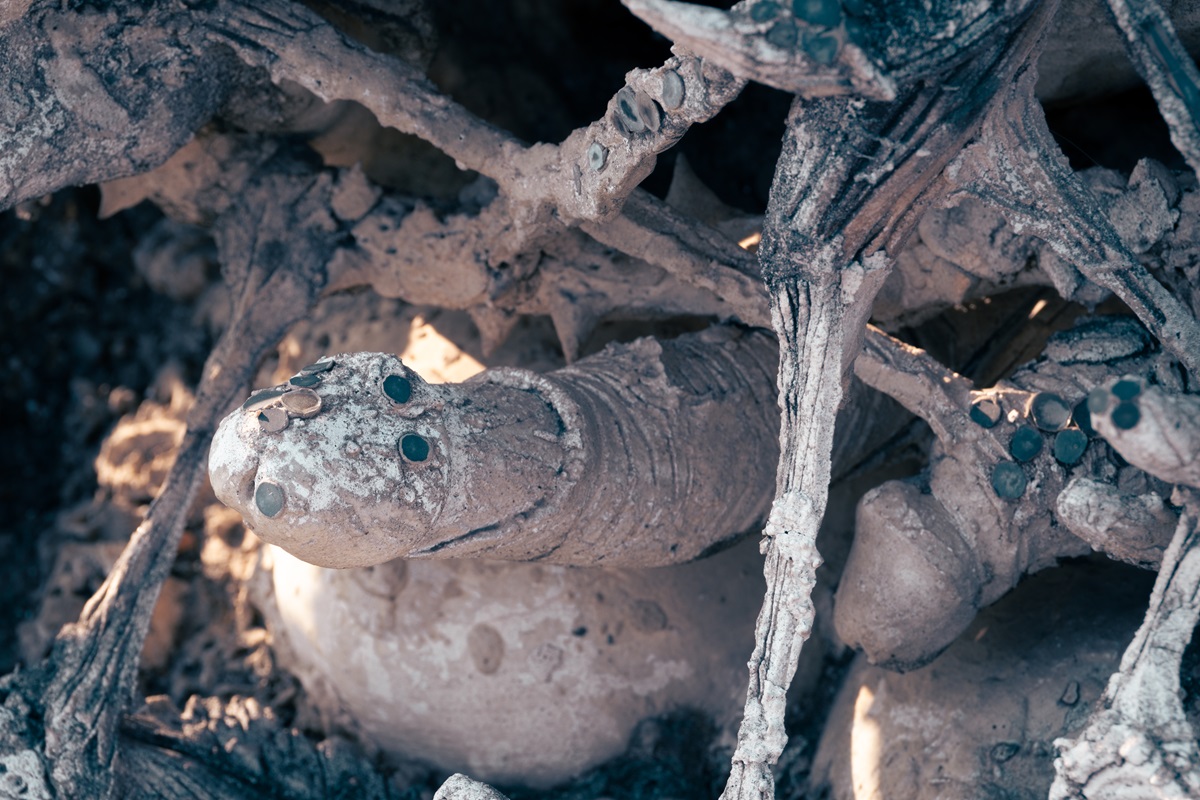
The other thing to note is the peculiarity. This temple is far more of an art exhibit than it is a place of worship. There are inimitable items everywhere, including a lot of handmade penis sculptures, amongst other things! A trip here should definitely be looked at as more of an artistic installation than a wat, hence the uniqueness!
A surprising thing to note about the White Temple in Chiang Rai is that technically you can see everything for free. The only part with a fee is for access inside the White Temple area. However, the rest of the entire site is unrestricted access, and it is easy to see the entire White Temple from all around the perimeter, unobscured.
Finally, the temple has possibly the most intricate golden toilet block in the world (with its own Google Map location).


The Golden Temple
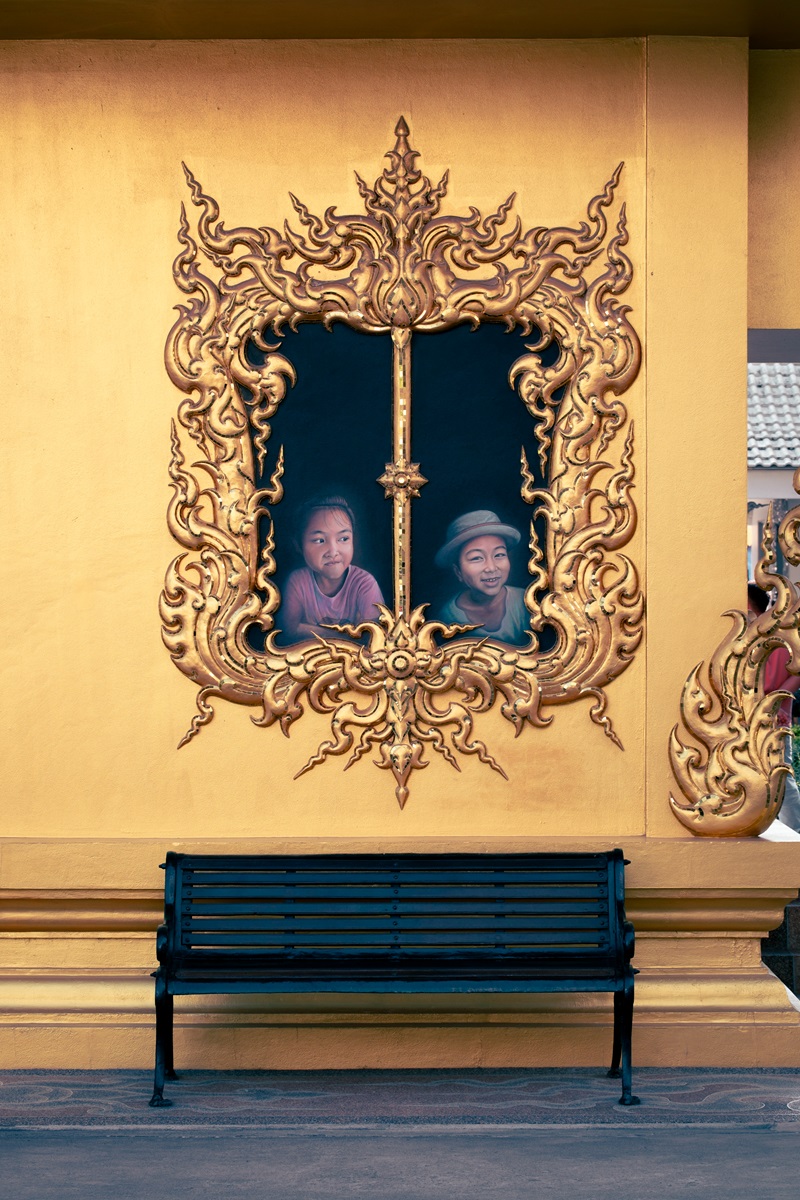
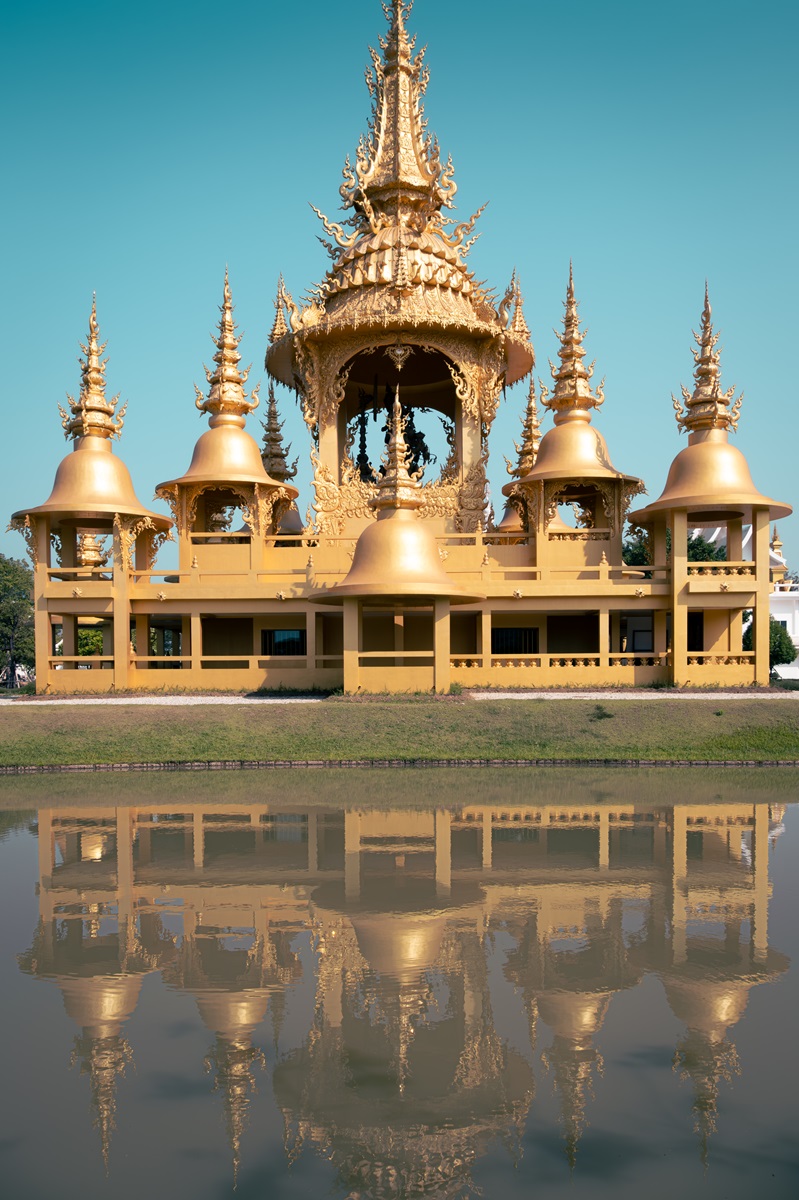
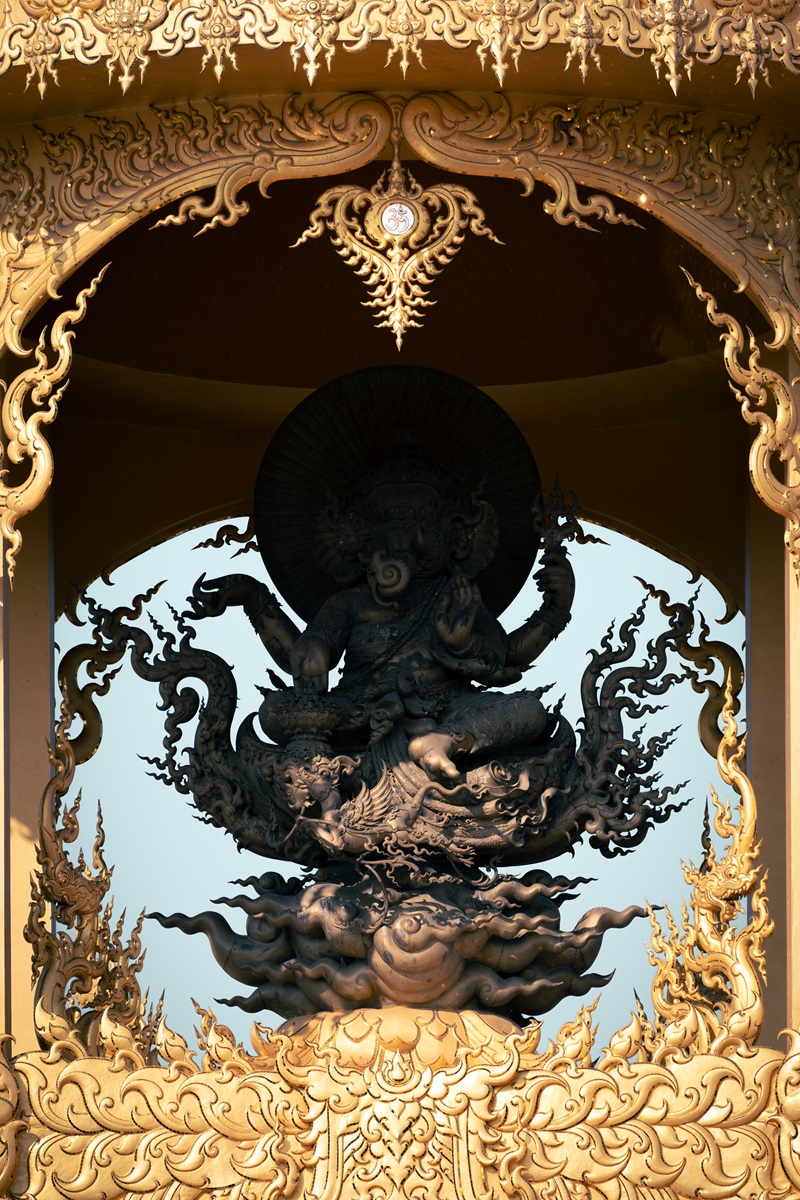
Located on a lake and accessed by a long, golden bridge, the Golden Temple is in the same complex as the White Temple. It houses a museum containing a small exhibition. Interestingly, it is dedicated to Lord Ganesha, rather than Buddha.
It is recently built, free to enter and incredibly photogenic (hint: get photos from across the lake from outside the complex, on the drive out). Parking is at the same place as for the White Temple.
WHITE AND GOLDEN TEMPLES INFO
Location – 14 kilometres south-west of Chiang Rai
Entry fee – 100 baht (for the White Temple itself, the rest free)
Parking – by main entrance, free, easy and plentiful
Opening times – 8am to 5pm daily
◊
WANT TO TAKE A BETTER TRAVEL PHOTO?
There are three parts to travel photography –
◊ Planning your trip
◊ Taking the photo
◊ Editing the end result
To get the highest quality, most sophisticated photos from your travels, you’ll need to perfect all three (plus a tiny bit of luck).
So, we’ve written a lot of country-specific guides about planning trips to various destinations, and also collated our absolute top tips for taking photos on location. We’ve also written a dedicated post on how to take the best black and white travel photography. Check them out if you’re interested!
We also write about typical editing mistakes to avoid. To complement that, we’ve collated a more intermediate user’s guide to editing travel photography. This covers more elegant, advanced and refined skills, ones that will promote your photos to the centerpiece of anybody’s wall.
–
The Blue Temple
The Blue Temple, officially named Wat Rong Suea Ten, was completed in 2016 and replaced an ancient, abandoned temple. The name means ‘Temple of the Dancing Tiger’ for the wild tigers that apparently used to roam there.
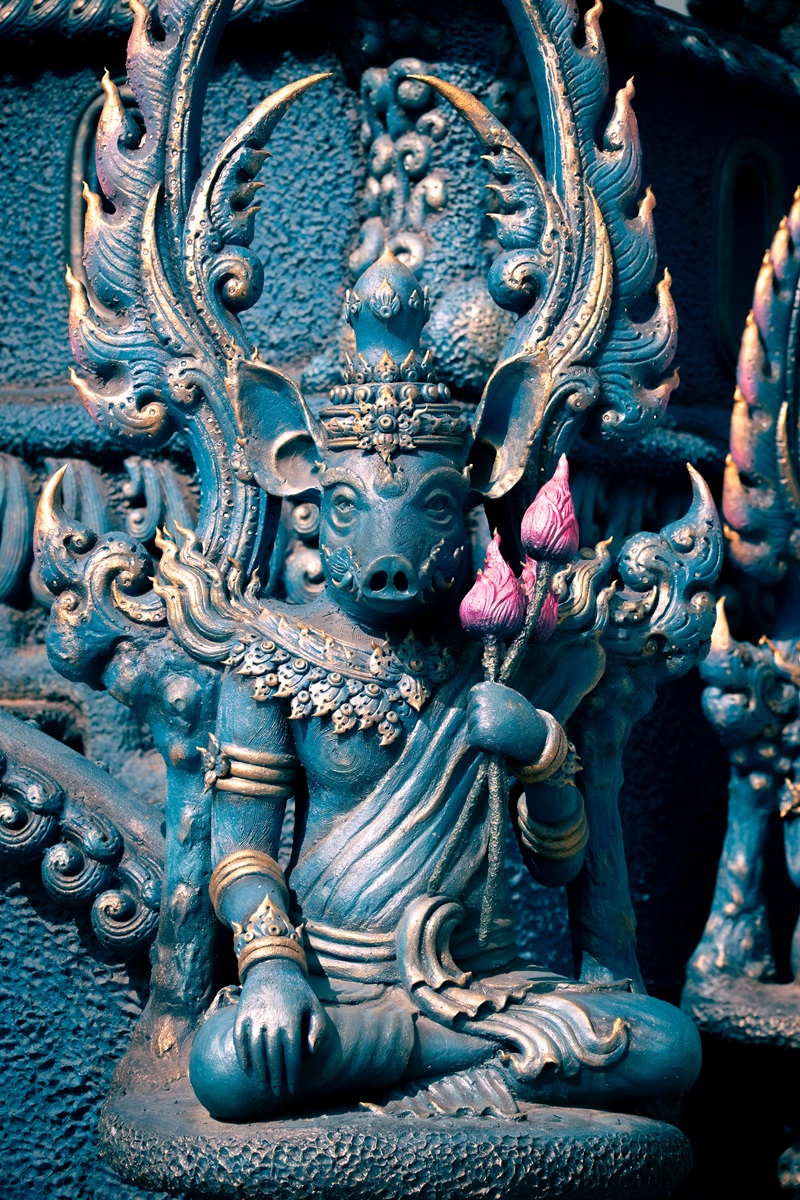
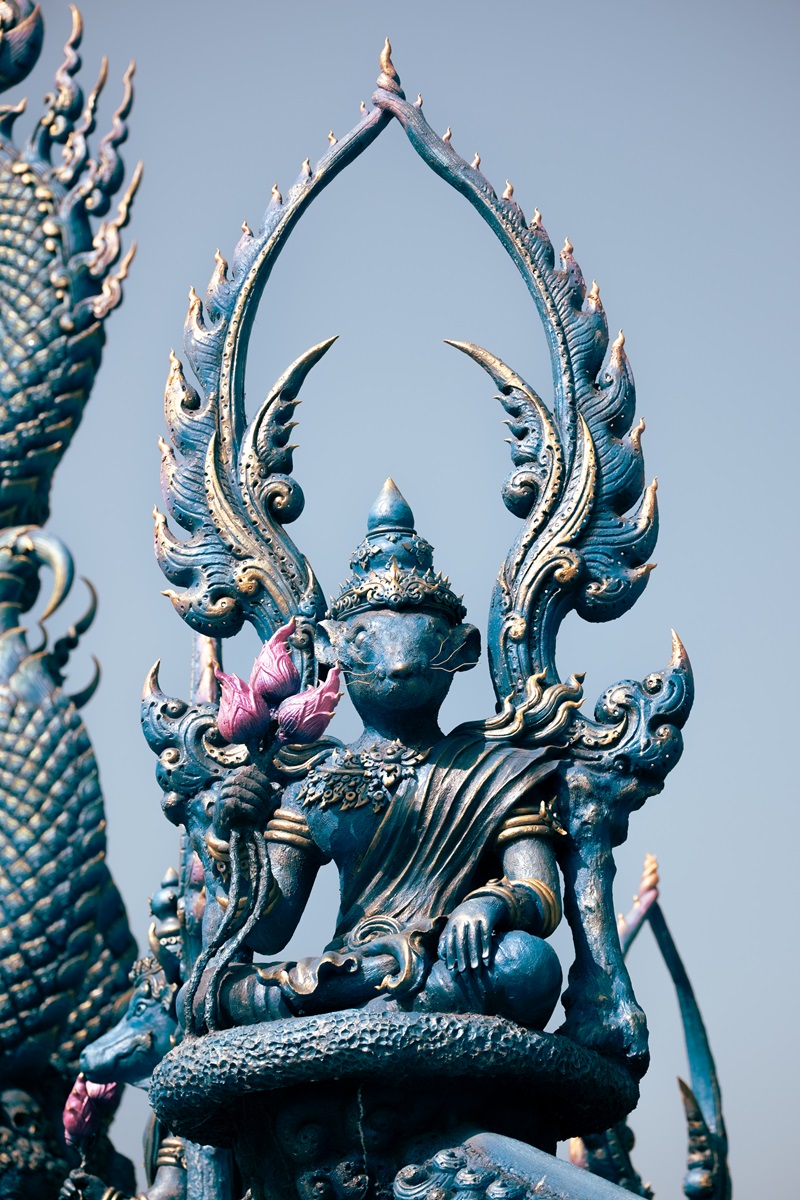
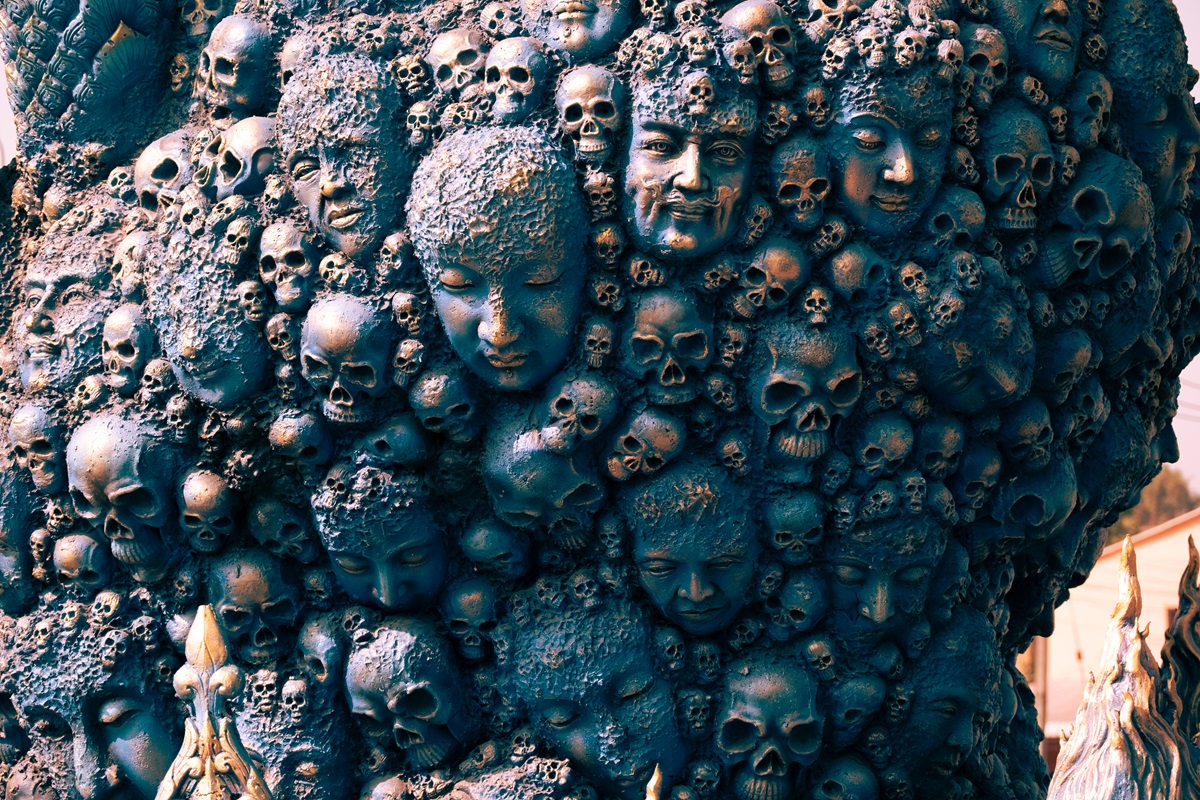
Designed by Phuttha Kabkaew, who studied under the same artist who designed the fever-dream White Temple, the Blue Temple is visually unique. The psychedelic nature of the statues, including half human, half pigs and rats, plus the vibrant paintings and colours inside, are all testament to the alternative teachings, I guess!
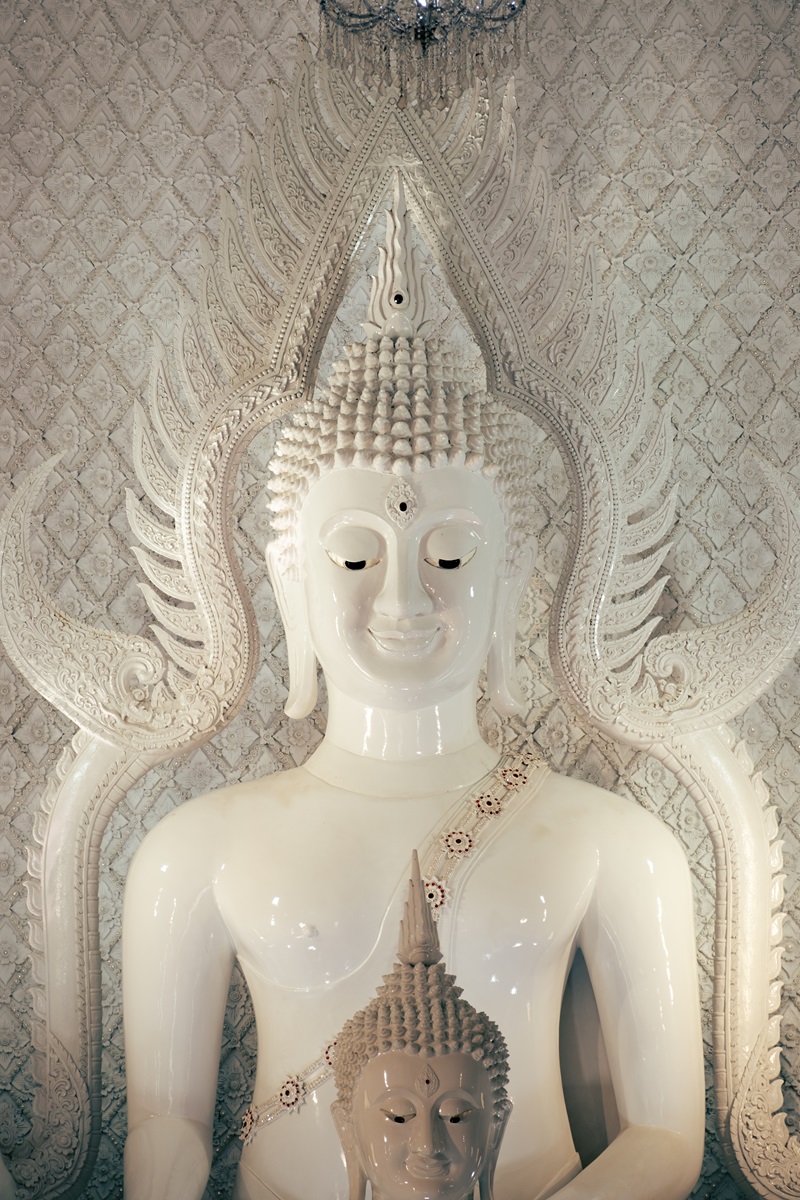
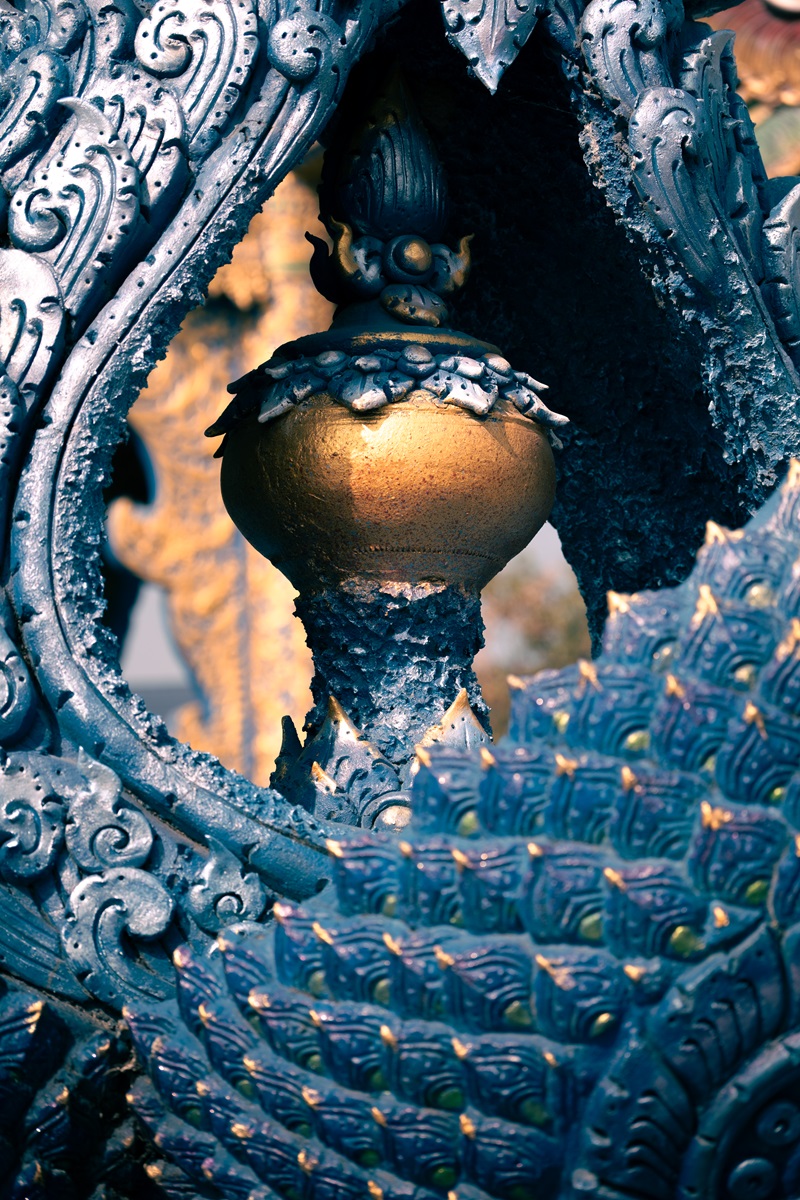
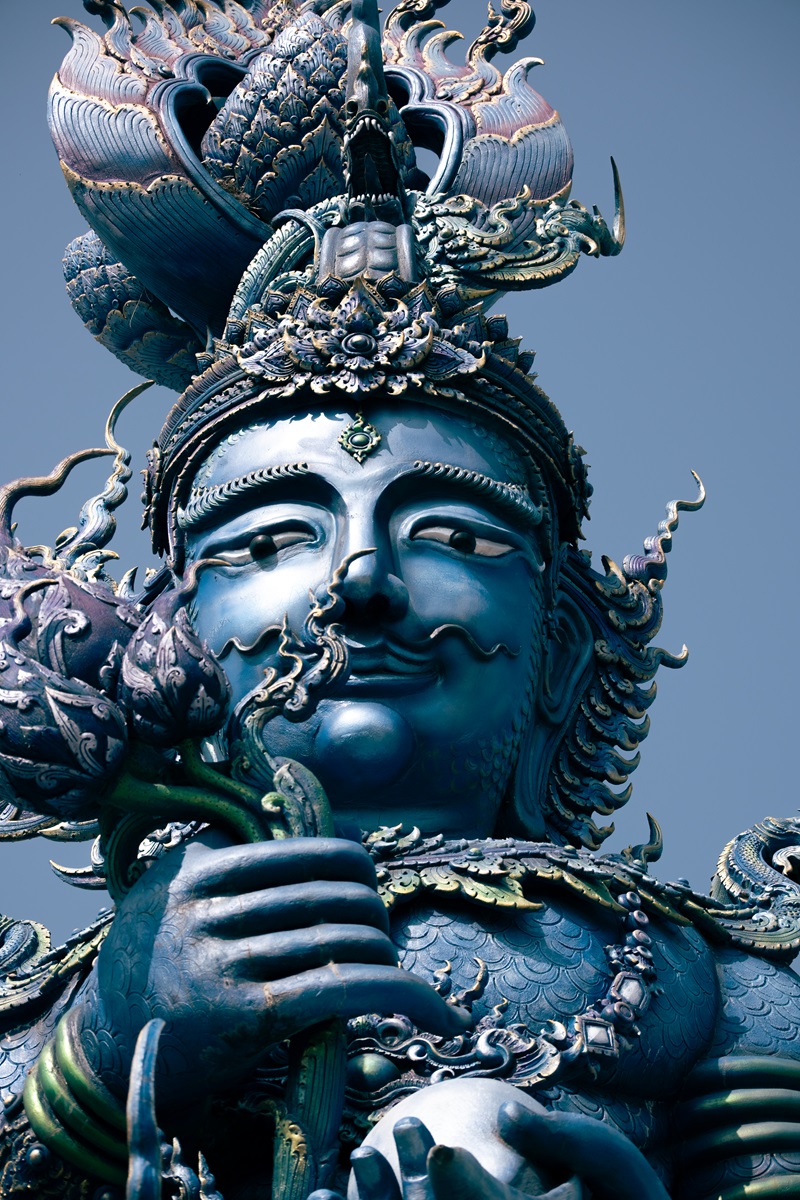
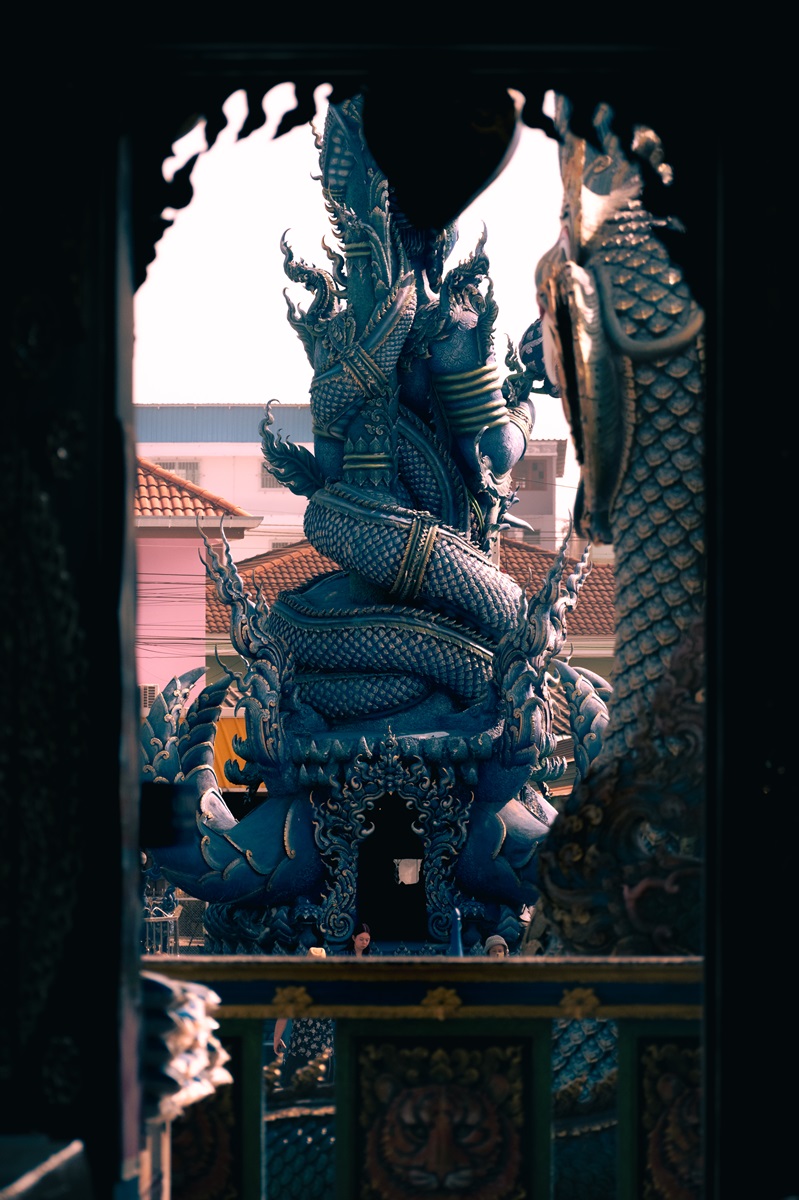
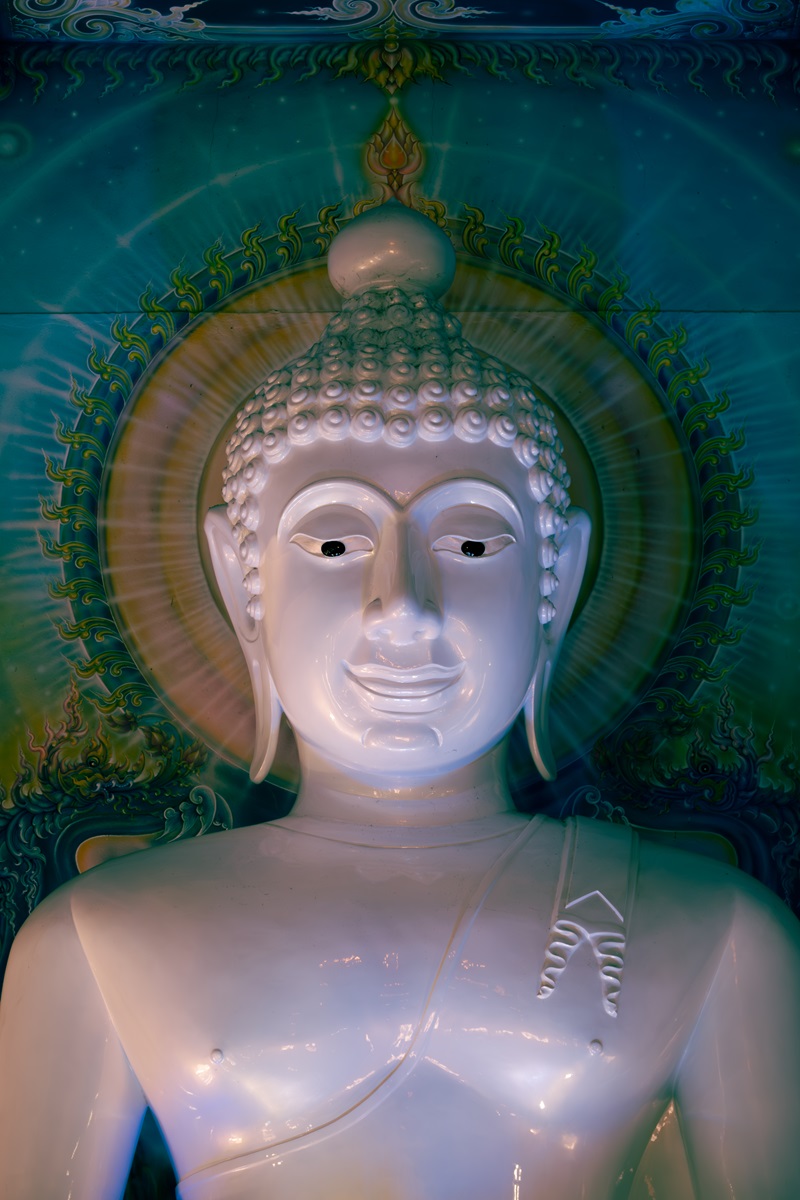
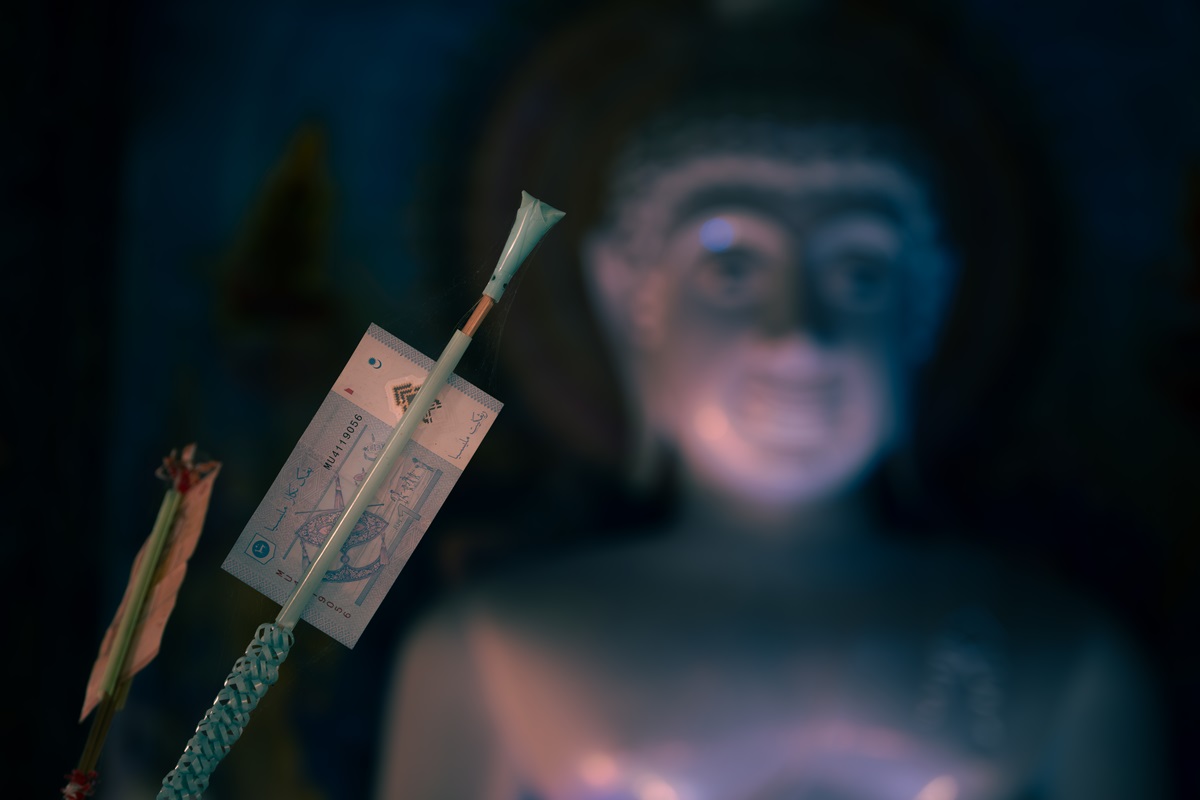
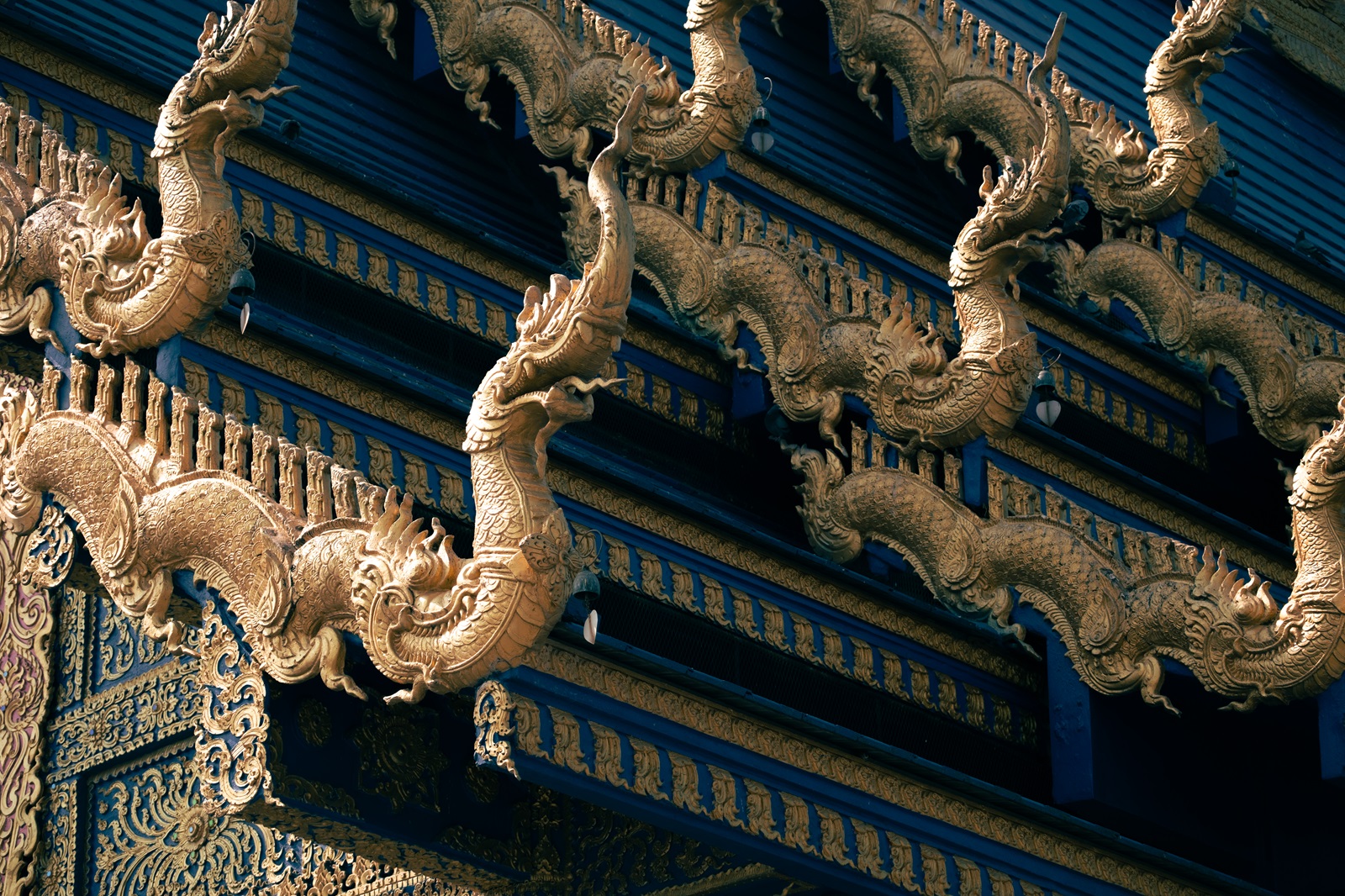
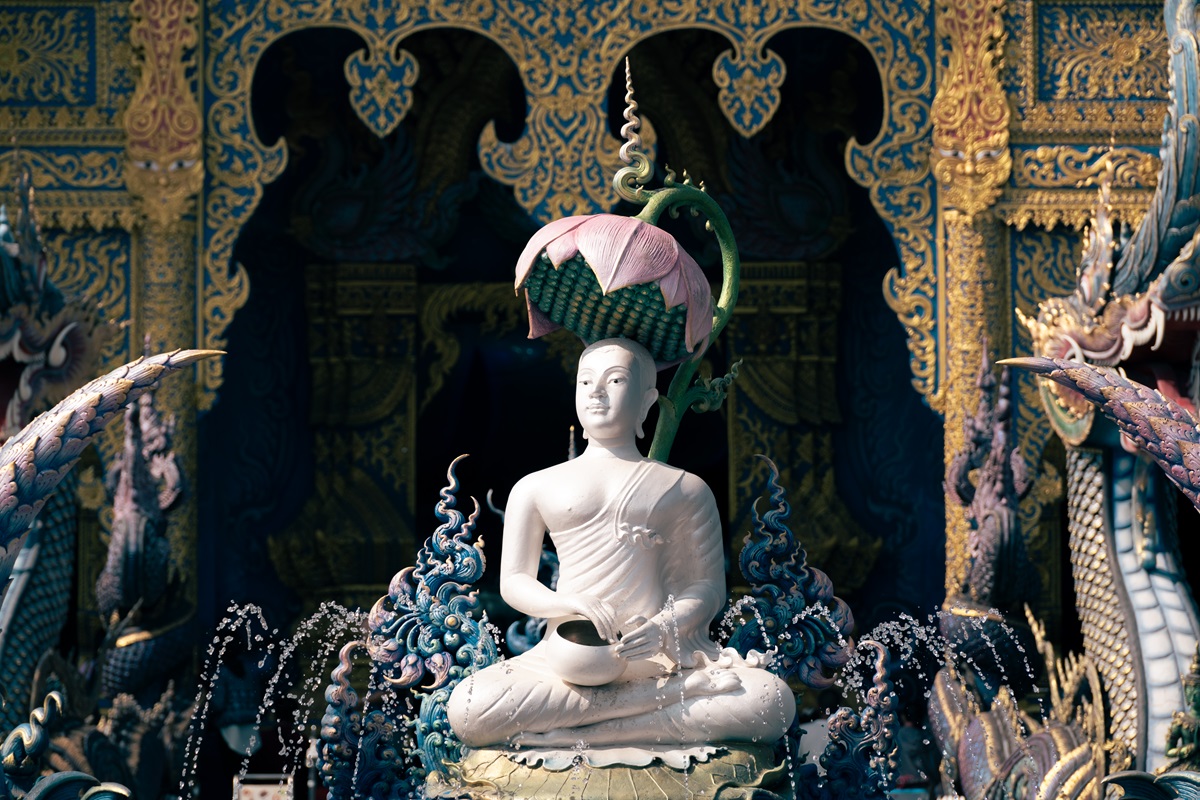
The Blue Temple is quite large and feels more like a place of worship than the White Temple, so in that sense, it appears more traditional. However, it’s definitely not conventional, aesthetically! As the name indicates, everything is blue, with some gold trim. The temple is home to a giant 5-6-metre-tall white Buddha, which glows with a blue hue inside the brightly decorated interior.
My favourite part is actually outside, with the huge, blue statues that guard the entrance and exit. They’re nearly the same height as the temple and just simply odd (in a good way).
Genuinely, I thought I was going to pop into this site for about ten minutes, then leave, like a usual temple, but not this time!
There are some on-site stores that sell, amongst other things, surprisingly delicious blue-coloured coconut ice cream with sticky rice. (I know it seems like a gimmick, and I guess it is, but it’s genuinely great). There is also an art museum which had an exhibition going on when we visited.
BLUE TEMPLE INFO
Location – a little over two kilometres north of Chiang Rai
Entry fee – none
Parking – inside the main entrance, free and plentiful
Opening times – 7am to 8pm daily
◊

The Goddess of Mercy
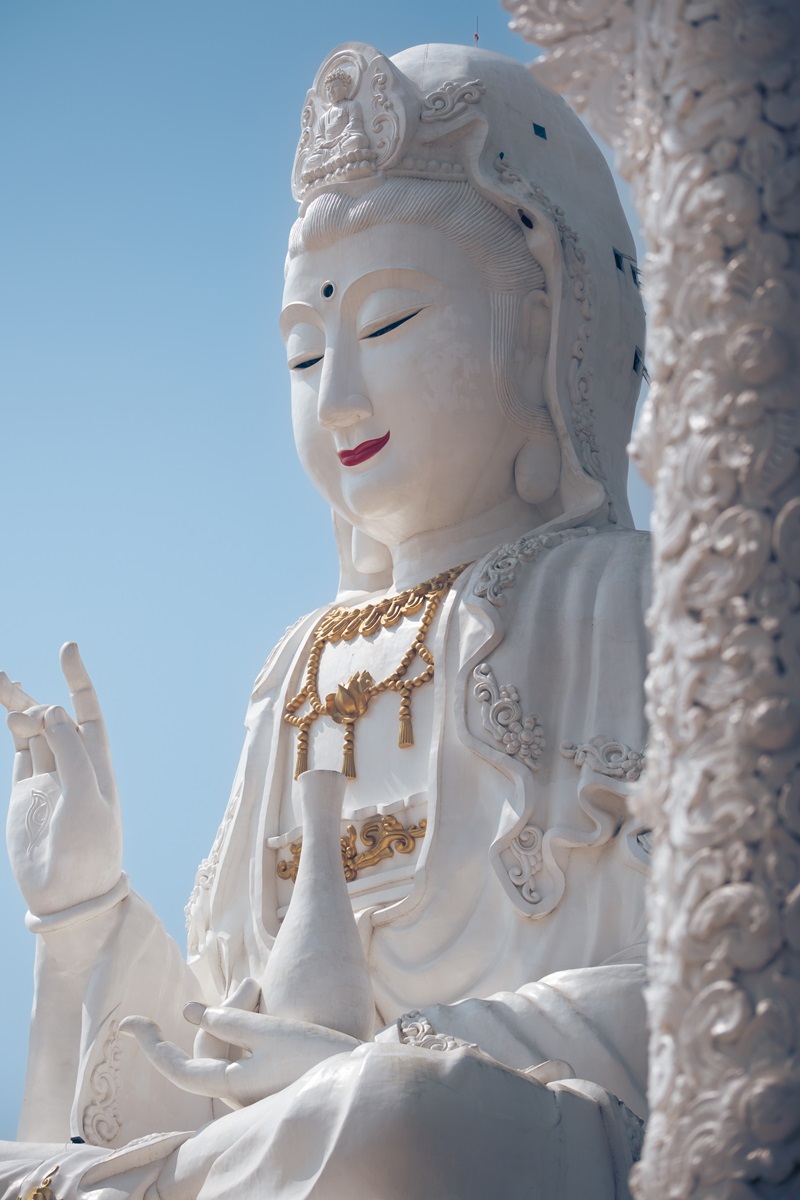
This one is a little different. It’s not entirely a temple, as such, with the main attraction being the insanely tall 90-metre giant white statue of the Goddess of Mercy (Guan Yin).
Honestly, you have to see how big this statue is in person to really get it. It is set up atop a hill with a long straight set of stairs leading to the top, lined with Chinese dragons instead of the usual Thai serpents.
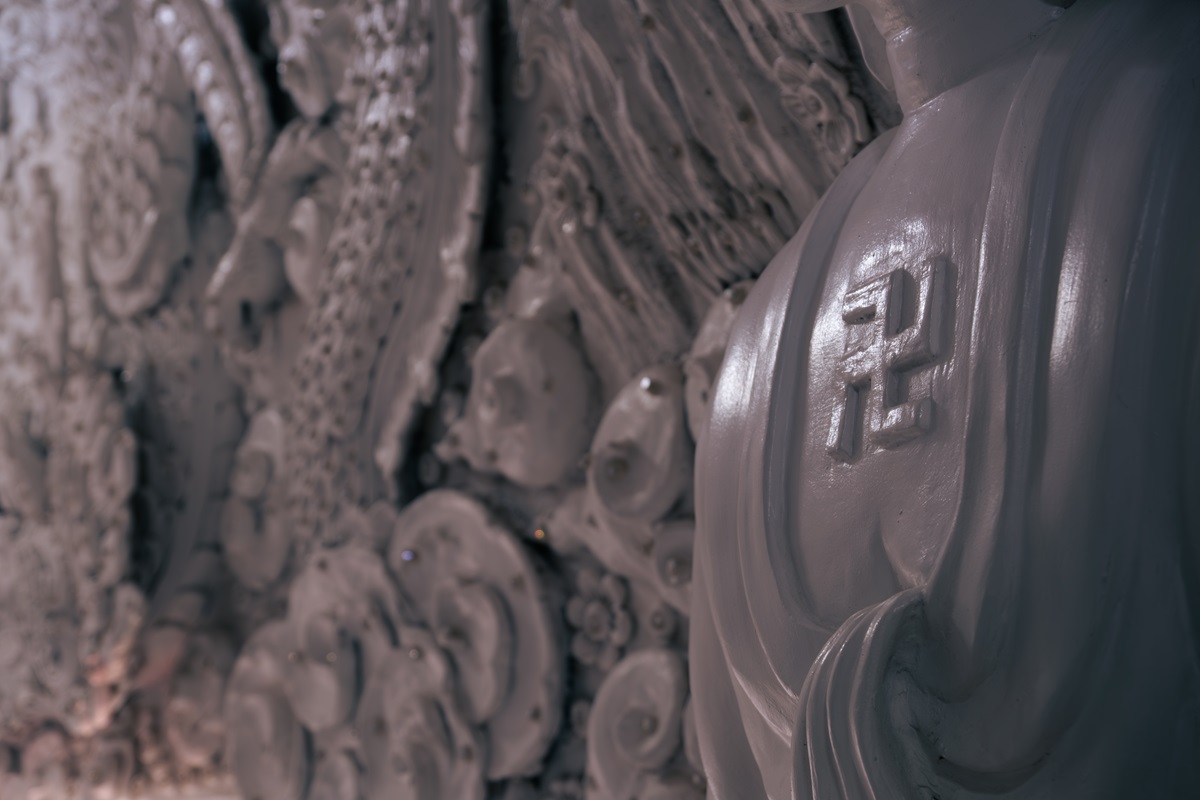
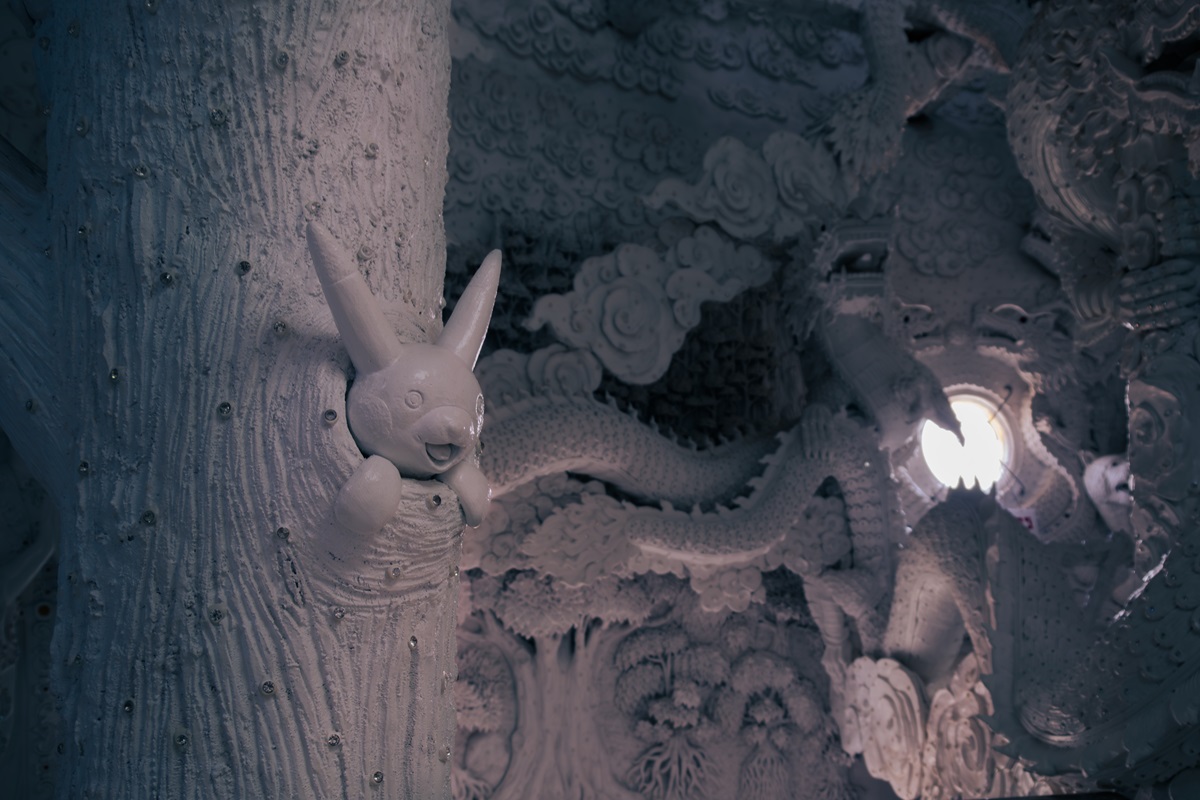
At the top of the stairs, underneath the statue itself, there’s a kind of shrine where people leave offerings of entire bags of rice. There is also the option to take the elevator up to the 25th floor (not sure where all the other floors are), where you end up inside the statue’s head and can see out of its eyes! This provides panoramic views of the surrounding fields, forests and mountains (plus the car park). The top floor inside is intricately decorated all in white, with beautiful details of white dragons, animals and Buddhist mythology.
Around the Goddess of Mercy
Next to the statue, down the steps, is an elaborately designed, gleaming white temple called Wat Huay Pla Kang. It’s probably my favourite temple in Thailand, purely for its simple yet ornate, bright, quiet feel. I felt like I could sit in there all day.
The windows let in rays of white which echo around the all-white interior, highlighting the golden altar adorned with colourful flowers. There were no foreign tourists when we visited, so it felt a world away, vibe wise, from the previous two temples mentioned in this post.
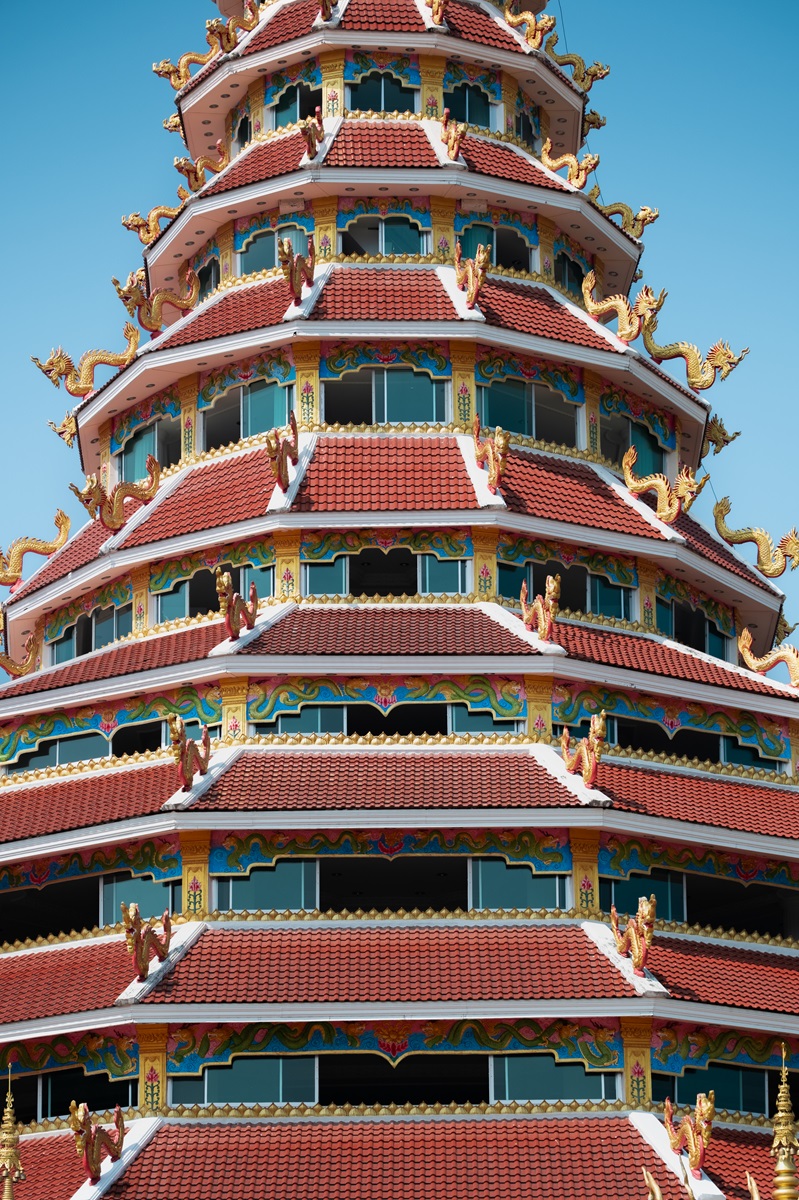
Sitting next to Wat Huay Pla Kang is Choktham Chedi, a colourful nine-storey pagoda, starkly contrasting with the adjacent striking white. It’s very striking, guarded by Chinese dragons with statues of Guan Yin on multiple levels inside and in the atrium.
This area was a very happy surprise for us – we would highly recommend it. There were no foreign tourists, lots of Thai tourists, local food vendors in the car park and some excellent pots of pineapple for only 10 baht. The parking was easy and free (if it looks full, just keep going to the lower levels, there’s masses of space).
GODDESS OF MERCY INFO
Location – 8.25 kilometers north-west from Chiang Rai
Entry fee – free to enter (the only charge is 40 baht for the optional lift up to the 25th floor of Guan Yin)
Parking – multiple cars park areas on site, free and abundant
Opening times – 7am to 9pm daily
◊
Oher Temples in Chiang Rai
Wat Phra Kaew Chiang Rai
A 14th century Buddhist temple which used to enshrine the famous Emerald Buddha that now resides in Bangkok. A replica statue sits in place now instead, surrounded by vibrant hues of deep reds and gold. Situated just on the outskirts of the city centre, there is free entry to the museum as well as the temple. Temple grounds open from 7am-6pm, the museum opens from 9am-5pm.
Wat Jed Yod
Built in the 18th century and far less ‘in your face’ than the Blue and White temples, Wat Jed Yod is smaller and more traditional. The temple name translates to ‘Seven Peaks’ which is a nod to the seven chedis at the back of the building (kind of like tower, spire things) – one for each week of meditation Buddha spent after enlightenment. Open 6am-9pm, free parking on-site.
Wat Ming Muang
Undergoing some renovations when we visited earlier this year, this ‘Temple of the Crouching Elephant’ follows an elephant motif throughout instead of the usual Thai nagas (snake-like creatures). At 700 years old, it’s one of the older sites on this list, and mixes Thai and Burmese influences. It’s an easy temple to visit if you are checking out the decorative clock tower in Chiang Rai. Open 8am-4.30pm. Parking on-street by the temple (it’s quite busy around here though).
Wat Klang Wiang
Another centrally located temple, Wat Klang Wiang was built in 1432 and sits close to the modern-day Saturday night market. The vibrant red décor makes this temple stand out from the others on this list. Open 8am-4.30pm. Parking on-street around the corner from the entrance.
WHERE TO STAY IN CHIANG RAI
Chiang Rai has the usual variety of accommodations, from five-star resorts to hostels, and everything in between.
We’ve stayed in a few different hotels in Chiang Rai, and these are our suggestions:
The Hop Inn | (there are two – choose either, but the clock tower one is better located). I wouldn’t usually recommend a motel here, but if you are bringing a car and need decent, free, safe parking, it’s the most reliable option right in the centre of the city. Hop Inn rooms are basic but clean and functional, plus *always* an absolute bargain for the price.
Heritage Chiang Rai Hotel and Convention | a nicer option which has abundant free parking, but is a little further south from the centre of the city than the other suggestions. The rooms are pretty nice though and the location means you don’t have to drive and park in the city centre.
Sleepy House Chiang Rai | this lovely, more local option right in the city centre is a little, family-run, central place with a cat theme going on. It has some parking, but not much. However, it’s conveniently located adjacent to the bus station if you are intending on getting the bus from Chiang Mai.
Nak Nakara Hotel | for a more upscale, but still very central, hotel in Chiang Rai, we recommend this one. It’s super nice and probably has the best money to quality ratio on this list. It’s distinctly styled, with very Thai-style décor, and it also has a nice, big shiny pool. We think it’s well worth the relatively small price tag.
–
RELATED POST | ONE DAY IN BANGKOK ITINERARY

Where to Next?
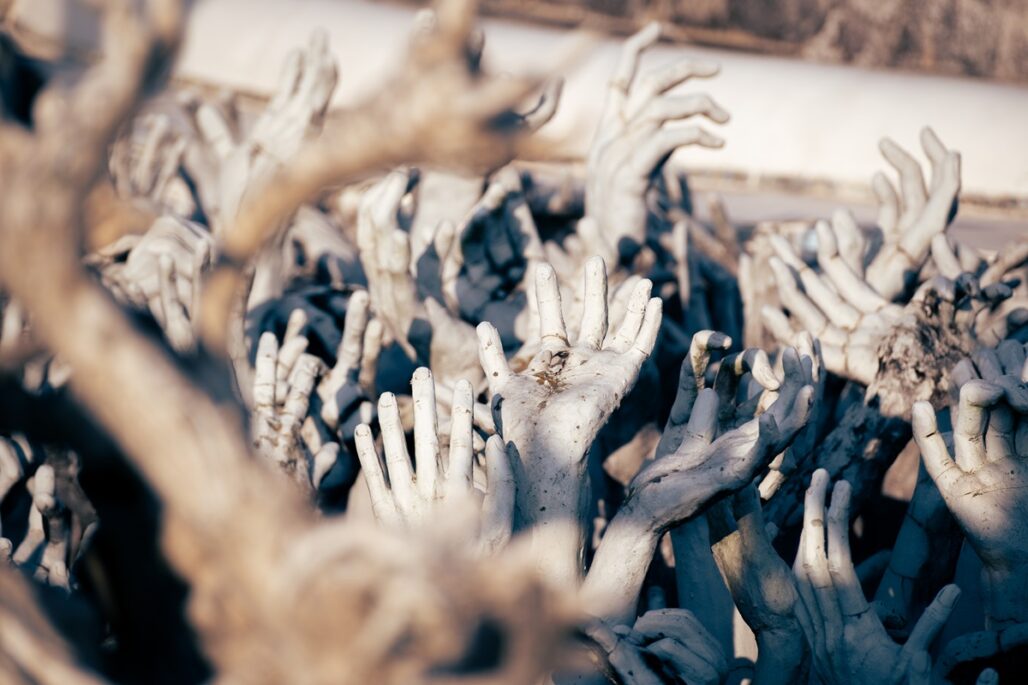
I got lured to Chiang Rai on our most recent visit because of the White Temple. I’d seen the weird pictures of creepy hands trying to grab people, and its shiny, intricate architecture all over the internet. My curiosity was piqued. The oddness did not disappoint – even just to visit that site alone, Chiang Rai is worth a visit.
Chiang Rai is a rare case in Thailand. It has many things to do, great accommodation, lots of resident-oriented restaurants, plus a fun night market and walking street. We really recommend spending a bit of time in the city to check out the slightly alternative wats too!
Although the Blue and White Temples are undoubtably touristy, that doesn’t mean they are not worth visiting. Respectfully treat them like the incredible art that they are.
For more help organising a trip to Thailand, have a peek at our monster planning guide, it’s got everything you could possibly need! If you are heading to the islands, have a look at our Koh Chang guide, Koh Mook guide, Koh Lanta guide or our Andaman island itinerary.
Have a fantastic trip to Thailand!
Hi, thanks for visiting our blog! If our free content has been of help to you, or you’ve just enjoyed our random ramblings and musings, say thank you by buying us a coffee! It helps keep The Restless Beans blog up and running.
Thank you, Claire + Nick


Hey! As for now, what is your favourite travel destination? We just came back from Oman (with a great help of your blog) and we wonder if there is more beautiful destination in the world. I was just thinking about Thailand, Sri Lanka or maybe Japan as a potential competition, but haven’t been there yet. What’s your opinion?
(I mean place to visit as a tourist, not to actually live – to live the best is Poland, of course;))