

Oman’s Dazzling Wadi Shab: a Complete Hiking and Swimming Guide
Scribbled by Claire ⬩ 01 Apr 2026
Are you planing on visiting Wadi Shab but aren’t sure whether to hike or swim? We have all the information you need to have the ultimate visit; parking tips, how to get there, hiking, swimming, the boat ride, costs, and more.

Wadi Shab is one of the most popular outdoor attractions in the Sultanate and, usually, that means it would automatically be swiped off my to-do list.
In my mind, outdoorsy, natural attractions and crowds of people just do not mix. However, there are some exceptions: the Grand Canyon, Sigiriya in Sri Lanka, Mount Fuji – these were all epic enough to persuade me to shelf my usual cynicism and tolerate the discomfort.
Well, Wadi Shab turned out to be one of those places and holy-hell am I glad I didn’t skip it. Not only would I have missed out on this incredible place, but I didn’t see a single other visitor until my walk out.
It was perfect, and I chastise myself constantly for even considering giving it a miss.
I think I was put off because the entire journey sounds a little complex and involves a boat ride, a quite dramatic-looking canyon hike, a swim through multiple pools and, finally, a waterfall in a cave! If all this sounds a little exhausting (it did to me), do not fret – it’s an easy, beautiful day trip with no need for a guide.
So, we’ve detailed exactly how difficult the hike and swim are, how not to get lost, how to get the boat, where to park, things to bring, safety and the best way to get there.
It was honestly so good, I’ve actually gone back!
IN THIS GUIDE //
Exploring Wadi Shab: a Guide
What is Wadi Shab
Wadi Shab Quick Facts
How to Get to Wadi Shab
Driving to Wadi Shab
Tours, Taxis and Public Transport
Parking at Wadi Shab
The Boat Ride
The Hike Through Wadi Shab
– What to Expect
The Wadi Shab Swim
– Is the Swim Hard
– The First Pool
– The Second Pool
– The Third Pool
– Water Temperatures and Fish
– Hiking Out
The Wadi Shab Cave and Waterfall
What to Wear for Your Wadi Shab Visit
What to Bring
Best Time and Season to Visit
– Best Time of Day
Accommodation Near Wadi Shab
Camping Near Wadi Shab
Frequently Asked Questions
Where to Next
This post may contain affiliate links. If you book through these links we may make a small commission at zero cost to you. It helps us pay for the upkeep of this blog. Thank you!
WADI SHAB — QUICK FACTS
OPENING TIMES: boat runs between 8am—5pm
NEAREST TOWN: Sur (45-minute drive to the car park)
COST: 1 OMR (Omani rial)
BEST SEASON: winter, the cooler the better
TIME NEEDED: 3-5 hours
GUIDE: not required
AVOID: weekends due to crowding
–
RELATED | 14 BEST WADIS IN OMAN
What Exactly is Wadi Shab?
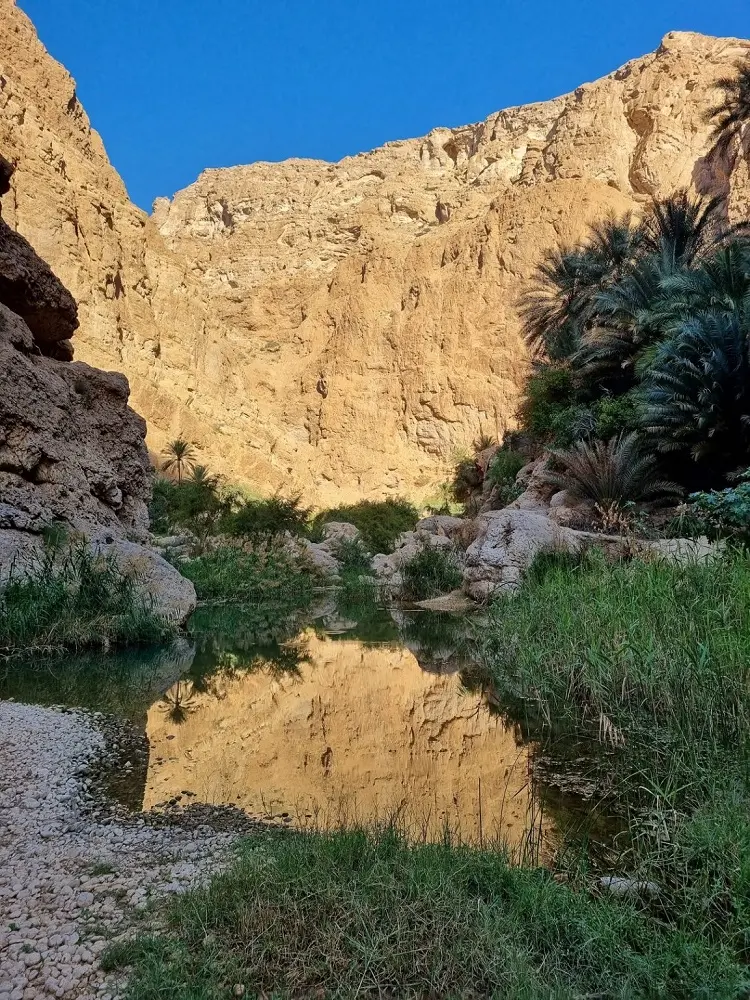
Wadi Shab, also called Wadi Ash Shab, is a shortish canyon hike in the eastern Hajar Mountains of northern Oman. I find it reminiscent of the slot canyons of Utah, which are some of my favourite places on the planet – only Wadi Shab has the added bonus of many beautiful turquoise pools that are fed by a year-around flowing underground spring.
The spring waters sustain local farmers who actually grow things in the canyon – so a cool benefit of this hike is that you’ll get to see some local agriculture!
The hike culminates in three pools and a cave, which have become a mini internet sensation in recent years. It’s almost certain that if you Google Oman, you’ll get images of this canyon!

How to get to Wadi Shab
Wadi Shab is one of the most accessible tourist locations in Oman and is really easy to get to.
It’s located on the outskirts of the small village of Tiwi, along Oman’s north eastern coast.
Driving to Wadi Shab
Hiring a rental car is the best way to get to Wadi Shab and you do not need a four-wheel drive car to get there.
The entrance to Wadi Shab is right off the main highway (Route 17) along Oman’s eastern coast, about 150 kilometres from the capital Muscat and 40 kilometres north of the port city of Sur.
The entire journey from either city is on flawless paved roads and Wadi Shab is clearly signed. If you put ‘Wadi Shab Parking’ into Google Maps, it will take you directly there. I promise, you can’t get lost and it’s a really easy drive.
Driving is the best way to do this trip since you can arrive and leave on your own schedule which, considering how busy it gets, is a huge benefit.
Tours, Taxis, and Public Transport
If you’re unable to drive yourself, there are absolutely loads of tours that run to Wadi Shab and also include Bimmah Sinkhole on the way. They’re a pretty popular day trip from Muscat and are an easy way to see a bunch of stuff if you’re short on time.
There is no direct public transport to Wadi Shab. It’s possible to potentially hitch hike (Oman is safe and super-friendly), but we didn’t see many people getting picked up or trying to grab lifts on this route because it’s mostly motorway/highway style roads.
Taxis are prohibitively expensive, so we’d recommend choosing any other option!
CAR HIRE FOR YOUR OMAN TRIP
We always rent our vehicles all over the world, including our recent trips in Oman, Saudi Arabia, Jordan, Tunisia and Morocco, with Discover Cars. They’re often the most affordable, plus they paid out immediately on an insurance claim we made when our car took some heavy damage in Sicily.
Read more about why we love them so much!
–
TAKE A LOOK BELOW OR CHECK CAR RENTAL
Parking at Wadi Shab
Parking is free at Wadi Shab – search for ‘Wadi Shab Parking‘ in Google for directions.
The moderately-sized, paved parking area can get extremely busy on weekends and later in the day.
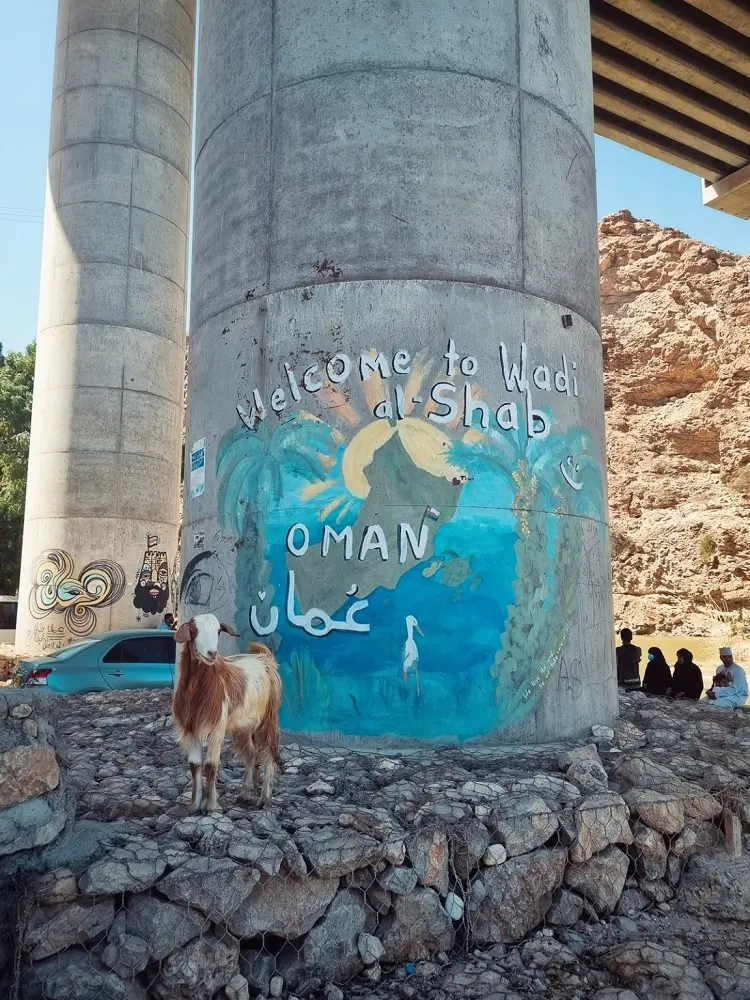
We arrived a little before 8am on a weekday and were the only car in the lot. However, when we returned around midday, the car park was rammed full. There were a few spaces left, but not many. People were milling around everywhere and there were goats trying to get into cars.
Another time we were just driving past in the later afternoon and cars were queued all the way down the main road outside the car park. It was parking carnage, honestly, so definitely arrive early and avoid Friday and Saturday if you can.

The Boat Ride to Wadi Shab
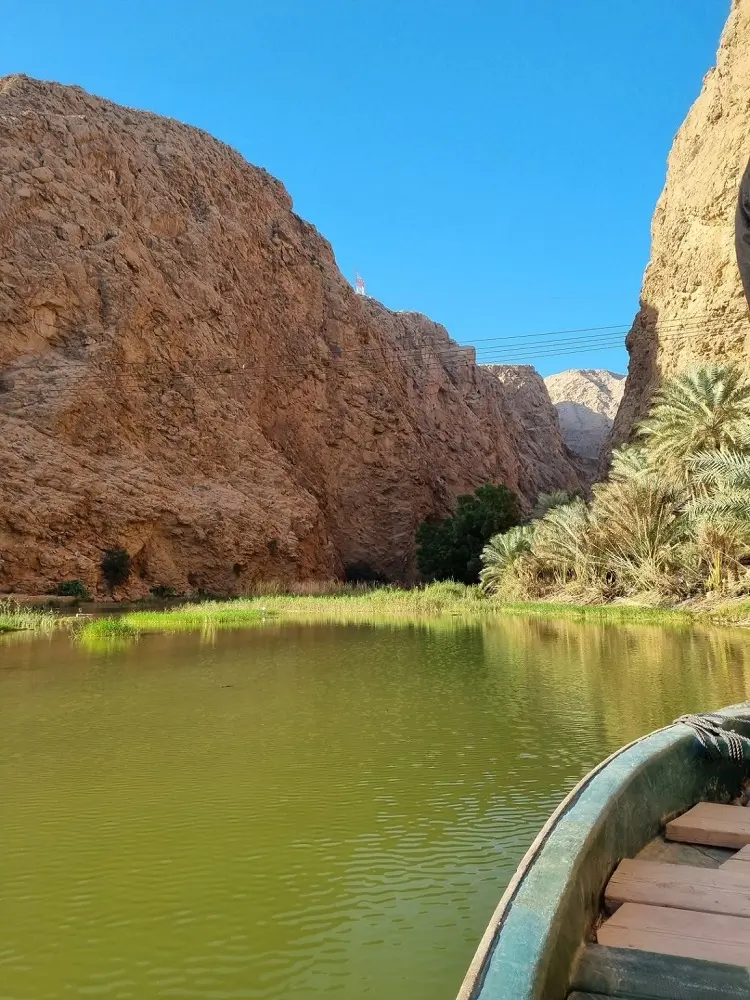
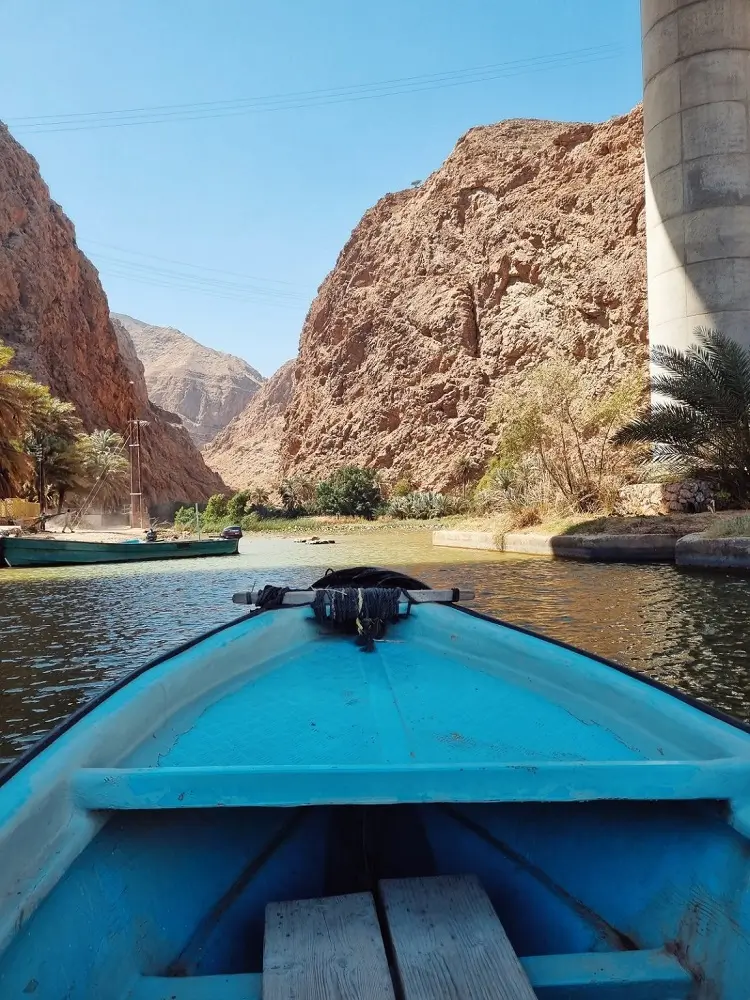
The hike through Wadi Shab starts with a quick boat ride across the wadi waters to the other side of the canyon. It takes about two minutes and the friendly men there charge 1 OMR in cash for the privilege of riding in their boat (round trip price in 2026).
We arrived early, around 7.50am. As soon as we got out of the car, a man explained the price, asked if we wanted a guide (no pressure), and called over a boat. This was technically before the stated opening hours, so it appears that you can turn up before 8am and still get across. As we were there alone, we did not have to share a boat with others so could leave immediately.
The attendant told us that the latest leaving time was 5pm for the boats. To get back, we just waited at the drop off point and a boat turned up a minute later. You only pay to cross over initially, not on your way out.
The Wadi Shab Hike
I’d describe the Wadi Shab hike as easy-moderate.
It’s about five kilometres distance (there and back), mostly flat, but not always totally straightforward to find the route.
Routing is technically easy, since it’s simply following the walls of a canyon. However, there are spots within the valley where you might initially struggle to find the way. The biggest challenge we found was routing around the boulders and aflaj channels on the second half of the hike.
There’s a debatable amount of elevation change (with no consensus on how much, but I don’t remember it being bad and I genuinely hate walking up hills!).
What to Expect on the Wadi Shab Route
– The Beginning –
The hike through Wadi Shab starts off really easy.
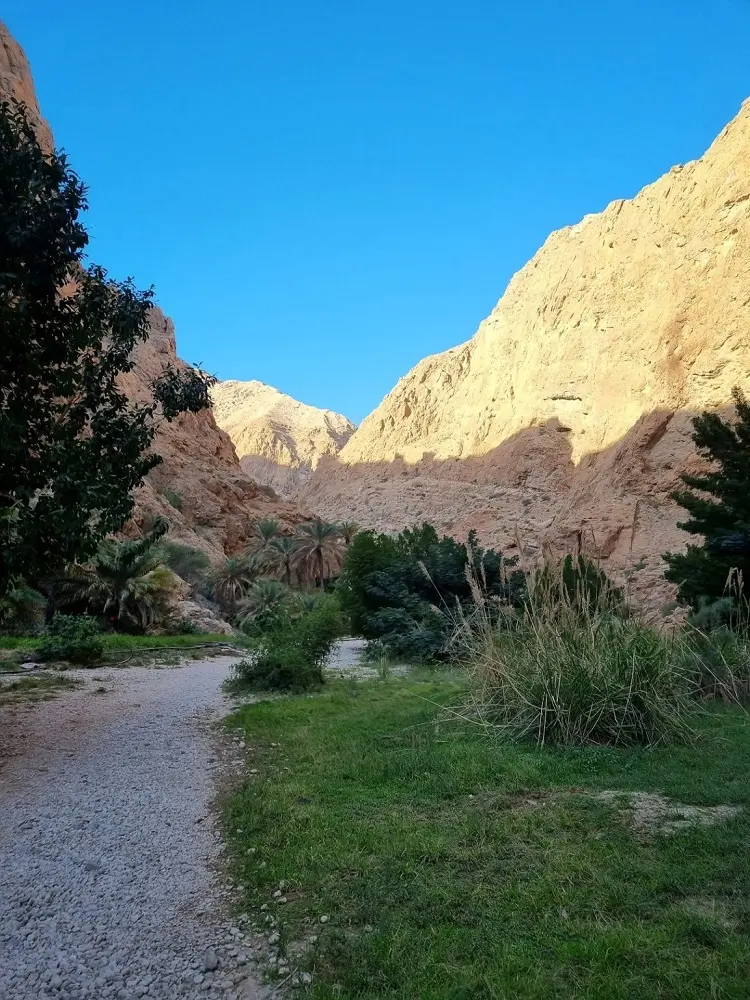
It’s completely flat and twists through the canyon, where you can see the ancient irrigation structures called aflaj and surrounding small farms.
There is no actual obviously marked path, however the canyon is relatively open early on, so pick a route and just keep walking forward.
There is no chance you can get properly lost.
– The Middle –
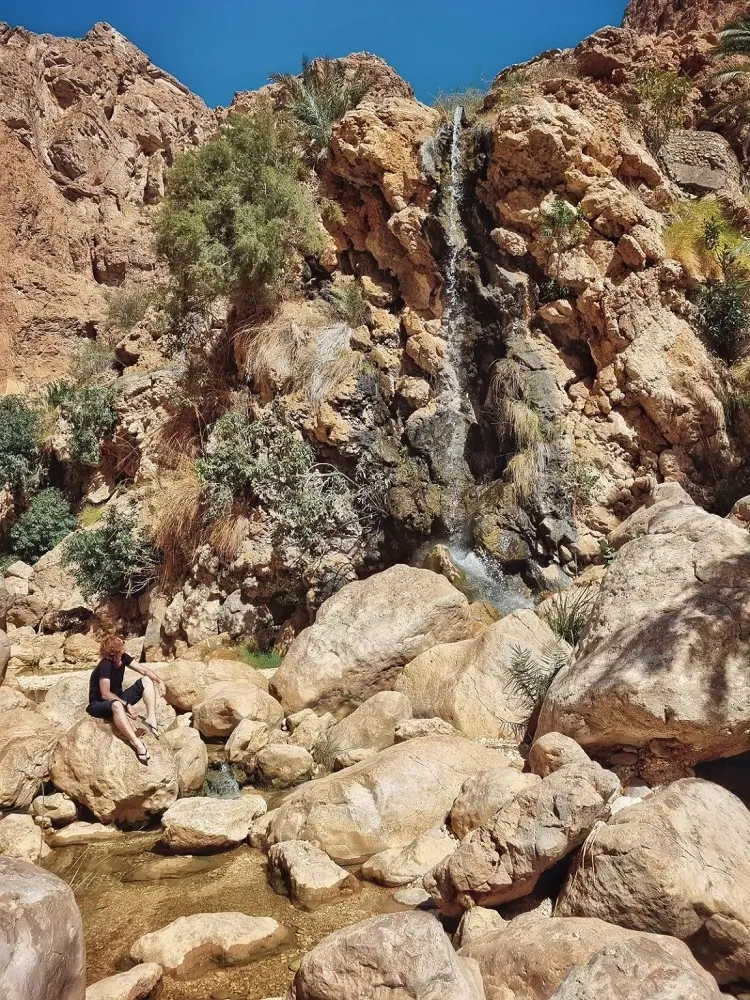
After around a kilometre or so, the path meanders around a cliff edge to the right, elevated above the bottom of the gorge.
This is where you can see the first pools, although you are not allowed to swim in them. The hike here is absolutely stunning and the path is very easy to follow.
Make sure to look up – we found ourselves always looking at the greenish blue pools and forgot to note how amazing the towering cliff walls were!

– The End –
The last section of the hike can get a bit unclear, but honestly, the online hype about it being difficult or confusing is a bit overblown.
I’m utterly incompetent and managed to find the way perfectly okay. There are boulders to climb over and sometimes no obvious markers, however the obstacles were not so big that we struggled to pass them and rarely even had to use our hands.
There are a few painted arrows, but we kept missing them and I don’t think you need them.
⬩ Worn rocks: it is best to look for shiny rocks and footprints. These denote where other people have been previously.
⬩ Stay to the left: another tactic is to stay to the left side towards the end and follow the falaj system along; in fact part of the hike actually involves walking directly on it (a resident showed us). Once you’ve done that, you turn a corner to the left and you’re basically there!
⬩ Arrows: when traversing the boulder field nearer the end, keep an eye out for arrows painted on the rocks. They can help you choose which direction to head in (although we rarely used these, it was reassuring when we saw them).
⬩ Residents: be aware that you’re never alone out there. I saw local people almost appear out of nowhere, one of which told us which way to go (no English, just hand signals). Make sure you are dressed appropriately, even if you feel hot (the temperature can be warmish in the canyon).
GOT MORE TIME IN OMAN?
Explore some wadis:
Take a look at our 13 favourite wadis
Live in a fairytale at the Wadi Damm pools
Drive through rivers in Wadi Dayqah
Explore the quirky white pools of Wadi Abyad
or the magnificent waterfalls of Wadi Darbat
or journey through the cities and mountains:
Feel intrepid on an Oman offroad mountains itinerary
Discover what dramatic means with this Salalah itinerary
See some offbeat spots around Sur
Explore Oman’s cultural heart in Nizwa
Prepare with our Oman driving guide
Max out your time with these Muscat day trip ideas
Check out Muscat’s best viewpoints
–
The Wadi Shab Swim
At the end of the hike, there is a pool which has no obvious way of scrambling around without climbing up high. This is the first wadi pool (of three) that everyone talks about.
This point is where most people leave any valuables they don’t want to get wet. It may seem counter-intuitive, but honestly, your stuff is safe. We left car keys, towels, and a phone in a backpack just by the side of the pool for several hours, out of our sight. Oman is such a trusting country and this is a normal thing to do.
Is the Swim Hard?
Absolutely not. Swimming through the pools at Wadi Shab is very easy (if you can swim).
There are sections where you will not be able to put your feet down, but the water is calm and not too cold. The distances are very short and it’s a easy stroll in the park for anyone competent.
The only occasional difficulty really is getting out of the water at certain parts because it’s slippery.
About the First Pool
The first pool starts off shallow, so you can wade in for a reasonable distance before having to swim. It’s not slippery, just a bit gravelly. The water wasn’t particularly cold when we visited with a beautiful, clear azure colour.
If you are uncomfortable swimming, sticking to this pool is a perfect way to end your hike. It’s so pretty and very shallow at the beginning. About halfway down you will be out of your depth, so if you bring children, be aware.
On our way out, this area was moderately busy as it is where a lot of people hang out if they don’t swim.
About the Second Pool
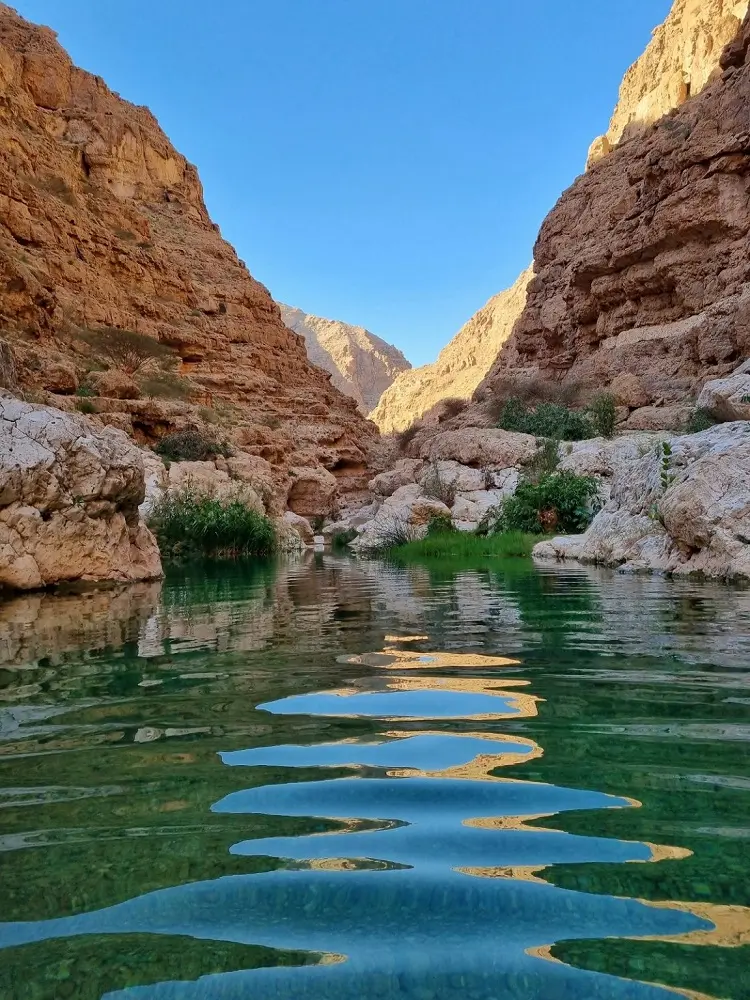
The second pool is reached after a short walk through the creek full of tall grassy plants. The water goes from ankle to around waist deep. The stones are also quite painful on your feet if you are not wearing shoes (I wore old trainers, but Nick didn’t and deeply regretted his choices).
From the second pool onwards, be aware that the rocks are very slippery. We fell over a few times, and I only just saved my phone and GoPro from being lost forever. We also had a toad sit next to us here for a while (absolute highlight, not going to lie).
To get to the the third pool, it’s not just slippery, but you also have to kind of navigate these tiny waterfalls, too. It’s not hard, but it’s much easier to do it sitting down, rather than standing up (well, for me, anyway).
I left this section mildly bruised.

About the Third Pool
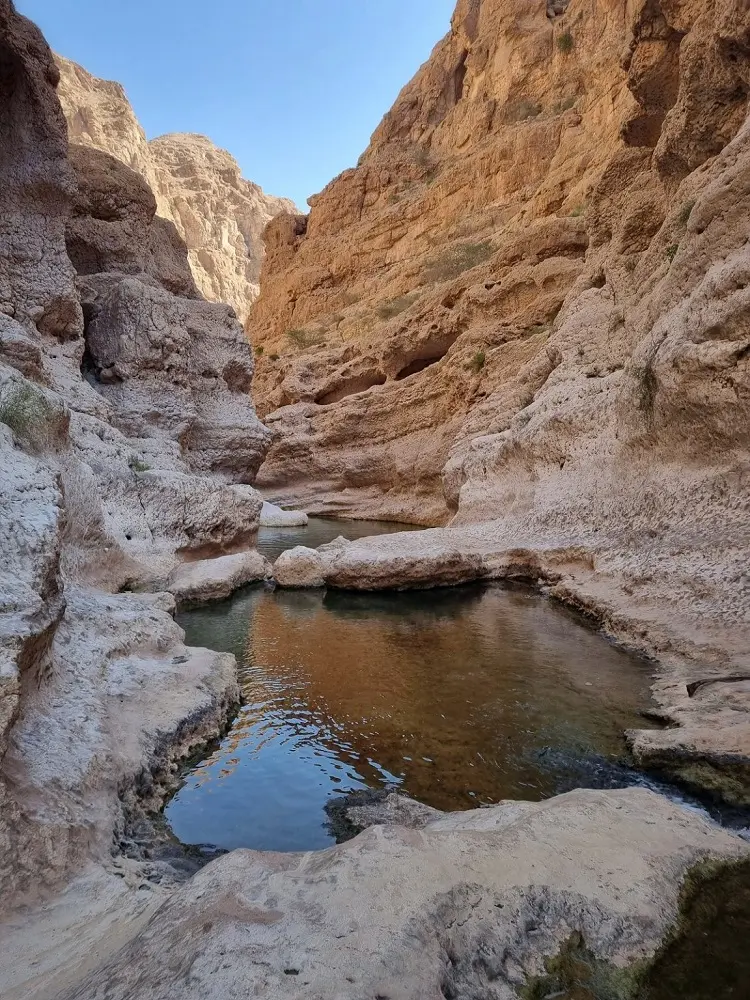
The third pool is where the fun is at (and the extra special scenery).
It is very dark-coloured, deep, and absolutely impeccable looking (as we were the first there, the water was completely still, like glass). The walls are tight and narrow, towering over the darker green waters which curve towards the right.
The entire pool is deep – I didn’t find any spots to put my feet down. Be aware that getting out of the third pool on the way out is trickiest part – it’s so slippery that if I was alone there, I would possibly be stuck there forever (I have zero upper body strength, though).
Also, the third pool was the coldest of the three.
We spent most of our time at this pool, partly because we were figuring out where the cave was.


Water Temperatures and Fish
I found the pool water temperatures in February and March comfortable, but not super warm.
Interestingly, certain parts of the pools were much warmer than others so every now and again, you’d feel absolutely freezing! Then, when we were walking back, parts of the creek were almost properly hot. It was odd, but never awful to swim in (and I get cold, really fast).
In the pools, there were loads of fish! I’m always terrified of squashing them (I’m not sure if that’s a legitimate risk, or not, but I worry anyway.
In the shallower sections you could see them all swimming past your feet, it was beautiful.
Some of them are those foot-eating fish, which I personally hate. If you feel something weird in the water, it’s probably them.
The Hike Back to the Boats
To return to the boat stop at the entrance, just retrace your steps!
It’s a little simpler on the way out because it’s very slightly downhill and we didn’t get lost at all, somehow.
There were a vast number of people, though, and it was way warmer around midday when we left.
The Wadi Shab Cave and Waterfall
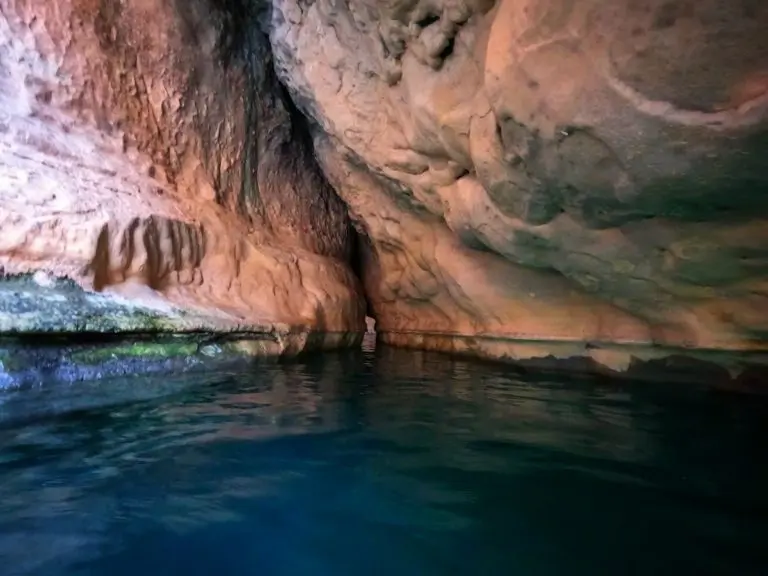
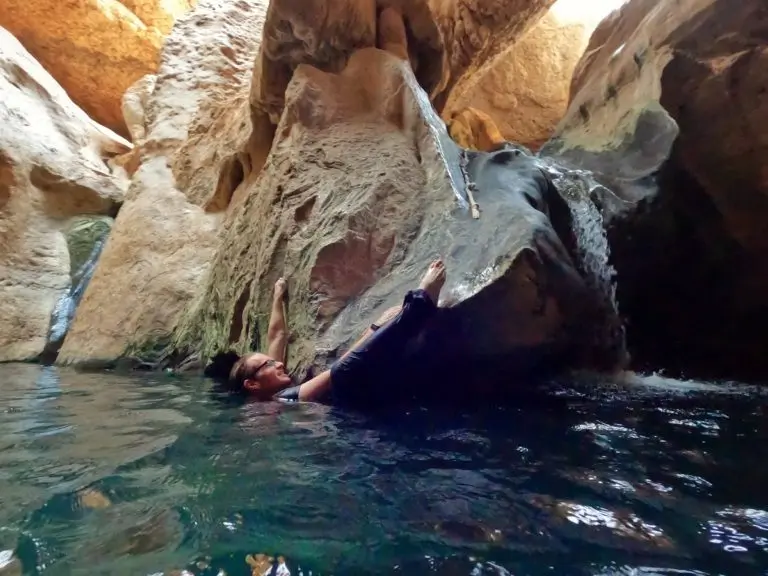
At the end of pool three is the entrance to a small cave, which is home to a waterfall.
The entry is diagonally to the right as you swim up to the end of pool three. It looks kind of like a small, triangular crack beneath the left side of a giant boulder. You won’t be able to see the cave entrance from the beginning of the pool – only by swimming to the end.
Water levels: for us, in February, we could just swim through a small gap in the rocks and there was no need to go underwater (another benefit of visiting Oman in the dry season). I can imagine if the water was half a foot higher, though, we would not have been able to do this.
Inside the cave: passing through the several-metres-deep crack, the cave opens up. There is a waterfall in the middle, a rope that you could only reach during the wetter season, and a kind of natural skylight. There aren’t many places to rest or cling on to, so it would be best to only enter here if you’re moderately capable of treading water (or bring a float).
The Wadi Shab cave is quite cool to visit, but probably the least scenic part of the entire wadi. We spent a fair while in the cave though – it was a really awesome end to a super-scenic hike.
What to Wear
Oman is a pretty conservative country and, mostly, people cover up and don’t show loads of skin. This applies at sites that tourists visit too, like Wadi Shab and the Bimmah Sinkhole.
There are even explicit signs that tell you exactly what is and isn’t allowed at most locations in the country where tourist visit. It’s bad that they have to do that, right? Despite this, the internet is full of inappropriate photos of neary-naked people in wadis and on beaches.
On our first visit to Wadi Shab, there were a few local men visiting with their friends who we spoke to for a bit on the way out, by pool one. They were super friendly and pleasant – but I definitely would not want to have been wearing any revealing clothing, out of respect.
As we were leaving, we saw other people there in actual skimpy bikinis and I just don’t understand why there is a need for that in a conservative country that doesn’t welcome it. Please, please dress appropriately.
What to Bring for your Visit
Other than the usual swimming gear, snacks and towel – here are a few things you may not think to bring for your trip to Wadi Shab:
⬩ A float: so here’s the thing. I’m a terrible swimmer, like I’m pretty sure I’d just sink. If you bring something small and inflatable then you can cling onto it and make the entire experience more fun and less anxiety inducing! Just don’t dump it there when you leave – Oman has enough trash issues as it is. There were also lifejackets to rent at the beginning in the car park.
⬩ GoPro: if you have one, bring it. It makes exploring the final caves really cool, being able to film underwater! Secure it to yourself though – the bottom of that cave is a GoPro graveyard.
⬩ Waterproof phone case: if you want to take photos in the cave without a GoPro.
⬩ Shoes: I wore shoes the entire time, not just on the hike. The rocks are slippery around the pools and the creek stones hurt your feet. I wear Altra Lone Peak 5s and they held up so well and dried incredibly quickly. Nick didn’t and felt sad about it.
⬩ Dry bag: all your electricals can actually just go in a dry bag. This can sit atop your float, if you have one. Problem solved with the ‘destroying your gear’ issue (this is what we did).
⬩ Drinking Water: it’s warm and a minimum of about 1.5 hours of walking, not including all the swimming. Take some water (and snacks).
⬩ Goggles: Nick wishes he had brought these to watch the fish.
⬩ Toilet paper: there are bathrooms at the car park (200 baisa fee), but they don’t have any toilet roll.
⬩ Safe sunblock: there are fish and toads and bugs and delicate ecosystems at Wadi Shab. Please don’t use eco-damaging sunblocks. The best option, honestly, is just to cover up and use as little as possible.

Best Time (and Season) to Visit Wadi Shab
The best time of year to visit Wadi Shab is during the cooler season, between November and March because the temperatures are tolerable (around 25-30 degrees C) and there is little rain to disrupt your plans. It is also peak season for tourism, though, so there will likely be more people.
Best Time of Day
In terms of time of day, I can advocate for first thing in the morning around 8am.
We had three uninterrupted hours alone in one of Oman’s most popular attractions purely by arriving before opening (we were on the first boat to cross the wadi). You also get to have the coolest and more comfortable hiking conditions, too! The second time we went, we arrived a little after 8am and had a similar experience.
Both times were on week days – this might be busier during weekends (and Fridays). We were told that going on a weekday is a reason why it was so quiet for us.
I can definitely advise against getting there at midday. The hike and car park were so busy – I think if we had arrived then, we would have genuinely turned around and left!
On our most recent trips around Oman, we drove past the entrance to Wadi Shab at around 2pm and 4pm, respectively. Both times were on a weekend and there were cars, traffic jams and people everywhere – it was absolute carnage. Avoid turning up at this time if you want a peaceful experience.

HOTELS NEAR WADI SHAB
Sur is the nearest major town to Wadi Shab.
It has several ‘tourist grade’ hotels, including Sur Plaza Hotel and Sur Grand Hotel. If you are looking for a moderate, comfortable hotel with a decent breakfast, we recommend these.
Sur Grand Hotel is our current choice when there’s little price difference (breakfast is decent here).
Nearer Wadi Shab is the Wadi Shab Guest House, a cute, well-rated place right next door to the wadi.
–
MUSCAT’S ACCOMMODATION
If you’re day tripping from Muscat, we recommend these hotels (we’ve stayed in many hotels in the capital and know them well):
Al Bustan Palace ($$$$): outrageously beautiful scenery accompanies even more outrageously beautiful rooms. Nestled into the mountains on a stunning beach along the coast to the east of Muscat – if you can afford this one snap up a room without question. I’d live here and never leave.
Royal Tulip Muscat (+$$): centrally located in Al Khuwair, near malls and some of our favourite restaurants, with classy, great sized rooms and underground parking. This hotel is almost always a bargain for the price you pay (and is opposite our favourite restaurant).
Citadines Al Ghubrah Muscat (-$$) – excellent little apartment rooms, perfect if you live out of the supermarket like we do! Once again, fantastically located in a quiet area just outside the busy Al Khuwair area.
Swiss-Belinn Airport Muscat Oman (+$) – outside of central Muscat near the airport, but super affordable if you have a car to get around. Really decent modern rooms, easy parking and all-around pleasant stay.
–
CAMPING NEAR WADI SHAB
For wild camping locations near Wadi Shab, the prettiest options are the nearby beaches at Fins (22.876232, 59.230173; 22.882761, 59.226109) or Qalhat (anywhere along the beach area away from the archaeological site).
There are wild camping opportunities all over this area, though, so just take a look around!
Or, if you want isolation and adventure, plus have some spare time, head up onto the Hajar Mountains plateau and search for a spot – the area around the Jaylah Beehive Tombs is incredible.
–
Frequently Asked Questions
How long is the hike at Wadi Shab?
The Wadi Shab hike is around five kilometres round-trip to the pools. It takes around 45-60 minutes, each way, depending on your pace.
Is the Wadi Shab hike difficult?
No, the hike to the pools at Wadi Shab is not difficult. The path is flat for the most part and involves some light boulder hopping. If you can walk up steps and on uneven ground, this hike will not be a challenge.
Is Wadi Shab suitable for children?
The Wadi Shab hike is suitable for children, however younger children may find the boulders tricky to cross. Children should be monitored carefully at the pools and be able to balance well unaided on any ledges without guard rails.
Do I need to swim at Wadi Shab?
No, you do not need to swim at Wadi Shab. The hike is scenic and if you don’t want to get wet, that’s okay. Swimming is only necessary if you want to reach the hidden cave and waterfalls, past the first pool.
What facilities does Wadi Shab have?
The Wadi Shab pools have no facilities.
The car park has attendants, bathrooms, a small shop and lifejackets for rent.
Can I day trip to Wadi Shab from Muscat?
Yes, it is easy to day trip from Muscat to Wadi Shab. The drive is around 150 kilometres down fast, paved roads. Organised one-day tours are popular.
Where is the best place to stay overnight near Wadi Shab?
The town of Sur is the best major hub to stay in near Wadi Shab, around a 45-minute drive south.
It is possible to wild camp along the coast if you want to be very nearby.
There are also a few hotels and guesthouses in the vicinity, most of which are a bit sketchy. One exception is the Wadi Shab Guest House.
GOT EVEN MORE TIME IN OMAN?
Go camping:
Sleep under the stars at these amazing wild camping locations
Plan your trip with our Oman camping guide
Camp atop Oman’s highest mountain
or camp in the whitest of Oman’s deserts at the Sugar Dunes
or have a totally unique adventure:
Spot the most remote beehive tombs in Oman
Wander around Oman’s most photogenic fort
Learn about livestock at the Nizwa goat market
Take a look around Oman’s most unique fortification
Drive up Oman’s most popular mountain
Find a way into Bat’s 5000 year-old tombs
Figure out which of Oman’s UNESCO sites are worth visiting
Take a chill day on one of Muscat’s beaches
–
Where to Next?
We hope you have just as incredible an experience as we did at Wadi Shab! Below are a few things you might also be interested in:
Itinerary: if you are planning an extended route around northern Oman, Wadi Shab is included on our classic 2WD one-week Oman road trip itinerary.
Wadis: if you are interested, we have also written guides on Wadi Darbat and Wadi Damm; these are both just as amazing as Wadi Shab. If you are looking for a less touristy spot, consider the curiously white pools at Wadi Al Abyad.
Muscat: finally, if you’re spending time in Muscat, check out our super detailed two-day itinerary that has all the best food recommendations, coolest viewpoints, and all the must-see spots.
Have a lovely day!
Hi, thanks for visiting our blog! If this post has been of help to you, or you’ve just enjoyed our random ramblings and musings, say thank you by buying us a coffee! It helps keep The Restless Beans blog up and running.
Thank you, Claire + Nick


This post is incredibly helpful and detailed!! Thank you so much!
Hi Rubab,
I’m glad you found our guide helpful 🙂