

23 Things to Do in Nizwa: Forts, Wadis, Mudbrick & Mountains
Scribbled by Claire ⬩ 05 Aug 2026
Are you wondering if Nizwa, Oman, is worth your time? Well, after more visits than we can count, we can categorically say yes! Below, we list the absolute best things to do and places to see around this magnificent Omani city, essential for any first, second or third time visitor to Oman’s heartland!
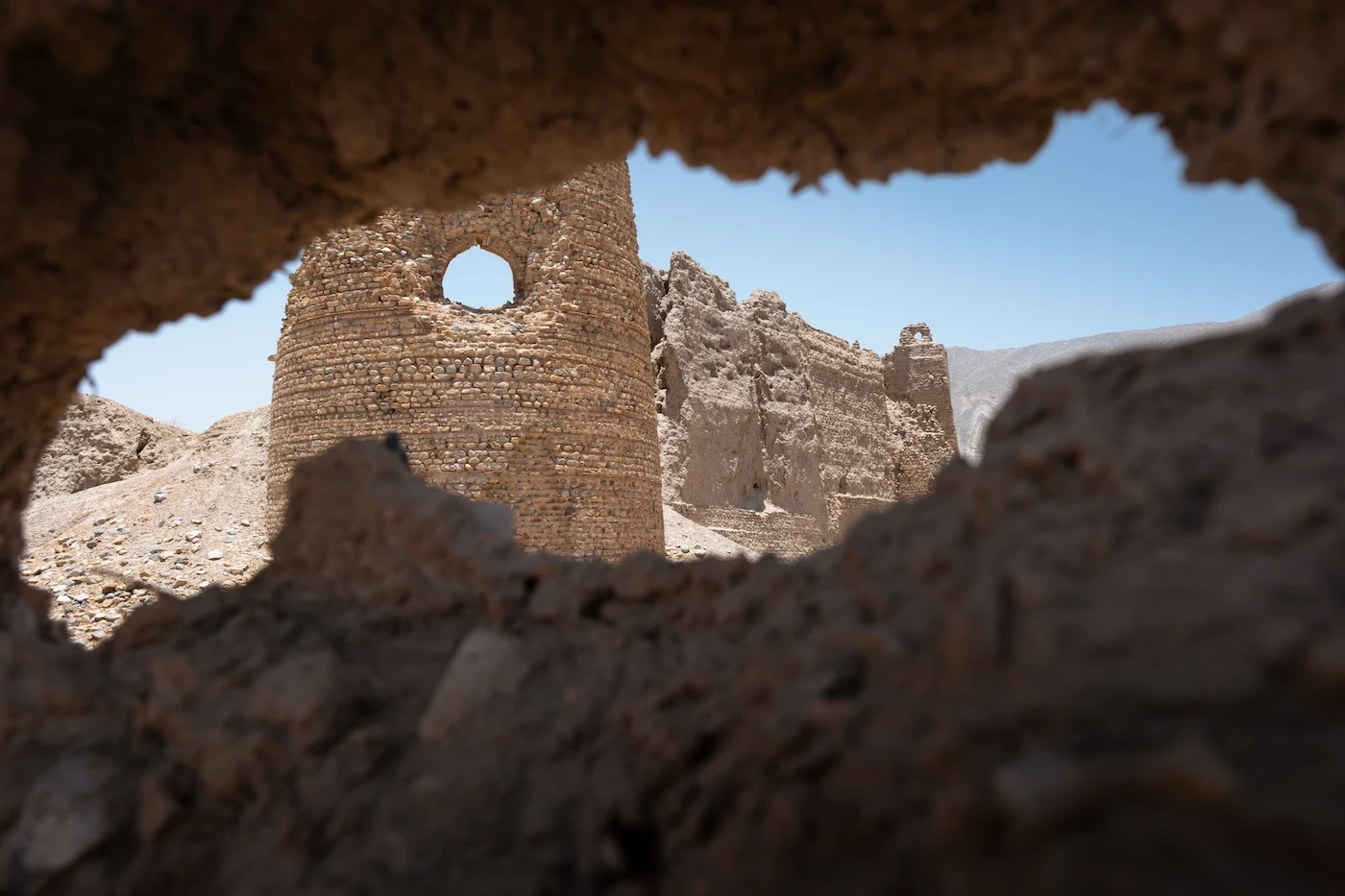
When I first started researching a trip to Oman (many years ago now), the tradtional town of Nizwa popped up. I hand-wrote it on my pad of paper, squeezed in next to a dozen other places, and promptly forgot it. After all, Muscat was the obvious draw, right?
I knew about the fort and the souq, but what more could this small town at the foot of the Hajar Mountains really have going on?
It turns out, the cultural capital and heart of Oman has *a lot* going for it.
It’s got all the best of everything: epic mountain scenery, photogenic forts, a world-class museum, ancient mudbrick towns, spectacular drives within easy reach, plus a daily souq and renowned weekly livestock market. In fact, I believe the city has enough to keep any visitor occupied for weeks!
My path has crossed with Nizwa more times that I can count during my three months in Oman. Throughout these journeys, I think I’ve visited almost everything a first (or second or third!) timer to Nizwa would want to see.
So, I’ve split everything below into three groups: historic sites (forts, castles, mudbrick ruins), natural sites (wadis, mountains, hikes, drives), and everything else (markets, museums). I’ve visited every single place on this list myself, with my own thoughts on each to help you plan your perfect trip.
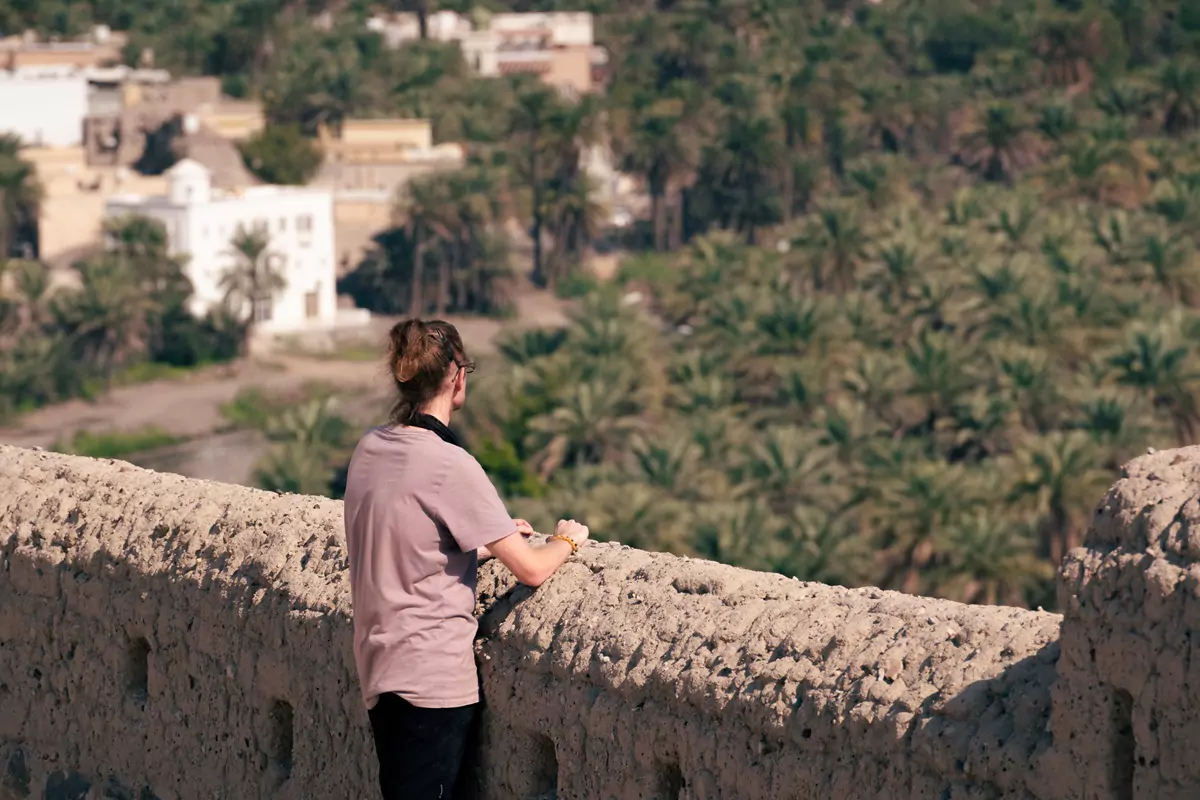
This post may contain affiliate links. If you book through these links we may make a small commission at zero cost to you. It helps us pay for the upkeep of this blog. Thank you!
Why Visit Nizwa, Oman?
Nizwa is the historical heart of Oman, around 1.5 hours drive south of Muscat. It’s bordered by the impressive western Hajar Mountains to the north and the never-ending Omani desert to the south.
Somehow, this city is not excessively visited, despite the plethora of things to do in the area. Here are a few reasons why you should make the journey from Muscat to Nizwa, and why we love it so much:
⬩ It’s the antithesis of modern Muscat
⬩ Oman’s most famous fort resides in the city
⬩ Easy access to Oman’s highest peak
⬩ Ancient mudbrick villages dot the surroundings
⬩ One of Oman’s most important museums is located on the outskirts
⬩ The famous Nizwa Goat Market happens here every Friday
⬩ The most scenic drives in the Hajar Mountains are all accessed from Nizwa (like Wadi Bani Awf)
⬩ It’s culturally rich
⬩ Nizwa souq is far nicer than Muscat’s Mutrah equivalent
⬩ The awesome Jebel Al Akhdar is adjacent
⬩ Three of Oman’s five UNESCO World Heritage Sites can be visited from Nizwa
⬩ No guides are necessary or required for any site (unless you want one)
There are so many more reasons to visit Nizwa – this is just a quick list off the top of my head. It’s such a different city to Muscat! Between them, they make a great pairing for any trip to Oman.
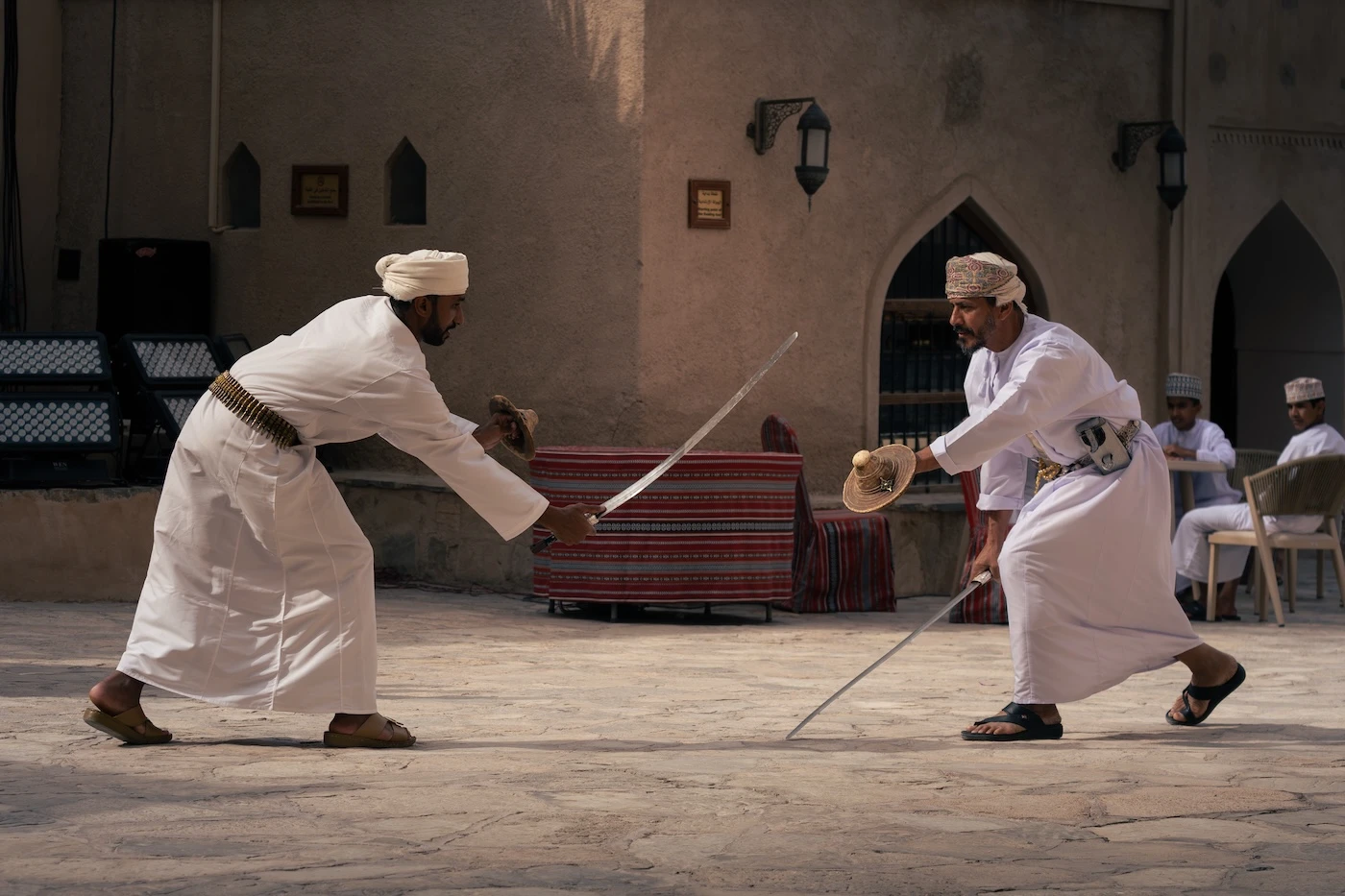

We’ve always found the best car rental prices for Oman on DiscoverCars. It’s our go-to car comparison website for every road trip because they have such good insurance. You can save loads of money and get great-priced comprehensive coverage.
Part 1: Historic Sites around Nizwa
There is abundant, free parking for every location listed below. Entry fees, where applicable, are also noted (all prices are for non-GCC tourists in 2026).
We have noted for each location what type of car is necessary for access.
1. Nizwa Fort and Castle
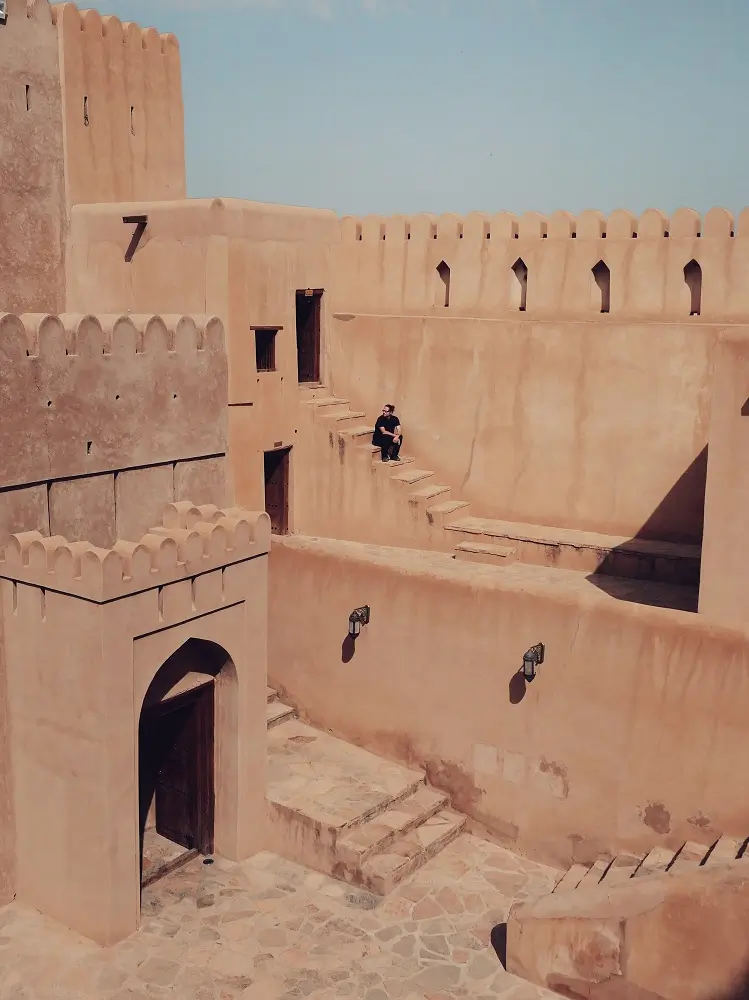
The 17th century Nizwa Fort is one of the most well-known locations in Oman, receiving more visitors than any other national monument in the country.
The fort has bold, immaculate, and genuinely unique architecture when compared with the rest of Oman’s forts. Additionally, it has a genuinely interesting museum, loads of cultural activities (particularly great for kids) and stretching panoramas from the ramparts. It’s obviously a top choice for every tourist in Nizwa, really.
Nizwa Fort is also a dream for photographers and has been beautifully renovated, so I personally think it’s worth the steep-ish entry fee.
Entry fee: 5 OMR
Distance from Nizwa: 0 kilometres
4WD needed: no
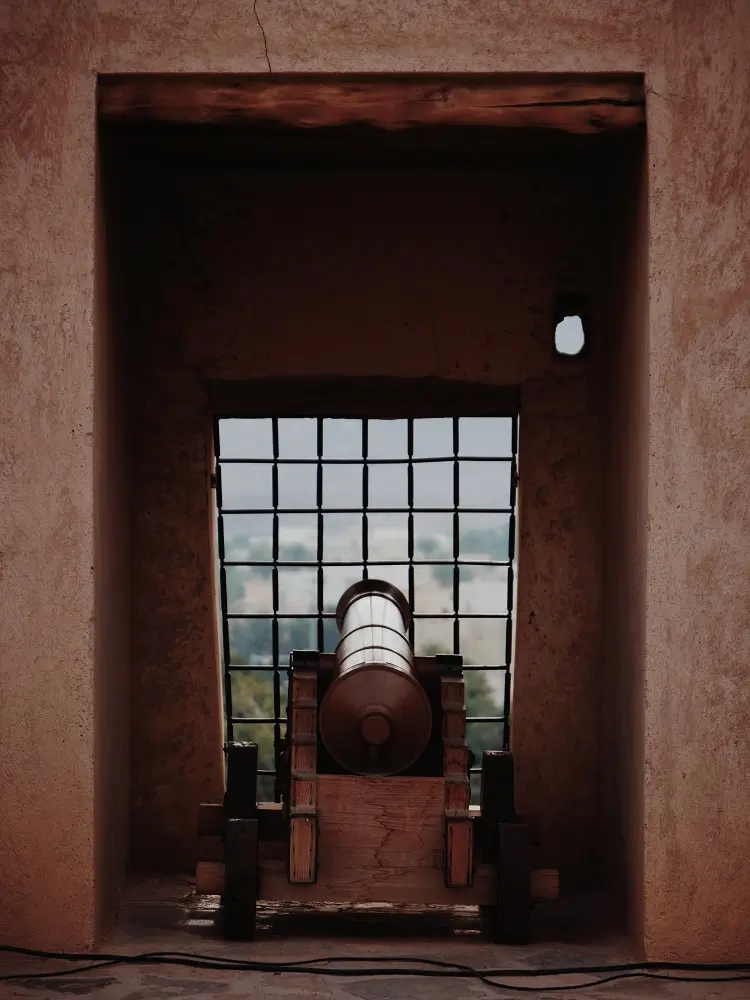
2. Jabreen Castle
Of all the old historic buildings in Oman, this was (probably) our favourite.
It’s a magnificent structure from the outside but, more notably, it’s been so lovingly restored internally. This makes exploring it feel more like you are wandering through a stately home that somebody still actually lives in. To me, the 55 rooms felt vast and I often became a little disoriented about which direction I was walking in.
Don’t forget to check out the surprising painted floral ceilings and outstanding views from the top across the farmland, plains and mountains. This site really packs a punch for the slightly lower entry fee and is a great choice to pair with Bahla Fort, which is just nine kilometres up the road.
Entry fee: 3 OMR
Distance from Nizwa: 42 kilometres
4WD needed: no
–


3. Bahla Fort
Oman’s only UNESCO fort, designated in 1987, looms over the tiny historic market town of Bahla. Older than Nizwa Fort, the scale and grandeur genuinely surprised me. It’s honestly huge – the top of this enormous site towers over the surrounding terrain, with panoramic views.
Within the absolutely monumental walls, there are three sections in the complex. These were built between the 12th and 18th century with the Qasbah being the oldest. You can see the different generations of buildings and how they differ across the centuries.
It’s all a little less (more accurately: a whole lot less) restored than Nizwa Fort and Jabreen Castle so, for Bahla Fort, bring your imagination! It will really conjure up images of medieval crusades and adventures (not sure if that is actually an accurate depiction of history, or just what was going on in my mind).
There is currently no real information provided within the site, so request a guide or brush up on some information before your visit. Also, be careful if bringing kids here, there are a bunch of drop-offs without barriers.
Entry fee: 4 OMR (card only)
Distance from Nizwa: 41 kilometres
4WD needed: no
–


4. Old Town Manah (Al Bilaad)
Manah, a very sleepy town 20 kilometres south of Nizwa, hides an amazing minimally-visited spot – Al Bilaad Historical Village. It’s a large, ancient mudbrick settlement that is (very) slowly being renovated, with working water wells and four rather intricate mosques.
Unlike many other mudbrick villages, it is being officially managed by the government, who bought all the properties from the residents (this is what the caretaker told us when we visited). This means there are no inhabitants, giving it an eerie, empty atmosphere that is hard to describe.
Currently, you can pay a nominal fee to the caretaker in order to look around. He is very friendly and can give you information and show you maps of the renovations and village history. We were the only people there when we visited during late afternoon, even though it is pretty close to Nizwa and very cool!
Entry fee: 2 OMR
Distance from Nizwa: 20 kilometres
4WD needed: no
–


5. Samail Castle
Samail Castle is a little different to other fortifications on this list.
It’s kind of empty (even compared to Bahla Fort’s standards!), but is somehow utterly striking in its setting. Situated around halfway between Nizwa and Muscat, the visually epic Samail makes for an excellent day out if you’re after a photography project or just a morning with your very own classic Omani fort – all to yourself.
Set in a very green, verdant wadi jam-packed with date palms, what the castle lacks in informative signs it makes up for in views. With immense watchtowers peering out across the jagged peaks of the Hajar Mountains, this castle really is spectacular to look at. You’ll likely get to enjoy these views in complete solitude – this fort receives near zero visitors.
The entry fee is a little high, considering there is no information or guide services available. However, it was one of our favourite days in Oman – I’ve always dreamt of having my own fortress with turrets!
Entry fee: 3 OMR
Distance from Nizwa: 91 kilometres
4WD needed: no
–


6. Birkat Al Mouz (Mawz)
The village of Birkat Al Mouz (meaning ‘banana pond’ apparently in Arabic!) is a settlement right at the foot of the only road entrance to Jebel Akhdar.
It’s main draw for tourists are two groups of abandoned mudbrick buildings, lovingly unrestored, that creep up the mountains behind the date palm ladened surroundings. It’s all rather pretty.
However, the village itself is actually very significant, since it’s home to two of the five officially designated UNESCO aflaj (irrigation) systems running through the plantations nearby.
Entrance is free (there are no gates, or anything) and you can have a wander around for as long as you’d like.
Entry fee: free
Distance from Nizwa: 22 kilometres
4WD needed: no
–
7. Old Al Hamra
It’s more mudbrick buildings.
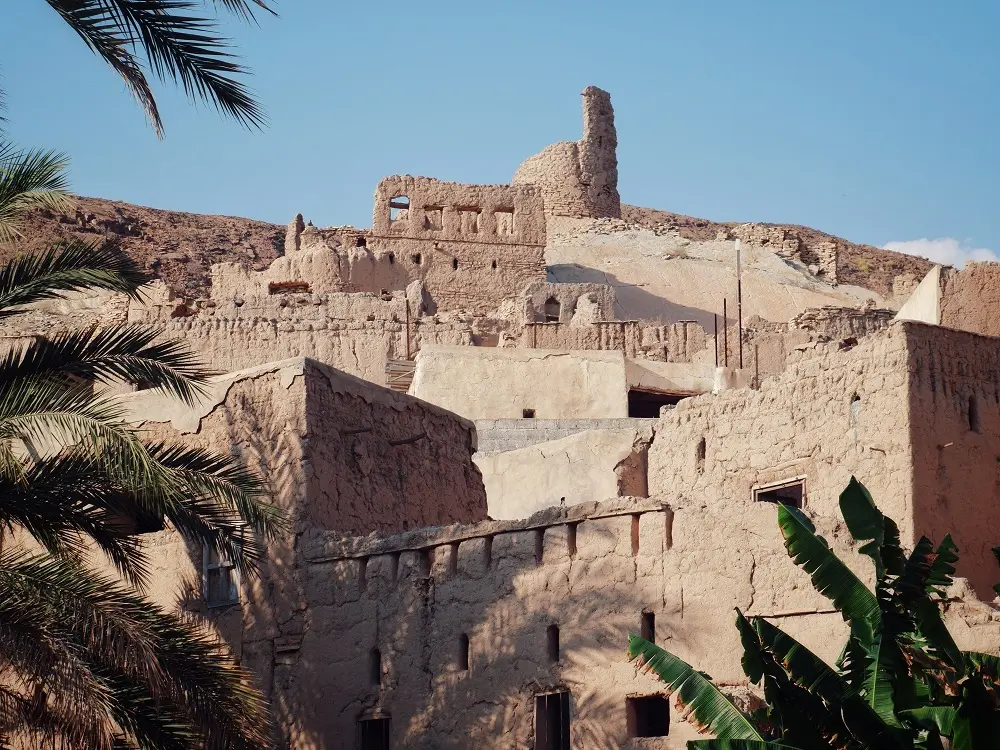
I know, you’re thinking to yourself ‘how many mudbrick buildings do we really need to see?’. The thing is, so many historic places in Nizwa involve mudbrick dwellings. They’re all a bit different and I’ve visited all of them so you can choose which suits you best.
Al Hamra is pretty special as mudbrick stuff goes, though. It is one of the oldest villages in the Sultanate (400+ years), with well-preserved, multi-storey Yemeni architecture. It’s this long strip of crumbly buildings, with a huge date plantation right on its southern side.It’s quite scenic!
The area is free to visit and is a great pairing with Misfat Al Abriyeen, a beautiful mountain village overlooking Al Hamra (see below).
Entry fee: free
Distance from Nizwa: 50 kilometres
4WD needed: no
–
8. Misfat Al Abriyeen (or Misfat Al Abriyyin)
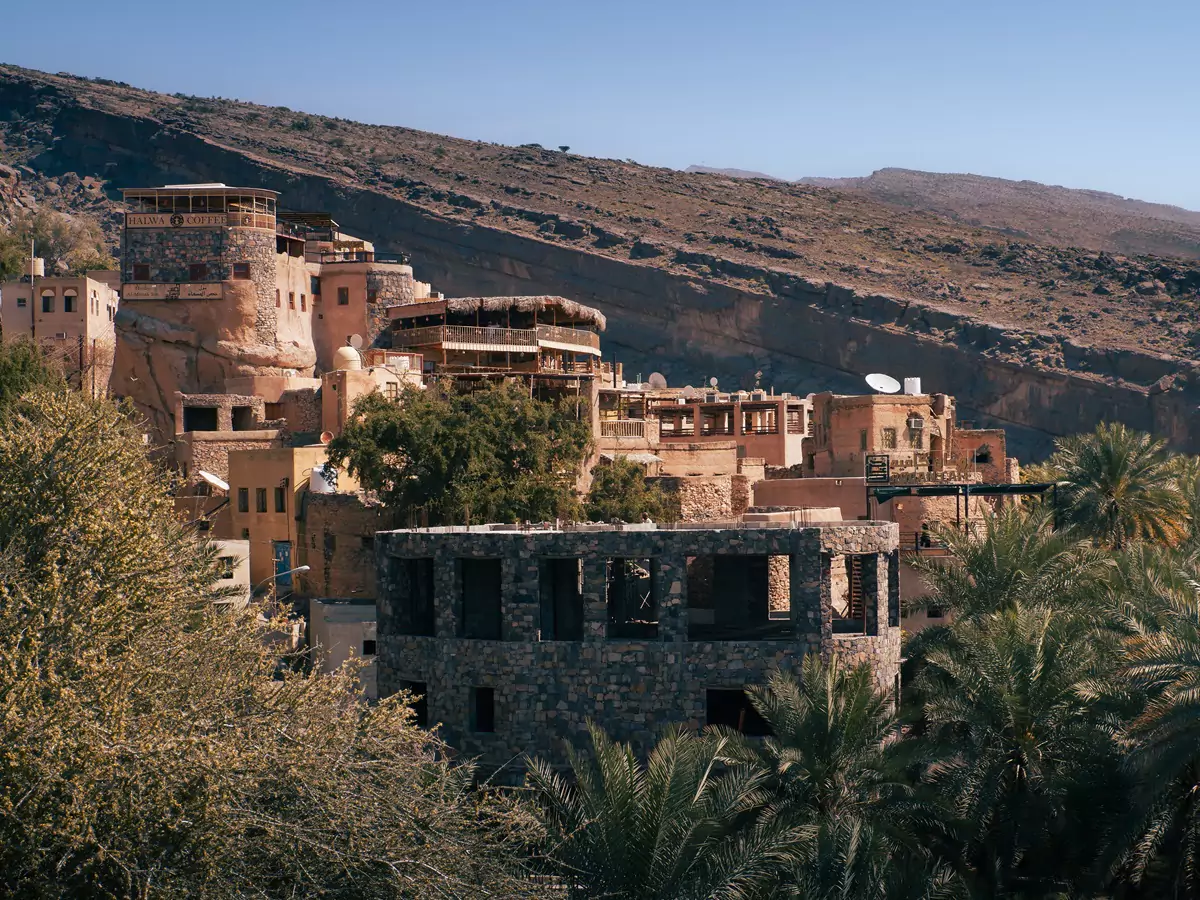
The picturesque Misfat al Abriyeen (or Misfat al Abriyyin), just five kilometres north of Al Hamra, is a tourist favourite.
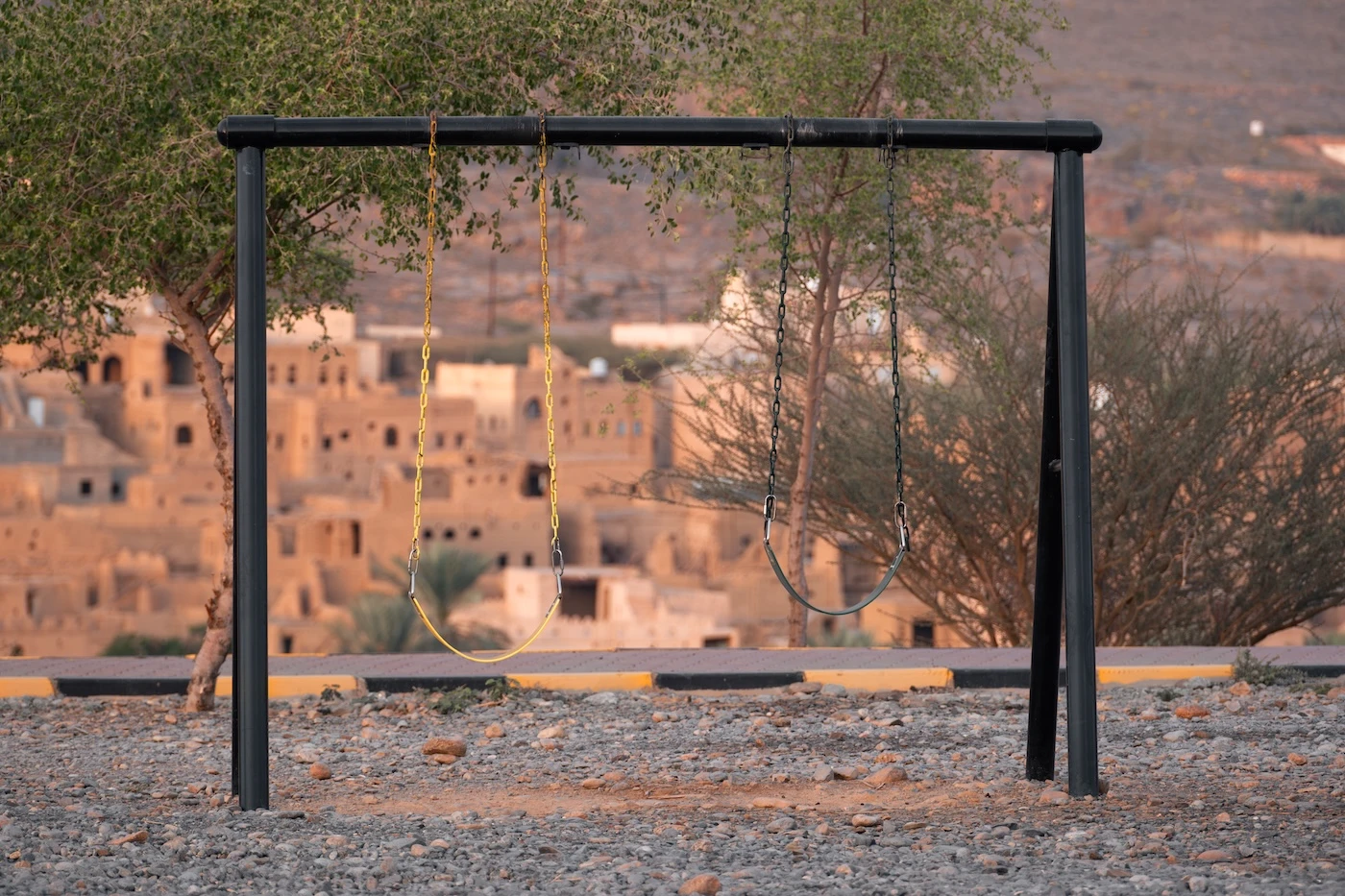
It’s been developed in a really tourist-forward way – everything is curated with visitors in mind. With welcoming residents, photogenic visas, meandering walks through the fruit trees, small canals and terraced fields, it’s totally understandable.
The hotel prices can be pretty high, but all places offer breakfast and dinner. Additionally, the views across the valley at sunset and sunrise while listening to rushing spring water is unanimously deemed worth it.
There are various hikes in the area, too, from casual strolls around fruit trees to a demanding trek up into the valley (the official W9 route) that leads to the origin of the irrigation stream – as always, follow the omni-present yellow, red and white flags.
Entry fee: free
Distance from Nizwa: 55 kilometres
4WD needed: no, but the road is mildly steep
–
9. Tanuf Ruins
These are a little different to the other mudbrick ruins on this list, even if, on first look, they seem similar.
The town of Old Tanuf, inhabited until the 1950s, was bombed by the British who were targeting rebels during the Jebel Akhdar Wars. The village was subsequently abandoned, leaving these cool roadside ruins that we see today.
This is a quick, entertaining little stop, nestled into the base of the Hajar mountains, literally by the side of the road. It is on the way to Wadi Tanuf, which is a great offroad adventure with some adventurous wadi hiking.
Search for ‘Tanuf Castle Ruins’ on Google Maps.
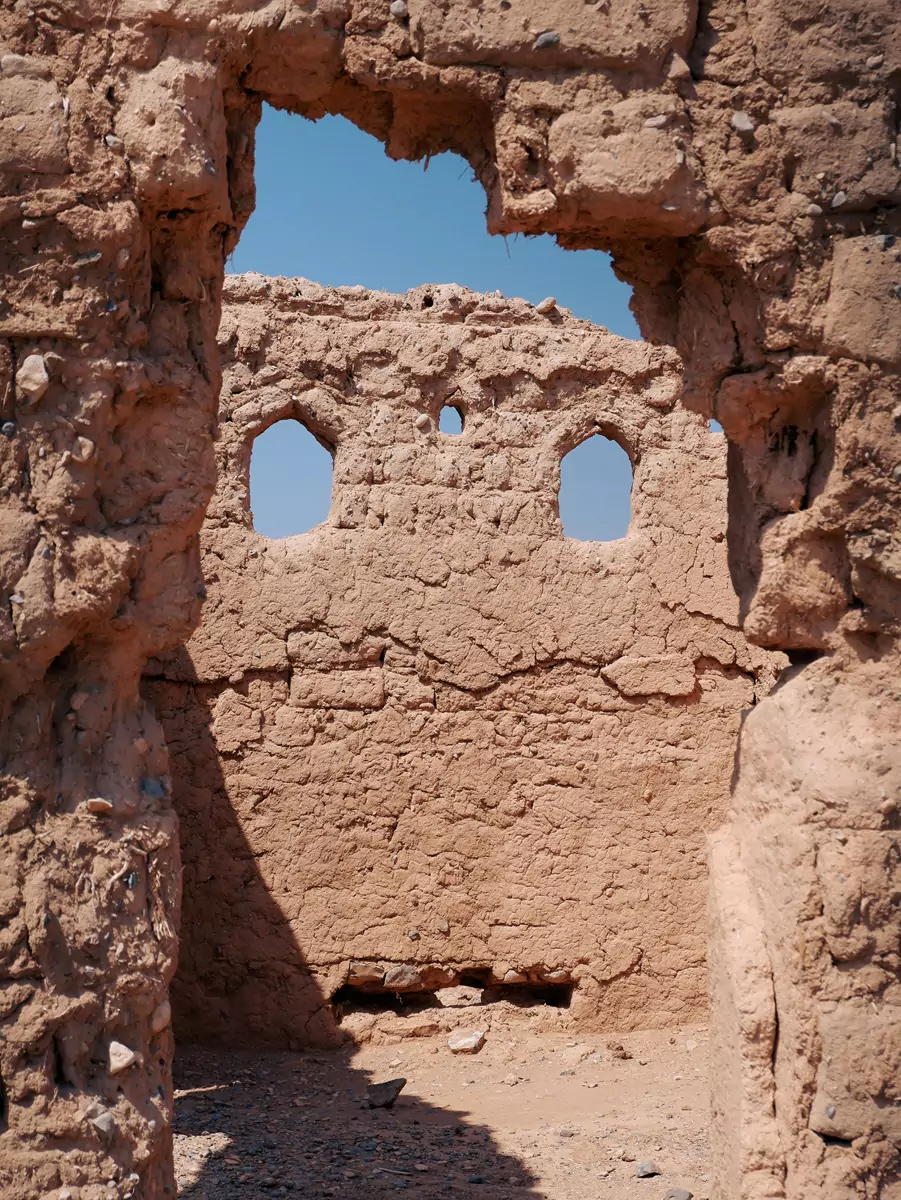
Try to spot faces in the ruins!
Entry fee: free
Distance from Nizwa: 23 kilometres
4WD needed: no
–

10. Cliffside Ruins at Ghul
Yet another abandoned mudbrick site!
The photogenic cliff-edge ruins at Ghul are just a short stop-off on the side of the road, by the entrance to Wadi Nakhur and Wadi Ghul, en route to Jebel Shams. They expertly camouflage into the mountain, so much so that you could easy pass by and miss them.
The village is on the road to Jebel Shams, so you may as well stop and take a peek from the opposite side of the valley at the useful roadside viewpoint.
Entry fee: free
Distance from Nizwa: 57 kilometres
4WD needed: no
–

11. Beehive Tombs of Al Ayn and Bat
I love beehive tombs in Oman. They’re crazy cool and a historical mystery.
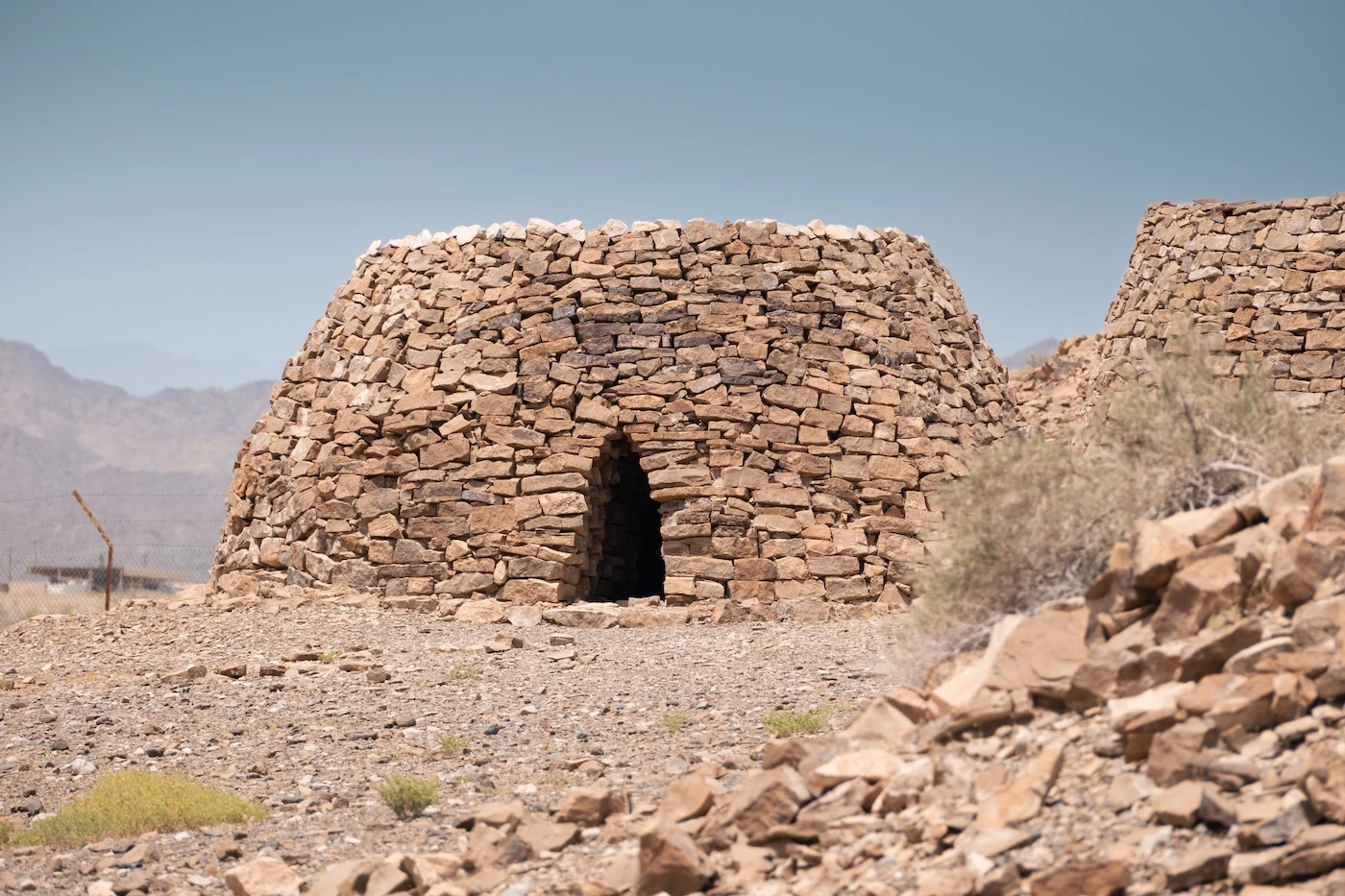
The two sites of Al Ayn and Bat (technically three if you include Al-Khutm, just next to Bat) show off Oman’s four-thousand-year-old tower tombs, which are UNESCO World Heritage sites. They comprise the most complete collection of settlements and tombs from the third millennium BCE, anywhere in the world.
The history behind the tombs is mysterious and there is minimal information about them, however just checking out their mountain setting is impressive.
Entry fee: free
Distance from Nizwa: 106-122 kilometres
4WD needed: no for Al Ayn, ideally for Bat

12. Bilad Sayt
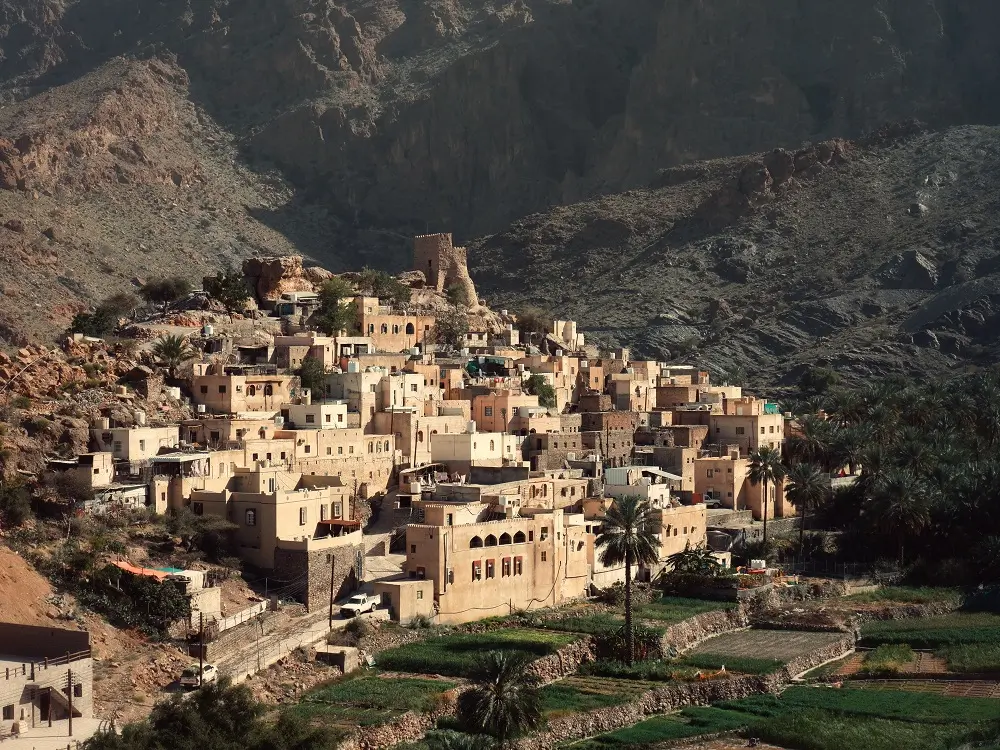
This, in our opinion, is the prettiest village in the whole of Oman (a country full of pretty villages). There are other beautiful ones, certainly, but this takes the gold star for most magnificent setting.
It is concealed within Wadi Bani Awf, a dramatic valley which cuts through some of the most scenic sections of the Hajar Mountains. The views of Bilad Sayt from across the groomed farmland are some of the most picturesque I’ve ever seen.
Even the drive here is all part of the crazy scenic adventure.
Entry fee: free
Distance from Nizwa: 80 kilometres
4WD needed: essential
–
13. Wakan Village
This several-thousand-metre-high village, towering over neighbouring Wadi Bani Harras and the Ghubrah Bowl, is a relief to reach after the narrow, steep winding track that leads up to it (actually, I exaggerate, it’s not too bad a drive!).
Follow the well-marked footpaths leading up behind the village for unfathomable views of the surrounding mountains, Jebel Akhdar and valley floor beneath. Chat with the goats that will inevitably come and steal your lunch, marvel at blossoms blooming in the spring, or continue the energetic trek to the peak (it’s the W25 official route that leads all the way to a village in Jebel Akhdar!). Maybe you just fancy grabbing a coffee in the cute cliff-edge café.
Whatever you go for, don’t miss a visit to this astoundingly scenic village.
Entry fee: free
Distance from Nizwa: 210 kilometres
4WD needed: essential (if you do not have a 4WD, there are people waiting at the bottom of the track to drive you up for a fee of 15 OMR and bringing you back down when you’re done).
–

GOT MORE TIME IN OMAN?
Explore some wadis:
Take a look at our 13 favourite wadis
Hike Oman’s favourite Wadi Shab
Live in a fairytale at the Wadi Damm pools
Drive through rivers in Wadi Dayqah
Explore the quirky white pools of Wadi Abyad
or the magnificent waterfalls of Wadi Darbat
Explore the mountains and cities:
Feel intrepid on an Oman offroad mountains itinerary
Discover what dramatic means with this Salalah itinerary
See some offbeat spots around Sur
Prepare with our Oman driving guide
Max out your time with these Muscat day trips
Check out Muscat’s best viewpoints
–
Part 2: Natural Sites in Nizwa
14. Jebel Shams and the Grand Canyon
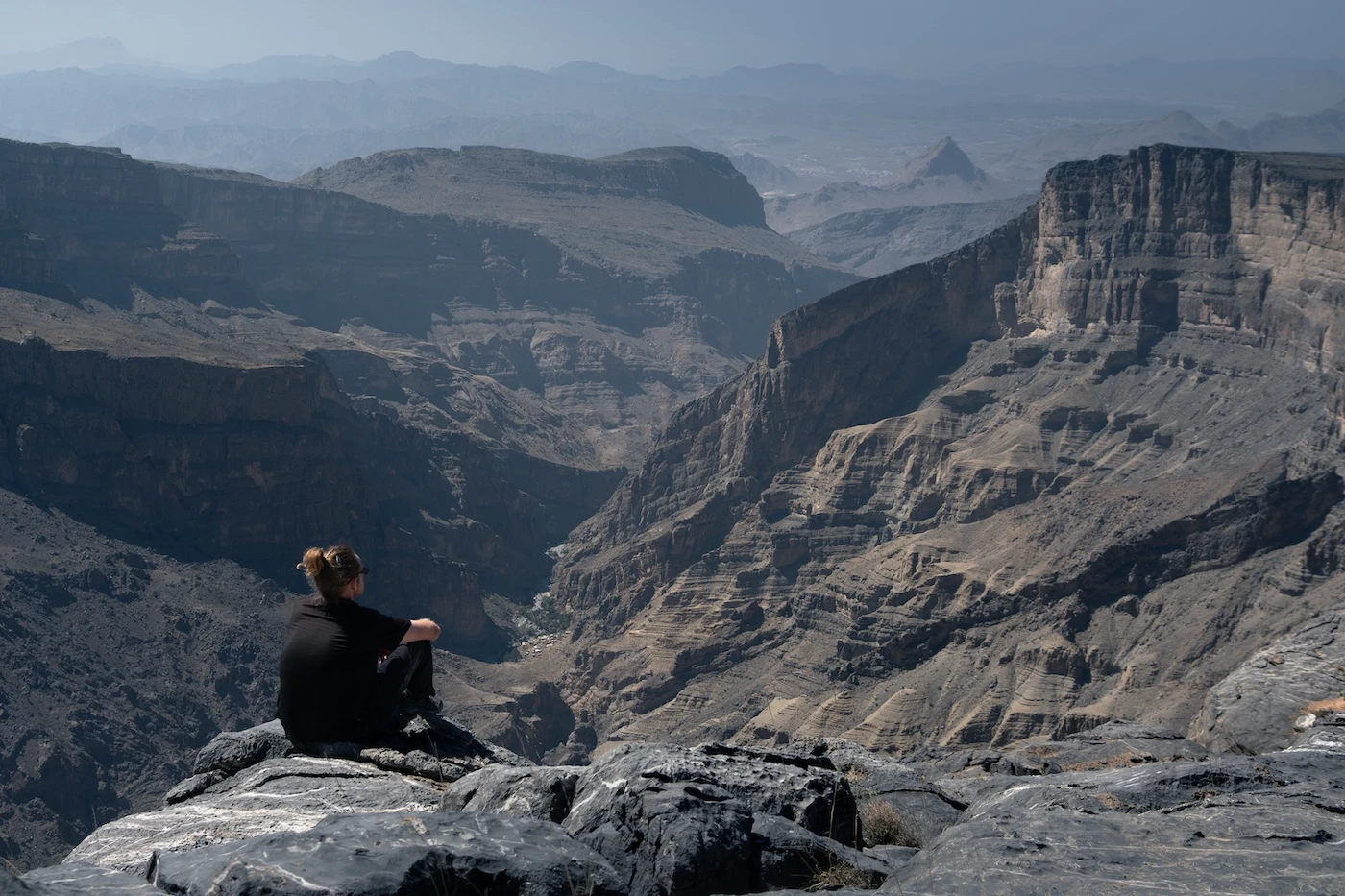
Jebel Shams, the highest mountain in Oman, translates as ‘Mountain of the Sun’. It overlooks the majestic ‘Grand Canyon of Arabia’, Wadis Ghul and Nakhr and is a can’t-miss location when visiting Oman.
In terms of scenery, I don’t think Jebel Shams is the most striking of Oman’s mountain panoramas (there’s some pretty hot competition here). However, it is quite pretty and worth a short visit (or an extended visit with a tent).
With several resorts on the summit, it is also possible to stay overnight on the peak of Jebel Shams and catch the sunrise over the canyon without a tent. However, the price to quality ratio is not the best, so make sure you’re really keen to get those views!
There are several walks, including the well-known balcony hike, which traverses the inside of the canyon and leads to ancient cliffside ruins.
Entry fee: free
Distance from Nizwa: 86 kilometres
4WD needed: helpful but not essential. Reaching the best camping locations needs a 4WD.
–

15. Jebel Akhdar and the Sayq Plateau
Jebel Akhdar, which translates as the ‘Green Mountain‘, is probably the second most popular place on this list (after Nizwa Fort). Incorporating the Sayq Plateau, it’s a vast region that hovers around two kilometres above sea-level, meaning pleasant temperatures, even throughout summer.
I’ve been a few times now and found new, cool little things each time I’ve visited. It’s a large, spread out region with an entire town, more than 30 improbably-placed villages, and loads of hikes and off-roading.
The plateau is pretty scenic, too, surrounded by step-terrace agriculture and far-reaching views from all sides (Princess Diana and Charles even came up here in 1986 before there were any roads!).
There are relaxed strolls around abandoned villages like Bani Habib; opportunities to stay overnight in inhabited, utterly implausible settlements (like As Suwgra); or just square miles of superb offroad mountain scenery all to yourself. Visit during spring to see the Damask rose gardens blooming in the area (used to make the traditional Omani rosewater).
Entry fee: free
Distance from Nizwa: 60 kilometres
4WD needed: essential and enforced
–
16. Wadi Qurai and Pools
This lesser-known gem-of-a-wadi hike traverses a valley off the main road between Muscat and Nizwa. It’s such an entertaining little walk, we are genuinely surprised Wadi Qurai is not more popular considering its central location and ease of access.
The route is relatively easy-going, around 45 minutes mildly uphill, culminating in some glistening clear blue pools. It tracks the falaj irrigation system up the valley and is super straightforward to follow.
Chances are you’ll have the entire place to yourself, apart from some goats, of course.
Travel tip | parking for this hike is just at the end of the road on Google Maps, right off the main highway between Nizwa and Muscat. Doesn’t get easier than this one!
Entry fee: free
Distance from Nizwa: 67 kilometres
4WD needed: no
–


17. Wadi Damm Pools
Wadi Damm was a highlight from our first month in Oman, without any shadow of a doubt, and still remains one of our favourite wadis in Oman.
Another overlooked destination, the Wadi Damm pools are something out of real-life fairy tale (seriously). There’s water pouring through ferns, huge canyon walls, a slightly complicated (but easy) hike, foot-eating fish and shimmering blue-green water. It’s incredible.
This wadi is a bit of a distance from Nizwa, but is only a little past Jebel Shams, so consider creating an itinerary that includes both. It’s also in the direction of the Al Ayn Beehive Tombs. Further west of Jebel Shams has substantially fewer tourists, so often you’ll have these places mostly to yourself.
Entry fee: free
Distance from Nizwa: 118 kilometres
4WD needed: no, but for easier access it is recommended
–

18. Snake Canyon (and Little Snake Canyon)
First up, don’t get Snake Canyon and Little Snake Canyon confused like everyone else seems to! They are not the same place (or really even related).
Both wadis are in the same kind of vicinity and involve hiking in slot canyons vaguely shaped like snakes. Little Snake Canyon is pretty cool and can be done with little effort or risk; whereas Big Snake Canyon is a whole different beast.
(Big) Snake Canyon
Big Snake Canyon is Oman’s premier adventure – abseiling, jumping from metre-high cliffs into pools, scrambling and sliding down waterfalls. It’s a real canyoneering adventure which has a fair bit of risk attached if you are not with a guide.
Generally, Big Snake Canyon is tackled with an experienced guide and gear – a full-on outfitter. However, we’ve recently met several (crazy) people who have done it independently – it is possible if you choose the correct route (there are several) and are extremely fit, experienced, and competent (so definitely not us).
You can always choose an entrance to Snake Canyon (there are three) and hike in until you can go no further comfortably. This is what we have done at two of the entrances. Be very careful not to drop down any ledges that you cannot return.
Little Snake Canyon
Alternatively, consider checking out Little Snake Canyon, an outstanding slot hike through a spectacular canyon with shear, soaring walls filled with pools and boulders as obstacles. It’s excellent for almost any level of hiker who is capable of scrambling.
Be aware – it’s an out-and-back hike if you only have one car (the one-way length is only a kilometre-ish, so not much of an issue). We did this hike and didn’t see anyone else the entire time.
Entry fee: free (or outfitter cost)
Distance from Nizwa: 80-88 kilometres
4WD needed: essential
–


19. Wadi Adventure Drives
If you want a short, off-road, moderately straightforward option to test out your four-wheel drive vehicle, consider doing one of the wadi drives near to Nizwa, like Nakhur and Ghul, Tanuf, or Abyad. These involve driving into a narrow gorge (be careful of rain) and returning the way you came. They’re good fun, highly scenic, and can be quite rough and adventurous.
These tracks are also excellent for anybody who generally avoids narrow, elevated cliffside routes with massive drop-offs found elsewhere in Oman. Instead, these trips are short with no fear-inducing heights but just as awesome scenery.
Wadi Tanuf: found immediately after the Tanuf Ruins, mentioned above. It passes a dam and then follows a wadi bed full of goats. With a sharp eye, looking up you’ll see some clifftop ruins (they’re visible from above at the top of Jebel Akhdar’s plateau, too!). This one is my favourite, so if you choose one drive – go for this one (it’s also the nearest to Nizwa).
Wadi Nakhur/Ghul: this wadi involves driving along the base of the valley that forms the Grand Canyon, as seen from atop Jebel Shams. There are commonly water pools along this route, and the road itself extremely narrow with soaring shear walls either side. This wadi is the trickiest to drive, in our opinion, but ever so dramatic! It begins at the cliffside ruins at Ghul (mentioned above).
Wadi Al Abyad: this is a totally different wadi drive that traverses small rivers, leading to unique, exceptionally white pools! It’s much closer to Muscat than Nizwa, but if you decide to visit Wakan Village (mentioned above), then this wadi is nearby. It’s also excellent for wild camping.
Entry fee: free
Distance from Nizwa: 23, 58, 183 kilometres
4WD needed: essential
–


20. Jebel Hatt Mountain Viewpoint
If you do not have access to a four-wheel drive vehicle but still want to experience a magnificent view of the Hajar Mountains nearby Nizwa, take a drive up to the viewpoint on Jebel Hatt.
It’s an easy, paved road, winding continually upwards and ending in a pretty picnic and camping area with some of the most outrageous views (and curious goats). There is the option to take a walk or hike along the mountain rim, too – the official W10 national trekking route starts here which will take you all the way down to Bilad Sayt.
Following this road further leads to a steep dirt track into Wadi Bani Awf and towards Snake Canyon (4WD essential).
Entry fee: free
Distance from Nizwa: 67 kilometres
4WD needed: no
–

21. Off-roading the Hajar Mountains
The western Hajar Mountains are so remarkable that we’ve written an entire post detailing a Hajar Mountains off-road itinerary including camping recommendations.
From Nizwa, the most impressive parts of the massif are easily accessible with a four-wheel drive vehicle, including Wadi Bani Awf, Wadi Mistall, Wadi As Sahtan and more. These jagged mountains and plunging valleys could take up many days of your time if you really wanted to explore in depth.
Entry fee: free
Distance from Nizwa: various
4WD needed: yes
–


CAR HIRE FOR YOUR NIZWA TRIP
We always rent our vehicles all over the world, including our recent trips in Oman, Saudi Arabia, Tunisia and Morocco, with Discover Cars. They’re often the most affordable, plus they paid out immediately on an insurance claim we made when our car took some heavy damage in Sicily.
Find out why we fully recommend them.
–
TAKE A LOOK BELOW OR CHECK CAR RENTAL
Part 3: Other Places in Nizwa
22. Nizwa Souq and Livestock Market
Nizwa souq is such a nice experience, honestly. If you’ve been to the Muttrah Souq in Muscat, it’s the complete opposite of that! Nobody hassles you; it’s laid back but bustling and people don’t try to get you to empty your wallet (from our many experiences there, anyway).
The souq has pretty handicrafts, local products like halwa, dates and coffee (we had a lot of free samples), pottery (it’s well-known for this) and fabrics. There are also fish and spice markets. If you have a look around, you can also see Khanjar traders who sell the traditional Omani dagger, which constitutes part of the national dress (we got invited into a closed shop to have a look around).
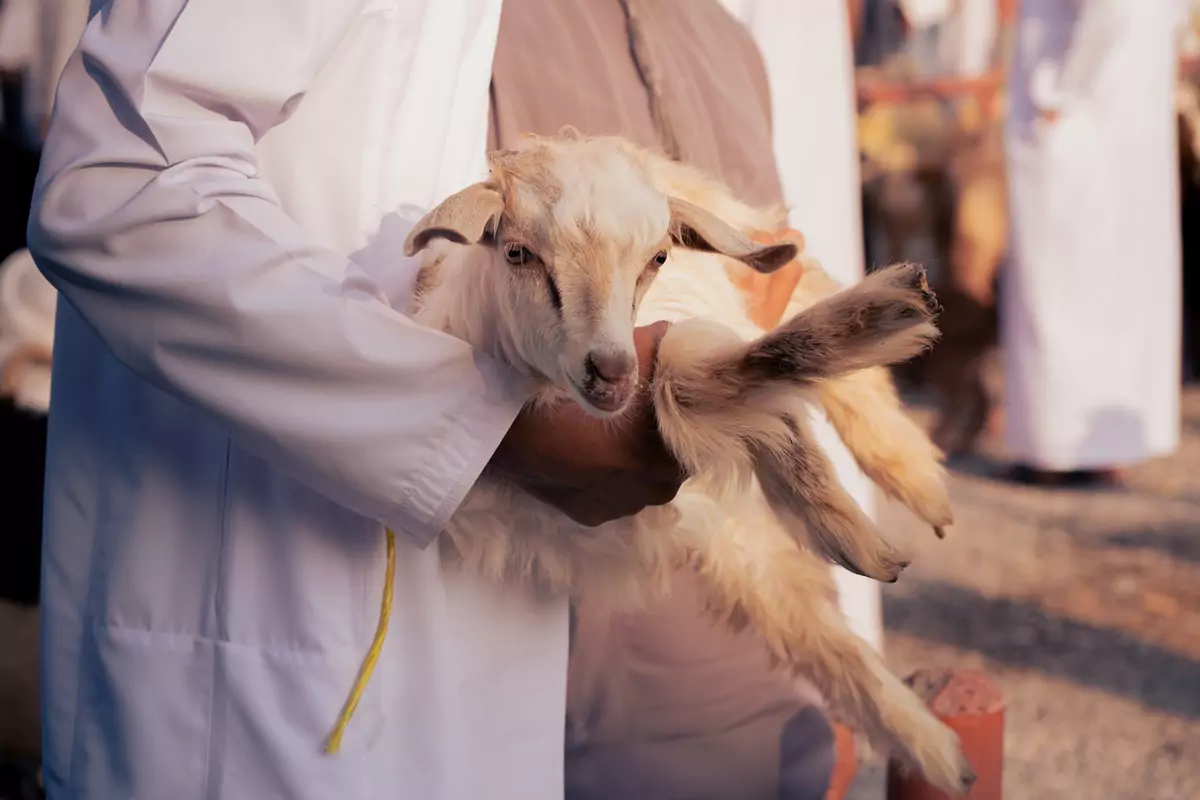
If you are in the area on a Friday morning, adjacent to the souq in a big penned in area, is the livestock market. This hectic weekly goat-trading event is worth checking out – get there early.
Entry fee: free
Distance from Nizwa: 0 kilometres
4WD needed: no
–
23. Oman Across Ages Museum
The Oman Across Ages Museum, situated around 20 kilometres south of Nizwa, is a modern spectacle and the country’s absolute top museum.
It’s relatively new (opened mid-March 2023 as part of Oman Vision 2040) and showcases the Sultanate’s history, while also considering the Oman of tomorrow. Emphasis is put on the renaissance of the 1970s, where the country experienced a massive boom in economic and technological growth, resulting in the Oman we see and experience today.
The building is huge, hyper-modern, with design nods to both the surrounding Hajar Mountains and local environment. It is worth visiting just to experience the architectural feat!
This museum is also a particularly welcome addition to Oman’s tourism industry. Many locations in the country, specifically historic places, lack on-site information, so Oman Across Ages compliments the real world experiences on this list and helps fill in some knowledge gaps!
Entry fee: 5 OMR
Distance from Nizwa: 14 kilometres
4WD needed: no
–
GOT EVEN MORE TIME IN OMAN?
Go camping:
Sleep under the stars at these amazing wild camping locations
Plan your trip with our Oman camping guide
Camp atop Oman’s highest mountain
or camp in the palest of Oman’s deserts at the Sugar Dunes
or have a totally unique adventure:
Spot the most remote beehive tombs in Oman
Wander around Oman’s most photogenic fort
Learn about livestock at the Nizwa goat market
Take a look around Oman’s most unique fortification
Find a way into Bat’s 5000-year-old tombs
Drive up Oman’s most popular mountain
Figure out which of Oman’s UNESCO sites are worth visiting
–
Nizwa Google Map
Below is a savable Google Map of all the places to visit in Nizwa we’ve mentioned in this post. It can assist with travel planning by demonstrating which sites are near each other, hopefully making designing an itinerary easier for however many days you have available.
Yellow: historic sites around Nizwa
Green: natural sites near Nizwa
Purple: other sites around Nizwa
Orange: hotel suggestions
Red: restaurants and cafes
To save the map, select the star next to the title.
WHERE TO STAY IN NIZWA
Nizwa has a great selection of hotels that cater for any accommodation preferences. Here are a few of our recommended hotels (we’ve stayed in all of them):
IntercityHotel Nizwa (+$$) – the most modern hotel in Nizwa, with clean, simple rooms and super easy parking right next to a Lulu Hypermarket and the Nizwa Grand Mall. This hotel goes up in price *a lot* last minute, so if you’re looking to book, do it early.
Antique Inn ($$) – quirky heritage hotel with some serious character, adjacent to Nizwa Fort and Souq. Parking can be a little tight if you arrive late in the evening and some rooms don’t have a window – upgrade to a King Suite if you can (I think the double rooms in this hotel are a little overpriced). Breakfast is excellent and the views of Nizwa old town from the terrace are fantastic.
Nizwa Inn (-$$) – simple, clean and friendly hotel with nice modern rooms; ours always had nice views across the desert towards the mountains. The entrance is a little slippery, be careful! The location is fantastic, right opposite the Nizwa Grand Mall.
WHERE TO STAY IN MISFAT Al ABRIYEEN
Another option is to stay in a more homestay-style place in Al Hamra or nearby Misfat Al Abriyeen.
The latter is a beautiful cliffside village that is well-accustomed to welcoming tourists now, resulting in some decent (if pricey!) heritage-type options. If you choose to stay here, we thoroughly recommend Misfah Old House, and if that is sold out (it’s very popular for good reason), then go for Al Misfah Hospitality Inn.
WHERE TO STAY IN JEBEL AKHDAR
If you are taking a trip up Jebel Akhdar as part of your Nizwa trip, the mountain plateau has a fantastic range of hotels, too.
For a simple but clean, elegant stay, consider the Green View Hotel. It’s in a lovely cliff-side position, the breakfast is excellent, the rooms are super modern and the owner is lovely.
For a touch of real luxury, it’s a toss up between the Alila Jebel Akhdar and the Anantara Al Jabal Akhdar. Both of these opulent hotels have outrageous views, exquisite swimming pools and price tags to match. If I had to choose, the Alila wins, but it’s close – they’re both utterly fabulous.
–
How to Get From Muscat to Nizwa
There are several options to travel from Muscat to Nizwa:
Mwasalat Bus: the buses go from Muscat to Nizwa twice a day. The buses are number 53 and 54, and leave from Azaiba Bus Station near Muscat Airport. Check the Mwasalat website for more details on the route and to check for any changes. A single ticket for either service should cost you 2.5 OMR.
Taxi: the going rate for a taxi from Muscat to Nizwa is about 40 OMR for a private ride. The best app is Otaxi.
Hitchhiking: this is less common than in Jordan and Saudi Arabia from our experience (still common though!). Since the route between Muscat and Nizwa is so busy, you’ll have no problem catching a ride. I consider Oman as one of the safest countries in the world, so wouldn’t have a problem hitching!
Driving: the distance from Muscat to Nizwa is about 150 kilometres and the journey takes 1.5 hours. We’ve driven this route so many times and, apart from some roadworks, it’s smooth sailing the entire time. Check out our guide if you’d like to know more about self-driving in Oman.
HAVE WE HELPED YOU PLAN YOUR TRIP TO NIZWA?
If you’ve found our content helpful, consider booking your rental car (if you need one!), through the company we always use – Discover Cars. They’re the absolute best and have been our rental companion (and savior, thanks to their insurance) in many destinations across the world.
Also, consider booking your accommodation through Booking.com – we use them exclusively when travelling around the Middle East.
Alternatively, leave us a tip to say thank you.
Help like this makes it easier to pay for the upkeep of this site and ensures our small business survives the onslaught of AI!
Thanks for reading.
–
Where to Next?
Nizwa is one of those incredible locations that offers cultural activities, historic attractions and outdoor pursuits to suit absolutely everyone.
Plus, a journey to Oman really isn’t complete without at least a brief visit (although it’s worth way longer than just a fleeting trip). We get so many people asking us about day trips from Muscat, but Nizwa is genuinely the tourism centre of Oman.
For a two-day Muscat guide with the same level of detail (actually, possibly more), check out our capital city itinerary, too.
Have a great trip!
Hi, thanks for visiting our blog! If this post has been of help to you, or you’ve just enjoyed our random ramblings and musings, say thank you by buying us a coffee! It helps keep The Restless Beans blog up and running.
Thank you, Claire + Nick




Great guide! I didn’t realise there is so much to see in Nizwa. I’ll be saving for future travel ideas. Thanks for sharing 🙂
Thanks so much for your comment – it’s a wonderful city! Appreciate it 🙂
Really useful information, thakyou so much for sharing.
This is a great website. I reference it often for planning our trip in April 2025. My family of 4 (kids aged 15 and 11) are looking for some adventure. What are your recommended highlights for a 6-day trip? We will have a rental car. Thanks in advance.
Hi Jared,
I’m glad you’ve found our posts useful 😊
It totally depends on where you’ll be basing yourselves, but we’d recommend:
A day in Muscat | the Sultan Qaboos Grand Mosque (not open Fridays), Mutrah Corniche and fort area (nice around sunset), Al Qurum and Al Bustan Beaches (if you or your kids want to hang out at a beach).
A day or two in north-eastern Oman around Sur | Wadi Shab, Wadi Bani Khalid, and Ras Al Jinz for the turtles are all good choices for kids (and adults). There’s also the option of spending a night in Wahiba Sands, if you have a 4×4 or arrange transport.
Three days (or more) around Nizwa | include Nizwa Fort and Souq and Oman Across Ages Museum. If you are there on a Friday, then visit the early morning Nizwa goat market.
Jabreen Castle is better for kids than Bahla Fort and Wadi Qurai is a fun little adventure if your kids are active. To the northwest is Misfat Al Abriyeen, a cool village you can stay in with pretty hikes and views (I think this is excellent for kids and the guides are so friendly there). Also check out nearby old Al Hamra.
With a 4WD | since you’re going in April, exploring the mountains might be good respite from the heat! So, day or overnight trips to Jebel Akhdar and Wadi Bani Awf would be great (4WD essential). The Balcony Walk in Jebel Shams and Wadi Damm are great if your kids love scrambling and exploring (4WD preferable, not essential). There’s also the option to visit Wakan Village (nearer Muscat) which is so pretty, with great hiking (4WD required, or take a driver from the bottom of the hill).
I think this would be pretty optimistic with six days! Hope this helps with your planning and that you have a fantastic trip!
This will be very helpful, all of your Oman stuff come December!
Hi Keith,
I’m glad you found our posts so helpful 🙂