

· MIDDLE EAST · OMAN ·
Two Days in Muscat: A Stopover Itinerary for Oman’s Underrated Capital
Scribbled by Claire ⬩ 02 Aug 2026
Are you planning a stopover in Muscat or staying for a couple of days during your Oman road trip? Here, we’ve written a detailed two-day Muscat itinerary covering all the best historic sites, the most spectacular viewpoints and our favourite places to eat, including a few spots that don’t make it onto anyone else’s list (and some things to skip).

I don’t think it’s an especially common opinion, but Muscat is my favourite city in the entire world.
It was the first West Asian city I’d ever visited, and I still lucidly recall the feeling when peering out from the roof of my seven-storey hotel for the first time. The characteristic ocean of white dwellings, candidly written shop signs, a glistening warm light that sort of sparkles (I’m told it’s because of sand and dust); it was all just so mesmerising to my unsophisticated senses.
My early fixation with this city has never dwindled. Over the past half-decade, I’ve returned to Oman four times (and I’m currently planning a fifth), spending more than three months in the country, much of which was spent exploring Muscat and the surrounding region.
This Muscat itinerary has been a long time coming and, finally, I’m sharing where we love to stay, the most magical viewpoints, every can’t-miss site (while noting the overrated ones), plus the restaurants I’ve eaten at more times than I can count.
It’s especially designed for people who are visiting the city as part of a stopover or other short trip and want to make the most of their two days in the capital. Fair warning, this itinerary is busy and includes some under-appreciated, less-visited options that are missed off every other Muscat itinerary out there. Feel free to cut it down if you’re after a more chill time!

IN THIS GUIDE //
Exploring Muscat
Why is Muscat Worth Visiting?
How to Get Around Muscat
– Why We Recommend Getting a Rental Car
About This Itinerary
Day 1: Old Muscat, Mutrah and Viewpoints
Day 2: The Mosque, City, Islands and Beaches
Where to Stay in Muscat
Best Time to Visit
– Ramadan and Eid Al Adha
Google Map of this Itinerary
A Few FAQs
Where to Next?
This post may contain affiliate links. If you book through these links we may make a small commission at zero cost to you. It helps us pay for the upkeep of this blog. Thank you!
Why is Muscat Worth Visiting?
As the capital city of a well-off, ‘high-income’ Gulf country, Muscat is probably not what you’d anticipate.
If you’ve been to Dubai, Abu Dhabi, Jeddah, Riyadh, or Doha, for example, Muscat is a refreshing alternative to their hyper-modern architecture, intentional tourist infrastructure, and flashy ambiance. With a conspicuous absence of high-rises, the city feels entirely unrelated to its more ostentatious neighbours. Instead, you’ll see a rolling white sea of rustic buildings sitting against an endless backdrop of craggy mountains (you’ll spot countless exquisite mosque minarets peeking above the low skyline, though).
Visually, it captivates me endlessly.
My love for Muscat isn’t just about its visuals, though. The residents of this city radiate warmth and are genuinely excited to greet visitors. I’m forever being given free perfume samples, counselled on the best food haunts, and invited for dinner or tea (or given fresh dates). That level of hospitality isn’t uncommon in West Asia, but we’ve found it extra prominent in Oman. (I feel bad that I’ve never paid for the bags-worth of dates I’ve eaten – even though it’s not been for a lack of trying).
The Omani character is strong, undiluted and distinctly, well, Omani!
This city and its inhabitants have soul and character in droves. It’s magic.

itinerary Overview
– Day 1: Old Muscat, Mutrah and Viewpoints –
Mutrah Fish Souq
Mutrah Souq
Interesting backstreets
Mutrah Fort
Riyam Park and Censer
Al Mirani View
Museums in Old Muscat
Al Bustan Beach
Viewpoints
– Day 2: The Mosque, City, Islands and Beaches –
The Grand Mosque
Option 1: Daymaniat Islands
Option 2: Qurum and Opera House
–


We’ve always found the best car rental prices for Oman on DiscoverCars. It’s our go-to car comparison website for every road trip because they have such good insurance. You can save loads of money and get great-priced comprehensive coverage.
How to Get Around Muscat
Your options for getting around Muscat are bus, rental car or taxi. The city has no trains or trams currently.
Muscat’s Buses
Public buses run the length of Muscat, operated by a company called Mwasalat. They’re supremely affordable (often way less than 0.5 OMR/£1 per journey). The main bus station is located in Ruwi, on the eastern side, and buses service the main artery of the city as well as the airport.
There are 12 bus routes that run throughout Muscat and a combination of these will always get you in the general vicinity of where you need to go.
For example, day one of this itinerary is mostly catered by bus number 4, which starts in Ruwi. The full distance costs 0.5 OMR (about £1). You can pay in cash, or tap on and off if you have the Sayir eWallet and prepay the amount (since you can’t withdraw your balance we wouldn’t recommend this for only a short visit). You can check on the Mwasalat App or website for the bus schedule – it should leave every 20-30 minutes (they’re not the most user-friendly, in my opinion).
The second day is catered mostly by bus number 1 – getting off at Sarooj. Short-distance stops for this service are charged at 0.2 OMR (about £0.40).
Taxis in Muscat
We’ve only taken a few taxis in Muscat, but they were expensive, especially considering the price of fuel in the country.
If you do intend to take taxis, the most popular ride-hailing app is called Otaxi. It’s just like Uber and you can pay by cash or card. Download it from Google Play or the Apple Store.
Another option is the Tasleem app but I haven’t used it personally.
Public taxis are typically orange and white and generally don’t have meters.
Why we Recommend Renting a Car
Most typical city breaks around the world do not involve renting a car, however we’d highly recommend doing so in Muscat. Below is why we think renting a car is the best option if you’re able to:
⬩ The city is spread out and follows the coast for around 70 kilometres. It’s not walkable, at all, and doesn’t really have a centre, as such.
⬩ Public transport exists but isn’t widespread.
⬩ Parking is mostly free and abundant.
⬩ Roads are easy to drive.
⬩ Small cars are very economical to rent in Muscat, at around 10 OMR ( $27/£20 a day).
⬩ Fuel is incredible value, around 0.2 OMR (around £0.40) per litre.
⬩ Taxis are moderately expensive, despite the affordable fuel prices.
⬩ It’s hot in Muscat pretty much all year-round, so aircon is a saviour.
⬩ Four-wheel drive is not necessary.

About this Itinerary
The itinerary is a fast-paced whizz around this sprawling city, giving equal emphasis to the outdoors and cultural activities. You can easy shorten it slightly or add on a couple days (we would highly recommend more time in Oman if you can!).
Unlike some other Muscat itineraries, we’ve designed this to be entirely spent within Muscat itself. However, if you’re after a day away from the city, we’ve written about our favourite trips that you can do – go check them out to see if there’s something you’d enjoy.

Geographical Intro to Muscat
On the western edge of Muscat is the International Airport, the Azaiba Clocktower, the newly developed upmarket Al Mouz housing area and ‘The Walk’. To the far east is Mutrah, Old Muscat and Al Bustan.
Through the city, parallel to the coast, runs the Sultan Qaboos Highway or the ‘1’, which basically links everything in between, including Qurum, Al Khuwair, Al Ghubrah, Ruwi, Azaiba, and more. Each of these places feel like smaller towns all meshed together.
Interestingly, the city was originally a string of these individual coastal towns, which was kind of intentionally merged to form a singular, continuous metropolitan region.
–

GOT MORE TIME IN OMAN?
Explore some wadis:
Take a look at our 13 favourite wadis
Hike Oman’s favourite Wadi Shab
Live in a fairytale at the Wadi Damm pools
Drive through rivers in Wadi Dayqah
Explore the quirky white pools of Wadi Abyad
or the magnificent waterfalls of Wadi Darbat
Explore the cities and mountains:
Feel intrepid on an Oman offroad mountains itinerary
Discover what dramatic means with this Salalah itinerary
See some offbeat spots around Sur
Explore Oman’s cultural heart in Nizwa
Prepare with our Oman driving guide
–
– Day 1: Old Muscat, Mutrah and Viewpoints –
You know those beautiful photos you’ve seen of Muscat with the coastline and mountains? They’re likely from around the Mutrah area.
Historic Mutrah (or Muttrah) and Old Muscat are areas along the eastern edge of the city, where much of the tourist-centric stuff is found. It’s full of old winding streets, markets, museums and, unfortunately, the cruise ship port.
The area of Mutrah that absolutely everyone visits is the three-kilometre-long corniche. It’s the home of the Sultan Qaboos Port and the famous souq and fort. Historically, this area was a highly strategic merchant trading hub, surrounded by jagged peaks topped with watchtowers (that I can imagine fending off seaborne pirate attacks in centuries past).
Next door is Old Muscat which, interesting, is a sort of oxymoron because most ‘old towns’ in other cities tend to be a bit crumbly, ancient and run-down (in an often-charming way). However, Muscat’s version of an old town is one of the nicest, well looked after areas in the city and is home to government offices and a previous Sultan’s palace.

Early Morning: Mutrah Fish Souq
The fish market sits on the western side of the Mutrah Corniche in a relatively newish, chic-looking building famously designed by Snøhetta in 2017 (the original was built in 1960).
If you’re very anti-dead-fish (although this particular market doesn’t smell bad, at all), give this spot a miss, however I know loads of people love a good local livestock/seafood market (there’s some vegetables and fruit, too).
I haven’t visited in a while, but it’s a cool experience and people are friendly – head down early around seven-ish.

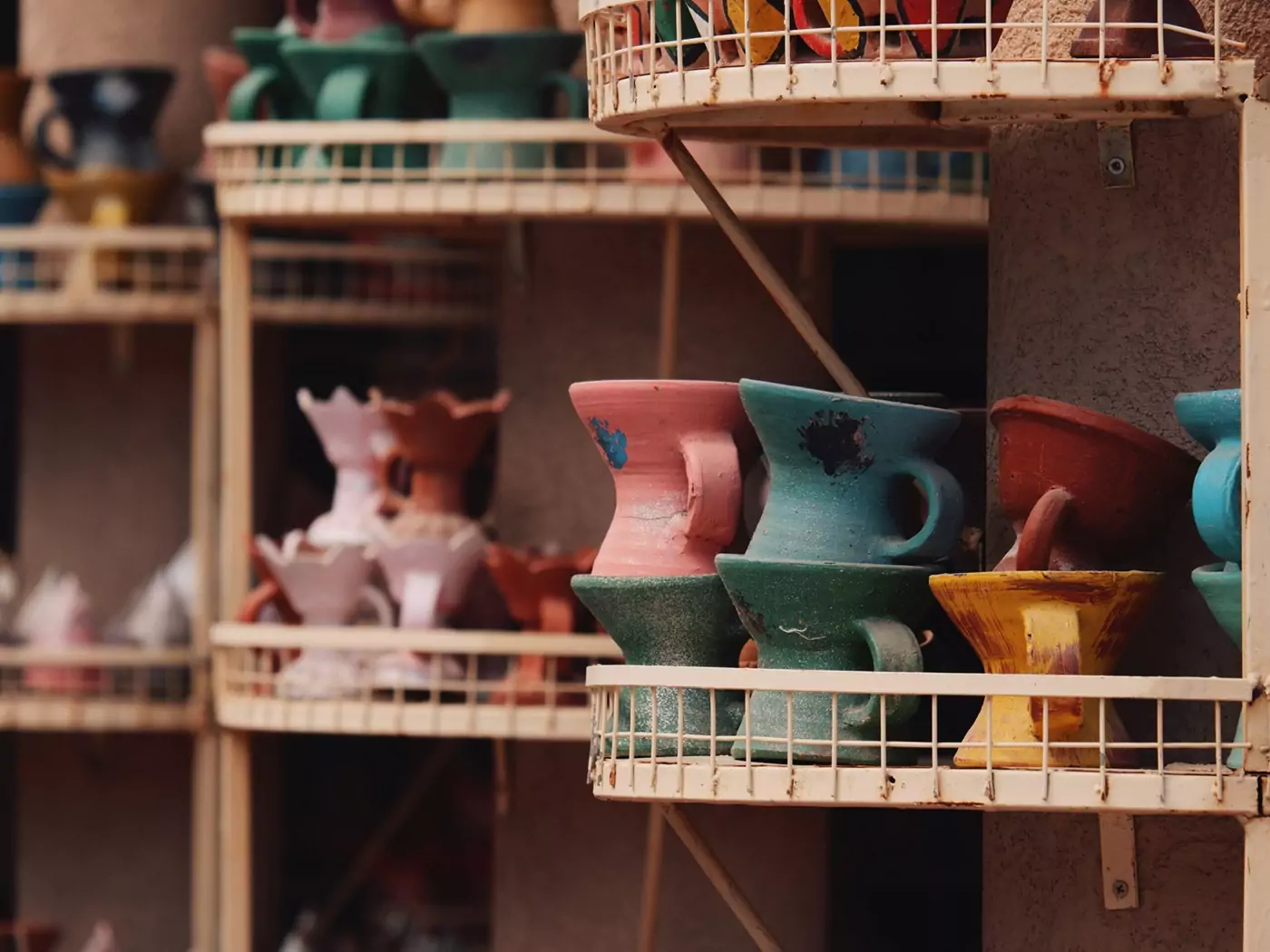
Mutrah Souq
Smack-bang in the middle of the corniche is the entrance to Muscat’s most popular market – the Mutrah Souq (souq literally means ‘market’ in Arabic). It’s a large, covered warren of stalls, selling all the usual fare, like fabrics, clothes, spices, perfumes and gold, plus keep an eye out for places selling the ceremonial Omani Khanjar. There’s also a dedicated Gold Souq located just slightly to the west of the main souq.
It’s not a bad place for a souvenir haul, but be careful of products that are not actually Omani (as is typical in many souqs).
Now, I’m not a huge fan of the Mutrah Souq. It’s okay and worth a quick visit, but is one of the few places in Oman where I don’t feel entirely at peace. (Be aware that I’m also not a shopper, so take my opinion with a pinch of salt).
The thing is, because it’s right next to the cruise port, there are clueless tourists wandering around there all day and I find that breeds a sort of ‘walking wallet’ like attitude from some vendors.
However, this market is still significantly nicer than most (less hassle than parts of Tunisia and Morocco, and significantly less stress than the souqs in Deira, Dubai). It’s definitely a friendlier souq – I was even offered a free scarf by a sweet young vendor because I had no money on me.
Personally, I prefer to wander through in the mornings, but it’s busier and more lively in the evenings. So choose whichever you’d prefer!
Opening hours: 9am-1pm, 4-10pm, Fridays 4-10pm
Interesting Back Streets
Behind the corniche is a warren of alleys. I’ve had a good wander around these back streets many times and they’re worth a trip for the type of traveller that just likes to amble about and get lost (like me).
It’s kind of similar to the back streets of Morocco’s many medinas – you’re welcome to explore the main streets and alleys with sensitivity and respect (and don’t invade private property). Make sure you’re dressed conservatively and don’t take photos of people or their homes without explicit permission.
On the western side of the corniche is one of Muscat’s more conservative (and fascinating) spots, a majority Shia area called Sur Al Lawatiyah (which is different since most of Oman practices Ibadi Islam). This is a large, walled residential enclave with several hundred homes which you are not allowed to access (‘sur’ literally means fence or enclosure). Access is via gate, so it’s easy to avoid – you won’t stumble in there by accident.
‘The Sur’ as it’s colloquially called is home to the Lawati Tribe, originating from the Sindh region (in modern-day Pakistan and western India) in the 1700s. It can be easily observed from the main corniche, where you can spot the ornate and distinctive outer homes. It’s also possible to wander down to the Sur Al Lawatiyah Tower which is a corner of the walled off complex.

Mutrah Fort
This isn’t my favourite fort in Oman (Jabreen, Samail and Al-Hazm Fort vie for that award), but if you don’t have time to visit any others, I’d recommend this one.
Entry is quite expensive at 5 OMR (£9.80) per foreigner visitor, but that price provides vast views along the corniche, port, and coastline. It’s actually one of the least interesting forts internally (Oman has so many good ones so it’s very stiff competition), but is still quite a good choice for the views. It has a nice aircon café (to enjoy the discounted drink that’s included with your ticket) if you’re looking for a place to rest your feet.
Be aware that there are more than 200 (unshaded) stairs to reach the top.


Riyam Park and Censer
Just along the road from the fort is Riyam Park. It has loads of free parking and is nice for a quick break under the trees. The area also offers some of the best views of the censer (a giant white-ish monument on top of some rocks).
The shape of the monument is based on a traditional Omani brass incense burner.
From the top of the censer, there are vast views of the surrounding mountains and coast, which I think is the main purpose for it. I’ve never been there when access to the top was actually open, but it’s pretty cool to check out from the park and there are great views from the Muscat Marine Tower on the opposite side of the road.
The Mutrah CAble CAr PrOject
There is currently a massive cable car project in development along the Mutrah waterfront (I’m not keen on how it’s going to look in this otherwise very beautiful location).
However, it’s not due to even begin trial operations until December 2026, so it’s just a bit of a mess in certain locations at the moment. For example, Hay Al-Ward Park, just a little further along from the Censer, is shut long term for the development which is such a pity because it’s so lovely.
–

Lunch
There’s nowhere overly inspiring to eat along the Mutrah Corniche apart from Bait Al Luban, a restaurant opposite the Fish Market.
It’s popular because Anthony Bourdain visited there and is well-received in reviews. Personally, I visited a few years ago and wasn’t blown away by it, however I’m vegetarian and probably not its primary target audience!
The restaurant is famous for the goat ‘Shuwa’, which is spiced and cooked underground for many hours.
If you’re after something more casual for lunch, Tea Time Mutrah serves super affordable sandwiches, wraps and tea (including a few decent veggie options). It’s easy to takeaway and eat in the park if the weather isn’t too stifling.
–
Afternoon: Al Mirani View and Fort
The large fort of Al Mirani sits just at the western side of Old Muscat, adjacent to the royal dwellings. Entry is extraordinarily expensive at 11 OMR per person, so we don’t recommend a visit – it’s just not that remarkable for the money (or your time).
Instead, if you’re driving, we’d suggest a quick stop at the Al Mirani View. There are nice views of the fort and the nearby naval base, plus a very cool looking lighthouse across the sea.
There is a small strip of free parking spaces just to the left after you go through the tunnel.


Mid-Afternoon: Museums in Old Muscat
There are two worthwhile museums in Old Muscat – The National Museum and Bait Al Zubair Museum.
⬩ Bait Al Zubair Museum – the smaller of the two and very intimate. It’s set in a grand heritage home full of art, traditional clothing, Omani jewellery and khanjars. Great value for money. I spent a little over an hour here. Entry 3.2 OMR, opening hours 9am – 5pm, shut Fridays.
⬩ National Museum Oman – this (along with the Oman Across Ages Museum in Nizwa) is the country’s premier museum, detailing absolutely everything Omani. It’s beautifully curated in a grand building. It’s a rare time where I think the entry fee is reasonable – I spent a little under two hours wandering around. Entry 5 OMR, opening hours: 10am – 5pm daily, 1.30pm – 5pm Fridays.
If you’re visiting for just a couple of days, I’d recommend choosing one (and going during the hottest part of the day, mid-afternoon). They’re both about Omani heritage and history, full of artifacts and art. Personally, I’d go for the National Museum if you have to decide between them. If you’re lower on time or money, go for Bait Al Zubair since it’s quicker to get around.


Optional Late Afternoon: Al Bustan Beach
Just further around the coast is Al Bustan, which has the lovely Al Bustan Public Beach if you want to pop in for a beachy stroll (well, it’s half public – the other half is owned by the the Ritz Carlton, which I guess speaks to its calibre). There are a few viewpoints and also some beautiful mountain scenery in the area.
From here, you can choose to drive back to the corniche for a sunset wander, or even climb the fort if you skipped it during the day.

Offbeat Sunset Viewpoint Options
It really depends on how much time you have left at the end of your day, but eastern Muscat is full of amazing spots for sunset.
⬩ The easiest option is the Al Bustan Viewpoint for smashing views of the elegant State Council of Oman buildings and surrounding mountains. This is an easy drive for any car.
⬩ My top choice is Wadi Kabir Heights Viewpoint, but it’s a bit of a rough road (access it via Yiti Road) so I’d recommend you have a high clearance car (you don’t need four-wheel drive). It’s usually empty and is a favourite of mine. You might even see workers playing cricket at the bottom of the hill, too (it’s always so hot and I can’t understand how they do it).
⬩ If you head to Wadi Kabir Heights Viewpoint, stop via Yiti Viewpoint – it’s literally on the way (you can’t take the road on Google Maps directly up from Al Bustan Viewpoint because it’s one way).


Dinner Choices
There are loads of decent places to eat in Muscat, for all budgets and food preferences.
If you didn’t choose to eat at Bait Al Luban for lunch, consider popping there for a traditional Omani dinner since you’re already in the area. If you’re looking for something different, here are my dinner suggestions for places we’ve loved multiple times:
⬩ Bukhari House: this Afghan place is hands-down home to our favourite casual, affordable eats in Muscat – we’ve been at least twenty times. They serve absolutely insane portions of incredibly flavourful food for working-class budgets (I’m forever thinking of the daal fry). The breads are practically the size of a bed and they do my favourite hummus in Oman. Go and see for yourself.
⬩ Turkish House Restaurant: another of our favourites, this restaurant serves quality, affordable Turkish food specialising in seafood options. Ensure to grab a chocolatey, nutty dessert from the counter on your way out. They single-handedly ensure I go on a diet with that kind of temptation.
⬩ Ramssa Omani Restaurant: hidden over in suburban Qurum, this lovely, homely spot does traditional Omani food, including a bunch of camel meat options, at very reasonable prices. It also has the distinction of doing the best muhamara I’ve ever had (and I’m a bit obsessed with it).
⬩ Dukanah Cafe: this friendly, rustic, but fashionable spot is really popular for a traditional Omani breakfast (massive portions and loads of veggie choices too), or you can be very British like me and get a crisp and cheese wrap! We’ve never been here in the evening, but if their dinner is a good as the breakfast, we’d highly recommend it.
⬩ Rozna Restaurant: this place is kind of mental and literally looks like an enormous castle or fort and even the car park is like the size of a mall. It serves traditional Omani food in an opulent setting but the menu is pretty meat heavy, so not particularly vegetarian friendly. I mean, definitely have a meal here for the photo ops, though! It’s always been extremely busy when we’ve visited, so book ahead, especially for dinner and on Fridays.
A Few Curve Ball Recommendations
HuQQabaz Muscat – a seaside hookah restaurant with a modern vibe, if a little pricey.
Mado Cafe – another nice seaside place, this one serves lots of Turkish staples including some very tasty ice-cream.
Hakkai – Al Khuwair – great veggie Chinese options, we often get this as a take away.
Sprout – has a menu featuring a range of lovely fresh salads for all your healthy food needs.
Ghasan’s Cafe – come here for your deep-fried sweet and savoury Keralan snacks and tea.
Roselle Kitchen – we had some of the best wraps from here, plus the decor is cute.
Lazy Cat Oman – amazing breakfast and classy brunch options.


– Day 2: The Mosque, City, Islands and Beaches –
The second day of this itinerary is a little more flexible, in so much that there’s less small stops than on day one.
The main highlight of the day is The Sultan Qaboos Grand Mosque in the morning. For the rest of the day, you have two choices:
⬩ spend a chill afternoon dotting around the city, checking out various sites and beaches.
⬩ take an afternoon boat trip to Muscat’s offshore Daymaniat Islands, where you can snorkel and sometimes see turtles, then pop to the beach for evening.

Morning: The Grand Mosque
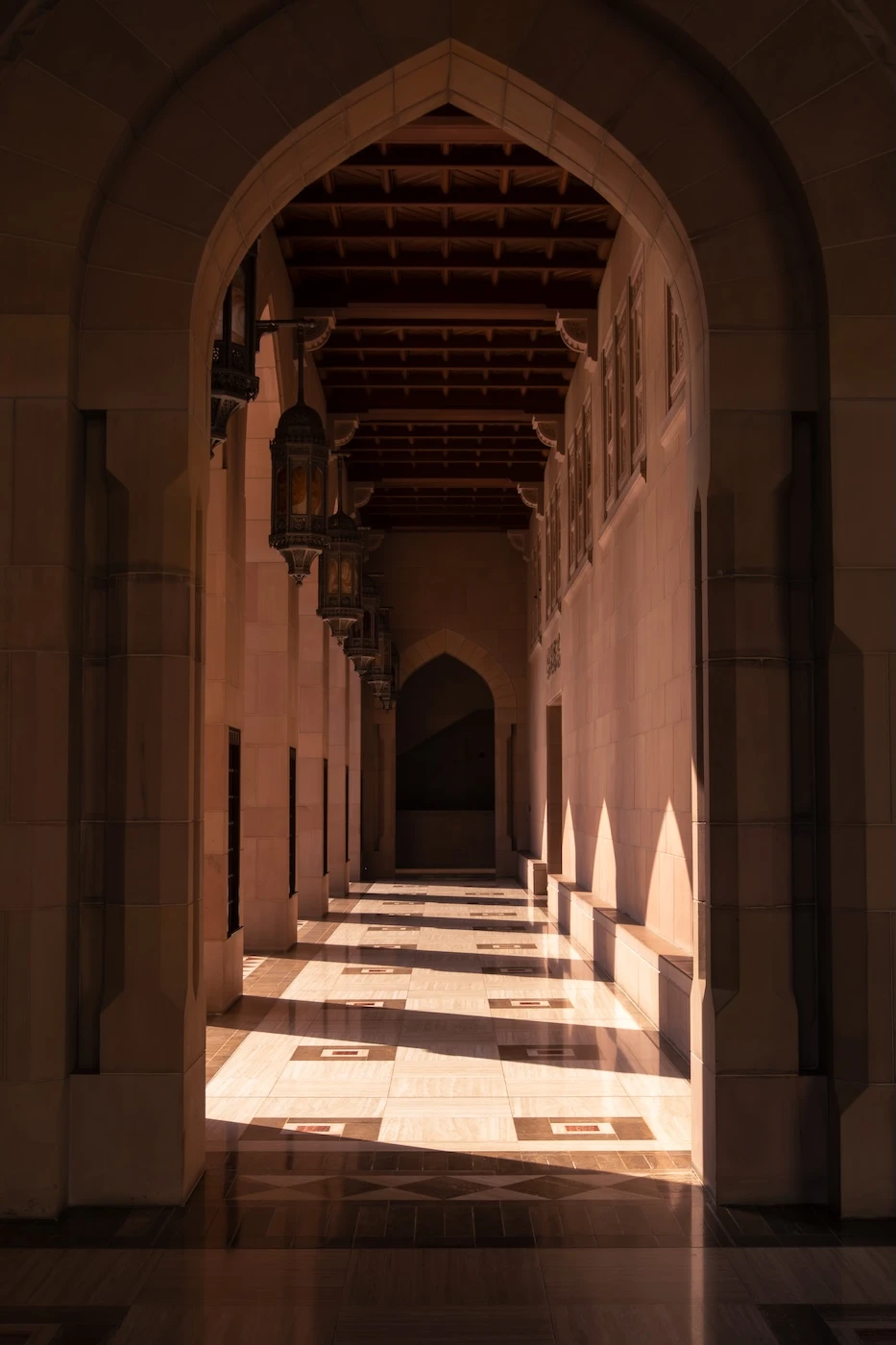
Muscat’s Grand Mosque is exquisite and one of the major draws in the city. You will not be able to miss its looming minarets when driving east from the airport – they absolutely dominate the landscape.
The building was completed in 2001 and is Oman’s largest mosque, able to accommodate 20,000 worshippers. It has the second largest continuous carpet in the world and also the second largest chandelier, too. (Oman’s neighbour to the west stole first place when they made both a slightly larger carpet and slightly larger chandelier for the Sheikh Zayed Grand Mosque in Abu Dhabi).
Non-Muslims aren’t permitted inside most of Oman’s mosques, but this one is an exception to the rule and allows visits during mornings, every day of the week apart from Fridays.
We’d recommend getting there early, when the temperatures are lowest. However, on one of our visits, it was absolutely packed with tour groups at 8am, so be aware that you may not be able to escape the crowds by turning up early. (It was still much less busy than the Sheikh Zayed Grand Mosque, though).
We find it easy to spend a few hours at the mosque, so plan for this visit to take up most of your morning unless you’re intentionally quick.
Entry free, opening hours 8am – 11am, shut to tourists on Fridays.

Lunch
We’ve written about quite a few food options above, but one great choice straight after the Grand Mosque is Dukanah Cafe right next door, where you can pop in for a late breakfast. This spot is open from 7am, so you could always grab a breakfast before your visit instead.
Alternatively, Cafe Farah does a classy late breakfast/lunch right by the sea (served from 8am-12.30pm) and offers some Western options along side some Omani choices. I would highly recommend the eggplant shatshuka.
–
Afternoon Option 1: Daymaniat Islands
If you’re after something a bit different, consider taking an afternoon boat trip to the Daymaniat Islands, a set of offshore islets, just 30 kilometres from the city.
It’s an easy excursion to fit within this itinerary as many of them depart from Al Mouj, a luxury housing and shopping complex, a 15-minute drive from the Grand Mosque.
The half day afternoon trips are approximately four hours, leaving at 1.30pm, which is perfect for fitting in after your trip to the Muscat Grand Mosque.
After the tour, you can head to the Royal Opera House to check out its pretty architecture before grabbing some dinner in Qurum.

Afternoon Option 2: Qurum and the Opera House
If you’ve chosen option 2, this afternoon is far more chill than yesterday, with less to do and more ambling around with smoothies.
Otherwise, some of the below can be done after your Daymaniat Islands excursion.

Qurum Beach
Qurum is the epicenter of Muscat’s international modern side. It has loads of restaurants and upscale hotels, as well as a massive beachfront with promenades, fitness equipment, and palm trees.
A lot of people skip this area because it’s less historic than others and doesn’t have loads of touristy spots. However, until I visited Qurum, I didn’t really get what the city was actually about or know what normal people did in the evenings!
If you’ve chosen a beachfront hotel in this area, like The Intercontinental, The W, or The Mandarin Oriental, it’s easy to spend the evening here and enjoy the beachy vibes nearby your hotel. If you’re staying elsewhere, it’s worth visiting to wander along Qurum’s Beach Walk, see people playing football on the beach, and grab an immaculate date and avo smoothie (from Tropical Juices and Ice cream Shati Al Qurum).


The Royal Opera House Muscat
This is a popular stop for most visitors to Muscat, but it’s only a quick one unless you want to actually see an event here.
The building is really striking and you can stop by at any time of year, but if you want to see a show (like an Opera, for example), they take a hiatus over summer. So, check in advance to see what is playing for your dates. There are also daily tours (Saturday to Thursday) between 8.30am and 5.30pm for a fee. Find out more about organising one on the Royal Opera House website.
If you’re just stopping off, there’s free covered parking right outside the main spot that people photograph, so just pop in, take a look around and carry on!

Dinner
If I was in Qurum for the evening right now, I’d choose Ramssa Omani Restaurant for a high quality, cosy, local meal with unique food.
If you’re looking for a bit more of a high-end, metropolitan, international vibe, choose anywhere on the seafront around Qurum Beach. There’s a lot to choose from: I’ve had excellent pizza at Brezza Marina Italian Restaurant and On the Wood had some of the best falafel I’ve ever had.
An intriguing option I personally haven’t tried (due to it being just a bit too meaty for my veggie tendencies) was Samad Al Iraqi Restaurant, which was highly recommended to me by several separate acquaintances during my trips. It serves proper Iraqi food and looks really interesting!
–


Where to Stay in Muscat
Muscat has loads of great value hotels. We’ve stayed in around twenty different ones within the city and they generally offer super high-quality rooms for really great prices.
These are our picks:
⬩ W Muscat: we’ve actually only stayed at The Intercontinental next door to The W (which was lovely, too) but I really wished we’d stayed at the W. It was lively and seemed like so much fun and the pool area was awesome. To be fair, if you can afford either of these hotels, you’re in for a win because they’re both in the best location in Muscat (the Intercontinental is literally in between the beach and the Opera House – you’ll likely get a view of one or the other!).
⬩ The Aloft Muscat: this spot is a bit out of the way, but it’s where we’ve stayed for the majority of time on our most recent visit. It’s mad value for money, recently built so the rooms are immaculate, and our included breakfast was vast and varied. I just cannot get over how good the quality-to-money ratio was – we kept extending our stay and they kept offering us free stuff, like pizza, in the evenings. The hotel also has a popular bar/club thing so it’s actually kind of lively with Muscat residents.
⬩ The Golden Tulip Muscat: this quite traditional Omani-feeling hotel chain in Al Khuwair is in a prime location in the centre of town and has really decent rooms for often incredibly low prices. We regularly return here purely because it’s affordable, opposite our favourite restaurant, and also has great underground parking.
⬩ Al Bustan Palace (The Ritz Carlton): Okay, so I definitely haven’t stayed here. I probably never will. But, if I had the money, there’s no doubt I would; it’s the definition of luxury. Also, if this is in your budget range, check out The Chedi Muscat, too.
⬩ The Sheraton Oman Hotel: this isn’t my favourite hotel (that would be the Aloft, above), but it’s one of a few comfortable hotels located in the Old Town/Mutrah area. It’s clean, decent enough, and I’d stay there again if it was the location I was after.


Best Time to Visit (Holidays and Weather)
The best time to visit Muscat is during the cooler months of December to February. It’s a hot country, year around, so aim for the coolest weather if you can! We have almost always visited between November and March and our experiences have been entirely sunny, with hot days and pleasant nights.
The summer weather in Oman is almost intolerable, maxing out around 45 degrees C (sometimes higher), with humidity to boot. We just returned from there in June and it was hard work. Sometimes the air didn’t even seem to be breathable, especially by the seaside. Also, drivers seemed far keener to use their car horns, so I wonder if they were feeling the same as me!
If you are visiting in summer, you can still do things around Muscat, just be aware that it will be uncomfortable. In June, we explored forts, went to museums and drove into the mountains, but would not dream of hiking or camping during this time.
Ramadan and Eid Al Adha
I’ve been in Oman during both Ramadan and Eid Al Adha and, for us, we didn’t find either particularly disruptive (we do spend a lot of time in the mountains, though). However, for a city break, the museums, forts and Grand Mosque being closed or having restricted hours around these times might be challenging, so check ahead (especially around the actual Eid celebrations).
It’s also worth noting that, during Ramadan, there will be fewer food options available during the day and many places will be providing an exclusive Iftar type service in the evenings. This doesn’t bother me personally as we love to eat all the incredible, fresh supermarket food during the day (Lulu is the best). So, during Ramadan, head to the supermarket (there will be less variety of prepared food during this time but still some options).
It might be pretty obvious, but it is also insanely busy on the evening of Eid celebrations. Parking is chaos, restaurants are booked for the entire day, and the beaches are entirely full. Everyone is having fun, though, so I think it’s a great time to visit.
Remember to tell people: ‘Eid Mubarak’!

GOT EVEN MORE TIME IN OMAN?
Go camping:
Sleep under the stars at these amazing wild camping locations
Plan your trip with our Oman camping guide
Camp atop Oman’s highest mountain
or camp in the palest of Oman’s deserts at the Sugar Dunes
or have a totally unique adventure:
Spot the most remote beehive tombs in Oman
Wander around Oman’s most photogenic fort
Learn about livestock at the Nizwa goat market
Take a look around Oman’s most unique fortification
Drive up Oman’s most popular mountain
Find a way into Bat’s 5000-year-old tombs
Figure out which of Oman’s UNESCO sites are worth visiting
–
Google Map of Muscat
Below is a Google Map with markers for everything mentioned throughout this post.
⬩ Orange: day 1 sites
⬩ Yellow: day 2 sites
⬩ Red: restaurant suggestions
⬩ Green: hotel options
⬩ Purple: parking
⬩ Blue: airport and bus stations
To save this map, select the star next to the title.
A Few Frequently Asked Questions
Is cash or card better in Muscat?
Card is the best option for most places in Muscat, although the Mutrah Souq has a few vendors that still prefer cash. Hotels, restaurants, parking, entrance fees, gas stations and more are all widely paid for by card.
Is driving easy in Muscat?
Yes, driving in Muscat is really easy. Any roads you’ll drive are paved, often multi-lane, highways. There’s one main road that cuts through the length of the city and most sites are located off this main artery. Take a look at our driving guide for more information.
What should I wear for a trip to Muscat?
Conservative clothing is the norm in Oman, although Muscat is a tiny bit more flexible in some areas. However, it’s still a strict Muslim country and we’d recommend always covering arms and legs and avoiding tight clothing. Women do not have to cover their heads (unless in the vicinity of a mosque).
Power plugs
Oman uses type-G plugs, the ones with three flat rectangular pins (the same as the UK).
How expensive is Muscat?
I think Muscat is pretty affordable, as city breaks go! Accommodation is mid-priced but with high standards, food is very affordable, rental cars and petrol are incredible value and few places have high entry fees. Supermarket items are also well-priced. We wrote a little post about what we spent during a month in the country if you’re interested.
Do I need a guide in Muscat?
No, you do not need a guide to travel around Muscat. It’s so easy to explore the city on your own.
What language do people speak in Muscat?
Arabic is the main language spoken in Oman, but you’ll find lots of people speak really clear English, too, especially in Muscat. There’s lots of immigrant workers from south Asia, so people speak loads of different languages and English is often the overlapping one.
Is vegetarian food widely available in Muscat?
Yes, kind of. There are plenty of places you can eat as a vegetarian, but in some more local Omani restaurants, you may occasionally feel like an after-thought. However, there’s masses of south Asian food which is naturally more veggie-friendly, so you’ll never struggle to find food to eat.
Are there luxury hotels in Muscat?
Yes, Muscat has some absolutely smashing luxury hotels. The best ones are The Chedi and The Ritz Carlton.
Where to Next?
Muscat is an interesting city: neither flashy and garish, nor so understated that it’s dull. It’s worth putting the effort in because you’ll receive so much in return!
We hope this itinerary has helped you plan the Muscat portion of your trip. If you’re considering spending longer in the country, it’s worth taking a look at our day trips from Muscat, the best things to do in Nizwa or a one-week itinerary that hits all the major spots in Oman’s north.
If you’re just hanging out here in Muscat for a few days, don’t forget to consider renting a car – it’ll really enhance your experience.
Have a fantastic trip!
Hi, thanks for visiting our blog! If our free content has been of help to you, or you’ve just enjoyed our random ramblings and musings, say thank you by buying us a coffee! It helps keep The Restless Beans blog up and running.
Thank you, Claire + Nick


