

The Essential Camping in Oman Guide: How to plan, where to go & what to pack
Scribbled by Claire ⬩ 10 Aug 2026
Are you curious about wild camping in Oman, but not sure if it’s your vibe? This exhaustive guide to planning the perfect Oman camping trip includes everything we wished we knew before we started our journey, plus safety, choosing campsite locations, bathrooms, gear, amenities, practical advice, and more.
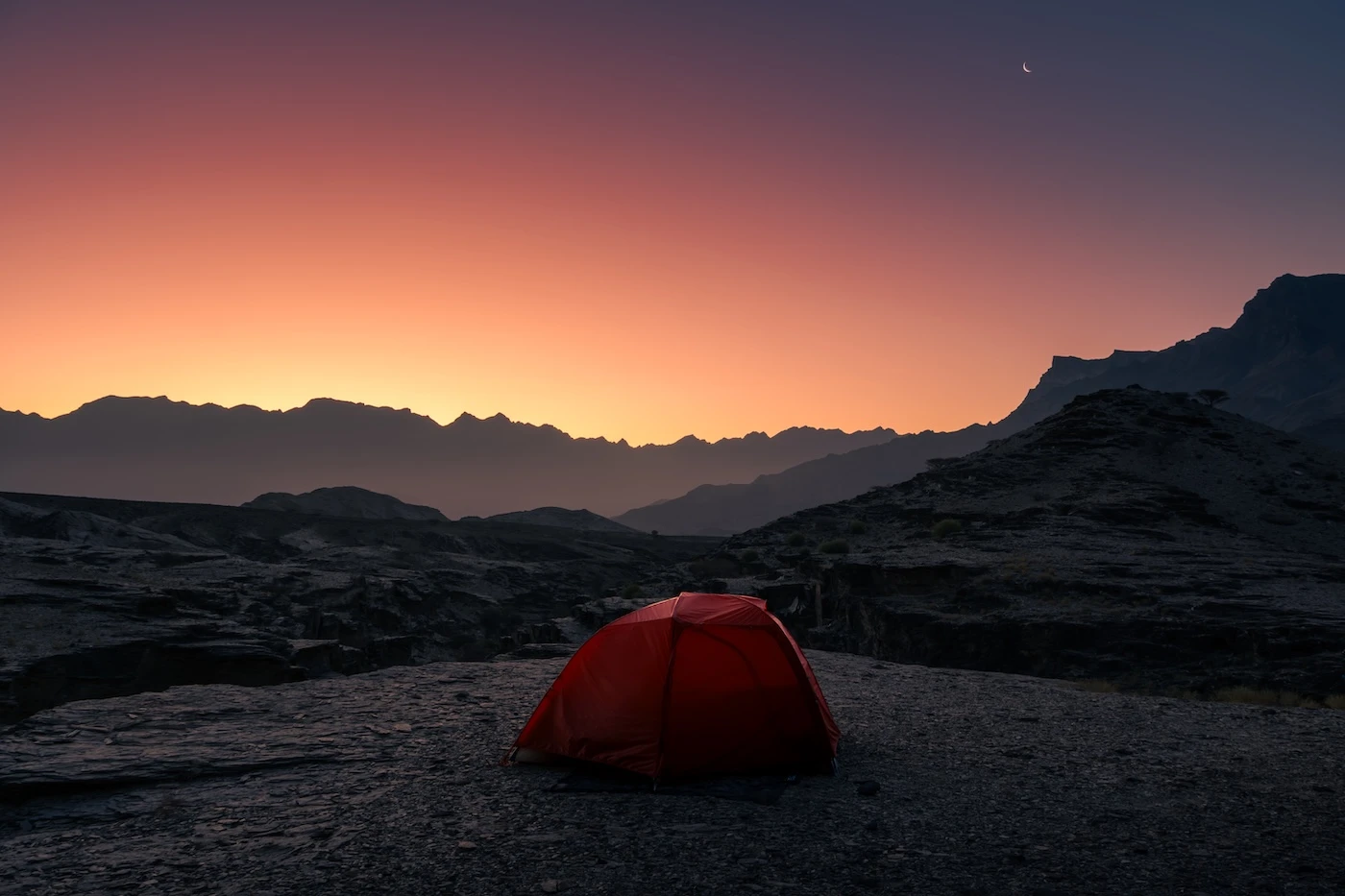
To be truthful, I struggle with camping (not that you’d necessarily know it from reading this website). I don’t cope well in cold and rain, I’m deathly afraid of all insects, and my back absolutely kills when sleeping on the floor. I also just don’t really get much sleep (a perpetual problem in my 40s, it seems).
However, Oman’s camping won me over.
The previous year, I spent several months of very uncomfortable camping in the United States, in freezing mountains and 48 degree deserts. I told myself then that I’d tolerated enough – never again. But, when I had the opportunity to spend a month camping around Oman, for some unfathomable reason I was well up for the adventure.
Thank god I was, because Oman is a legitimate outdoor utopia.
I had a lot of anxious questions before I arrived, though: things like safety, how the bathroom situation works, what car you might need, where you are allowed to camp, legalities, and loads more quirky thoughts that I won’t bore you with now.
Since that first, slightly wild decision, we’ve spent three months driving and wild camping all over Oman, covering 20,000 kilometres, so hopefully have the answers and solutions to all your queries!
IN THIS GUIDE //
Rogue Adventures in Oman
PART 1: GETTING STARTED
– Why Camp in Oman?
– Things to Sort Before Your Trip
– Is a 4WD Car Required?
– Do You Need a Permit?
– – Muscat Permits
PART 2: WHERE CAN YOU CAMP IN OMAN?
– Where Are You Not Allowed to Camp?
– How to Find the Best Campsites
– Beach Camping
– Desert Camping
– Our Top 5 Campsites
PART 3: CAMPING SAFETY
– Wadis and Flooding
– Snakes, Scorpions and Creepies
– Roaming Animals
– Mosquitos
– Crime
– Tips for Staying Safe
PART 4: THINGS YOU’LL NEED TO CAMP IN OMAN
– Tent, Sleeping Mat and Bag
– Roof-Top Tents
– Other Camping Items
PART 5: CAMPING FACILITIES
– Supermarkets and Restaurants
– Water
– Trash
– Bathrooms
PART 6: PRACTICAL CAMPING ADVICE FOR OMAN
– Helpful Campsite Tips
– Other Things
– Best Time to Camp
Where to Next?
This post may contain affiliate links. If you book through these links we may make a small commission at zero cost to you. It helps us pay for the upkeep of this blog. Thank you!
Part 1: Getting Started
Why Go Camping in Oman?
Here is a quick list of why camping in Oman is such an epic choice for your next trip:
⬩ Legality: wild camping is completely legal in Oman. It is built into the culture of the country. People from all walks of life head down to the beaches on weekends and up to the mountains in the scalding summers.
Nobody will blink an eye at you setting up a camp!
⬩ Cost: it is free. You do not have to pay for that perfect sunrise beach view, wadi shower, or mountain vista.
⬩ Safety: we travelled as a pair, but I would have been happy camping completely alone, as a woman, at every place we chose.
Oman has a very low crime rate, to the point where we’ve seen people leave their cars unattended with the windows open when shopping, even in Muscat. We went to Oman straight after spending months in Central America and the contrast in how we felt was significant.
There are also no animals, apart from maybe some rogue goats (they stole my toilet roll).
⬩ Peace and quiet: it is easy to find solitude. There is plenty of space and campsites are so easy to find. Whether you have a four-wheel drive or not, you’ll be sleeping in a beautiful spot!
⬩ Planning: camping in Oman is also amazing for anyone like us who hates to plan too far ahead – no bookings required.
⬩ Fires: fires are allowed, as is gathering of wood.
9 Things TO SORT BEFORE YOUR TRIP
To start planning your camping trip, you’ll need the following things:
1. Flight (or overland option) – we always use Skyscanner.
2. Visa (in some circumstances) – check the official Omani website.
3. Car rental suitable for the terrain – we always book through Discover Cars.
4. Tent, sleeping mat and sleeping bag – this can be purchased either in Oman or your home country.
5. Other camp equipment – this can be purchased in Oman when you arrive.
6. An itinerary or rough plan – we have several routes, including a one-week 2WD classic trip and an 4WD offroad mountains option.
7. A sim card – these can be picked up in the airport, or you can use an e-sim if you prefer.
8. Travel insurance – our preference is Safety Wing for short trips.
9. Hotels (first and last night) – we reserve everything in Oman through Booking.com because the cancellation options are best.
Much of this list can be organised before you leave for Oman, making it a pretty hassle-free trip.
–
Is a Four-Wheel Drive Car Required?
No, you do not need a four-wheel drive (4WD) car to wild camp in Oman.
The main road routes in Oman are in excellent condition. Popular places like Nizwa, Raz al Jinz, Wadi Shab and Jebel Shams (nearly to the top!) are all paved and easily accessible. Further south, you can reach Masirah Island and Salalah by high-quality, paved roads.
You can definitely camp on the coasts, in modest mountain locations, and even on the edges of sand dunes with a 2WD car.
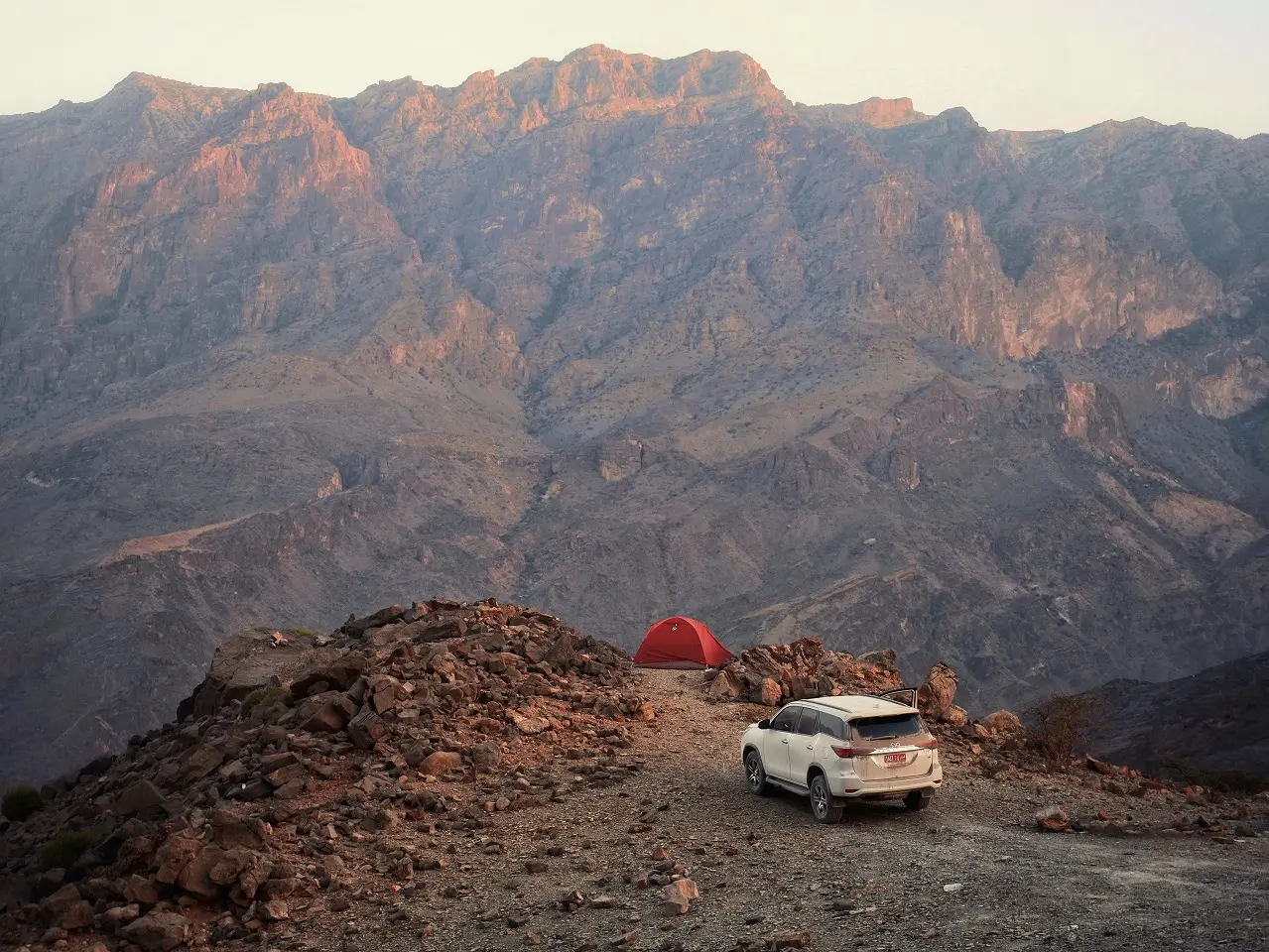
However, the best adventures we had were down the roughest roads. These non-paved, non-graded, and sometimes unmapped roads are the highlight of an Oman road trip experience (if you’re looking for the ultimate views and remoteness). They lead to the hidden wadis, villages and campsites that would not be reachable without a high clearance four-wheel drive car.
Within sand dunes and actually on beaches are other areas that are mostly off-limits without a suitable vehicle.

We’ve always found the best car rental prices for Oman on DiscoverCars. It’s our go-to car comparison website for every road trip because they have such good insurance. You can save loads of money and get great-priced comprehensive coverage.
Do You Need a Permit to Camp in Oman?
No, you do not need a permit to wild camp in Oman, except in certain circumstances around Muscat.
If you are planning to camp for more than 48 hours within the Muscat Governorate, then a permit is necessary. You do not need a permit to camp if you are only spending one night camping near Muscat.
The Muscat Governorate covers the area just around the city – check Google Maps for the boundaries.
Muscat Camping Permit Details
If you are planning on camping for more than 48 hours in the same location within the Muscat Governorate you can secure a permit through the e-services portal. Unlike wild camping in the rest of Oman, there are set locations where you are allowed to camp within the city.
The website is in Arabic, but some of the page will translate. On the form, there are drop-down menus for locations which do not translate, so you’ll have to manually translate them (use Google Image Translate on your phone, for example).
The permits last for a week and can be renewed. There is a 100 OMR deposit for camping for more than two days in the region.
To be honest, most visitors intending to camp in Oman won’t be planning to stay within the city limits, so it’s unlikely you’ll need to do this, but it’s worth being aware.

LOOKING FOR SOME OMAN INSPIRATION?
Explore some wadis:
Take a look at our 13 favourite wadis
Hike Oman’s favourite Wadi Shab
Live in a fairytale at the Wadi Damm pools
Drive through rivers in Wadi Dayqah
Explore the quirky white pools of Wadi Abyad
or the magnificent waterfalls of Wadi Darbat
Explore the cities and mountains:
Feel intrepid on an Oman offroad mountains itinerary
Discover what dramatic means with this Salalah itinerary
See some offbeat spots around Sur
Explore Oman’s cultural heart in Nizwa
Prepare with our Oman driving guide
Max out your time with these Muscat day trip ideas
Check out Muscat’s best viewpoints
–
Part 2: Where Can You Camp in Oman?
For the most part, you can wild camp anywhere in Oman!
There are a few caveats to this (like the Muscat situation above), but generally if there is some quiet, empty land somewhere, you are allowed to camp overnight.
The best areas to camp are the wild, unpopulated spots, so think: mountains, beaches, wadis (avoid during rain) and deserts.
Where are you not allowed to Camp in Oman?
The few places where you should not camp in Oman are usually obvious.
Avoid the following locations:
⬩ Private property: do not camp on private property unless you have permission to do so (it’s very obvious where land boundaries are for people’s houses).
⬩ Protected land: it is illegal to camp on wilderness preservation sites in Oman. These will always be well signed. For example, beaches in Raz Al Jinz where turtles lay and hatch their eggs is off-limits to campers. The Daymaniat Islands also do not permit camping between May to October due to turtle nesting season. Similar exclusions apply for several beaches on Masirah Island. There are also places like the Sareen Nature Reserve which literally has a government-official locked gate (even though Googlen used to show it as a through route).
⬩ Military: avoid any area near military compounds (you won’t come across many, don’t worry).
⬩ Within villages and towns: there is no set minimum distance, but it’s considerate to camp out of sight of any settlements. Use your judgement.

How to Find the Best Campsites
There are multiple sources that can help you find the perfect camp site in Oman:
1. Oman Offroad
For a first-time visitor to Oman, the best option is the Oman Off-road book. It is a tome of knowledge. The book has 38 fully mapped off road/hiking routes that include camping suggestions, hikes and little detours. The book can be purchased in Oman for around 25 OMR at certain shops, such as the WH Smiths in the airport.
It is very difficult and expensive to find outside of Oman, making it challenging to plan before you land.
2. Google Satellite
Google Satellite often shows where dirt roads are in an area (even when Google does not recognize them as a road). It frequently led us to some very remote and beautiful campsites.
It can’t show you what the terrain is like, though. Sometimes the most perfect looking place will be way too rocky to pitch a tent! It’s also not the best at finding flat spots. However, this is the method we used most to find random places to sleep each night.
3. I-Overlander
I-Overlander is an app where users mark facilities, like campsites. It isn’t always great, depending on which area you are looking in, because not that many people update it for Oman!
We used it a bunch of times, though, and found quite a few interesting camping suggestions.
4. Explore
Sometimes the best option is to look for small side roads. Often, a brilliant campsite can be found purely from a bit of investigation!
After a few days you kind of get a vibe for where good spots might be located.

Beach Camping
One of the most popular activities for outdoor adventurers in Oman is to camp on the incredible beaches that run along much of the country’s coast.
There are literally thousands of locations you can choose from across the country – many providing incredible, isolated sunrise views to the east and south.
Having said that, the best beaches are definitely found around Salalah, in our opinion. Most beaches around Muscat aren’t so pretty, sensible, or convenient for camping.

Desert Camping
Camping in the dunes and deserts of Oman provides a unique experience, but with this comes a few logistical considerations (dune driving is the only kind of terrain that scares me!).
Driving on sand: compact sand is straightforward to drive on and doesn’t require lowering your vehicle’s tire pressure. However, driving into actual sand dunes to camp will require equipment to deflate and inflate your tires (sometimes garages can do this for you). Don’t do this without some experience in deep sand driving.
Desert safety: much of Oman’s sand dune-covered land is remote, with no cell phone signal and sparse population. Do not go unprepared.
Camping on sand: sand dunes are notoriously awkward to tent-camp on due to the soft surfaces, strong winds and constantly moving environment. Bring something to secure your tent and ideally use a freestanding model.

Our Top Five Campsites in Oman
Our favourite wild camping spots to check out include:
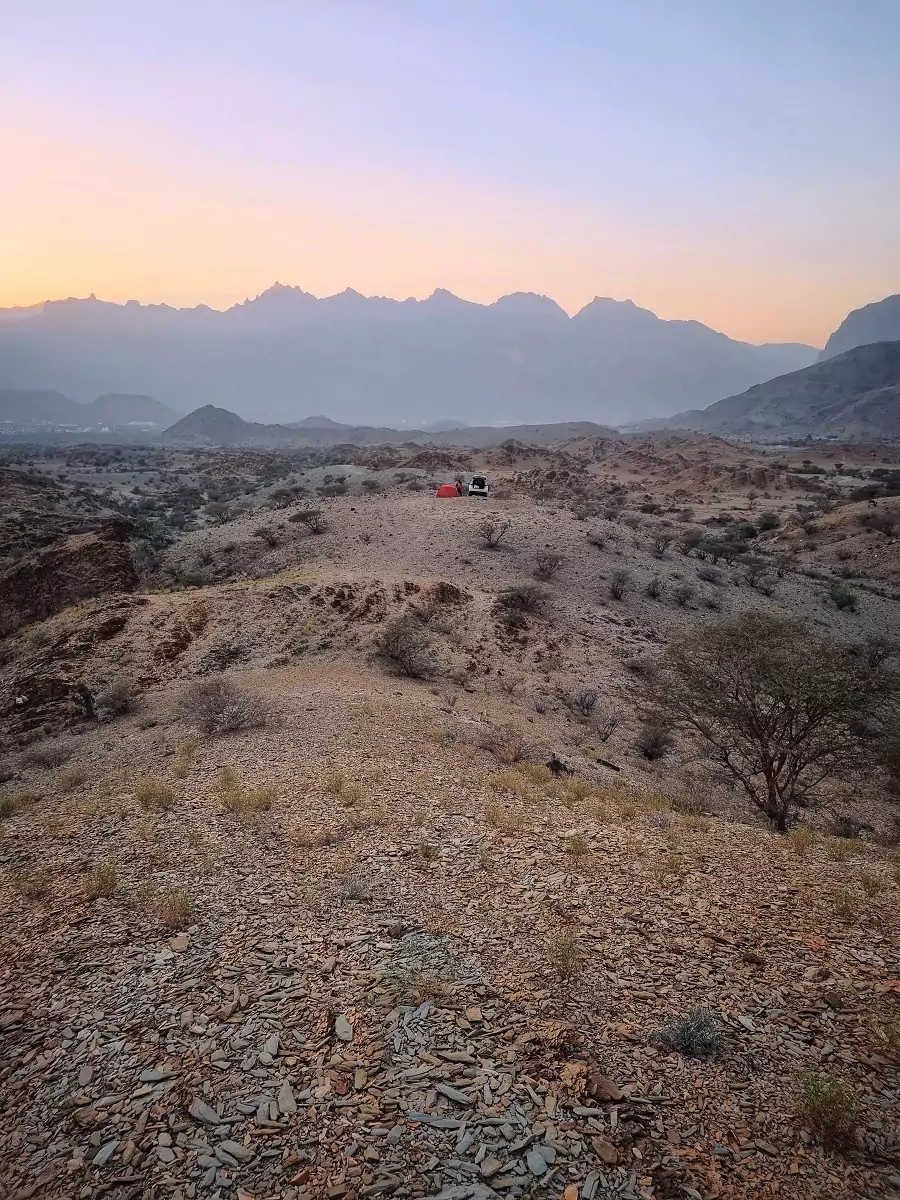
1. Wadi As Sahtan
This location in the western Hajar Mountains is our favourite wild campsite in Oman.
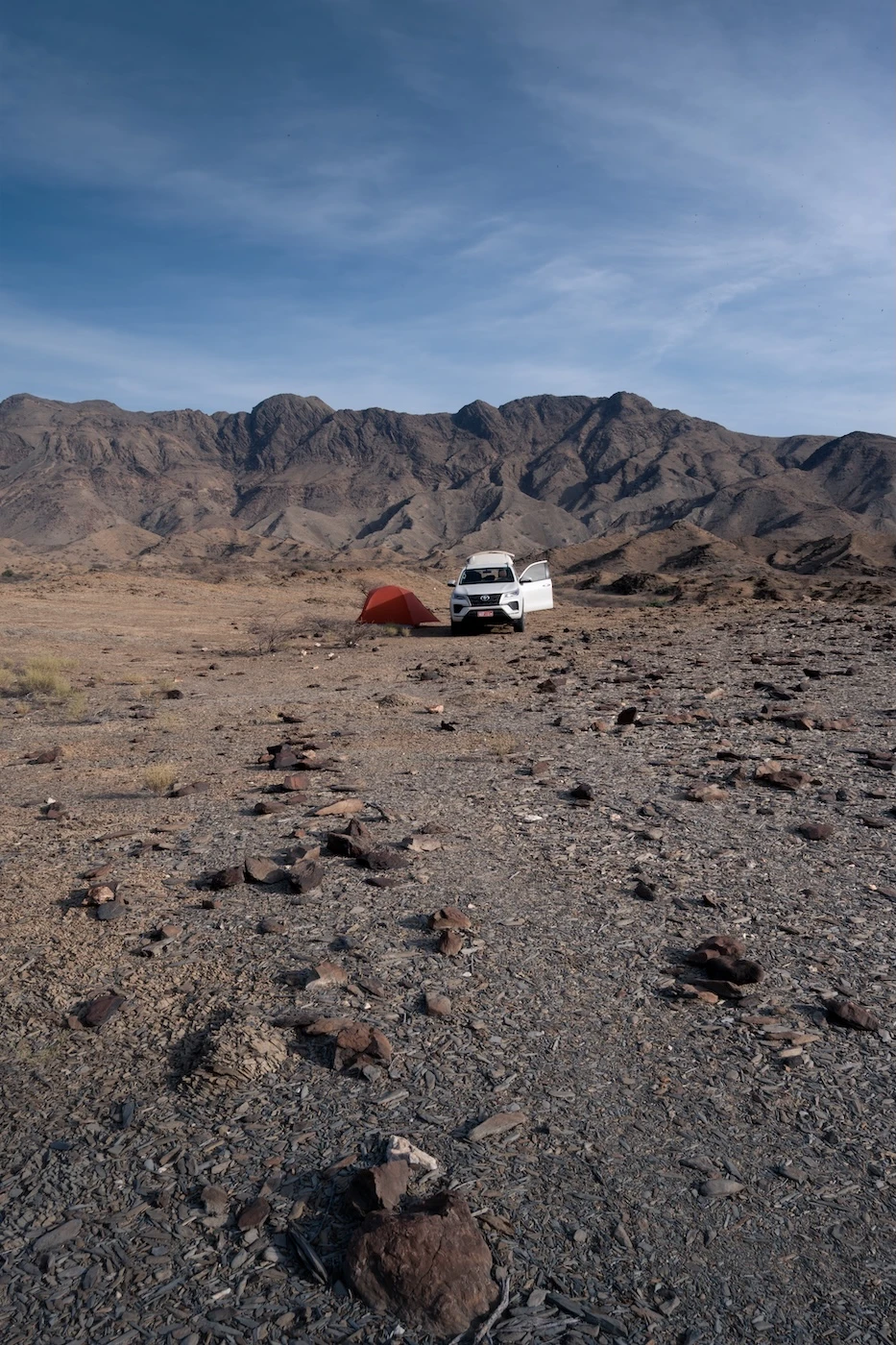
Up on rolling hills, surrounded by the highest mountains in Oman (including the impressive peak of Jebel Shams) this was the Omani landscape that I was romantically chasing in my mind. With only a man and his sheep for company (for five minutes), we spent the evening watching the sunset against the magnificent mountain scenery.
GPS coordinates: 23.270940, 57.361442
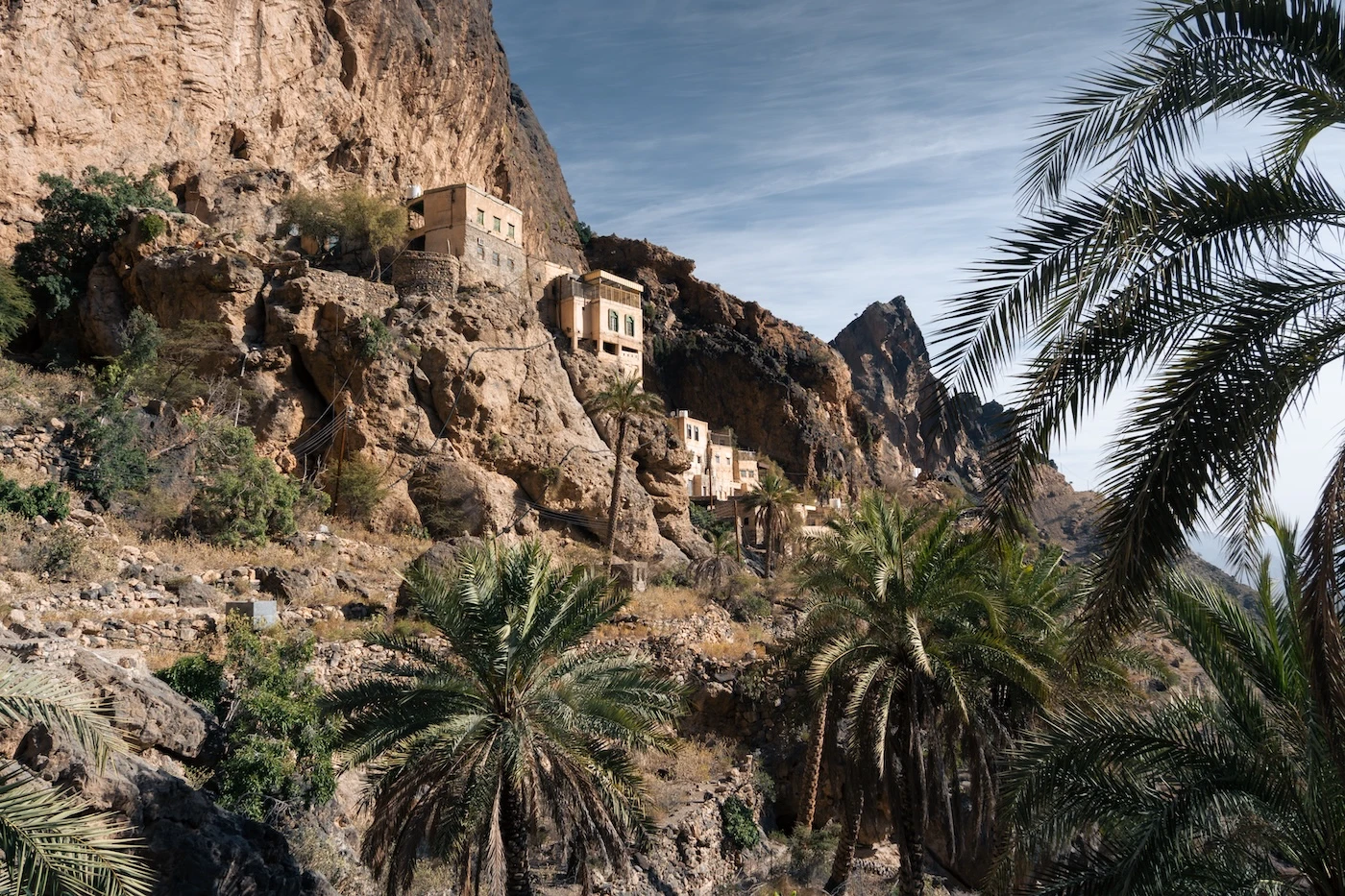
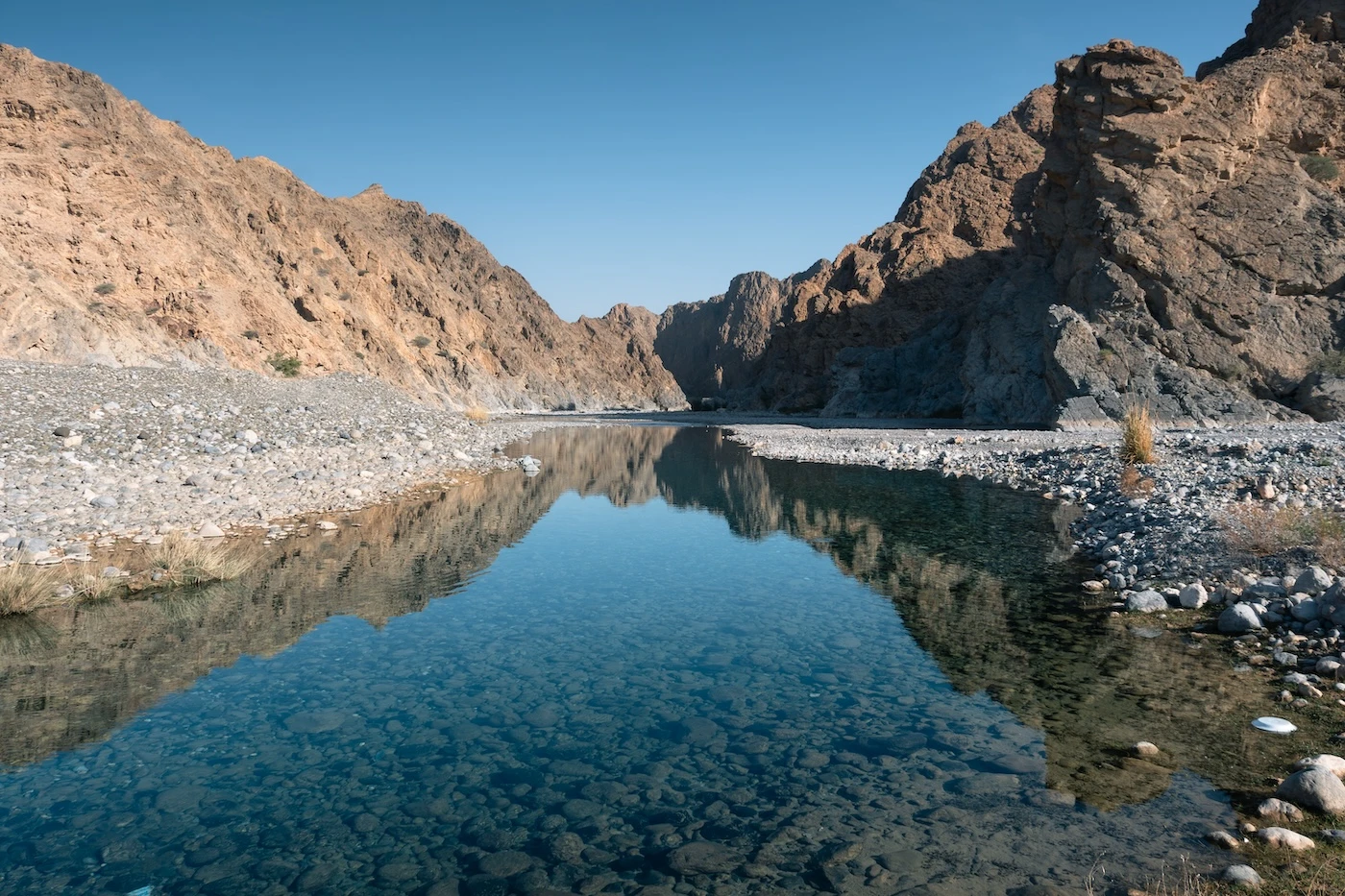
2. Wadi Dayqah
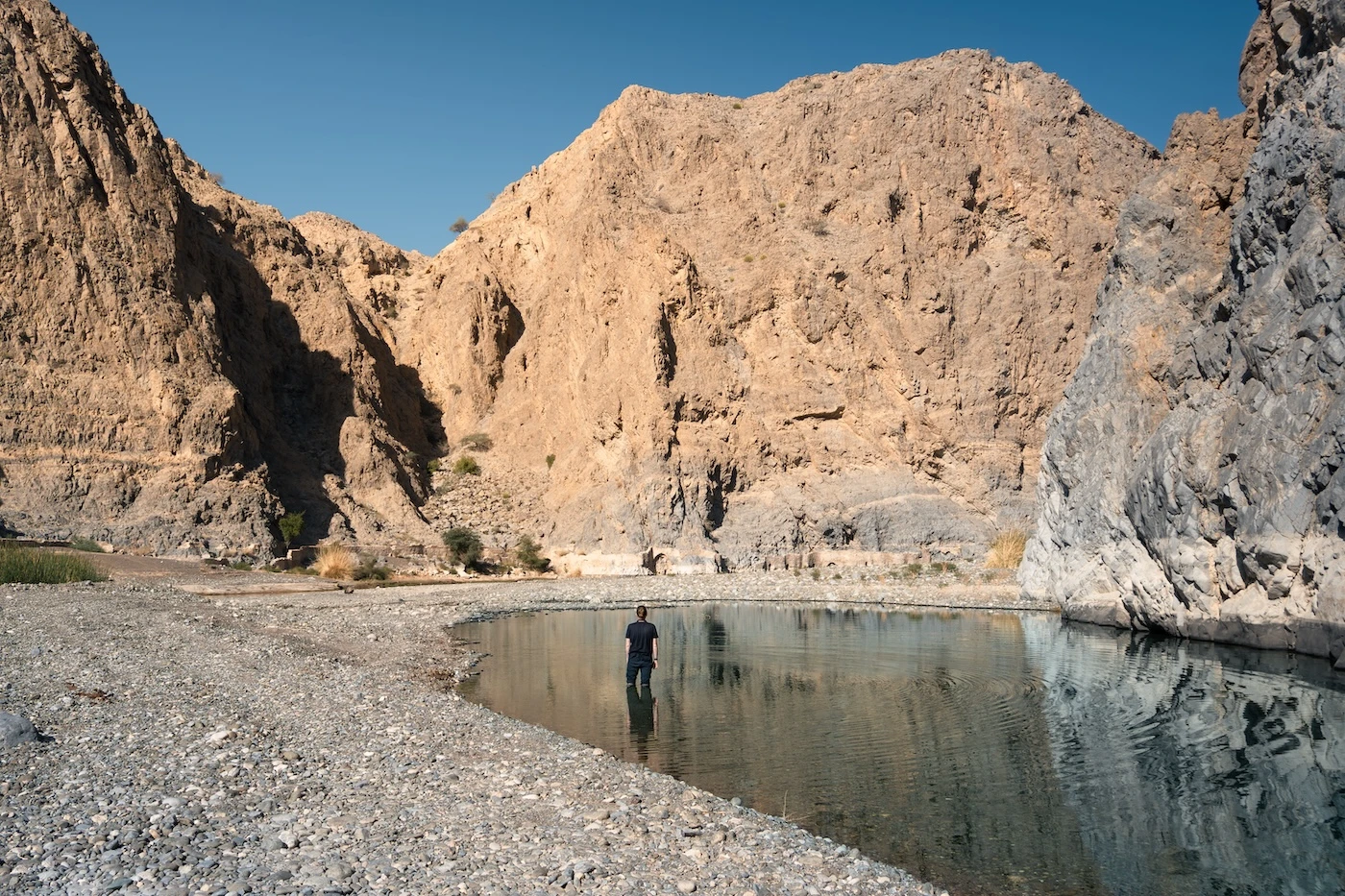
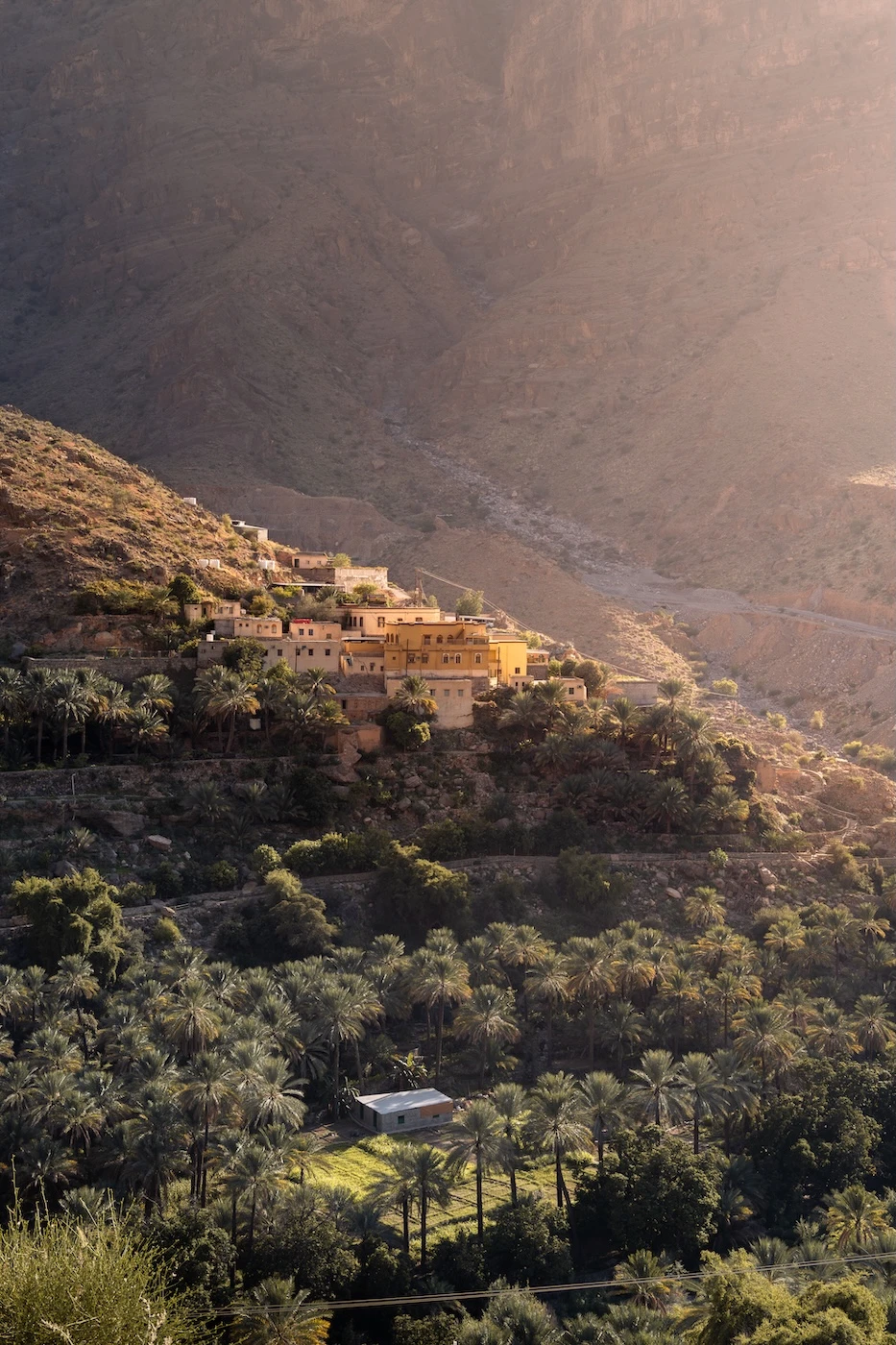
Between Wadi Al Arbeieen/Arbiyyin and the stunning emerald lake at Wadi Dayqah, created by Oman’s largest dam, is this magnificent campsite area in the eastern Hajar Mountains. The track leading through the wadi valley is stunning, passing bright blue pools nestled under high cliff sides.
Have a little read about why Dayqah is one of my favourite places in Oman.
GPS coordinates: 23.095097, 58.914642
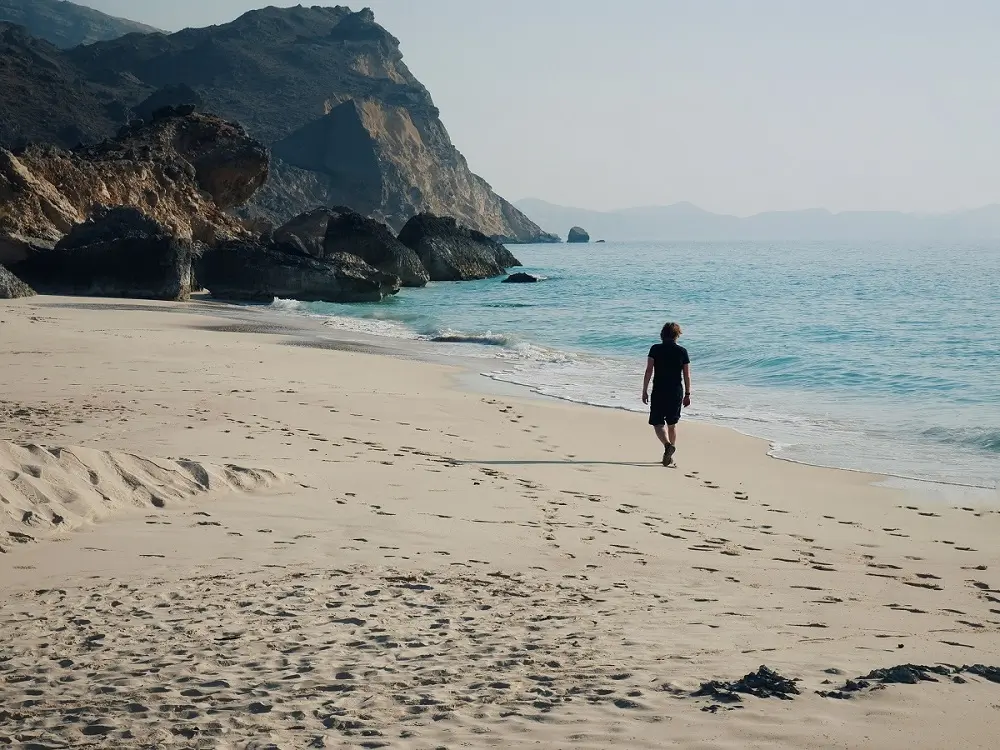
3. Fazayah Beaches
We are not the most beachy of people, however the scenery at Fazayah won us over immediately.
A little west of Salalah on the southern coast of Oman, these three beaches with lovely white curved stretches of sand and the impressive backdrop of the massive Dhofar mountains are epic. The area normally has other campers around the three beaches, however the area is substantial and with so many options, you never have to camp within eyesight of somebody else.
GPS coordinates: 16.816096, 53.690780
4. Jebel Shams
A night in Jebel Shams is an absolute must if you are considering a camping trip to Oman.
As the tallest mountain in the country, the views are unbeatable and watching the sun cast a slow glow across the ‘Grand Canyon of Arabia‘ at sunrise is an extraordinary experience.
To plan your trip, check out our Jebel Shams guide.
GPS coordinates: 23.206645, 57.203446

5. Sugar Dunes
The Sugar Dunes are a fantastic option for an independently-accessed sand dunes campsite in Oman that is easy(ish) to reach, with stunning views and no people.
With powdery white sand right on the edge of the ocean, an Omani wild camping experience here doesn’t really get much better. For more information, check out our dedicated post.
GPS coordinates: 20.391582, 57.944746
Part 3: Camping Safety
Oman is generally a very safe country to camp in, personal-safety-wise, but it’s worth being aware of a few weather and wildlife related safety issues.
Wadis and Flooding
Flash flooding is a significant risk, especially during southern Oman’s Khareef season, which is typically late June to early September.
If you choose to camp in or near any wadis, consider where you pitch your tent and always check the weather. Usually (but not always), if you’re camping near date palms, there will be a waterway which could flood.
Snakes, Scorpions and Other Creepies
There are a number of dangerous species of snake in Oman, but we have never seen one! A few of the venomous ones include the Saw-scaled Viper, Puff Adder and the Arabian Cobra.
Oman also has a number of creepies but, again, I’ve not seen any, at all. In fact, it’s one of the reasons I love camping in Oman because I never have bug issues, not even ants (I am not a fan).
Despite this, we recommend shaking out your clothes, tent and checking your shoes, just in case!
Roaming Animals
Oman really doesn’t have much in the way of predators that might bother you when you camp. It’s more about the livestock, really:
Goats: hardly a hazard, but they tried to eat our guy lines and stole our toilet paper. Plus, they travel in gangs.
Donkeys: not a threat so much as a disquieting presence. We woke up one night to a dead-eyed donkey just staring forlornly at our tent.
Camels: although we’ve been surrounded by camels when we camp, they have never approached us. Plus they’re adorable and hardly a threat.

Mosquitos
We’ve never seen a single mosquito in Oman, but we’ve also only camped during the winter season and love the mountains, where they don’t tend to hang out much.
If you’re camping during summer, they could present a problem where there is standing water, so bring some repellent.
Oman has been considered Malaria free since 2013.
Crime
In other countries, you may feel a little uncomfortable with the idea of wild camping. However, in Oman, we can (safely!) say that we never felt any threat or concern about people or crime.
The country has very low crime rates and camping is such a common activity!
We’ve written more about safety, crime and more (particularly from a women’s perspective), if you’re interested.
Tips for Staying Safe
Tell someone where you’re going: an obvious statement, but Oman can be remote and if you get stuck somewhere, it’s worth somebody knowing your plan.
Water: always have several days worth of drinking water per person in your car, in case of emergencies. So, we’d recommend eight litres per person as a back up.
Live updates: Oman is very safe, but I still wouldn’t publish my camp GPS coordinates in live time!
Check the weather: it’s obvious, but if you’re camping, be aware of anything extreme coming your way. Also, don’t be afraid to just book a hotel for the night if conditions are occasionally grim.

CAR HIRE FOR YOUR OMAN CAMPING TRIP
We always rent our vehicles all over the world, including our recent trips in Oman, Saudi Arabia, Tunisia and Morocco, with Discover Cars. They’re often the most affordable, plus they paid out immediately on an insurance claim we made when our car took some heavy damage in Sicily. Read more about why we love them so much!
–
TAKE A LOOK BELOW OR CHECK CAR RENTAL
Part 4: Things You’ll Need to Camp in Oman
Tent, Sleeping Mat and Sleeping Bag
The most affordable and straightforward way to camp in Oman is by using a traditional tent and sleeping gear, combined with a rental car. This is what we did.
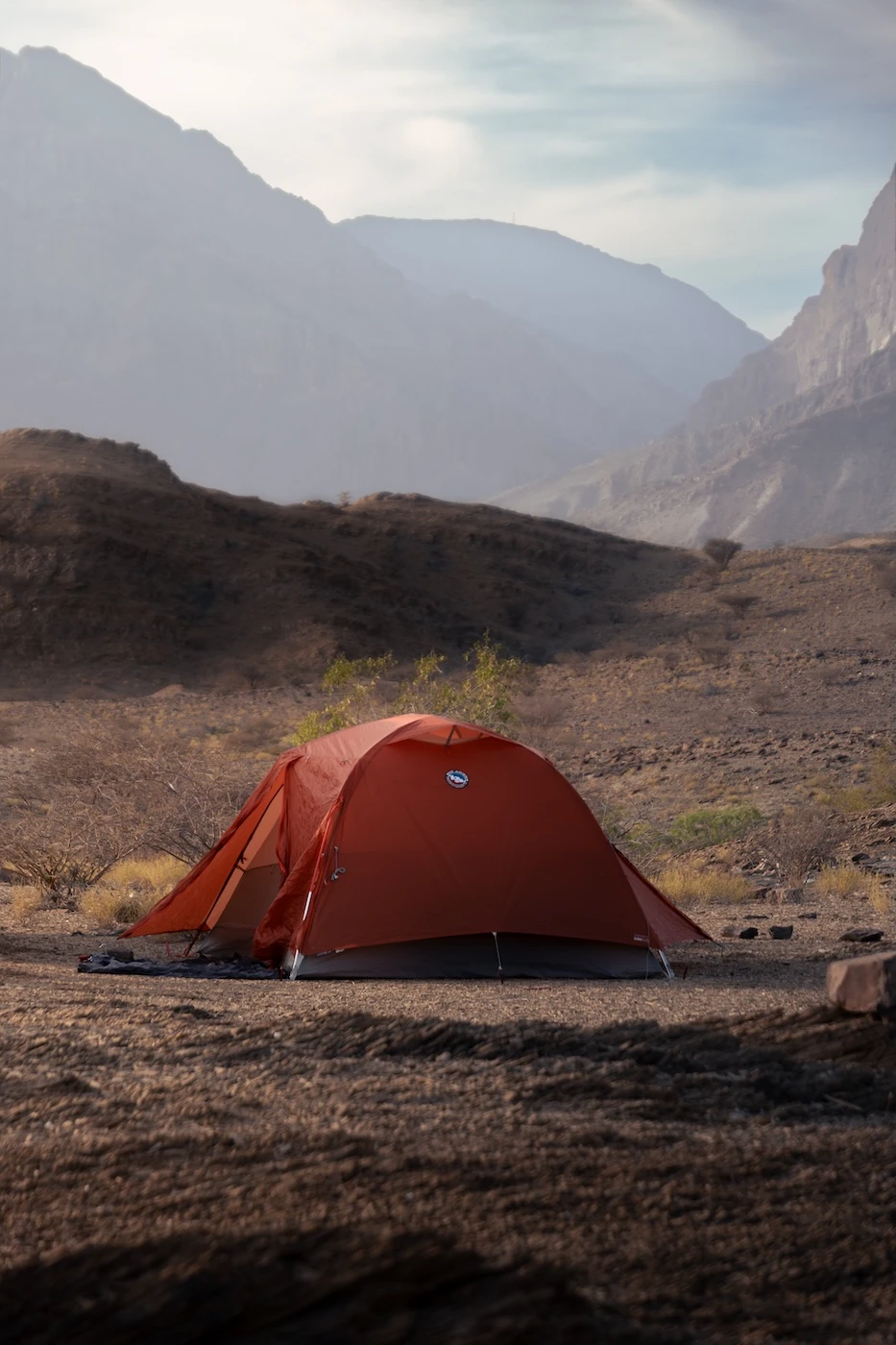
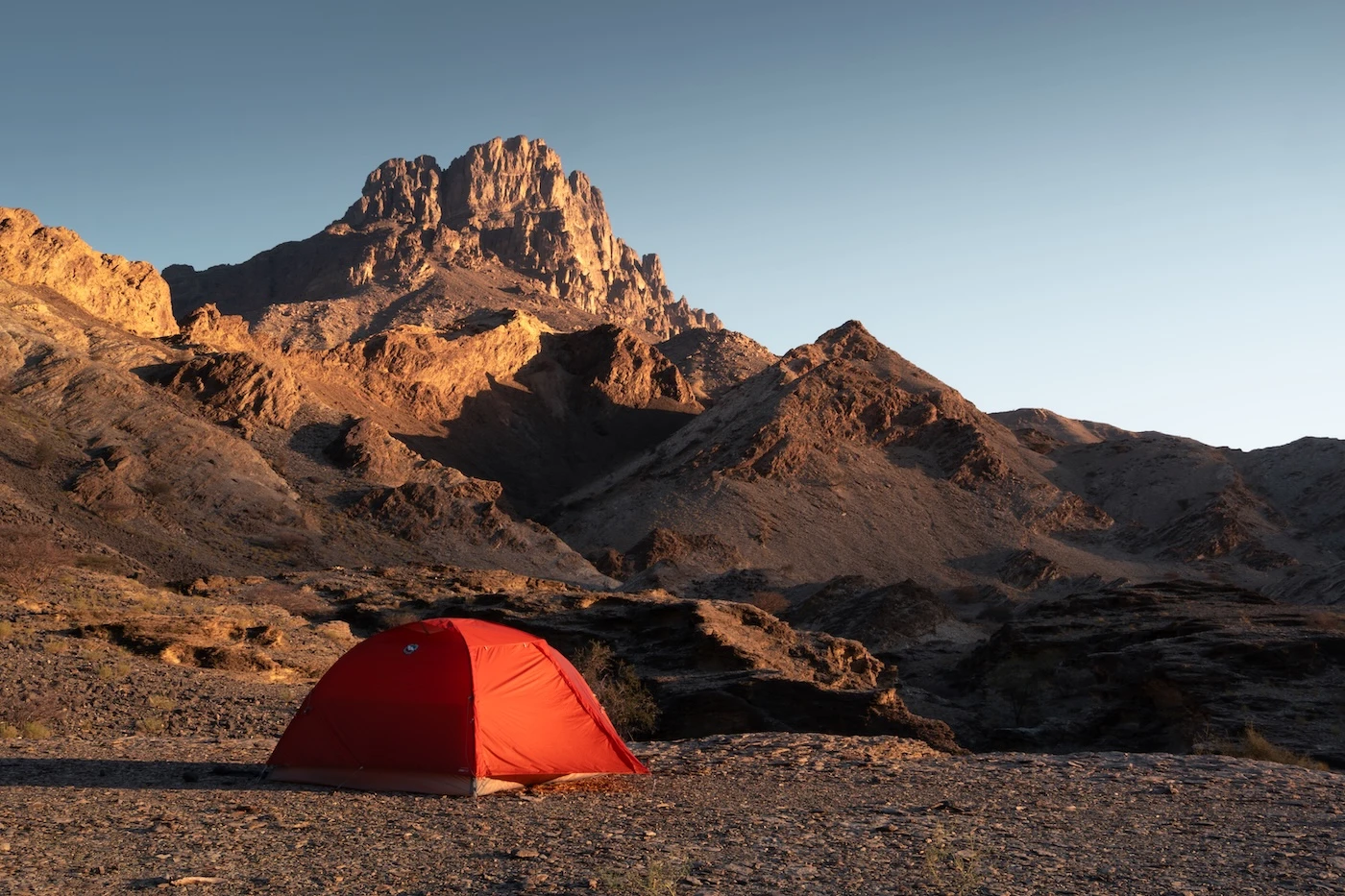
For our trips, we used all our own camping gear from home, as we already own quality lightweight stuff. Our tent is a Big Agnes Copper Spur UL3.
If you’re interested in buying your own tent gear before arriving, check out our highly recommended, tried and tested gear list. In short, the essentials you will need are:
⬩ sleeping mat
⬩ tent
⬩ sleeping bag or blanket
⬩ head support, like a pillow
If you do not own the necessary camping equipment, there are outfitters in Oman who can arrange rental gear, tents and rooftop tents. Everything, even down to the sleeping bags and mats, are available to rent.
Buying a tent in Oman: you can also buy everything from hypermarkets such as Carrefour and Lulu. It will not be the highest quality but will be fit for purpose considering the mild camping conditions in Oman. If you choose this option, please do not just dispose of everything after your trip – it’s not sustainable and terrible for the environment. Either sell, gift, or take home and re-use it. Often tour companies will accept leftover equipment, including gas canisters.

Roof-Top Tents
Roof-top tents seem to be all the rage at the moment. They are a kind of folding tent that permanently sits on the top of a car (usually a four-wheel drive).
The few other tourists we saw in Oman mostly had these, whereas it seemed that local people used traditional tents. Roof-top tents can be rented, fully equipped, from several outfitters.
There are benefits of roof-top tents over traditional ones. You will not need to worry about the condition of the ground – if it is flat then you are good to go. With a tent, you need to consider how rocky the ground is and how to secure your tent (sand dunes can be challenging!). Having said all that, roof-top tents are prohibitively expensive (at least to us!).
Other Camping Items
Apart from the standard camping gear, these are a few items that we packed and recommend you have for your Oman camping trip:
Hygiene
⬩ Biodegradable soap/shampoo: ensure it is actually non-damaging for the environment. Also, some people swear by dry shampoo (it destroys my hair so can’t comment). If you are interested, check out our solid shampoos reviews.
⬩ Tweezers: these can live in a first aid kit, but many don’t include one. I found them helpful when I had thorns and fish spikes stuck in my feet and flip flops.
⬩ Bin bags: mainly to clean up trash you see scattered about.
⬩ Baby wipes: very helpful for persuading your brain that you are not, in fact, the filthiest person alive.
⬩ Disinfectant/Hand sanitiser: this is very necessary when you can’t wash your hands.
⬩ Bucket: for all sorts of things, like washing up and keeping clean.
⬩ First aid: for any accidents.
⬩ Towel: to dry yourself/things.
⬩ Microfiber cloths: we bought a set of five and used them so much, for things like drying plates, cleaning up spillages, and sorting condensation.
Electrical
⬩ Power bank: does anyone go on a trip without one of these now to charge their gear? You could also get a solar one (they look cool but are quite heavy).
⬩ (Head) torch: it gets dark early when you camp during winter in Oman.
⬩ Car cigarette plug charger: to charge all the essentials when you’re on the go.
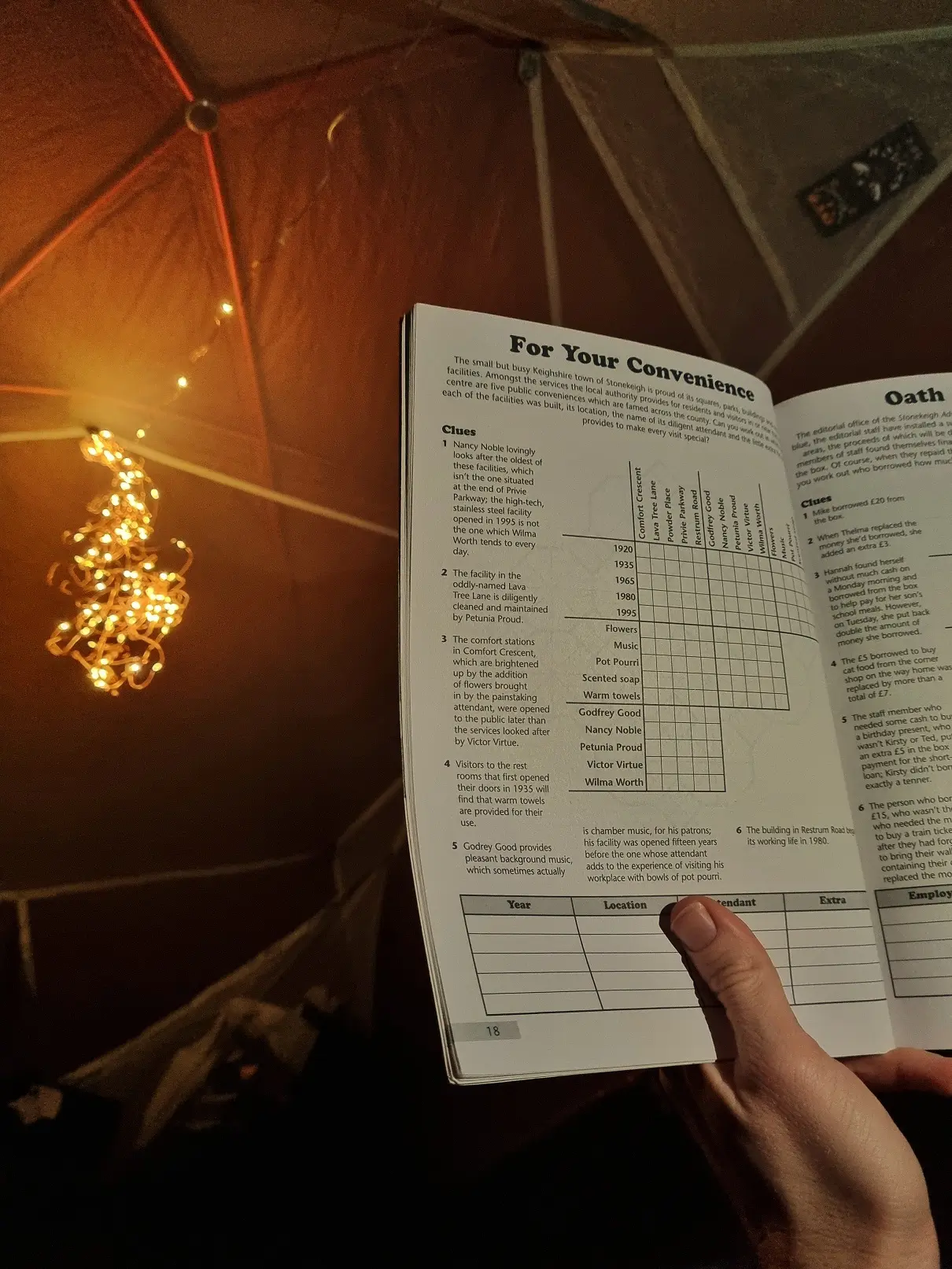
⬩ Fairy lights: we never go camping without our camp/tent lighting – remember they need to be battery powered or rechargeable.
Miscellaneous
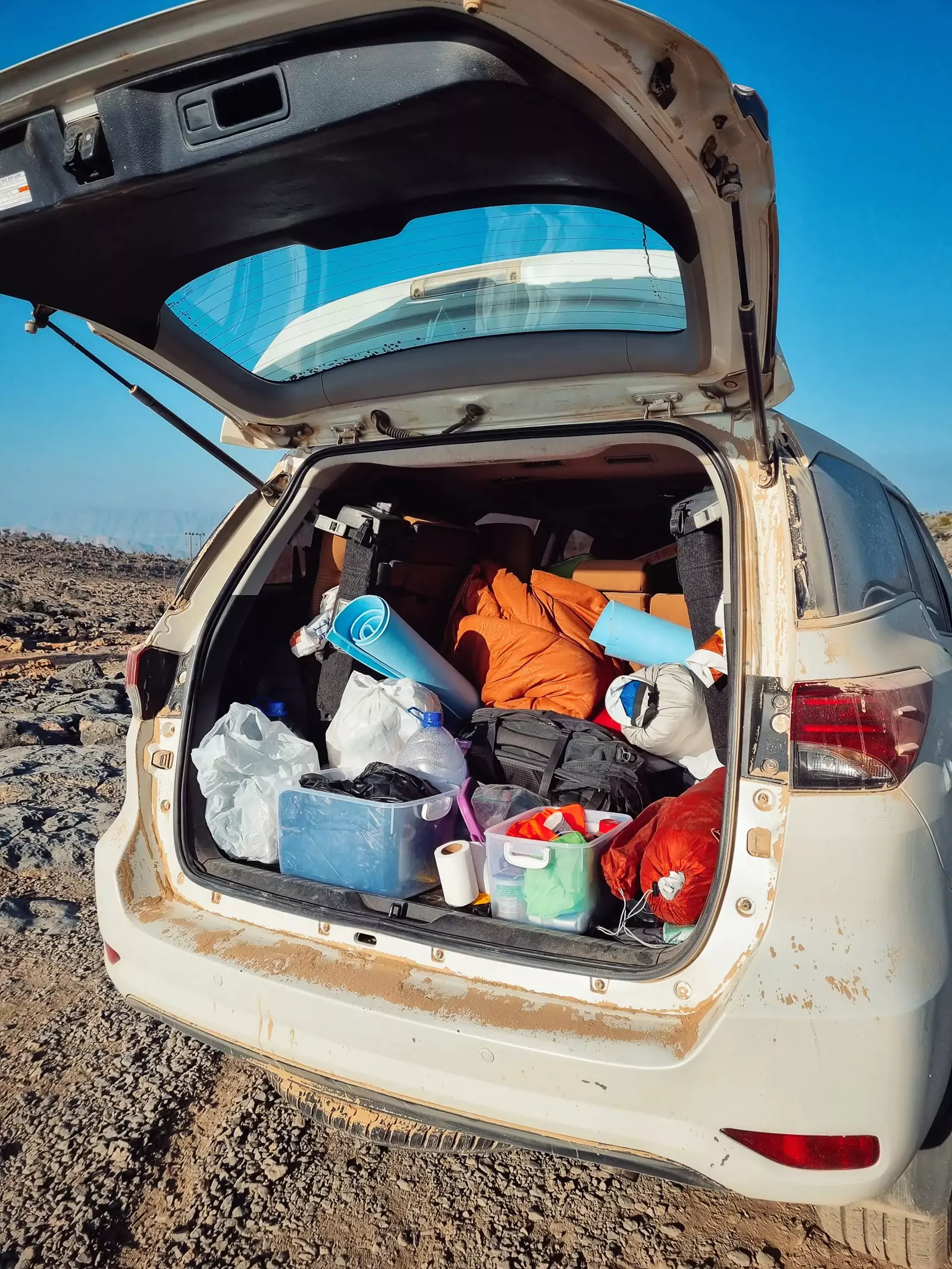
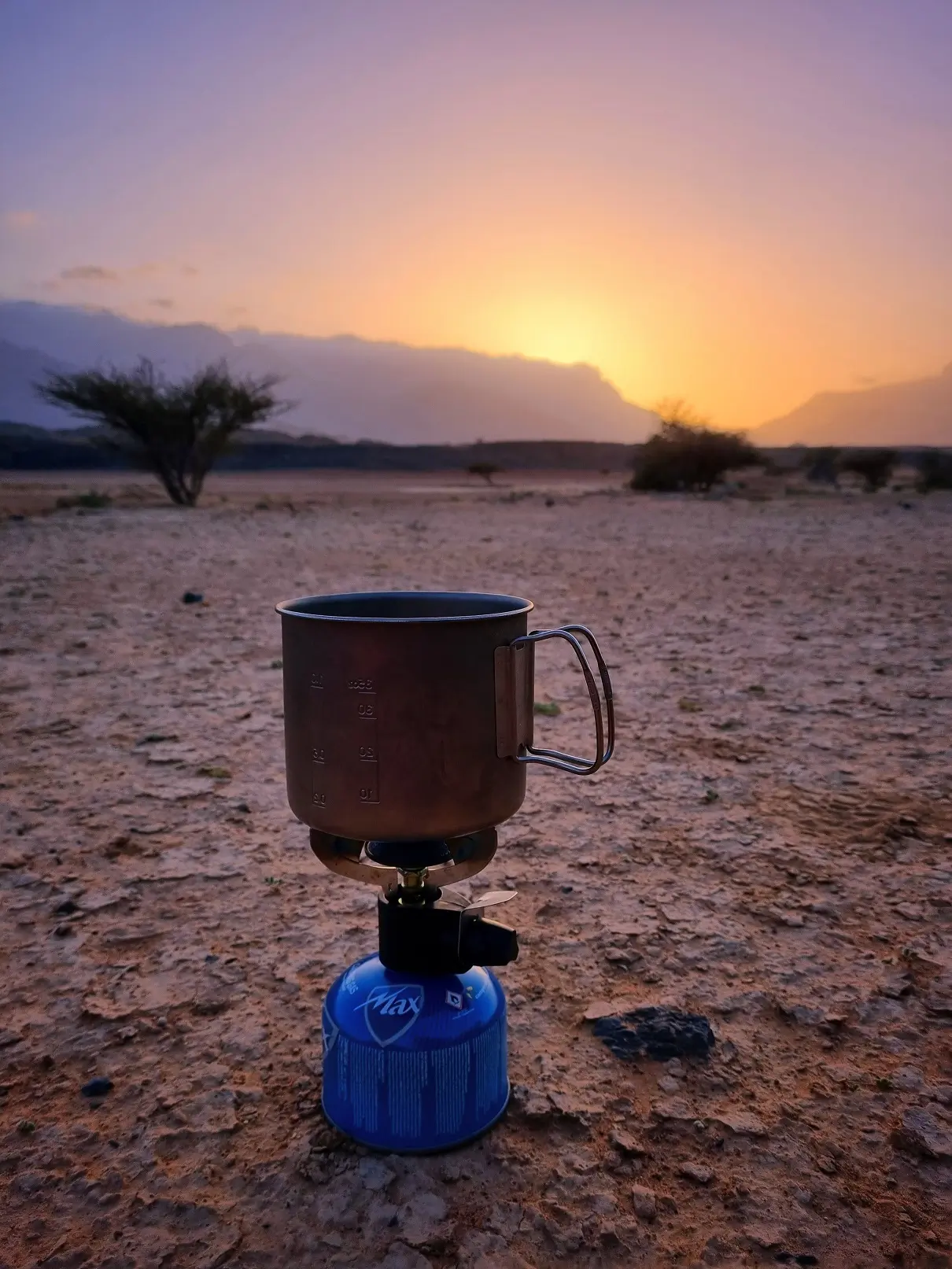
⬩ Kitchen equipment: this will depend on your wild camp cooking ambitions, but pans, gas, stove, chopping board and cutlery are the basics (or you can eat bread and hummus, like we do sometimes).
⬩ Bowel-trowel: in the Omani wilds, you must dig a hole.
⬩ Tent entertainment: during Oman winters, sunsets are around 6pm, so have something to read or do for the evening!
⬩ Water filtration option: better safe than sorry – we use a Katadyn BeFree filter for all our wild water needs.
⬩ Pocket-sized picnic blanket: we take one everywhere we go, it comes in handy for so many things.
⬩ Tent footprint: if your tent is a lightweight delicate one like ours, it might get ripped by Oman’s spiky, rocky, fish-spine-ridden ground.
⬩ Camp chairs: unless you like sitting on rocks and sand.
Part 5: Camping Amenities in Oman
There are no facilities when wild camping in Oman. There are no bathrooms or showers, shops, benches, tent pads, electricity hook-ups or bbq/fire pits.
The ‘wild’ in wild camping is exactly what this is.
Supermarkets and Restaurants
For camping food options, there are several remarkable hypermarket chains found in the major towns and cities.
Lulu is our favourite shop and has so much healthy (and vegetarian) fresh food choices. These enormous stores are found all over Oman, in any medium-large town, including Muscat, Salalah, Nizwa, Sur, Ibra, Rustaq, Sohar, and more.
There is also the supermarket brand HyperMax, who took over Carrefour, which has a fantastic range.
Camp foods are so easy to source in Oman, along with basic kitchen equipment. There are a number of other supermarket chains, like Nesto, too.

Water
Drinking water can be bought in six-litre containers from hypermarkets.
You can also fill these containers up from public water dispensers and mosques (they commonly have large water containers outside – they’re easy to spot).
Tap water is said to be drinkable in Oman, however we always choose to filter it anyway just because camping with a sketchy stomach is not a risk we are willing to take.

Trash
Public bins are literally everywhere (I just wish people used them more).
Some areas of Oman have a trash problem – ensure you leave no trace (and pack out more than you pack in if you visit one of these areas).
Bathrooms
Public bathrooms can be found in larger shopping centres, hotels and gas stations. Sometimes you may have to ask the door to be unlocked if you are female. I used about three, in total.
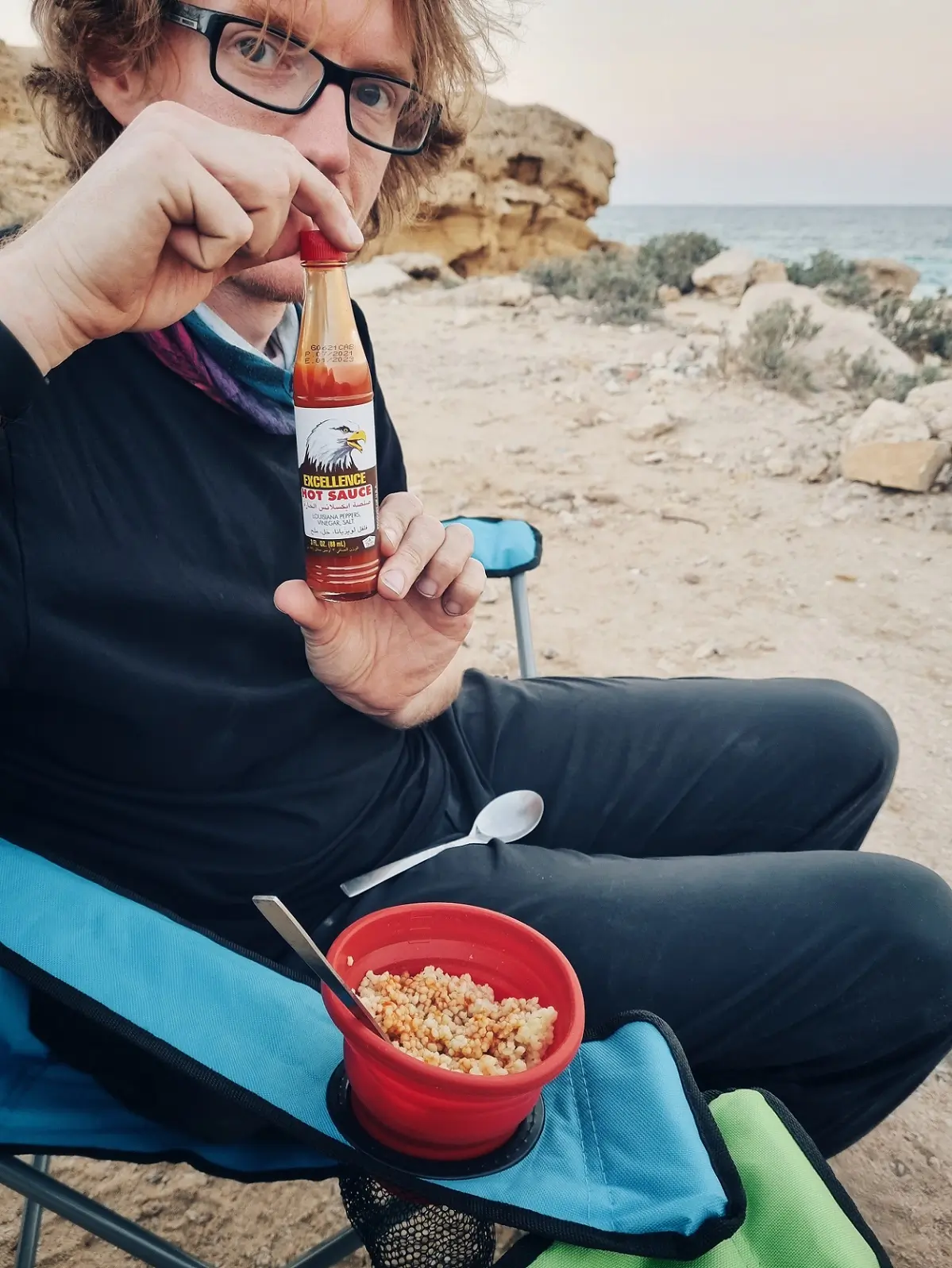
Mostly, if you are camping in the Omani wilds, you will have to go ‘al fresco’. This involves digging a six inch hole with your trusty bowel-trowel (see gear list above) and packing out any paper. Avoid doing this within 50 metres of any water sources.
It sounds awkward, but you’ll be all alone, almost always. Apart from that one time a ceremonially suited camel rider ambushed us in the middle of nowhere (traumatic story for another day).
Part 6: Practical Camping Advice for Oman
Some Helpful Campsite Tips
Mountains: although dunes and beaches are all the rage on Instagram, we think the best camping is in the mountains. Don’t miss them.
Sleep: if you’re camping in the mountains, take a good sleeping mat if you’re a bad tent sleeper, like me. It’s cold, uneven, and rocky.
Secure your stuff: Goats WILL eat everything.
Daylight hours: if you camp in the winter season, the days are particularly short – sunrise is as late as 6.45am (vs. 5.15am in summer) and sunset is 5.30pm (vs. around 7pm in summer).
Unless you love setting up camp in the dark, keep an eye on the time!
Wind: position your car so it can be used as a shield to block the wind! This is especially helpful while cooking.
Other Things to Note
Fill up on petrol: Oman has lots of gas stations, but if you’re going camping off-grid, particularly in the mountains or dunes, do not get caught with an empty tank. We nearly got stranded by the border with Yemen due to some sketchy calculations!
Wash your car: you can be fined for having a dirty car in Oman, so if you go off road to camp, be aware of the state of your car after.
Sim Card: it’s essential to have cell phone data for mapping and looking for campsites.
Emergency numbers: in an emergency, call 9999 (police and ambulance).
Best Time to Camp in Oman
The best time to camp in Oman is during the ‘winter’ season, which falls between December and February. The shoulder months of November and March are also pleasant. During this time, the temperatures are warm with mostly dry conditions.
Winter: camping in Oman’s mountains means being well over 2000 metres (6500 feet) up, so it can get especially cold in winter. I’ve read reports of people waking up with their sleeping bags covered in ice! Check the appropriate forecasts before committing to a high-altitude camp and use appropriate gear. We camped on Jebel Shams in February and it was cold, but tolerable.
Summer: Oman summers are blisteringly hot, reaching above 40 degrees C. I would not recommend camping throughout this time, even in early March we could feel the temperature difference from the beginning of February.
I would also avoid camping in the summer Khareef (monsoon season) in southern Oman. If you do camp in summer, consider higher elevation campsites in the mountains.
My recent experience in Oman in June was harsh – the air felt like yukky soup, especially by the sea.

RESPONSIBLE CAMPING: LEAVE NO TRACE
Oman has a trash problem.
This is especially prevalent along the coastline and beaches. It’s not trash that has washed up from other sources, but rather left there by previous campers, residents and visitors.
We can’t police how Omani people choose to treat their lands, but we can ensure not to add to the issue.
Bring a bag or two and pick up some trash – always leave your campsite cleaner than when you arrived.
Follow leave no trace principles, always.
–
GOT EVEN MORE TIME IN OMAN?
On your camping adventure:
Sleep under the stars at these amazing wild camping locations
Watch the sun rise atop Oman’s highest mountain
or camp in the palest of Oman’s deserts at the Sugar Dunes
or have a totally unique excursion:
Spot the most remote beehive tombs in Oman
Wander around Oman’s most photogenic fort
Learn about livestock at the Nizwa goat market
Take a look around Oman’s most unique fortification
Have a chill day on Muscat’s best beaches
Drive up Oman’s most popular mountain
Find a way into Bat’s 5000-year-old tombs
Figure out which of Oman’s UNESCO sites are worth visiting
–
HAVE WE HELPED YOU PLAN YOUR CAMPING Adventure?
If you’ve found our content helpful, consider booking your rental car (if you need one!), through the company we always use – Discover Cars. They’re the absolute best and have been our rental companion (and savior, thanks to their insurance) in many destinations across the world.
Also, consider booking your accommodation through Booking.com – we use them exclusively when travelling in the Middle East.
Alternatively, leave us a tip to say thank you.
Help like this makes it easier to pay for the upkeep of this site and ensures our small business survives the onslaught of AI!
Thanks for reading.
–
Where to Next?
I hope that we have persuaded you that Oman is the perfect camping destination. It is my favourite country for road tripping, hiking, and camping – so if you love the outdoors, add Oman to your list!
If you are starting your trip in Muscat (as most people do), check out everything we’d recommend to do in the city over a couple of days, including restaurant suggestions, cool viewpoints, must-see spots, plus some less-must-see places.
Have a great day!
Hi, thanks for visiting our blog! If this post has been of help to you, or you’ve just enjoyed our random ramblings and musings, say thank you by buying us a coffee! It helps keep The Restless Beans blog up and running.
Thank you, Claire + Nick


Your camping tips are so helpful! Your firsthand experience and advice will come in handy for my upcoming camping adventure.