

Visiting Oman’s Bat Tombs: is it worth the journey (and how to get in)
Scribbled by Claire ⬩ 18 Aug 2026
Have you seen chatter about Oman’s Bat tombs and want to know if they’re worth the effort to reach? Here, we’ve talked about the route, how to access the site, what there is to do, and what we really thought after two visits!
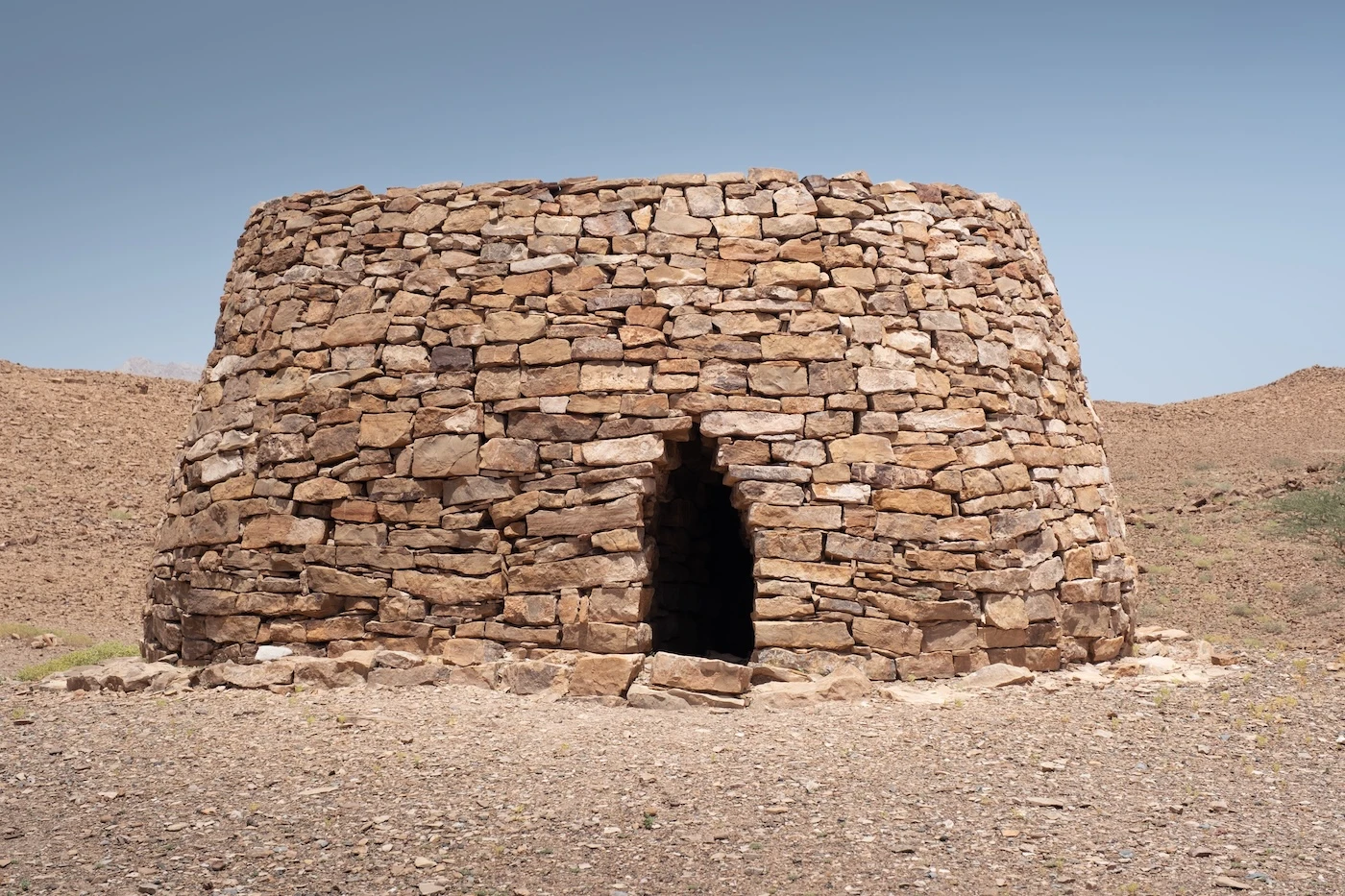
Most people only visit Al Ayn’s ancient beehive necropolis (if they even venture out this far in Oman’s particularly rural depths at all). Few persevere further to the namesake of Oman’s second ever UNESCO site, the Bat Tombs.
Despite its less-than-thriving reputation, this was actually my second visit to Bat’s multi-millennia-old rock piles. Ancient stuff in beautiful surroundings with zero other humans is *very* on-brand for me.
It’s curious because, at the time of writing this, lots of people are talking about Homer’s Odyssey and how incredible it is that the poem is now nearly 3000 years old. This made me reflect on Bat’s tombs and towers, all a thousand or more years older than that epic, which puts the significance of this unknown little spot on a map into clearer relief for me.
So, I decided to write about our most recent journey to the tombs. It’s a niche destination and is quite awkward to access, so this little account includes how to get to Bat, what’s actually there, how to get your car into the complex, and whether it’s really worth the journey for your trip.
IN THIS GUIDE //
A Rural Road Trip to Bat’s Tombs
What Are the Bat Tombs?
– What is at the Site?
– The Tombs
Getting to (and into) Bat’s Tombs
– Getting there from Nizwa
– Getting there from Al Hamra/Jebel Shams/Damm
– Do You Need a 4WD to Visit Bat’s Tombs?
– Getting *into* Bat’s Tombs
Best Time of Year to Visit
Is it Actually Worth Visiting the Bat Tombs?
– Some Alternatives
Where to Stay Near Bat
– Ibri
– Jebel Shams
– Nizwa
– Camping near Bat
Best Navigation App for Oman
Google Map of Bat’s Locations
Where to Next?
This post may contain affiliate links. If you book through these links we may make a small commission at zero cost to you. It helps us pay for the upkeep of this blog. Thank you!
What are the Bat Tombs?
If you’re reading this, then I assume you know of (or at least the existence of) the unassuming Bat and its archaeologically significant rock-pile tombs.
I think most people are drawn in by the remarkable age and uniqueness of these Hafit/Umm an-Nar period archaeological mysteries – I know that’s what initially piqued my interest. You see, they’re the oldest example of complete Bronze Age (4000–5000-year-old) complexes and funeral practices in the Arabian Peninsula (and possibly the world), which is pretty cool.
Designated a heritage site by UNESCO in 1988, they’ve long been recognised by experts as significant – but not every historically noteworthy spot is actually worth visiting by the average tourist, is it?
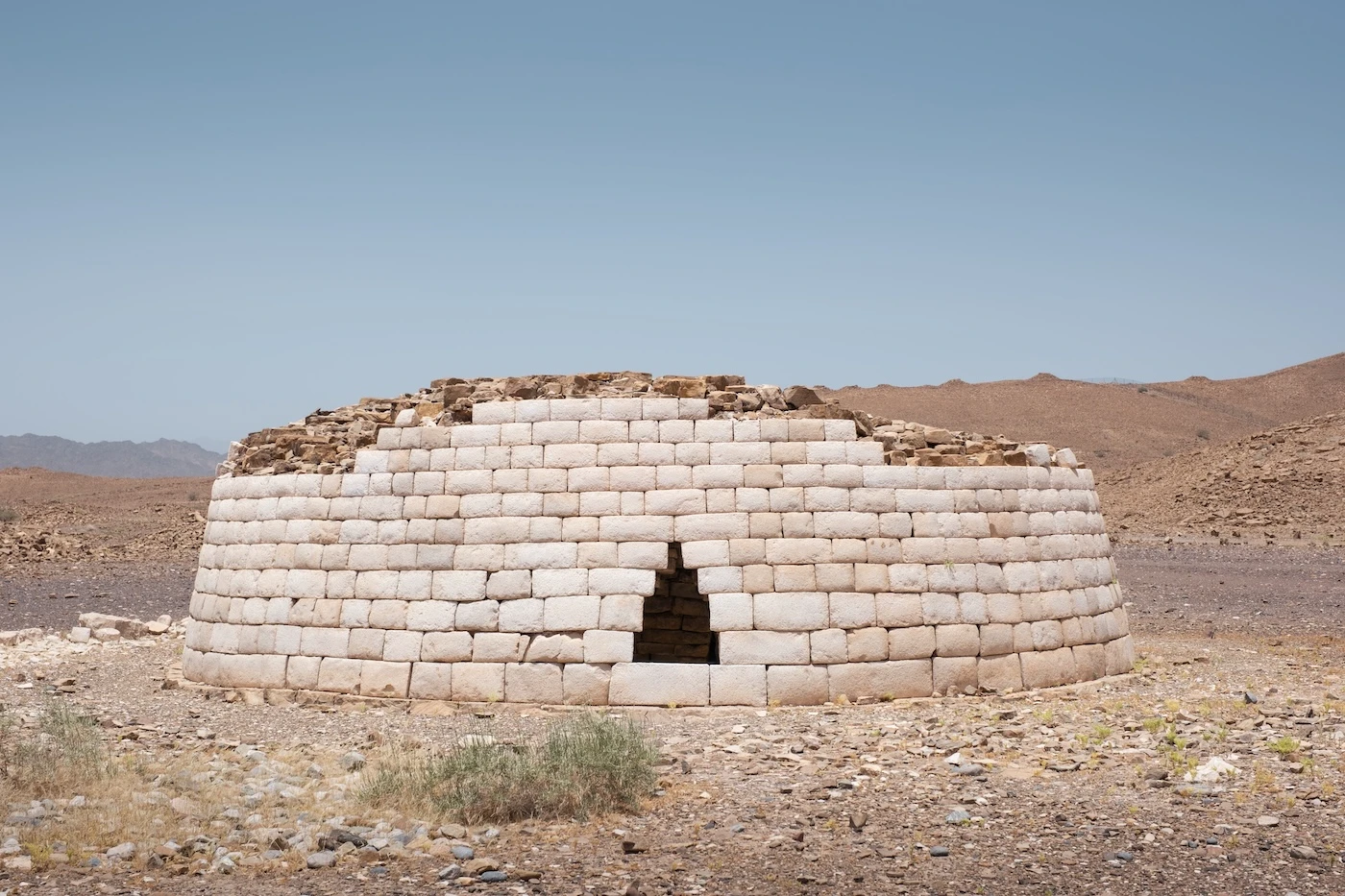
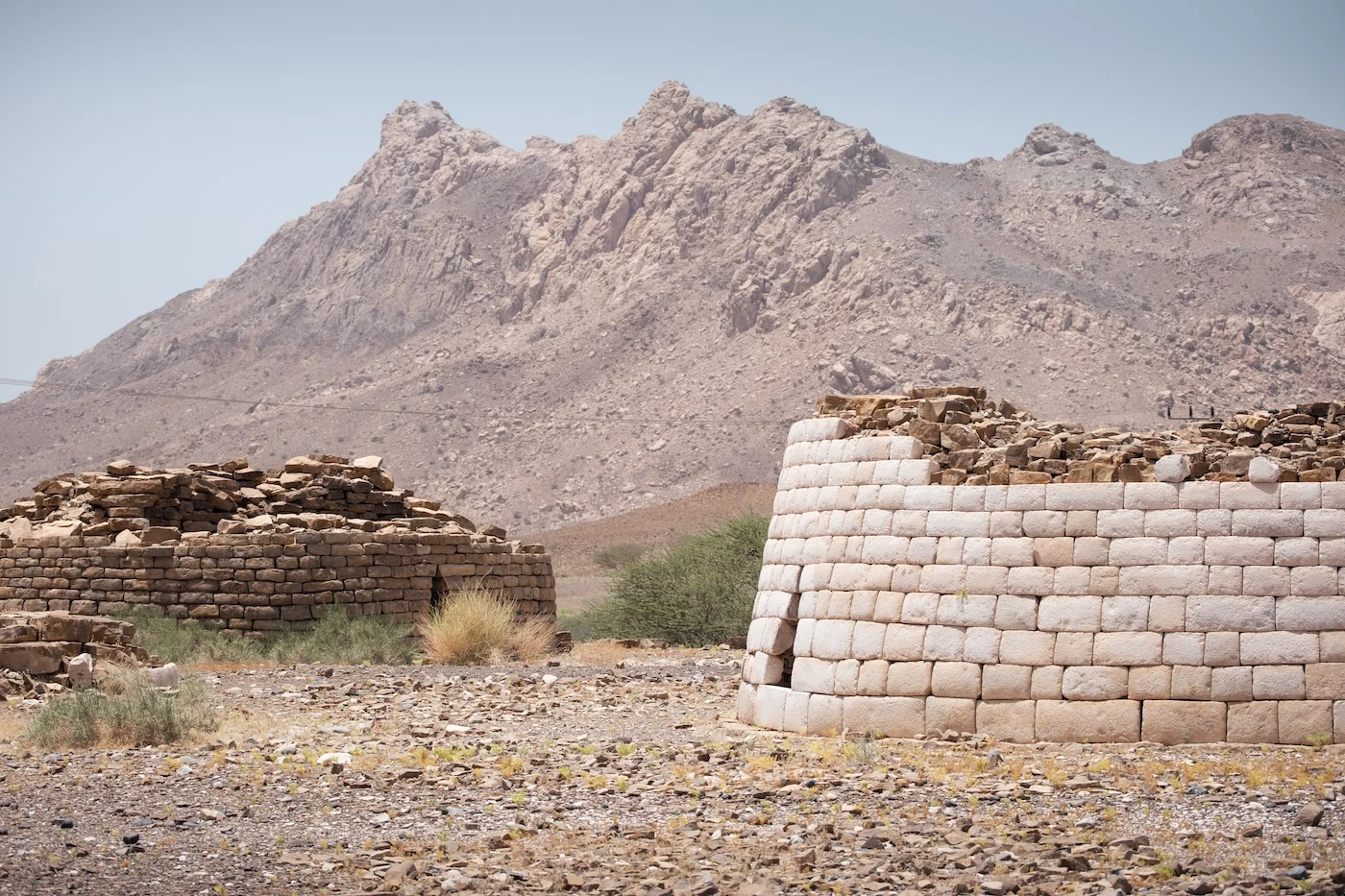
Well, Bat isn’t actually just beehive tombs (although its often referred to that way).
The aforementioned single-chamber Hafit ‘beehive’ tombs are the oldest and smallest of the structures across the archaeological site (3100–2700 BCE), but there are also the remnants of Umm an-Nar tombs. These are large towers with multiple chambers that reach 14 metres across and are up to a thousand years younger (from 2700–2000 BCE).
Interestingly, the fact that these tombs cover several periods shows the evolution of funerary practices across the Bronze Age – it’s quite a fascinating little bit of history.
(Note: there’s actually loads of different variations or tomb/tower architecture based on region, age, and more, so I’m simplifying a little bit).
Fundamentally, though, these ruins are organised piles of rocks, to any layman’s eye, and you’ve got to be keen to drive two hours each way from Nizwa just to see them! It’s a pretty rogue option for most trips to Oman but, for some people, it makes for a cool little adventure away from the typical tourist hotspots.
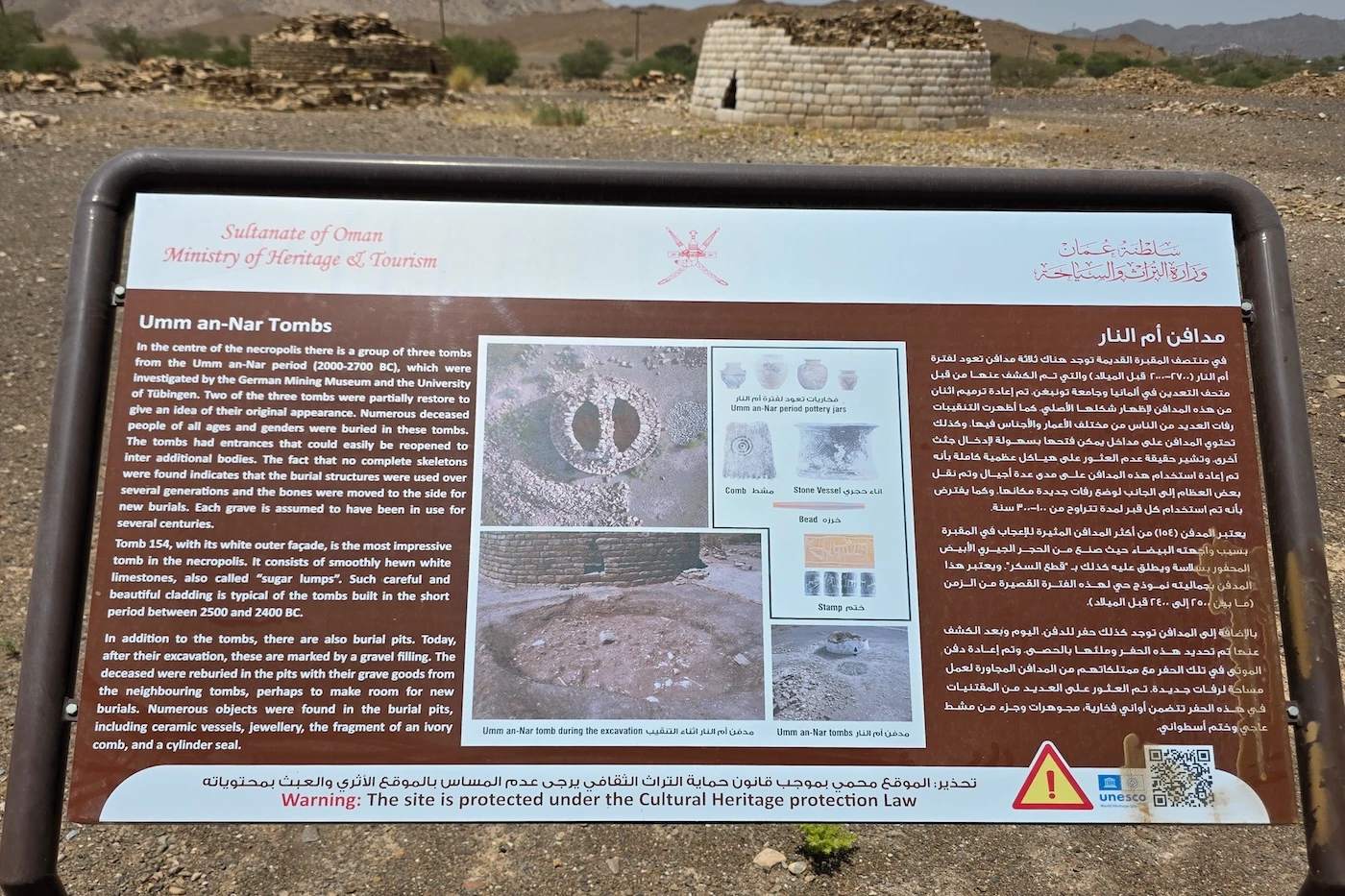
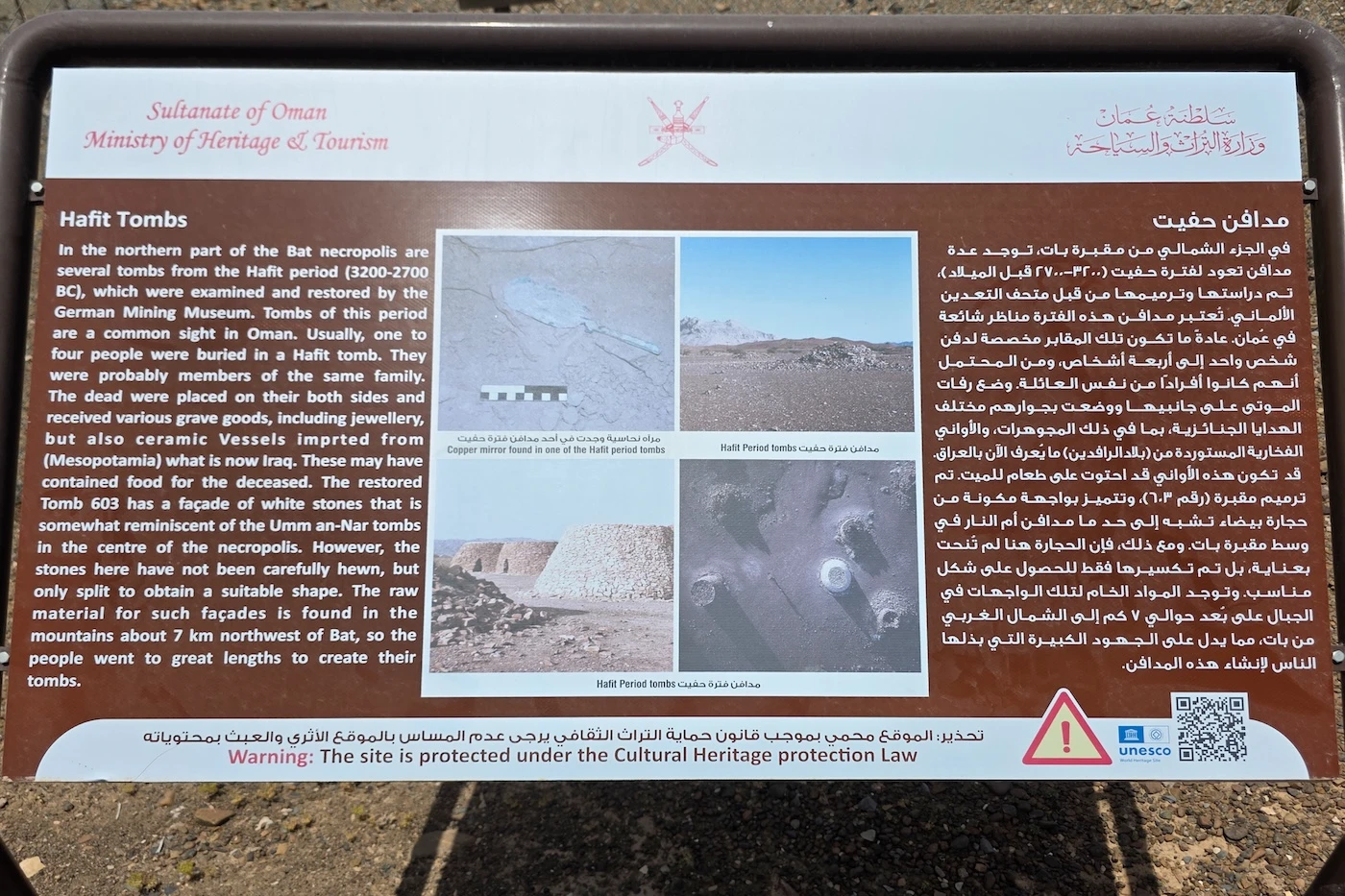
What’s at the Site?
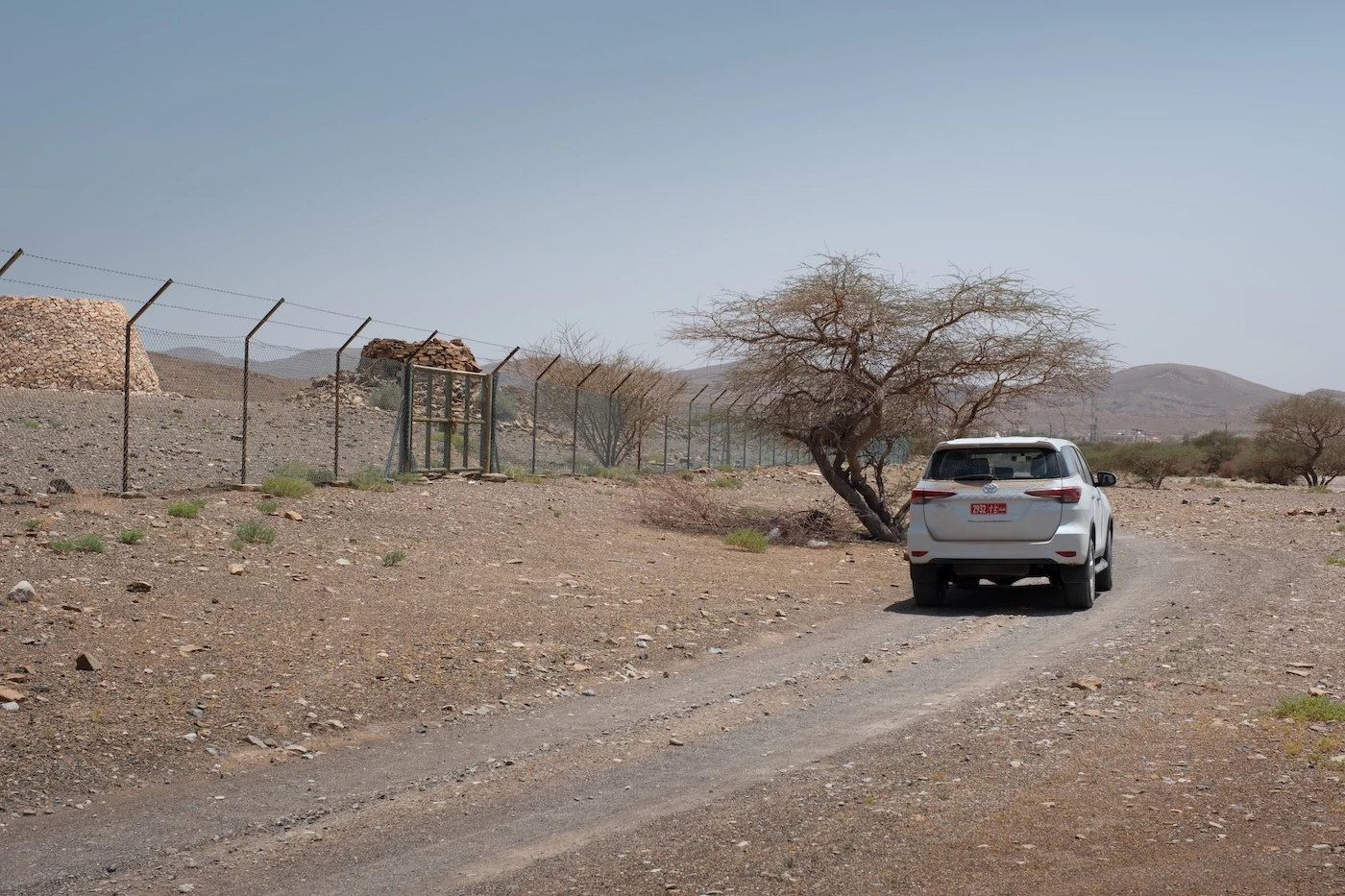
The necropolis at Bat is enormously spaced out (so it’s doesn’t have a specific area listed by UNESCO). However, the bits most people visit are in a (mostly) fenced-off section that I’ve tried to mark on a satellite map below (I’m not sure how helpful it will be).
The Bat site was first excavated in 1972 by the Danish and has been ongoing ever since, but I’ve never seen people working there. I know they do sometimes (from universities as far away as the USA, Japan, and Germany, amongst others), so you might even get to see real life archaeologists doing cool Indiana Jones stuff.
The Tombs
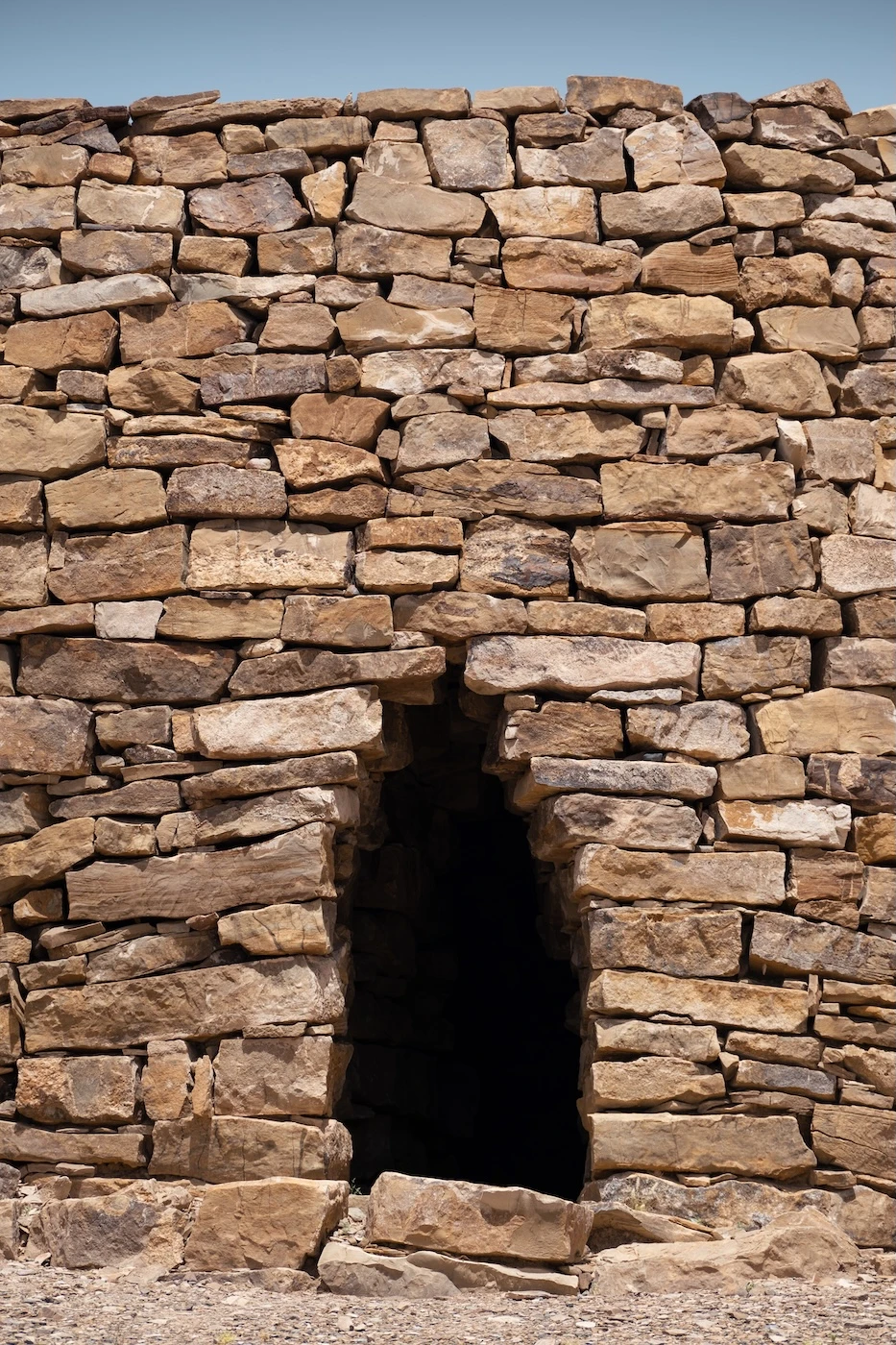
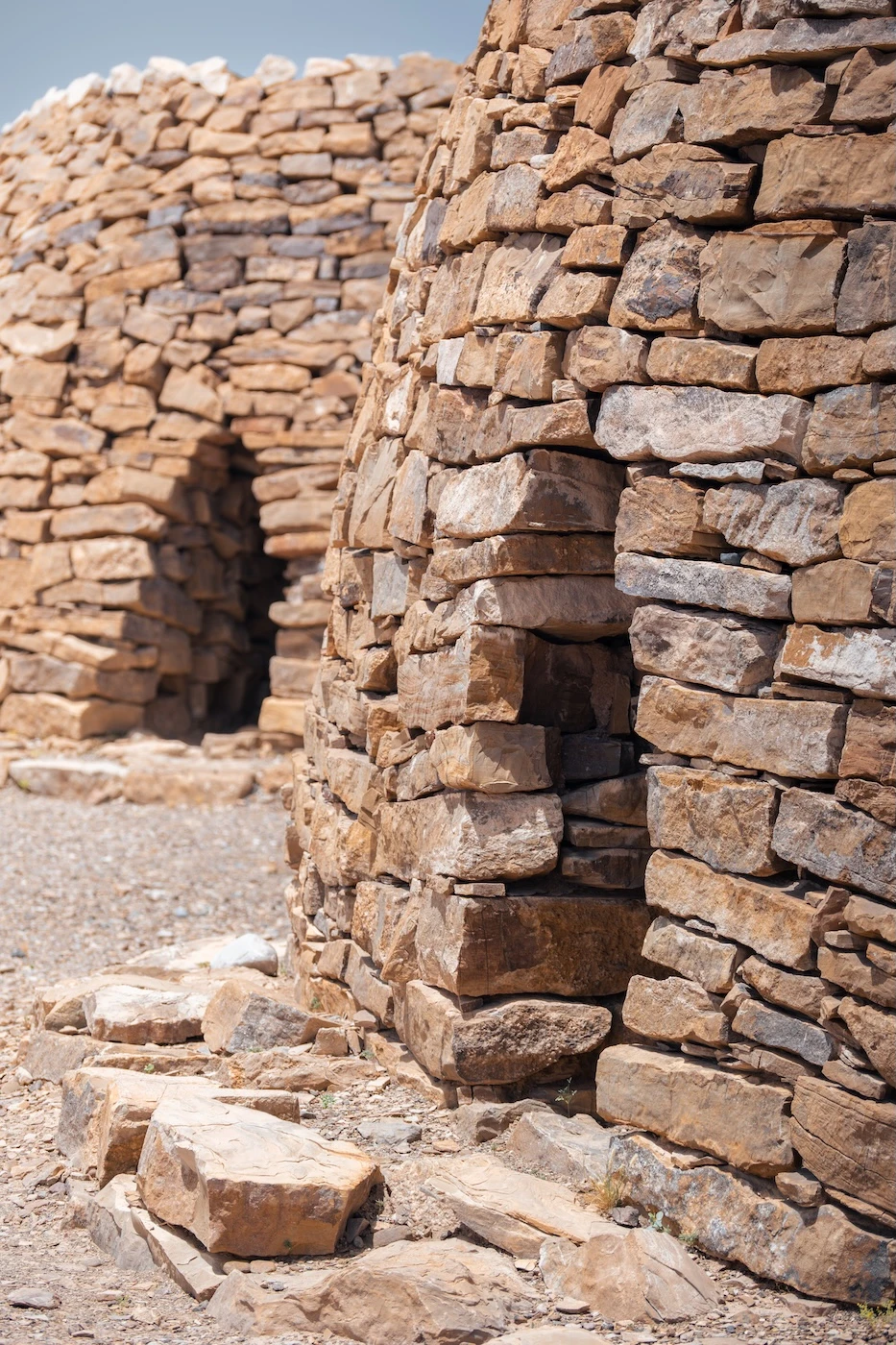
The tombs have been numbered by scientists, but you won’t see those labels when you visit. Instead, you’ll see neat, organised piles of rocks.
Three of the more well-preserved examples are numbered 154, 155 and 156, which are right next to the western car entrance and will be the first you come across. It’s not so obvious from the side, but these tombs are actually multi-chamber – they have two internal rooms – it’s probably most noticeable in tomb number 154 which has two sections with separate entrances (check out Google Satellite at 23.270437, 56.745021 – you can see them).
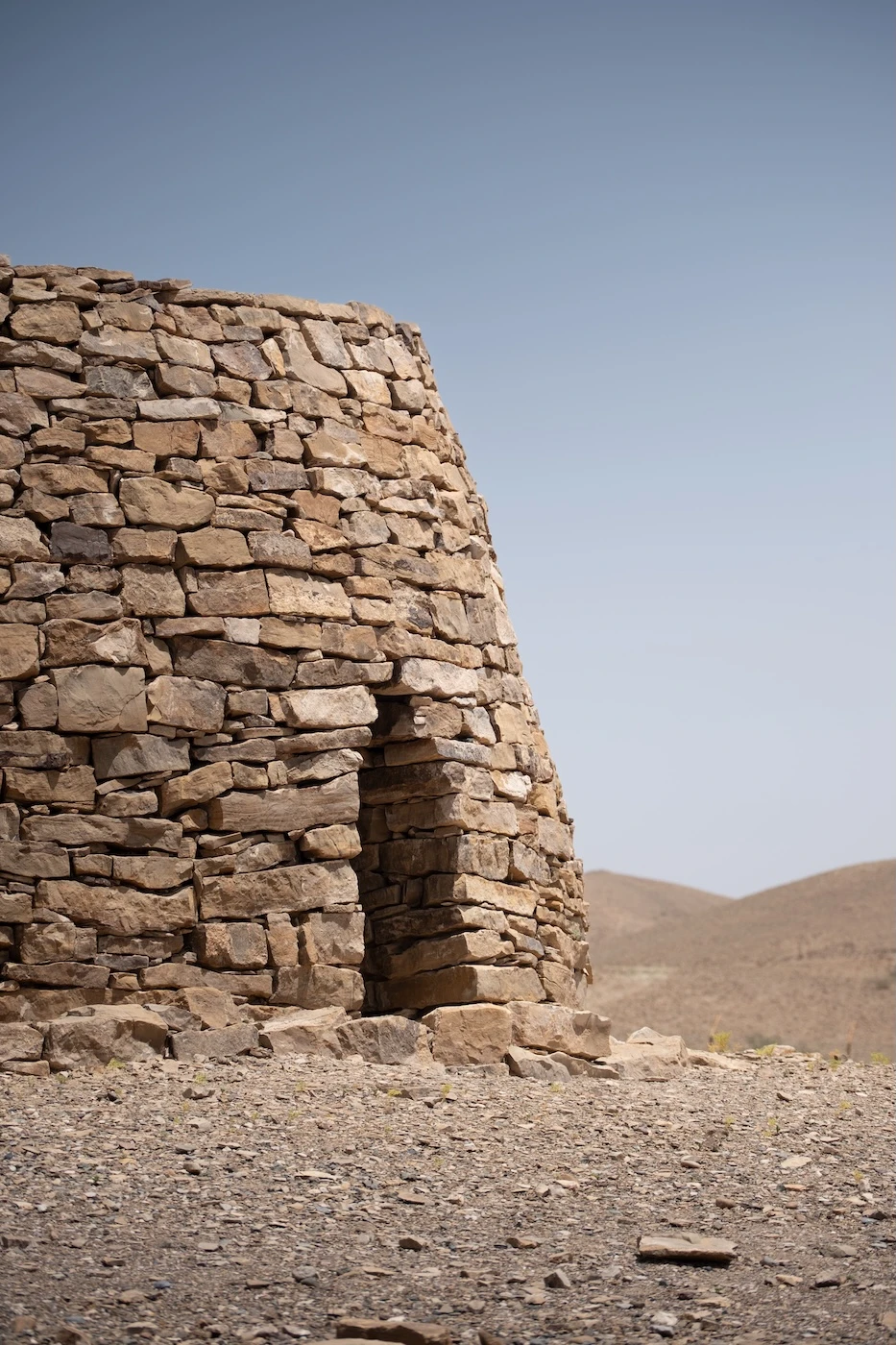
Pictures don’t really do these justice, size-wise – they’re around eight metres in diameter.
There are shallow rock piles on the floor near the tombs that are documented burial pits, too, which contained fragments of pottery, bones and jewellery. It’s cool – they found lapis lazuli and carnelian, the latter of which was apparently from Gujurat – suggesting Oman had trade ties to what’s now modern-day India 4000-5000 years ago.
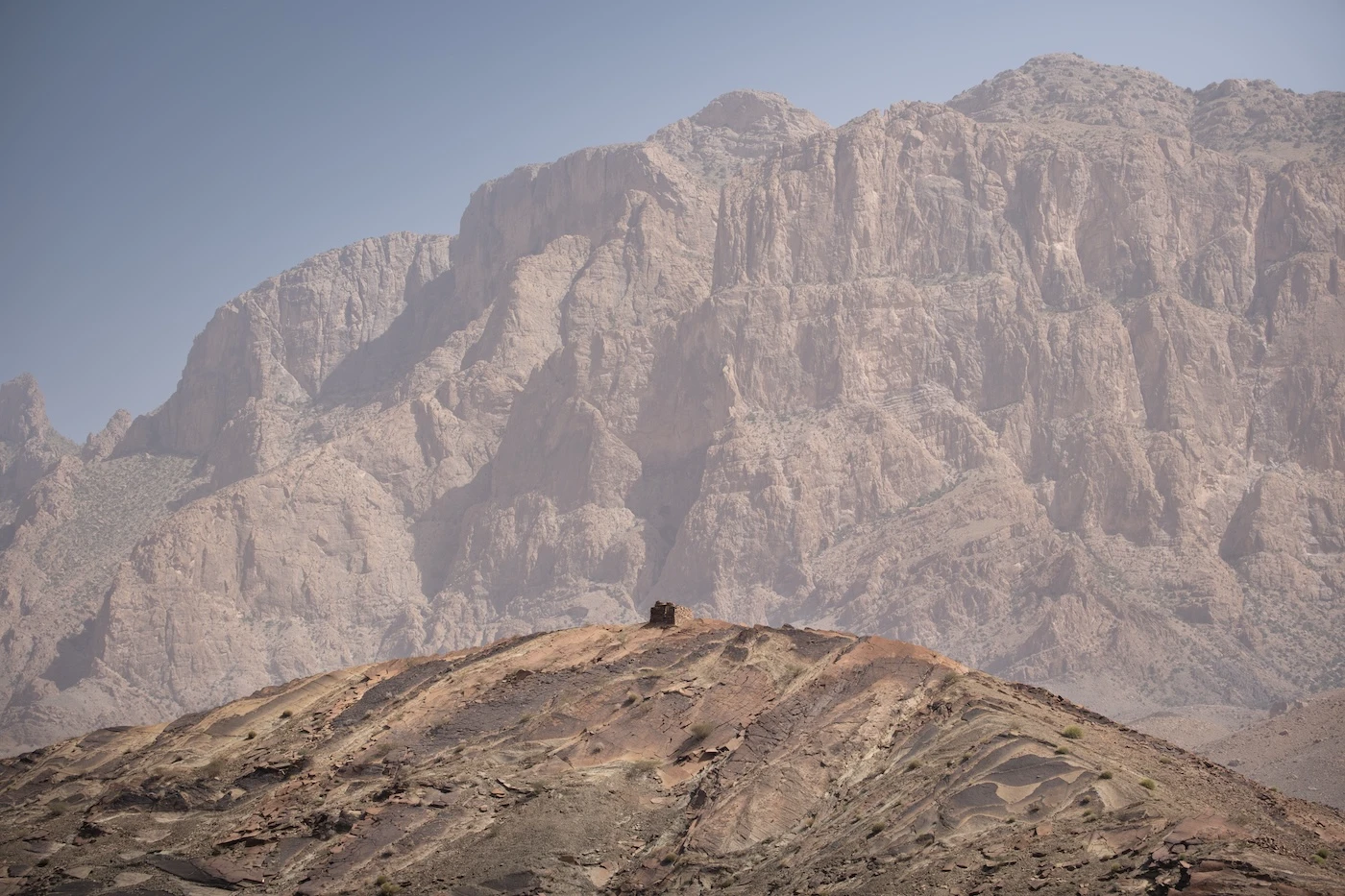
Scattered about around the rest of the site are smaller examples – just drive/walk around and see what you can find. Keep an eye on the hill tops!
A little further north, at 23.274180, 56.747433 within some separate fencing, are a bunch of larger, well restored tombs, but I don’t know as much about them.

We’ve always found the best car rental prices for Oman on DiscoverCars. It’s our go-to car comparison website for every road trip because they have such good insurance. You can save loads of money and get great-priced comprehensive coverage.
GOT MORE TIME IN OMAN?
Explore some wadis:
Take a look at our 14 favourite wadis
Hike Oman’s favourite Wadi Shab
Live in a fairytale at the Wadi Damm pools
Drive through the rivers of Wadi Dayqah
Explore the quirky white pools of Wadi Abyad
or the magnificent waterfalls of Wadi Darbat
Explore the cities and mountains:
Feel intrepid on an Oman offroad mountains itinerary
Discover what dramatic means with this Salalah itinerary
See some offbeat spots around Sur
Explore Oman’s cultural heart in Nizwa
Prepare with our Oman driving guide
Check out Muscat’s best viewpoints
–
Getting to (and into) Bat’s Tombs
The Bat Tombs are located in the Wiliyat of Ibri, to the western side of the Hajar Mountain range.
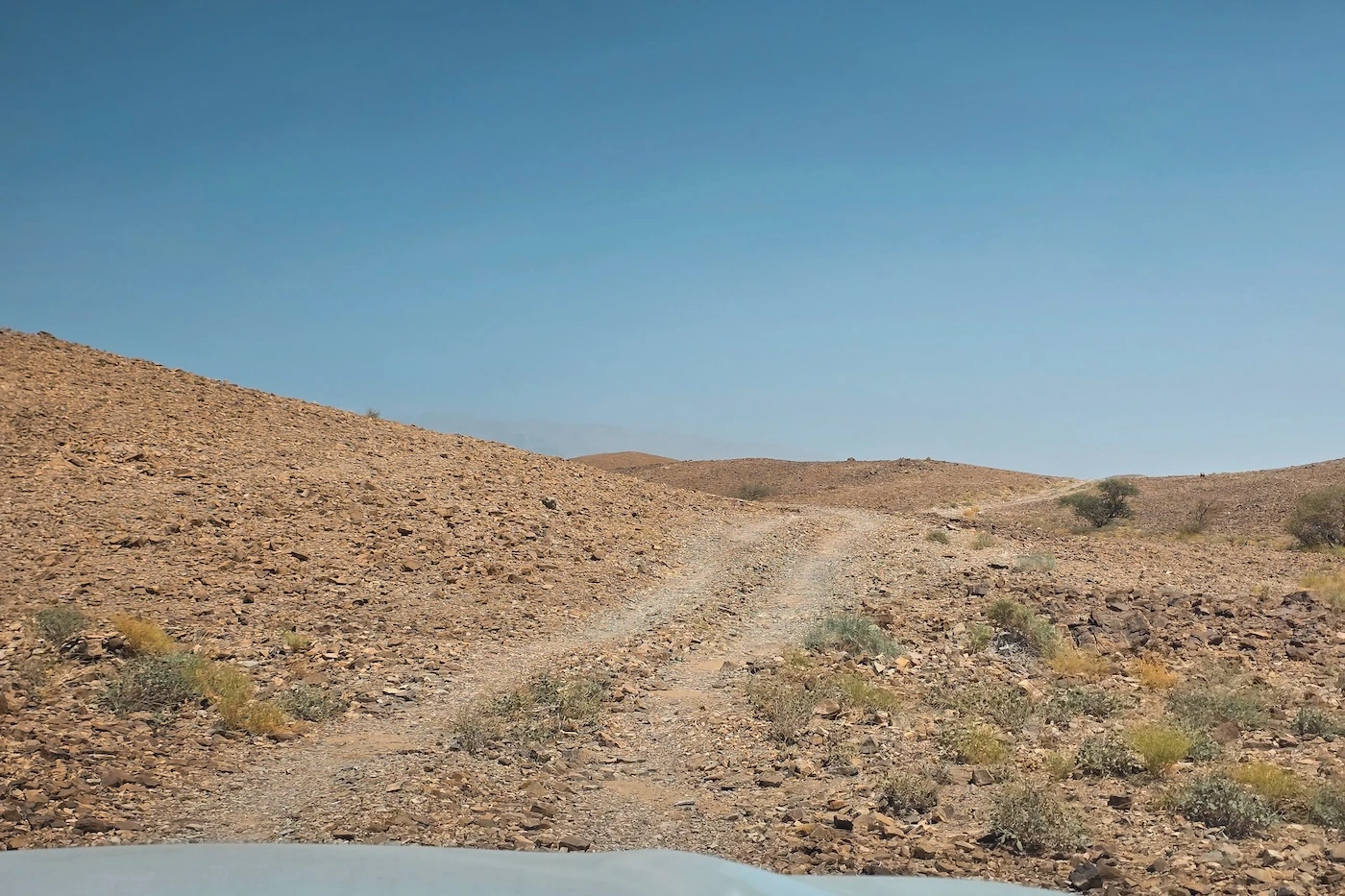
Google Map’s directions aren’t the best for visiting Bat’s tombs. It does get you to the right place, but it doesn’t tell you that you’ll be driving down a sandy wadi to reach the exact location. We actually had to engage our four-wheel drive just to get out of the sand (and the wadi route it gives you is technically incorrect, anyway).
Google Maps also doesn’t show you the exact entry points to the complex because, from the outside, it all appears fenced off and I think a lot of people just give up after taking a quick look from the outside.
Getting There From Nizwa
The two hour journey from Nizwa to Bat is pretty straightforward, but there are actually loads of places you can see on the way, like Al Hamra, Jebel Shams, Al Ayn, and Wadi Damm, for example, if you take an alternative route.
I mention those stops further down, but here, I’m going to describe the quickest route from Nizwa:
Take the westbound route from Nizwa on Route 15/21 (Sultan Thuwayni Bin Said Road) and stay on for around 70 kilometres, then head towards ‘Wadi Al-Ayn’ and ‘Amla’ (on the signs). About 20 kilometres later, take the left onto the unsigned Ablah-Ad Dreez Road.
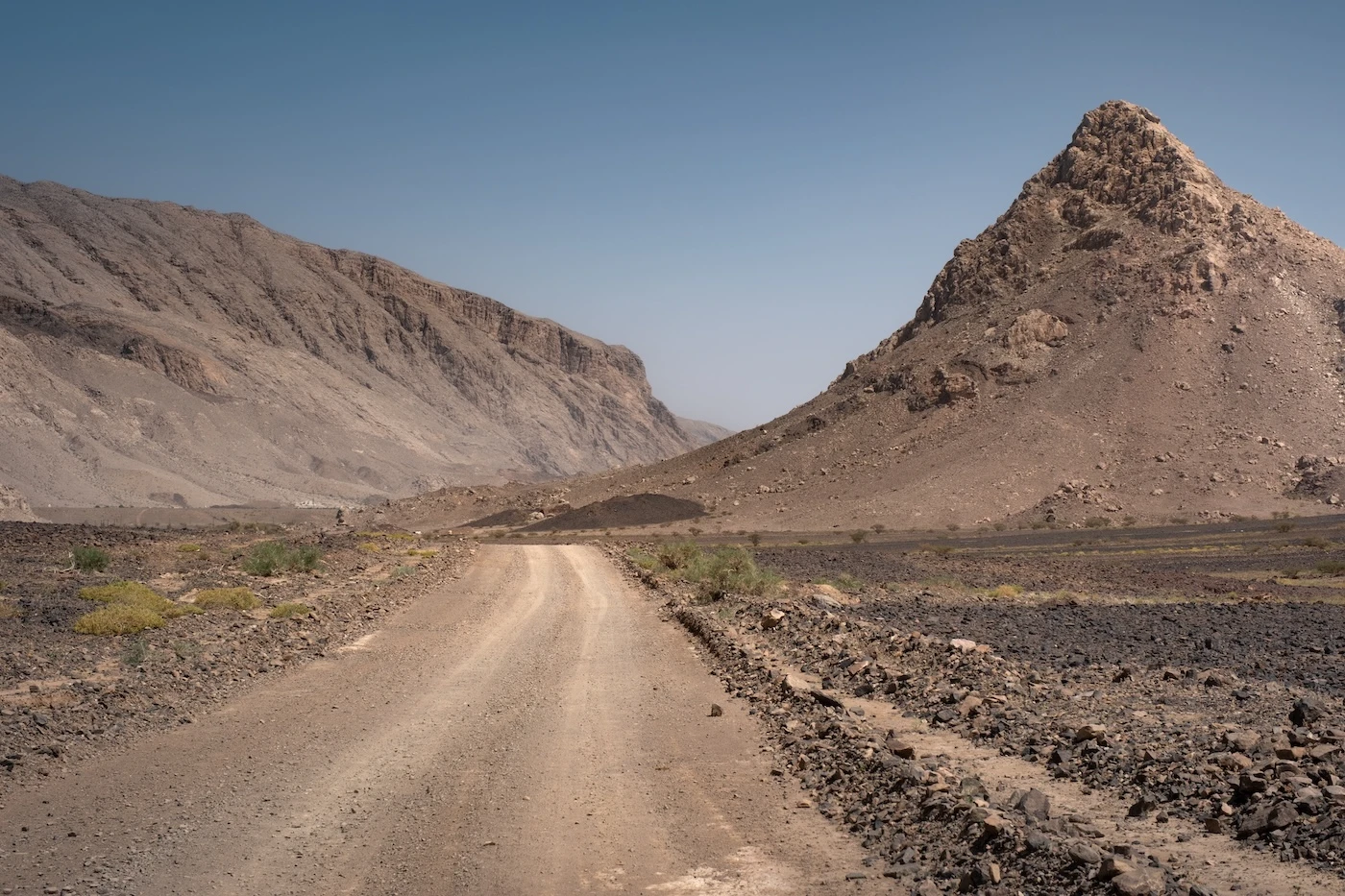
It starts off paved, but after passing some houses a few kilometres in, the tarmac disappears (and I think there’s even a dead end sign!). Just continue on along the track for around 20 kilometres, until you reach the tiny town of Bat.
Getting There from Al Hamra/Jebel Shams/Damm
If you are making a day of it and are travelling from Al Hamra, through Jebel Shams and Damm, they’re perfectly positioned so that you end up passing Al-Ayn’s beehive tombs too, directly on the way to Bat.
It’s very convenient.
If you’re at Al Hamra, route towards Jebel Shams, taking the Musaidira-Al Arf Road and turn left at 23.241214, 57.150016. This 10-ish kilometre unpaved track will take you directly into the Wadi Damm Pools, then continue on to Al-Ayn and Bat.
Do You Need a 4WD to Visit Bat’s Tombs?
No, you don’t need a four-wheel drive car to reach Bat, but it would be very helpful, particularly if it rains (I’ve only been when it was dry).
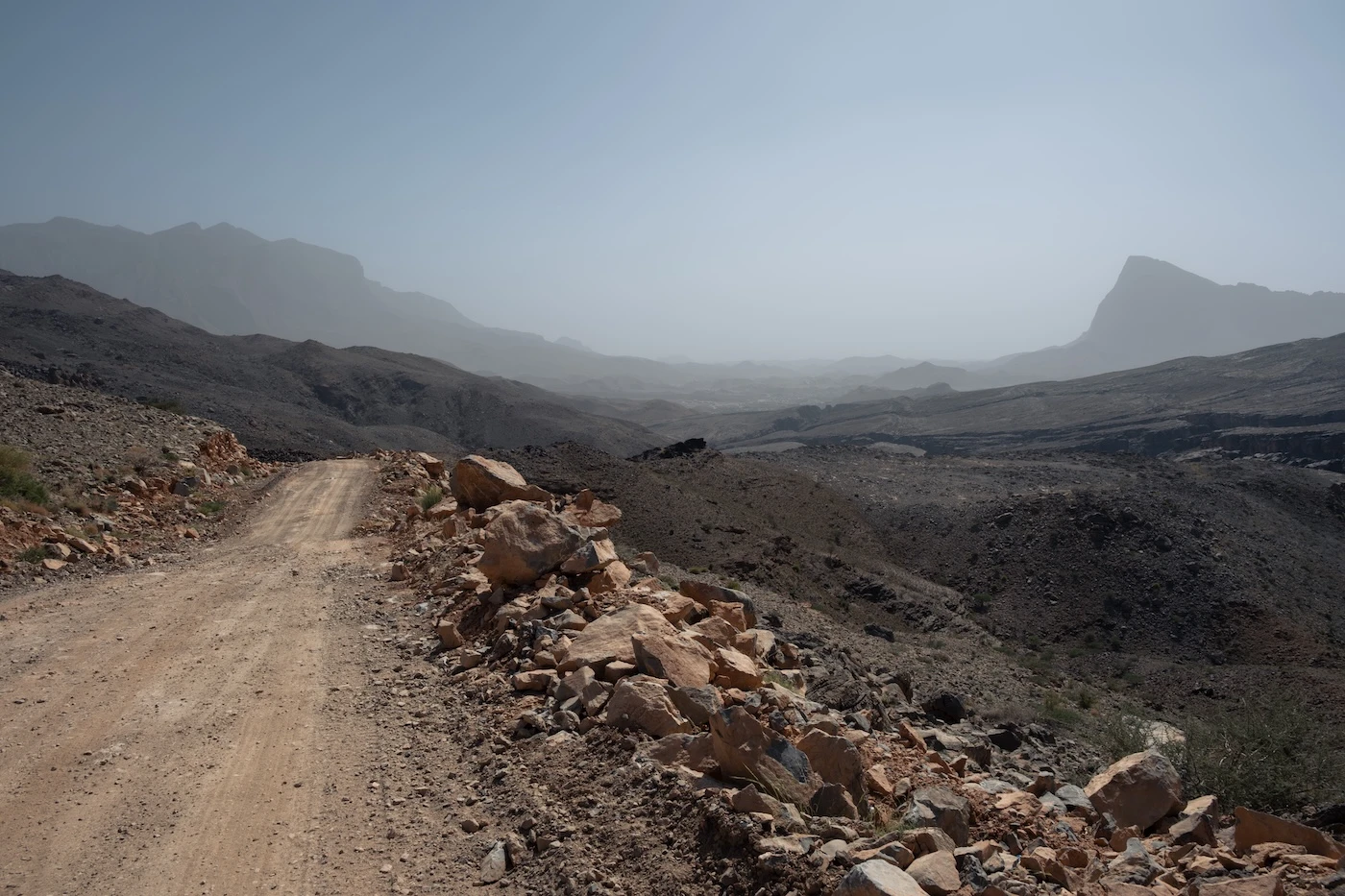
Although 4WD is not necessary to reach Bat, the roads are rough and ground clearance is certainly something you would be grateful for during this trip.
Getting into the Bat ruins complex itself is a different story – 4WD is very helpful here. We’ve detailed below about the ways to access the site via two different entrances – both are pretty rough and really could do with a rugged car.
Getting *into* the Bat Tombs Site
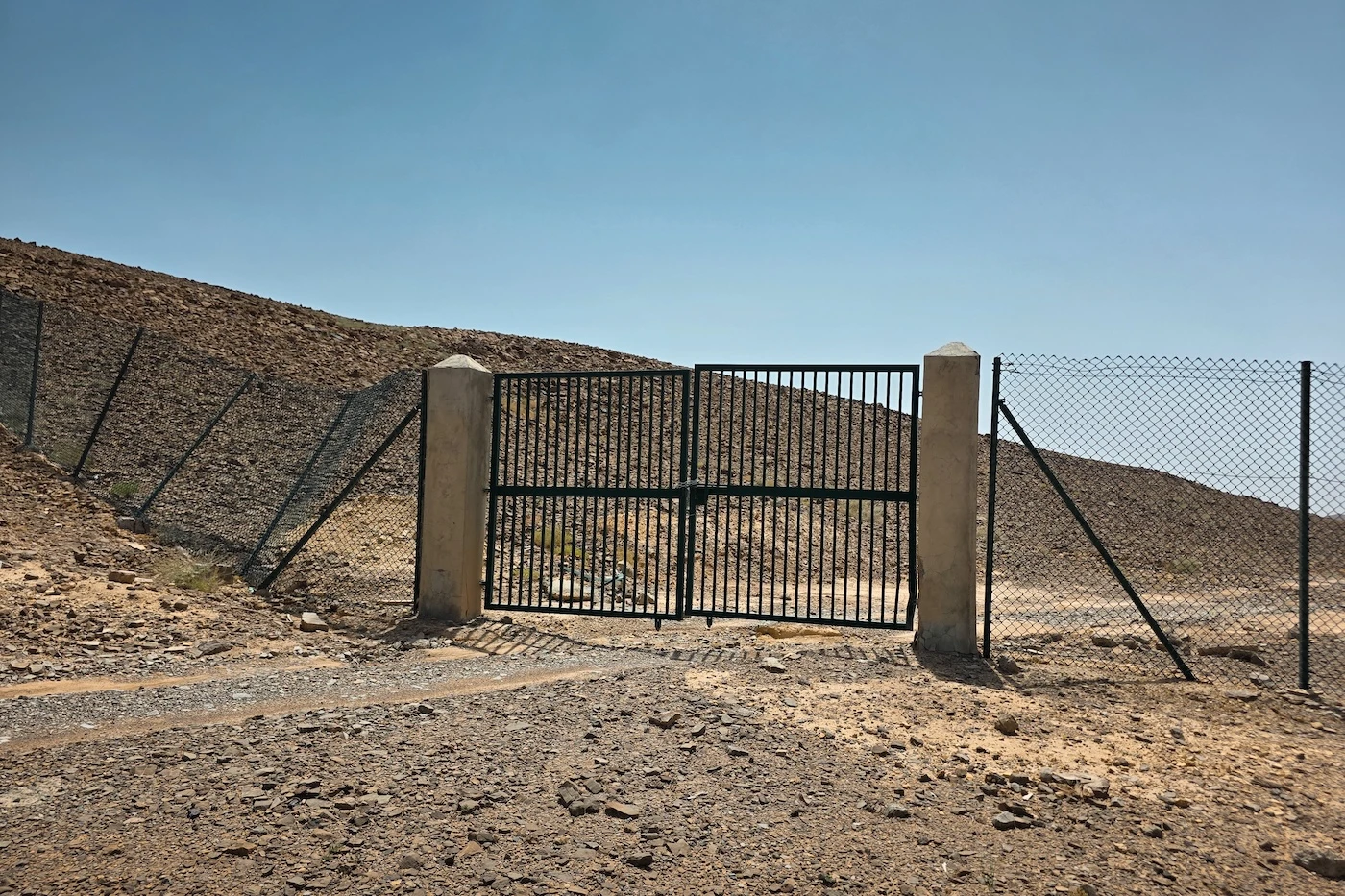
It’s interesting, because the Bat Necropolis is fully fenced off – it’s one of the few natural places in Oman that has any boundaries! And, from first appearance, it looks like there is no way in.
However, there are actually two ways in with your car.
1. From the west: the first is via a sandy wadi to the western side of the complex. You follow it up off the main road at 23.269291, 56.742737. There’s a concrete square wall protecting some electrical cables – drive to the left of that and find the wadi, then turn right down it.
The entrance to the site is further along, kind of hidden behind some trees at 23.270598, 56.744601.
2. From the east: the second is on the eastern side where there is a locked gate at 23.270119, 56.751182. Adjacent to the gate, the fence is kind of broken or missing, so you can just drive around (although it’s a bit rough).
This gate area can be accessed off the main dirt road as you enter Bat from the east, at 23.261707, 56.751749, then follow the tracks north and west until you find the entrance (Google Satellite is good for navigating this).
BEST TIME OF YEAR TO VISIT
We’ve visited in February and June and there’s no question that visiting in winter is better than summer. It was so hot in June I thought I would melt and I really didn’t want to wander around too far from air-conditioning.
So, if you want to traipse around in the hills and take an extended look around, definitely do this little jaunt between December and February.
–
So, it is Actually Worth Visiting the Bat Tombs?
Well, I think the answer to this is complicated.
For me, yes, it’s totally worth visiting because I love deserts, mountains, old stuff, wild adventures, unpaved roads, and empty spaces.
It ticks off literally all the best things on my Omani wish-list.
However, I’d argue that if you’re not massively into crazy-ancient rock piles, I’d potentially skip it. Here’s why:
⬩ It’s remote and takes ages to get to.
⬩ It’s not really near to, or on the way to, anything else.
⬩ It’s the least scenic of the three beehive tomb sites I’ve been to in Oman.
⬩ It’s history is still relatively unknown and there’s not masses of perspective you can gain.
⬩ At minimum, you’d ideally have some clearance on your car.
But, here’s the thing: it’s the adventure; the wildness. It’s the Google Map directions to a colossal pile of camel bones in an untracked area of fuck-knows-where; it’s not seeing another car for several hours; it’s wandering around an entire UNESCO site all alone (and driving your 4WD right through it); It’s figuring out ways through fences instead of passing through ticket booths.
You see, this is the exact kind of fun, weird wildness that I’ll always be onboard with on trips to Oman.
So, if you’ve got more time than sense, and that sense is thoroughly tuned towards bizarre adventures, I’d recommend visiting Bat’s Tombs!
Some Alternatives
If you’re just not sure if you can be bothered to visit Bat (or if its worth the time for you), then there are a couple of alternative beehive-y options:
⬩ Al-Ayn: this is another part of the same UNESCO site that Bat is a part of, situated on an easy to reach hill just down the road from Damm. It’s quite scenic due to the mountain setting and has 19 Hafit-era beehive tombs in a row on a ridge, plus another 12 that are in a less striking position and condition. Definitely quite a quick stop, but a great addition if you’re going to do the hike in Wadi Damm.
⬩ Jaylah: this tiny settlement on the Salma Plateau in the eastern Hajar Mountains is home to one of the most unreal, beautiful settings for Oman’s beehive tombs. In fact, it’s one of my favourite spots in the entirety of Oman.


GOT EVEN MORE TIME IN OMAN?
Go camping:
Sleep under the stars at these amazing wild camping locations
Plan your trip with our Oman camping guide
Camp atop Oman’s highest mountain
or camp in the palest of Oman’s deserts at the Sugar Dunes
or have a totally unique adventure:
Spot the most remote beehive tombs in Oman
Wander around Oman’s most photogenic fort
Learn about livestock at the Nizwa goat market
Take a look around Oman’s most unique fortification
Drive up Oman’s most popular mountain
Figure out which of Oman’s UNESCO sites are worth visiting
–
Where to Stay Near Bat
There isn’t any accommodation in Bat. Below are your options instead:
Ibri
The closest major town to Bat is Ibri, located 25 kilometres and 40 minutes to the west, but that’s sort of in the opposite direction to most places tourists visit. There’s a few decent hotels, like the Ayla Ibri Hotel (that has a Lulu Hypermarket adjacent if you want to stock up on anything).
Ibri has the Al-Sulaif Fort, an old souq (سوق عبري القديم), a large abandoned mudbrick village (حارة الرمل), and Ibri Castle if you’re looking for things to do while there. My main memory of Ibri is actually finding an excellent bakery with some outrageously good flatbread, but I can’t remember where it was. So, just try every bakery in town for me and report back.
Jebel Shams
Just under two hours east is Jebel Shams, which has a few nicer mountain-resort accommodations and homestay-style places on its summit.
The route from Bat backtracks through Al Ayn and Damm (the same as described above) directly to the mountain top, so is a good call if you’re heading east. The two most popular hotels are:
Jebel Shams Resort: nice hotel with the best location on the rim and decent rooms too.
Sama Jabal Shams Resort: a prettier resort than the Jebel Shams Resort, with these lovely stone buildings and luxury tent-style rooms, but located slightly further from the rim.
Nizwa
You can also just drive directly back from Bat to Nizwa (the reverse of the route above) and it takes around 1 hour 40 minutes.
Nizwa has absolutely loads of hotel options – these are the three we’ve stayed in the most (and recommend):
⬩ IntercityHotel Nizwa (+$$): the most modern hotel in Nizwa, with clean, simple rooms and super easy parking right next to a Lulu Hypermarket and the Nizwa Grand Mall. We’ve noticed this hotel go up in price a lot last minute, so if you’re looking to book, do it early.
⬩ Antique Inn ($$): quirky heritage hotel with some serious character, adjacent to Nizwa Fort and Souq. Parking can be a little tight if you arrive late in the evening and some rooms don’t have a window – upgrade to a King Suite if you can (I think the double rooms in this hotel are a little overpriced). Breakfast is excellent and the views of Nizwa old town from the terrace are fantastic.
⬩ Nizwa Inn (-$$): simple, clean and friendly hotel with nice modern rooms, ours always had nice views across the desert towards the mountains. The entrance is a little slippery, be careful! The location is convenient, right opposite the Nizwa Grand Mall.


Camping Near Bat
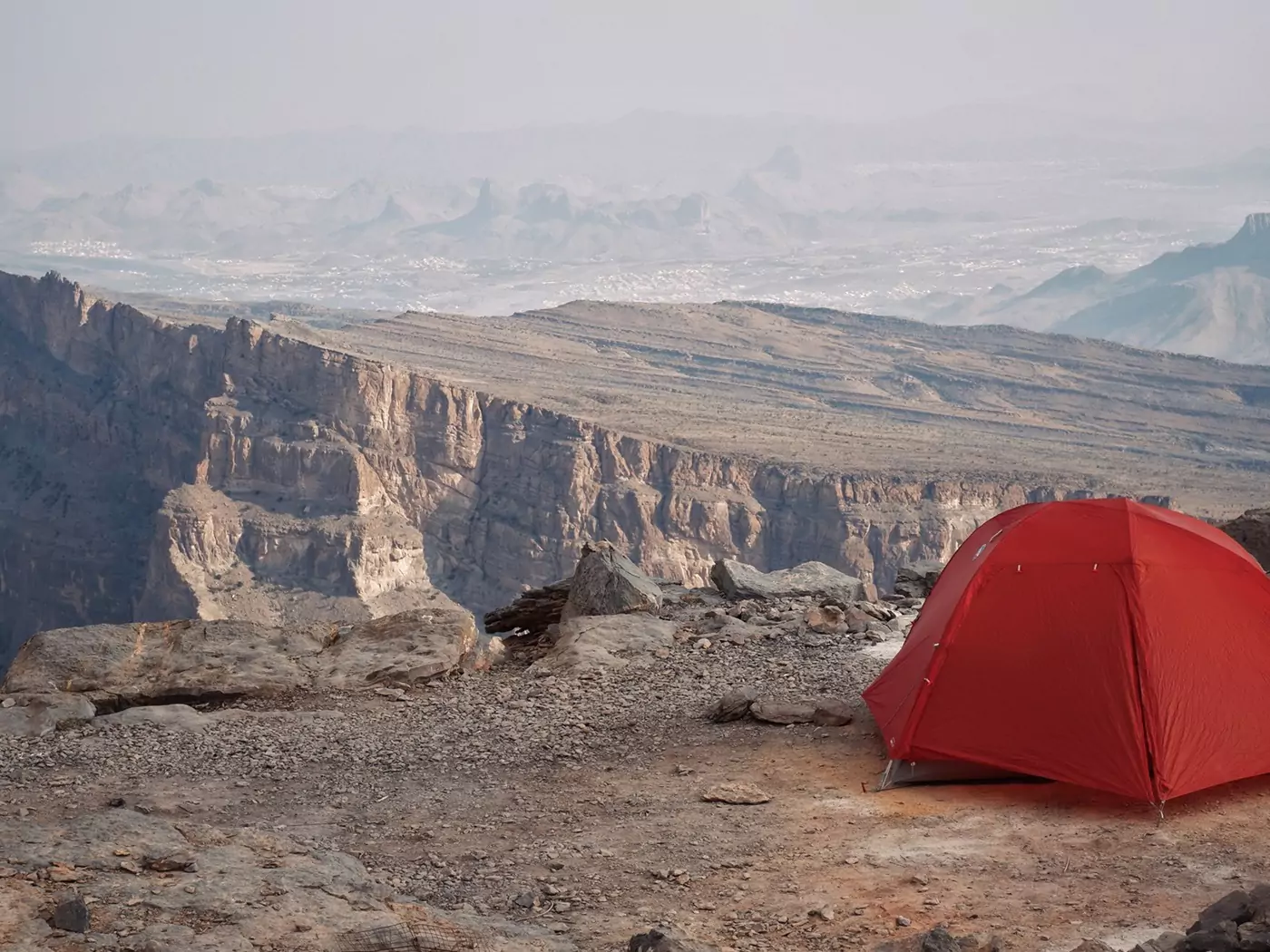
The nearest place to camp near the tombs is just to the east, outside the second entrance (I mentioned it above). It’s a nice camping area literally just outside the entrance around 23.266885, 56.754488. Head on towards 23.266999, 56.756914 and pick a spot.
Alternatively, there’s decent camping at Wadi Damm and also at Jebel Shams, which are both on the way back to Al Hamra and Nizwa:
⬩ Wadi Damm: 23.233068, 57.091263
⬩ Jebel Shams: 23.206326, 57.202982 (or anywhere along the rim that you like!)
–
WHAT APP IS BEST FOR GPS AND NAVIGATION IN OMAN?
We use Google Maps for all our navigating in Oman. In conjunction with Google Satellite, we were able to accurate route even in the most remote areas.
Occasionally, Google can get confused if there are new roads or if it thought a road was closed, but generally it’s really good at navigating through some pretty sketchy non-roady stuff.
–
Google Map of Bat Locations
Below is a Google Map with markers for everything mentioned throughout this post.
⬩ Orange: archaeological sites around Bat
⬩ Red: nearby towns and cities
⬩ Green: camping sites near Bat
⬩ Purple: access routes into Bat
⬩ Blue driving routes: Nizwa to Bat, Al Hamra via Damm to Bat
To save this map, select the star next to the title.
HAVE WE HELPED YOU PLAN YOUR Rogue Bat TRIP?
If you’ve found our content helpful, consider booking your rental car (if you need one!), through the company we always use – Discover Cars. They’re the absolute best and have been our rental companion (and savior, thanks to their insurance) in many destinations across the world.
Also, consider booking your accommodation through Booking.com – we use them exclusively when travelling in the Middle East.
Alternatively, leave us a tip to say thank you.
Help like this makes it easier to pay for the upkeep of this site and ensures our small business survives the onslaught of AI!
Thanks for reading.
–
Where to Next?
I hope this little post helps you decide if you want to make the long journey out to Bat’s tombs!
If you’re spending a few weeks in Oman, take a look at our classic one-week 2WD itinerary or our one-week 4WD mountains itinerary because a visit to Bat could be included as an extra on either of them.
Alternatively have a look at our detailed two-days in Muscat itinerary because it’s a perfect way to start off your trip.
Have a great visit!
Hi, thanks for visiting our blog! If this post has been of help to you, or you’ve just enjoyed our random ramblings and musings, say thank you by buying us a coffee! It helps keep The Restless Beans blog up and running.
Thank you, Claire + Nick


