Why Wadi Dayqah is (one of) My Favourite Places in Oman
Scribbled by Claire ⬩ 27 Aug 2026
Find out why the unassuming Wadi Dayqah is an awesome addition to any trip to Muscat, what there is to do, what car you need, and how to get there.
I wasn’t going to write about Wadi Dayqah (or Dhaiqah) at all – it was never on the list of places I thought people would actually care about visiting.
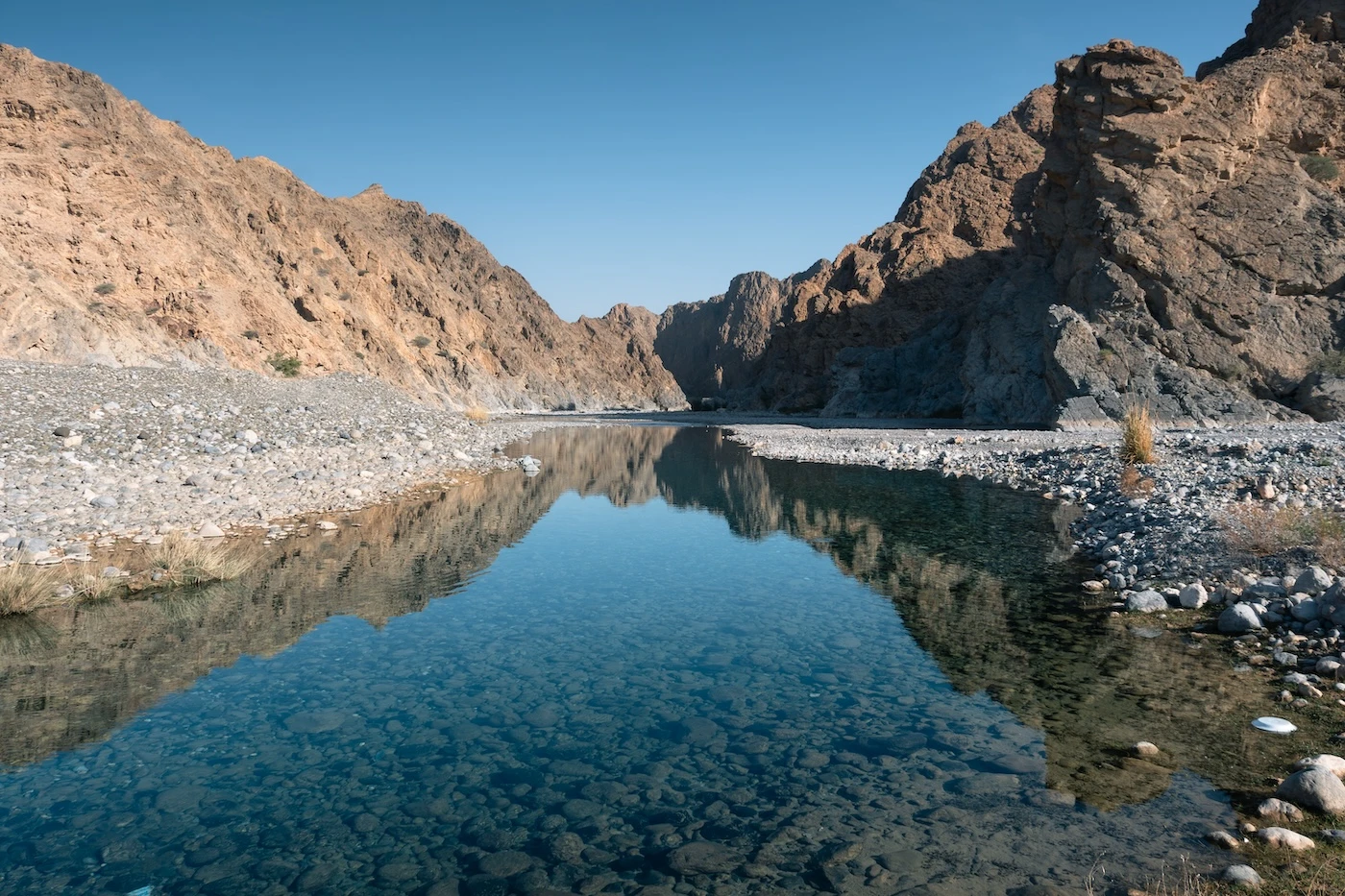
You see, it’s just not really that big of a deal – a channel of pebbly streams in a small, rusty canyon near a pretty dam and some mountain-y desert, a little outside of Muscat.
Yet, it’s one of my favourite places in the country and I’ve been trying to figure out why exactly that is. It doesn’t have the tall-canyon grandeur of Wadi Shab nor the immense waterfalls of Wadi Darbat. It’s not a picture-perfect fairytale world like Wadi Damm, and has far more visitors than Wadi Qurai.
So, why do I like it so much? And, as *I* like it, does that mean other people will too?
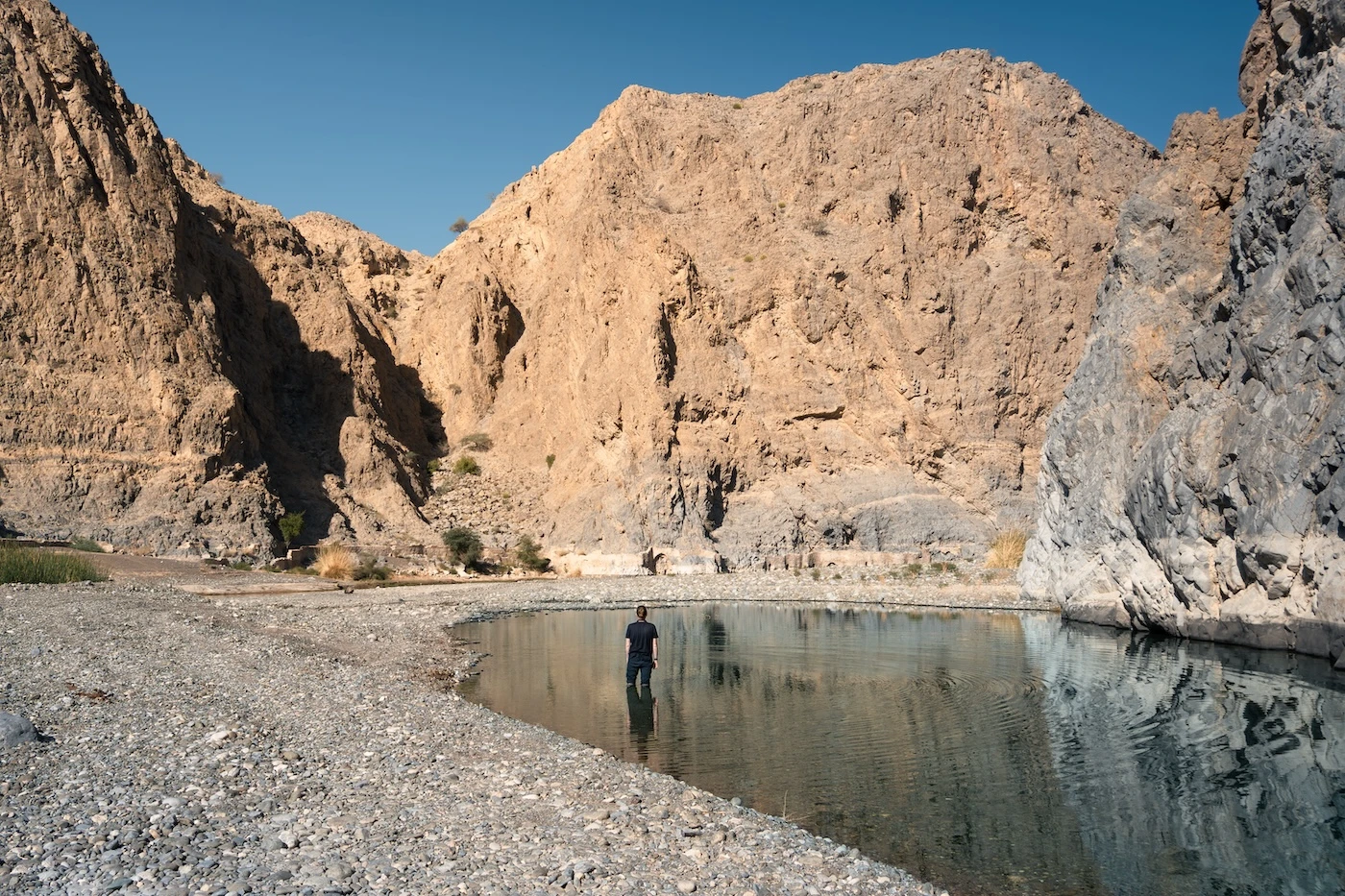
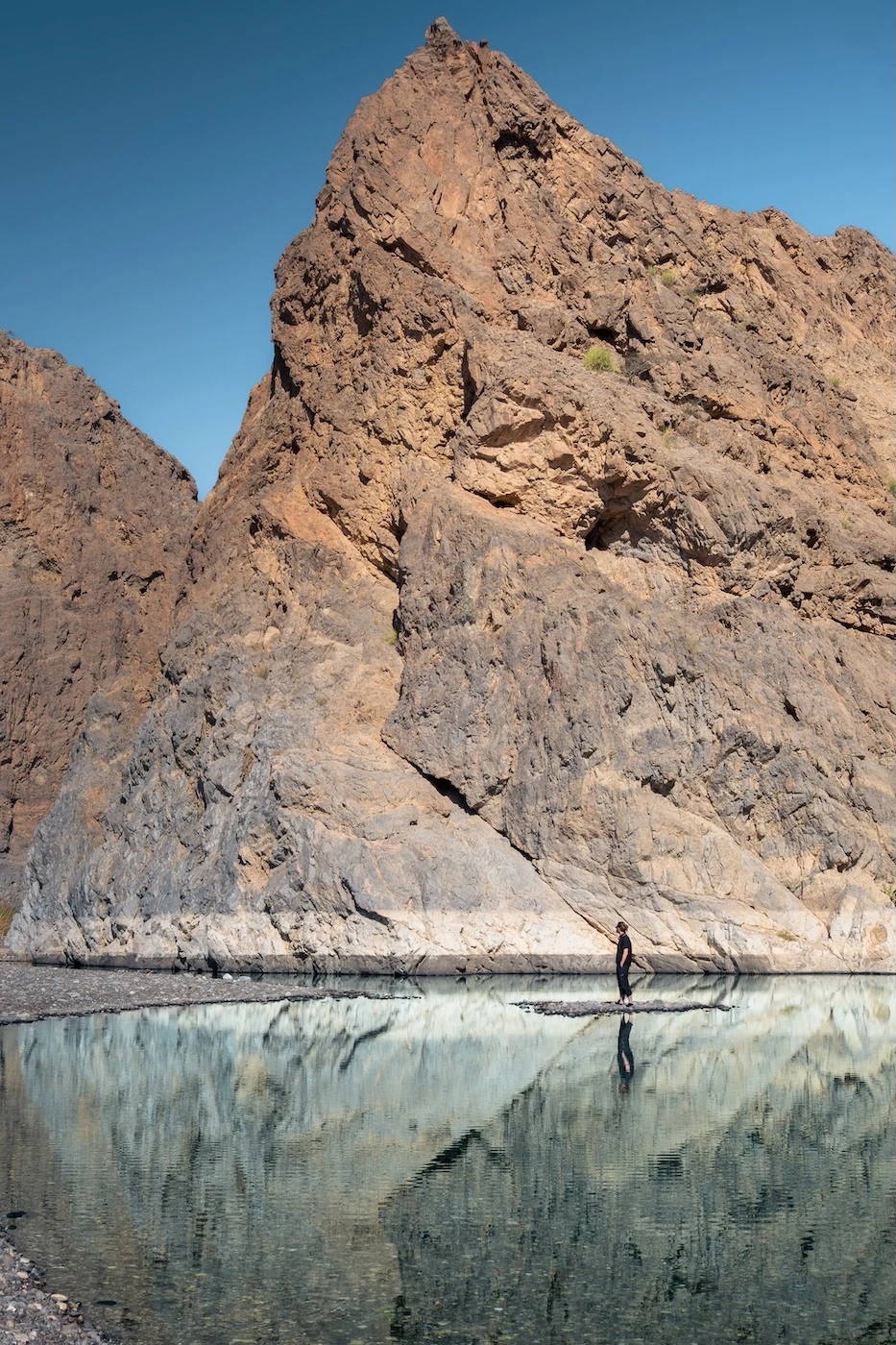
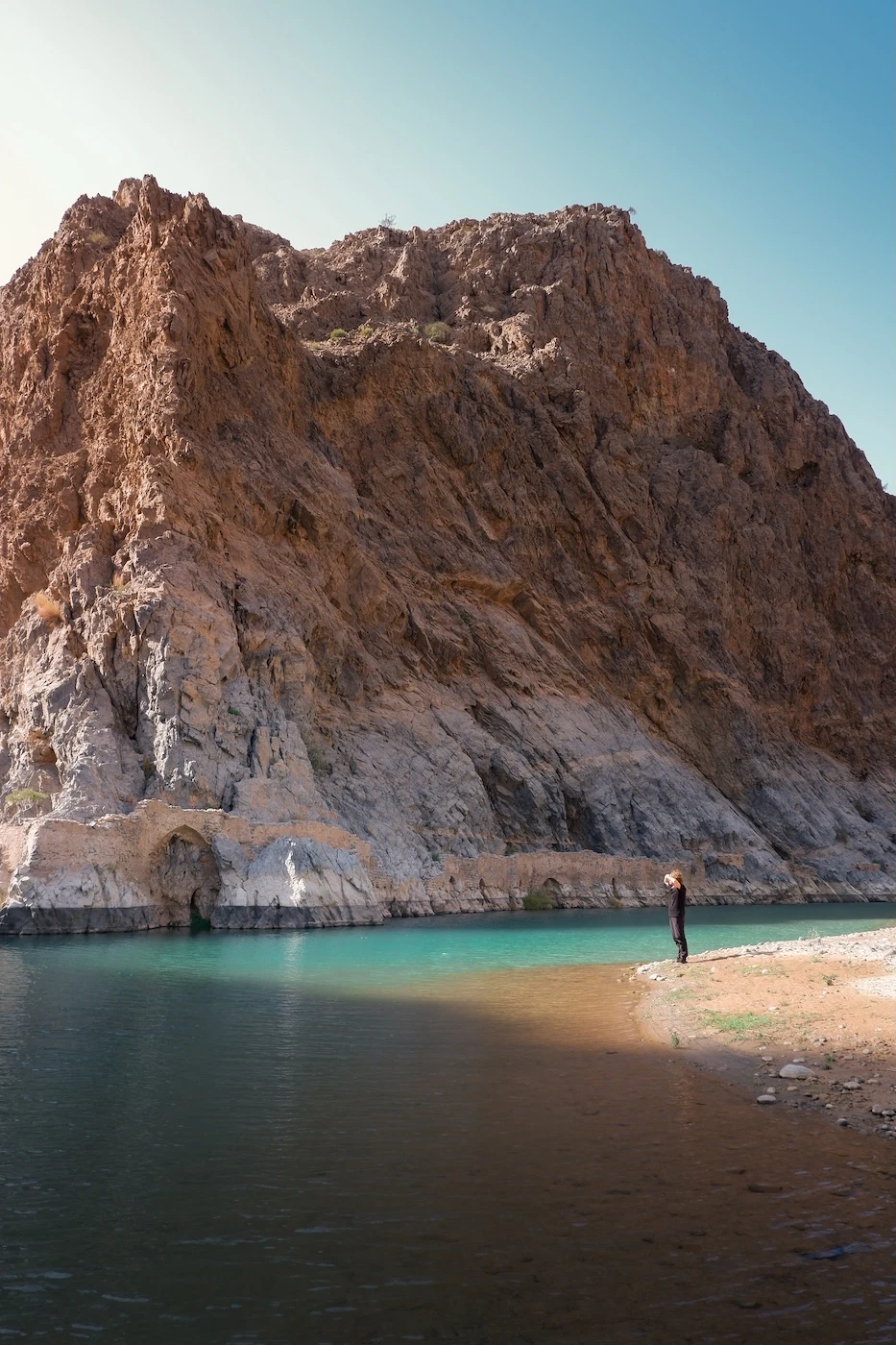
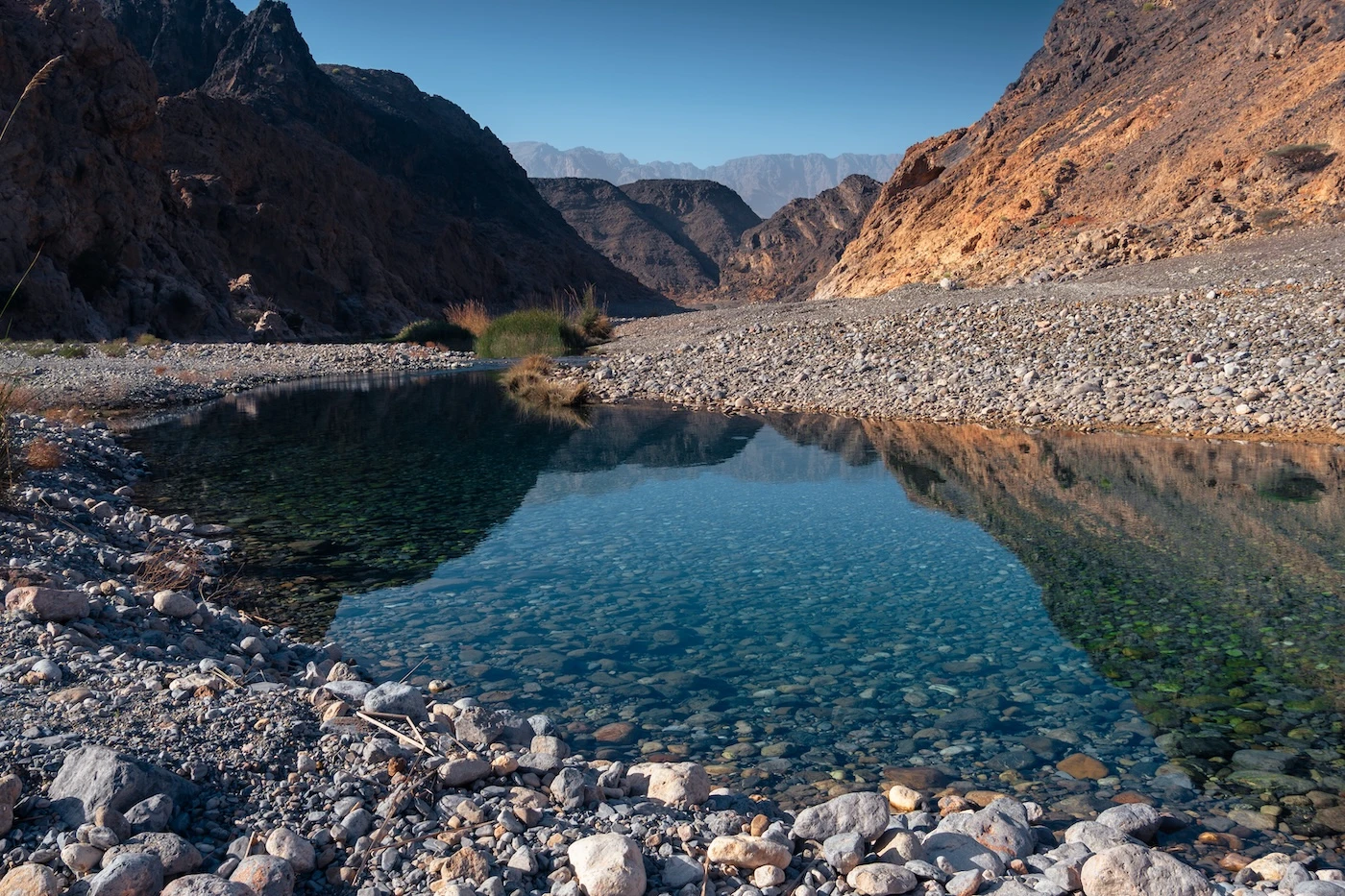
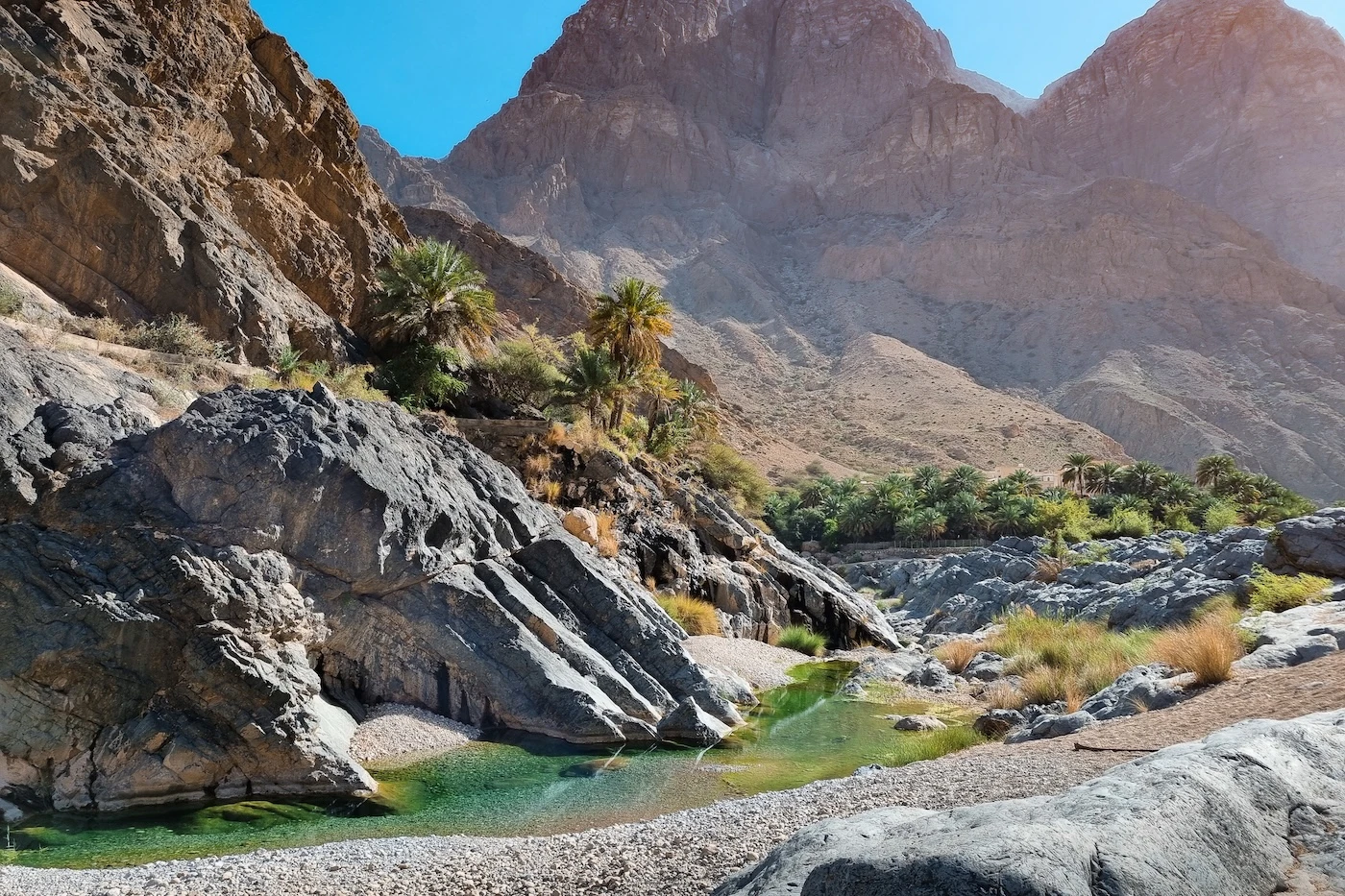
I think, maybe, it’s purely because it’s a bit different to everywhere else I’ve been in Oman. The blueish tint of the innumerable smooth, river-hewn pebbles; the sharp contrast of deep-blue pools with the shallow orange valley walls; the glassy water reflections.
It turns out I quite like driving through rivers, so there’s that, too!
Wadi Dayqah was also the second place I ever camped in Oman – and the only one I’ve chosen to come back to camp at more than three times.
Anyway, this post will be a quick one – I don’t really have that much to write. But I’ll try and detail why I love this place so much, what there is to do and provide helpful logistics, with as many pictures as I can fit onto this page!

IN THIS GUIDE //
Wadi Dayqah’s Secret Allure
Where (and What) is Wadi Dayqah?
How to Access Wadi Dayqah by Car
– Do You Need a 4WD for Wadi Dayqah?
Is the Dayqah Dam Worth Visiting?
What is There to do at Wadi Dayqah?
– In and Around
– Further Afield
Where to Stay near Wadi Dayqah
Best Time of Year to Visit
Google Map for Dayqah
Where to Next?
This post may contain affiliate links. If you book through these links we may make a small commission at zero cost to you. It helps us pay for the upkeep of this blog. Thank you!
Where (and what) is Wadi Dayqah?
Wadi Dayqah is located 110 kilometres south of Muscat within the eastern Hajar Mountain range. It’s just under 1.5 hours by car on entirely paved roads (until you arrive, then the tarmac disappears).
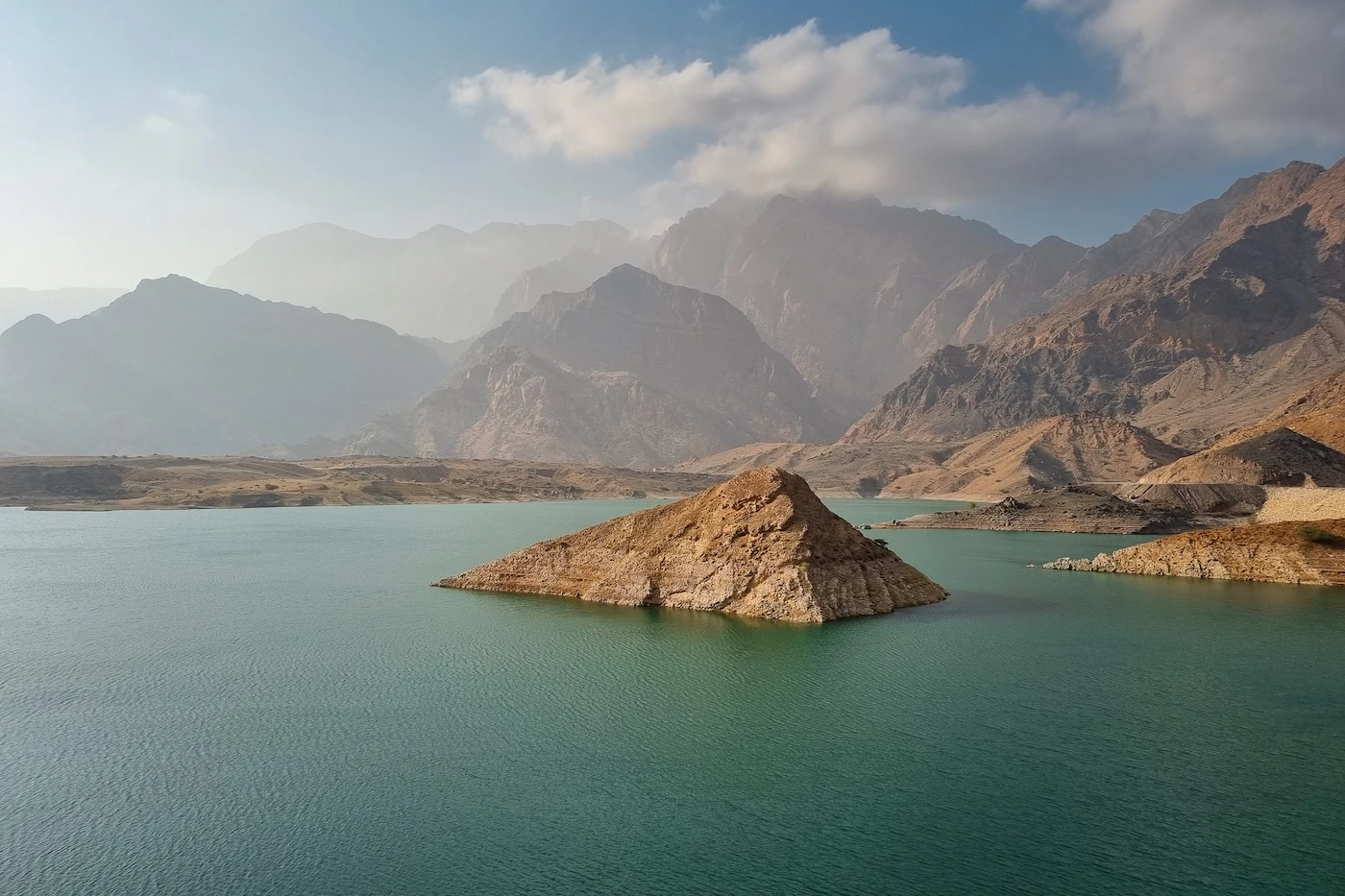
The wadi is located just to the east of the well-known Wadi Dayqah Dam Park, home to Oman’s largest dam (technically there are actually two dams either side of the park). The main dam is 75 metres high and spreads 400 metres along the crest. It’s pretty huge and the water varies from a bright-ish green to a deep blue, depending on which month you visit!
This post is specifically about the wadi, though, which is a natural geographical feature: a channel or gorge that floods when it rains – like a wash in the United States. Some wadis in Oman have year-round water coming from underground springs and others only have flowing water after rainfall. Interestingly, this wadi has its water due to remnants let out by the dam.
How to Access Wadi Dayqah by Car
To access the wadi, the best option is to turn off the main road to the dam at 23.133602, 58.895263 and head east. This is where the pavement ends.
A short, 750-metre track will join with the main Dayqah canyon. From there, the route to the best pools is right, following along the tracks in the stones. You can see these tracks clearly using Google Maps Satellite view.
At 23.114058, 58.906685, you can choose to go left towards a nice, remote camping area, or right to drive through more pools and rivers.
There are also other options to access Wadi Dayqah, such as from the village of Hayl al Ghaf at 23.164971, 58.925388, or at the terminus of the wadi around 23.187148, 58.963058.
However, both these options don’t generally have rivers and pools (unless there’s extreme rain), so I’m not talking about them here.

Do You Need a 4WD for Wadi Dayqah?
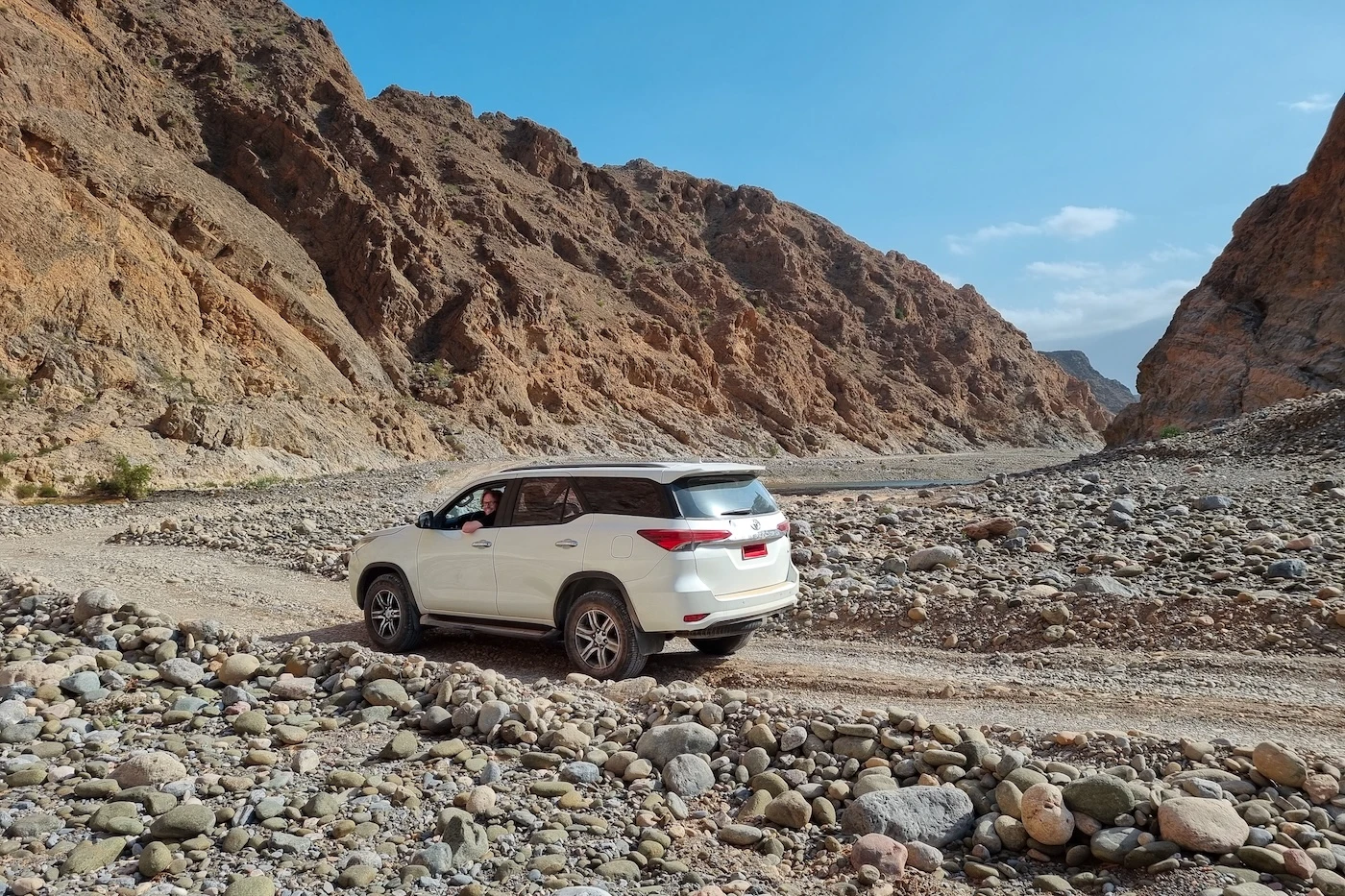
Yes, you should have a 4WD vehicle to traverse Wadi Dayqah.
You’ll be driving down a semi-dry river channel full of rocks and water. The ground is very uneven and you’ll likely have to cross actual rivers, so clearance and power in your car matters.
The rivers can be a foot or more deep, at least when we’ve been there, so a chunky car really helps.


We’ve always found the best car rental prices for Oman on DiscoverCars. It’s our go-to car comparison website for every road trip because they have such good insurance. You can save loads of money and get great-priced comprehensive coverage.

GOT MORE TIME IN OMAN?
Explore some more wadis:
Take a look at our 14 favourite wadis
Hike Oman’s favourite Wadi Shab
Live in a fairytale at the Wadi Damm pools
Explore the quirky white pools of Wadi Abyad
or the magnificent waterfalls of Wadi Darbat
Explore the cities and mountains:
Feel intrepid on an Oman offroad mountains itinerary
Discover what dramatic means with this Salalah itinerary
See some offbeat spots around Sur
Explore Oman’s cultural heart in Nizwa
Prepare with our Oman driving guide
–
Is the Dayqah Dam Worth Visiting?
Dayqah Dam, a few years ago, used to be a beautiful viewpoint with some picnic benches and grass. It was a really nice park-like spot to visit with your family and check out the crazy, green-ish coloured water of the artificial lake and walk across the actual dam. It was very cool.
Now, the actual park area has been turned into a sort of adventure park or entertainment area. When we went back there in 2026, it had a climbing wall, camping areas and archery. Since March 2025, there’s been an entry fee of 1 OMR per person for access (the site is now run by a company called Husaak Adventures).
There’s even a zip line across to the tiny island in the lake which absolutely ruins the views a bit (similar to the Mutrah Corniche area, which is now sadly covered in cable car wires).
If you’re coming to Oman as a once in a lifetime thing and want to see the lake, it’s still probably worth your 1 OMR (UK£2) entry fee.
During the winter months, I’d always found the dam quite peaceful (and even more so in the summer months due to the flaming hot weather keeping sensible people away!) but now, I imagine it to be full of kids and summer holiday-type activities which is really not my jam.
So, I won’t be returning because two quid to see an artificial lake that I’ve already been to before isn’t a vibe, but within this post are a few pics from some of my previous trips there, so you can decide if it’s for you.

What is there to do at Wadi Dayqah?
This is where I get stuck. You know when you read a blog post and sort of expect tonnes of really exciting things to do and see, all listed nicely for you?
Well, there’s not masses to do here, really, apart from explore the canyon on foot and by car.
I find the entire region beautiful, and it’s worth spending half a day exploring the canyons and surrounding area. So, here’s my kind of an attempt at a list of things:
See the Dam From Below
To see the Dam from the bottom, head to 23.083404, 58.849078, which is right below the massive dam, although this seems to be within the fee area (the last time I went it was free, but not anymore).
If you don’t want to pay, instead head to the bit of land just adjacent to it (23.084085, 58.850714), via the nearby village (this is a good way to see the dam with no fees, but access isn’t paved).
Drive the Savannah-esque Region
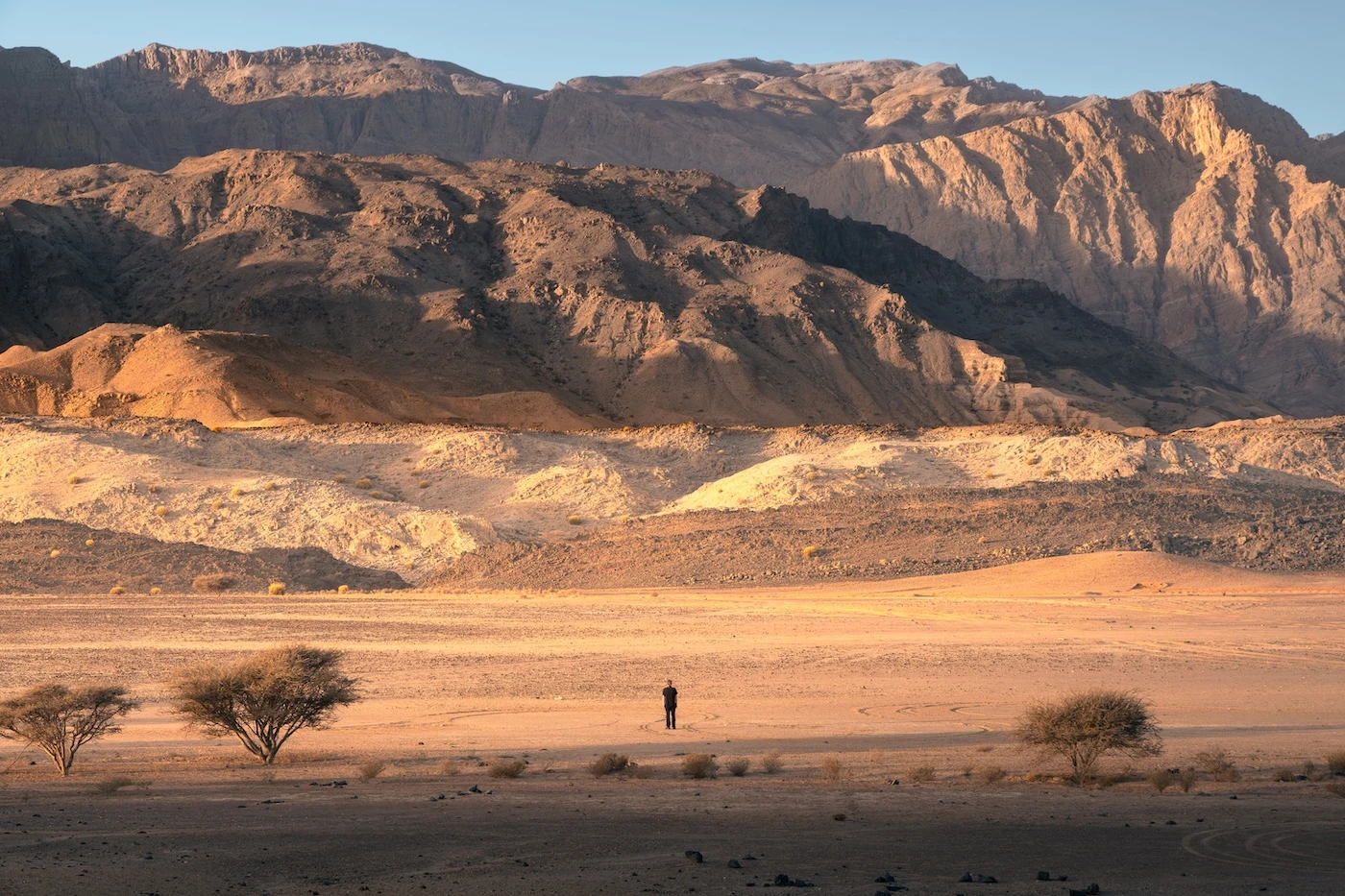
I have no idea what to call this area, but it’s just a sparse, dry, expansive and thoroughly savannah-ish region (but with amazing mountains). I can’t explain it, but it’s wild and I love it!
If you head southeast through 23.112392, 58.907225 down a rocky canyon for a few kilometres, you’ll end up in an area that looks entirely opposite to Wadi Dayqah – no blue, just dusty orange for as far as the eyes can see. Climb up the shallow, shaley hills at 23.095142, 58.916860 for some empty, vast views.
If you continue onwards, there’s a nice unpaved but graded road at 23.082764, 58.917435 that eventually reaches the Muscat Sur Highway. This road has some cool rock formations that are highly reminiscent of the hoodoos I saw in southern Utah.
This is one of my favourite places I’ve ever put up a tent and always seems pretty empty (we’ve never seen anyone else up here!).

Drive and Hike Through the Wadi
This is the main activity at Wadi Dayqah: driving and hiking wherever you can reach (depending on water levels). Take your car as far as you’re comfortable – aim for 23.107099, 58.899182.
Once you’ve stopped wherever you’re happy to, hike onwards! It’s a beautiful area with no designated hiking paths, so choose your route and prepare to get your feet wet.
You can also go exploring at the other end of the wadi near the dam – park up around 23.085993, 58.867100. There are lovely views of the mountains here, too.

Other Options
⬩ Wadi Mangal Lake – I haven’t done this hike yet (still haven’t gotten around to it, and the last time I was there in June the temperatures would have destroyed me). It’s a bit rough, with boulder scrambling in a deep canyon that leads to a small lake and is very minimally visited.
⬩ Camp: I’ve mentioned already but if you’re keen on wild camping, this area is magnificent!
⬩ Visit the actual Dayqah Dam Park: as discussed above.
⬩ Apparently climb – I’m not ever going to climb rocks because I’d die, but I’ve read it’s a thing in the canyon.


Further Afield
⬩ Visit nearby Wadi Al Arbiyeen: this very pretty wadi is around a 30-minute drive from the other side of Wadi Dayqah (from around 23.0829194, 58.9174386). It’s worth exploring if you’re in the area, especially if you like to hike.
⬩ Quriyat Salt Pans: a bit of a strange curveball, but if you are exiting to the coast after driving to Al Arbiyeen (or even if you’re not!), head onwards and check out Quriyat’s salt farming. It has hundreds of these tiny squares of pink salt pools which, if you catch at the right time of day with the right temperatures, looks kind of otherworldly and pink!

Where to Stay Near Wadi Dayqah
There aren’t many places to stay nearby Wadi Dayqah.
Most people travel to-and-from Muscat as a day trip, or occasionally from the port city of Sur or the nearby coast.
These are our current favourite spots in the capital:
⬩ W Muscat: we’ve actually only stayed at The Intercontinental next door to the W (which was lovely, too) but I really wished we’d stayed at the W. It was lively and seemed like so much fun and the pool area was awesome. To be fair, if you can afford either of these hotels, you’re in for a win because they’re both in the best location in Muscat (the Intercontinental is literally in between the beach and the Opera House – you’ll likely get a view of one or the other!).
⬩ The Aloft Muscat: this spot is a bit out of the way, but it’s where we’ve stayed for the majority of time on our most recent visit. It’s mad value for money, recently built so the rooms are immaculate, and our included breakfast was vast and varied. I just cannot get over how good the quality-to-money ratio was – we kept extending our stay and they kept offering us free stuff, like pizza, in the evenings. The hotel also has a popular bar/club thing so it’s actually kind of lively with Muscat residents.
⬩ The Golden Tulip Muscat: this quite traditional Omani-feeling hotel chain in Al Khuwair is in a prime location in the centre of town and has really decent rooms for often incredibly low prices. We regularly return here purely because it’s affordable, opposite our favourite restaurant, and also has great underground parking.
⬩ Al Bustan Palace (The Ritz Carlton): Okay, so I definitely haven’t stayed here. I probably never will. But, if I had the money, there’s no doubt I would; it’s the definition of luxury. Also, if this is in your budget range, check out The Chedi Muscat, too.
BEST TIME OF YEAR TO VISIT
The best time to visit Wadi Dayqah is definitely winter. Outside of December to March it is sweltering hot, so hiking more than 20 metres from your car becomes a right chore (and hazard).
I also get terrified of navigating random wadis in the middle of summer because if you get stuck, it’s so hot you might just die before anyone finds you.
Bleak, but that’s what my brain does.
In terms of water levels, it’s higher in winter but we navigated Wadi Dayqah in June this year and there was no lack of pools and rivers.
–

WHAT APP IS BEST FOR GPS AND NAVIGATION IN OMAN?
We use Google Maps for all our navigating in Oman. In conjunction with Google Satellite, we were able to accurate route even in the most remote areas.
Occasionally, Google can get confused if there are new roads or if it thought a road was closed, but generally it is really good at navigating through some pretty sketchy non-roady stuff.
–
Google Map for Wadi Dayqah
Below is a Google Map with markers for everything mentioned throughout this post.
To save this map, select the star next to the title.
GOT EVEN MORE TIME IN OMAN?
Go camping:
Sleep under the stars at these amazing wild camping locations
Plan your trip with our Oman camping guide
Camp atop Oman’s highest mountain
or camp in the whitest of Oman’s deserts at the Sugar Dunes
or have a totally unique adventure:
Spot the most remote beehive tombs in Oman
Wander around Oman’s most photogenic fort
Learn about livestock at the Nizwa goat market
Take a look around Oman’s most unique fortification
Drive up Oman’s most popular mountain
–
A Few Frequently Asked Questions
Can You Swim in Wadi Dayqah?
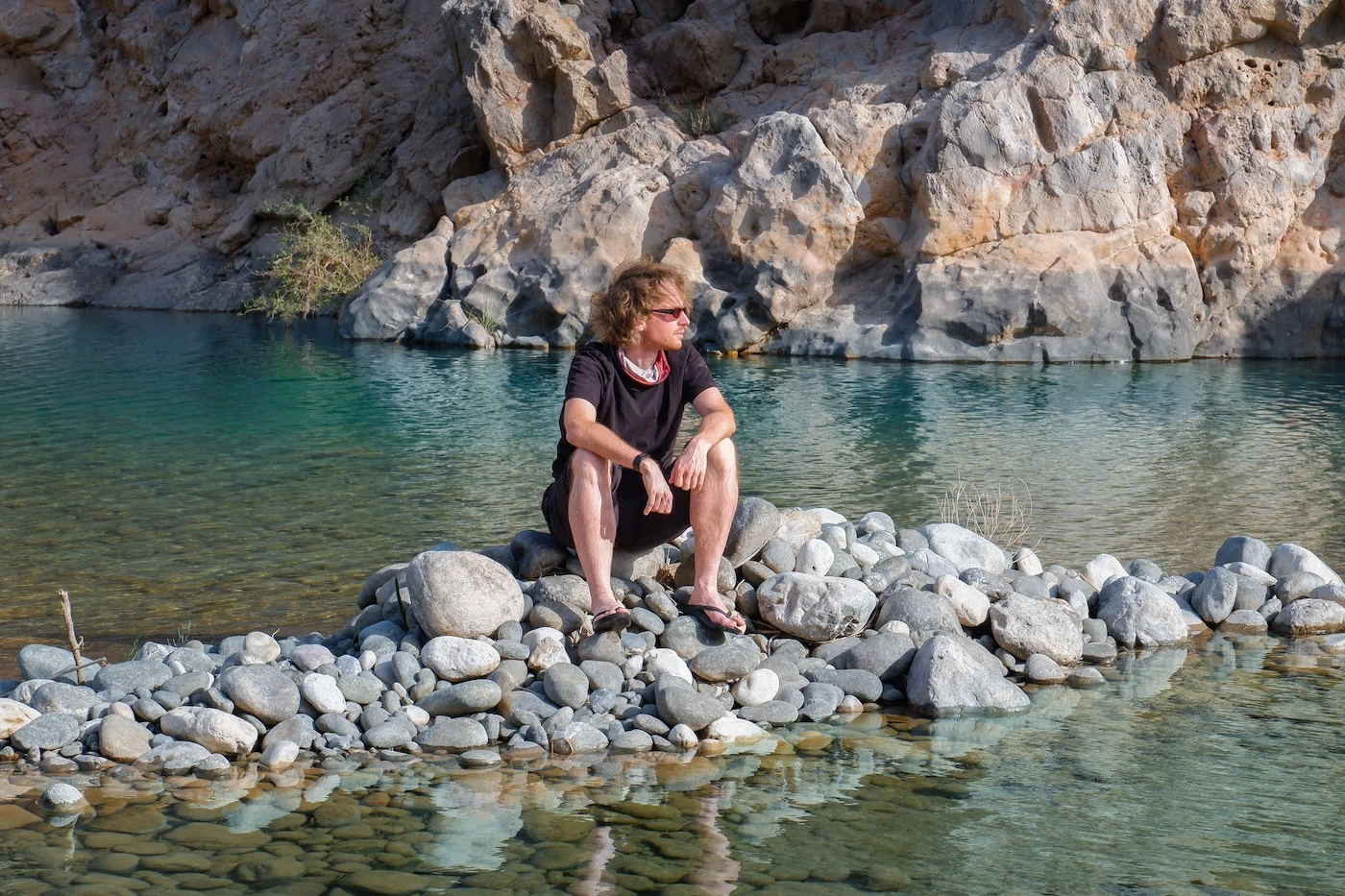
You can sort of swim at Wadi Dayqah. The pools are often quite shallow and more like pebbly rivers than your typical wadi pools.
I mean, sometimes the pools are a little deeper, and you can certainly sort of hang out in them, but they’re not these deep channels of ideal swimming water like you’d find in Wadi Bani Khalid or Wadi Shab. They’re more like 1-3 feet deep, wide shallow rivers.
I wouldn’t take a trip down there purely to swim.
How long to spend at Wadi Dayqah?
I’d recommend half a day or so in the area.
That might include exploring the valley for a few hours and visiting the dam for a picnic lunch. If you hike more, you could easily spend longer. A visit to Wadi Arbiyeen would make a solid full day out from Muscat.
If you camp, then you could easily hang out here for a whole day.
Can you camp at Wadi Dayqah?
Yes, wild camping in Wadi Dayqah is allowed. Never camp in a wadi if there is a risk of rain (or recent rainfall) due to a high risk of flooding.
Is there an entry fee for the wadi?
No, but there is an entry fee for the Wadi Dayqah Dam Park of 1 OMR per foreign visitor (300 baisa for Omanis). We paid in cash.
Do you need a guide for Wadi Dayqah?
No, you absolutely do not need a guide to explore this wadi. It’s not a complicated place to navigate like other more rugged wadis, where a guide might be helpful. You can’t get lost here and there’s no real route to follow.
HAVE WE HELPED YOU PLAN YOUR Wadi DAyqah Adventure?
If you’ve found our content helpful, consider booking your rental car (if you need one!), through the company we always use – Discover Cars. They’re the absolute best and have been our rental companion (and savior, thanks to their insurance) in many destinations across the world.
Also, consider booking your accommodation through Booking.com – we use them exclusively when travelling in the Middle East.
Alternatively, leave us a tip to say thank you.
Help like this makes it easier to pay for the upkeep of this site and ensures our small business survives the onslaught of AI!
Thanks for reading.
–
Where to Next?
I hope this little post has helped you decide if this less-visited area near Muscat is worth (at least) half a day or so of your time!
If you’re in Muscat, take a look at our detailed two-day itinerary – it has loads of food suggestions, viewpoints, things to skip and other things that typical guides omit.
I hope you have a great time!
Hi, thanks for visiting our blog! If this post has been of help to you, or you’ve just enjoyed our random ramblings and musings, say thank you by buying us a coffee! It helps keep The Restless Beans blog up and running.
Thank you, Claire + Nick